Manual content production doesn't scale, and in 2026, it doesn't have to. Whether you're a marketer trying to maintain publishing velocity, a founder building organic authority, or an agency managing dozens of clients, content creation automation tools can compress weeks of work into hours.
But not all automation platforms are built the same. Some focus purely on writing; others layer in SEO optimization, AI search visibility, indexing, and distribution. This list covers the best tools available right now, evaluated on output quality, automation depth, AI search optimization capabilities, and how well they integrate into a modern content workflow.
If you're also looking to understand the broader strategy behind this, our guide on automate content creation is worth reading alongside this list.
1. Sight AI
Best for: Teams that want content generation, AI visibility tracking, and indexing in one platform.
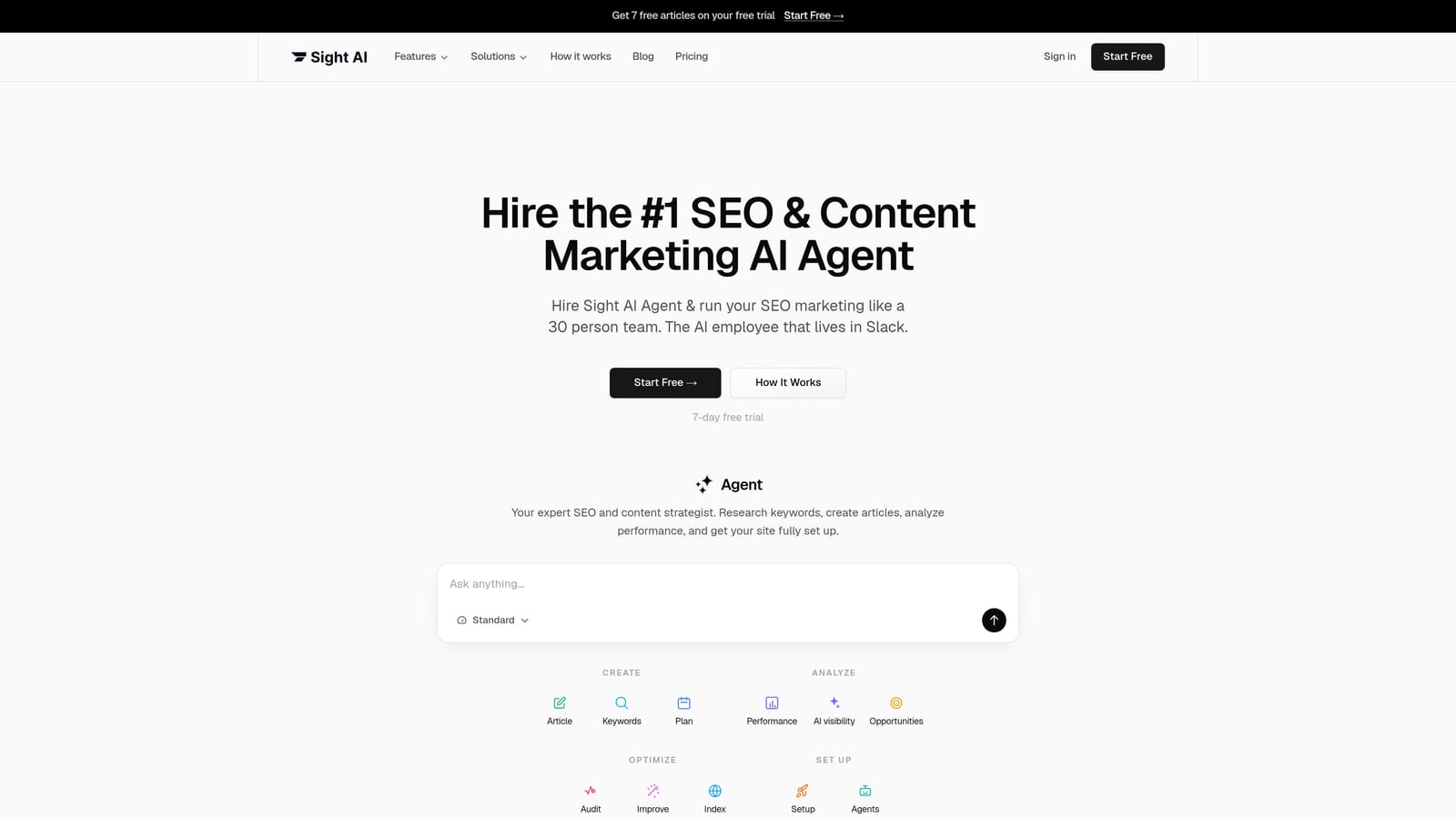
Sight AI is an all-in-one AI content automation platform combining SEO/GEO-optimized content generation, brand visibility tracking across major AI models, automated website indexing, and CMS auto-publishing.
Where This Tool Shines
Most content automation tools stop at the draft. Sight AI takes you from ideation through to a live, indexed page, which is a genuinely rare combination. The platform's 13+ specialized AI agents handle different content formats, so a listicle, a how-to guide, and a product explainer each get purpose-built treatment rather than a one-size-fits-all output.
The standout differentiator is the AI Visibility Score. While other tools help you rank in Google, Sight AI also tracks how AI models like ChatGPT, Claude, and Perplexity talk about your brand, complete with sentiment analysis and prompt tracking. For teams building a GEO strategy alongside traditional SEO, that's a meaningful advantage.
Key Features
13+ Specialized AI Agents: Purpose-built agents for listicles, guides, explainers, and more, each optimized for the specific content format rather than relying on generic prompting.
Autopilot Mode: Enables hands-off content creation and publishing, letting teams set parameters and let the platform handle execution without manual intervention at each step.
AI Visibility Score: Tracks brand mentions across ChatGPT, Claude, Perplexity, and 3+ other AI platforms, with sentiment analysis and prompt-level tracking to show exactly how AI models perceive your brand.
IndexNow Integration: Automated sitemap updates and IndexNow integration accelerate content discovery, reducing the lag between publishing and search engine indexing.
CMS Auto-Publishing: Pushes finished content directly to your CMS, cutting the manual steps between draft approval and a live page.
Best For
Sight AI is best suited for marketers, founders, and agencies that need more than a writing assistant. If your goal is to build organic traffic and AI search presence simultaneously, and you want a single platform to handle creation, optimization, indexing, and visibility monitoring, this is the tool built for that workflow.
Pricing
Paid plans are available. Check trysight.ai for current pricing tiers, as plans are updated regularly.
2. Writesonic
Best for: SMBs and agencies needing high-volume content generation across multiple formats.
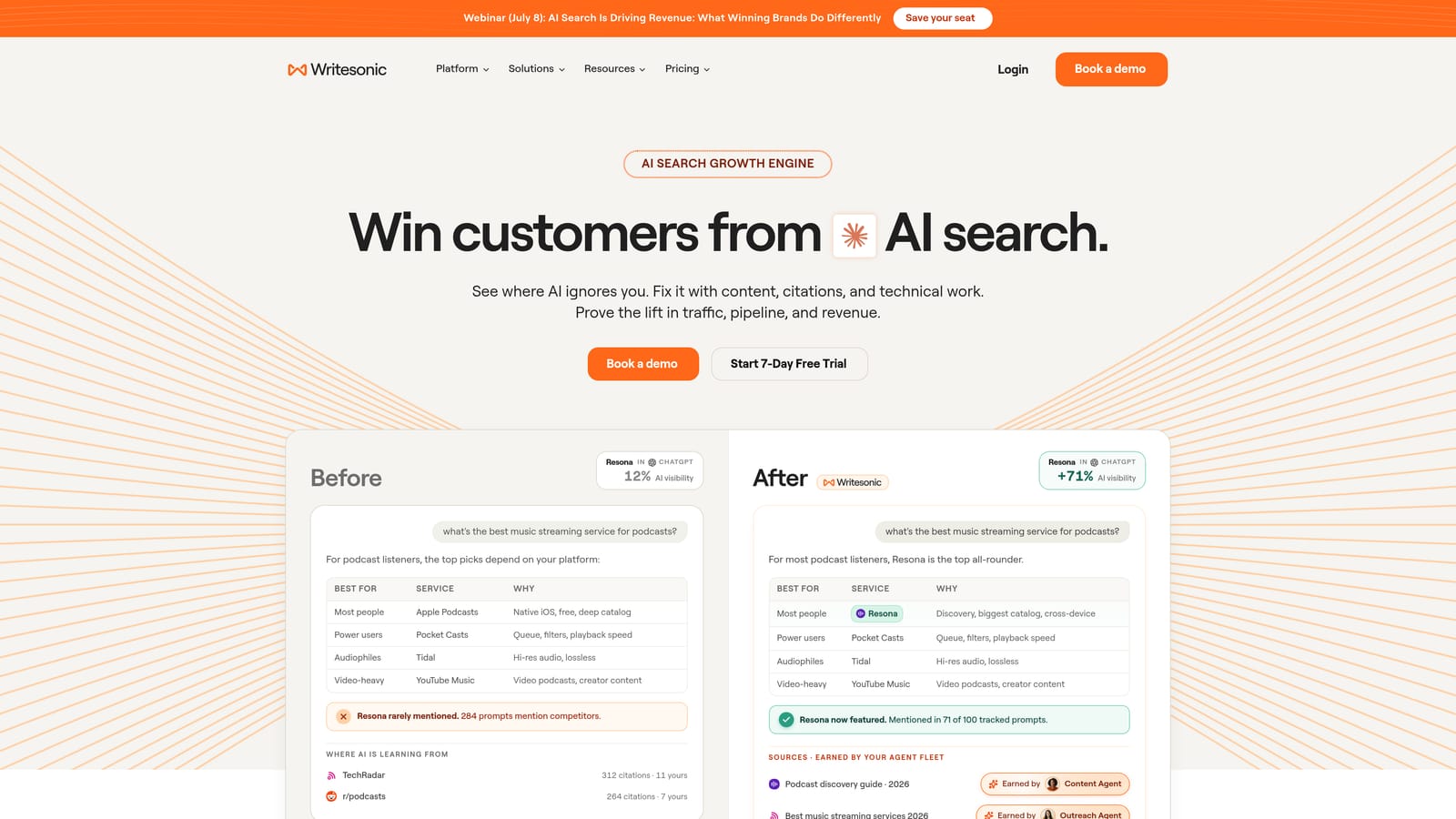
Writesonic is a widely-used AI writing platform offering content generation across articles, ads, product descriptions, and marketing copy, with integrated SEO workflows.
Where This Tool Shines
Writesonic's strength is breadth. The platform covers a wide range of content types, from long-form SEO articles to social captions and email sequences, making it a practical choice for marketing teams that need to produce content across multiple channels without switching tools.
The SEO-focused article writer includes SERP analysis, which helps align content with what's currently ranking. Chatsonic, the platform's conversational AI layer, adds a research and ideation workflow that feels more interactive than static template-based tools.
Key Features
SEO Long-Form Article Writer: Generates articles with SERP analysis built in, helping writers align output with current search intent and ranking signals.
Chatsonic: A conversational AI interface for research, brainstorming, and content ideation, functioning as an interactive layer on top of the core writing engine.
Template Library: A broad collection covering marketing copy, social media, email, and product descriptions, useful for teams managing diverse content needs.
Botsonic: A chatbot builder that extends the platform into customer-facing automation beyond content creation.
Team Collaboration Features: Workspace and collaboration tools designed for content operations teams working across multiple projects.
Best For
Writesonic is a strong fit for SMBs and agencies that need high output across varied content formats and want an accessible, template-driven workflow. It's less suited to teams that need AI visibility tracking or automated indexing as part of the same platform.
Pricing
A free plan is available. Paid plans start at approximately $16/month. Verify current pricing at writesonic.com as tiers change periodically.
3. AirOps
Best for: Content ops and growth engineering teams building custom, scalable AI content pipelines.
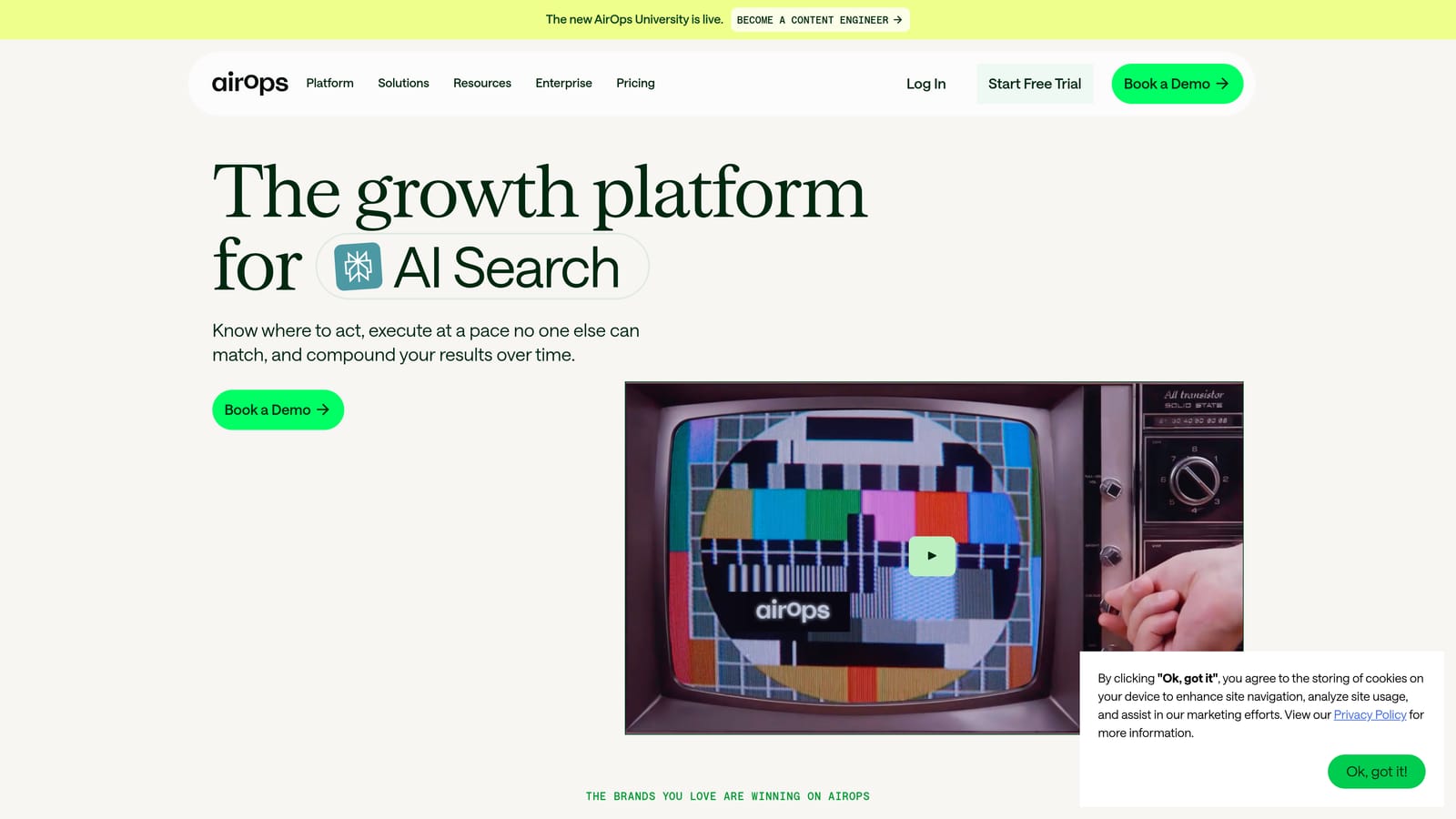
AirOps is an AI workflow automation platform that lets teams build custom content pipelines connecting large language models to their data sources, CMS, and publishing systems.
Where This Tool Shines
AirOps occupies a different position in the content automation stack than most writing tools. Rather than giving you a pre-built content workflow, it gives you the infrastructure to build your own. That makes it particularly powerful for programmatic SEO at scale, where you need to generate hundreds or thousands of pages from structured data.
The visual workflow builder lowers the technical barrier enough that content operations teams can build and iterate without deep engineering support, though some technical comfort is still required compared to plug-and-play writing tools.
Key Features
Visual Workflow Builder: A no-code interface for connecting LLMs to CMS platforms, databases, and other data sources, enabling custom content pipelines without extensive engineering resources.
Programmatic SEO Generation: Designed for large-scale content production from structured data, making it well-suited to teams building location pages, product descriptions, or category content at volume.
Custom AI App Creation: Teams can build internal AI-powered tools and workflows tailored to their specific content operations needs.
Platform Integrations: Connects with popular content management and marketing platforms to fit into existing tech stacks.
Version Control and Team Management: Workflow versioning and team-level management features for content ops teams running multiple concurrent pipelines.
Best For
AirOps is best for growth engineering teams, content ops leads, and technically-oriented marketers who need to build custom, scalable pipelines rather than use a pre-configured writing tool. It's less suited to teams looking for a quick setup or those who need AI visibility monitoring included.
Pricing
Tiered pricing is available. Verify current plans at airops.com before committing.
4. Promptwatch
Best for: Teams managing large-scale AI content pipelines who need prompt reliability and performance monitoring.
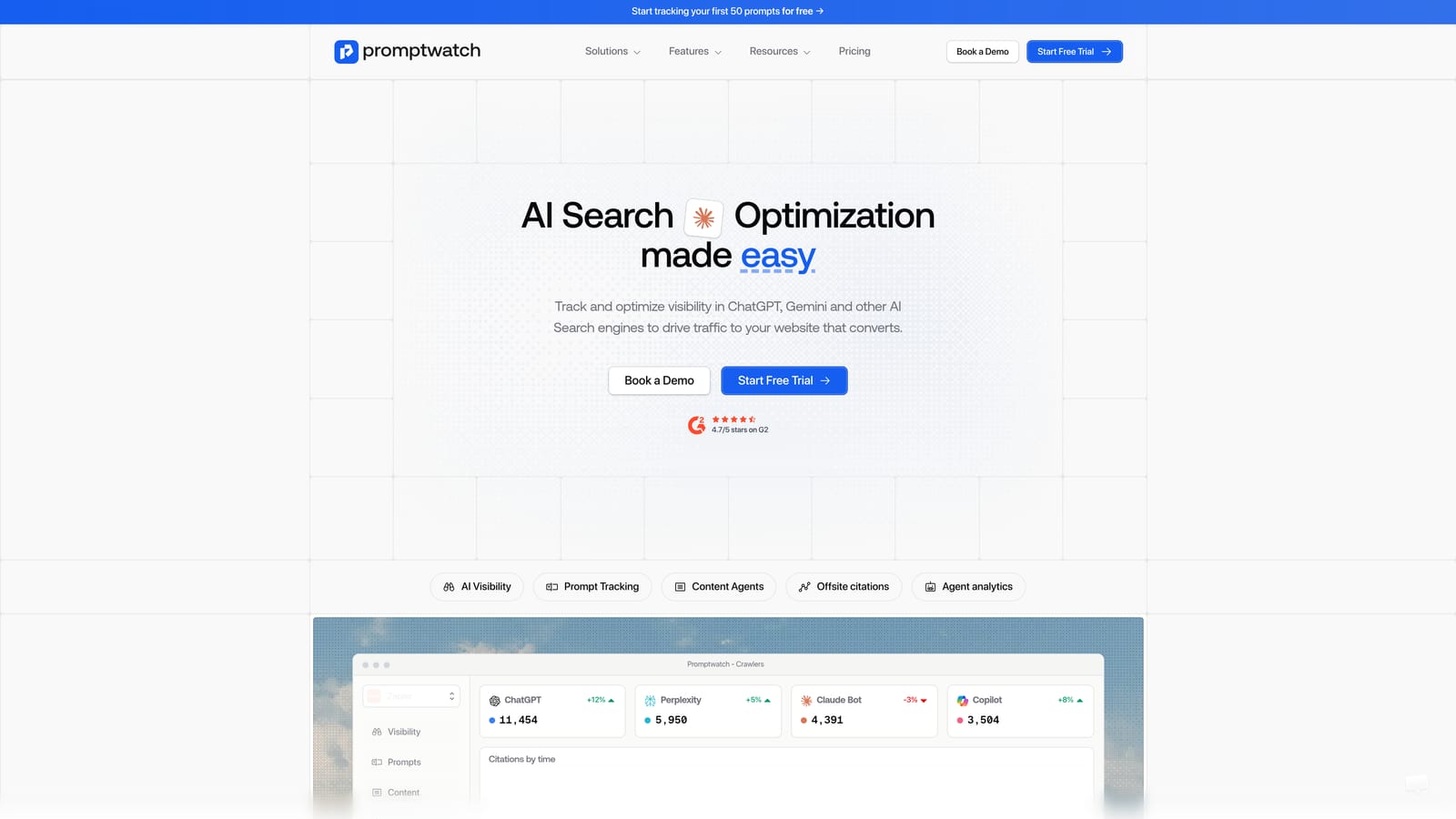
Promptwatch is a prompt management and monitoring platform that helps teams track, version, and optimize the AI prompts powering their content automation workflows.
Where This Tool Shines
As content automation scales, prompt quality becomes an operational risk. Model updates, prompt drift, and inconsistent outputs can quietly degrade the quality of everything your pipeline produces. Promptwatch addresses this by treating prompts as managed assets with version history, performance tracking, and comparison tools.
Think of it as the quality control layer for teams running AI content at volume. It's not a content creation tool in the traditional sense, but for organizations where dozens of prompts are running across multiple workflows, having this visibility is genuinely valuable.
Key Features
Prompt Versioning: Maintains a full history of prompt iterations so teams can roll back, compare, and understand how changes affect output quality over time.
Performance Monitoring: Tracks LLM output quality over time, helping teams identify when model updates or prompt changes are affecting results.
Prompt Testing and Comparison: Side-by-side testing tools for evaluating how different prompt variations perform before deploying changes to production pipelines.
Output Drift Alerts: Notifications when output quality degrades, allowing teams to catch and address issues before they affect published content at scale.
Collaborative Prompt Libraries: Shared prompt management for teams, enabling consistent standards across multiple users and workflows.
Best For
Promptwatch is most valuable for content operations teams and growth engineers running large-scale AI pipelines where prompt consistency and quality control are ongoing concerns. It complements a full content generation platform rather than replacing one.
Pricing
Check promptwatch.io for current pricing tiers.
5. Profound
Best for: Enterprise marketing teams building dedicated AI answer engine optimization strategies.
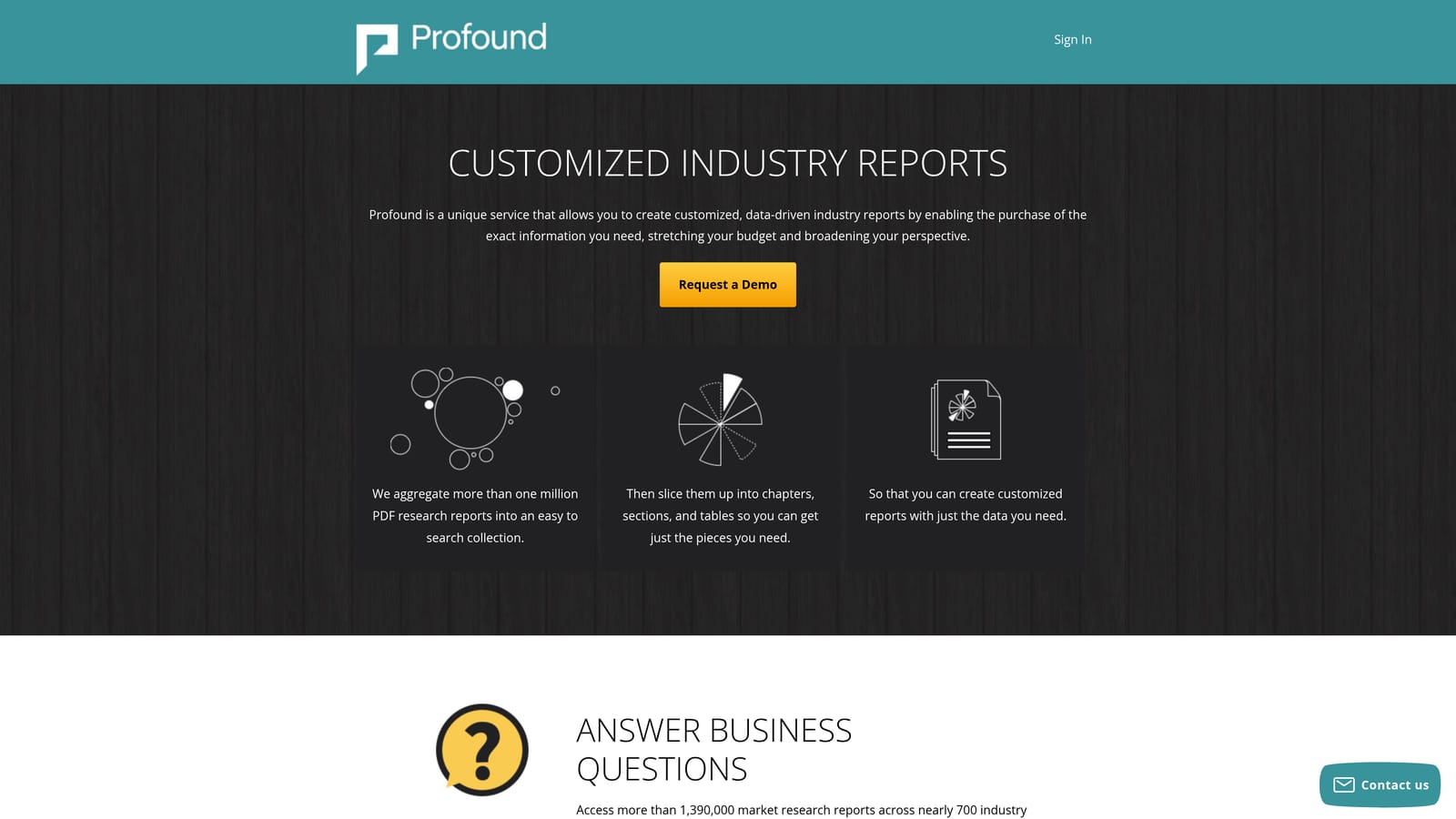
Profound is an AI answer engine optimization platform that helps enterprise brands understand and improve how they appear in AI-generated search responses across major AI platforms.
Where This Tool Shines
Profound focuses specifically on the question that's becoming central to enterprise SEO strategy: not just "do we rank on Google?" but "how does AI describe us when someone asks a relevant question?" The platform provides structured visibility into AI-generated answers, helping brands identify where they're being cited, misrepresented, or absent entirely.
The content gap analysis feature is particularly useful for enterprise teams building GEO strategies. By surfacing where competitors appear in AI answers and where your brand doesn't, it creates a clear brief for content investments.
Key Features
AI Search Visibility Monitoring: Tracks how your brand appears in AI-generated responses across major answer engines, providing a structured view of your AI search presence.
Brand Mention Tracking: Monitors brand references in AI-generated content, including context and sentiment around those mentions.
Content Gap Analysis: Identifies topics and queries where competitors appear in AI answers but your brand does not, informing content strategy decisions.
Competitive Benchmarking: Compares your AI search presence against competitors across specific topics, queries, and platforms.
Enterprise Reporting: Structured analytics and reporting designed for enterprise marketing teams and executive stakeholders.
Best For
Profound is designed for enterprise marketing teams with dedicated AI search strategies and the budget to match. It does not offer content generation natively, so it works best as a visibility and strategy layer alongside a content production platform.
Pricing
Enterprise pricing applies. Contact Profound directly at profound.com for details.
6. Peec
Best for: Agencies and brands tracking competitive AI share of voice across multiple clients or markets.
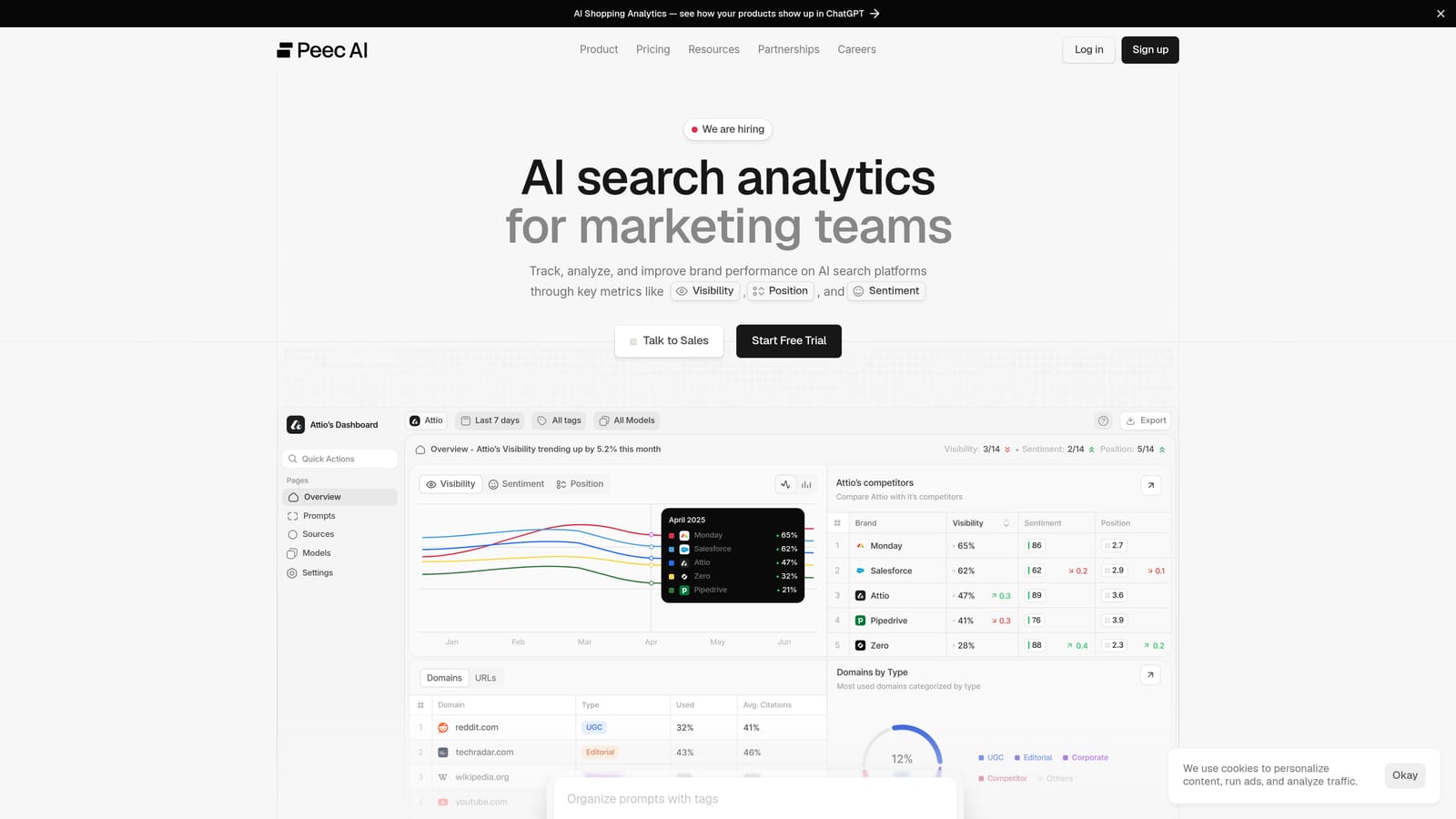
Peec is a competitive AI visibility benchmarking tool that tracks brand share of voice in AI-generated content, helping agencies and brands measure their presence relative to competitors.
Where This Tool Shines
Peec fills a specific and growing need: understanding not just whether your brand appears in AI-generated answers, but how often relative to competitors. For agencies managing multiple client accounts, the multi-client dashboard makes it practical to monitor AI visibility across a portfolio without jumping between separate reports.
The trend tracking feature adds a time dimension that's often missing from point-in-time AI visibility snapshots. Watching share of voice shift over weeks and months helps teams connect content investments to measurable changes in AI search presence.
Key Features
AI Share of Voice Tracking: Measures how frequently your brand appears in AI-generated responses relative to competitors across multiple platforms.
Competitor Benchmarking: Direct comparison of brand presence in AI-generated answers against named competitors, topic by topic.
Multi-Client Dashboard: Agency-friendly interface for managing AI visibility monitoring across multiple client accounts from a single view.
Trend Tracking: Historical tracking of brand mentions over time, allowing teams to correlate content activity with changes in AI search visibility.
Keyword and Topic-Level Insights: Granular visibility into which topics and queries your brand is winning or losing in AI-generated results.
Best For
Peec is a strong fit for agencies that need to report on AI search presence across multiple clients, and for brands that want competitive context around their AI visibility. Like Profound, it's a measurement and benchmarking layer rather than a content creation tool.
Pricing
Check peec.ai for current pricing tiers.
Which Tool Fits Your Workflow?
Each tool on this list serves a distinct role in the content automation stack, and the right choice depends on what problem you're actually trying to solve.
For end-to-end content automation: Sight AI is the only platform on this list that combines content generation, AI visibility tracking, automated indexing, and CMS publishing in a single workflow. If you're a marketer, founder, or agency that wants to build organic traffic and AI search presence without stitching together multiple tools, it's the natural starting point.
For high-volume multi-format content: Writesonic is a proven choice for teams that need broad content type coverage and an accessible, template-driven workflow at a competitive price point.
For custom programmatic content pipelines: AirOps gives technically-oriented teams the infrastructure to build exactly the workflow they need, particularly at scale for programmatic SEO.
For prompt quality and reliability: Promptwatch is the right infrastructure layer for teams running large AI pipelines where prompt drift and output consistency are operational risks.
For enterprise AI answer engine optimization: Profound provides the depth of AI search visibility analysis that enterprise teams with dedicated GEO strategies need.
For competitive AI share of voice benchmarking: Peec is purpose-built for agencies and brands that need to track AI visibility across multiple clients or markets with competitive context.
The clearest insight from evaluating these tools together: content automation in 2026 isn't just about writing faster. It's about making sure what you publish gets discovered, indexed, and cited by AI models that increasingly shape how your audience finds information. Start tracking your AI visibility today and see exactly where your brand appears across top AI platforms, so your content investments translate into measurable organic and AI search presence.