AI search is reshaping how buyers discover brands. When a prospect asks ChatGPT, Claude, or Perplexity for a vendor recommendation, your position in that answer—or your absence from it—can influence a deal before you ever enter the conversation. Enterprise teams are waking up to this reality and investing in dedicated AI visibility solutions: platforms that track how AI models talk about their brand, surface content gaps, and help them earn more mentions across AI-powered search.
We evaluated each platform on monitoring depth, analytics quality, content generation capabilities, indexing speed, and scalability for larger teams. Whether you're a marketing director, a growth-focused founder, or an agency managing multiple client brands, this guide will help you find the right platform for your AI visibility strategy. For context on measuring organic performance more broadly, see our guide on how to measure SEO success.
1. Sight AI
Best for: Teams that want an all-in-one platform covering monitoring, content creation, and indexing.
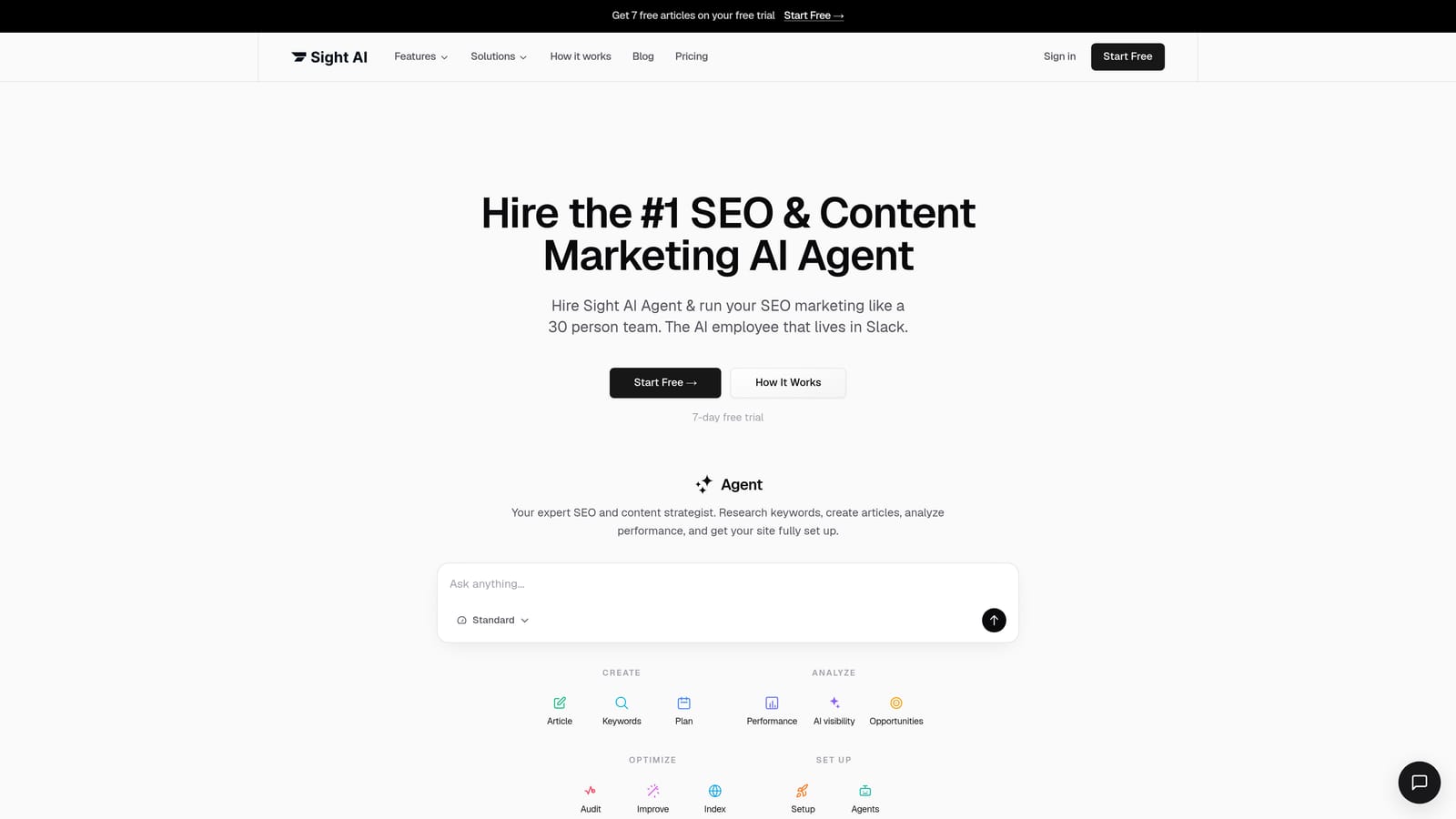
Sight AI is an end-to-end AI visibility platform that tracks brand mentions across 6+ AI models, generates SEO and GEO-optimized content with 13+ specialized AI agents, and automatically indexes new content via IndexNow integration.
Where This Tool Shines
Most AI visibility tools make you choose between monitoring and content. Sight AI combines both under one roof, which means your team isn't juggling separate platforms to understand where your brand stands and then act on that intelligence. You get a single workflow: monitor your AI presence, identify the content gaps driving low visibility, create optimized content, and push it live with automatic indexing.
The Autopilot Mode is particularly useful for enterprise teams with high content volume. Rather than manually triggering each piece, you can set content generation and publishing workflows to run hands-off, freeing your team to focus on strategy rather than execution.
Key Features
AI Visibility Score: A unified score with sentiment analysis and prompt tracking across ChatGPT, Claude, Perplexity, and 3+ additional AI platforms, giving you a clear picture of how your brand is perceived and surfaced.
13+ Specialized AI Content Agents: Purpose-built agents for listicles, guides, explainers, and other formats, each optimized for both traditional SEO and Generative Engine Optimization (GEO).
Autopilot Mode: Hands-off content generation and publishing that keeps your content pipeline moving without constant manual input.
IndexNow Integration: Automated sitemap updates and IndexNow submission so new content gets discovered and factored into AI retrieval systems faster.
CMS Auto-Publishing: Connects content generation directly to your CMS, compressing the time between content creation and live publication.
Best For
Sight AI is the strongest fit for marketing teams, founders, and agencies that want a single platform to handle the full AI visibility loop. If your primary bottleneck is not knowing where to start or how to connect monitoring insights to content action, this platform is built for exactly that workflow.
Pricing
Visit trysight.ai for current pricing tiers. Plans are designed to scale with team size and content volume.
2. Profound
Best for: Large enterprise teams that need structured share-of-voice reporting and boardroom-ready dashboards.
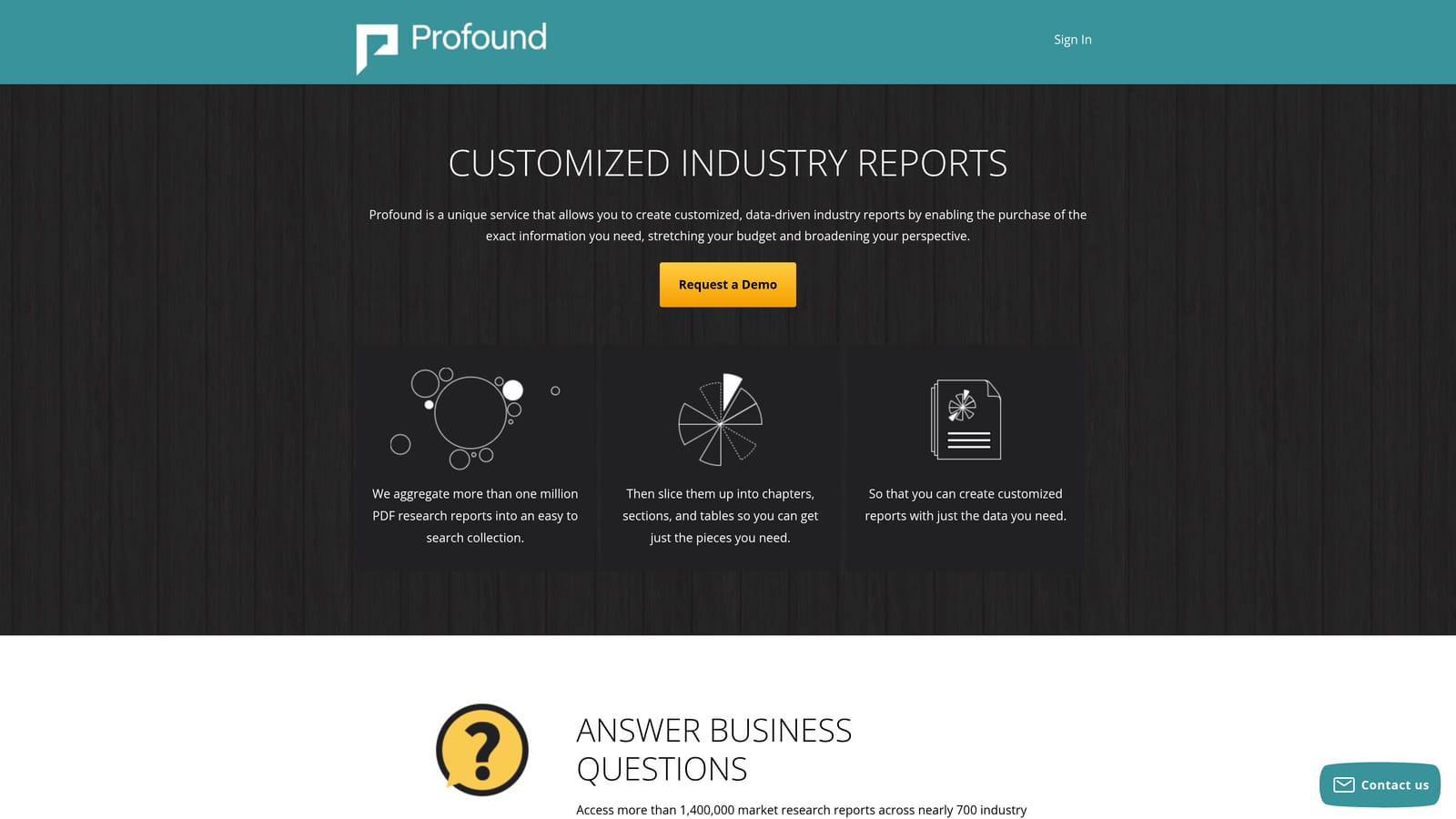
Profound is an enterprise AI search monitoring platform focused on structured brand tracking and share-of-voice analytics across major AI engines.
Where This Tool Shines
Profound is built with enterprise reporting requirements in mind. Where many AI visibility tools surface raw mention data, Profound structures that data into share-of-voice metrics and competitive benchmarks that marketing leaders can bring directly into executive conversations. The dashboards are designed to communicate brand presence in AI search in a way that resonates with stakeholders who don't live in the technical weeds.
The prompt-level testing capability is another differentiator. Teams can design specific queries that mirror how their target buyers actually search, then see exactly how their brand surfaces in response. This gives you a more realistic picture of your AI visibility than broad monitoring alone.
Key Features
Brand Mention Monitoring: Tracks how your brand appears across leading AI search engines in real time.
Share-of-Voice Analytics: Competitive benchmarking that shows how your brand's AI presence compares to key competitors across categories and topics.
Structured Prompt Testing: Lets you define and test specific queries to understand exactly how your brand surfaces for high-priority search scenarios.
Boardroom-Ready Dashboards: Reporting interfaces designed for enterprise teams presenting AI visibility data to senior leadership.
Best For
Profound is best suited for large enterprise marketing and brand teams that prioritize structured analytics and executive reporting over content generation. If your primary need is understanding your AI share of voice at a competitive level, this platform delivers that with depth and clarity.
Pricing
Custom enterprise pricing. Contact Profound directly for a quote tailored to your team's scale and requirements.
3. Promptwatch
Best for: SEO and brand teams that need granular, prompt-level brand visibility tracking with historical trends.
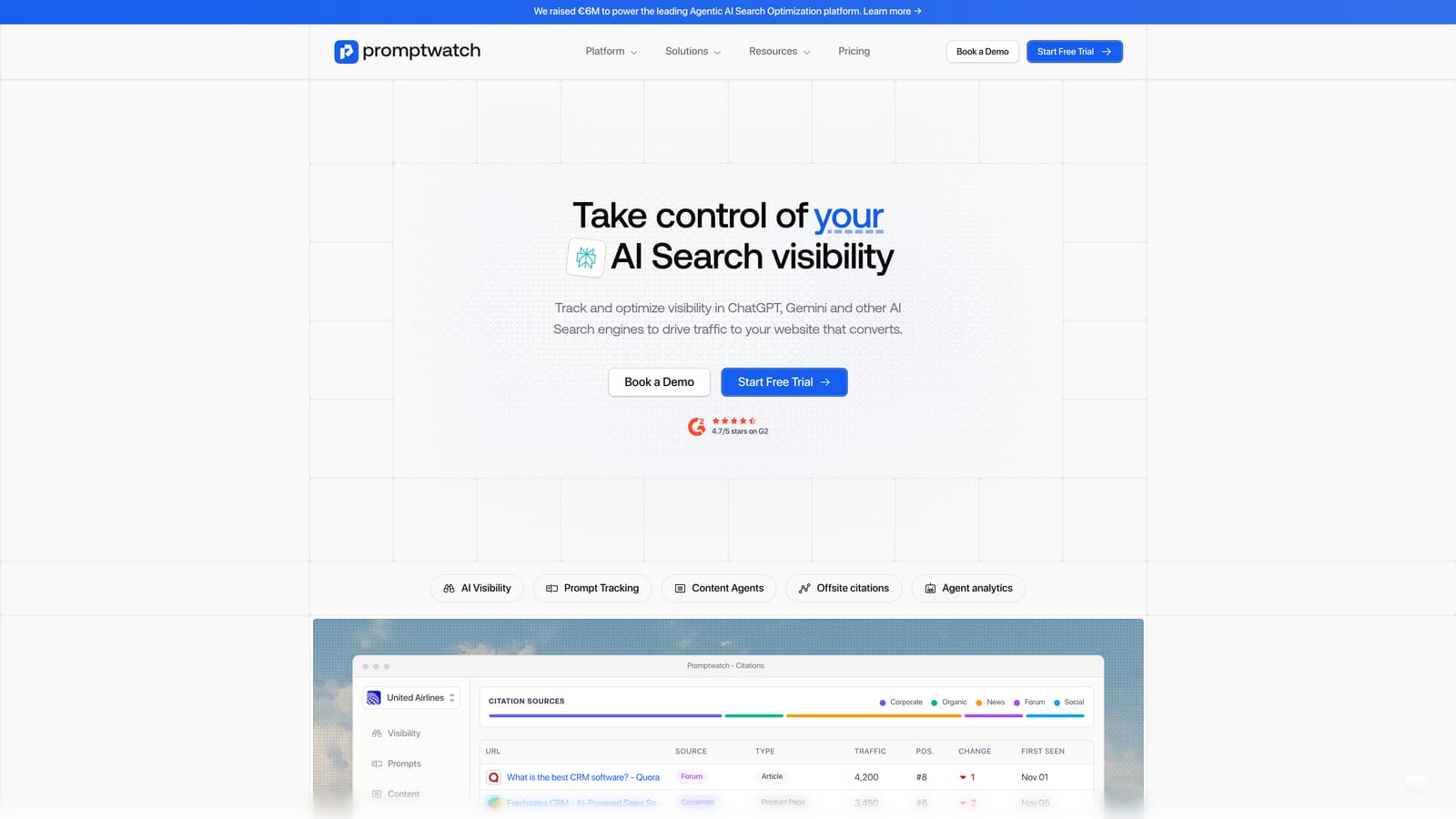
Promptwatch is a prompt-level AI visibility monitoring tool that tracks how specific queries surface brand mentions across AI models, with historical trend data built in.
Where This Tool Shines
Promptwatch takes a deliberately focused approach: it cares deeply about the prompt layer. Rather than giving you broad brand sentiment, it answers a more precise question: when someone types a specific query into an AI model, does your brand show up, and how has that changed over time? That granularity is hard to find in broader monitoring platforms.
The historical trend tracking adds meaningful context to the monitoring data. Visibility changes don't happen overnight, and being able to see how a brand's presence in a specific prompt category has shifted over weeks or months helps teams connect content and optimization efforts to measurable outcomes.
Key Features
Prompt-Level Brand Mention Tracking: Monitors how your brand appears in AI responses to specific, defined queries across multiple platforms.
Historical Trend Data: Tracks visibility changes over time so you can identify patterns and measure the impact of content initiatives.
Competitive Share-of-Voice at the Prompt Level: Compares how your brand and competitors appear for the same queries, giving you a competitive read at the most granular level.
Alerting: Notifies your team when significant changes occur in brand mention frequency or sentiment for tracked prompts.
Best For
Promptwatch is the right fit for SEO professionals and brand teams who want to go deep on specific prompt scenarios rather than broad brand monitoring. It's particularly useful for teams running content experiments and wanting to measure their effect on AI-generated responses.
Pricing
Check promptwatch.io for current plan details and tier breakdowns.
4. Peec
Best for: Competitive intelligence teams and agencies that need side-by-side brand comparison in AI search results.
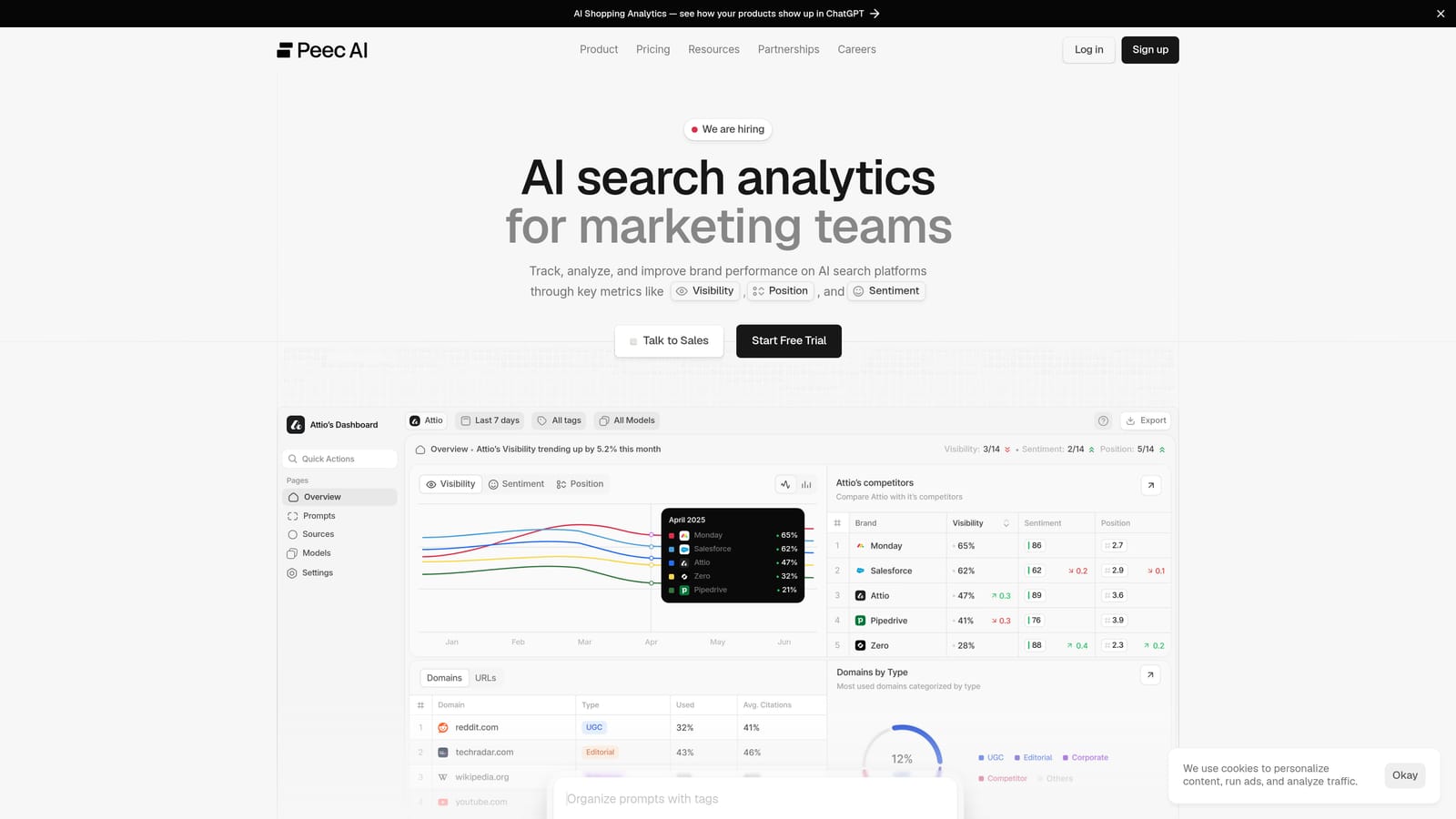
Peec is a competitive AI visibility benchmarking platform that lets brands compare how they and their competitors appear in AI-generated responses side by side.
Where This Tool Shines
Peec's core value is competitive context. Knowing that your brand appears in 40% of relevant AI responses means very little without knowing that your top competitor appears in 70% of the same responses. Peec is built around that comparative view, making it easy to see not just your own AI presence but how you stack up in the category.
For agencies managing multiple brand clients, the multi-brand management interface is a practical advantage. Rather than running separate monitoring setups for each client, you can track and compare AI visibility across a portfolio of brands from a single workspace.
Key Features
Side-by-Side Competitor Comparison: Directly compares how your brand and named competitors appear in AI model responses for the same queries.
Competitive Share-of-Voice Tracking: Monitors relative brand presence across AI search engines over time, giving you a competitive trend line.
Category and Topic-Level Visibility Analysis: Breaks down AI visibility by topic or category so you can identify where you lead and where you're losing ground.
Agency-Friendly Multi-Brand Management: Supports managing and comparing visibility data across multiple client brands in one interface.
Best For
Peec is ideal for competitive intelligence teams, brand strategists, and agencies where the primary question is not just "are we visible?" but "are we more visible than our competitors?" It's a natural fit for teams building positioning strategies informed by AI search data.
Pricing
Check peec.ai for current pricing options and plan details.
5. AirOps
Best for: Enterprise content teams that need scalable, automated content production workflows powered by AI.
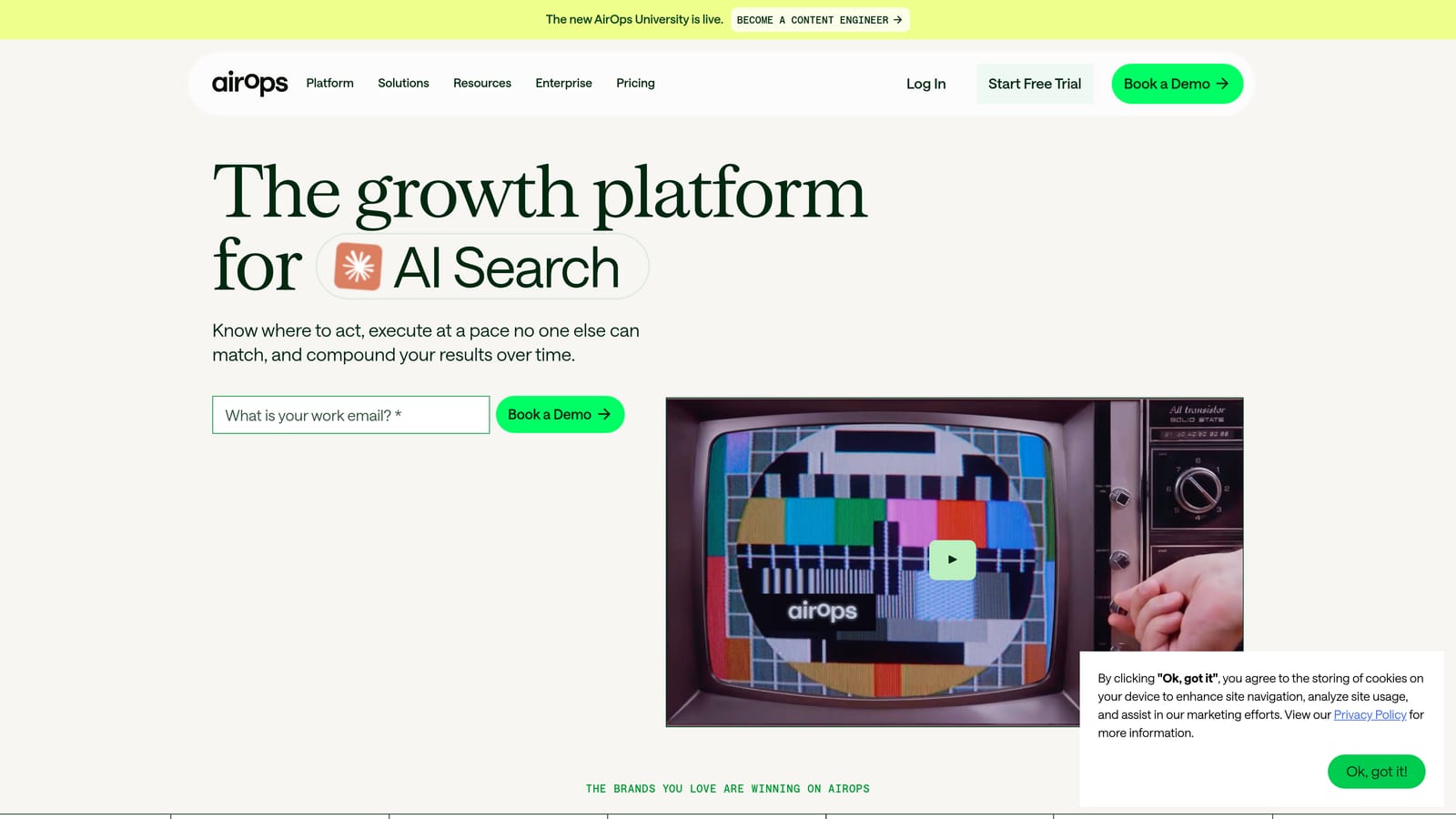
AirOps is an AI-powered content workflow automation platform that helps enterprise teams build scalable content operations, a critical input to improving brand mentions in AI-generated responses.
Where This Tool Shines
AirOps approaches AI visibility from the content production side. The premise is straightforward: AI models are more likely to mention brands that have published substantial, well-structured, authoritative content. AirOps helps enterprise teams produce that content at scale through customizable AI workflow automation, without requiring every piece to be built from scratch.
The drag-and-drop workflow builder makes it accessible to non-technical content teams while still offering the depth that enterprise operations require. You can build repeatable content production pipelines that integrate multiple AI models and data sources, which is particularly valuable for teams managing high content volume across multiple channels or markets.
Key Features
Drag-and-Drop AI Workflow Builder: Visual interface for building content production workflows without needing engineering resources.
Multi-Model and Data Source Integration: Connects to multiple AI models and external data sources so workflows can pull in the right inputs for each content type.
Template Library: Pre-built templates for common content operations that teams can deploy immediately and customize over time.
Team Collaboration Features: Built for enterprise teams with shared workspaces, role management, and collaborative review capabilities.
Best For
AirOps is the right choice for enterprise content teams and agencies that need to scale content production operations. If your AI visibility gap is primarily a content volume problem, AirOps provides the infrastructure to close it systematically.
Pricing
Tiered plans are available. Visit airops.com for current pricing and enterprise options.
6. Writesonic
Best for: Teams that need high-volume, SEO-optimized content generation across multiple formats to increase brand surface area.
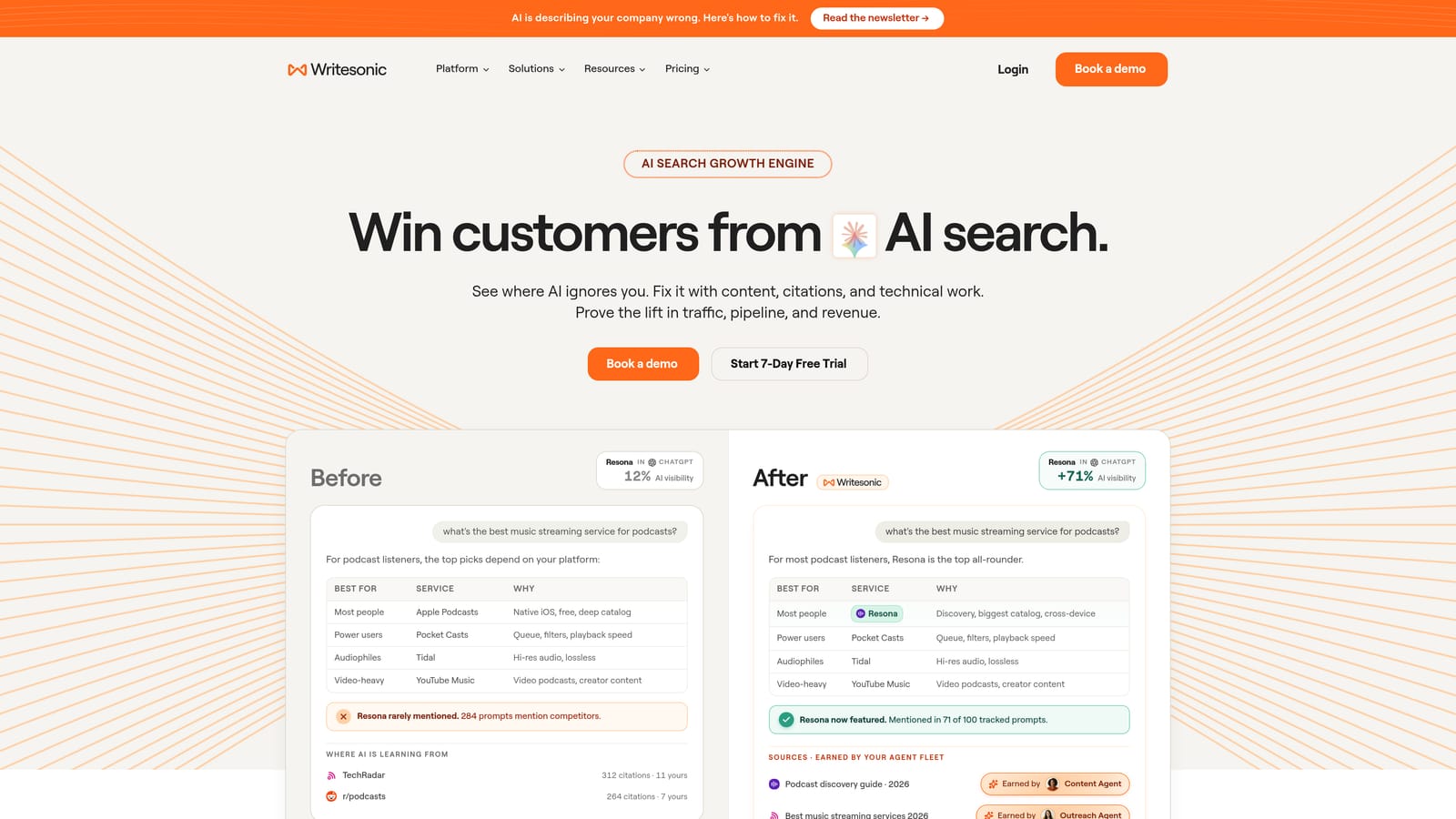
Writesonic is a broad AI content generation platform with built-in SEO optimization features, helping teams publish well-structured content that expands their presence across AI search.
Where This Tool Shines
Writesonic's strength is breadth. It supports a wide range of content formats from long-form articles to landing pages to social content, all within a single platform. For teams trying to increase their brand's surface area across AI search, that format variety matters: AI models draw on a diverse range of content types, and having authoritative content across multiple formats and topics increases the probability of being cited.
The built-in SEO scoring and web-search-grounded article writing are practical features for teams that need their content to perform in both traditional search and AI-generated responses. Rather than writing in a vacuum, Writesonic's AI article writer can pull in current information to improve factual grounding, which is increasingly important as AI models evaluate source quality.
Key Features
Wide Content Format Support: Generates articles, landing pages, social content, ads, and more from a single platform.
Built-In SEO Scoring: Provides real-time optimization recommendations as content is created, helping teams hit SEO targets without a separate tool.
AI Article Writer with Web Search: Grounds long-form content in current, factual information by pulling from live web sources during generation.
Brand Voice Customization: Lets teams define and apply a consistent brand voice across all generated content for coherent output at scale.
Best For
Writesonic is well suited for marketing teams and agencies that need to produce a high volume of SEO-optimized content across multiple formats. It's more of a content generation platform than a dedicated AI visibility monitor, making it a strong complement to monitoring tools rather than a standalone AI visibility solution.
Pricing
A free plan is available. Paid plans start at published rates on writesonic.com.
Which Platform Fits Your AI Visibility Strategy?
The right tool depends entirely on where your biggest gap sits right now. Here's a quick breakdown to help you match platform to priority.
All-in-one monitoring, content, and indexing: Sight AI covers the full loop from tracking brand mentions across 6+ AI platforms to generating optimized content and automatically indexing it. If you want one platform that connects every stage of the AI visibility workflow, this is the natural starting point.
Pure enterprise monitoring and reporting: Profound is the strongest option for large teams that need structured share-of-voice data and executive-ready dashboards. It's built for organizations where AI visibility needs to be communicated upward, not just tracked internally.
Granular prompt-level tracking: Promptwatch is the right fit when your team needs to understand exactly how specific queries surface your brand across AI models, with historical trend data to measure change over time.
Competitive benchmarking: Peec is purpose-built for teams whose primary question is how they compare to competitors in AI-generated responses. Agencies managing multiple client brands will also appreciate its multi-brand interface.
Content workflow automation at scale: AirOps is the infrastructure play. If your AI visibility problem is rooted in content volume and production efficiency, AirOps gives your team the workflow tooling to close that gap systematically.
High-volume content generation: Writesonic is the broadest content generation option on this list, covering the widest range of formats with built-in SEO optimization. It works best as a complement to a dedicated monitoring tool rather than a standalone AI visibility solution.
The most important step is aligning your tool choice with your primary bottleneck. Teams that are strong on content but blind to their AI presence should prioritize monitoring. Teams that understand their gaps but can't produce content fast enough should focus on generation and automation. And teams that want to close the loop entirely should look for platforms that handle monitoring, content, and indexing in one place.
Stop guessing how AI models like ChatGPT and Claude talk about your brand. Start tracking your AI visibility today and see exactly where your brand appears across top AI platforms, which content opportunities you're missing, and how to automate your path to consistent organic growth.