The modern SEO toolbox looks nothing like it did three years ago. Ranking on Google still matters, but now your brand also needs to show up when someone asks ChatGPT, Claude, or Perplexity for a recommendation. That dual demand means your stack needs tools that handle traditional search optimization AND the emerging discipline of Generative Engine Optimization (GEO).
This list covers the best tools to build a complete SEO toolbox in 2026, from tracking how AI models talk about your brand, to generating optimized content at scale, to making sure search engines index your pages fast. Whether you're a founder growing organic traffic, a marketer managing a content calendar, or an agency juggling multiple clients, these picks cover the full workflow. Each tool was selected based on feature depth, use-case fit, and relevance to the AI-first search landscape.
1. Sight AI
Best for: Marketers and agencies who need AI visibility tracking, content generation, and indexing in one platform.
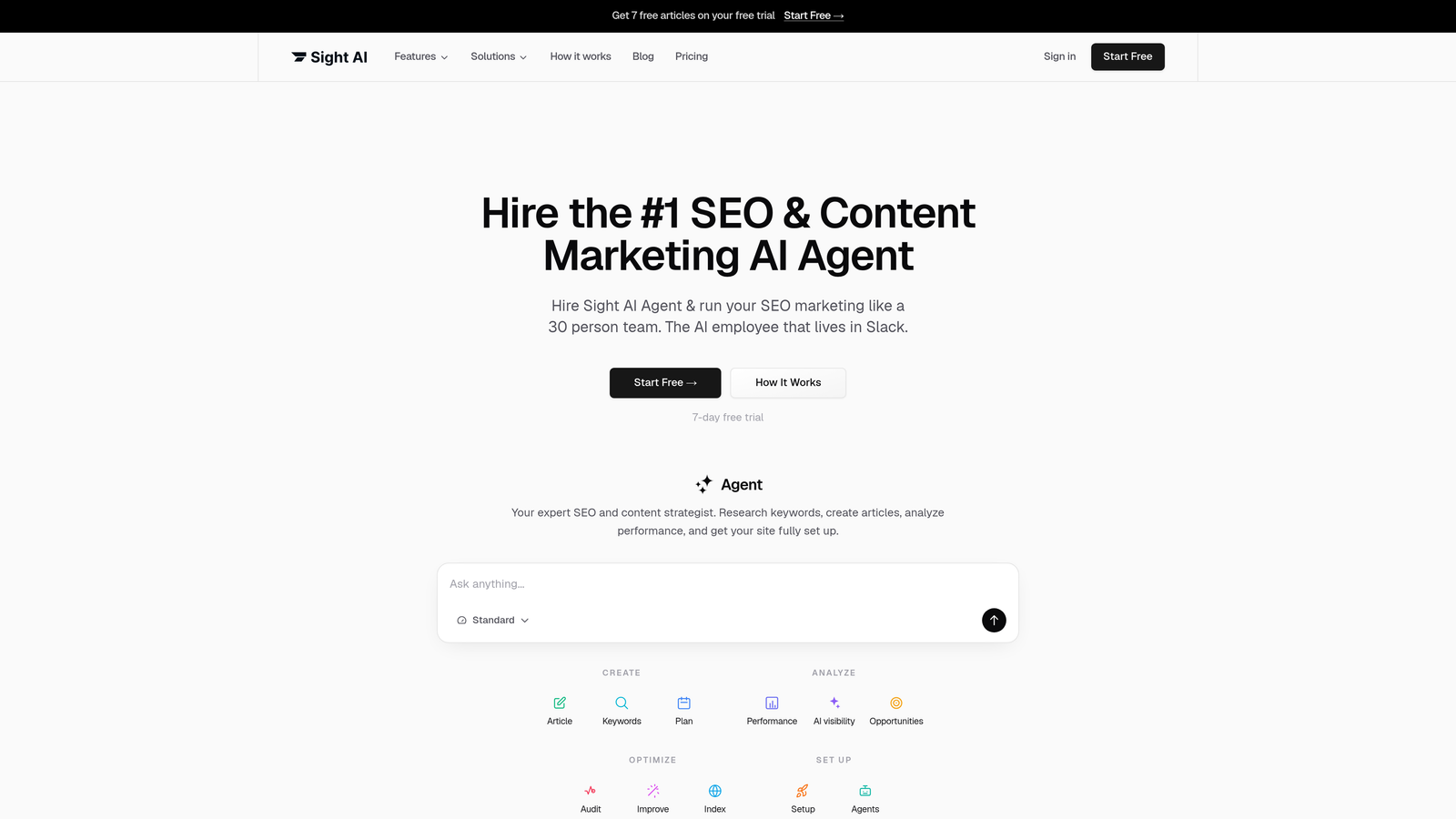
Sight AI is an all-in-one AI SEO platform that tracks brand mentions across AI models, generates SEO and GEO-optimized content using 13+ specialized AI agents, and automates website indexing with IndexNow integration.
Where This Tool Shines
Most SEO tools solve one piece of the puzzle. Sight AI is built around the idea that in 2026, you need visibility into both traditional search and AI-generated responses simultaneously. The AI Visibility Score gives you a concrete, trackable metric for how your brand appears across platforms like ChatGPT, Claude, and Perplexity, paired with sentiment analysis so you know not just whether you're mentioned, but how.
The content side is equally strong. With 13+ specialized AI agents covering listicles, guides, explainers, and more, plus an Autopilot Mode that handles publishing automatically, Sight AI compresses what used to be a multi-tool workflow into a single platform. For teams trying to move fast without adding headcount, that consolidation is genuinely valuable.
Key Features
AI Visibility Score: Tracks brand mentions and sentiment across 6+ AI platforms including ChatGPT, Claude, and Perplexity, giving you a single performance metric for AI search presence.
Prompt Tracking: Monitors how specific prompts return responses about your brand, so you can run GEO experiments and measure the impact of content changes.
13+ Specialized AI Agents: Purpose-built agents for different content types (listicles, guides, explainers, and more) rather than a generic text generator.
Autopilot Mode: Fully automated content publishing pipeline that takes content from generation to live without manual intervention.
IndexNow Integration: Automatically submits new and updated pages to search engines for faster discovery, combined with automated sitemap updates to keep crawl data current.
Best For
Sight AI is the strongest fit for founders, marketers, and agencies who want to manage AI visibility tracking, content production, and indexing from one dashboard. If you're currently running separate tools for each of those functions, the consolidation alone makes it worth evaluating.
Pricing
Visit trysight.ai for current plan details and pricing tiers.
2. Writesonic
Best for: Content teams producing high volumes of SEO-optimized blog posts, landing pages, and web copy.
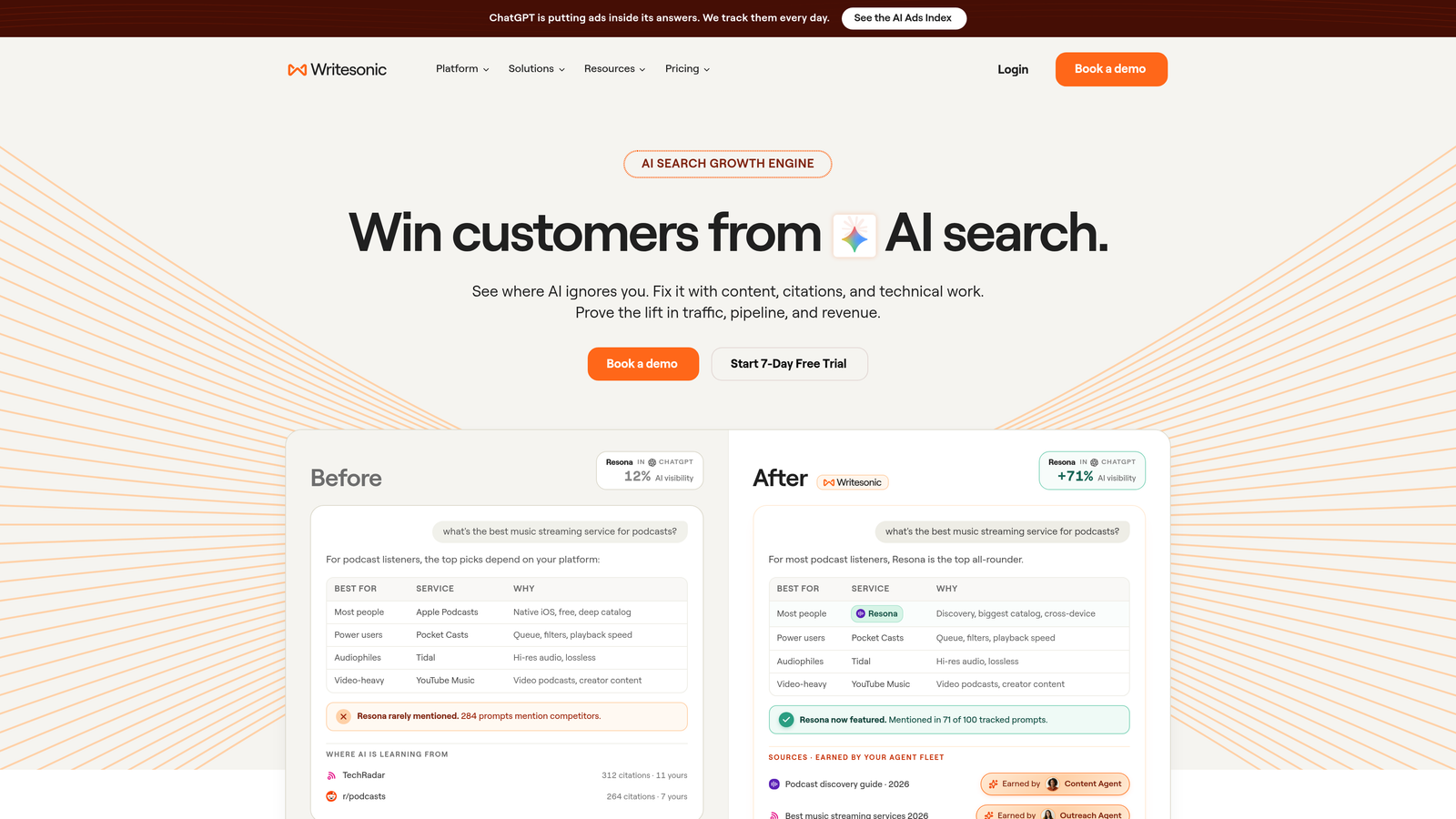
Writesonic is an AI-powered content creation platform with SEO optimization features built for marketers who need to publish consistently and at scale.
Where This Tool Shines
Writesonic has matured well beyond basic AI writing. The editor now includes real-time SEO optimization suggestions, which means writers get on-page guidance as they draft rather than running a separate audit after the fact. That tight feedback loop speeds up production without sacrificing quality.
Brand voice customization is another practical strength. For agencies managing multiple clients or brands with distinct tones, the ability to set and enforce voice parameters across content types prevents the generic-AI-output problem that plagues cheaper alternatives.
Key Features
Long-Form Content Generation: Handles full blog posts, articles, and landing pages with coherent structure and flow, not just paragraph-level snippets.
Real-Time SEO Suggestions: In-editor optimization guidance that surfaces keyword and structure recommendations while you write.
Brand Voice Customization: Configurable tone and style settings that carry across content types for consistent output.
Content Templates: Pre-built templates covering product descriptions, ad copy, email sequences, and other formats beyond standard blog content.
Best For
Writesonic suits content marketers and SEO teams whose primary bottleneck is production volume. It's a strong content engine for teams that already have visibility tracking and indexing handled elsewhere and need to focus on output quality and speed.
Pricing
A free trial is available. Paid plans are tiered by usage. Check writesonic.com for current pricing.
3. AirOps
Best for: Technical SEOs and content ops teams building custom, repeatable AI-powered workflows at scale.
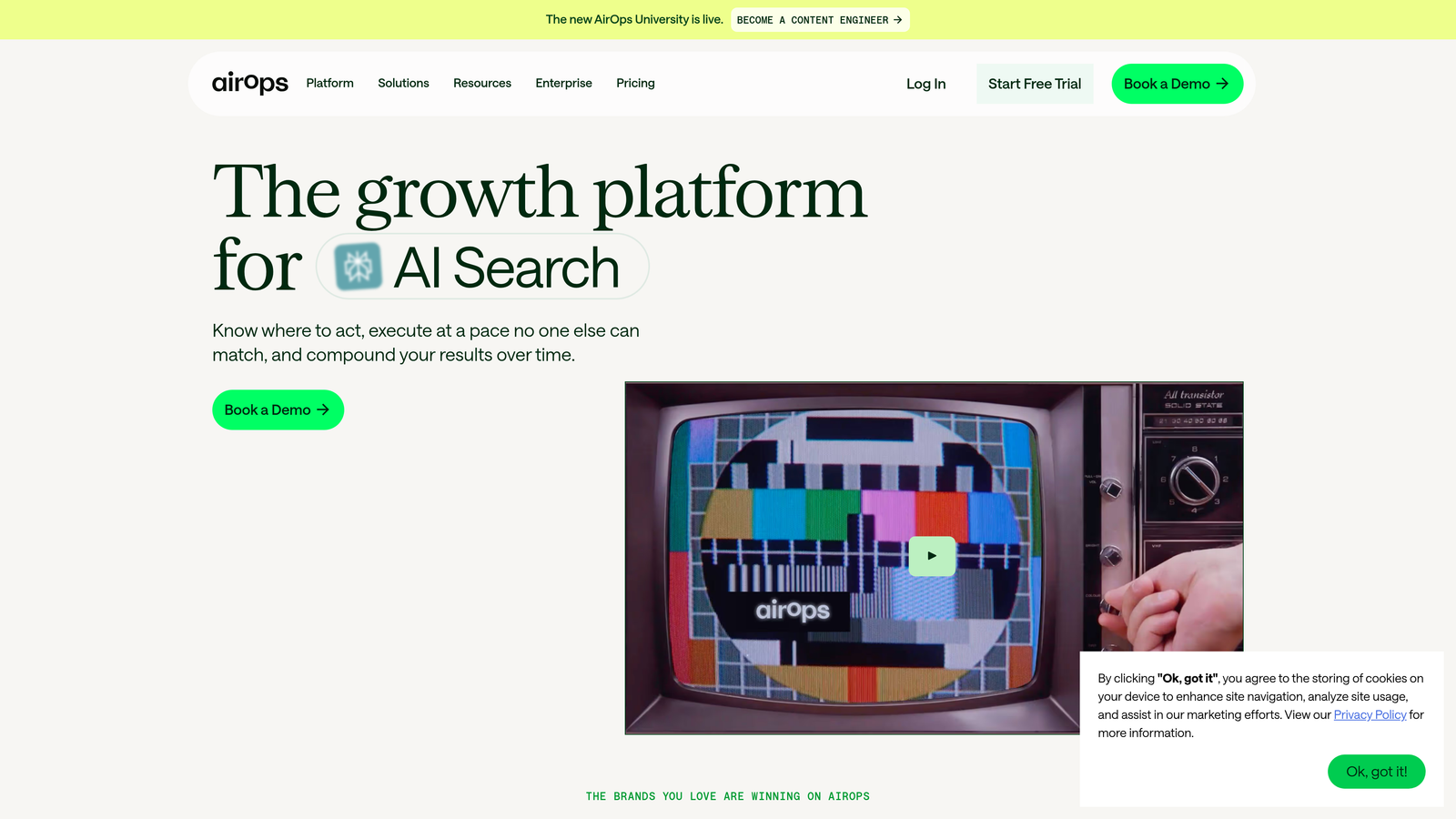
AirOps is an AI workflow automation platform that lets SEO and content teams design and run custom AI-powered processes without requiring engineering resources.
Where This Tool Shines
The core value proposition of AirOps is flexibility. Rather than locking you into a predefined content workflow, it gives you a builder for creating your own, connecting multiple AI models to specific SEO tasks like content brief generation, bulk title optimization, or metadata rewriting at scale. For teams running programmatic SEO operations, that customizability is hard to replicate with off-the-shelf tools.
It also connects to external data sources, which means your AI workflows can pull in real context rather than generating in a vacuum. Think of it as building a custom AI-powered content ops system without hiring a developer to do it.
Key Features
Custom Workflow Builder: Visual interface for connecting AI models to specific SEO and content tasks in a repeatable, automated sequence.
Bulk Content Operations: Run large-scale content tasks (title optimization, meta description generation, content briefs) across hundreds of URLs simultaneously.
Data Source Integration: Connect workflows to external data for context-aware content generation that reflects real product or market information.
Multi-Model Support: Access different AI models within the same workflow depending on task requirements.
Best For
AirOps is best suited for technical SEOs, content ops leads, and growth teams running programmatic SEO at scale who want to build custom automation without depending on engineering bandwidth.
Pricing
Tiered plans are available. Check airops.com for current pricing details.
4. Profound
Best for: Enterprise brand teams that need analytics-level reporting on AI search visibility and share of voice.
Profound is an AI search analytics platform focused on measuring brand visibility, share of voice, and citation patterns within AI-generated search responses.
Where This Tool Shines
Profound approaches AI visibility from an analytics-first perspective. Where some tools surface mentions, Profound is designed to quantify them at the level of detail enterprise brand and marketing teams expect. Share of voice tracking across AI platforms gives strategists a competitive benchmark, not just a snapshot of their own performance.
The citation pattern analysis is particularly useful for GEO strategy. Understanding which sources and content formats AI models are pulling from when generating responses about your category helps you make informed decisions about where to invest content resources.
Key Features
Brand Visibility Measurement: Tracks how frequently and prominently your brand appears in AI-generated search results across platforms.
Share of Voice Tracking: Benchmarks your AI search presence against competitors to reveal relative standing in your category.
Citation Pattern Analysis: Identifies which content types and sources AI models reference when generating responses in your space.
Enterprise Reporting: Analytics-level dashboards and reporting suited for brand teams that need to present AI visibility data to leadership.
Best For
Profound is most appropriate for enterprise brands and larger marketing organizations that need rigorous, data-driven reporting on AI search performance and want to benchmark against competitors at scale.
Pricing
Enterprise-focused pricing. Contact Profound directly at profound.ai for a quote.
5. Peec
Best for: Agencies and multi-brand teams monitoring AI mentions for multiple clients alongside competitive benchmarking.
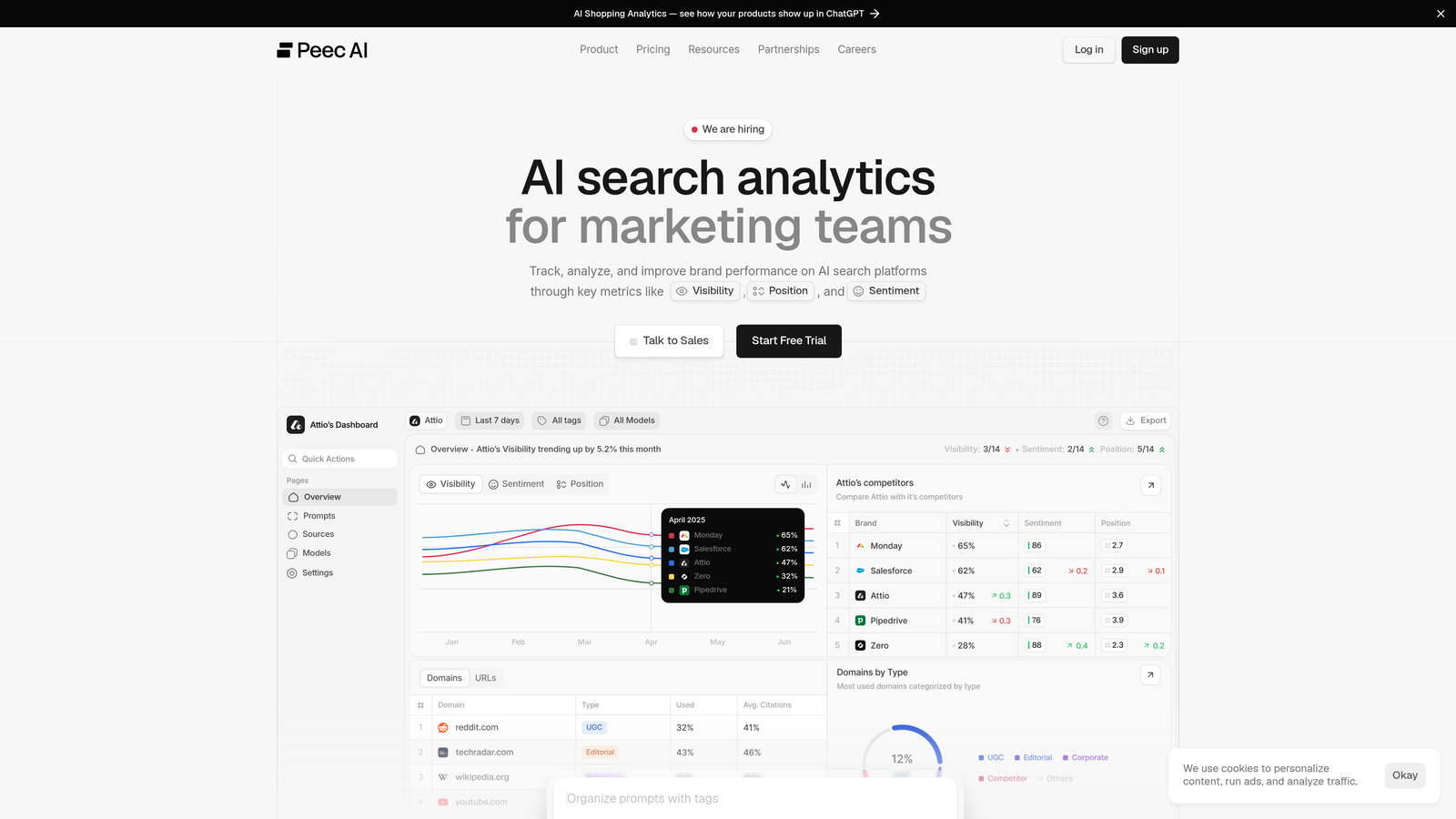
Peec is an AI mention monitoring tool with competitive intelligence features that helps agencies and brands track how they and their competitors appear in AI-generated responses.
Where This Tool Shines
Peec's competitive angle sets it apart from tools that only monitor your own brand. Tracking how competitors are mentioned in AI responses alongside your own brand gives you a clearer picture of the landscape, not just your slice of it. For agencies managing several clients in overlapping categories, that competitive framing is immediately actionable.
The multi-brand support is a practical feature for agency workflows specifically. Managing separate monitoring setups for each client in a single dashboard reduces the operational overhead that comes with fragmented point solutions.
Key Features
Brand and Competitor Monitoring: Tracks AI mentions for your brand and named competitors simultaneously across AI platforms.
Competitive Share of Voice: Benchmarks your AI visibility against competitors to identify gaps and opportunities.
Multi-Brand Support: Manages monitoring for multiple brands or clients from a single interface, suited for agency workflows.
Alerts and Reporting: Notifies teams of significant changes in mention patterns and provides ongoing reporting on AI visibility trends.
Best For
Peec is a strong fit for digital agencies tracking AI visibility across multiple client accounts, and for brands that want competitive intelligence alongside their own monitoring rather than just self-focused reporting.
Pricing
Check peec.ai for current plan details and pricing tiers.
6. Promptwatch
Best for: GEO practitioners and technical SEOs running structured experiments to influence AI citation behavior.
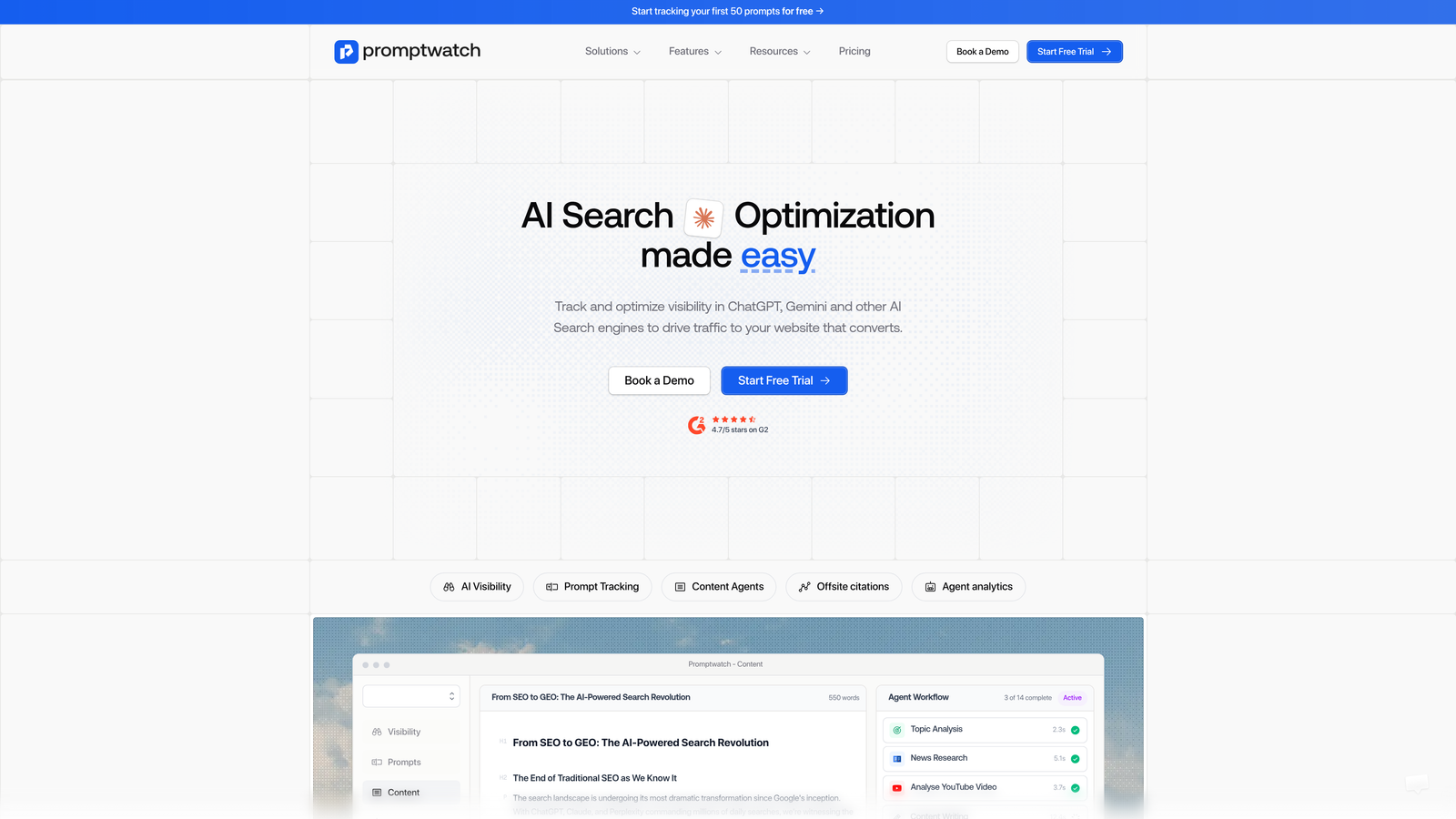
Promptwatch is a specialized tool for tracking specific AI prompts and monitoring how model responses evolve over time, built for practitioners who treat GEO as an iterative testing discipline.
Where This Tool Shines
Promptwatch fills a niche that broader AI visibility platforms don't address: prompt-level tracking with historical logging. If you want to know whether a specific content change you made last month influenced how an AI model responds to a particular query, Promptwatch gives you the before-and-after data to answer that question. That's the kind of granularity that separates GEO experimentation from guesswork.
For technical SEOs building a systematic GEO testing practice, this is the tool that makes the discipline measurable. You define the prompts that matter to your category, track how responses shift over time, and use that data to refine your content strategy with actual evidence.
Key Features
Prompt-Level Tracking: Monitors specific queries over time to detect changes in how AI models respond to prompts relevant to your brand or category.
Historical Response Logging: Stores past AI responses so you can compare current outputs against a baseline and measure the effect of content changes.
GEO Experiment Support: Designed to support iterative content testing aimed at influencing AI citations and response patterns.
Technical SEO Workflow Integration: Suited for practitioners who want structured, evidence-based approaches to AI search optimization rather than passive monitoring.
Best For
Promptwatch is the right tool for technical SEOs and GEO specialists who want to run controlled experiments on AI response behavior and measure the impact of content decisions with historical data.
Pricing
Check promptwatch.io for current plans and pricing.
Building the Right Stack for Your Situation
The best SEO toolbox in 2026 isn't the one with the most tools. It's the one that covers both search engines and AI models without creating so much operational overhead that nothing gets done. Here's how to think about which combination makes sense for you.
If you're a founder or solo marketer: Start with Sight AI. The combination of AI visibility tracking, content generation with 13+ specialized agents, and automated indexing in one platform means you can cover the full workflow without managing multiple subscriptions or learning curves. Autopilot Mode is particularly valuable when you're wearing multiple hats.
If you're running a content team at scale: Sight AI for visibility and indexing, with Writesonic or AirOps layered in depending on whether you need high-volume content production (Writesonic) or custom programmatic workflows (AirOps).
If you're an agency managing multiple clients: Peec handles competitive monitoring across accounts efficiently. Profound adds enterprise-grade reporting if your clients expect that level of analytics. Promptwatch is worth adding if you're offering GEO as a service and need to demonstrate measurable impact to clients.
The underlying principle is the same regardless of your situation: AI-generated search is now a meaningful channel for brand discovery, and your toolbox needs to reflect that. Tracking only traditional rankings while ignoring how ChatGPT or Claude discusses your brand in 2026 is the equivalent of ignoring mobile traffic in 2015.
Start tracking your AI visibility today and see exactly where your brand appears across top AI platforms. Stop guessing how AI models like ChatGPT and Claude talk about your brand and get the visibility, content tools, and indexing automation you need to compete in AI-first search.