The best enterprise content automation platform depends on the bottleneck you need to remove. Sight AI leads for AI search visibility combined with automated publishing. Jasper suits brand-voice consistency at scale, Writer and Acrolinx suit regulated or multilingual governance, and Kapost and Percolate (Seismic) suit complex B2B and global campaign operations.
Today's enterprise solutions go well beyond scheduling. They combine AI-powered generation, brand governance and workflow orchestration. Increasingly, they also optimize for how AI models like ChatGPT and Perplexity discover and cite your content. Below are the top enterprise content automation platforms for creating, managing and distributing content at scale.
1. Sight AI
Best for: Brands prioritizing AI search visibility alongside traditional SEO and organic traffic growth
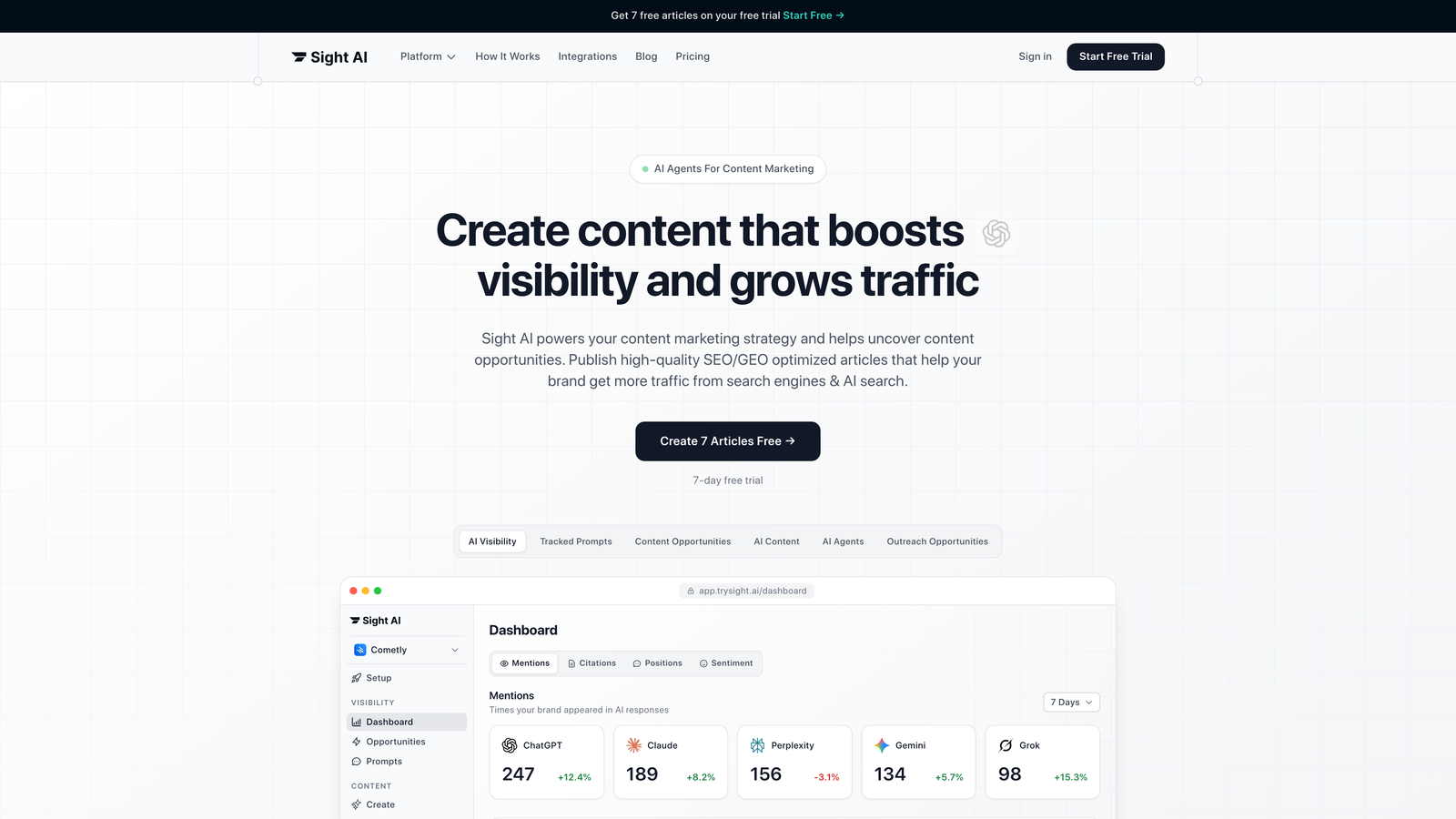
Sight AI solves a problem most content automation platforms ignore: tracking and optimizing how AI models actually talk about your brand. Most competitors focus only on content creation. Sight AI combines generation with visibility tracking across ChatGPT, Claude, Perplexity and other AI platforms, then automates the entire publishing and indexing workflow.
Where This Tool Shines
The platform's AI Visibility Score shows where and how your brand appears in AI-generated responses, with sentiment analysis and prompt tracking. These are not vanity metrics. They are actionable intelligence about which content topics and formats get your brand mentioned when users ask AI models for recommendations.
What sets Sight AI apart is the tight integration between visibility insights and content production. When you find gaps in AI coverage, the platform's 13+ specialized AI agents can immediately generate optimized content to fill them. The Autopilot mode handles everything from ideation to publishing without manual intervention.
Key Features
AI Visibility Tracking: Monitor brand mentions across 6+ AI platforms with sentiment analysis and competitive benchmarking.
13+ Specialized AI Agents: Purpose-built agents for listicles, guides, explainers and other content types, with SEO/GEO optimization built in.
IndexNow Integration: Automatic content indexing for faster search engine discovery, so you are not waiting weeks for new content to be crawled.
Autopilot Mode: Hands-off content generation that produces publication-ready articles based on your visibility gaps and content strategy.
CMS Auto-Publishing: Direct publishing to WordPress and other platforms, which eliminates manual copy-paste workflows.
Best For
Marketing teams and agencies running organic traffic strategies who see AI search becoming as important as Google. It is particularly valuable in competitive categories where AI model recommendations directly influence purchase decisions.
Pricing
Contact for enterprise pricing based on content volume and team size.
2. Jasper
Best for: Large teams needing consistent brand voice across hundreds of content pieces monthly
Jasper has become the enterprise standard for AI content generation, mainly because its brand voice training keeps output consistent as teams scale.

Where This Tool Shines
Jasper's Brand Voice and Brand Memory features learn from your existing content and replicate your tone, style and messaging guidelines automatically. New team members and external contractors can produce on-brand content without extensive training or repeated revision cycles.
Campaign-level workflow automation lets you run an entire content initiative from a single brief, covering blog posts, social snippets and email sequences. Teams report significant time savings on multi-channel launches that previously needed a separate brief for each content type.
Key Features
Brand Voice Training: The AI learns your brand's voice from sample content and applies it consistently across all outputs.
Campaign Workflows: Create interconnected content pieces for multi-channel campaigns from a single strategic brief.
Template Library: Over 50 templates for different content types, from long-form articles to ad copy.
Team Collaboration: Built-in approval workflows, commenting and version control for distributed teams.
API Access: A robust API for custom integrations with existing martech stacks.
Best For
Enterprise marketing teams with established brand guidelines who need to scale production without losing voice consistency. It also works well for organizations with multiple brands or regional teams that need centralized oversight.
Pricing
Business plans start at $49 per seat monthly, with custom enterprise pricing for larger deployments and advanced features.
3. Writer
Best for: Regulated industries requiring strict content compliance and governance controls
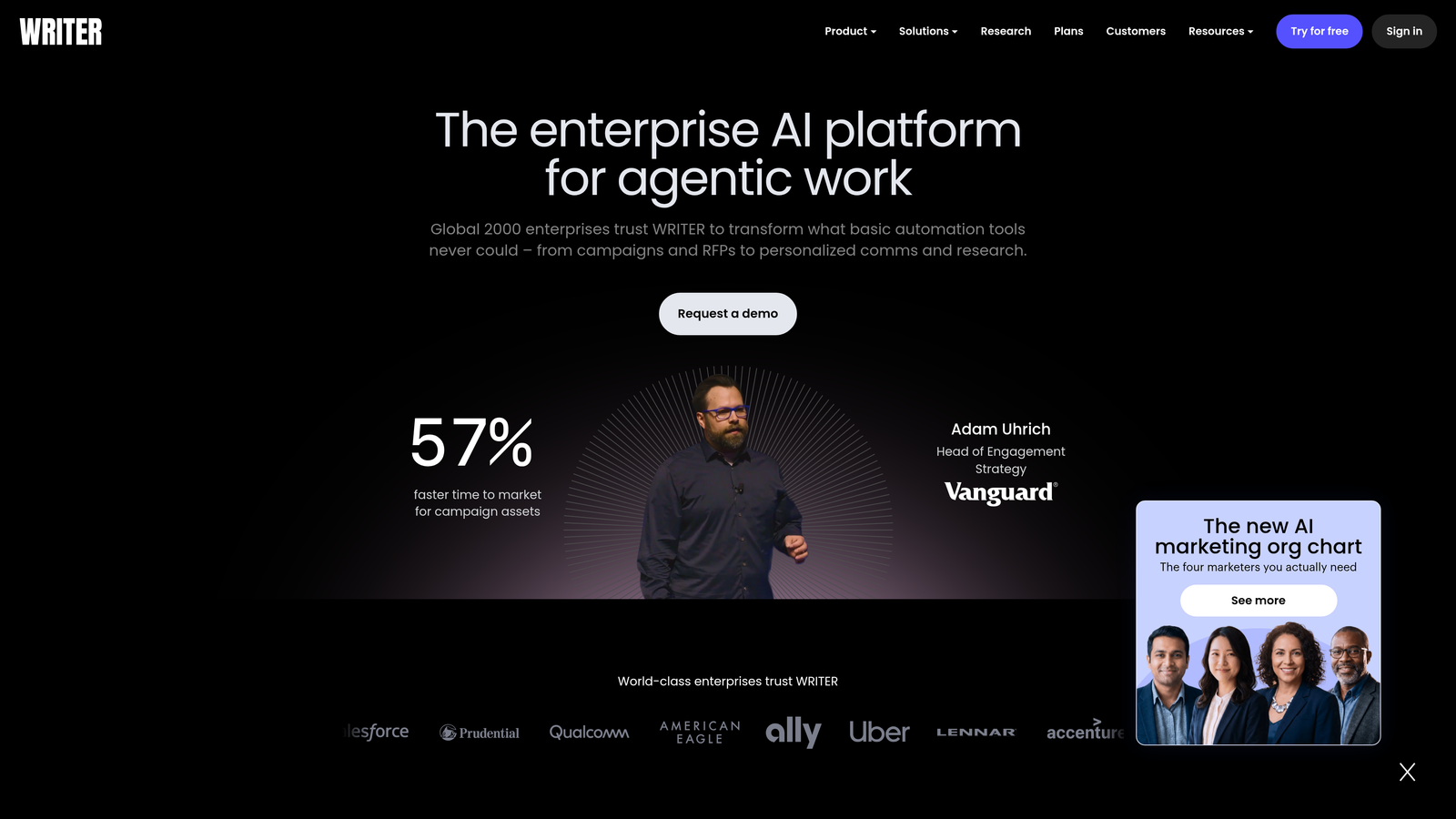
Writer positions itself as the enterprise AI platform for organizations where content mistakes carry legal or regulatory consequences, such as healthcare, financial services and other heavily regulated sectors.
Where This Tool Shines
Writer's AI guardrails stop compliance violations before content is published. The platform flags terminology that breaches industry regulations, enforces approved language for legal claims and keeps an audit trail of every content change. This proactive governance has made it the default choice for risk-averse enterprises.
Its terminology management goes beyond simple word replacement. It understands context, suggests approved alternatives and explains why certain language creates compliance risk. Teams report fewer legal reviews and faster approvals because issues are caught during creation rather than after submission.
Key Features
AI Guardrails: Real-time compliance checking that prevents regulatory violations and brand guideline breaches.
Terminology Management: Centralized control over approved language, banned terms and industry-specific vocabulary.
Security Certifications: SOC 2 Type II and HIPAA compliance for handling sensitive data and protected health information.
Custom AI Training: Train the AI on proprietary company data and domain-specific knowledge bases.
Browser Extension: Governance and style checking across email, Google Docs and other writing environments.
Best For
Financial services, healthcare, legal and other regulated industries where content compliance is not optional. It is also valuable for global enterprises that must enforce brand consistency across dozens of regional teams.
Pricing
Team plans start at $18 per user monthly, with enterprise pricing customized to compliance requirements and user count.
4. Contently
Best for: Organizations wanting managed creative services integrated with content technology
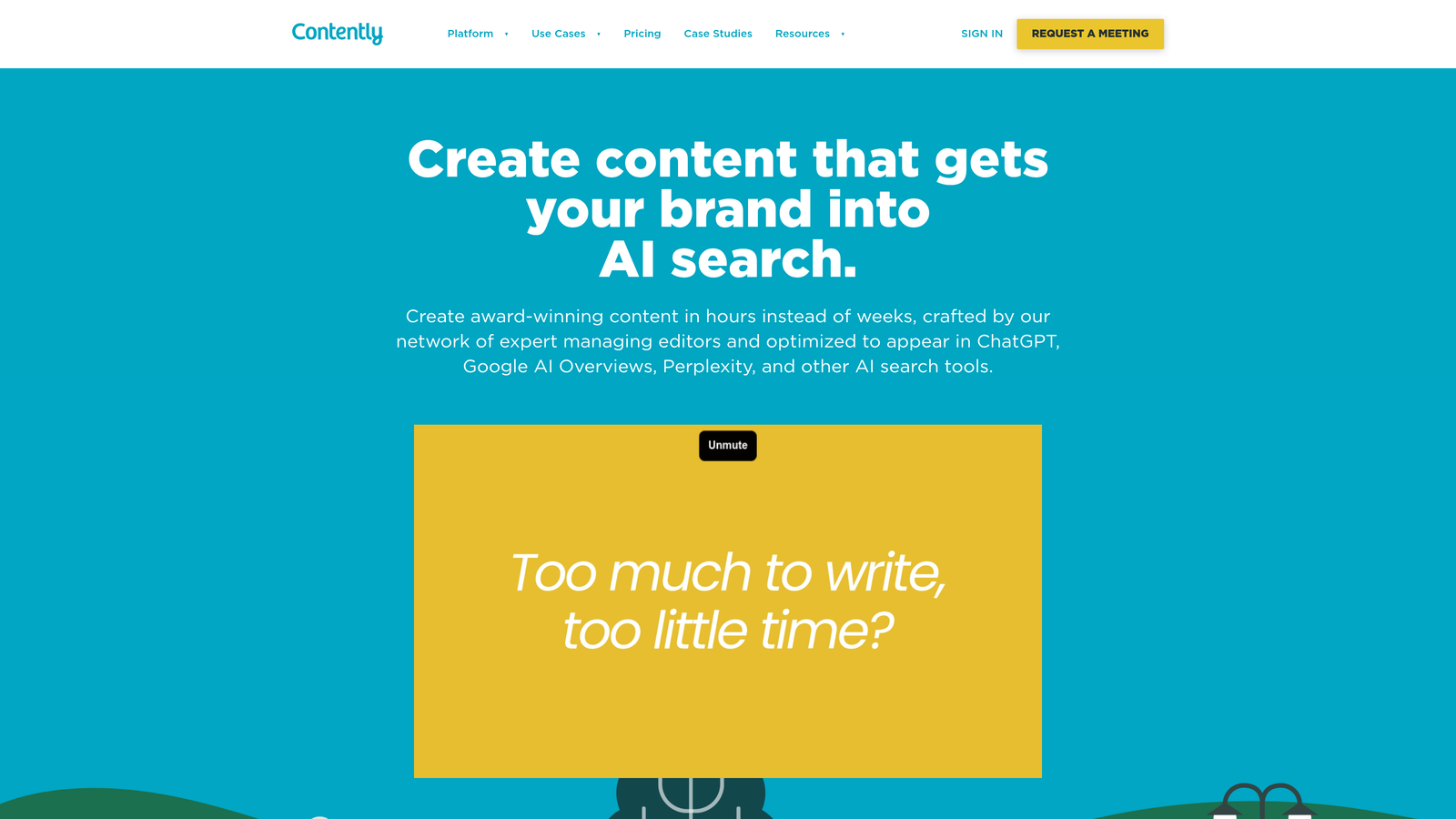
Contently sits between pure technology platforms and traditional content agencies. It combines workflow automation with access to a vetted network of freelance creators.
Where This Tool Shines
Contently's talent network answers the question pure AI platforms leave open: who actually creates the content? When you need subject matter expertise, industry knowledge or specialized formats like video and interactive content, the platform matches you with pre-vetted professionals.
Its performance analytics go deeper than most competitors. They track content ROI through the full funnel from awareness to conversion, so teams can see which content types, topics and creators drive business results rather than just engagement.
Key Features
Freelance Talent Network: Access to thousands of vetted writers, designers and video creators, with portfolio reviews and performance ratings.
Editorial Workflows: End-to-end production management from brief creation through approval and publishing.
ROI Analytics: Track content performance against business objectives with attribution modeling.
SEO Optimization: Built-in recommendations for keyword targeting, content structure and technical optimization.
Multi-Channel Publishing: Distribute content across owned channels, social platforms and syndication networks.
Best For
B2B enterprises with ambitious content marketing programs that need both technology infrastructure and on-demand creative talent. It works especially well for companies without large in-house creative teams.
Pricing
Custom enterprise pricing based on content volume, talent usage and required platform features.
5. Acrolinx
Best for: Global enterprises needing linguistic consistency across languages and technical documentation
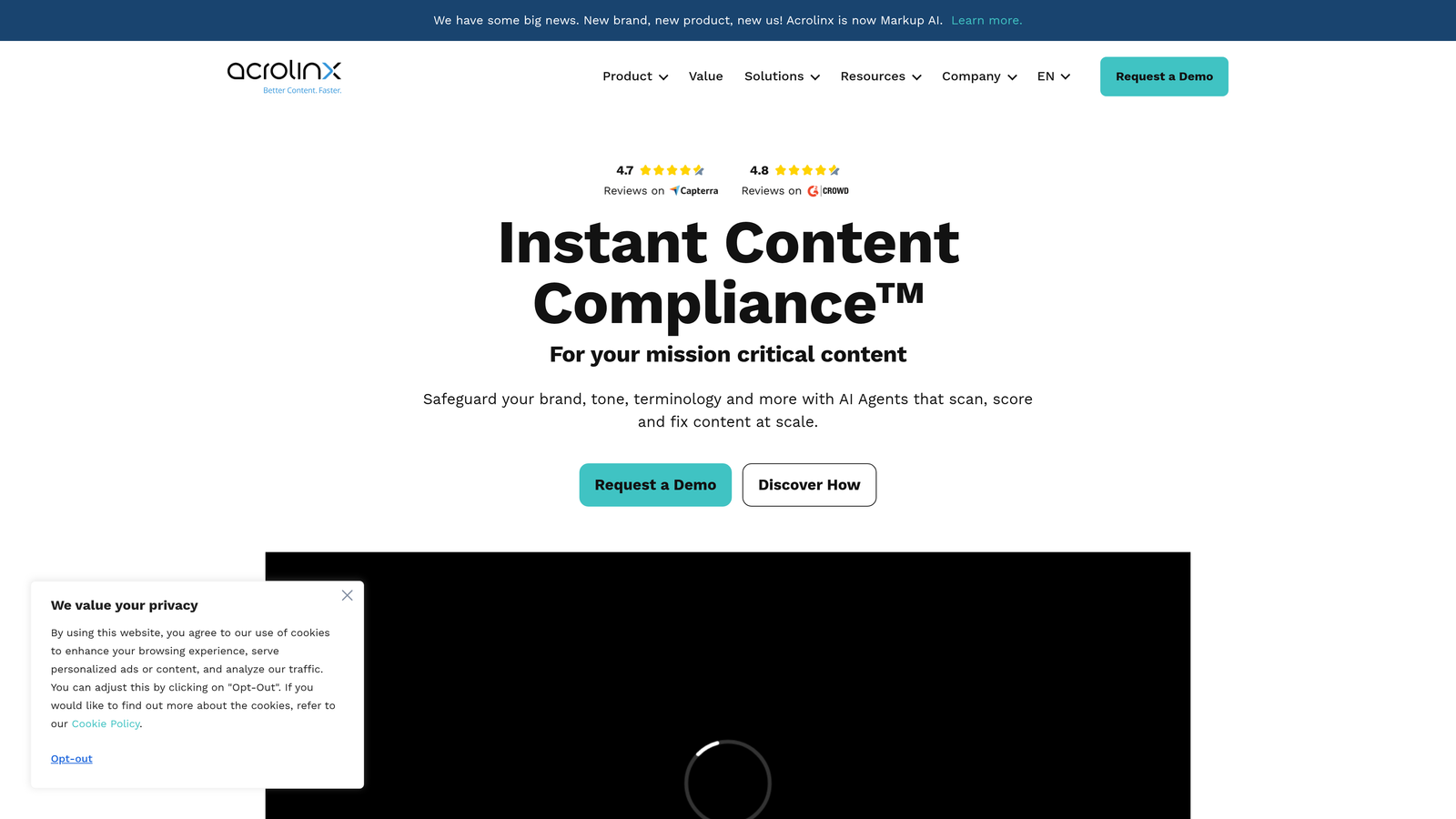
Acrolinx specializes in content governance for technical documentation, product information and other content where precision and consistency are non-negotiable.
Where This Tool Shines
Acrolinx's AI content scoring evaluates every piece against your style guide, terminology database and readability standards before publication. It does more than flag issues: it explains why they matter and suggests specific fixes that fit your guidelines.
Its integration ecosystem is unmatched for technical content teams. Acrolinx works inside 50+ authoring tools, including Oxygen XML, Adobe FrameMaker and various component content management systems. Writers get real-time guidance without leaving their preferred environment.
Key Features
AI Content Scoring: Quantitative quality scores based on terminology accuracy, tone consistency and readability.
Style Guide Enforcement: Automated checking against company-specific writing standards and industry style guides.
Authoring Tool Integration: Real-time guidance inside Microsoft Word, Google Docs, XML editors and CMS platforms.
Multi-Language Support: Consistent quality checking across dozens of languages with localization-aware rules.
Analytics Dashboard: Track content quality trends, common issues and improvement over time.
Best For
Manufacturing, technology and pharmaceutical companies producing technical documentation, product information and regulatory content for global markets. It is essential where inconsistent terminology creates safety or compliance risks.
Pricing
Custom enterprise pricing based on number of users, languages supported and integration requirements.
6. Kapost (Upland)
Best for: B2B marketing teams managing complex content operations and sales enablement
Kapost, now part of Upland Software's marketing suite, focuses on the operational backbone of content marketing: planning, production workflows and distribution.
Where This Tool Shines
Kapost excels at connecting content strategy to execution. It maps content initiatives to buyer journey stages and business objectives, so every piece serves a strategic purpose rather than just filling an editorial calendar.
Its sales enablement integration is particularly strong. Content flows to sales teams with context on when and how to use it, and usage analytics show which assets help close deals. This feedback loop lets content teams prioritize what sales actually needs instead of what marketing assumes it needs.
Key Features
Content Calendar: Strategic planning tools that map content to campaigns, buyer stages and business goals.
Workflow Automation: Customizable approval processes, task assignments and deadline tracking for distributed teams.
Sales Enablement: Content distribution to sales with usage tracking and performance analytics.
Performance Tracking: Connect content metrics to revenue outcomes and pipeline influence.
Marketing Automation Integration: Native connections to Marketo, HubSpot and other marketing automation platforms.
Best For
B2B organizations with long sales cycles where content directly supports sales conversations. It is most valuable for companies with dedicated content operations teams managing dozens of stakeholders.
Pricing
Custom pricing based on team size, feature requirements and integration needs.
7. Percolate (Seismic)
Best for: Large enterprises needing campaign orchestration across global teams and markets
Percolate, now integrated into Seismic's enablement platform, specializes in coordinating complex marketing campaigns across geographies, brands and channels.

Where This Tool Shines
Percolate's campaign planning handles the complexity of global marketing operations. Regional teams can adapt corporate campaigns to local markets while keeping brand consistency and strategic alignment. Everyone works from the same strategic brief, even when execution varies by market.
Its digital asset management integration keeps creative assets, brand guidelines and approved content in one system. Teams spend less time hunting for the right logo version or approved product images and more time on strategic work.
Key Features
Campaign Orchestration: Coordinate multi-channel campaigns across teams, regions and time zones from a central hub.
Digital Asset Management: Centralized storage and distribution of creative assets, with version control and usage rights tracking.
Brand Compliance: Approval workflows that enforce brand standards before content reaches audiences.
Cross-Channel Distribution: Publish to social, email, web and other channels from a single interface.
Analytics Integration: Unified reporting across channels and campaigns with customizable dashboards.
Best For
Global enterprises with complex organizational structures managing multiple brands or regional marketing teams. It is particularly valuable where brand consistency across markets is a competitive differentiator.
Pricing
Custom enterprise pricing through Seismic based on user count and platform features.
8. Skyword
Best for: Brands wanting technology-enabled content services with global creator access
Skyword combines content technology with managed creative services, offering both the platform and the people to execute your content strategy.
Where This Tool Shines
Skyword's global creator network includes specialists in video, photography, design and multimedia, not just writers. When your strategy calls for rich media or specialized formats, the platform connects you with creators who have relevant portfolios and proven performance.
Its AI-assisted creation tools help in-house teams and freelancers produce optimized content faster. The platform suggests SEO, readability and engagement improvements while creators work, which reduces revision cycles and improves first-draft quality.
Key Features
Global Creator Network: Access to writers, videographers, designers and multimedia specialists across markets and languages.
AI Content Optimization: Real-time suggestions for SEO, readability and engagement during content creation.
Editorial Workflow: End-to-end production management from assignment through approval and publishing.
Performance Tools: SEO recommendations, content scoring and analytics to optimize for search and engagement.
Multimedia Support: Handles video, interactive content and rich media production alongside traditional formats.
Best For
Consumer brands and B2C companies with ambitious content programs that require diverse formats and multimedia capabilities. It works well for organizations without extensive in-house creative teams.
Pricing
Custom pricing based on content volume, creator services required and platform features.
9. CoSchedule
Best for: Small to mid-size marketing teams needing affordable workflow automation and social scheduling
CoSchedule is a more accessible entry point to content automation. It focuses on calendar management, social scheduling and team collaboration without enterprise complexity.
Where This Tool Shines
CoSchedule's unified marketing calendar gives teams a single view of all content, campaigns and social activity. That visibility prevents conflicts, exposes gaps and helps teams coordinate across channels without constant status meetings.
Its social media automation handles scheduling, recycles evergreen content and optimizes post timing based on audience engagement patterns. Teams can manage multiple social profiles and schedule weeks of content in one session, freeing time for strategy and creation.
Key Features
Marketing Calendar: Unified view of content, campaigns and social activity across teams and channels.
Social Automation: Schedule posts, recycle evergreen content and optimize timing across multiple profiles.
Content Workflows: Task management, approval processes and collaboration tools for distributed teams.
Team Collaboration: Commenting, file sharing and project updates in one centralized workspace.
CMS Integration: Direct publishing to WordPress and other content management systems.
Best For
Growing marketing teams that have outgrown spreadsheets but are not ready for enterprise-level complexity or pricing. It is particularly valuable for agencies managing multiple client calendars.
Pricing
Marketing Calendar offers a free tier. Marketing Suite plans start at $29 per user monthly, with additional features for larger teams.
Making the Right Choice
Your ideal platform depends on which content challenge matters most to you. If your main concern is how AI models like ChatGPT and Claude talk about your brand, Sight AI covers a visibility gap that traditional platforms ignore. It tracks AI mentions, identifies content opportunities and automatically generates optimized content, creating a feedback loop no other platform on this list offers.
For regulated industries, Writer's compliance guardrails prevent costly mistakes before they happen. Jasper remains the strongest choice for brand voice consistency across large, distributed teams. If you need both technology and creative talent, Contently and Skyword provide integrated solutions that remove vendor management overhead.
Consider your team's maturity and resources. Acrolinx and Percolate need dedicated operations staff to deliver full value, while CoSchedule works for smaller teams with limited technical resources. The integration ecosystem matters too. Choose platforms that connect cleanly with your existing martech stack rather than creating data silos. If your bottleneck is the production line itself rather than governance, our guide to content pipeline automation software compares tools built for brief-to-publish throughput.
Start with a focused pilot before committing enterprise-wide. Pick one content type or channel, test thoroughly and measure the impact on both efficiency and quality. The platforms that deliver long-term value adapt as content distribution evolves, and that increasingly means optimizing for AI-powered discovery alongside traditional search.
Frequently asked questions
What is enterprise content automation?
Enterprise content automation uses software to handle repeatable stages of the content lifecycle at scale: briefing, AI-assisted drafting, governance checks, approvals, publishing, indexing and performance reporting. Unlike simple scheduling tools, enterprise platforms add role-based permissions, audit trails, brand and terminology controls, SSO and integrations with CMS, DAM and marketing automation systems. The goal is to increase output across channels and languages without losing consistency or compliance.
What is the best content automation platform for enterprise marketing?
There is no single winner, because the right choice depends on your constraint. Sight AI fits teams focused on organic and AI search visibility, Jasper fits brand-voice consistency, Writer fits regulated industries, and Kapost or Percolate fit complex campaign operations. The Making the Right Choice section above maps each platform to its ideal use case.
Which ECM platforms support workflow automation?
Most modern content platforms include workflow automation. In this list, Kapost, Contently, Skyword and CoSchedule offer configurable approval chains, task assignment and deadline tracking. Percolate (Seismic) adds asset management and brand compliance workflows. Writer and Acrolinx automate governance checks inside authoring tools. Sight AI automates the downstream steps of generation, CMS publishing and IndexNow submission through its automation features. When evaluating vendors, check for conditional routing, parallel approvals and API triggers.
Is enterprise content automation suitable for mid-market companies?
Yes, but scope it carefully. Mid-market teams rarely need heavyweight governance suites like Acrolinx or Percolate, which require dedicated operations staff. Prioritize tools with transparent per-seat pricing, fast onboarding and native CMS integrations. CoSchedule, Jasper's Business tier and Sight AI's automated publishing typically deliver value faster at this size. Run a 30 to 60 day pilot on one content type before expanding.
How do you measure ROI from content automation?
Track efficiency and outcomes separately. Efficiency metrics include cycle time from brief to publish, pieces shipped per editor, and revision rounds per asset. Outcome metrics include organic traffic, rankings, AI search mentions, pipeline influence and conversions. Compare a baseline quarter against the pilot period. Platforms with built-in analytics, such as Contently, Kapost and Sight AI, make attribution far easier than stitching together spreadsheets.
Stop guessing how AI models like ChatGPT and Claude talk about your brand. Get visibility into every mention, track content opportunities and automate your path to organic traffic growth. Start tracking your AI visibility today and see exactly where your brand appears across top AI platforms.