Enterprise AI content platforms promise to transform how your team produces, governs, and distributes content at scale. The problem? Pricing is notoriously opaque. Many vendors bury their costs behind "Contact Sales" buttons, making it genuinely difficult to compare options or build an accurate budget before you're already deep in a sales cycle.
Whether you're a marketing leader evaluating your first enterprise AI content tool or an agency comparing renewal options, understanding the real cost landscape matters. This guide covers leading enterprise AI content platforms, what each does best, its standout features, and critically, what you can actually expect to pay. Where pricing requires a sales consultation, we say so clearly so you know what you're walking into.
1. Sight AI
Best for: Teams that need AI content generation, AI visibility tracking, and automated indexing in a single platform.
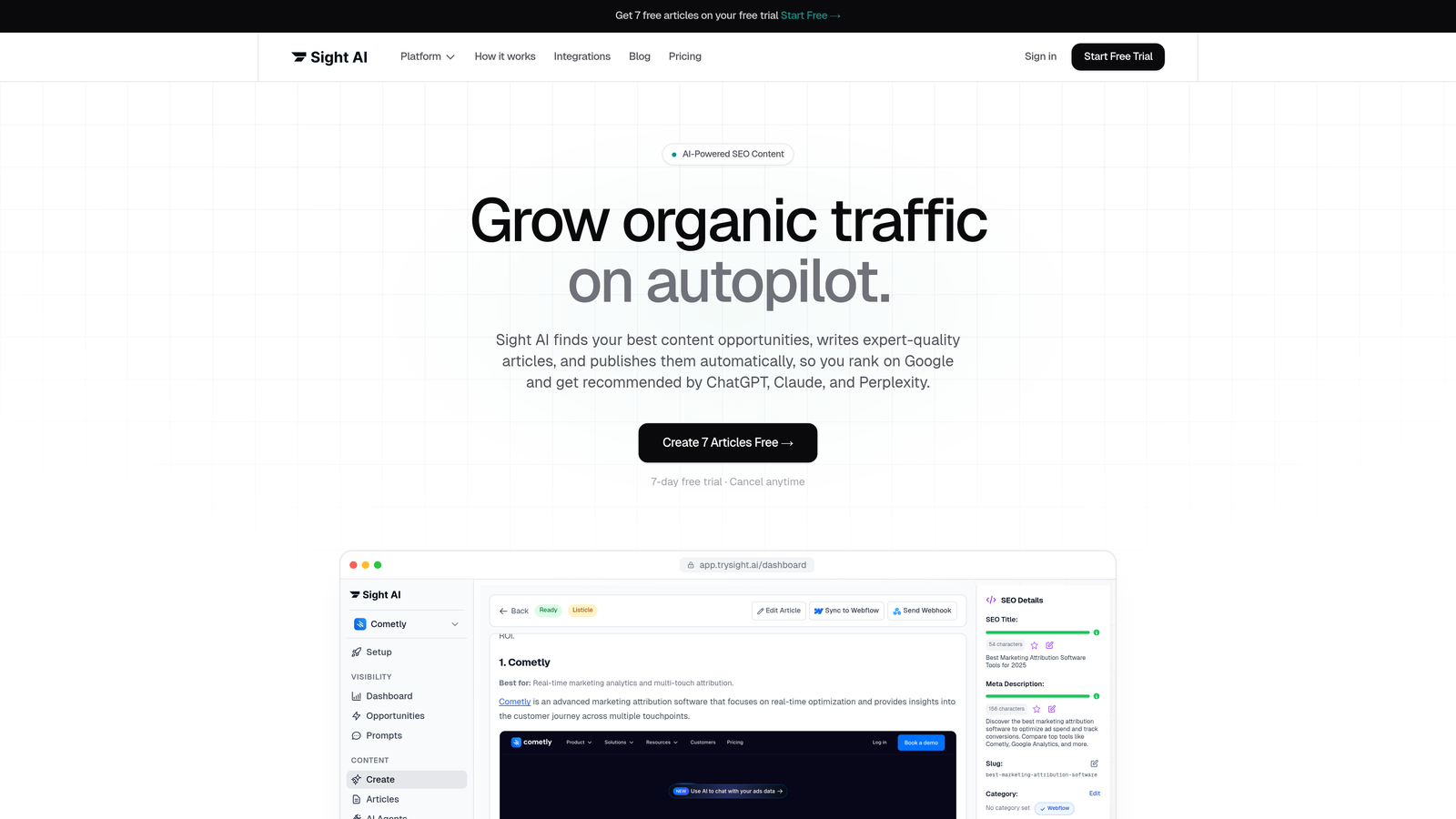
Sight AI is an all-in-one platform combining SEO and GEO-optimized content generation with AI visibility tracking across major AI models and automated website indexing.
Where This Tool Shines
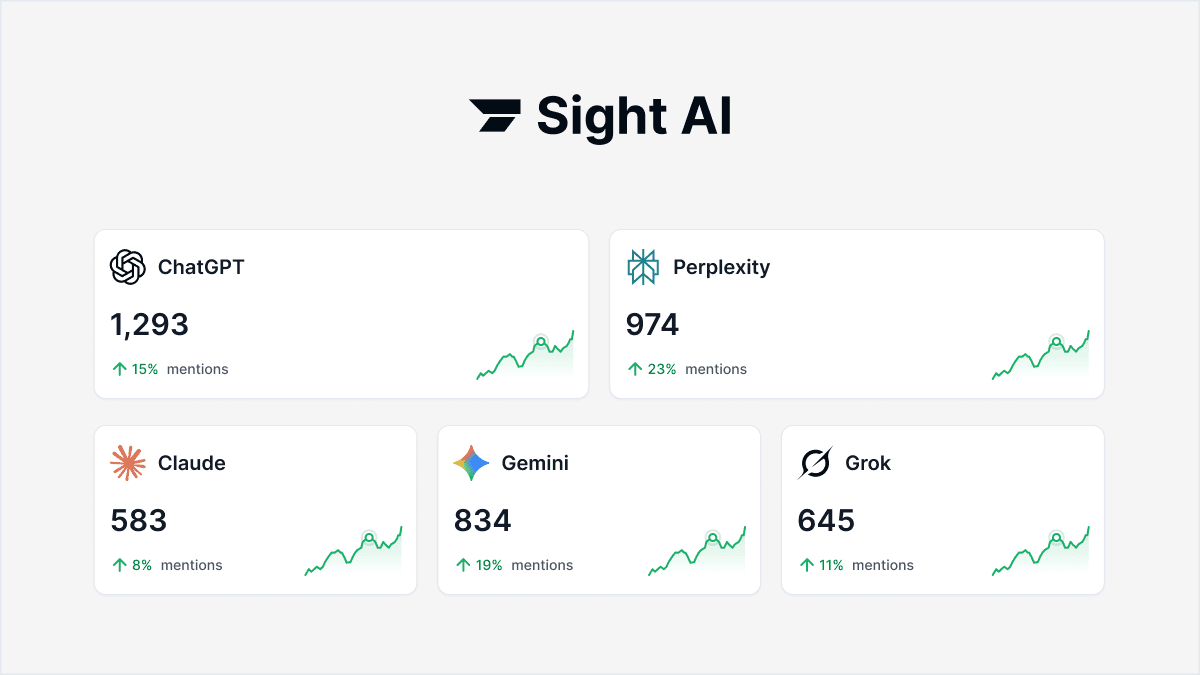
Most enterprise content platforms focus on one piece of the puzzle: either generating content or measuring its performance. Sight AI is built around the full loop. You can create content optimized for both traditional search and AI-driven discovery, then track how AI models like ChatGPT, Claude, and Perplexity actually talk about your brand in response to relevant prompts.
The Autopilot Mode is particularly useful for teams managing high content volume. Instead of manually triggering each piece, you can set up AI agents to run content workflows end-to-end, with CMS auto-publishing pushing completed articles directly to your site. Pair that with IndexNow integration for near-instant search engine discovery, and you have a system that compresses the time between content creation and organic traffic impact.
Key Features
AI Content Writer with 13+ Specialized Agents: Purpose-built agents for listicles, guides, explainers, and other formats, with Autopilot Mode for hands-off content production at scale.
AI Visibility Tracking: Monitors how your brand is mentioned across ChatGPT, Claude, Perplexity, and 6+ AI platforms, with sentiment analysis and prompt tracking included.
AI Visibility Score: A consolidated metric showing how prominently and positively your brand appears in AI-generated responses, making it easier to benchmark and improve over time.
IndexNow Integration and Automated Sitemap Submission: Ensures newly published content is discovered by search engines faster, reducing the lag between publishing and indexing.
CMS Auto-Publishing: Direct integrations allow content to publish automatically to your CMS, removing manual handoffs from the workflow.
Best For
Marketers, founders, and agencies focused on organic traffic growth who want to combine content production with AI visibility monitoring. Particularly strong for teams that want to understand and improve how AI models represent their brand, not just how they rank in traditional search.
Pricing
Transparent published pricing is available at trysight.ai/pricing, with plans scaling based on features and usage. One of the few platforms in this category that doesn't require a sales call to understand costs.
2. Jasper
Best for: Enterprise marketing teams that need consistent brand voice across large content volumes.
Jasper is an AI content platform built specifically for marketing teams, with a strong emphasis on brand consistency, campaign workflows, and team collaboration.
Where This Tool Shines
Jasper's Brand Voice and Brand Knowledge engine is one of its most distinctive capabilities. You feed it your brand guidelines, tone preferences, and existing content samples, and it applies that context consistently across every output. For enterprise teams managing multiple writers, campaigns, and channels, this reduces the editorial overhead of enforcing brand standards manually.
The campaign workflow features are also well-developed. Rather than generating individual assets in isolation, Jasper lets teams build multi-asset campaigns from a single brief, which is useful for product launches or seasonal pushes where you need consistent messaging across email, social, landing pages, and ads simultaneously.
Key Features
Brand Voice and Brand Knowledge Engine: Ingests your brand guidelines and applies them consistently across all generated content.
Campaign and Multi-Asset Generation: Create coordinated content across multiple formats from a single campaign brief.
Marketing-Specific Templates: Pre-built workflows for common marketing formats including ads, emails, blog posts, and social content.
Team Collaboration with Roles and Permissions: Supports multi-user environments with access controls appropriate for larger teams.
Integrations with Major Marketing Tools: Connects with platforms commonly used in enterprise marketing stacks.
Best For
Mid-market to enterprise marketing teams that prioritize brand consistency and need structured campaign workflows. Less suited for teams that also need AI visibility tracking or advanced content governance without additional tooling.
Pricing
Creator plan starts at $49/month; Pro plan from $69/month. Business tier for enterprise features requires a custom quote via sales. Published entry-level pricing is a plus in this category.
3. Writer
Best for: Enterprises that need custom LLMs, strict content governance, and deep security compliance.
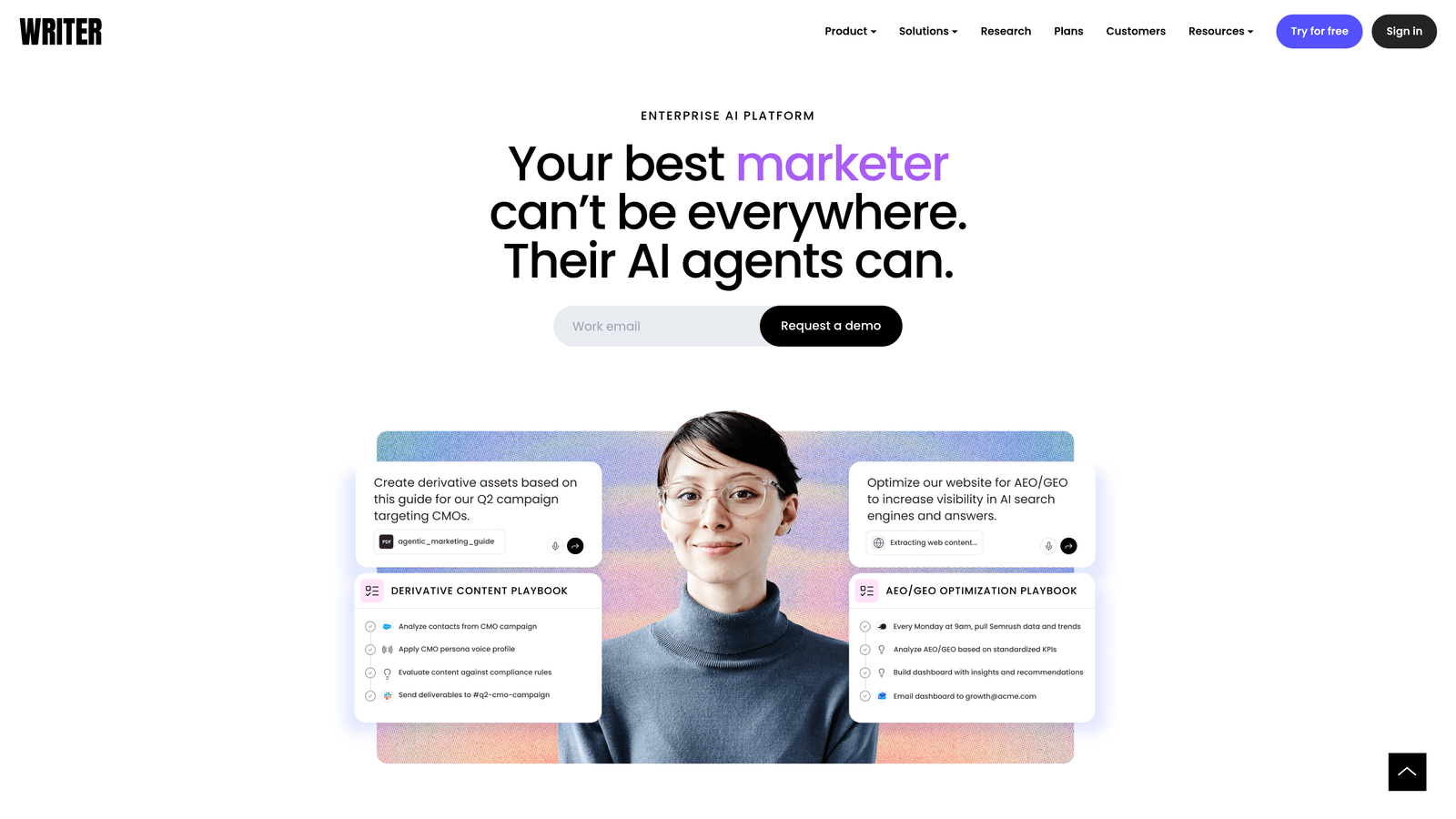
Writer is a full-stack generative AI platform for enterprises, built around custom model training, content governance controls, and enterprise-grade security infrastructure.
Where This Tool Shines
Writer occupies a different position than most content platforms. Rather than giving you access to a general-purpose AI, it's designed to let enterprises build AI applications on top of their own proprietary data. The Palmyra family of LLMs can be fine-tuned on your company's specific knowledge base, making outputs more contextually accurate for specialized industries like finance, legal, or healthcare.
The Knowledge Graph is particularly valuable for large organizations with complex internal documentation. It gives the AI structured access to company-specific context, reducing hallucinations and improving the relevance of generated content for highly technical or regulated subject matter.
Key Features
Palmyra Custom LLMs: A family of enterprise-grade language models that can be fine-tuned on proprietary company data.
AI Guardrails and Content Governance: Built-in controls to enforce brand standards, compliance requirements, and content policies at scale.
Knowledge Graph: Structured company knowledge base that provides the AI with accurate, organization-specific context.
API Access for Custom AI Application Development: Enables technical teams to build custom AI-powered applications on Writer's infrastructure.
SOC 2 Type II Compliance: Enterprise security certifications relevant for regulated industries handling sensitive data.
Best For
Large enterprises in regulated industries that need custom AI models, rigorous content governance, and strong security compliance. Less suited for teams looking for quick deployment or transparent self-serve pricing.
Pricing
Enterprise pricing only. No published tiers are available publicly. Expect a sales consultation process before receiving any cost information.
4. Contently
Best for: Enterprises that need both AI-powered content strategy and access to vetted freelance creators.
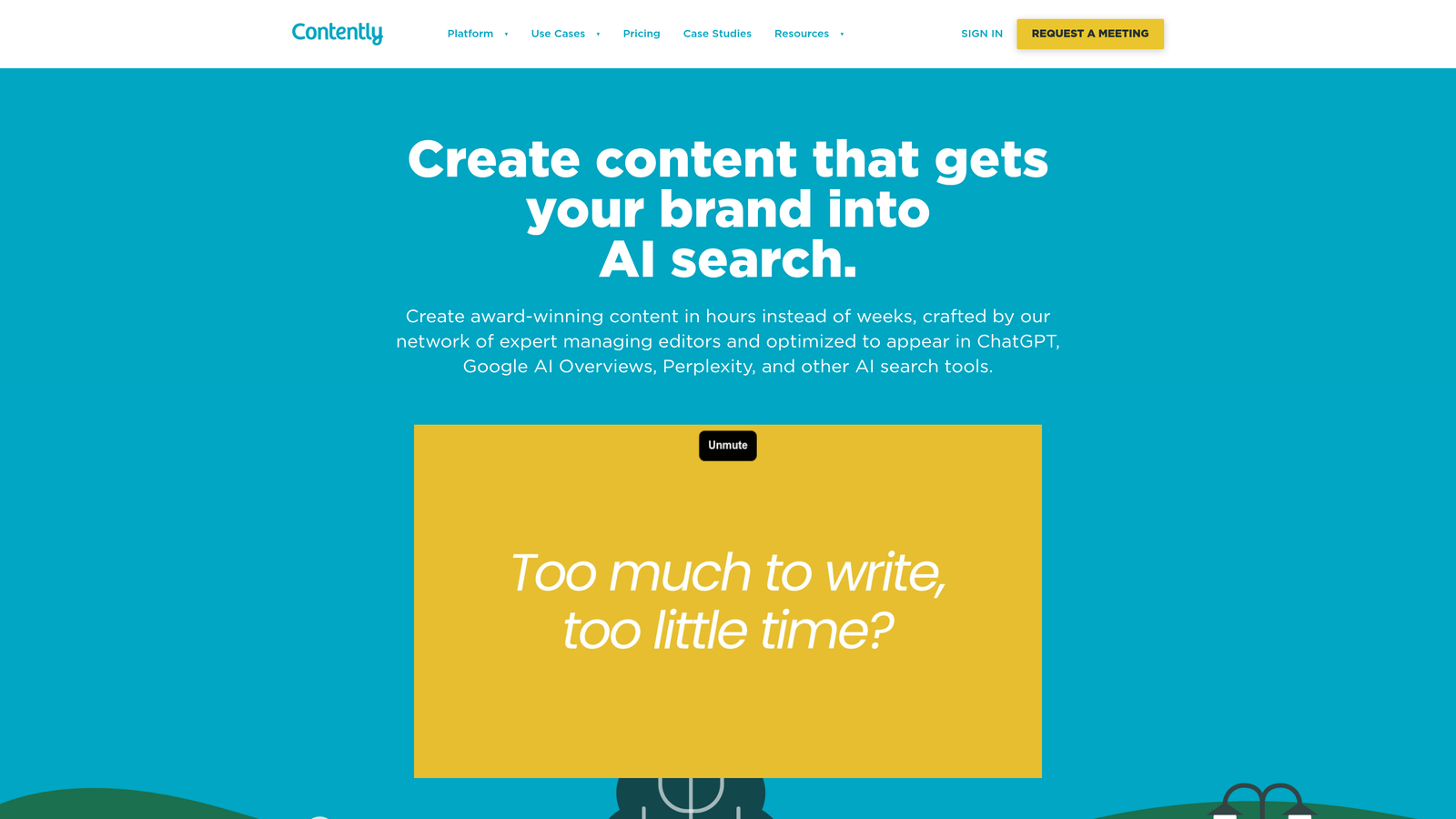
Contently is an enterprise content marketing platform that combines AI-driven strategy tools with a curated freelance talent marketplace for end-to-end content operations.
Where This Tool Shines
Contently's differentiation is the combination of AI tooling with human creative talent. While many platforms focus purely on AI-generated content, Contently gives enterprise teams access to a vetted network of freelance writers, editors, and strategists alongside its AI capabilities. This hybrid model works well for brands that want AI efficiency but aren't ready to fully remove human creative judgment from the process.
The content performance analytics are more mature than many competitors in this space. Contently has been tracking content ROI for years, and its reporting tools reflect that depth. Teams can connect content activity to business outcomes rather than relying solely on vanity metrics.
Key Features
AI-Driven Content Strategy and Topic Recommendations: Surfaces content opportunities based on performance data and audience signals.
Vetted Freelance Creator Marketplace: Access to a curated network of professional writers and editors for human-quality content production.
Content Performance Analytics and ROI Tracking: Connects content activity to measurable business outcomes.
Editorial Workflow and Approval Management: Structured workflows for content review, editing, and sign-off across large teams.
Brand Storytelling Framework: Strategic tools for maintaining narrative consistency across content programs.
Best For
Enterprise content marketing teams that want a managed content operation combining AI strategy tools with professional freelance talent. Budget-conscious teams or those needing purely AI-generated volume may find better value elsewhere.
Pricing
Custom enterprise pricing only. Requires a sales consultation. No published tiers or starting prices are available publicly.
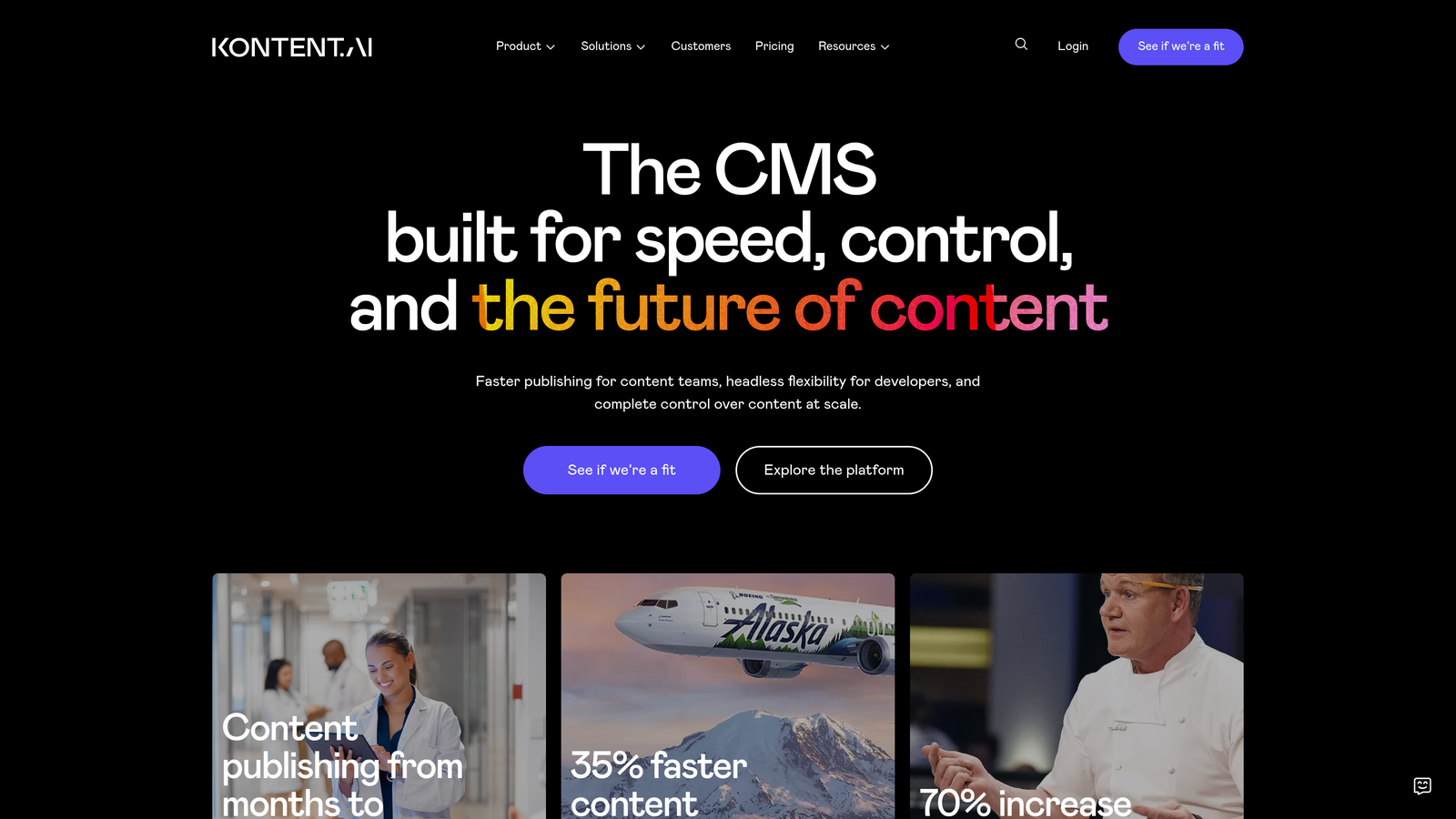
5. Kontent.ai
Best for: Enterprises managing multi-channel content delivery who need a headless CMS with integrated AI capabilities.
Kontent.ai is a headless CMS platform with integrated AI content tools, designed for enterprises that need structured, reusable content delivered across multiple digital channels.
Where This Tool Shines
Kontent.ai approaches content from an infrastructure perspective rather than a pure generation angle. Its API-first headless architecture means content created and managed on the platform can be delivered to any front-end: websites, mobile apps, digital signage, voice interfaces, and more. For enterprises managing genuinely complex multi-channel content ecosystems, this structural flexibility is difficult to replicate with traditional CMS tools.
The modular content modeling system allows teams to build content components that can be reused and recombined across channels, reducing duplication and improving consistency at scale. The integrated AI tools layer on top of this foundation to assist with creation and optimization without disrupting the underlying content architecture.
Key Features
Headless CMS with API-First Architecture: Delivers structured content to any channel or front-end via API, without front-end constraints.
AI-Powered Content Creation and Optimization: Integrated AI tools assist with drafting, editing, and improving content within the platform.
Modular Content Modeling: Build reusable content components that can be deployed across multiple channels without duplication.
Workflow Automation and Content Governance: Structured approval workflows and governance controls for large editorial teams.
Multi-Language and Localization Support: Native tools for managing content across multiple languages and regional variants.
Best For
Enterprise development and content teams managing complex multi-channel digital experiences. Strong fit for organizations with technical resources to leverage the API-first architecture. Less suited as a standalone AI content generation tool.
Pricing
A free Developer plan is available. Scale and Enterprise plans require custom quotes via sales. Some published tier information is available on the website, making it more transparent than fully opaque competitors.
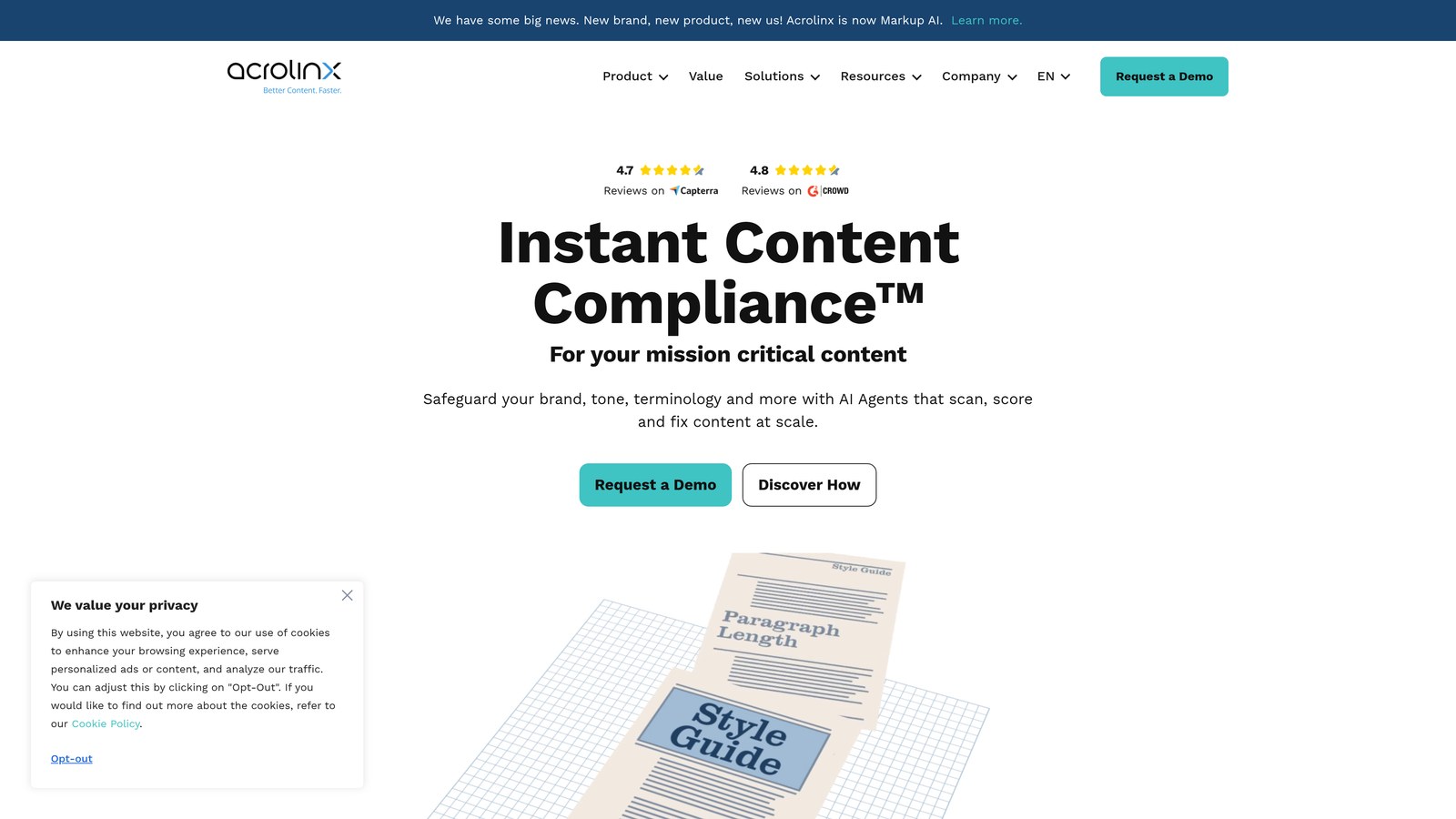
6. Acrolinx
Best for: Large enterprises that need AI-powered enforcement of brand standards, terminology, and content quality at scale.
Acrolinx is an AI-powered content governance platform that aligns enterprise content to brand standards across tone, terminology, clarity, and inclusive language.
Where This Tool Shines
Acrolinx is less about generating content and more about governing it. Its linguistic analytics engine analyzes content against your custom style guide and brand standards, flagging deviations before they reach publication. For enterprises where content quality and consistency are compliance concerns, not just stylistic preferences, this level of governance is difficult to achieve with general-purpose AI writing tools.
The platform integrates directly into the tools your writers already use, including CMS platforms, authoring environments, and development tools. This means governance happens in context rather than as a separate review step, which improves adoption and reduces the friction of enforcement.
Key Features
Linguistic Analytics Engine: Analyzes content against custom brand standards for tone, terminology, clarity, and inclusivity.
Custom Style Guide Enforcement: Applies your specific brand guidelines at scale across distributed content teams.
Broad Tool Integrations: Connects with CMS platforms, authoring tools, and development environments so governance happens in-workflow.
Content Quality Scoring and Reporting: Dashboards that surface content quality trends across teams and content types.
Support for 20+ Languages: Governance capabilities extend to multilingual content programs.
Best For
Global enterprises with large distributed content teams where brand consistency and content quality are strategic priorities. Particularly relevant for industries like technology, financial services, and healthcare where terminology precision matters.
Pricing
Enterprise pricing only, typically structured as annual contracts. No published pricing tiers are available. Requires a sales consultation to receive any cost information.
7. Persado
Best for: Enterprise marketing teams focused on optimizing marketing language for emotional engagement and conversion.
Persado is a Motivation AI platform that generates and optimizes enterprise marketing language using emotional and motivational analysis to improve engagement and conversion rates.
Where This Tool Shines
Persado takes a fundamentally different approach to AI content than most platforms on this list. Rather than generating general-purpose content, it focuses specifically on marketing language optimization: analyzing which emotional triggers, narrative structures, and linguistic patterns drive the highest engagement and conversion for a given audience and channel.
The platform's strength is in high-stakes, high-volume marketing copy where small improvements in language translate to meaningful revenue impact. Think email subject lines, CTA buttons, paid ad copy, and landing page headlines at enterprise scale, where even incremental lift across millions of impressions compounds significantly.
Key Features
Motivation AI Engine: Analyzes emotional and linguistic triggers to identify language patterns that drive specific audience behaviors.
AI-Generated Marketing Copy Optimized for Conversion: Generates marketing language variants scored for motivational effectiveness.
A/B and Multivariate Language Testing: Built-in testing infrastructure to validate language performance at scale.
Enterprise Integrations: Connects with email platforms, web content systems, and ad platforms for deployment across channels.
Performance Analytics Tied to Language Elements: Reporting that connects specific language choices to measurable performance outcomes.
Best For
Large enterprises in retail, financial services, and direct-to-consumer industries where marketing copy volume is high and conversion optimization is a primary business lever. Not designed as a general content production platform.
Pricing
Enterprise pricing only, with contracts that typically reach six figures annually based on publicly available market information. Requires a sales consultation. No self-serve or published pricing tiers are available.
8. Scale AI
Best for: Enterprises building custom AI applications and content pipelines on proprietary training data.
Scale AI is a data-centric AI infrastructure platform offering enterprise generative AI solutions, including custom content pipelines built on high-quality training data and fine-tuned models.
Where This Tool Shines
Scale AI occupies the infrastructure layer of the enterprise AI stack. Rather than providing a ready-to-use content platform, it gives enterprises the data foundation and model customization capabilities needed to build their own AI-powered content systems. If your organization has proprietary data that could meaningfully differentiate your AI outputs, Scale AI provides the tooling to leverage it.
The Donovan enterprise generative AI platform is designed for organizations that need custom AI capabilities built to their specific requirements, with enterprise security and compliance frameworks appropriate for sensitive data environments including government and defense contexts.
Key Features
Enterprise Generative AI Platform (Donovan): Custom generative AI infrastructure designed for enterprise and government-grade requirements.
Custom Model Fine-Tuning: Fine-tune AI models on your proprietary data for more accurate, context-specific outputs.
Data Labeling and Curation at Scale: Infrastructure for building and maintaining high-quality training datasets.
Enterprise Security and Compliance Frameworks: Security architecture appropriate for sensitive and regulated data environments.
Custom AI Application Development Support: Services and tooling for building bespoke AI applications on Scale's infrastructure.
Best For
Large enterprises and government organizations with significant technical resources that need to build custom AI capabilities rather than deploy an off-the-shelf content platform. Not a fit for teams looking for a ready-to-use content generation tool.
Pricing
Fully custom enterprise pricing. Contracts vary widely based on scope, data volume, and customization requirements. Requires direct sales engagement with no published pricing available.
9. Copy.ai
Best for: GTM teams that need AI content generation combined with pre-built workflow automations for marketing, sales, and operations.
Copy.ai is a GTM AI platform combining content generation with multi-step workflow automations designed for marketing, sales, and operations use cases.
Where This Tool Shines
Copy.ai has evolved beyond a simple AI writing tool into a workflow automation platform with a GTM focus. The pre-built workflow templates are a practical differentiator: rather than building automation chains from scratch, teams can deploy ready-made workflows for common GTM tasks like content repurposing, sales enablement asset creation, and campaign brief generation.
The multi-step AI chain capability is particularly useful for teams that want to automate sequences of content tasks. For example, you can chain together a research step, a drafting step, and a formatting step into a single automated workflow, reducing manual handoffs across the content production process.
Key Features
Pre-Built GTM Workflow Templates: Ready-to-deploy automation templates for content, sales, and operations use cases.
AI-Powered Content Generation Across Formats: Generates a wide range of content types including blog posts, emails, social content, and sales copy.
Multi-Step AI Workflow Chains: Build automated sequences that connect multiple AI tasks into a single streamlined process.
Brand Voice Customization: Train the platform on your brand's tone and style for more consistent outputs.
API Access and CRM Integrations: Connects with CRM and marketing platforms for deeper workflow integration across your tech stack.
Best For
Marketing, sales, and operations teams at growth-stage and enterprise companies that want AI content generation embedded in automated GTM workflows. A strong option for teams that want published pricing transparency with a clear path to enterprise features.
Pricing
Free tier available. Pro plan starts at $49/month. Enterprise tier requires a custom quote, but the existence of published entry-level pricing makes it easier to evaluate fit before engaging sales.
Which Platform Is Right for Your Team?
The right enterprise AI content platform depends heavily on what problem you're actually trying to solve, and what you're willing to pay to solve it.
If you need a transparent, all-in-one platform that handles content generation, AI visibility tracking, and automated indexing without a sales call to understand costs, Sight AI is the strongest starting point. It's one of the few platforms in this category that publishes pricing openly and covers the full content-to-visibility loop in a single tool.
For teams focused primarily on brand voice consistency and campaign workflows, Jasper and Copy.ai both offer published pricing tiers and strong marketing-specific feature sets. If your priority is content governance at scale rather than generation, Acrolinx is purpose-built for that use case, though you'll need to go through sales to understand costs.
Enterprise teams with complex infrastructure needs, custom model requirements, or regulated data environments should evaluate Writer or Scale AI, accepting that pricing will only emerge through a sales process. Similarly, Persado and Contently serve specific niches: conversion-focused marketing language and hybrid human-AI content operations, respectively, but both require sales consultation before you'll see any numbers.
One area that's becoming increasingly important as AI search grows: knowing how AI models like ChatGPT and Claude actually represent your brand in their responses. Most platforms on this list don't address that gap. Start tracking your AI visibility today with Sight AI and see exactly where your brand appears across top AI platforms, alongside the content generation and indexing tools that help you improve that presence over time.