Enterprise content automation has become essential for organizations managing high-volume content operations across multiple channels. With pricing models ranging from transparent per-seat subscriptions to custom enterprise quotes, understanding the true cost of these platforms requires looking beyond the sticker price.
This guide breaks down nine leading enterprise content automation solutions, comparing their pricing structures, feature tiers, and total cost of ownership to help you make an informed investment decision.
1. Sight AI
Best for: Organizations prioritizing AI search visibility alongside traditional SEO content automation
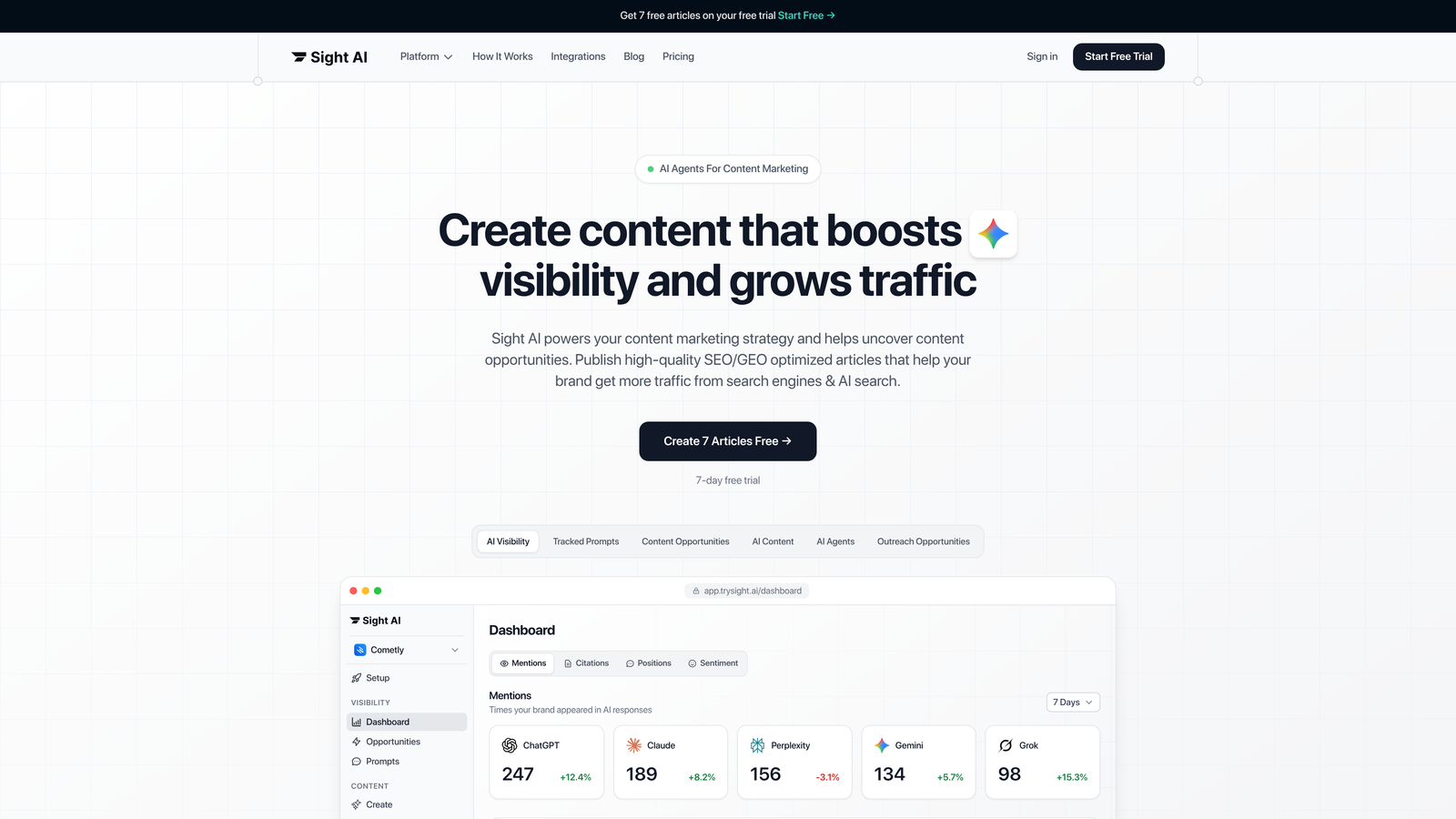
Sight AI combines content automation with AI visibility tracking, monitoring how your brand appears across ChatGPT, Claude, Perplexity, and other AI platforms.
Where This Tool Shines
Sight AI addresses a gap most enterprise platforms miss: visibility in AI-generated responses. While traditional content automation focuses on search engines, this platform tracks brand mentions across AI models and generates content optimized for both traditional SEO and generative engine optimization.
The platform's 13+ specialized AI agents work in Autopilot Mode to generate content that gets your brand mentioned by AI systems. This dual approach helps organizations capture traffic from both traditional search and the growing segment of AI-assisted searches.
Key Features
AI Visibility Tracking: Monitors brand mentions across 6+ AI platforms including ChatGPT, Claude, and Perplexity with sentiment analysis.
Content Generation with AI Agents: 13+ specialized agents create SEO/GEO-optimized articles in formats like listicles, guides, and explainers.
Autopilot Mode: Automated content creation workflows that require minimal manual intervention.
IndexNow Integration: Automatic content indexing for faster discovery by search engines and AI crawlers.
CMS Auto-Publishing: Direct publishing capabilities to your content management system.
Best For
Marketing teams and agencies focused on organic traffic growth who want to track and optimize their presence in AI-generated content. Particularly valuable for brands investing in thought leadership and content marketing as core strategies.
Pricing
Transparent pricing tiers available on the website, scaling based on content volume and feature requirements. This pricing transparency stands out in a market where most enterprise solutions require custom quotes.
2. Adobe Experience Manager
Best for: Large enterprises needing unified content and digital asset management at scale
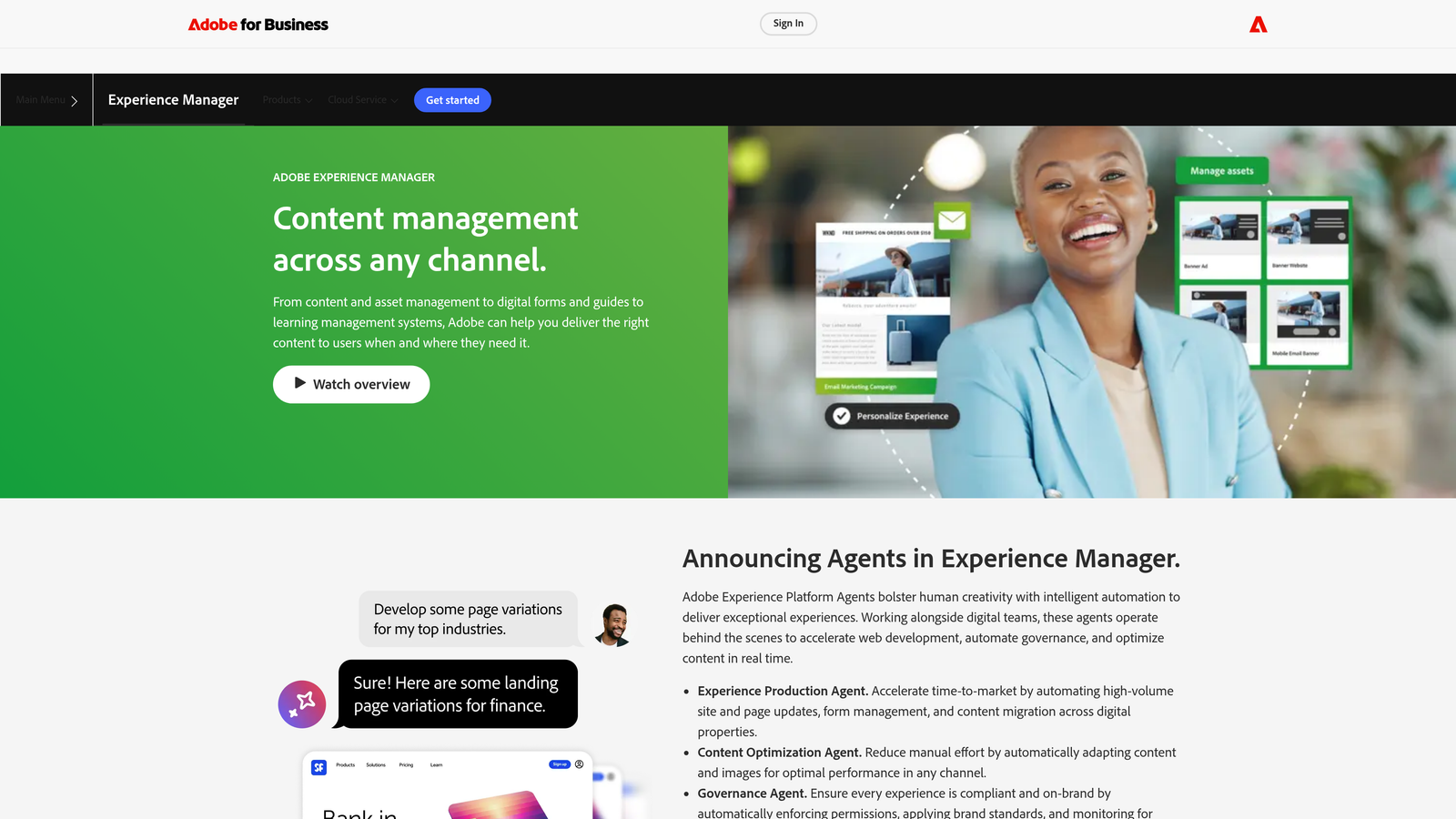
Adobe Experience Manager is an enterprise-grade platform combining content management, digital asset management, and omnichannel delivery capabilities.
Where This Tool Shines
Adobe's deep integration with Creative Cloud creates seamless workflows between content creation and publishing. Design teams can work in familiar Adobe tools while marketers manage distribution through the CMS, eliminating the typical handoff friction.
The platform handles both traditional CMS needs and headless architecture, giving organizations flexibility as their digital strategy evolves. AI-powered content tagging automatically organizes assets, saving countless hours of manual categorization.
Key Features
Unified Content Hub: Combines traditional CMS, headless capabilities, and digital asset management in one platform.
AI Content Intelligence: Automated tagging, smart cropping, and content personalization powered by Adobe Sensei.
Creative Cloud Integration: Direct workflows from Photoshop, Illustrator, and other Adobe tools.
Omnichannel Delivery: Publish content across web, mobile, IoT, and other digital touchpoints from a single source.
Enterprise Workflow Automation: Complex approval chains, version control, and collaboration features for large teams.
Best For
Fortune 500 companies and large enterprises with substantial digital asset libraries and complex content operations. Organizations already invested in Adobe's ecosystem gain the most value from tight integrations.
Pricing
Custom enterprise pricing typically starts at $50,000+ annually for mid-size implementations. Total cost often reaches six figures when including implementation, training, and ongoing support.
3. Contentful
Best for: Development teams building content-driven applications across multiple platforms
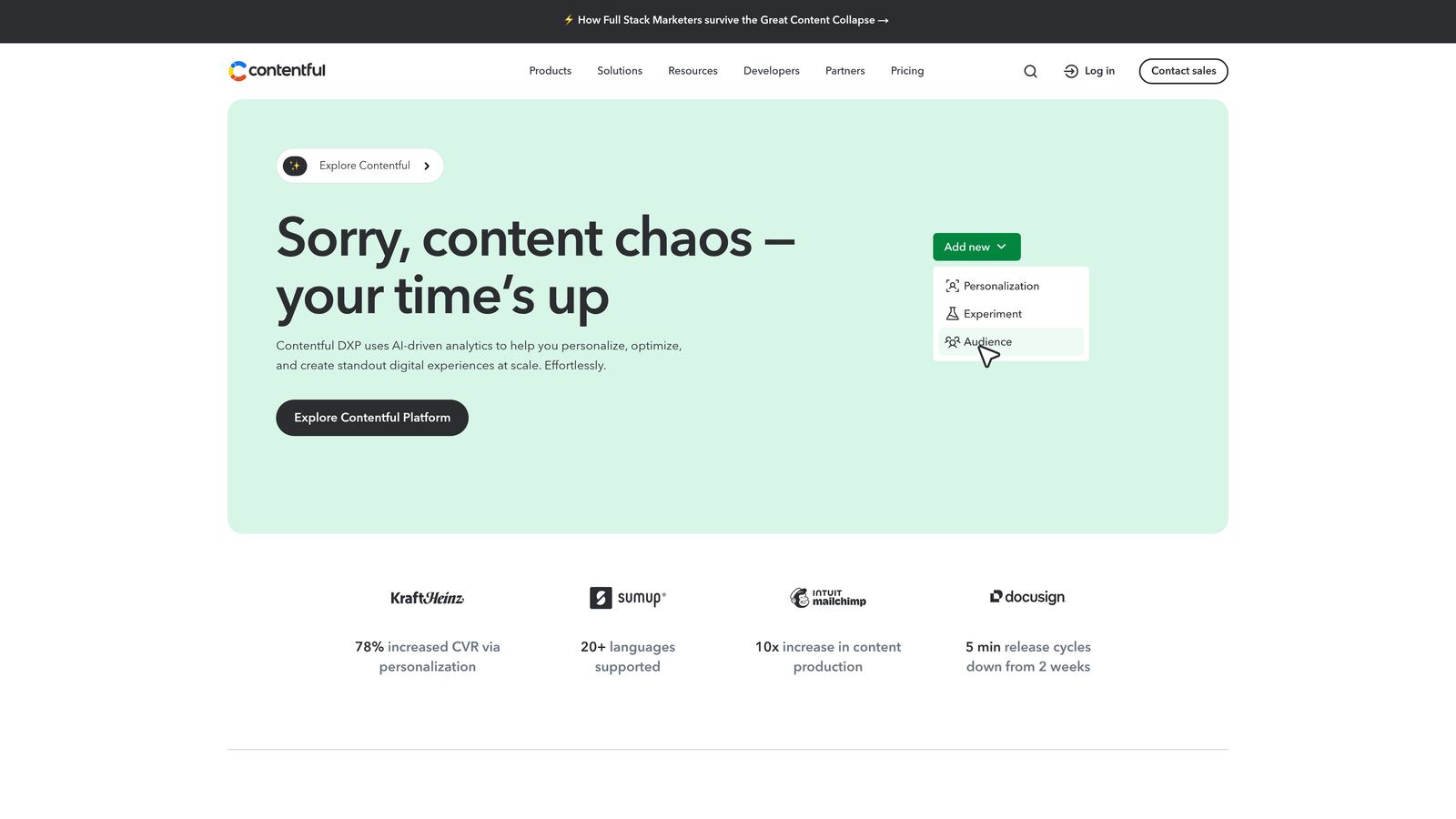
Contentful pioneered the API-first headless CMS approach, designed for organizations delivering content across web, mobile, IoT, and other digital channels.
Where This Tool Shines
Contentful's flexible content modeling lets developers structure content exactly how their applications need it, without CMS constraints. The robust API delivers content to any platform or device, making it ideal for organizations with complex digital ecosystems.
The platform's composable architecture means you can integrate best-of-breed tools for specific needs rather than accepting one-size-fits-all functionality. This modularity appeals to teams prioritizing flexibility over out-of-the-box features.
Key Features
Headless Architecture: Content delivered via API to any frontend, platform, or device.
Flexible Content Modeling: Create custom content structures that match your exact requirements.
Real-Time Collaboration: Multiple team members can work simultaneously with automatic conflict resolution.
App Marketplace: Extensive ecosystem of integrations and extensions.
Multi-Environment Workflows: Separate development, staging, and production environments with easy content promotion.
Best For
Tech-forward companies with strong development teams building custom digital experiences. Organizations managing content across multiple platforms and devices find the headless approach particularly valuable.
Pricing
Free tier available for small projects. Team plan at $489/month includes up to 5 users and 25,000 records. Enterprise pricing is custom but typically starts in the low five figures annually.
4. Acrolinx
Best for: Regulated industries requiring strict content governance and brand consistency
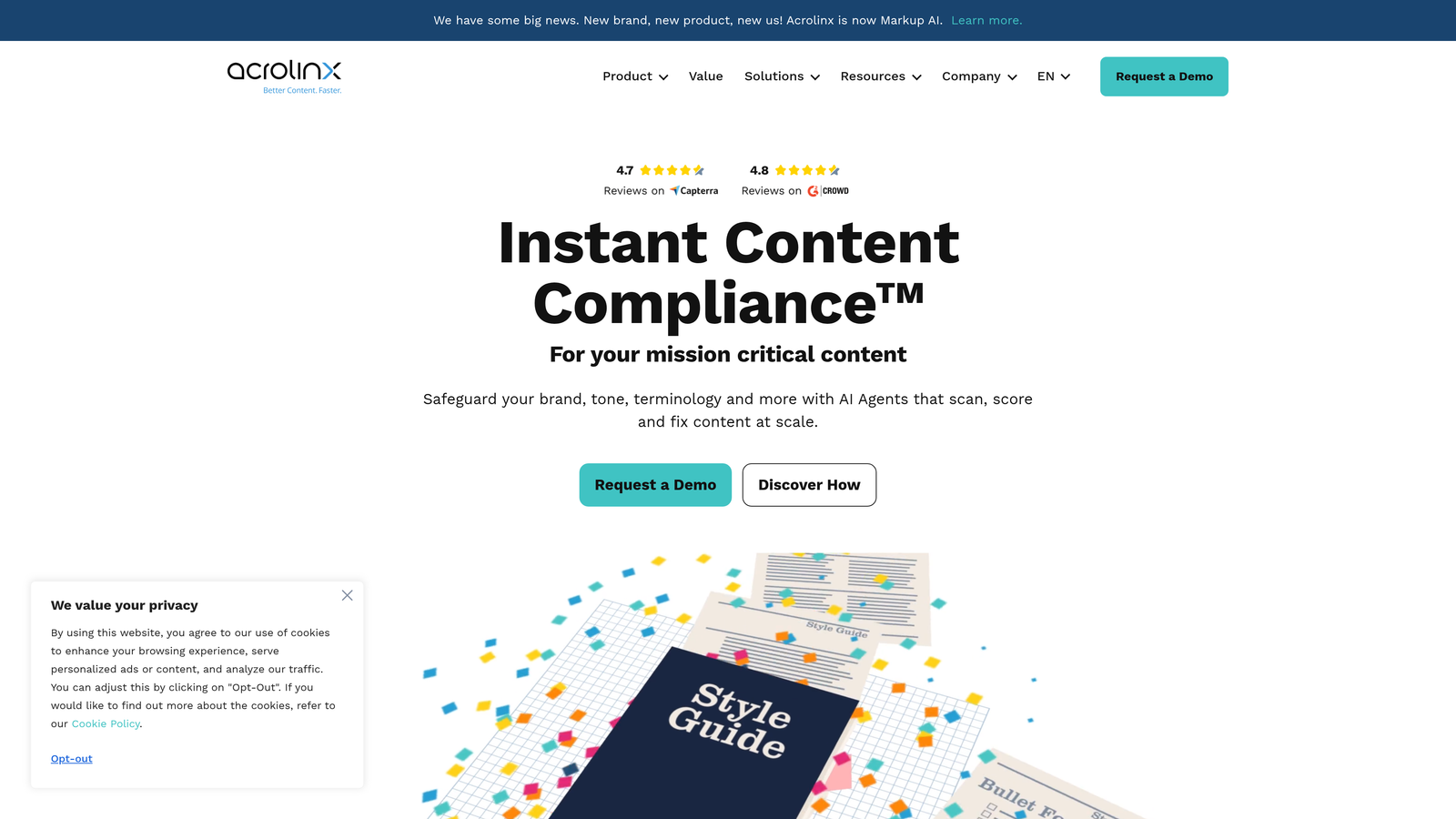
Acrolinx focuses on content quality and governance, using AI to ensure every piece of content meets brand standards, regulatory requirements, and quality benchmarks.
Where This Tool Shines
Acrolinx acts as a quality control layer across your entire content ecosystem. It integrates with 50+ authoring tools, checking content in real-time whether writers work in Microsoft Word, Google Docs, or your CMS.
For organizations in healthcare, finance, or other regulated industries, Acrolinx's compliance checking catches potential violations before publication. The platform learns your specific terminology, style preferences, and regulatory requirements to provide increasingly accurate guidance.
Key Features
AI Content Scoring: Real-time analysis of content quality, readability, tone, and brand alignment.
Brand Voice Enforcement: Ensures consistent terminology, style, and messaging across all content.
Compliance Checking: Flags potential regulatory violations in industries like healthcare and financial services.
Wide Integration Support: Works with 50+ content creation and management tools.
Enterprise Analytics: Dashboard showing content quality trends, common issues, and improvement opportunities.
Best For
Large enterprises with strict brand guidelines, regulated industries requiring compliance oversight, and organizations producing high volumes of technical or specialized content where consistency is critical.
Pricing
Enterprise-only pricing model based on number of users and content volume. Pricing discussions typically start in the mid-five figures annually, with implementations often requiring professional services for integration and customization.
5. Jasper
Best for: Marketing teams scaling content production with AI-powered writing assistance
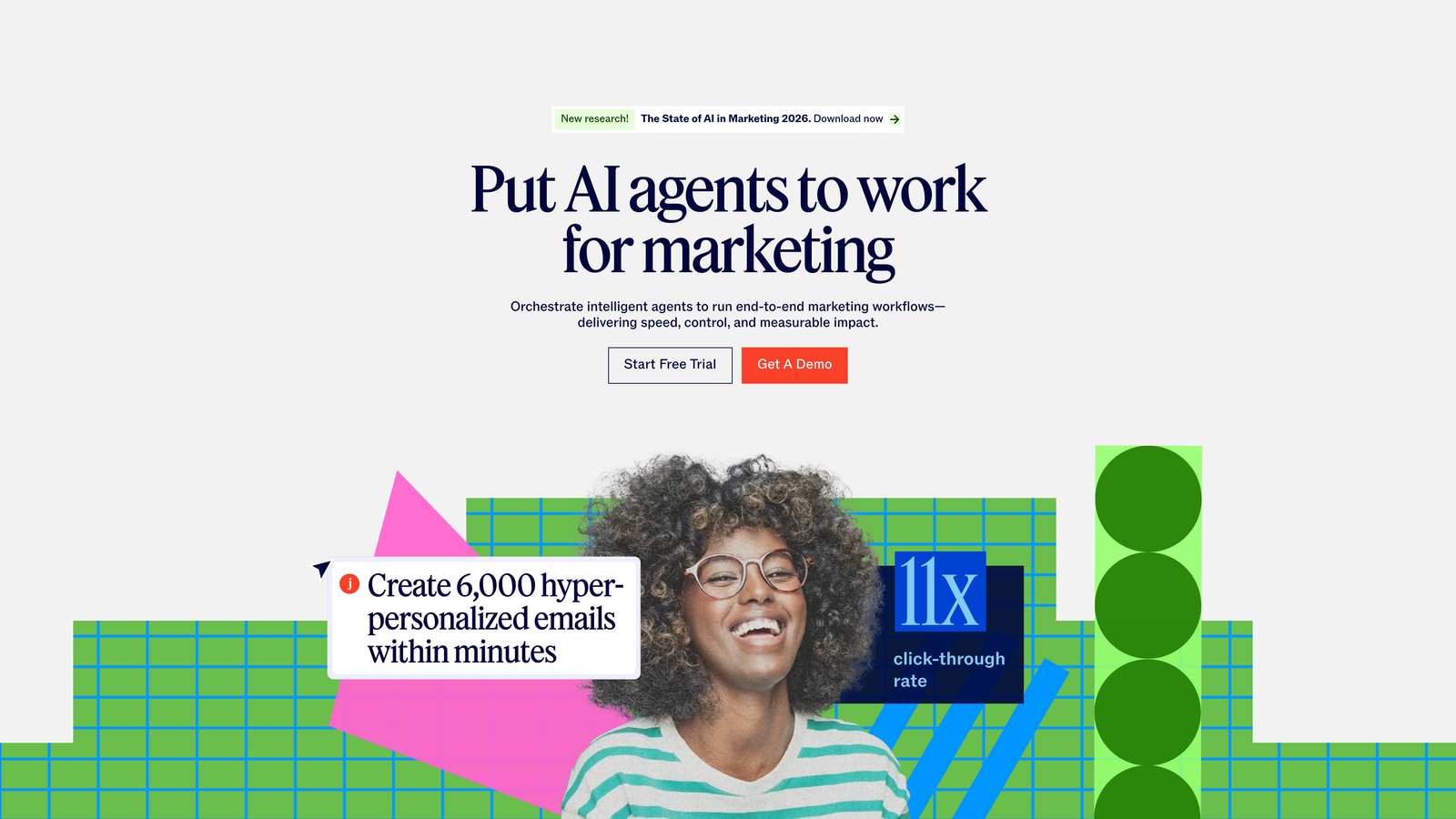
Jasper focuses specifically on AI content generation for marketing teams, with features designed around campaign workflows and brand voice consistency.
Where This Tool Shines
Jasper's brand voice training learns your company's specific tone, terminology, and style from existing content. Once trained, it generates new content that sounds authentically like your brand rather than generic AI output.
The platform's campaign-focused workflows help teams coordinate content across multiple channels. Create a campaign brief, and Jasper can generate blog posts, social media content, email copy, and ad variations all aligned to the same messaging.
Key Features
Brand Voice Training: Learns your specific style and terminology from sample content.
Campaign Workflows: Coordinate multi-channel content creation from a single campaign brief.
Chrome Extension: Generate content directly in Google Docs, Gmail, and other web applications.
Template Library: Pre-built frameworks for blog posts, social media, emails, and other common content types.
Team Collaboration: Shared workspaces, content review workflows, and brand asset libraries.
Best For
Marketing teams at growth-stage companies and agencies managing multiple clients. Organizations looking to scale content production without proportionally scaling headcount find the most value.
Pricing
Creator plan at $49/month per seat for individuals. Pro plan at $69/month per seat adds brand voice and collaboration features. Business plan offers custom pricing with advanced security, dedicated support, and custom AI training.
6. Sitecore Content Hub
Best for: Organizations needing integrated DAM, content marketing, and product content management
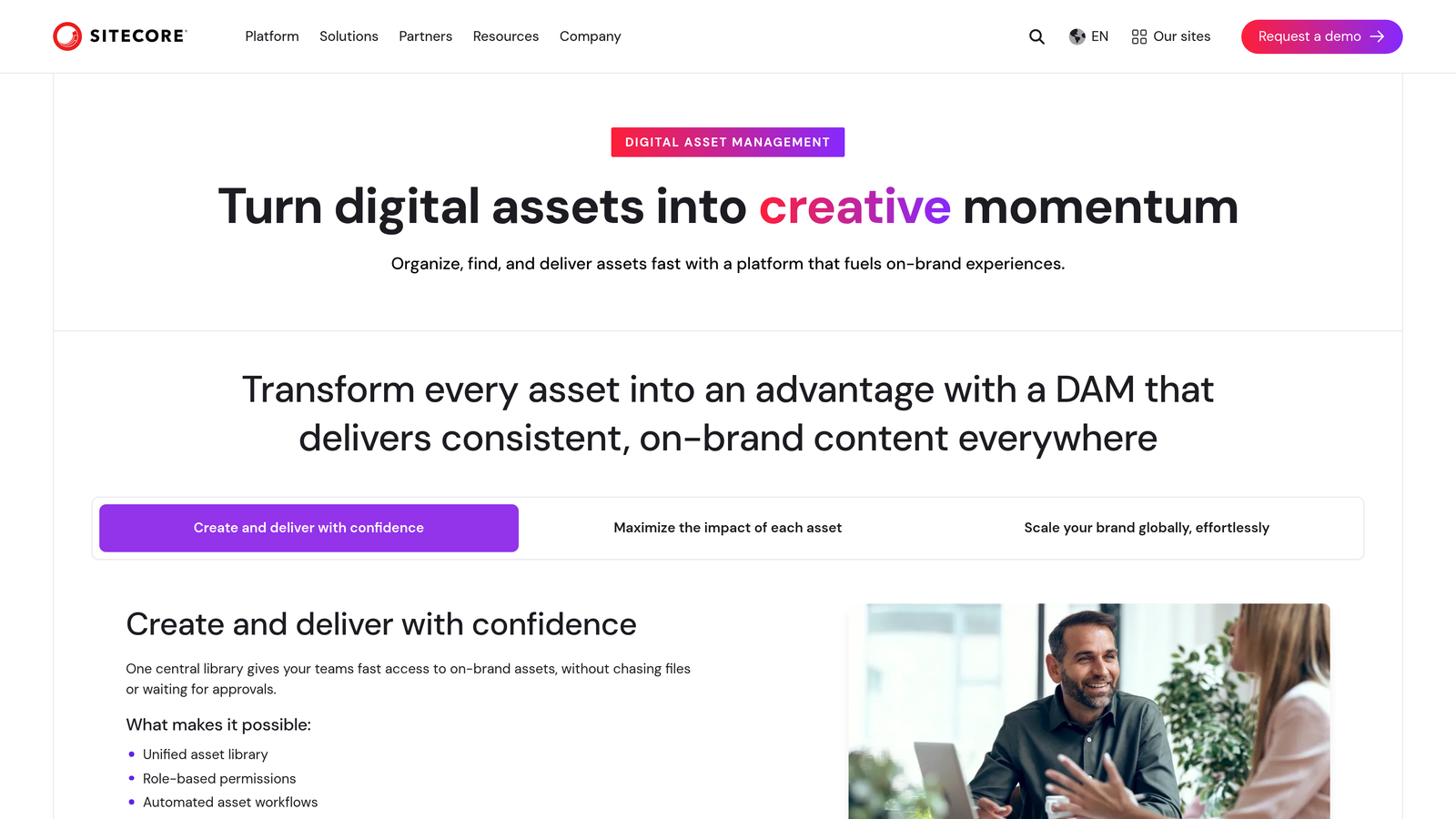
Sitecore Content Hub unifies multiple content operations—digital asset management, marketing resource management, and product content—into one platform.
Where This Tool Shines
Sitecore's modular approach lets organizations implement exactly the capabilities they need. Start with digital asset management, add content marketing planning later, then integrate product content management as requirements evolve.
The platform excels at connecting content operations across departments. Marketing teams access the same product information that e-commerce uses, ensuring consistency. Creative assets flow seamlessly from production to publication without format conversion headaches.
Key Features
Digital Asset Management: Centralized repository for images, videos, documents, and other creative assets.
Marketing Resource Management: Campaign planning, budget tracking, and resource allocation tools.
Product Content Management: Specialized workflows for product information, specifications, and related content.
Web-to-Print Automation: Generate print materials automatically from digital content and templates.
Content Planning Tools: Editorial calendars, workflow management, and collaboration features.
Best For
Retail, manufacturing, and consumer goods companies managing large product catalogs. Organizations with significant print and digital marketing operations benefit from the unified approach to content operations.
Pricing
Custom enterprise pricing with modular components priced separately. Full implementations typically start at $75,000+ annually, with costs scaling based on number of users, asset volume, and modules deployed.
7. Writer
Best for: Enterprises requiring AI writing assistance with strict security and compliance requirements
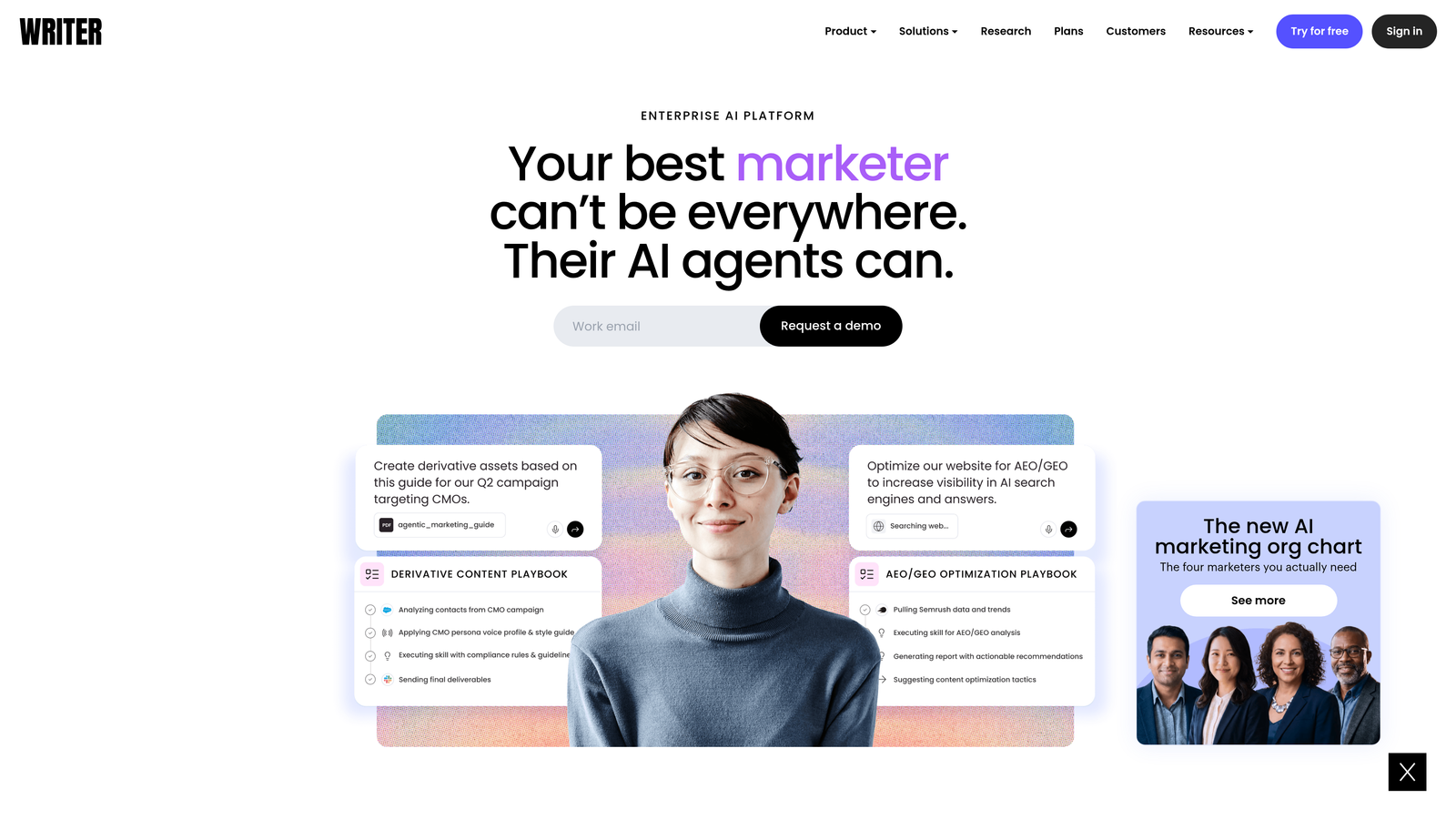
Writer positions itself as the enterprise-grade AI writing platform, emphasizing security, compliance, and customizable brand guardrails over raw content generation speed.
Where This Tool Shines
Writer's security-first architecture addresses the concerns that prevent many enterprises from adopting AI writing tools. The platform offers private deployment options, ensures no training on customer data, and provides audit trails for compliance requirements.
Custom AI model training goes beyond simple brand voice. Organizations can train Writer on their specific industry terminology, regulatory language, and proprietary knowledge bases, creating an AI assistant that understands their unique context.
Key Features
Custom AI Training: Train models on your specific content, terminology, and brand requirements.
Style Guide Enforcement: Automatically applies your brand's grammar, terminology, and formatting rules.
Enterprise Security: SOC 2 Type II certified, GDPR compliant, with private deployment options.
Work Tool Integrations: Connects with Google Docs, Microsoft Office, Slack, and major CMS platforms.
Content Analytics: Track content quality trends, common errors, and improvement opportunities across teams.
Best For
Financial services, healthcare, and other regulated industries where security and compliance are non-negotiable. Enterprises with complex brand guidelines and specialized terminology find the custom training particularly valuable.
Pricing
Team plan at $18/user/month covers basic features. Enterprise plan offers custom pricing with advanced security features, dedicated support, custom AI training, and private deployment options.
8. Kontent.ai
Best for: Mid-market companies wanting headless CMS flexibility with AI content assistance
Kontent.ai combines headless CMS architecture with AI-assisted content creation and collaborative workflow management, targeting the space between simple CMSs and complex enterprise platforms.
Where This Tool Shines
Kontent.ai's AI content assistant helps writers overcome blank page syndrome and maintain consistency without replacing human creativity. It suggests content improvements, generates variations, and helps maintain tone across different content types.
The modular content architecture lets teams structure content as reusable components rather than monolithic pages. This approach dramatically reduces duplication when the same content needs to appear across multiple channels or languages.
Key Features
Modular Content Architecture: Build content from reusable components that can be mixed and reassembled.
AI Content Assistant: Suggests improvements, generates variations, and helps maintain consistent tone.
Workflow Management: Customizable approval processes, task assignments, and collaboration tools.
Multi-Language Support: Manage translations and localized content from a single interface.
Content Scheduling: Plan publication dates, automate content lifecycle, and manage version history.
Best For
Growing companies that have outgrown basic CMSs but don't need full enterprise complexity. Organizations managing content in multiple languages or across several digital properties find the modular approach particularly efficient.
Pricing
Developer tier is free for small projects. Scale plan at $1,249/month includes 10 users and advanced features. Enterprise pricing is custom, typically starting in the low-to-mid five figures annually.
9. Optimizely CMS
Best for: Organizations prioritizing experimentation and data-driven content optimization
Optimizely CMS integrates content management with built-in A/B testing and personalization capabilities, letting teams optimize content performance based on actual user behavior.
Where This Tool Shines
Optimizely's native experimentation capabilities eliminate the need for separate testing tools. Launch A/B tests directly from the CMS, personalize content based on user segments, and measure impact without switching platforms or coordinating data across systems.
The AI-powered recommendation engine analyzes user behavior to suggest content optimizations and personalization strategies. This data-driven approach helps teams move beyond gut feelings to evidence-based content decisions.
Key Features
Native A/B Testing: Launch experiments directly from the CMS without additional tools or complex integrations.
AI Content Recommendations: Suggests personalization strategies based on user behavior analysis.
Personalization Engine: Deliver different content experiences based on user segments, behavior, or attributes.
Commerce Integration: Tight integration with e-commerce platforms for unified content and product experiences.
Multi-Site Management: Manage multiple websites or digital properties from a single installation.
Best For
E-commerce companies and digital-first businesses where content performance directly impacts revenue. Organizations with established testing cultures and data science capabilities extract the most value from experimentation features.
Pricing
Custom pricing based on traffic volume and feature modules. Implementations typically start in the mid-five figures annually, with costs scaling significantly for high-traffic sites or complex multi-site deployments.
Making Your Platform Decision
Enterprise content automation pricing reflects not just software costs but the total investment in transforming your content operations. The right platform depends on your specific priorities and constraints.
For organizations prioritizing AI search visibility alongside content automation, Sight AI offers a compelling combination of transparent pricing and specialized AI optimization features. The platform's focus on tracking brand mentions across AI models addresses an emerging need that traditional CMSs weren't built to handle.
Enterprises with complex digital asset needs and substantial budgets may find Adobe Experience Manager or Sitecore worth the custom pricing investment. These platforms serve as content hubs for organizations with thousands of assets and complex omnichannel requirements.
Mid-market teams often find the best value in platforms like Contentful or Kontent.ai with their published pricing tiers. The transparency helps with budget planning, and the headless architecture provides growth flexibility without enterprise-level complexity.
Regulated industries should evaluate Acrolinx or Writer for their governance and compliance capabilities. The investment in content quality control often pays for itself by preventing costly compliance issues or brand consistency failures.
Whatever your budget, start by mapping your actual content volume, workflow requirements, and integration needs before requesting quotes. Document your current content operations: How many pieces do you publish monthly? How many team members need access? What systems must integrate? This preparation ensures you're comparing apples to apples across vendors rather than being swayed by feature lists you may never use.
Remember that implementation and training costs often match or exceed software licensing fees. Factor these into your total cost of ownership calculations, and ask vendors for realistic timelines and resource requirements during the evaluation process.
Start tracking your AI visibility today and see exactly where your brand appears across top AI platforms. Stop guessing how AI models like ChatGPT and Claude talk about your brand—get visibility into every mention, track content opportunities, and automate your path to organic traffic growth.