Enterprise content marketing teams face a unique challenge: producing high-quality content at scale while maintaining brand consistency across dozens of channels and stakeholders. Manual workflows that worked for smaller operations become bottlenecks when you're coordinating global campaigns, managing approval chains, and tracking performance across multiple business units.
The right automation platform eliminates these friction points—handling everything from ideation and creation to distribution and analytics. We evaluated these platforms based on scalability, AI capabilities, integration depth, and enterprise-specific features like governance controls and multi-team collaboration. Here are the top enterprise content marketing automation platforms for 2026.
1. Sight AI
Best for: Enterprise teams prioritizing AI visibility and SEO-optimized content generation at scale.
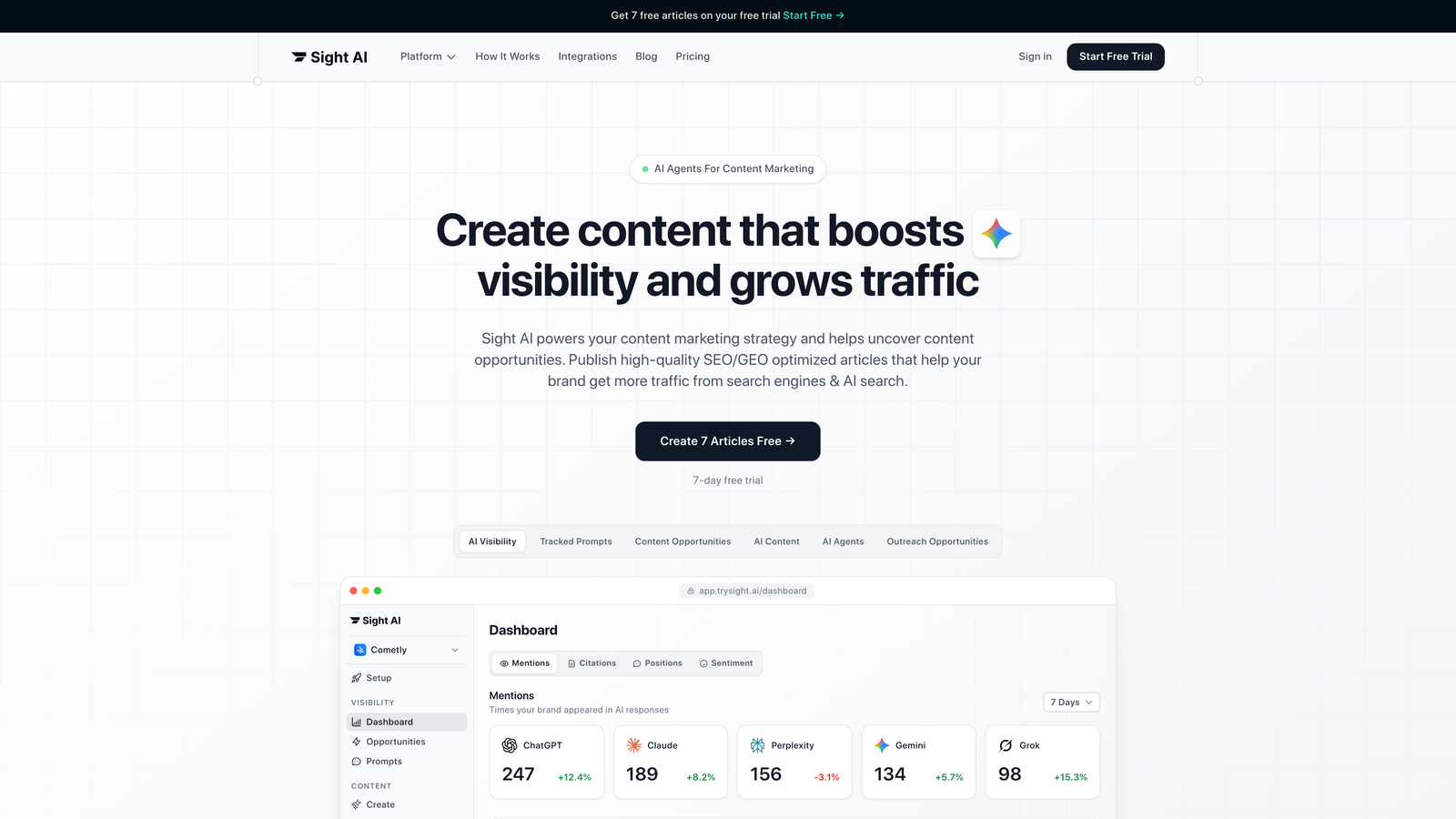
Sight AI is an AI-powered platform that combines content generation, AI visibility tracking, and automated indexing for enterprise content teams focused on organic growth and AI discoverability.
Where This Tool Shines
Sight AI addresses a critical gap that traditional content platforms miss: understanding how AI models like ChatGPT, Claude, and Perplexity actually talk about your brand. For enterprise teams investing heavily in content, this visibility is crucial—you're not just creating content and hoping it ranks, you're seeing exactly where your brand appears in AI-generated responses.
The platform's 13+ AI agents work together to produce SEO and GEO optimized long-form content that's specifically designed to get recommended by AI models. This matters because search behavior is shifting—users increasingly turn to AI assistants for recommendations and research.
Key Features
AI Visibility Tracking: Monitor brand mentions across ChatGPT, Claude, and Perplexity with sentiment analysis and prompt tracking to understand context.
Multi-Agent Content Generation: 13+ specialized AI agents collaborate to produce comprehensive, optimized long-form articles tailored for both traditional search and AI recommendations.
Autopilot Mode: Set content parameters and let the platform handle end-to-end production without manual intervention—ideal for scaling content operations.
Instant IndexNow Submissions: Automatically submit new content for faster discovery by search engines, reducing the lag between publication and organic traffic.
Auto-Publishing to CMS: Direct integration with content management systems eliminates manual upload steps and streamlines workflow.
Best For
Enterprise marketing teams and agencies managing high-volume content operations who need both production efficiency and visibility into how AI platforms represent their brand. Particularly valuable for organizations where organic traffic and AI discoverability are primary growth channels.
Pricing
Contact for enterprise pricing. Custom plans available based on content volume and team size.
2. Adobe Experience Manager
Best for: Large enterprises deeply invested in Adobe's ecosystem requiring sophisticated digital asset management.
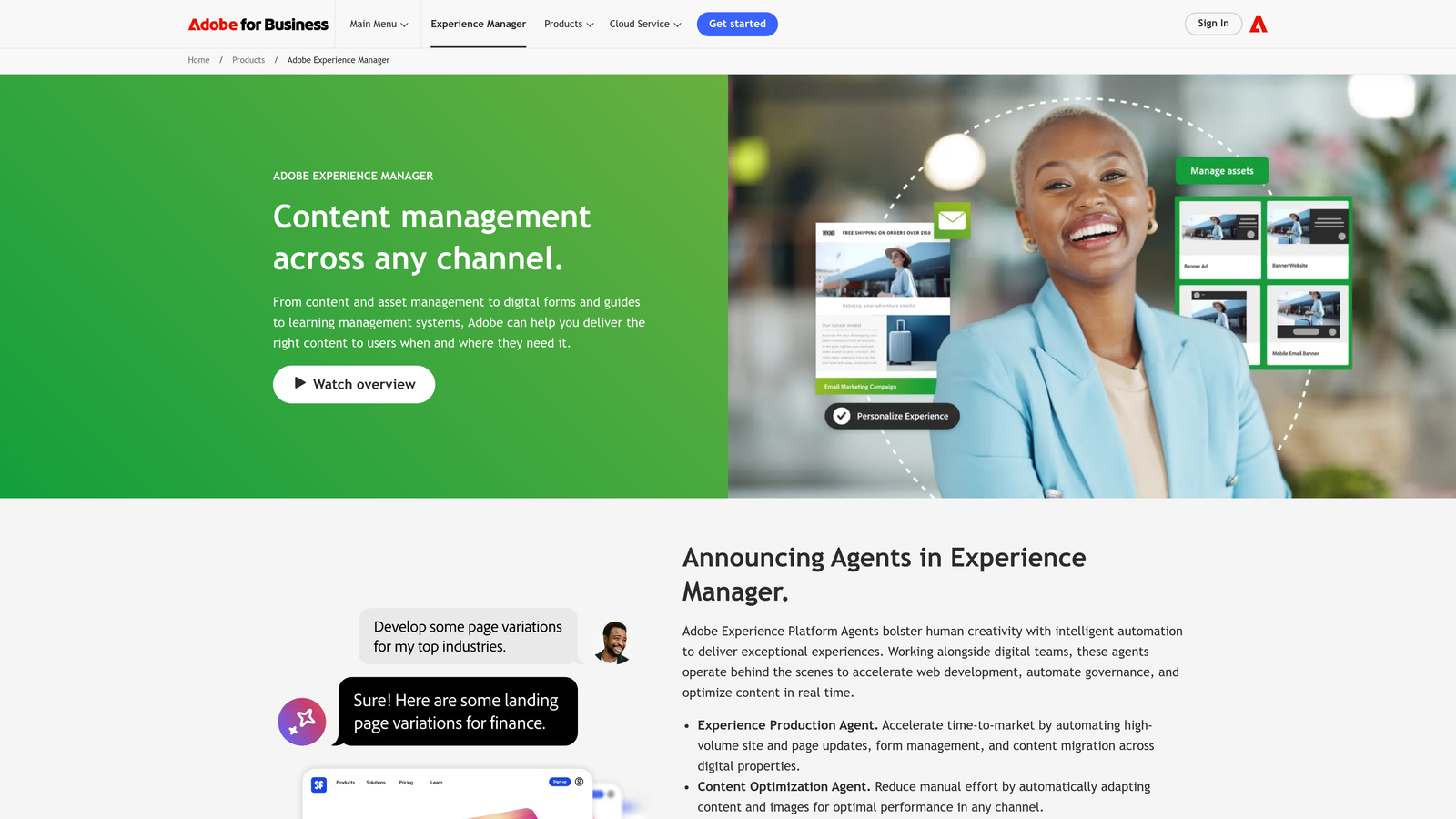
Adobe Experience Manager is an enterprise-grade content management system offering end-to-end content lifecycle management with deep Creative Cloud integration.
Where This Tool Shines
If your creative teams live in Photoshop, Illustrator, and InDesign, Experience Manager creates a seamless bridge between design and publication. Assets flow directly from Creative Cloud into your content workflows without format conversions or manual uploads. This integration alone can save enterprise teams dozens of hours weekly.
The platform's headless and hybrid CMS capabilities give you flexibility in how you deliver content—whether you're managing a traditional website, mobile app, or IoT device. This architectural approach future-proofs your content investment as new channels emerge.
Key Features
Headless and Hybrid CMS: Deliver content to any channel via APIs while maintaining the option for traditional page-based management when needed.
Native Creative Cloud Integration: Direct connectivity with Adobe's design tools eliminates asset handoff friction and maintains version control.
AI-Powered Content Tagging: Automatically categorize and tag assets using Adobe Sensei, making content discovery faster for large libraries.
Multi-Site Management: Manage dozens of regional sites from a single interface with shared components and localized variations.
Digital Asset Management: Robust DAM capabilities handle massive media libraries with advanced search, metadata management, and usage rights tracking.
Best For
Global enterprises with complex multi-site operations and significant creative production requirements. Organizations already using Adobe Marketing Cloud will find natural workflow synergies, though the platform works independently as well.
Pricing
Custom enterprise pricing, typically starting around $100,000 annually depending on sites, users, and feature requirements.
3. Salesforce Marketing Cloud
Best for: Enterprises needing tight CRM integration for personalized, data-driven content journeys at scale.
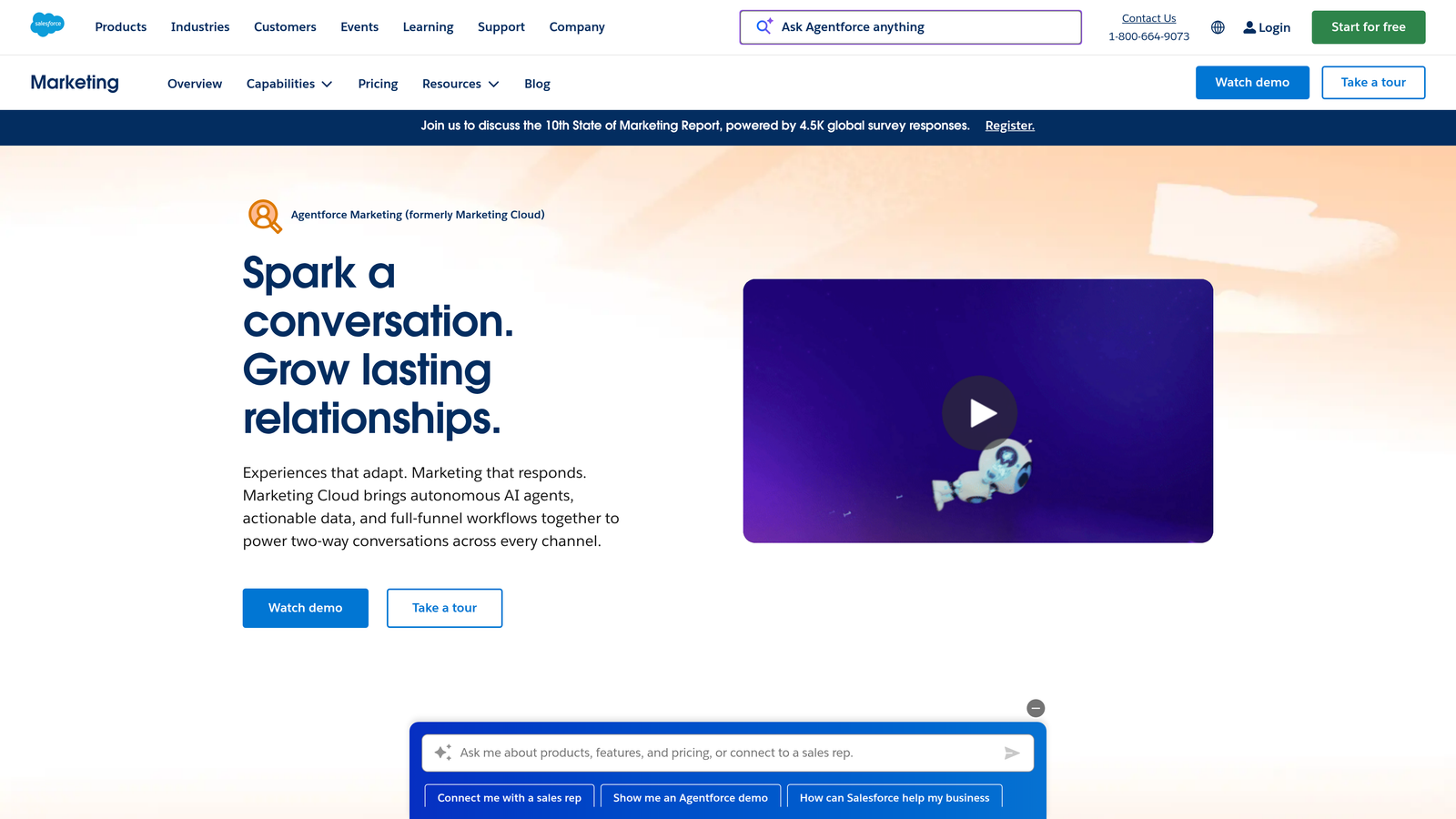
Salesforce Marketing Cloud is a comprehensive marketing automation platform with native CRM integration for personalized content journeys at scale.
Where This Tool Shines
The platform's Journey Builder transforms static content campaigns into dynamic, responsive experiences. A prospect who downloads a whitepaper receives different follow-up content than someone who attended a webinar—all automated based on CRM data and behavioral triggers.
Einstein AI analyzes historical engagement patterns to predict which content will resonate with specific audience segments. This moves beyond basic segmentation into true predictive personalization, where the platform learns and improves recommendations over time.
Key Features
Journey Builder: Visual interface for designing complex, multi-step content campaigns that adapt based on user behavior and CRM data.
Einstein AI: Predictive intelligence that recommends optimal send times, content variations, and audience segments based on historical performance.
Native Salesforce CRM Connectivity: Real-time access to customer data, opportunity stages, and account information without middleware or API delays.
Omnichannel Automation: Coordinate content delivery across email, mobile, social media, and advertising from a unified platform.
Advanced Segmentation: Build audience segments using any combination of CRM fields, behavioral data, and third-party attributes.
Best For
Organizations already using Salesforce CRM who need sophisticated marketing automation that leverages customer data. Particularly strong for B2B enterprises with complex sales cycles requiring nurture campaigns.
Pricing
Starts at $1,250 per month for basic features. Enterprise implementations with full capabilities typically run $5,000 to $15,000+ monthly depending on contact volume and features.
4. HubSpot Marketing Hub Enterprise
Best for: Growing companies transitioning to enterprise-scale operations who value ease of use alongside power features.
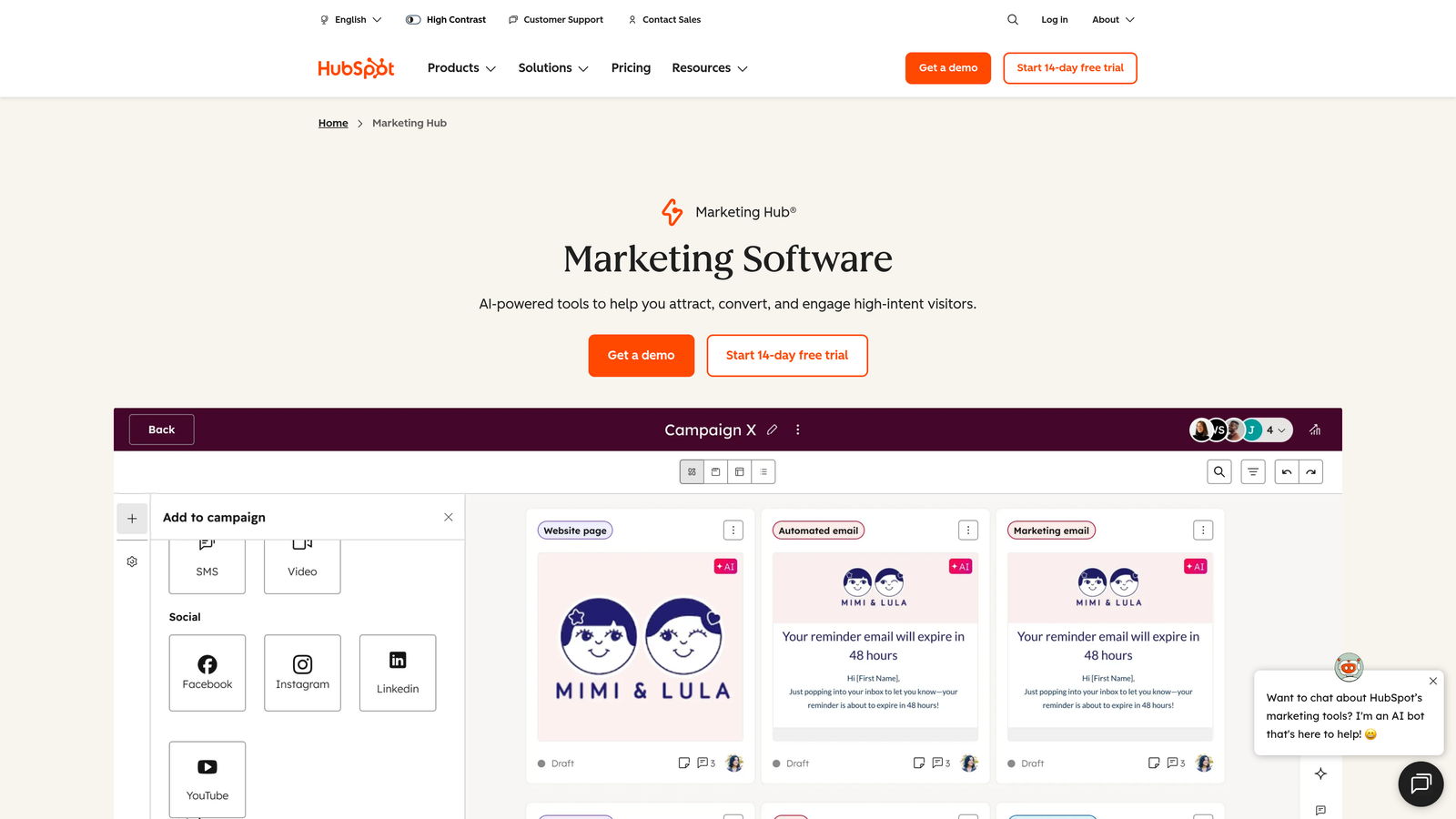
HubSpot Marketing Hub Enterprise is a scalable marketing automation platform with strong content tools, ideal for growing companies transitioning to enterprise operations.
Where This Tool Shines
HubSpot strikes a balance that's rare in enterprise software: powerful capabilities without overwhelming complexity. Teams can implement sophisticated automation workflows without requiring dedicated administrators or extensive training. This accessibility accelerates time-to-value significantly.
The platform's multi-touch revenue attribution connects content performance directly to pipeline and revenue. You can finally answer which blog posts, whitepapers, or webinars actually contribute to closed deals—not just engagement metrics that don't tie to business outcomes.
Key Features
Content Staging and Team Partitioning: Create separate workspaces for different business units or brands while maintaining centralized governance and reporting.
Multi-Touch Revenue Attribution: Track content influence across the entire customer journey and attribute revenue to specific assets and campaigns.
Adaptive Testing: Automatically optimize content variations based on performance, going beyond simple A/B tests to continuous improvement.
Custom Behavioral Events: Track any user action on your site or app to trigger personalized content experiences based on specific behaviors.
Integration Ecosystem: Connect with 1,500+ apps including most major CRMs, analytics platforms, and business tools.
Best For
Mid-market companies scaling to enterprise size and organizations that prioritize user experience alongside functionality. Strong fit for teams without dedicated marketing operations staff who still need enterprise capabilities.
Pricing
Enterprise tier starts at $3,600 per month for 10,000 contacts. Pricing scales with contact database size and additional feature modules.
5. Contentful
Best for: Tech-forward enterprises building composable content architectures for omnichannel delivery.
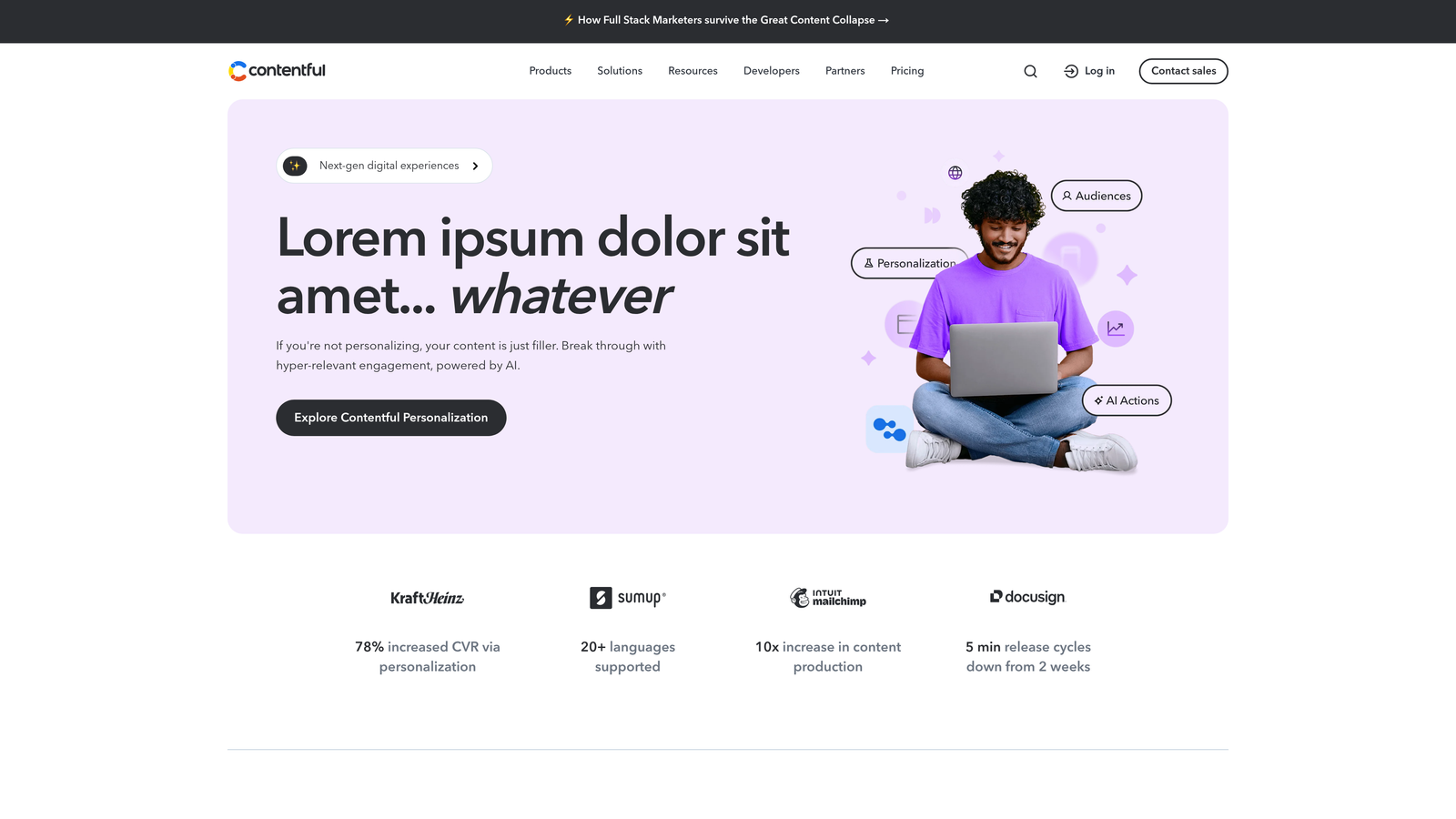
Contentful is an API-first headless CMS designed for composable content architecture and multi-channel delivery.
Where This Tool Shines
Contentful treats content as pure data, separate from presentation. This architectural decision gives development teams complete freedom in how they display content—whether that's a website, mobile app, smartwatch interface, or voice assistant. The same content entry can power multiple touchpoints simultaneously.
The platform's composable approach means you can mix and match content types like building blocks. A product launch might combine text descriptions, video assets, pricing tables, and customer testimonials—each managed independently but assembled dynamically based on context.
Key Features
Composable Content Modeling: Define custom content structures that match your business needs rather than forcing content into predefined templates.
GraphQL and REST APIs: Flexible API options give developers choice in how they query and retrieve content for different applications.
Localization Support: Manage translations and regional variations for 100+ locales with workflow tools for translation teams.
Granular Permissions: Role-based access controls down to individual content fields ensure appropriate governance without blocking productivity.
Extensible App Framework: Build custom integrations and workflow tools using Contentful's app framework to match unique business processes.
Best For
Enterprises with strong development teams who need maximum flexibility in content delivery. Particularly valuable for organizations managing content across many digital touchpoints beyond traditional websites.
Pricing
Enterprise plans start around $3,000 per month. Custom pricing based on API calls, users, and specific feature requirements.
6. Sprinklr
Best for: Global enterprises managing high-volume social content with strict compliance and governance requirements.
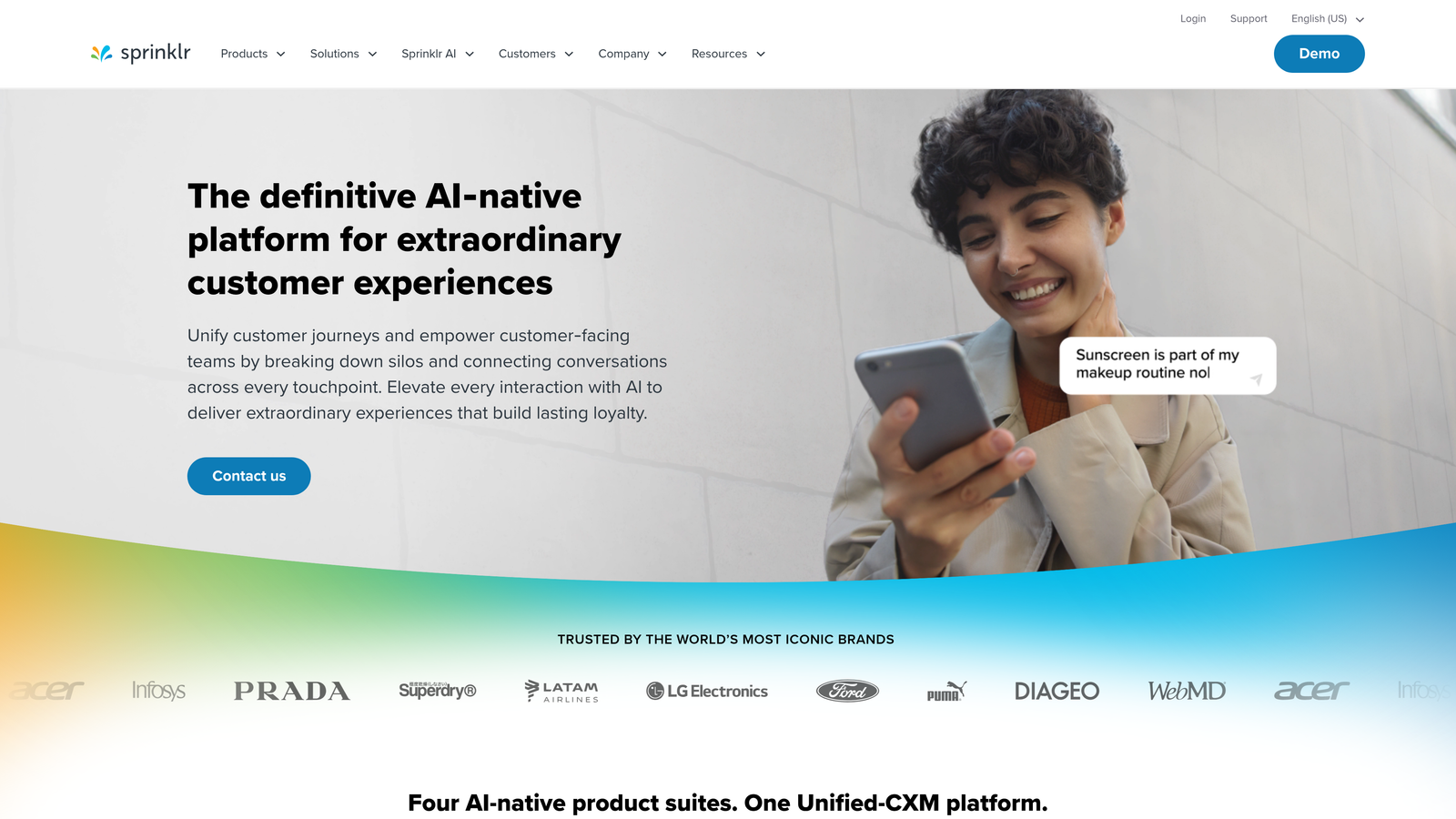
Sprinklr is a unified customer experience management platform with strong social content automation and enterprise compliance features.
Where This Tool Shines
Sprinklr excels at managing social content at a scale that would overwhelm most platforms. Think dozens of regional social accounts across multiple brands, each requiring localized content, approval workflows, and compliance monitoring. The platform handles this complexity while maintaining central oversight.
The compliance and governance features address real pain points for regulated industries. Every post, comment, and message gets archived with full audit trails. Automated approval routing ensures sensitive content passes through appropriate stakeholders before publication.
Key Features
Unified Social Management: Manage content across 30+ social channels from a single interface with unified reporting and workflow.
AI-Powered Content Intelligence: Analyze content performance patterns and receive recommendations for optimal posting times, formats, and messaging.
Enterprise Compliance: Built-in approval workflows, content archiving, and audit trails meet requirements for financial services, healthcare, and other regulated industries.
Omnichannel Publishing: Coordinate content across social media, messaging apps, review sites, and community forums with automated scheduling.
Advanced Analytics: Track performance across all channels with customizable dashboards and automated reporting for stakeholders.
Best For
Large enterprises with complex social media operations spanning multiple brands, regions, or business units. Essential for organizations in regulated industries requiring comprehensive compliance and governance controls.
Pricing
Custom enterprise pricing, typically starting around $60,000 annually. Pricing scales based on number of users, channels, and feature modules.
7. Marketo Engage
Best for: B2B enterprises focused on sophisticated lead nurturing and account-based marketing campaigns.
Marketo Engage is a B2B-focused marketing automation platform with sophisticated lead nurturing and account-based marketing capabilities.
Where This Tool Shines
Marketo's lead scoring and nurturing capabilities are built specifically for B2B complexity. The platform understands that enterprise sales involve multiple stakeholders, long evaluation cycles, and complex decision processes. Content gets delivered based on job role, engagement level, and position in the buying committee.
Revenue cycle analytics connect marketing activities directly to pipeline stages and closed revenue. This visibility transforms content from a cost center into a measurable revenue driver, making it easier to justify content investments and optimize strategy.
Key Features
Advanced Lead Scoring: Multi-dimensional scoring models that consider demographic fit, engagement behavior, and account-level signals to identify sales-ready leads.
Account-Based Marketing: Coordinate content delivery across all contacts within target accounts with unified reporting and engagement tracking.
Revenue Cycle Analytics: Track leads through every pipeline stage and attribute revenue to specific content assets and campaigns.
Dynamic Content Personalization: Automatically adapt email and landing page content based on industry, company size, job role, or any custom attribute.
CRM Integration: Native connectors for Salesforce and Microsoft Dynamics ensure bi-directional data sync and unified lead management.
Best For
B2B enterprises with complex sales processes requiring sophisticated lead nurturing. Particularly strong for organizations selling high-value products or services with long evaluation cycles.
Pricing
Starts around $895 per month for basic features. Enterprise implementations typically range from $3,000 to $10,000+ monthly depending on database size and features.
8. Optimizely Content Marketing Platform
Best for: Data-driven content teams that prioritize experimentation and continuous optimization.
Optimizely Content Marketing Platform is a content operations platform with built-in experimentation capabilities for data-driven content teams.
Where This Tool Shines
Optimizely brings experimentation thinking directly into content operations. Rather than publishing content and hoping it performs, teams can test variations of headlines, formats, and messaging before full rollout. This scientific approach reduces guesswork and accelerates learning.
The platform's campaign planning tools help teams coordinate complex content initiatives across channels and stakeholders. Visual calendars show what's publishing when, identifying gaps and preventing conflicts before they cause problems.
Key Features
Native A/B and Multivariate Testing: Test content variations directly within the platform without requiring separate tools or technical implementation.
Campaign Planning and Calendars: Visual planning tools coordinate content across teams and channels with dependency tracking and conflict detection.
Collaborative Workflow Management: Built-in approval routing, task assignment, and status tracking keep complex projects moving without email chaos.
Performance Analytics Integration: Connect experimentation results directly to business metrics and content performance dashboards.
Content Recommendations Engine: AI-powered suggestions for related content and next-best actions based on user behavior patterns.
Best For
Content teams that embrace data-driven decision making and want to continuously optimize performance. Valuable for organizations producing high volumes of content where small improvements compound significantly.
Pricing
Custom pricing based on traffic volume, number of experiments, and feature requirements. Enterprise implementations typically require direct sales engagement.
9. Sitecore Content Hub
Best for: Enterprises needing comprehensive content operations combining DAM, workflow automation, and marketing resource management.
Sitecore Content Hub is a comprehensive content operations platform combining digital asset management, marketing resource management, and workflow automation.
Where This Tool Shines
Sitecore Content Hub functions as a central nervous system for enterprise content operations. The integrated digital asset management handles massive media libraries while the marketing resource management tools coordinate production workflows, budget tracking, and vendor management—all in one platform.
The platform's product content management capabilities are particularly strong for retail and manufacturing enterprises. You can manage product information, specifications, and marketing assets in a single system, ensuring consistency across all customer touchpoints.
Key Features
Integrated Digital Asset Management: Centralized repository for all media assets with advanced search, metadata management, and automated workflows.
Marketing Resource Management: Coordinate content production with project management, budget tracking, and vendor collaboration tools.
Content Workflow Automation: Build custom approval workflows that route content through appropriate stakeholders based on type, channel, or business rules.
Product Content Management: Specialized tools for managing product information, specifications, and marketing materials with version control and localization.
Web-to-Print Capabilities: Generate print-ready materials directly from digital assets with brand compliance controls and template management.
Best For
Large enterprises with complex content operations spanning digital and print channels. Particularly valuable for organizations managing extensive product catalogs or coordinating content across multiple agencies and vendors.
Pricing
Custom enterprise pricing, typically starting around $100,000 annually. Pricing varies significantly based on users, asset volume, and specific modules required.
Making the Right Choice
Choosing the right enterprise content marketing automation platform depends on your specific operational needs and strategic priorities. For teams prioritizing AI visibility and SEO-optimized content generation, Sight AI offers a unique combination of creation capabilities and discoverability insights that traditional platforms miss. Organizations deeply invested in the Adobe or Salesforce ecosystems will find natural workflow synergies with Experience Manager or Marketing Cloud respectively.
B2B enterprises focused on lead nurturing and complex sales cycles should consider Marketo Engage, which was purpose-built for these scenarios. Teams managing high-volume social content at scale with strict compliance requirements will benefit from Sprinklr's governance features. If your content strategy spans numerous digital touchpoints beyond traditional websites, Contentful's headless architecture provides the flexibility you need.
Start by mapping your current workflow bottlenecks. Where do projects stall? What manual processes consume disproportionate time? Which integrations would eliminate the most friction? Then evaluate platforms based on how directly they address those specific pain points while offering room to grow as your operations mature.
The landscape continues evolving rapidly, with AI capabilities moving from differentiators to baseline expectations. Platforms that integrate content creation with performance tracking and optimization will increasingly separate from those treating these as disconnected functions. Start tracking your AI visibility today and see exactly where your brand appears across top AI platforms—because understanding how AI models talk about your brand is becoming as important as traditional search rankings.