Automated content platforms promise to cut production time, scale organic output, and increasingly, help brands stay visible inside AI-generated answers — not just traditional search. But pricing structures vary wildly: some charge per word, others per seat, and a growing number bundle AI visibility tracking alongside content generation.
For marketers, founders, and agencies evaluating these tools, the real question isn't just "what does it cost?" It's "what do I get for that cost, and will it move the needle on both SEO and AI visibility?" This guide breaks down the most relevant automated content platforms available today, comparing their feature sets, ideal use cases, and pricing tiers so you can make a confident, ROI-focused decision.
Whether you're running a lean startup or scaling an enterprise content operation, you'll find a clear recommendation for your situation at the end.
1. Sight AI
Best for: Teams who want content generation and AI visibility tracking in a single platform
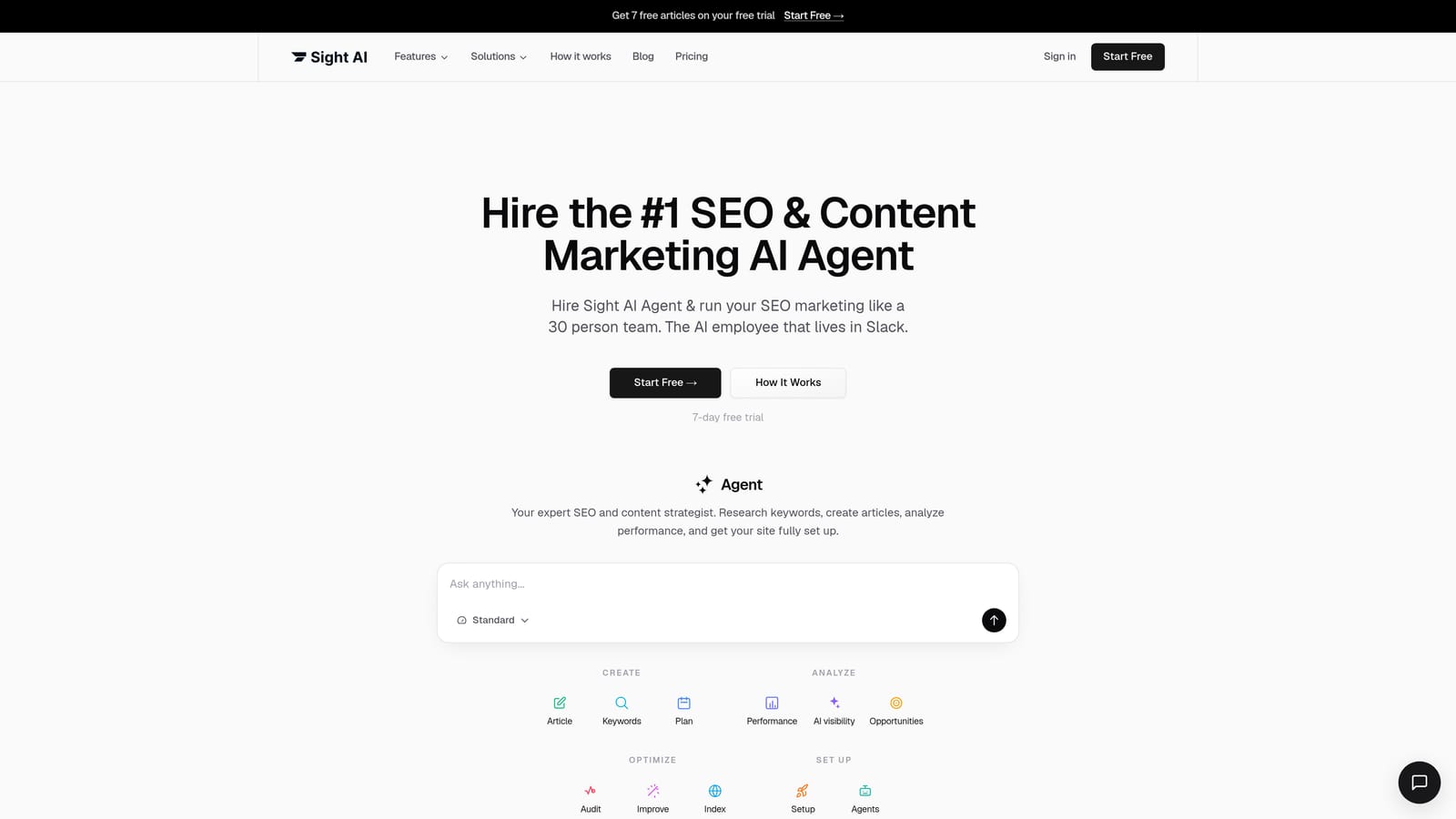
Sight AI is an all-in-one platform combining AI content generation, AI brand visibility tracking, automated website indexing, and CMS publishing — built specifically for teams who need to grow organic traffic and AI search presence from one dashboard.
Where This Tool Shines
Most content platforms solve one problem: writing more content faster. Sight AI addresses a second, increasingly critical problem: making sure that content actually gets your brand cited inside AI-generated answers from tools like ChatGPT, Claude, and Perplexity. That dual focus is genuinely rare in this space.
The Autopilot Mode is a standout for lean teams. Once your content workflows are configured, the platform can publish articles end-to-end without manual intervention. Combined with IndexNow integration for faster content discovery, it's designed to compress the gap between content creation and organic impact.
Key Features
AI Visibility Score: Tracks how your brand is mentioned across 6+ AI platforms with sentiment analysis and prompt-level tracking, so you know not just whether you appear, but how you're being represented.
13+ Specialized AI Content Agents: Purpose-built agents for different content formats including listicles, how-to guides, and explainers, each optimized for both SEO and Generative Engine Optimization (GEO).
Autopilot Mode: Hands-off, automated content publishing that handles the full workflow from generation to live publication without requiring manual steps at each stage.
IndexNow Integration: Automated sitemap updates and IndexNow-powered indexing push new content to search engines faster, reducing the lag between publishing and ranking.
CMS Auto-Publishing: Direct integration with your CMS streamlines the end-to-end content workflow, removing the copy-paste bottleneck that slows most content operations.
Best For
Sight AI is the strongest fit for marketers, founders, and agencies who want to manage content production and AI brand monitoring from a single subscription. If you're currently stitching together separate tools for writing, tracking, and indexing, the consolidation alone can justify the cost.
Pricing
Visit trysight.ai for current pricing tiers and free trial availability. Pricing is not published here as SaaS rates change frequently.
2. Writesonic
Best for: High-volume content teams needing fast, template-driven article and copy generation
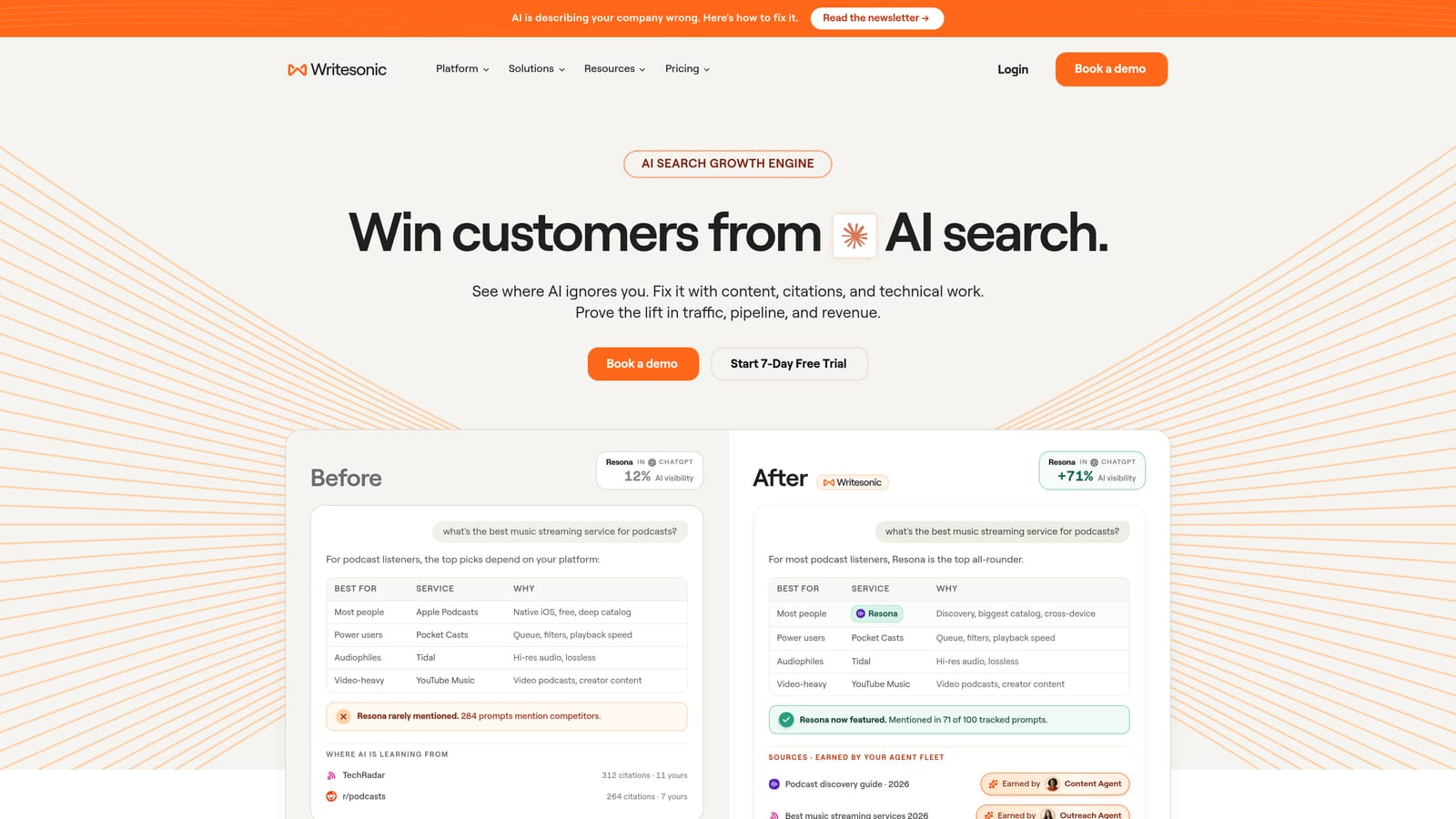
Writesonic is a widely-used AI writing platform offering high-volume article generation, SEO optimization features, and a broad template library covering blog posts, landing pages, and marketing copy.
Where This Tool Shines
Writesonic's strength is breadth. The template library covers an extensive range of content formats, making it practical for teams that need to produce varied content types without switching tools. For marketers who need a reliable output engine across blog posts, ad copy, and social content, it delivers consistent results at volume.
The Chatsonic feature adds a conversational AI layer useful for research, ideation, and drafting. It's a solid complement to the structured template workflow, giving writers a more flexible interface when they need to explore angles before committing to a format.
Key Features
Long-Form Article Generation: Produces full-length articles with SEO keyword integration, suitable for blog publishing workflows.
Broad Template Library: Covers blog posts, landing pages, product descriptions, email copy, and more from a single interface.
Chatsonic: A conversational AI tool for research, ideation, and flexible drafting alongside structured content generation.
Brand Voice Customization: Allows teams to define and apply a consistent tone across generated content, reducing editing time.
Bulk Content Generation: Enables high-volume teams to generate multiple pieces simultaneously, scaling output without proportionally scaling headcount.
Best For
Content teams and agencies with high monthly output requirements who prioritize speed and format variety. Writesonic works well when the primary goal is content volume and SEO coverage, rather than AI visibility monitoring.
Pricing
Tiered plans are available with a free trial. Visit writesonic.com for current pricing details, as plans and word limits are updated regularly.
3. AirOps
Best for: Operations and marketing teams building structured, no-code AI content pipelines at scale
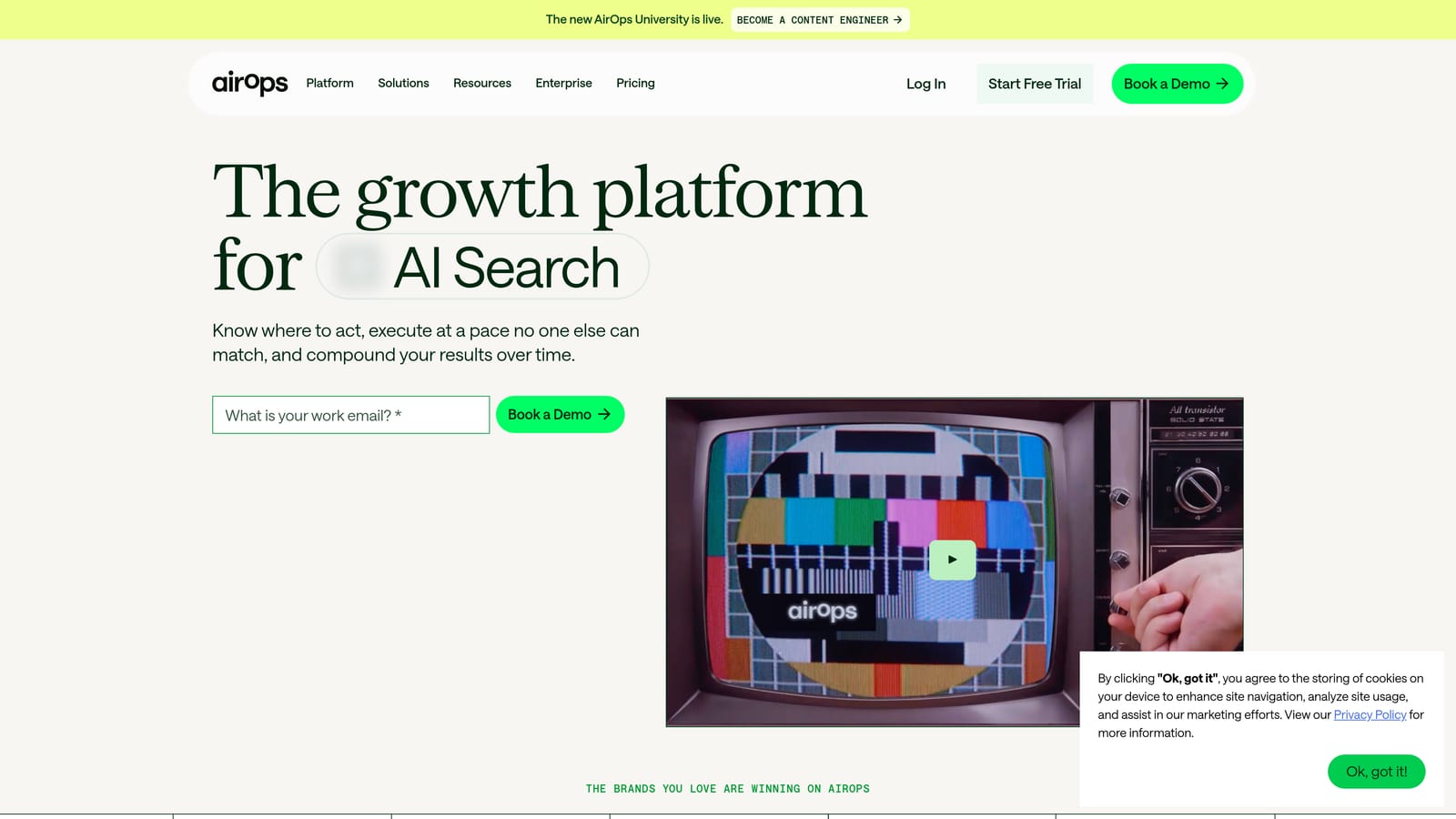
AirOps is a workflow-driven content automation platform that lets teams build no-code AI pipelines connecting data sources, AI writing, and CMS publishing for programmatic content at scale.
Where This Tool Shines
AirOps is less of a writing tool and more of an automation infrastructure layer. If your team needs to generate thousands of structured content pieces from a data source — think location pages, product descriptions, or FAQ content — AirOps provides the pipeline architecture to do that without engineering resources.
The no-code workflow builder is genuinely accessible for operations-minded marketers. You can connect external data, define content templates, and route finished pieces directly into your CMS without writing a line of code. For RevOps and growth teams managing content at scale, this kind of repeatability is hard to replicate with general-purpose writing tools.
Key Features
No-Code AI Workflow Builder: Visual pipeline builder for creating structured content workflows without developer involvement.
External Data Source Connections: Pulls from databases, spreadsheets, and APIs to power programmatic content generation at volume.
CMS and Tool Integrations: Connects directly to publishing destinations and existing marketing tools to automate end-to-end content delivery.
Scalable Pipeline Architecture: Designed for repeatable, high-volume content operations rather than one-off article generation.
RevOps and Marketing Ops Use Cases: Positioned for operations teams who think in systems and workflows rather than individual content pieces.
Best For
Growth teams, RevOps practitioners, and content operations managers who need to build scalable, data-driven content pipelines. AirOps suits teams where the bottleneck is workflow structure rather than writing capability.
Pricing
Usage-based and seat-based options are available. Visit airops.com for current pricing and plan details.
4. Profound
Best for: Enterprise SEO teams and agencies tracking brand presence in AI-generated answers
Profound is an AI search visibility analytics platform that tracks how brands are cited and represented inside AI-generated answers across major AI models, designed for enterprise teams that need rigorous, reportable data.
Where This Tool Shines
Profound fills a gap that traditional SEO tools don't address: understanding how your brand appears when users ask AI models questions in your category. That's a fundamentally different data problem than ranking tracking, and Profound is built specifically to solve it.
For agencies managing multiple client brands, the competitive visibility analysis is particularly useful. Seeing not just whether your client appears in AI answers, but how they appear relative to competitors, gives you a basis for GEO strategy conversations that most clients haven't had yet.
Key Features
AI Citation Tracking: Monitors how and when your brand is cited in AI-generated answers across multiple AI models.
Competitive Visibility Analysis: Compares your brand's AI search presence against competitors to identify gaps and opportunities.
Sentiment and Context Analysis: Goes beyond simple mention counts to assess how your brand is being framed in AI responses.
Enterprise-Grade Reporting: Structured reporting designed for agencies and large teams that need to present AI visibility data to stakeholders.
Actionable Insights: Surfaces specific recommendations for improving AI search presence based on citation data.
Best For
Enterprise SEO teams, digital agencies, and brands with serious investment in AI search strategy who need structured, reportable visibility data. Profound complements content tools rather than replacing them — it tells you what to fix, not how to write it.
Pricing
Enterprise-focused pricing with custom options for larger teams. Visit helloprofound.com for current plan details.
5. Peec
Best for: Startups and SMBs entering AI visibility monitoring without enterprise complexity or cost
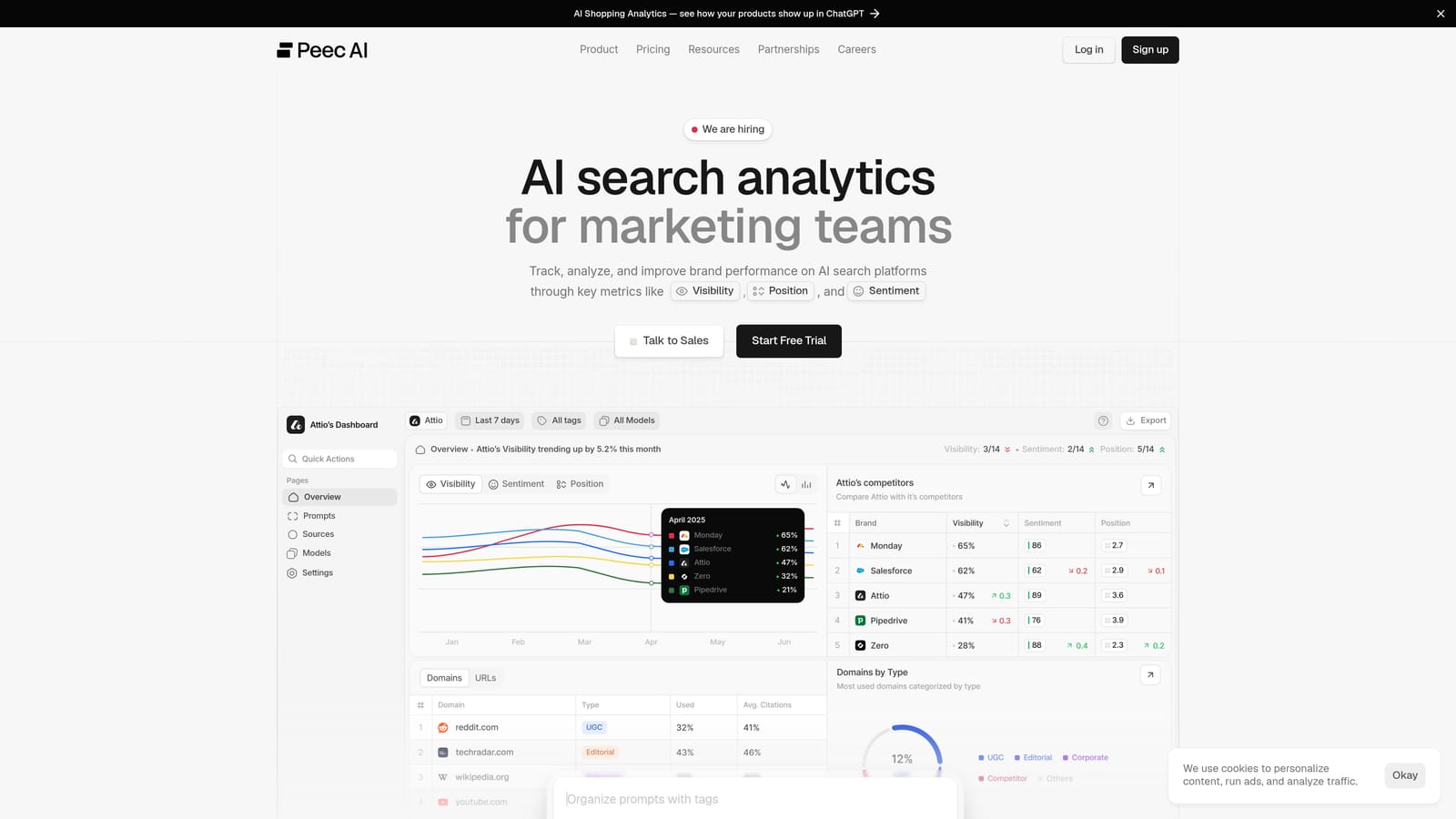
Peec is a lightweight AI brand mention monitoring tool built for smaller teams who want to track their presence in AI-generated answers at an accessible price point.
Where This Tool Shines
Not every team needs enterprise-grade AI analytics. Peec's value proposition is straightforward: if you're a startup or SMB that wants to understand whether AI models are mentioning your brand, and you don't need deep competitive intelligence or custom reporting, Peec gets you started without a significant budget commitment.
The onboarding experience is designed for teams that are new to AI visibility as a concept. Rather than overwhelming users with complex configuration, Peec focuses on delivering clear, regular reporting on brand presence — a practical entry point for teams building their first GEO baseline.
Key Features
AI Mention Tracking: Monitors brand mentions across major AI platforms and surfaces results in a straightforward dashboard.
Accessible Onboarding: Built for teams new to AI visibility, with minimal setup friction to get monitoring running quickly.
Regular Brand Presence Reporting: Delivers consistent reporting on how and where your brand appears in AI-generated answers.
Affordable Entry Point: Priced for early-stage companies and SMBs who want AI visibility data without enterprise-level spend.
Simplified Dashboard: Focuses on clarity over complexity, making it easy for non-specialist team members to interpret results.
Best For
Startups, SMBs, and individual marketers who want to establish an AI visibility baseline without committing to enterprise pricing. A good first step before graduating to more sophisticated monitoring or an all-in-one platform.
Pricing
Accessible pricing designed for smaller teams. Visit peec.ai for current tiers and plan details.
6. Promptwatch
Best for: GEO specialists and agencies doing prompt-level AI search optimization
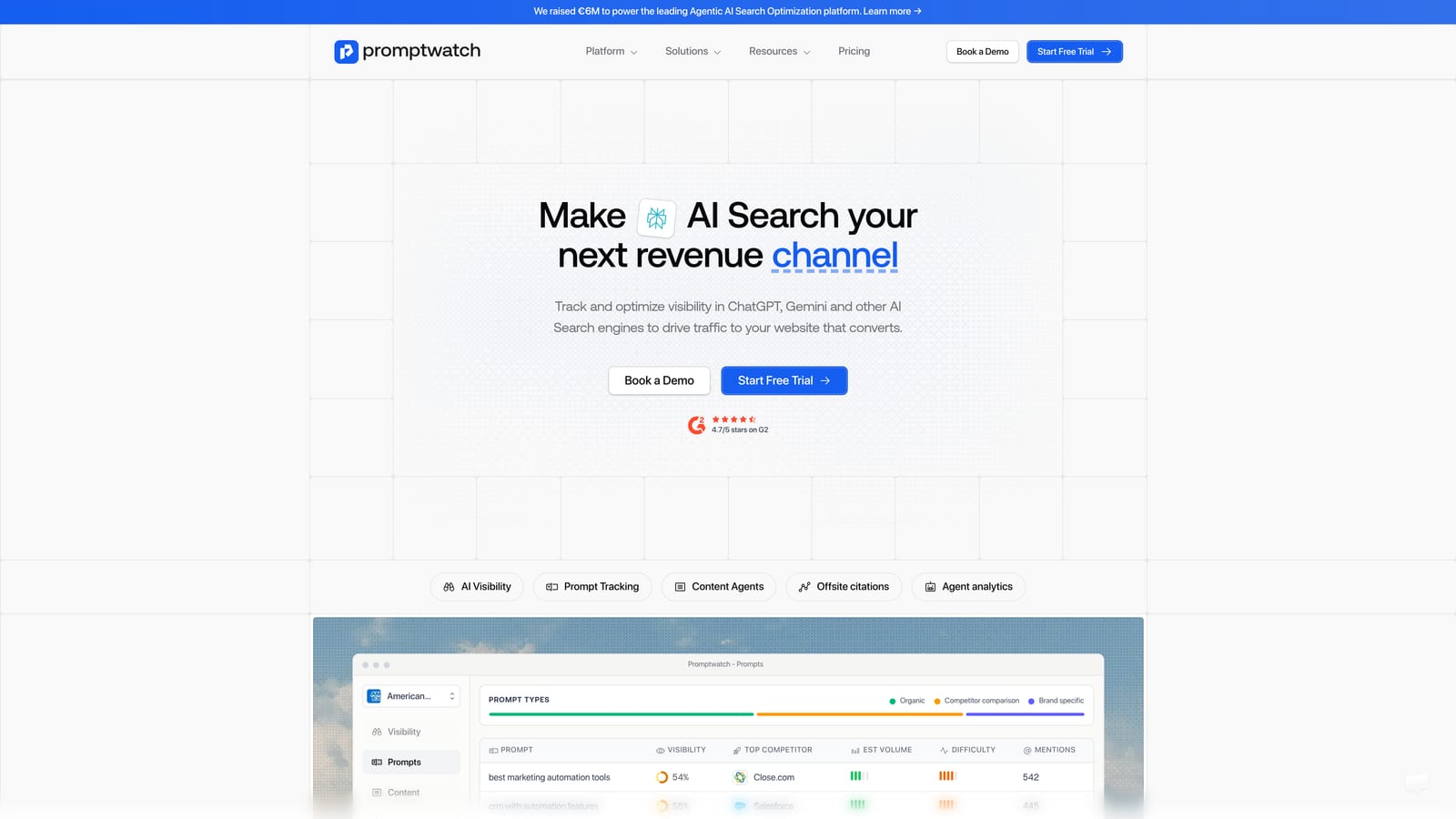
Promptwatch is a specialized AI visibility tool focused on prompt-level tracking, identifying exactly which user queries trigger brand mentions inside AI models — making it a precise instrument for teams doing deep Generative Engine Optimization work.
Where This Tool Shines
The distinction Promptwatch makes is granularity. Most AI visibility tools tell you whether your brand appears in AI answers. Promptwatch tells you which specific prompts surface your brand and which ones don't. That's a meaningfully different level of insight for teams who want to build a systematic GEO strategy rather than just monitoring brand presence.
For SEO specialists and agencies doing content gap analysis for AI search, the prompt-level data creates a direct feedback loop: you can identify the exact query contexts where you're invisible, create content targeting those gaps, and then track whether your AI visibility improves. That's a workflow that broader monitoring tools don't support as precisely.
Key Features
Prompt-Specific Tracking: Identifies which exact user queries trigger brand mentions in AI model responses, not just aggregate visibility data.
Visibility Gap Identification: Surfaces the specific prompts where your brand is absent, creating a prioritized list of content opportunities.
GEO Strategy Support: Designed for teams actively optimizing content for AI search, with data structured to inform targeting decisions.
Brand Presence Monitoring: Tracks brand mentions across AI model responses at the query level for ongoing visibility measurement.
Granular Data for Specialists: Provides the depth of data that SEO specialists and agency practitioners need for systematic AI search optimization.
Best For
SEO agencies, GEO practitioners, and in-house specialists who are actively optimizing content for AI search and need prompt-level data to guide their strategy. Less suited to teams who just want a high-level brand presence overview.
Pricing
Visit promptwatch.io for current pricing and plan details.
Which Platform Is Right for Your Situation
The automated content platform market has split into distinct lanes, and the right tool depends on what problem you're actually trying to solve.
If you want a single platform that handles content generation, AI visibility tracking, indexing, and publishing without juggling multiple subscriptions, Sight AI is the clear choice. It's the only platform on this list that addresses both content creation and AI brand monitoring in one workflow, which matters if you're trying to grow organic traffic and AI search presence simultaneously.
For teams whose primary need is raw content volume across multiple formats, Writesonic delivers reliable output at scale with accessible pricing. If your bottleneck is workflow automation rather than writing itself, AirOps provides the pipeline infrastructure to generate structured content programmatically from data sources.
On the AI visibility side: Profound suits enterprise teams and agencies that need rigorous, reportable analytics on AI citation data. Peec is the right entry point for startups and SMBs building their first AI visibility baseline without a large budget. And Promptwatch is the specialist's tool for teams doing systematic GEO work who need prompt-level data to guide content targeting.
Before choosing, audit your current content stack honestly. Are you producing content that AI models actually cite? Do you know whether ChatGPT or Claude mentions your brand when users ask questions in your category? For many teams, that gap is already costing them visibility they don't know they're missing.
Start tracking your AI visibility today and see exactly where your brand appears across top AI platforms — then use that data to build a content strategy that works for both traditional search and the AI-generated answers your future customers are already reading.