Content ideation is often the bottleneck that slows down every marketing team. Coming up with fresh, relevant, and strategically sound topic ideas at scale — especially ones optimized for both search engines and AI-powered discovery — requires more than a brainstorming session. It requires automation.
The right content ideation automation tools analyze search trends, competitor gaps, audience intent, and AI visibility signals to surface opportunities your team would never find manually. This list covers the top tools for automating content ideation in 2026, evaluated on depth of insight, ease of use, integration capabilities, and how well they support modern SEO and GEO (Generative Engine Optimization) workflows.
Whether you're a solo founder, a content-heavy agency, or an enterprise marketing team, there's a tool here built for your scale and strategy.
1. Sight AI
Best for: Marketers and agencies who want ideation informed by AI visibility gaps, not just search data.
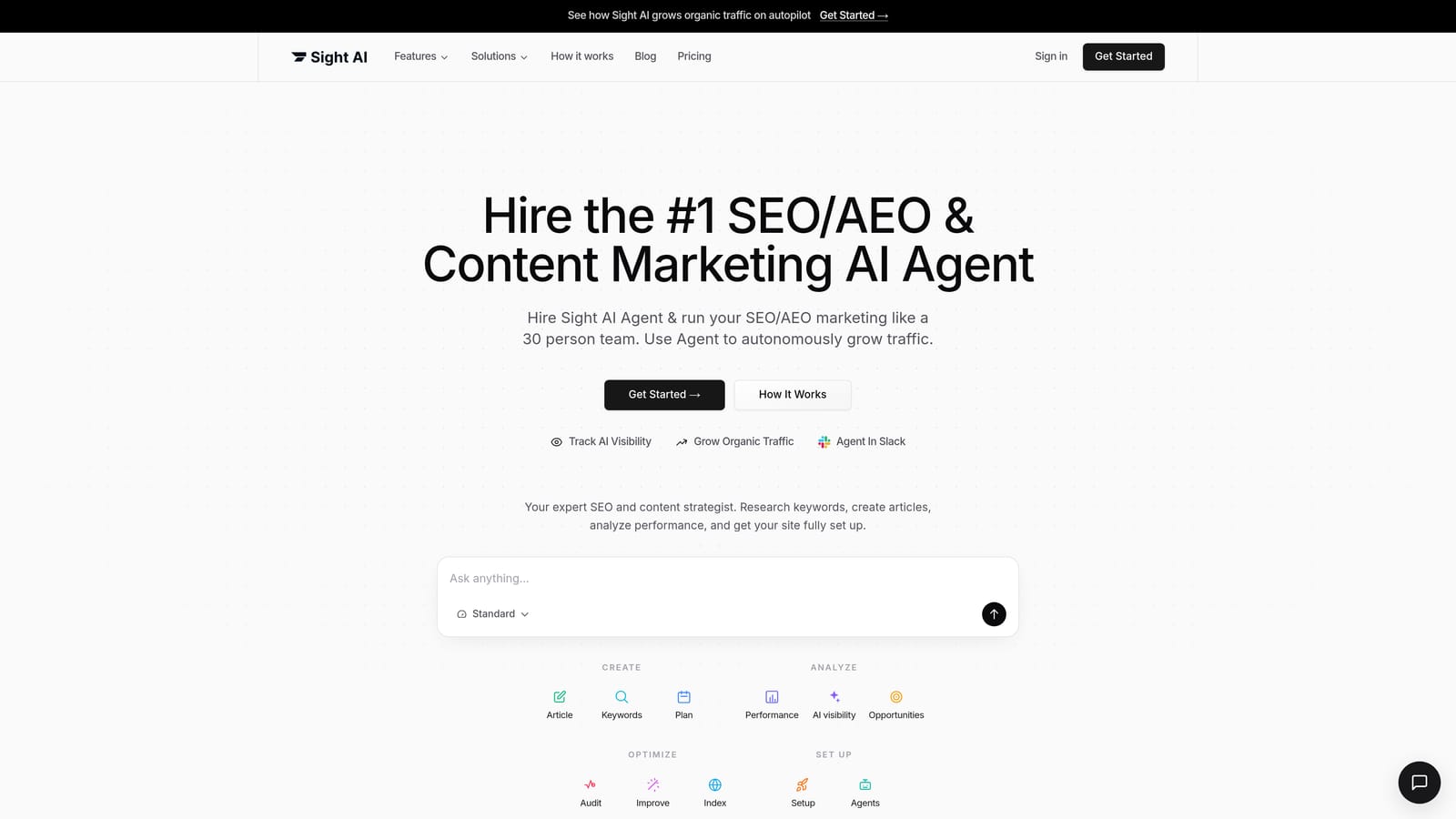
Sight AI is an all-in-one AI visibility and content platform that surfaces content opportunities by tracking how AI models reference your brand and competitors, then generates fully SEO/GEO-optimized articles through 13+ specialized AI agents.
Where This Tool Shines
Most content ideation tools tell you what people search for. Sight AI tells you something different and increasingly critical: what AI models like ChatGPT, Claude, and Perplexity are actually saying about your brand and your competitors. That distinction matters because AI-powered search is now a meaningful discovery surface, and brands that don't appear in those responses are losing visibility they can't even measure with traditional tools.
What makes Sight AI genuinely differentiated is the feedback loop it creates. You discover where AI models are mentioning competitors but not you, identify the content gaps driving that absence, and then use the built-in AI writing system to close those gaps — all within a single platform. The ideation isn't just keyword-driven; it's informed by real AI model behavior.
Key Features
AI Visibility Score: Tracks brand mentions across ChatGPT, Claude, Perplexity, and 3+ other AI platforms with sentiment analysis and prompt tracking built in.
Content Opportunity Discovery: Surfaces ideation opportunities based on gaps between how AI models reference your brand versus your competitors.
13+ Specialized AI Agents: Generates listicles, guides, and explainers optimized for both traditional SEO and GEO, with each agent tuned for a specific content format.
Autopilot Mode: Handles hands-off content ideation and publication for teams that want a fully automated content pipeline.
IndexNow Integration: Automatically submits new content and sitemap updates for faster indexing and discovery across search engines.
CMS Auto-Publishing: Reduces the time from idea to live article by connecting ideation directly to publication workflows.
Best For
Sight AI is the strongest fit for marketers, founders, and agencies who are actively thinking about AI visibility alongside traditional SEO. If your team is asking "how do we show up in ChatGPT responses?" alongside "how do we rank on Google?", this is the platform built to answer both questions simultaneously.
Pricing
Verify current pricing at trysight.ai. Plans are structured to serve solo operators through agency-scale teams.
2. Semrush
Best for: SEO-driven teams that need volume-backed ideation at scale with competitor intelligence baked in.
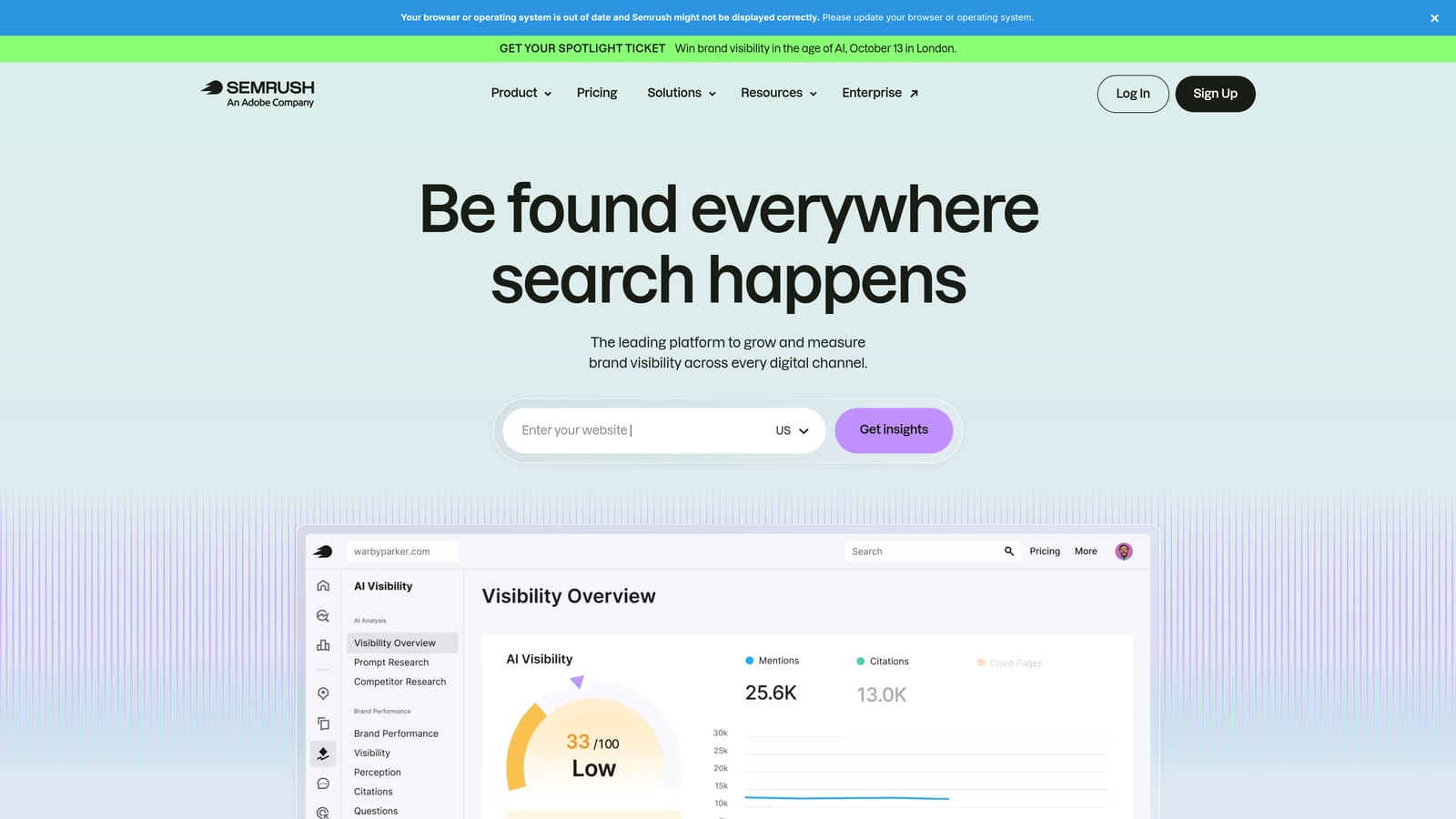
Semrush is a comprehensive SEO and content marketing platform with dedicated topic research and keyword discovery tools that automate ideation at scale.
Where This Tool Shines
Semrush has long been the go-to for data-heavy content teams, and its Topic Research tool is one of the most complete ideation modules in the market. You drop in a seed keyword and get back a structured view of subtopics, trending headlines, and commonly asked questions — organized in a way that makes editorial planning significantly faster.
The real advantage is breadth. Semrush combines keyword discovery, competitor gap analysis, and content performance data in one interface, so your ideation isn't siloed from your broader SEO strategy. Teams that already use Semrush for rank tracking will find the content ideation layer integrates naturally into existing workflows.
Key Features
Topic Research Tool: Surfaces subtopics, headline examples, and questions for any seed keyword to jumpstart editorial planning.
Keyword Magic Tool: Accesses a large keyword database with volume and difficulty data to validate ideation with search demand.
Keyword Gap Analysis: Identifies topics your competitors rank for that your site currently doesn't, making competitive ideation systematic.
Content Marketing Platform: Integrates with the SEO Writing Assistant to connect ideation directly to content creation and optimization.
Trending Topics Filter: Prioritizes timely content opportunities so your team can act on rising subjects before they peak.
Best For
Semrush is ideal for content teams and SEO professionals who want a single platform covering ideation, keyword research, competitor analysis, and content optimization. It's particularly strong for teams producing content at high volume who need structured, data-backed topic pipelines.
Pricing
Paid plans start around $139.95/month. Verify current pricing and plan tiers at semrush.com.
3. BuzzSumo
Best for: Content teams that want to ideate based on what's actually resonating socially, not just what ranks.
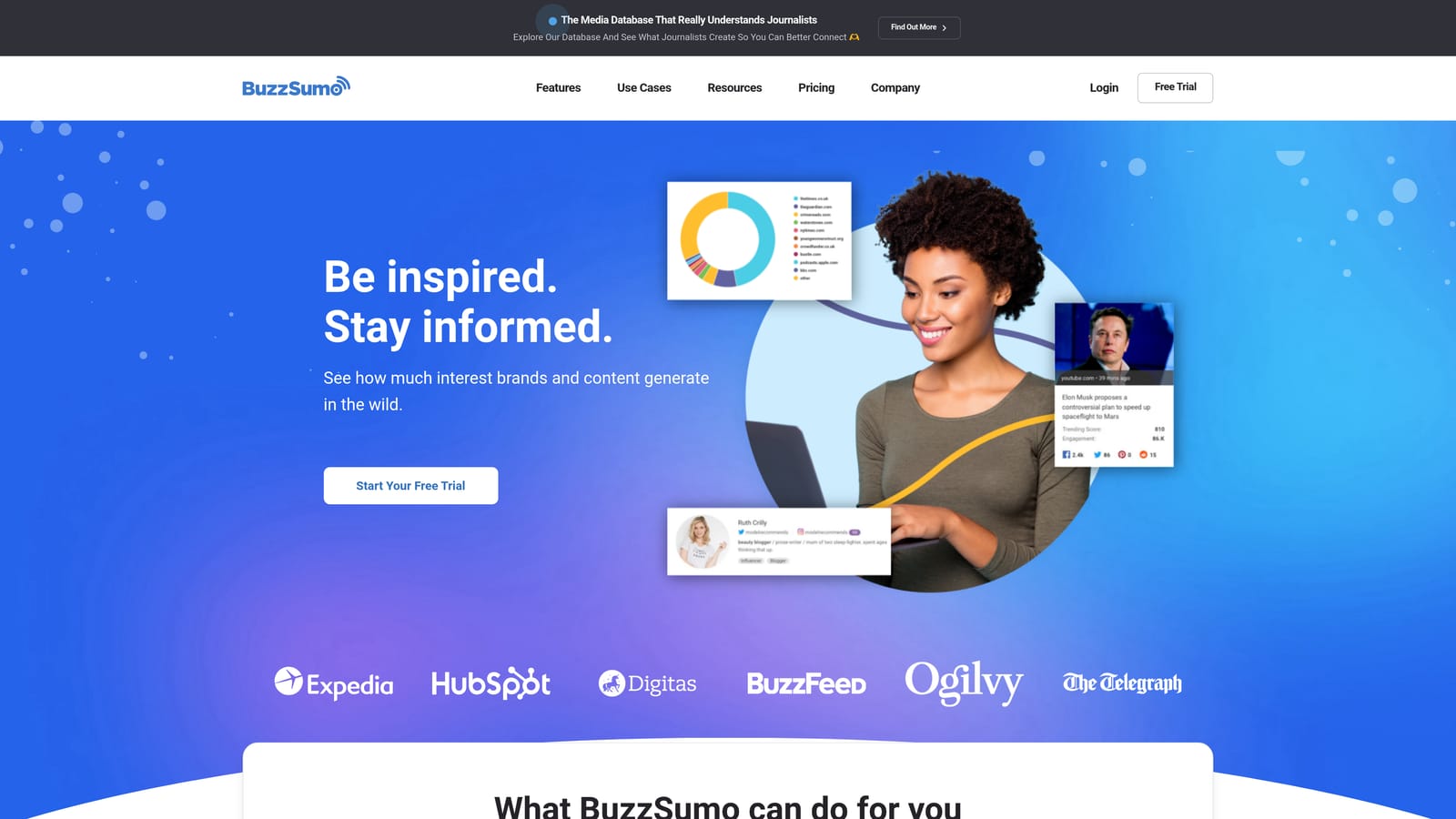
BuzzSumo is a content intelligence platform that identifies high-performing topics and formats by analyzing social engagement, backlinks, and content trends across the web.
Where This Tool Shines
BuzzSumo's core insight is that search volume doesn't always predict content success. A topic might have modest search volume but generate significant shares, backlinks, and audience engagement when executed well. BuzzSumo surfaces those opportunities by analyzing what's actually performing across the web — giving content teams a different lens than keyword tools alone provide.
Its Question Analyzer is particularly useful for ideation. Instead of guessing what your audience wants to know, you can pull real questions from Reddit, Quora, and Q&A forums around any topic, which is especially valuable for conversational content formats that align with how AI models surface information.
Key Features
Content Discovery Engine: Shows top-performing articles by topic, sorted by social engagement and backlink acquisition.
Trending Content Alerts: Notifies you when subjects start gaining traction so you can act before saturation.
Question Analyzer: Aggregates real questions from forums, Reddit, and Q&A platforms around any seed topic.
Competitor Content Analysis: Benchmarks what content is working in your niche so you can identify format and angle gaps.
Influencer Identification: Connects topic performance data to the people amplifying that content, useful for distribution planning.
Best For
BuzzSumo suits content marketers and PR-adjacent teams who need to understand what content formats and angles generate real audience engagement, not just search traffic. It's a strong complement to keyword-focused tools rather than a replacement for them.
Pricing
Paid plans start around $199/month. Verify current pricing at buzzsumo.com.
4. Ahrefs
Best for: Teams that want competitor-driven ideation grounded in traffic potential, not just search volume.
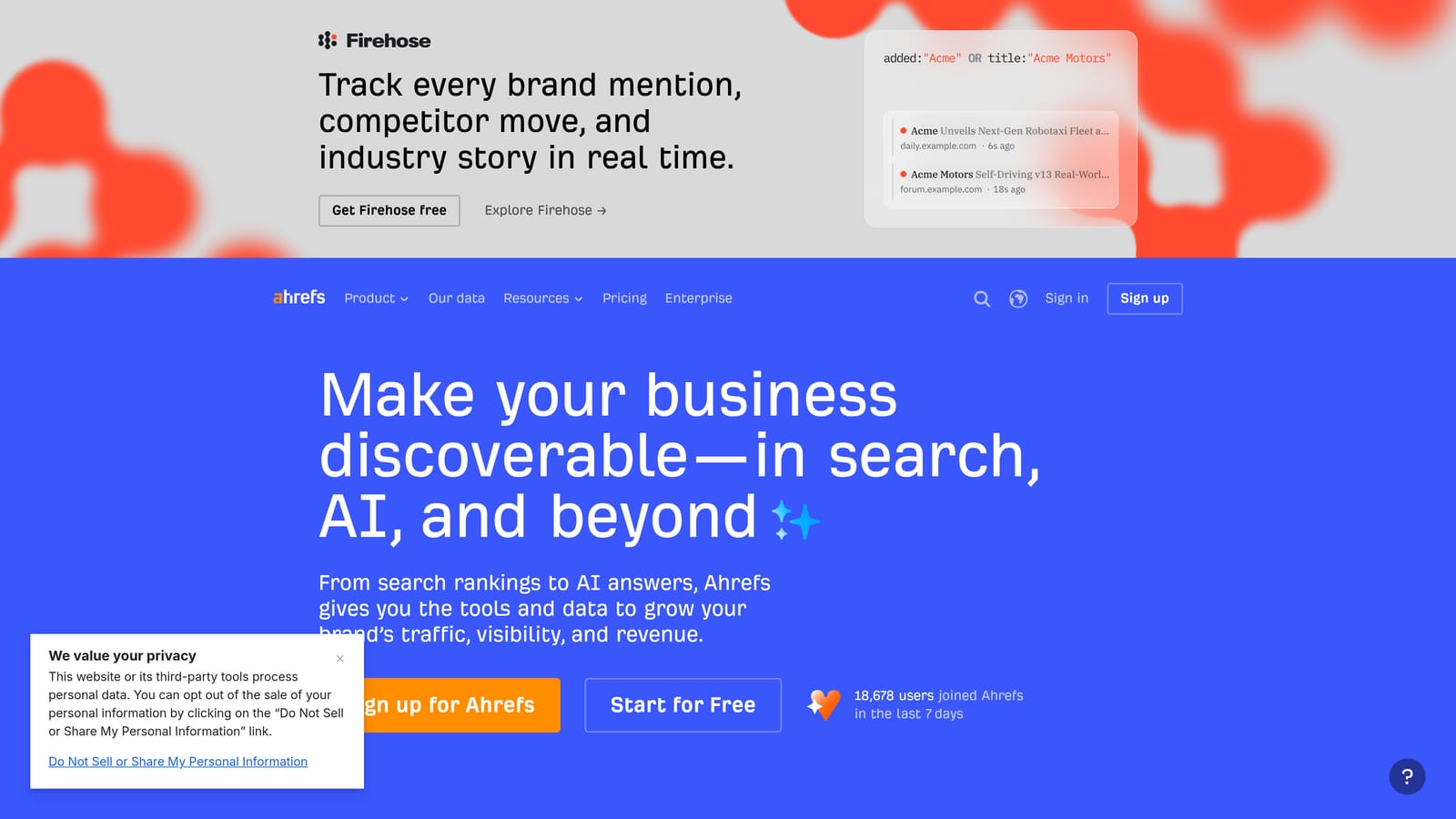
Ahrefs is a leading SEO toolset with powerful content gap and keyword research features that make competitor-driven content ideation highly systematic.
Where This Tool Shines
Ahrefs' Content Gap tool is one of the most actionable ideation features available. You input your domain alongside competitors, and Ahrefs returns every keyword those competitors rank for that you currently don't — instantly generating a prioritized list of content opportunities backed by real traffic data. It removes the guesswork from competitive ideation entirely.
The traffic potential metric is another standout. Rather than chasing keywords with high search volume that are dominated by authority sites, Ahrefs shows you the realistic traffic ceiling for each keyword based on the current top-ranking pages. This makes ideation more strategic and less aspirational.
Key Features
Content Gap Tool: Identifies keywords competitors rank for that your site doesn't, creating a systematic competitor-driven ideation pipeline.
Keywords Explorer: Classifies keywords by search intent so you're not just finding topics, you're finding topics with the right audience alignment.
Site Explorer: Analyzes competitor top pages to reverse-engineer which content strategies are driving their organic growth.
Questions Filter: Surfaces long-tail conversational queries within Keywords Explorer, useful for targeting informational intent and AI-surfaced answers.
Traffic Potential Metric: Prioritizes ideation by realistic traffic ceiling rather than raw volume, leading to more achievable content investments.
Best For
Ahrefs is the strongest fit for SEO-focused content teams and agencies that want rigorous, data-backed ideation processes. It's especially powerful for competitive niches where understanding the gap between your content coverage and competitors' is the primary ideation strategy.
Pricing
Paid plans start around $129/month. Verify current pricing at ahrefs.com.
5. Perplexity AI
Best for: GEO-conscious content teams who want to understand how AI models frame topics in real time.
Perplexity AI is an AI-native search and research tool that surfaces real-time answers, emerging questions, and exploratory topic angles using live web data.
Where This Tool Shines
Perplexity occupies a unique position in the ideation toolkit: it shows you how AI models are currently synthesizing information about any topic. For teams thinking about GEO, this is genuinely useful. When you search a topic in Perplexity, you're seeing what an AI-powered discovery surface considers authoritative and relevant — which is increasingly how a portion of your audience finds content.
The related questions feature is particularly valuable for long-tail ideation. Every search surfaces follow-up questions that real users are exploring, giving you a natural map of conversational content angles that align with how AI models structure information hierarchies.
Key Features
Real-Time Web Synthesis: Shows how AI models currently frame and answer questions about any topic, useful for GEO-aware ideation.
Related Questions: Surfaces follow-up and adjacent questions for any topic, mapping conversational content opportunities naturally.
Source Citations: Makes it easy to validate ideation angles with primary references and authoritative sources.
Collections: Organizes research across multiple content ideation projects so nothing gets lost in chat history.
Pro Search: Enables deeper, multi-step research on complex topics requiring synthesis across multiple sources.
Best For
Perplexity is a strong secondary tool for content strategists and researchers who want to understand the AI-native information landscape around their topics. It works best alongside a dedicated keyword tool rather than as a standalone ideation platform.
Pricing
Free tier available. Pro plan also available. Verify current pricing at perplexity.ai.
6. HubSpot Content Strategy Tool
Best for: HubSpot-native teams building pillar-page content programs with integrated publishing workflows.
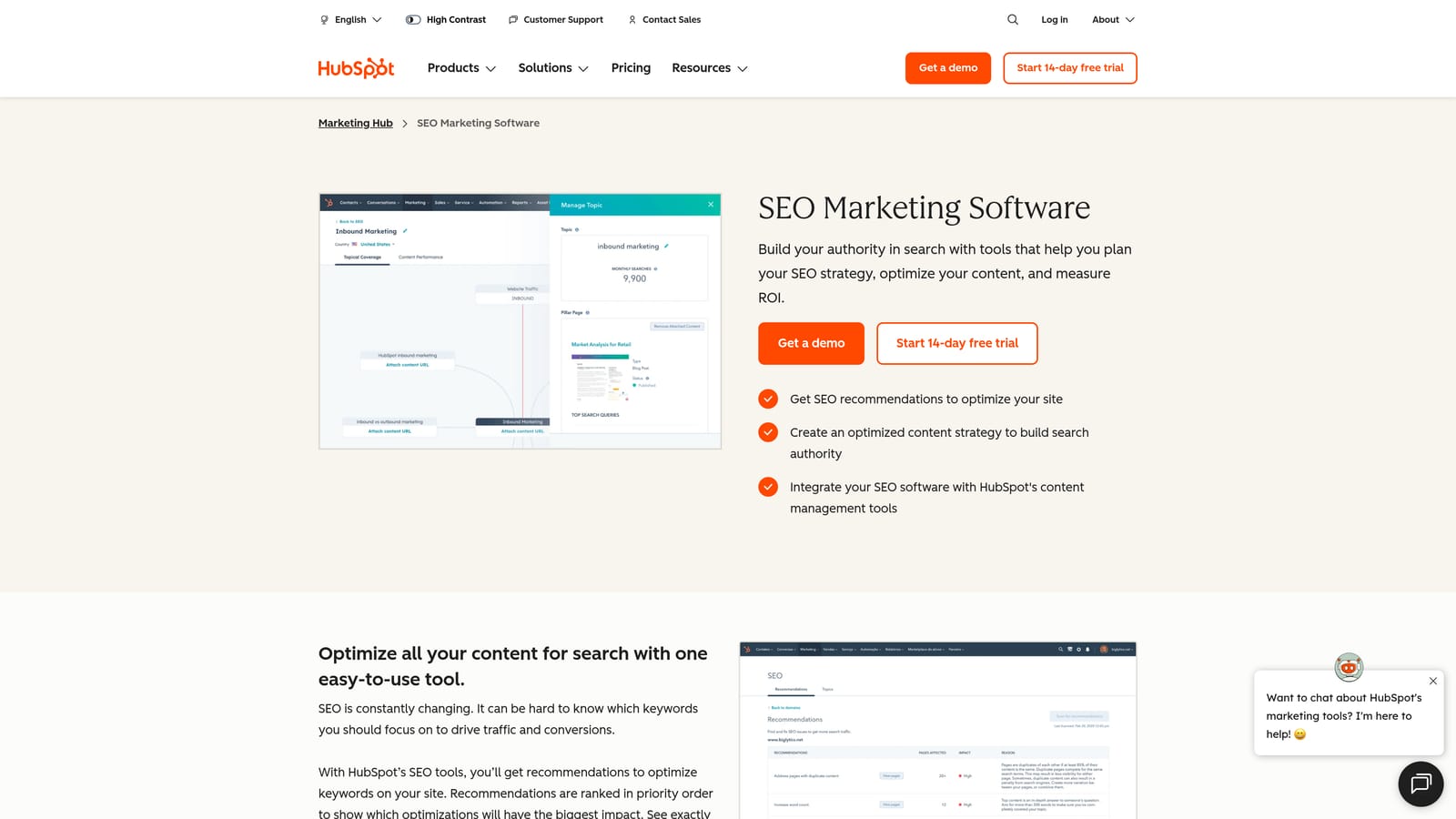
HubSpot's Content Strategy Tool is a topic cluster planning and content ideation feature built into HubSpot Marketing Hub, designed to help teams build structured content programs around measurable topical authority.
Where This Tool Shines
The pillar-cluster model is one of the most durable content architecture strategies available, and HubSpot's implementation makes it accessible to teams without deep SEO expertise. You input a seed topic, and the tool suggests cluster topics, maps relationships between pillar and supporting pages, and integrates monthly search volume data directly into the planning view.
For teams already operating in HubSpot's ecosystem, the seamless connection between ideation, CMS publishing, and performance tracking is a genuine workflow advantage. You're not toggling between platforms — ideation, creation, and measurement live in the same environment.
Key Features
Topic Cluster Suggestions: Recommends cluster page topics based on seed topics and existing site content to fill authority gaps.
Pillar Page Relationship Mapping: Visualizes the structural relationship between pillar and cluster pages for organized ideation.
Integrated Search Volume: Displays monthly search volume data directly within the topic planning interface.
Content Audit View: Identifies gaps in existing cluster coverage so you can prioritize ideation around what's missing.
HubSpot CMS Integration: Connects ideation directly to blog publishing and performance tracking within the same platform.
Best For
This tool is best suited for marketing teams already invested in HubSpot who want structured, cluster-based ideation without adding another platform to their stack. It's less useful as a standalone tool if you're not already a HubSpot customer.
Pricing
Included in HubSpot Marketing Hub paid plans. Verify which tier includes the Content Strategy Tool at hubspot.com.
7. Frase
Best for: Content writers and strategists who want SERP-driven briefs generated automatically from ideation inputs.
Frase is a content research and brief-building tool that automates ideation by aggregating SERP data, People Also Ask questions, and related queries for any target keyword.
Where This Tool Shines
Frase sits at the intersection of ideation and execution. Most tools help you find topics; Frase helps you understand exactly what a piece of content needs to cover to compete for a given keyword, pulling structure directly from what's already ranking. That makes it particularly strong for teams where ideation and brief creation are closely linked steps.
The People Also Ask aggregation is a standout feature for question-based content. Rather than manually combing through Google's PAA boxes, Frase pulls and organizes those questions automatically, giving you a ready-made content angle map for any keyword you're targeting.
Key Features
SERP Analysis: Pulls top-ranking content structures for any keyword so you can understand what coverage is required to compete.
People Also Ask Aggregation: Automatically collects and organizes PAA questions for question-based content angle discovery.
Automated Brief Generation: Creates content briefs from SERP research, reducing the manual work between ideation and writing.
Topic Scoring: Prioritizes which ideas have the strongest content coverage opportunities based on existing SERP competition.
AI Writing Assistant: Moves content from brief to draft within the same interface, shortening the ideation-to-publication cycle.
Best For
Frase is the right fit for content teams where writers and strategists work closely together, and where brief quality directly impacts content performance. It's especially strong for teams producing SEO-focused content at consistent volume who need to streamline the research phase.
Pricing
Paid plans start around $45/month. Verify current pricing at frase.io.
8. AnswerThePublic
Best for: Teams that want a fast, visual way to map every question and angle variation around a seed topic.
AnswerThePublic is a visual keyword and question research tool that maps every question, preposition, and comparison variation around a seed keyword to expose long-tail content opportunities.
Where This Tool Shines
AnswerThePublic's visual output is genuinely useful for content brainstorming sessions. You type in a seed keyword and get back a structured wheel of every who/what/where/when/why/how variation that people are searching around that topic. It's one of the fastest ways to go from a vague topic idea to a full list of specific, audience-driven content angles.
The preposition and comparison visualizations are often overlooked but valuable. "X vs Y" and "X for Z" queries frequently represent high-intent, lower-competition opportunities that keyword tools miss because they focus on volume rather than query structure. AnswerThePublic makes those patterns immediately visible.
Key Features
Visual Question Map: Displays who/what/where/when/why/how query variations for any seed topic in an organized visual format.
Preposition and Comparison Visualization: Surfaces "X vs Y" and "X for Z" query structures that reveal specific audience intent angles.
Alphabetical Autocomplete Listing: Shows all autocomplete suggestions for a keyword in alphabetical order for comprehensive coverage.
Search Listening Alerts: Monitors rising questions around a topic over time so you can catch emerging angles early.
CSV Export: Exports the full query map for bulk ideation planning and editorial calendar building.
Best For
AnswerThePublic is a strong fit for content strategists, freelance writers, and small teams who need a fast, affordable way to generate question-based content ideas. It works best as a complementary tool alongside a keyword platform that provides volume and difficulty data.
Pricing
Free tier available with limited daily searches. Paid plans also available. Verify current pricing at answerthepublic.com.
9. Exploding Topics
Best for: Content teams that want first-mover advantage on emerging subjects before they reach mainstream saturation.
Exploding Topics is a trend detection platform that surfaces rising topics weeks or months before they peak in search volume, giving content teams early positioning on emerging subjects.
Where This Tool Shines
The core value proposition of Exploding Topics is timing. Every other tool on this list helps you find topics that are already established in search. Exploding Topics finds topics that are gaining momentum before they become competitive, which means content you publish now can rank before the flood of articles from larger publishers arrives.
The Meta Trends feature adds strategic depth to what could otherwise be a list of disconnected micro-trends. By grouping related rising topics into broader thematic trends, it helps content teams make smarter decisions about where to invest editorial resources for long-term topical authority rather than chasing one-off viral moments.
Key Features
Trend Detection Algorithm: Identifies topics gaining momentum before mainstream search saturation, enabling early content positioning.
Category Filtering: Surfaces emerging trends within specific industries or niches so ideation stays relevant to your audience.
Trend Timeline: Shows the growth trajectory of any detected topic so you can assess timing and urgency.
Meta Trends Report: Groups related micro-trends into broader strategic themes for long-term content planning.
Weekly Newsletter: Delivers trending topic discoveries passively for teams who want ideation inputs without active research sessions.
Best For
Exploding Topics is best for content strategists and thought leadership teams who want to establish topical authority on emerging subjects ahead of competitors. It's particularly valuable for brands in fast-moving industries where being early to a topic carries significant SEO and credibility advantages.
Pricing
Free tier available. Pro plans also available. Verify current pricing at explodingtopics.com.
Which Tool Is Right for Your Workflow?
The honest answer is that most content teams benefit from combining two or three of these tools rather than relying on any single platform. Each addresses a different dimension of the ideation problem.
For pure SEO-driven ideation at scale, Ahrefs and Semrush are the most systematic options. BuzzSumo adds the social engagement lens that keyword tools miss. AnswerThePublic and Frase are strong choices for question-based content and brief automation respectively. Exploding Topics earns its place for teams that want early positioning on emerging subjects. Perplexity AI is a valuable research companion for understanding how AI models currently frame topics. HubSpot's Content Strategy Tool is the natural choice for teams already in that ecosystem.
If you're looking for a platform that handles ideation, content generation, and AI visibility in a single workflow, Sight AI stands apart. It's the only tool on this list that connects the dots between how AI models like ChatGPT and Claude currently reference your brand, what content gaps that reveals, and a full AI writing system to close those gaps automatically.
The ideation tools that will matter most in 2026 aren't just the ones that surface keywords. They're the ones that help you understand where your brand needs to show up across both traditional search and AI-powered discovery surfaces. That's a meaningfully different brief than the one most content teams are working from today.
Stop guessing how AI models like ChatGPT and Claude talk about your brand. Start tracking your AI visibility today and see exactly where your brand appears across top AI platforms — then use that intelligence to drive every content decision that follows.