Keyword research has always been the foundation of organic growth. But in 2026, the landscape looks very different from even a few years ago. Marketers who rely solely on search volume and keyword difficulty scores are working with an incomplete picture. AI-powered search engines are changing how people discover information, and your brand's visibility in ChatGPT, Claude, and Perplexity responses is becoming just as important as your Google rankings.
The best keyword tools today go further than pulling search data. They help you understand content gaps, map user intent, track competitive overlap, and increasingly, monitor how AI models surface your brand in generated answers. Whether you're a solo founder trying to stretch a limited content budget, an agency juggling dozens of client campaigns, or an in-house marketer scaling production at speed, the right tool changes everything.
Here are the top keyword tools for 2026, evaluated on data accuracy, standout features, ease of use, and pricing across traditional SEO and the emerging AI search landscape.
1. Sight AI
Best for: Marketers and brands who need keyword discovery combined with AI search visibility monitoring.
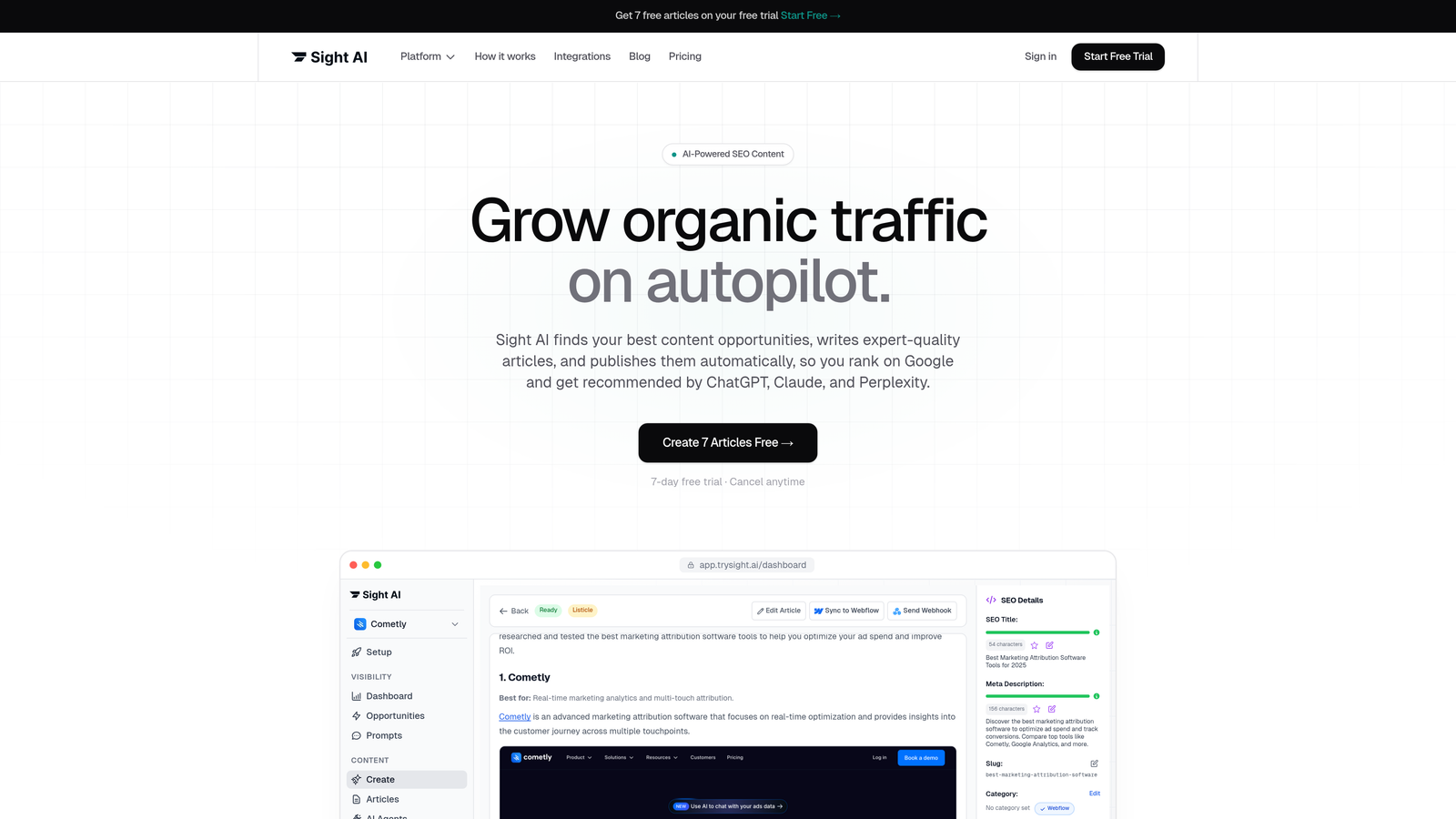
Sight AI is an AI visibility tracking and content generation platform built for the search landscape as it exists today, not as it existed five years ago.
Where This Tool Shines
What sets Sight AI apart from every other tool on this list is its focus on AI search. While traditional keyword tools tell you how a keyword performs on Google, Sight AI tells you how your brand is being mentioned, described, and recommended across AI platforms like ChatGPT, Claude, and Perplexity. That's a fundamentally different and increasingly valuable data layer.
On the content side, Sight AI's 13+ specialized AI writing agents handle the full production workflow: from identifying keyword and content gaps based on AI model responses to generating SEO and GEO-optimized articles. The Autopilot Mode with CMS auto-publishing means content can move from brief to live without manual intervention, which is a genuine efficiency advantage for teams running high-volume content programs.
Key Features
AI Visibility Score: Tracks your brand's mentions, sentiment, and positioning across 6+ AI platforms in one unified score.
Content Gap Discovery: Surfaces keyword and topic opportunities based on how AI models respond to prompts in your category.
13+ AI Writing Agents: Specialized agents produce listicles, guides, explainers, and other formats optimized for both traditional SEO and generative engine optimization (GEO).
IndexNow Integration: Automatically notifies search engines of new content for faster discovery and indexing.
CMS Auto-Publishing with Autopilot Mode: Connects directly to your CMS so content goes live without manual publishing steps.
Best For
Sight AI is the right fit for marketers, founders, and agencies who understand that keyword strategy in 2026 means showing up in AI-generated answers, not just on page one of Google. If you're already producing content at scale and want to close the gap between keyword research and AI visibility, this platform covers both in one place.
Pricing
Visit trysight.ai for current pricing plans and available tiers.
2. Ahrefs
Best for: SEO professionals who need the most comprehensive keyword and backlink data available.
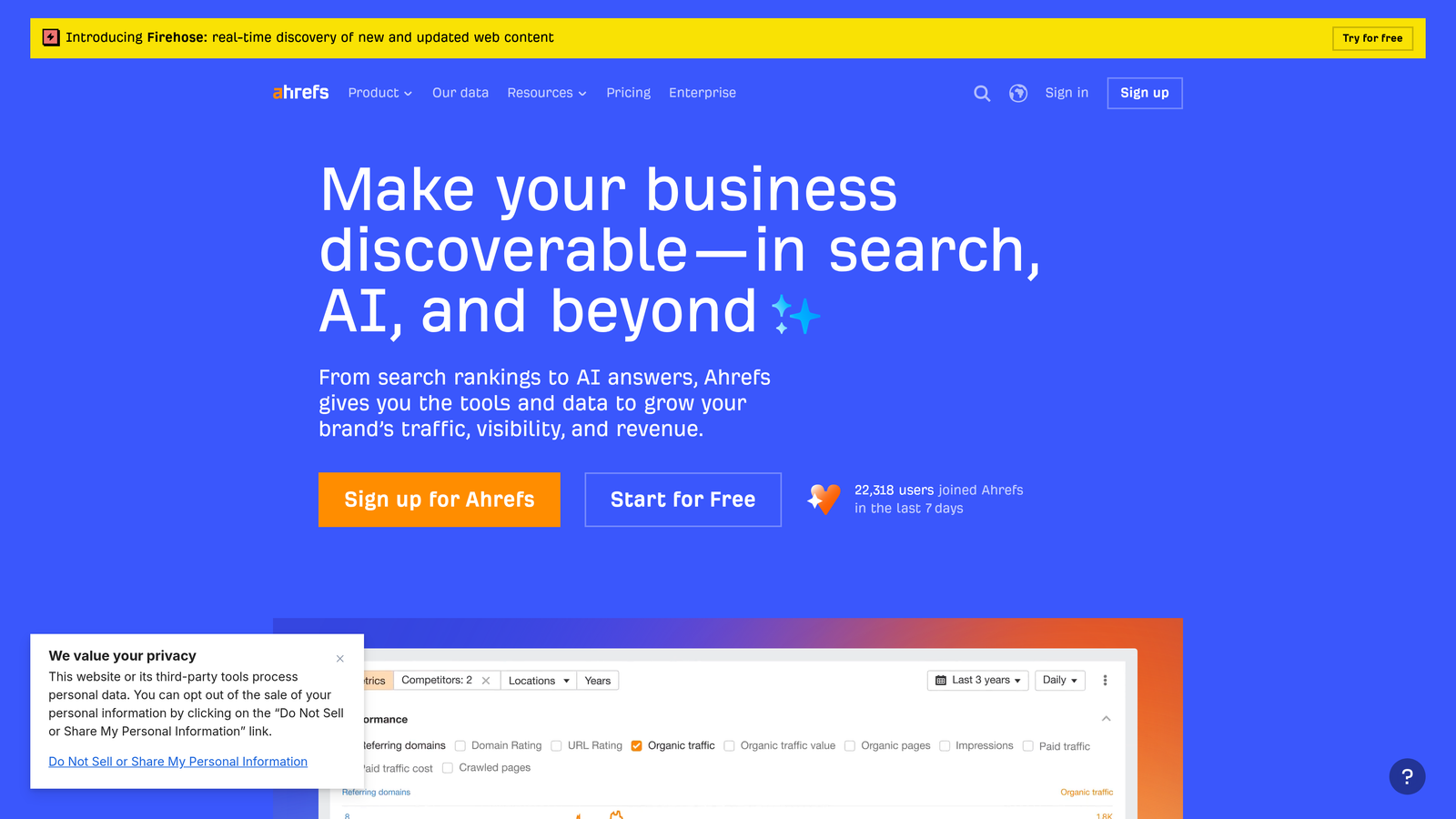
Ahrefs is one of the most trusted names in SEO, with a keyword database and backlink index that remains among the largest in the industry.
Where This Tool Shines
Ahrefs' Keywords Explorer is genuinely best-in-class for depth. The clickstream-enhanced click-through data gives you a more realistic picture of actual traffic potential than raw search volume alone. You're not just seeing how many people search for a term; you're seeing how many actually click through to results, which changes how you prioritize targets.
The Content Gap tool is another standout. You can plug in competitor domains and instantly see which keywords they rank for that you don't, turning competitive analysis into a direct content roadmap. SERP history tracking adds useful context for understanding ranking volatility before you commit resources to a keyword.
Key Features
Keywords Explorer: Access to billions of keywords with clickstream-based click-through rate data for more accurate traffic estimates.
Content Gap Analysis: Identifies keywords competitors rank for that your site is missing.
SERP Overview and History: Detailed ranking snapshots and historical data to assess ranking stability.
Keyword Lists and Tagging: Organize research into labeled lists for client or campaign management.
Multi-Engine Coverage: Keyword data spanning 10+ search engines beyond Google.
Best For
Ahrefs is the go-to for experienced SEO professionals and agencies who need reliable, deep keyword data and are willing to pay for the most comprehensive toolset available. It's particularly strong for competitive research and link-building workflows.
Pricing
Starts at $129/month for the Lite plan. Higher tiers unlock more features and usage limits.
3. Semrush
Best for: Agencies and marketing teams that need an all-in-one platform covering SEO, PPC, content, and competitive intelligence.
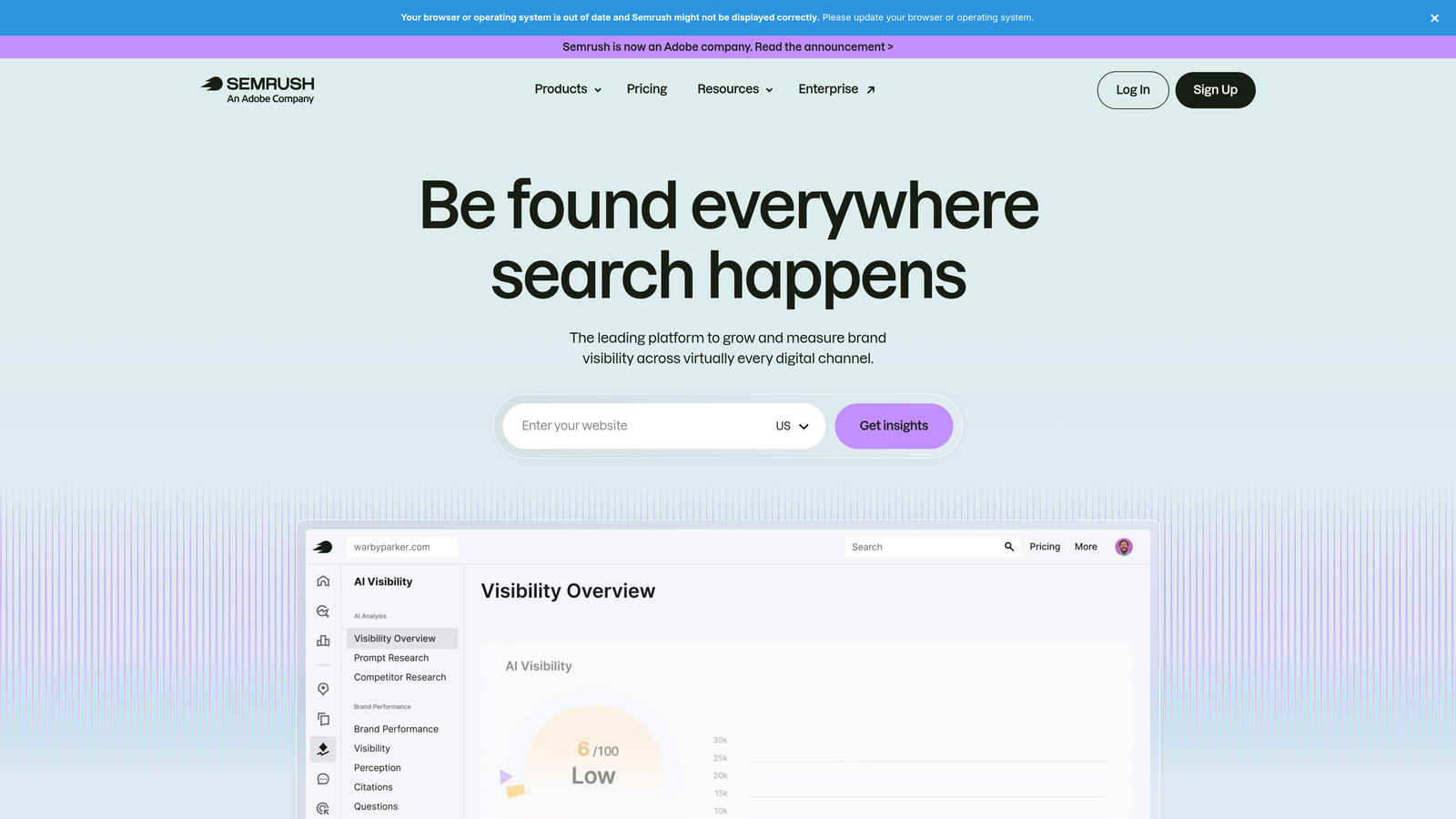
Semrush is the broadest platform on this list, combining keyword research with position tracking, paid search planning, content tools, and social media analytics under one subscription.
Where This Tool Shines
The Keyword Magic Tool is one of the most powerful keyword ideation interfaces available. With a database of over 25 billion keywords, it's difficult to find a topic it hasn't indexed. The intent classification layer is especially useful: filtering keywords by informational, navigational, commercial, or transactional intent helps you match content format to what users actually want at each stage of the funnel.
For agencies specifically, Semrush's breadth is its biggest advantage. You're not stitching together five different tools; you're managing SEO, PPC, and content research from a single platform. Position tracking with daily rank updates keeps client reporting accurate without manual data pulls.
Key Features
Keyword Magic Tool: 25+ billion keyword database with filtering by intent, difficulty, volume, and more.
Intent Classification: Automatically categorizes keywords by informational, navigational, commercial, and transactional intent.
Position Tracking: Daily rank updates with device and location segmentation.
PPC Keyword Planning: CPC data and ad copy insights integrated directly into keyword research.
Topic Research Tool: Content ideation based on trending subtopics and questions around any seed term.
Best For
Semrush is ideal for agencies managing multiple clients across SEO and paid search, and for in-house marketing teams that want a single platform for the full digital marketing workflow. The breadth justifies the price for teams that will actually use most of its features.
Pricing
Starts at $139.95/month for the Pro plan. Business and Enterprise plans are available for larger teams.
4. Moz Keyword Explorer
Best for: Beginners and intermediate marketers who want actionable keyword data without the complexity of enterprise tools.
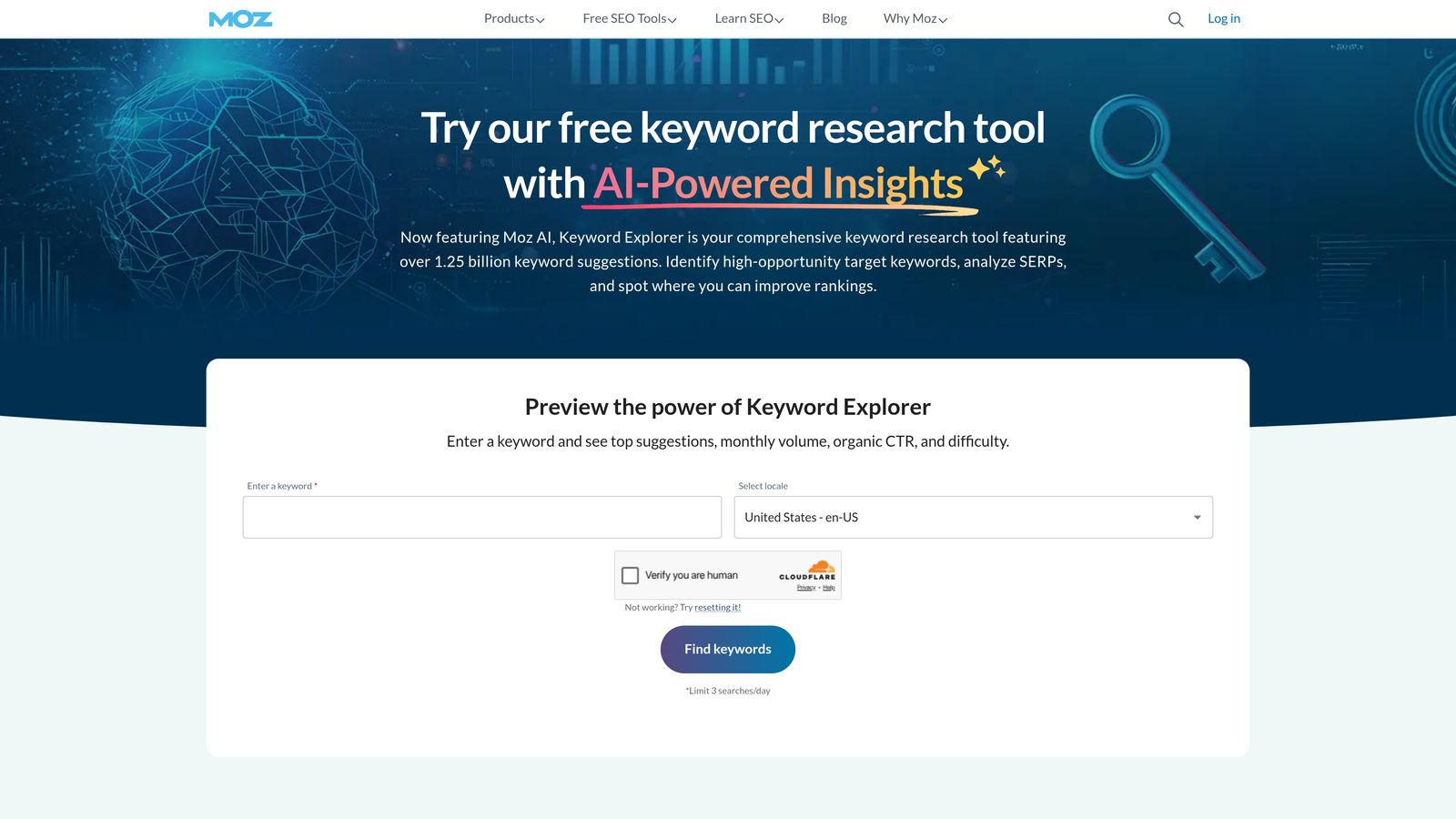
Moz Keyword Explorer is built around simplicity, offering proprietary metrics that distill keyword opportunity into clear, actionable numbers.
Where This Tool Shines
Moz's Priority Score is the tool's signature feature. Rather than asking you to manually balance volume, difficulty, and click-through rate, Priority Score combines all three into a single number that ranks keyword opportunities by realistic potential. For marketers who don't want to spend hours analyzing raw data, this is a genuinely useful shortcut.
The integration with Moz Pro's Domain Authority and Page Authority metrics adds useful context to SERP analysis. You can quickly assess whether the pages currently ranking for a keyword are within reach based on your site's authority, which helps set realistic expectations before committing to a content strategy.
Key Features
Priority Score: Proprietary metric combining search volume, keyword difficulty, and organic CTR into one actionable ranking.
Keyword Suggestions with Relevance Scoring: Related keyword ideas ranked by topical relevance to your seed term.
SERP Analysis: Page Authority and Domain Authority data for every ranking result.
Saved Keyword Lists: Organize and export keyword research for ongoing campaigns.
Moz Pro Integration: Connects directly to rank tracking and site audit features within the Moz Pro suite.
Best For
Moz Keyword Explorer is the right choice for solo marketers, small business owners, and content teams who are newer to SEO and want a tool that makes prioritization straightforward. It's also a solid starting point before graduating to Ahrefs or Semrush.
Pricing
Included with Moz Pro, which starts at $49/month. A limited free version is available without a subscription.
5. Google Keyword Planner
Best for: Marketers who want free, first-party keyword data directly from Google for both SEO and PPC planning.
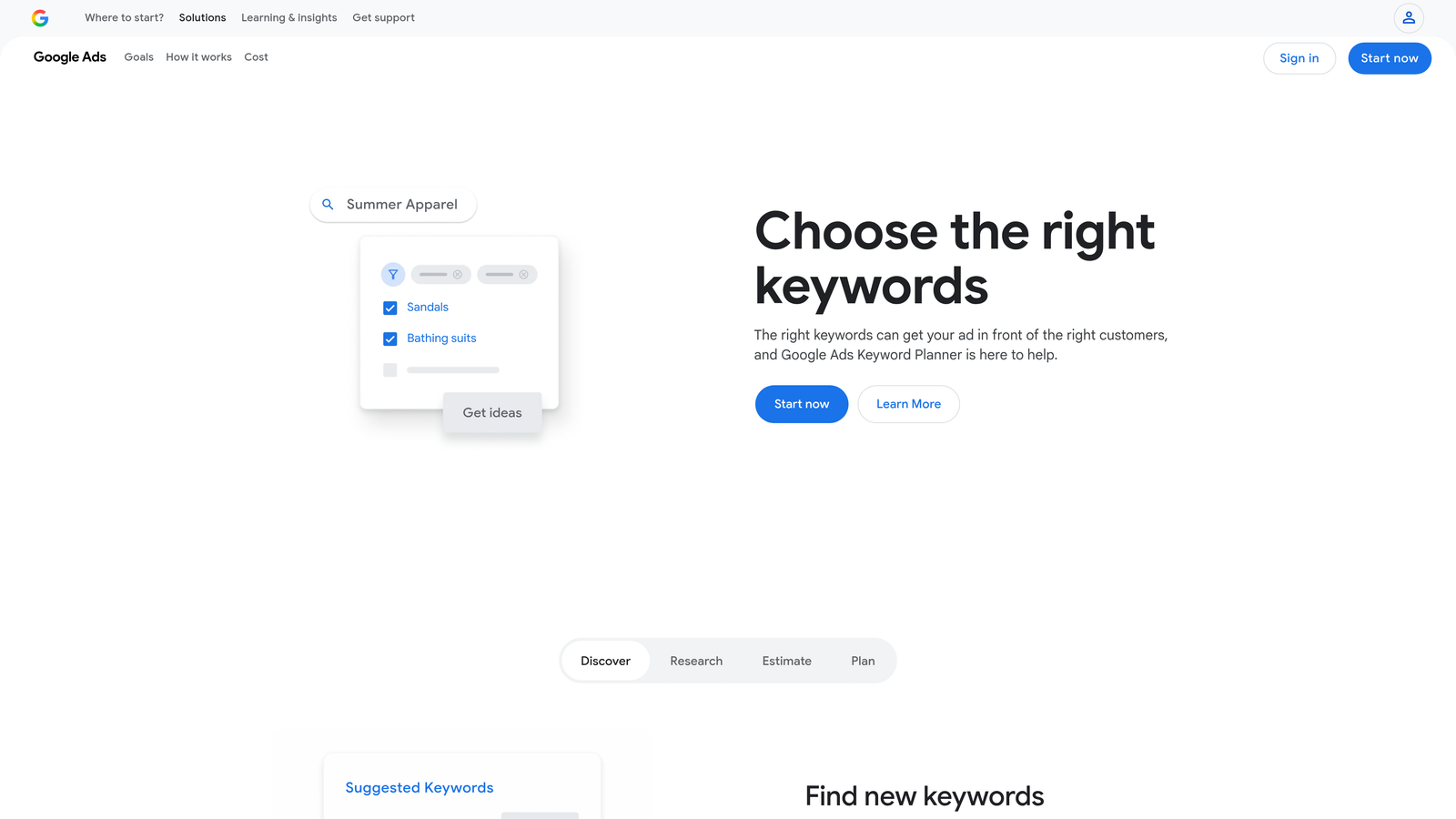
Google Keyword Planner is the original keyword research tool, offering search volume ranges, competition levels, and CPC estimates pulled directly from Google's own data.
Where This Tool Shines
The core advantage here is the source. No third-party tool is pulling data from a larger or more authoritative dataset than Google itself. For paid search planning, Keyword Planner remains the most reliable source of CPC estimates and competition levels. For organic research, it's a strong starting point for validating keyword demand before investing in content production.
The URL-based keyword discovery feature is underused and genuinely useful: paste in a competitor's URL and Keyword Planner surfaces keywords Google associates with that page. It's a quick way to reverse-engineer competitor content strategies without a paid subscription.
Key Features
First-Party Google Data: Search volume ranges and trend data sourced directly from Google's search index.
CPC Bid Estimates: Accurate cost-per-click data for paid keyword planning and budget forecasting.
URL-Based Keyword Ideas: Enter a competitor URL to surface associated keywords Google has indexed for that page.
Location and Language Filtering: Narrow keyword data by geography and language for local or international campaigns.
Completely Free: Full access with any Google Ads account, active campaign not required.
Best For
Google Keyword Planner is the right first stop for anyone building a keyword list from scratch, especially on a tight budget. It's also the best tool available for PPC keyword planning given its direct connection to Google's ad auction data.
Pricing
Free with a Google Ads account. No paid subscription required to access keyword data.
6. Ubersuggest
Best for: Budget-conscious marketers and freelancers who need solid keyword research without a recurring monthly commitment.
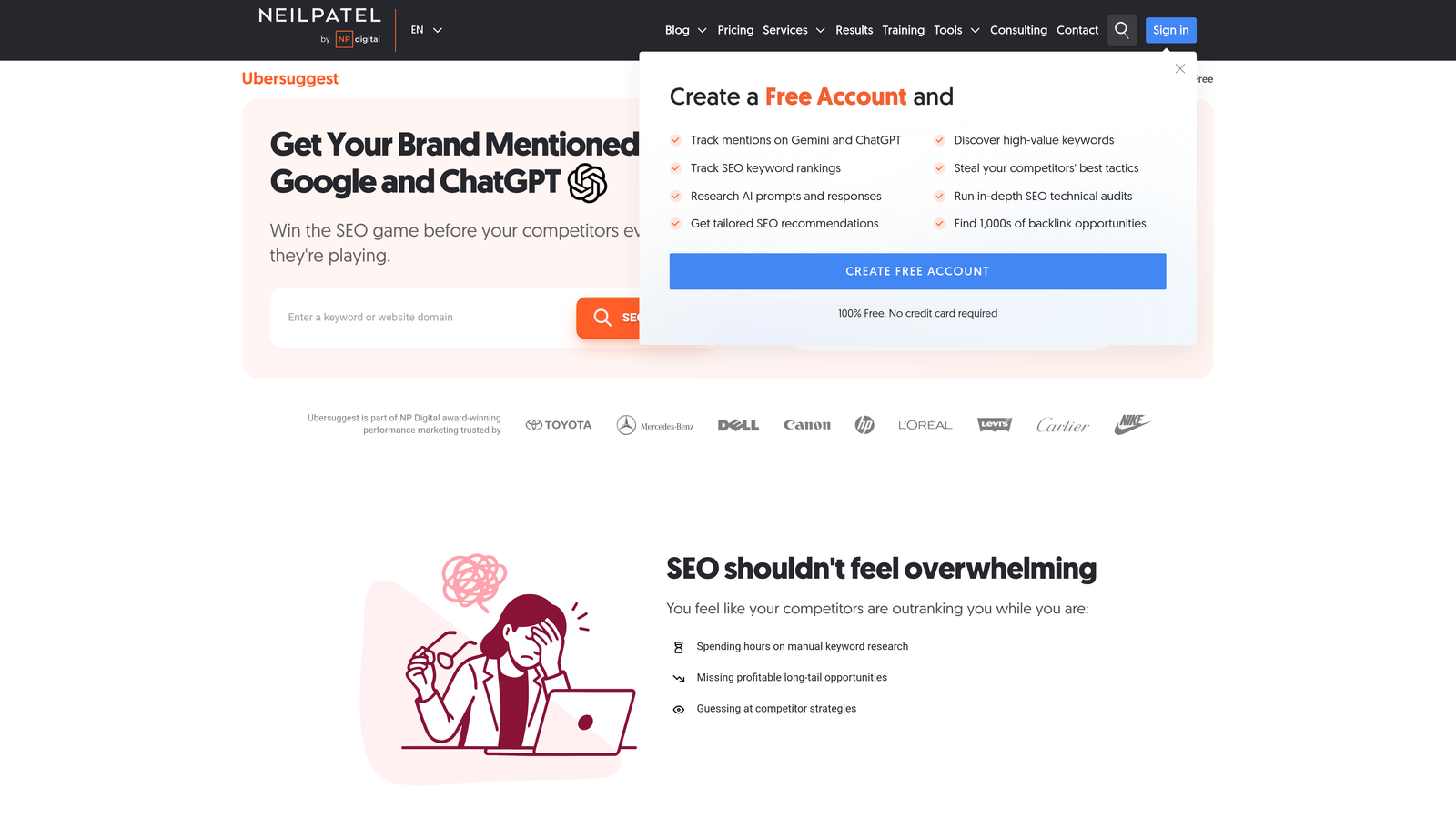
Ubersuggest is a keyword research and SEO tool that punches above its price point, offering search volume, difficulty scores, content ideas, and basic backlink data at rates well below the enterprise platforms.
Where This Tool Shines
The lifetime pricing option is Ubersuggest's most distinctive feature. For freelancers or small business owners who want to avoid ongoing SaaS subscription costs, a one-time payment for lifetime access is a compelling proposition that no other major keyword tool offers. The Chrome extension adds practical value by surfacing keyword data directly in Google search results without switching tabs.
The content ideas section, which shows top-performing pages for any keyword along with their estimated traffic and backlink counts, is a useful shortcut for content planning. You can quickly see what's already working in a topic area and build from there.
Key Features
Keyword Suggestions: Search volume, CPC, SEO difficulty, and paid difficulty for any seed keyword.
Content Ideas: Top-performing pages for each keyword with traffic estimates and social share data.
Domain Overview: Competitor keyword analysis and traffic estimates by domain.
Chrome Extension: Inline keyword data within Google search results for faster research.
Lifetime Plan: One-time payment option that eliminates ongoing subscription costs.
Best For
Ubersuggest is ideal for freelancers, solo founders, and small business owners who need functional keyword research without the $100+ monthly price tags of enterprise tools. The lifetime plan makes it especially attractive for budget-conscious users planning for the long term.
Pricing
Starts at $12/month or $120 as a one-time lifetime payment for the Individual plan.
7. SE Ranking
Best for: Agencies and SMBs that want a full-featured SEO platform with flexible pricing tied to actual usage.
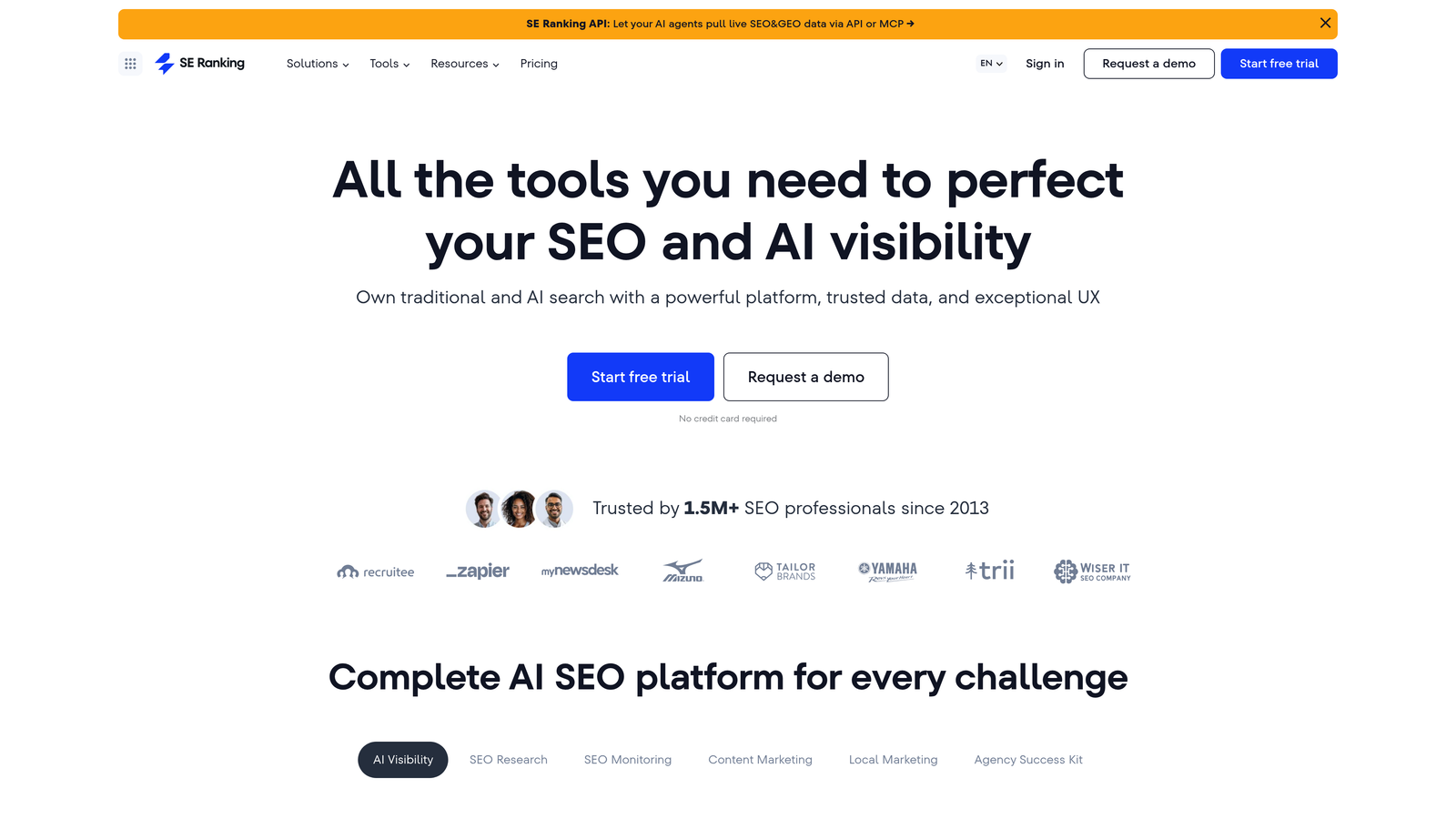
SE Ranking is a comprehensive SEO platform that stands out for its adjustable pricing model, strong keyword grouping tools, and white-label reporting capabilities built specifically for agency workflows.
Where This Tool Shines
SE Ranking's pricing flexibility is genuinely useful for agencies managing clients with different needs. You can adjust rank check frequency, which directly affects your monthly cost. Clients who only need weekly tracking cost less than those requiring daily updates, which makes it easier to match tool costs to client budgets.
The keyword grouping and clustering functionality is one of the more underrated features in this price range. Rather than managing a flat list of keywords, you can automatically cluster semantically related terms into topic groups, which makes content planning and site architecture decisions significantly more organized.
Key Features
Keyword Research: Search volume, difficulty scores, and related keyword suggestions for any target term.
Adjustable Rank Tracking Frequency: Control costs by setting check frequency from daily to weekly per project.
Keyword Grouping and Clustering: Automatically organize keywords into semantic clusters for content planning.
Competitive Research: Keyword overlap analysis and traffic share comparison against competitors.
White-Label Reporting: Branded reports for agency client delivery without platform attribution.
Best For
SE Ranking is particularly well suited for agencies managing multiple clients at different service tiers, and for SMBs that want a capable SEO platform without paying for features they don't use. The white-label reporting makes it a practical choice for client-facing work.
Pricing
Starts at $65/month for the Essential plan. Higher tiers add more keywords, projects, and users.
8. Mangools (KWFinder)
Best for: Content marketers and bloggers focused on finding low-competition long-tail keywords with minimal friction.
Mangools KWFinder is a streamlined keyword research tool designed around one core task: finding keywords you can actually rank for without an enormous domain authority.
Where This Tool Shines
KWFinder's interface is one of the cleanest in the category. Keyword difficulty scores are displayed on a clear visual scale alongside live SERP results in the same view, so you're evaluating competition and search volume simultaneously without switching between screens. For marketers who spend a lot of time in keyword research, that workflow efficiency adds up quickly.
The tool's strength in long-tail keyword discovery makes it particularly valuable for newer sites or content-heavy blogs where ranking against high-authority domains on broad terms isn't realistic. Finding lower-competition variations of high-intent keywords is where KWFinder consistently delivers.
Key Features
Keyword Difficulty Score: Visual difficulty rating on a clear 0-100 scale with color-coded indicators.
Simultaneous SERP and Keyword View: Live SERP results displayed alongside keyword metrics in one screen.
Keyword Variations and Questions: Related keywords, autocomplete suggestions, and question-based queries from a single search.
Competitor Keyword Analysis: Enter any domain to see what keywords it ranks for and identify gaps.
Bundled Tool Suite: Subscription includes SERPChecker, LinkMiner, SiteProfiler, and SERPWatcher.
Best For
KWFinder is ideal for bloggers, content marketers, and small sites looking to grow organic traffic through long-tail keyword targeting. The bundled suite of tools provides solid all-around SEO coverage at a price point well below the enterprise alternatives.
Pricing
Starts at $29.90/month for the Mangools Basic plan. Annual billing reduces the effective monthly cost.
9. KeywordTool.io
Best for: Marketers who need keyword data across multiple platforms including Amazon, YouTube, and Instagram, not just Google.
KeywordTool.io is a multi-platform keyword research tool that pulls autocomplete suggestions from eight or more search engines and content platforms, making it uniquely useful for cross-channel content strategies.
Where This Tool Shines
Most keyword tools are built around Google. KeywordTool.io is built around the idea that your audience searches everywhere: YouTube for tutorials, Amazon for product research, Instagram for inspiration, Bing for a meaningful share of desktop queries. If your content strategy spans multiple channels, having keyword data from each platform in one place is a meaningful advantage.
The long-tail suggestions generated from autocomplete data reflect real search behavior, since they're drawn from actual queries users are typing rather than modeled estimates. This makes the tool particularly useful for uncovering highly specific, intent-rich keyword variations that broader tools might miss.
Key Features
Multi-Platform Autocomplete Data: Keyword suggestions from Google, YouTube, Amazon, Bing, Instagram, Twitter, and more.
Long-Tail Keyword Discovery: Autocomplete-based suggestions reflecting real user search behavior across platforms.
Search Volume and CPC Data: Volume, competition, and cost-per-click metrics available on Pro plans.
Hashtag Suggestions: Social media hashtag discovery for Instagram and Twitter content planning.
Bulk Export: Download keyword lists in bulk for integration with other SEO tools or spreadsheets.
Best For
KeywordTool.io is the right choice for e-commerce brands that need Amazon keyword data, video marketers focused on YouTube SEO, and content teams running cross-platform campaigns who need keyword intelligence beyond Google alone.
Pricing
Free tier available with limited searches. Pro plans start at $89/month with full volume, CPC, and competition data.
10. AnswerThePublic
Best for: Content strategists and SEO writers who need to map question-based keyword opportunities for blog posts, FAQs, and topical authority content.
AnswerThePublic is a visual keyword ideation tool that organizes search queries around any seed term into question clusters, prepositions, and comparisons, making content planning more intuitive.
Where This Tool Shines
The visual question map format is genuinely useful for content planning in a way that a flat keyword list is not. Seeing all the "how," "why," "what," and "when" questions around a topic laid out visually helps you understand the full scope of what your audience wants to know, which is exactly what you need when building topical authority content or FAQ sections.
AnswerThePublic also works well as a complement to traditional keyword tools. Use Ahrefs or Semrush to find high-volume target keywords, then use AnswerThePublic to map out the question landscape around each topic. The combination gives you both the volume data and the content depth you need to build comprehensive resources.
Key Features
Visual Question Maps: Keyword questions organized by who, what, when, where, why, and how for any seed term.
Preposition and Comparison Clusters: Surfaces keywords using prepositions (for, with, without) and comparisons (versus, like, or).
Alphabetical Keyword Expansion: Full A-Z keyword variations for broad topic exploration.
Search Listening Alerts: Notifications when new keyword trends emerge around your monitored topics.
CSV Export: Download all keyword data for use in content briefs or other tools.
Best For
AnswerThePublic is ideal for content strategists, SEO writers, and anyone building topical authority content or structured FAQ sections. It works best as a complement to a primary keyword tool rather than a standalone research solution.
Pricing
Free tier with limited daily searches. Pro plans start at $5/month, making it one of the most affordable specialized tools available.
11. Serpstat
Best for: Content teams and SEO strategists who want automated keyword clustering to streamline content planning at scale.
Serpstat is a budget-friendly SEO platform with a standout keyword clustering feature that automatically groups semantically related keywords based on SERP similarity, reducing the manual work of content organization.
Where This Tool Shines
Keyword clustering is Serpstat's clearest differentiator. Rather than manually sorting hundreds of keywords into topic groups, Serpstat analyzes SERP overlap to identify which keywords share ranking pages, then clusters them automatically. The result is a content map that reflects how search engines actually group topics, which is more reliable than manual categorization based on surface-level keyword similarity.
For content teams managing large-scale production, this feature alone can save significant planning time. Instead of starting every content sprint with a manual sorting exercise, you start with organized clusters ready to assign to writers. The API access extends this functionality into custom workflows and internal tools.
Key Features
Keyword Clustering: Automatically groups keywords by SERP similarity to identify which terms can be targeted on the same page.
Keyword Research: Search volume, difficulty scores, and CPC data for any target keyword or domain.
Competitor Keyword Gap Analysis: Identifies keywords competitors rank for that your site is missing.
Rank Tracking with Visibility Trends: Monitors position changes over time with visibility score tracking.
API Access: Programmatic access to keyword and SERP data for custom integrations and workflow automation.
Best For
Serpstat is a strong fit for content teams running high-volume production who need efficient keyword organization, and for SEO strategists who want keyword clustering without paying enterprise-level prices. The API makes it attractive for technically oriented teams building custom tooling.
Pricing
Starts at $59/month for the Individual plan. Team and Agency plans are available with expanded limits.
Which Tool Is Right for You?
The honest answer is that the best keyword tool depends on what stage you're at and what problems you're actually trying to solve.
If budget is the primary constraint, start with Google Keyword Planner. It's free, the data is authoritative, and it covers the fundamentals of keyword discovery and PPC planning without any cost. Pair it with AnswerThePublic's free tier for question-based ideation and you have a workable research stack at zero cost.
For agencies and teams managing multiple clients across SEO and paid search, Semrush or Ahrefs are the category leaders. Semrush wins on breadth; Ahrefs wins on backlink data depth and keyword click-through accuracy. Both justify their price tags for professional use cases.
On a tighter budget, Mangools KWFinder and Ubersuggest offer solid keyword research at a fraction of the enterprise price. Ubersuggest's lifetime plan is particularly compelling for freelancers who want to stop paying monthly fees.
But here's the thing: if you're only optimizing for traditional search rankings, you're already behind where the search landscape is heading. AI-generated answers in ChatGPT, Claude, and Perplexity are becoming a primary discovery channel for many audiences. Knowing which keywords drive Google traffic is valuable. Knowing whether your brand is being mentioned, recommended, or ignored when someone asks an AI about your category is a different and increasingly critical insight.
That's the gap Sight AI fills. It combines keyword and content gap discovery based on AI model responses with a full content generation workflow and AI visibility tracking across 6+ platforms. For marketers who want to build organic growth strategies that work in both traditional search and AI search, it's the tool built for where things are actually going.
Start tracking your AI visibility today and see exactly where your brand appears across top AI platforms. Stop guessing how AI models like ChatGPT and Claude talk about your brand, and start turning that visibility into a growth advantage.