AI search engines have fundamentally changed how people find information. When someone asks ChatGPT, Perplexity, or Claude a question, they get a direct answer, not a list of blue links. If your brand isn't being cited in those answers, you're invisible to a growing segment of your audience.
This is where generative engine optimization (GEO) comes in. Unlike traditional SEO, which targets search engine results pages, GEO focuses on making your content the kind that AI models trust, cite, and recommend. And just like SEO has its toolkit, GEO is rapidly developing its own.
The tools below were selected based on five criteria: AI visibility tracking capabilities, content optimization for AI citations, ease of use, pricing transparency, and integration with existing workflows. Whether you're a founder trying to get your brand mentioned by AI models, a marketer managing content at scale, or an agency serving multiple clients, there's a tool here for you.
From purpose-built AI visibility platforms to established SEO tools adding GEO features, here are the top generative engine optimization software options worth your attention in 2026. You can also explore more breakdowns like this on the Sight AI blog.
1. Sight AI
Best for: Marketers and founders who want an all-in-one GEO platform covering tracking, content creation, and indexing.
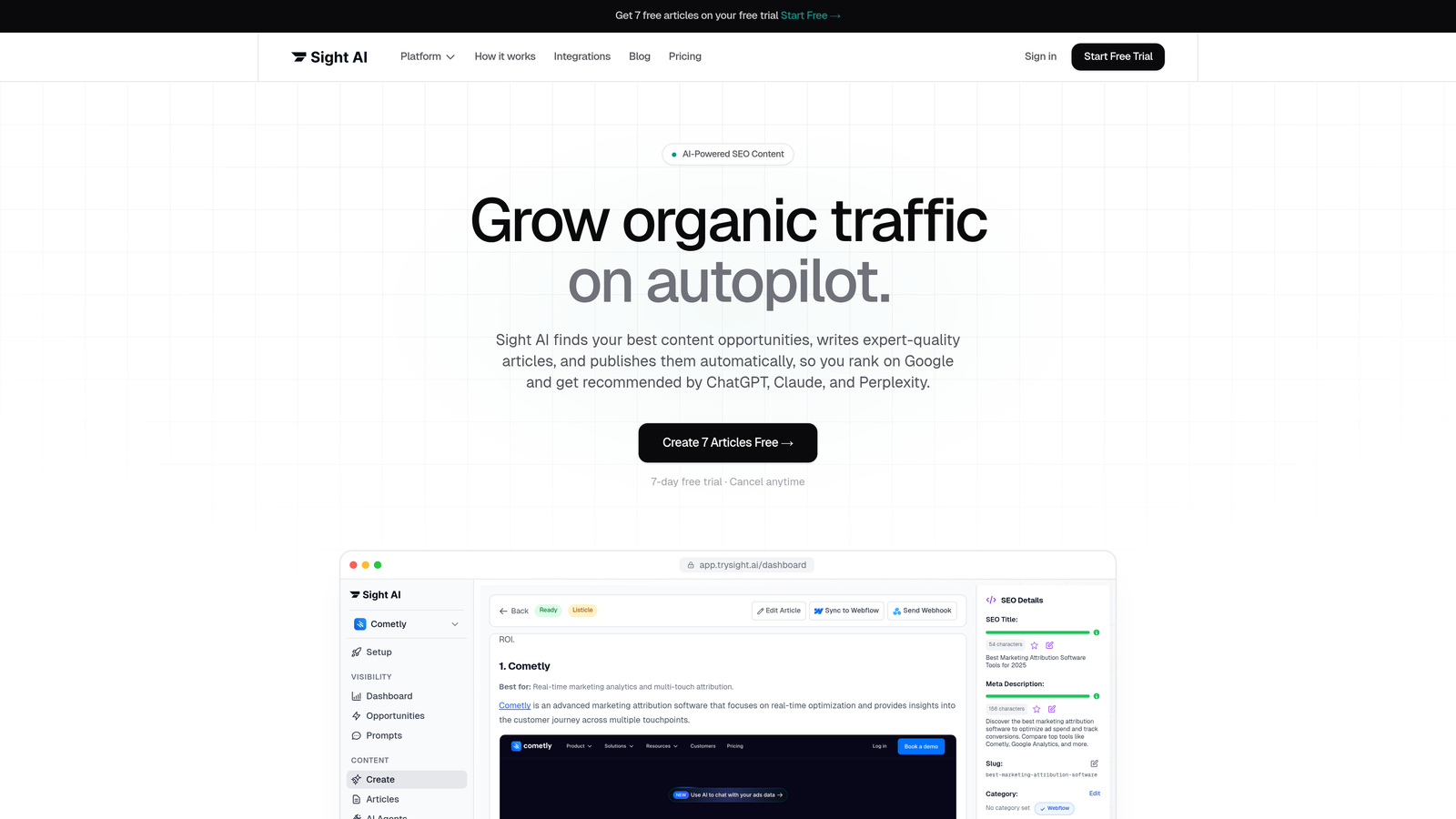
Sight AI is an all-in-one generative engine optimization platform that combines AI visibility tracking, AI-powered content generation, and automated website indexing in a single workflow.
Where This Tool Shines
Most GEO tools make you choose between monitoring your AI visibility and doing something about it. Sight AI closes that loop by connecting what AI models say about your brand directly to the content actions you can take to improve it. You can track a prompt, see that a competitor is being cited instead of you, and immediately spin up a GEO-optimized article to close that gap.
The platform's Autopilot Mode is particularly useful for teams that don't have bandwidth for manual content production. Once configured, it handles content generation and publishing in the background, keeping your site fresh without constant oversight.
Key Features
AI Visibility Score: Tracks how often and how favorably your brand appears across ChatGPT, Claude, Perplexity, and three or more additional AI platforms, with sentiment analysis built in.
Prompt-Level Tracking: Shows exactly which queries trigger your brand mentions in AI-generated answers, so you can identify gaps and opportunities with precision.
13+ Specialized AI Agents: A content writing system with agents dedicated to different formats, including listicles, how-to guides, and explainers, all optimized for both SEO and GEO citation signals.
Autopilot Mode: Hands-off content production that generates and publishes articles automatically, freeing up your team for strategy over execution.
IndexNow Integration: Automated sitemap submission and IndexNow integration ensure new content gets discovered and indexed by search engines faster than manual submission.
Best For
Sight AI is best suited for marketers, SaaS founders, and digital agencies who want a unified platform rather than stitching together separate monitoring and content tools. It's especially valuable if you're starting to build a GEO strategy from scratch and want visibility into AI mentions alongside the content infrastructure to act on what you find.
Pricing
A free tier is available for getting started. Paid plans with expanded tracking, content generation, and automation features are listed at trysight.ai/pricing.
2. Semrush
Best for: Enterprise teams that need a comprehensive SEO foundation with emerging AI search features layered on top.
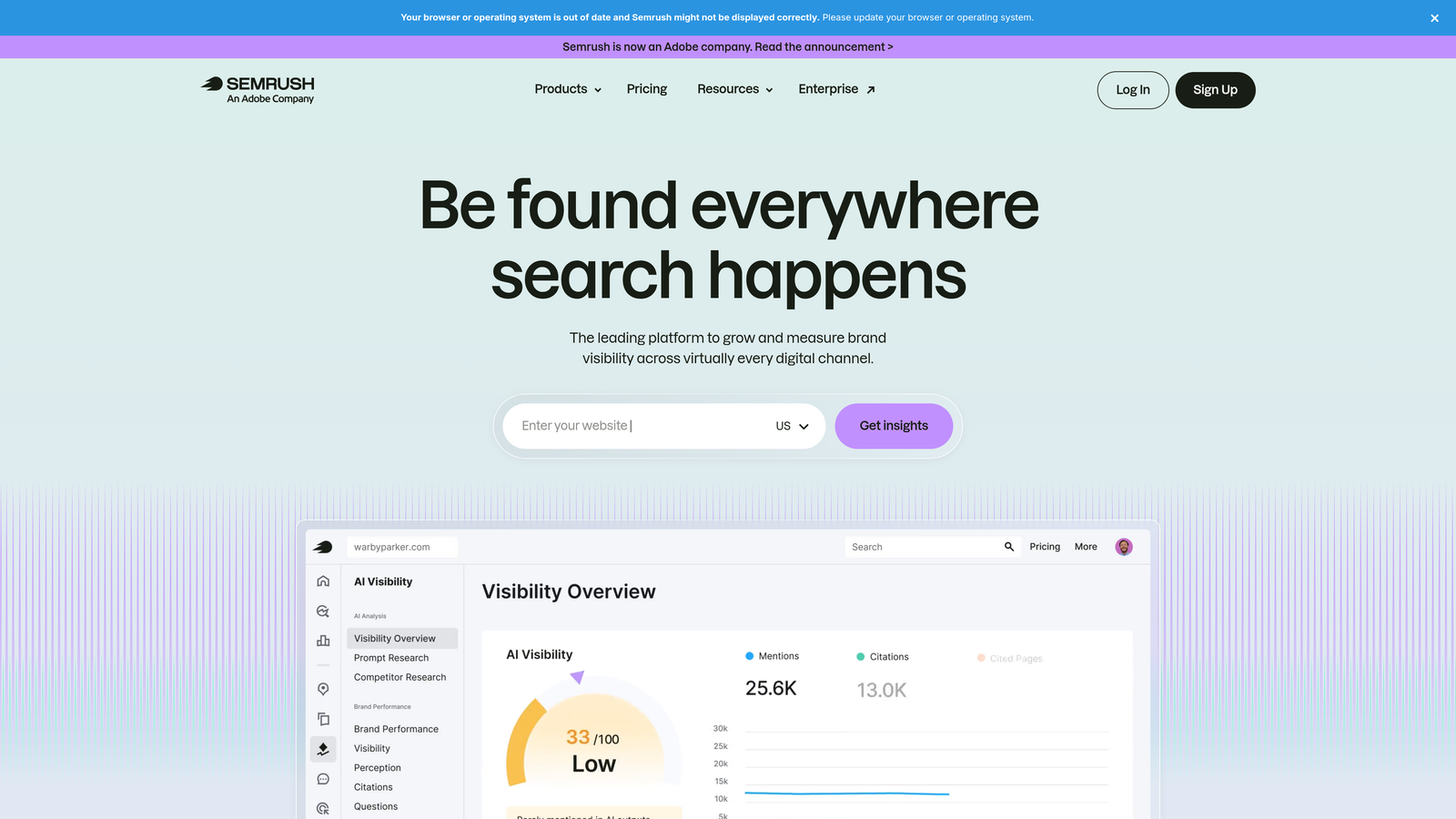
Semrush is one of the most established names in SEO, and it's actively expanding its toolset to address AI-generated search features and content optimization for the GEO era.
Where This Tool Shines
Semrush's core advantage is the sheer depth of its data infrastructure. Its keyword database, backlink index, and competitive analysis tools are among the most comprehensive available, giving you a strong foundation for understanding where content opportunities exist. ContentShake AI, its built-in writing assistant, helps translate that data into content that's structured for both traditional and AI-driven search.
For teams already running SEO programs, Semrush is a natural extension into GEO because you don't have to rebuild your workflow. The position tracking features are also beginning to surface AI Overview appearances, which matters as Google's AI-generated results take up more search real estate.
Key Features
ContentShake AI: AI-powered writing assistant that generates and optimizes content using Semrush's competitive data as a foundation.
Position Tracking: Monitors keyword rankings and increasingly tracks appearances in AI-generated search features like Google AI Overviews.
Backlink and Keyword Database: One of the largest in the industry, useful for understanding what content earns citations and authority.
Site Audit: Technical SEO analysis that helps identify structural issues that could reduce AI crawlability and citation likelihood.
Integrations: Connects with Google Search Console, Google Analytics, and major CMS platforms for a unified data view.
Best For
Enterprise marketing teams and agencies managing large content programs who need a robust SEO platform that's adding GEO-relevant capabilities over time. Less ideal if your primary need is dedicated AI mention monitoring across multiple LLMs.
Pricing
Pro plan starts at approximately $139.95/month. A free limited account is available for basic exploration.
3. Surfer SEO
Best for: Content teams focused on NLP-driven on-page optimization to improve the chances of being cited by AI answers.
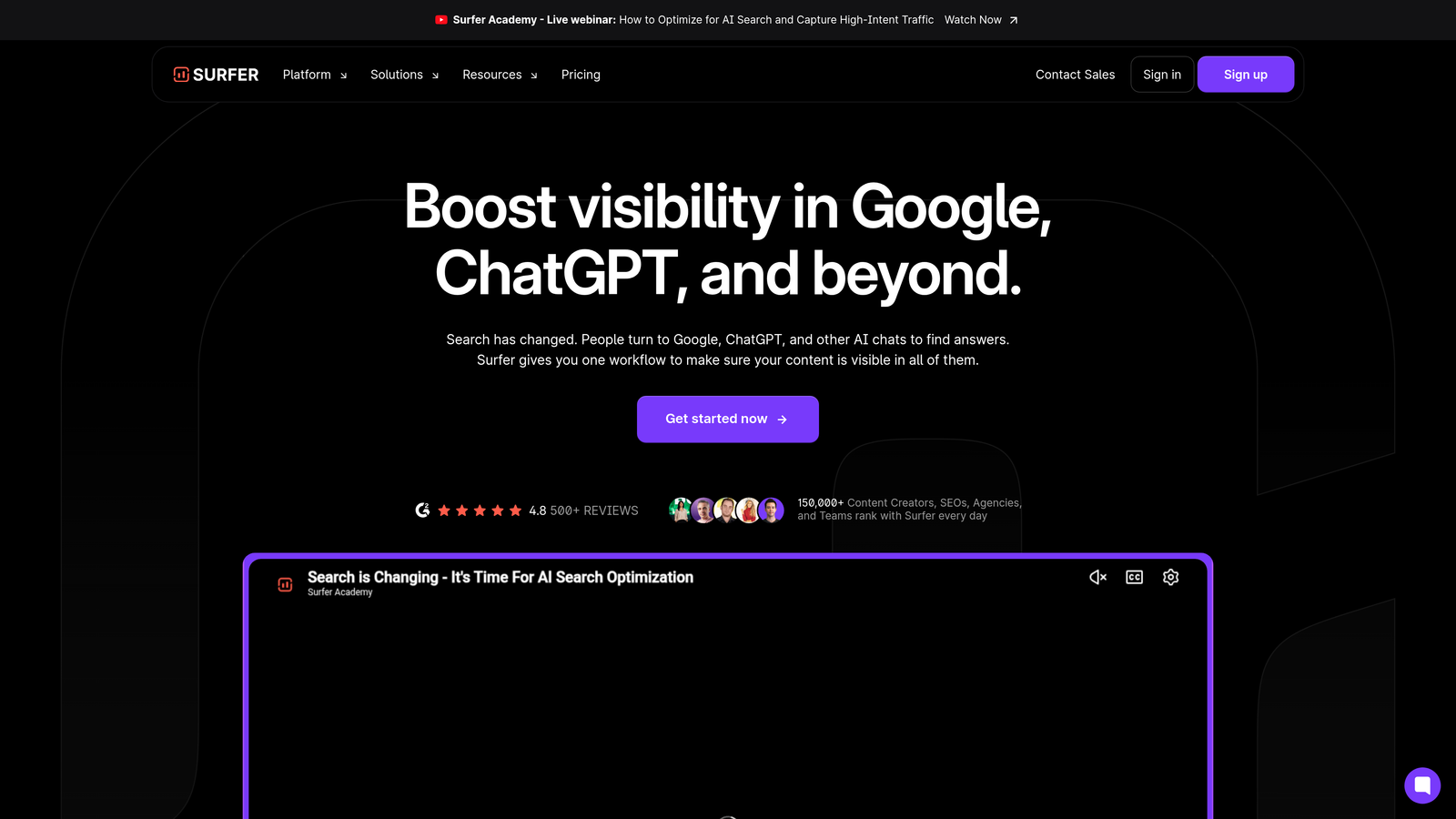
Surfer SEO is an on-page content optimization platform that uses natural language processing to score content for topical completeness, a key factor in AI citation likelihood.
Where This Tool Shines
AI models favor content that thoroughly covers a topic. Surfer's Content Editor scores your writing in real time against what top-ranking pages cover, pushing you toward the kind of comprehensive, well-structured content that AI models tend to reference. It's not a GEO monitoring tool, but it's one of the better instruments for making your content GEO-ready.
The SERP Analyzer is particularly useful for understanding the topical patterns that already earn visibility, giving you a data-backed roadmap rather than guesswork about what to write.
Key Features
Content Editor: Real-time NLP-based scoring that guides writers toward topically complete, well-structured content as they draft.
SERP Analyzer: Breaks down what top-ranking pages cover, how they're structured, and what terms they use.
AI Writing Assistant: Integrated drafting tool that works within the Content Editor's scoring framework.
Content Audit: Evaluates existing pages for optimization gaps and prioritizes which to update first.
Keyword Clustering: Groups related keywords into content clusters to support topical authority building.
Best For
Content writers, SEO specialists, and in-house teams who want a focused on-page optimization workflow. Works well as a complement to a dedicated AI visibility monitoring tool rather than as a standalone GEO solution.
Pricing
Essential plan starts at approximately $99/month. Higher-tier plans unlock additional users and features.
4. Otterly.AI
Best for: Brands that want dedicated, purpose-built monitoring of how they appear in AI-generated search answers.
Otterly.AI is a purpose-built AI search monitoring platform designed specifically to track brand and competitor mentions across major large language models and AI search interfaces.
Where This Tool Shines
Otterly is built from the ground up for the GEO use case. Rather than adapting traditional SEO tracking to AI search, it was designed with AI-generated answers as the primary focus. This shows in how it handles prompt-based tracking: you define the queries you care about, and it monitors how AI models respond to those prompts over time, flagging when your brand appears, disappears, or changes in how it's described.
Competitor monitoring is another strong point. Seeing which brands AI models recommend instead of yours, and in response to which prompts, gives you concrete intelligence on where to focus content efforts.
Key Features
Multi-Model Brand Tracking: Monitors mentions across ChatGPT, Perplexity, Google AI Overviews, and other AI search surfaces.
Competitor Monitoring: Tracks how competitors appear in AI-generated answers alongside your own brand.
Prompt-Based Tracking: Lets you define specific queries to monitor, showing which prompts trigger brand citations.
Trend Analysis: Visualizes AI visibility changes over time so you can measure the impact of content efforts.
Alerts: Notifies you when significant changes occur in how your brand is represented across AI models.
Best For
Marketing teams and agencies that need clear, dedicated AI mention monitoring without the overhead of a full content platform. Particularly useful for competitive intelligence in AI search.
Pricing
Tiered plans are available. Check otterly.ai directly for current pricing, as plans evolve frequently in this emerging category.
5. Profound
Best for: Enterprise teams focused on competitive benchmarking and share-of-voice analysis across AI search platforms.
Profound is an AI search analytics platform built around competitive intelligence, tracking how AI models reference and recommend brands relative to their competitors.
Where This Tool Shines
Where many monitoring tools focus on whether you appear in AI answers, Profound digs into the competitive context. Its share-of-voice metrics for AI-generated answers give you a relative picture of your brand's standing: not just "are we being cited" but "how often compared to our top three competitors." That framing makes it easier to set meaningful benchmarks and track progress.
The actionable recommendations layer is also notable. Rather than just surfacing data, Profound provides guidance on what content and structural changes are likely to improve AI citation rates, which bridges the gap between insight and action.
Key Features
AI Search Competitive Benchmarking: Compares your brand's AI citation frequency and context against named competitors.
Prompt-Level Analytics: Shows which specific queries surface which brands, giving granular visibility into citation patterns.
Multi-Model Tracking: Covers major LLMs to give a broad picture of AI search presence.
Share of Voice Metrics: Quantifies your brand's portion of AI-generated recommendations within your category.
Actionable Recommendations: Provides specific guidance for improving AI citation rates based on observed patterns.
Best For
Enterprise marketing teams and agencies with a strong focus on competitive positioning in AI search. Best suited for organizations with budget for custom enterprise tooling and a need for deep competitive analytics.
Pricing
Custom pricing based on scope. Contact Profound directly for a quote tailored to your needs.
6. Frase
Best for: Content teams that want to automate research and brief creation to build topically comprehensive content at scale.
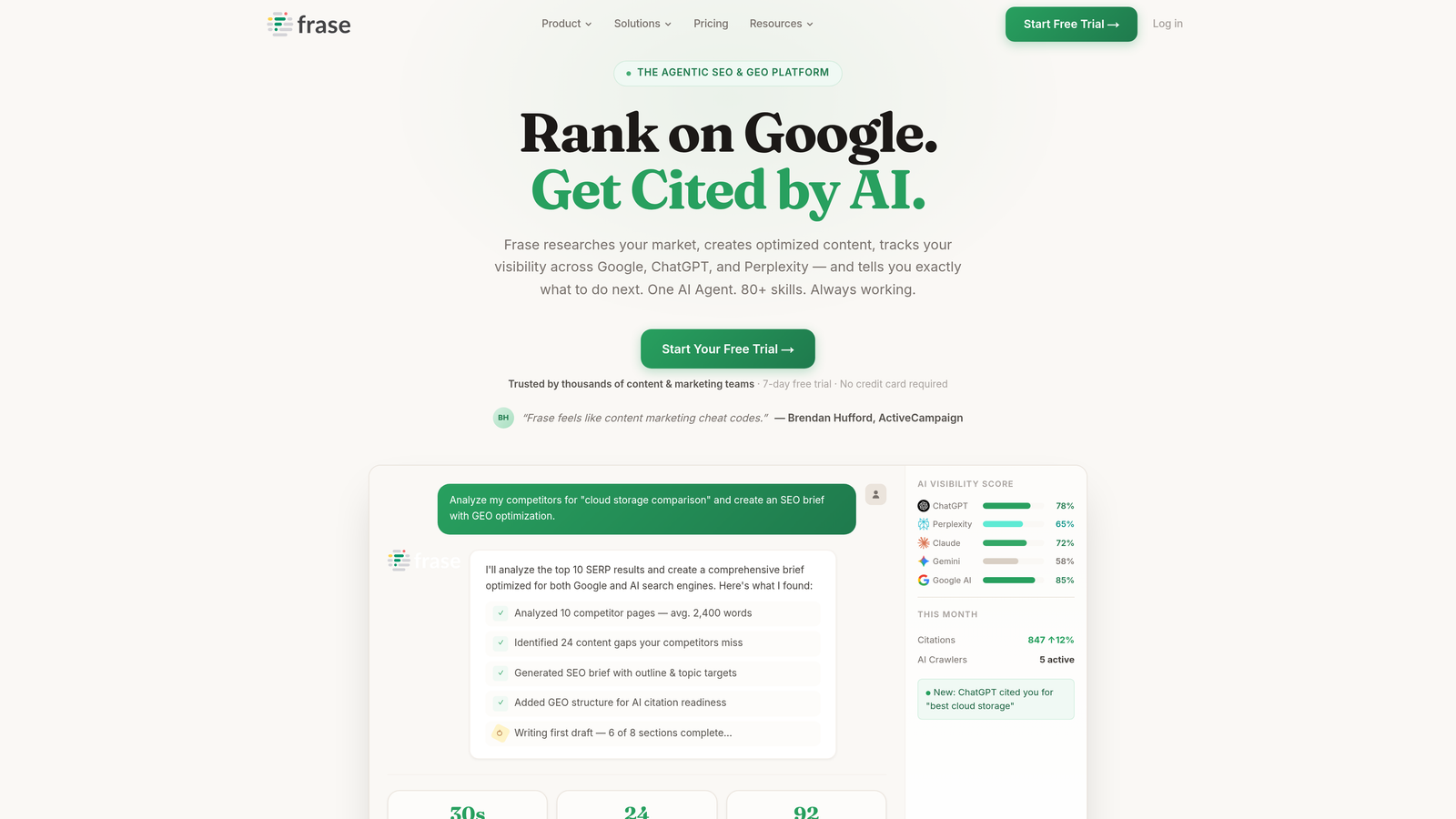
Frase is a research-driven content optimization platform that automates SERP analysis and generates detailed content briefs, helping teams create the kind of thorough, well-structured content AI models prefer to cite.
Where This Tool Shines
Frase excels at compressing the research phase of content creation. Instead of manually reviewing competitor pages and People Also Ask results, you get an automated brief that maps out what a piece of content needs to cover to be competitive. This directly supports GEO by ensuring content addresses the full scope of a topic rather than skimming the surface.
Its question research feature is particularly useful for GEO purposes. AI models often pull from content that directly answers the questions users are asking, and Frase surfaces those questions systematically so you can make sure your content addresses them explicitly.
Key Features
Automated Content Briefs: Generates detailed briefs based on SERP analysis, outlining what topics, questions, and structure a piece needs.
Topic Scoring: Scores content against competitor pages to measure topical completeness.
AI Writing Assistant: Helps draft content within the brief framework to speed up production.
Question Research: Pulls related questions from People Also Ask and similar sources to inform content structure.
Content Analytics: Tracks organic performance of optimized content over time.
Best For
Small to mid-size content teams, freelance writers, and SEO specialists who need to produce well-researched, comprehensive content efficiently. A strong budget-friendly option compared to enterprise alternatives.
Pricing
Solo plan starts at approximately $15/month, making it one of the more accessible options in this category. Team plans are available at higher tiers.
7. MarketMuse
Best for: Content strategists who want to audit existing content and identify topical authority gaps at the domain level.
MarketMuse is an AI-powered content strategy platform that analyzes your entire content inventory and maps topical gaps relative to your domain's existing authority, helping you build the comprehensive coverage that AI models favor.
Where This Tool Shines
MarketMuse operates at a strategic layer that most content tools don't reach. Instead of optimizing one page at a time, it looks at your entire site and identifies where your topical coverage is thin relative to competitors. This is directly relevant to GEO because AI models tend to cite sources that demonstrate broad, deep authority on a subject, not just one well-optimized article.
The personalized difficulty scores are a standout feature. Unlike generic keyword difficulty metrics, MarketMuse adjusts difficulty based on your site's existing content, giving you a realistic picture of where you can realistically compete for AI citations.
Key Features
Content Inventory Analysis: Audits your existing pages to map topical coverage and identify gaps.
Personalized Difficulty Scores: Adjusts content difficulty ratings based on your domain's current authority, not just generic competition metrics.
Topic Modeling: Identifies content cluster opportunities to build comprehensive topical authority.
Content Briefs: Generates detailed briefs with recommended topics, questions, and structure for each piece.
Competitive Content Analysis: Shows how your topical coverage compares to competitors across your subject area.
Best For
Content strategists, SEO managers, and mid-to-large teams that need a strategic view of their content program, not just page-level optimization. Particularly valuable for sites with large existing content inventories that need prioritization.
Pricing
A free plan is available with limited features. Paid plans start at approximately $149/month for expanded access to content briefs and analysis.
8. Writesonic (Chatsonic)
Best for: Teams that need high-volume AI content generation with real-time web data integration for factual grounding.
Writesonic is an AI content generation platform whose Chatsonic feature integrates real-time web data to produce factually current, GEO-friendly content at scale.
Where This Tool Shines
One of the key factors in AI citation is factual accuracy and recency. Writesonic's Chatsonic addresses this directly by pulling real-time web data into the content generation process, reducing the risk of AI-generated content that's outdated or factually weak. For brands that need to publish frequently and at volume, this combination of speed and factual grounding is genuinely useful.
Brand voice customization is another practical feature. When generating content at scale, consistency matters, and Writesonic allows you to define and apply a brand voice across generated pieces rather than starting from scratch each time.
Key Features
Chatsonic with Real-Time Data: Conversational AI that integrates live web information to keep generated content factually current.
Content Templates: Pre-built formats for blog posts, landing pages, ads, and more to speed up production.
Brand Voice Customization: Define your brand's tone and style for consistent output across bulk content generation.
Bulk Generation: Produces multiple content pieces simultaneously, useful for teams managing high content volume.
Multiple Output Formats: Handles a range of content types beyond blog posts, including social copy and email.
Best For
Content marketers, growth teams, and agencies that prioritize content velocity and need AI writing assistance with better factual grounding than standard generation tools. Works well as a production tool alongside a dedicated GEO monitoring platform.
Pricing
A free tier is available. Paid plans start at approximately $16/month, making it one of the more affordable AI writing tools in this comparison.
9. HubSpot Content Hub
Best for: HubSpot-native teams that want AI-assisted content creation tightly integrated with CRM data and marketing automation.
HubSpot Content Hub is a full-stack content management platform with AI-powered creation tools, strong structured data support, and deep integration with HubSpot's broader CRM and marketing ecosystem.
Where This Tool Shines
HubSpot Content Hub's GEO relevance comes primarily from its structured data support and its topic clustering architecture. Schema markup and well-organized content clusters are both signals that help AI models understand and trust your content, and HubSpot makes implementing both relatively straightforward without requiring deep technical expertise.
For teams already in the HubSpot ecosystem, the integration with CRM data is a meaningful differentiator. You can tie content performance directly to contact and lead data, giving you a clearer picture of which content is driving real business outcomes, not just traffic.
Key Features
AI Content Assistant: Generates and refines blog posts, landing pages, and emails using AI within the HubSpot editor.
Topic Clustering and SEO Recommendations: Built-in tools for building content clusters and optimizing pages for topical authority.
Schema Markup and Structured Data: Strong support for structured data implementation, which improves AI model comprehension of your content.
CRM-Integrated Analytics: Ties content performance data to contact records, giving revenue-level visibility into content impact.
Multi-Language Support: Enables content creation and management across multiple languages for global teams.
Best For
Marketing teams already using HubSpot's CRM and automation tools who want their content operations in the same platform. Less practical as a standalone GEO tool due to cost and complexity if you're not already in the HubSpot ecosystem.
Pricing
Free CMS tools are available. Content Hub Professional starts at approximately $450/month, positioning this as an enterprise-tier option.
Which Tool Is Right for Your GEO Strategy
The GEO software category is still maturing, and the right choice depends heavily on what you're trying to solve first: monitoring, content production, or both.
If you want a single platform that covers AI visibility tracking, content creation, and automated indexing without stitching together separate tools, Sight AI is the most complete option available. It's built specifically for the GEO workflow from the ground up.
If your primary need is monitoring how AI models talk about your brand and your competitors, Otterly.AI and Profound are the purpose-built choices. Otterly is more accessible for smaller teams; Profound skews toward enterprise competitive intelligence.
For content optimization, Surfer SEO and Frase are strong companions to any monitoring tool. Surfer excels at real-time NLP scoring during the writing process, while Frase shines at the research and brief-creation stage. MarketMuse is the better fit if you need a strategic view of your entire content program rather than page-level optimization.
Semrush makes the most sense for enterprise teams that already rely on it for SEO and want GEO features layered into an existing workflow. Writesonic fits teams prioritizing content volume with factual grounding. HubSpot Content Hub is the natural choice if you're already running on HubSpot's CRM and want everything under one roof.
The underlying principle across all of these tools is the same: AI models cite content that is accurate, comprehensive, well-structured, and authoritative. The tools that help you build and measure those qualities are the ones worth investing in.
Start tracking your AI visibility today and see exactly where your brand appears across top AI platforms. Stop guessing how ChatGPT and Claude talk about you and start making decisions based on real data.