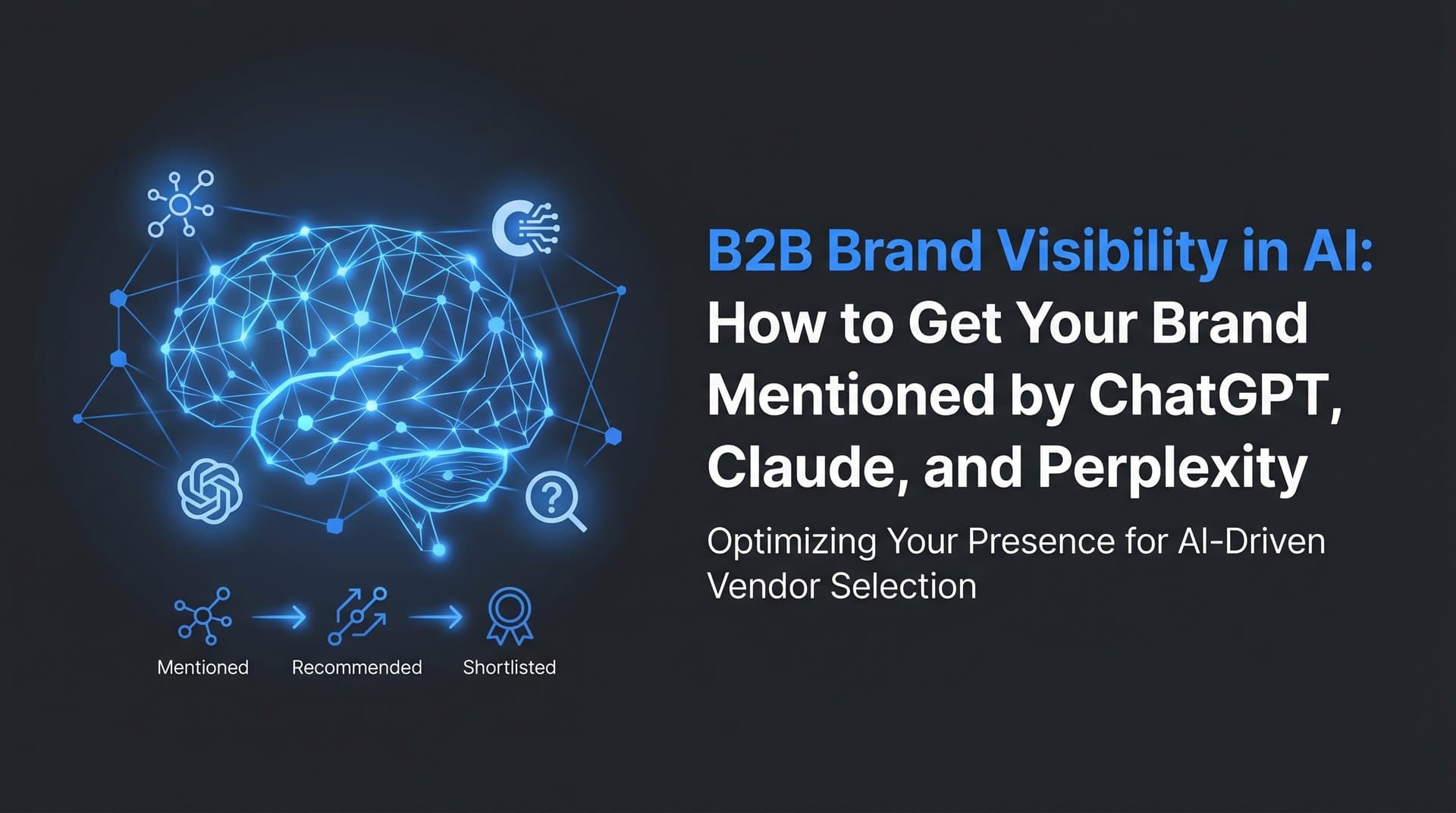
When someone asks ChatGPT to recommend the best project management software or queries Perplexity about top marketing automation platforms, does your brand get mentioned? For most companies, the answer is no—and they don't even know it. AI-powered search has fundamentally changed the discovery game. Traditional SEO taught us to optimize for ranking positions on Google's results page. But AI answers work differently. There's no position two or three. You're either cited in the response, or you're invisible.
The shift is profound. Users increasingly skip search engines entirely, asking AI assistants for recommendations, comparisons, and solutions. When ChatGPT generates an answer about your industry, it's pulling from sources it deems authoritative, well-structured, and credible. If your content doesn't meet those criteria, you simply don't exist in that conversation.
This creates both a challenge and an opportunity. The challenge: AI visibility requires different optimization strategies than traditional SEO. The opportunity: most of your competitors haven't figured this out yet. The brands investing in AI visibility now are building advantages that will compound as more users shift from traditional search to AI-powered discovery.
This guide walks you through seven concrete steps to position your brand for AI citations. You'll learn how to audit your current presence, identify why competitors get mentioned instead of you, create content that AI models actually pull from, and build the credibility signals that make you citation-worthy. Whether you're currently invisible to AI platforms or looking to increase mention frequency, these steps provide a systematic approach to getting your brand cited across ChatGPT, Claude, Perplexity, and other AI systems.
Step 1: Audit Your Current AI Visibility Across Major Platforms
You can't improve what you don't measure. Start by testing your brand's current visibility across the major AI platforms: ChatGPT, Claude, Perplexity, Gemini, and any other AI assistants relevant to your audience. The goal is to establish a baseline understanding of when you get mentioned, when you don't, and which competitors appear instead.
Begin with direct questions. Ask each AI platform variations of queries your potential customers might use. If you're a CRM platform, try "What are the best CRM tools for small businesses?" or "Which customer management software should I choose?" Test industry-specific questions, comparison queries, and recommendation requests. Document every response meticulously.
Pay attention to three critical patterns. First, which platforms mention you and which don't? You might appear in Perplexity's answers but be completely absent from ChatGPT's responses. Second, what's the context of your mentions? Are you listed as a top recommendation, mentioned as an alternative, or only cited when specifically asked about your brand? Third, which competitors consistently appear when you don't? Understanding how AI answers rank brands helps you decode these patterns.
This isn't a one-time exercise. AI models update their knowledge bases and retrieval systems regularly. What works today might change next month. Create a spreadsheet tracking specific prompts, which platforms mentioned you, your position in the response, and the sentiment of the mention. Test at least twenty different query variations across each platform.
The manual approach gives you qualitative insights, but it's time-consuming and doesn't scale. This is where AI visibility tracking tools become invaluable. Platforms designed for monitoring multiple AI platforms can automate this process, testing hundreds of prompts across multiple AI models and tracking changes over time. They provide visibility into exactly how AI platforms talk about your brand, which prompts trigger mentions, and how your visibility trends compared to competitors.
By the end of this step, you should have clear documentation of your current AI visibility: which platforms cite you, which ignore you, what types of questions trigger mentions, and where your biggest gaps exist. This baseline becomes your measurement point for all future improvements.
Step 2: Analyze Why Competitors Get Cited Instead of You
Once you know which competitors consistently appear in AI answers, it's time to reverse-engineer why. AI models don't cite brands randomly. They pull from sources that demonstrate authority, provide clear information, and appear across multiple credible references. Your job is to identify what your competitors have that you're missing.
Start with content analysis. When a competitor gets cited, examine the actual sources AI models likely reference. Search for their brand name plus common industry terms. What types of content do they publish? Many brands that appear frequently in AI answers maintain comprehensive resource libraries: detailed guides, comparison articles, glossaries, and FAQ sections. They structure content to directly answer questions users ask. If you're seeing competitors appearing in ChatGPT instead of you, their content strategy likely differs significantly from yours.
Look at their third-party presence. Brands that AI models cite often appear across industry publications, review platforms, and expert roundups. Check sites like G2, Capterra, TrustRadius, and industry-specific review platforms. Examine whether competitors have been featured in major publications, quoted as experts, or mentioned in comparison articles on authoritative sites.
Assess their domain authority and backlink profiles. While AI models don't use traditional SEO metrics directly, the signals that build domain authority—quality backlinks, mentions from authoritative sources, consistent publishing—also make brands more likely to appear in AI training data and retrieval systems. Use backlink analysis tools to see where competitors are getting mentioned and linked from.
Pay special attention to content structure. AI models favor content that's easy to parse: clear headings, direct definitions, bulleted lists, comparison tables, and structured data. When you examine competitor content that likely gets cited, notice how they organize information. Do they use schema markup? Do they provide direct answers to questions in the first paragraph? Do they structure content hierarchically with clear topic clusters?
Create a gap analysis document. List the specific differences between your content approach and competitors who get cited frequently. Maybe they have comprehensive comparison pages and you don't. Perhaps they maintain an active presence on review platforms while you're absent. Possibly they've built relationships with industry publications that regularly mention them. These gaps become your roadmap for the next steps.
Step 3: Create AI-Optimized Content That Models Can Easily Parse
AI models excel at extracting information from well-structured, clearly written content. Your goal is to create content that makes it easy for AI systems to understand your expertise, extract relevant facts, and cite you as a credible source. This means rethinking how you structure and format information.
Start with direct answers: When creating content around questions in your industry, provide clear, concise answers upfront. If someone asks "What is project management software?", your content should define it clearly in the first paragraph before diving into details. AI models often pull these direct answers when generating responses. This approach directly addresses why your content might not be appearing in AI searches.
Use structured formats AI models prefer: Certain content types are particularly citation-friendly. FAQ pages with clear question-answer pairs, comparison tables that lay out features side-by-side, step-by-step guides with numbered instructions, and glossaries that define industry terms. These formats make it easy for AI systems to extract specific information.
Implement semantic HTML and schema markup: Help AI models understand your content structure by using proper HTML hierarchy and schema markup. Use H2 and H3 tags to create clear content outlines. Implement FAQ schema for question-answer content, HowTo schema for guides, and Product schema for solution pages. While we can't confirm exactly how AI models use structured data, making your content machine-readable increases the likelihood it can be properly parsed and cited.
Build entity-rich content: AI models work with entities—specific people, places, products, and concepts. Create content that clearly establishes your brand as an entity associated with specific topics. Use consistent terminology, link related concepts together, and build comprehensive topic clusters that demonstrate expertise across your domain.
Write in natural, conversational language: AI assistants respond to conversational queries. Your content should match how people actually ask questions. Instead of only optimizing for keywords like "project management software features", create content that answers "What features should I look for in project management software?" This alignment between user queries and your content increases citation probability.
The key is creating content that serves both human readers and AI systems. Well-structured, clearly written content that directly answers questions benefits everyone. Focus on comprehensive coverage of topics in your domain, clear organization that makes information easy to extract, and authoritative depth that establishes your expertise.
Step 4: Build Third-Party Credibility Signals AI Models Trust
AI models don't just look at your own website when deciding whether to cite you. They prioritize brands that appear across multiple authoritative sources. Third-party validation signals that you're a credible, established player in your industry. Building these signals requires strategic effort across several channels.
Secure mentions in industry publications: Getting featured in established industry publications creates powerful credibility signals. Contribute expert insights to journalists covering your space, offer to provide quotes for relevant articles, and build relationships with editors and writers. When authoritative publications mention your brand in context of industry trends or solutions, it strengthens your citation potential.
Establish presence on review platforms: Sites like G2, Capterra, TrustRadius, and industry-specific review platforms are frequently referenced sources. Claim your profiles, encourage satisfied customers to leave authentic reviews, and maintain updated information. AI models often pull from these platforms when generating recommendations because they aggregate user experiences and provide structured comparison data. This is essential for learning how to appear in AI recommendations.
Pursue podcast and media appearances: Audio content gets transcribed and indexed, creating text-based references to your brand and expertise. Appear on industry podcasts, participate in webinars, and seek speaking opportunities. Each appearance creates another authoritative mention of your brand in context of your expertise area.
Contribute to knowledge bases and databases: Look for opportunities to be included in industry databases, directories, and knowledge repositories. Wikipedia mentions (when appropriate and following their guidelines), inclusion in industry association directories, and presence in specialized databases all contribute to the breadth of authoritative sources mentioning your brand.
Build genuine thought leadership: The most sustainable approach is becoming a recognized expert in your domain. Publish original research, share unique insights, and contribute valuable perspectives to industry conversations. When you consistently provide value, other authoritative sources naturally reference and cite you, creating the third-party signals AI models look for.
Focus on quality over quantity. A mention in one highly authoritative publication carries more weight than dozens of low-quality directory listings. Prioritize building relationships with established voices in your industry and creating the kind of value that makes others want to reference you.
Step 5: Ensure Your Content Gets Indexed and Crawled Quickly
Even the best content can't help your AI visibility if it never enters the systems AI models use for retrieval. Fast indexing ensures your content becomes discoverable quickly, increasing the likelihood it gets incorporated into AI knowledge bases and retrieval systems.
Implement IndexNow for instant notifications: IndexNow is a protocol that allows you to notify search engines immediately when you publish or update content. Instead of waiting for search engines to discover changes through regular crawling, you actively push notifications. This dramatically reduces the time between publishing content and having it indexed. Major search engines support IndexNow, making it an efficient way to ensure your content enters discovery systems quickly.
Maintain clean XML sitemaps: Your sitemap tells search engines which pages exist on your site and how they're organized. Keep your sitemap updated, remove broken links, and ensure all important content is included. Submit your sitemap to Google Search Console and Bing Webmaster Tools. A well-maintained sitemap helps ensure nothing important gets missed during crawling. This is especially critical if your new content is not appearing in search.
Fix technical SEO barriers: Technical issues can prevent your content from being properly crawled and indexed. Check for problems like broken robots.txt rules that block important content, slow page load times that cause crawlers to time out, redirect chains that waste crawl budget, and duplicate content issues that confuse indexing systems. Use tools like Google Search Console to identify and fix crawling errors.
Remove access barriers: Ensure your content is actually accessible. Some companies inadvertently block AI crawlers or put valuable content behind login walls. While protecting certain content makes sense, your primary educational and informational content should be publicly accessible. AI models can't cite content they can't access.
The faster your content gets indexed, the sooner it can potentially appear in AI retrieval systems. While we can't know exactly how often AI models update their knowledge bases, ensuring your content is quickly discoverable by search engines increases the likelihood it becomes available to AI systems when they refresh their data sources.
Step 6: Develop a GEO Content Strategy for Sustained Visibility
Generative Engine Optimization represents a fundamental shift in how you approach content creation. While traditional SEO focuses on ranking for specific keywords, GEO focuses on being the source AI models cite when generating answers. This requires a different strategic approach to content development.
Target conversational query patterns: People interact with AI assistants differently than they use search engines. They ask complete questions in natural language: "What's the best way to manage remote teams?" rather than searching "remote team management software". Create content that directly addresses these conversational queries. Think about the questions your customers actually ask, not just the keywords they might search.
Build comprehensive topic clusters: AI models favor sources that demonstrate deep expertise across a topic area. Instead of creating isolated articles, build interconnected content clusters that cover a topic comprehensively. If you're in the project management space, create clusters around team collaboration, resource planning, timeline management, and reporting. Each cluster should include foundational guides, specific how-to content, comparison pieces, and advanced strategy articles. Understanding how blogging grows organic traffic can inform your cluster strategy.
Create definitional and educational content: AI models frequently pull from content that explains concepts clearly. Develop comprehensive guides that define key terms in your industry, explain how things work, and provide educational value. This foundational content becomes citation-worthy when AI models need to explain concepts to users.
Balance traditional SEO and GEO: You don't need to choose between ranking in traditional search and appearing in AI answers. The best content serves both purposes. Create comprehensive, well-structured content that targets relevant keywords while also providing the clear, authoritative information AI models prefer to cite. The overlap is significant—quality content that serves users well tends to perform in both contexts.
Focus on expertise and authority: AI models prioritize sources that demonstrate genuine expertise. This means going beyond surface-level content to provide real insights, unique perspectives, and valuable information users can't easily find elsewhere. Original research, detailed case examples, and expert analysis all strengthen your authority signals.
Your GEO content strategy should be ongoing and systematic. Regularly publish new content that expands your topical coverage, update existing content to keep it current and comprehensive, and continuously build the depth of expertise your content demonstrates across your domain.
Step 7: Track, Measure, and Iterate on Your AI Visibility Progress
AI visibility isn't a set-it-and-forget-it effort. The landscape evolves as AI platforms update their models, change their retrieval systems, and adjust how they source information. Ongoing monitoring and iteration are essential for sustained visibility.
Set up systematic monitoring: Establish a regular process for tracking your brand mentions across AI platforms. This could be weekly manual testing of key prompts, automated monitoring through AI visibility tracking tools, or a combination of both. Track not just whether you're mentioned, but the context, sentiment, and prominence of those mentions. Being cited as a minor alternative is different from being recommended as a top solution. Learning how to track your brand in AI tools is essential for this process.
Measure sentiment and context: Getting mentioned isn't enough if the context is negative or dismissive. Monitor how AI platforms talk about your brand. Are you presented positively? Do the descriptions accurately reflect your value proposition? Are there recurring misconceptions or outdated information? Understanding the quality of your mentions is as important as tracking their frequency.
Identify high-performing content: As you track AI visibility over time, patterns will emerge. Certain content pieces may drive more citations than others. Specific formats or topics might consistently perform well. Pay attention to what's working and double down on those approaches. If your comparison content gets cited frequently, create more comprehensive comparisons. If how-to guides drive mentions, expand your guide library.
Stay informed about platform changes: AI platforms regularly update their models and systems. ChatGPT releases new versions, Perplexity adjusts its search integration, Claude updates its knowledge cutoff dates. Stay informed about these changes and adjust your strategy accordingly. What works with one model version might need refinement when the platform updates.
Test and experiment continuously: The field of AI visibility is still evolving. Run experiments with different content formats, test various structural approaches, and try new distribution channels. Track results systematically so you can identify what actually moves the needle for your specific brand and industry.
Create a dashboard or tracking document that consolidates your AI visibility metrics. Include mention frequency across platforms, sentiment scores, prompt categories that trigger citations, and trends over time. Review this data monthly to inform your content strategy and identify opportunities for improvement.
Putting It All Together
Getting your brand to appear in AI answers requires a systematic approach across multiple dimensions: content quality, technical optimization, credibility building, and ongoing measurement. The seven steps in this guide provide a framework for building sustainable AI visibility.
Start by auditing where you currently stand. You can't improve what you don't measure, and understanding your baseline visibility across AI platforms gives you a clear starting point. From there, analyze why competitors get cited instead of you—these gaps become your roadmap for improvement.
The content you create needs to serve both human readers and AI systems. Well-structured, clearly written content that directly answers questions and demonstrates expertise naturally performs better in AI citations. But your own content isn't enough. Build the third-party credibility signals that validate your authority: industry publication mentions, review platform presence, and expert recognition.
Technical optimization ensures your content actually reaches the systems that matter. Fast indexing through tools like IndexNow, clean sitemaps, and accessible content all contribute to discoverability. Your GEO content strategy ties everything together, creating a systematic approach to building topical authority and citation-worthiness.
Finally, ongoing tracking and iteration keep you competitive as the landscape evolves. AI platforms update regularly, user behavior shifts, and new opportunities emerge. Brands that monitor their visibility, measure what works, and continuously refine their approach will maintain and grow their AI presence over time.
The brands investing in AI visibility now are building advantages that will compound as more users shift from traditional search to AI-powered discovery. Every piece of citation-worthy content you create, every third-party mention you secure, and every improvement to your technical infrastructure strengthens your position in this emerging landscape.
Use this checklist to track your progress: complete your initial AI visibility audit, finish competitor analysis, publish AI-optimized content across key topic areas, secure third-party mentions on authoritative platforms, implement fast indexing systems, develop your ongoing GEO content strategy, and establish tracking systems for continuous monitoring. Each step builds on the previous ones, creating a comprehensive approach to AI visibility.
Stop guessing how AI models like ChatGPT and Claude talk about your brand—get visibility into every mention, track content opportunities, and automate your path to organic traffic growth. Start tracking your AI visibility today and see exactly where your brand appears across top AI platforms.