The best generative AI SEO software combines two jobs: measuring where your brand appears in AI answers (ChatGPT, Perplexity, Claude, Google AI Overviews, Microsoft Copilot) and improving content so language models understand and cite it. Sight AI covers both tracking and GEO content generation. Semrush suits teams already on its suite, while Surfer SEO, Clearscope, MarketMuse and Frase are strongest at optimizing the content itself.
Traditional SEO tactics alone no longer guarantee visibility. Generative engines synthesize answers instead of serving ten blue links, so your content has to be optimized for them too. (If the concept is new to you, start with our explainer on what generative engine optimization (GEO) is.) Generative search optimization (GSO) software helps marketers track AI citations, optimize content for LLM comprehension, and monitor brand mentions across AI platforms. This guide compares nine tools by features, pricing and ideal use case.
Quick comparison
| Tool | Primary job | Tracks AI mentions? | Starting price |
|---|---|---|---|
| Sight AI | AI visibility tracking + GEO content | Yes (6+ AI platforms) | Contact; free trial |
| Semrush AI Toolkit | All-in-one SEO suite with AI layer | Yes | $139.95/mo |
| Surfer SEO | Content editor and optimization | Limited | $89/mo |
| Clearscope | Semantic content grading | No | $170/mo |
| MarketMuse | Topical authority planning | No | Free tier; $149/mo |
| Frase | Answer-focused briefs and writing | No | $15/mo |
| Originality.ai | AI detection and plagiarism checks | No | $14.95/mo |
| Letterdrop | B2B content ops and distribution | No | Contact |
| Dashword | Lightweight content optimization | No | $99/mo |
Prices are entry-level list prices and change often. Confirm them on each vendor's site before you budget.
1. Sight AI
Best for: Comprehensive AI visibility tracking combined with automated GEO content generation
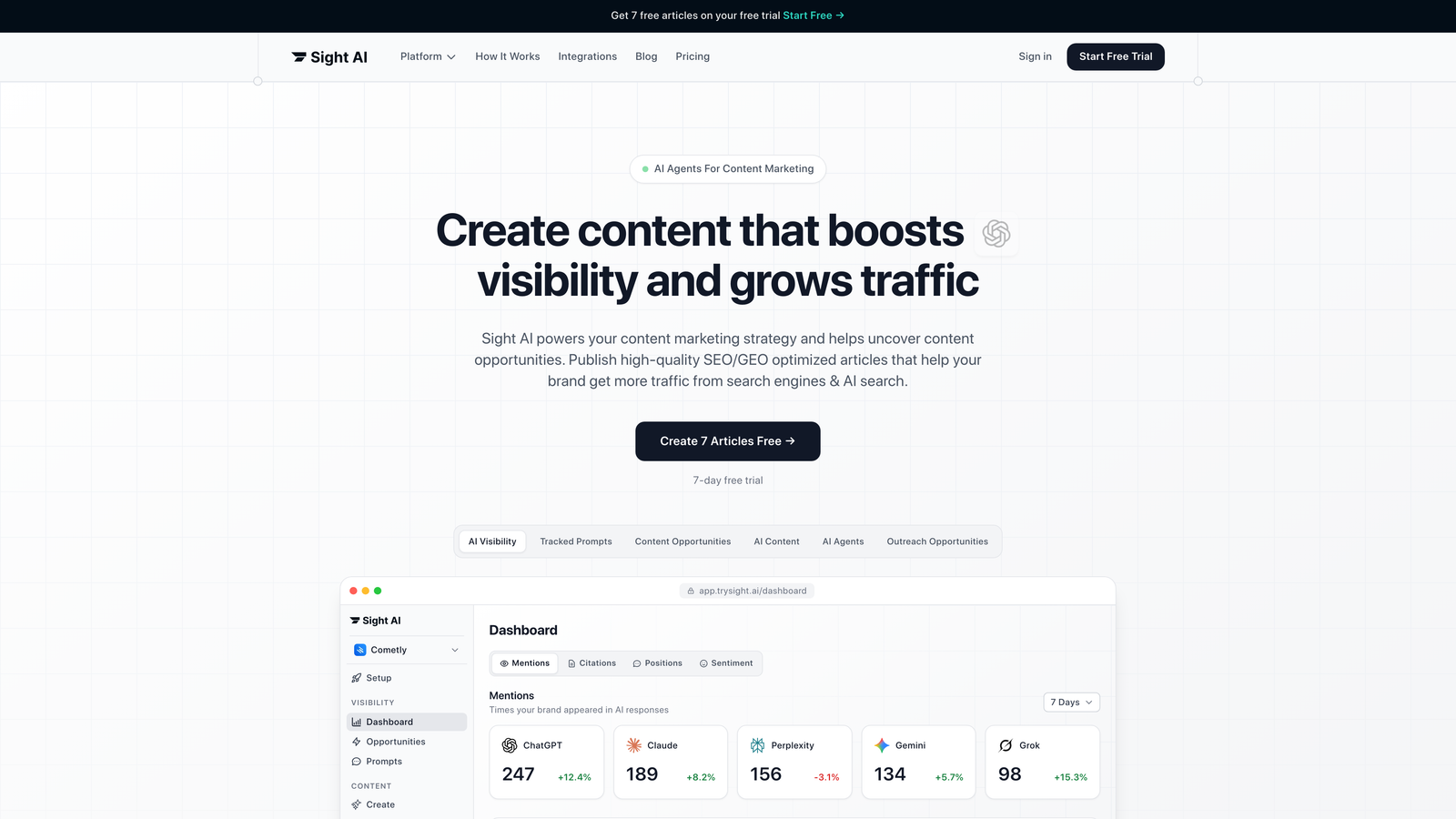
Sight AI is an all-in-one platform that monitors brand mentions across ChatGPT, Claude, Perplexity, and other AI models while generating optimized content.
Where This Tool Shines
Sight AI covers the complete GSO workflow, from tracking to content creation. Its AI Visibility Score gives you quantifiable metrics on how AI models perceive and reference your brand. Sentiment analysis shows whether those mentions are positive, neutral or negative.
The platform's prompt tracking feature shows exactly which user queries trigger brand mentions. That tells you which topics and contexts drive AI citations, so you can spot content gaps and optimization opportunities that competitors might miss.
Key Features
Multi-Platform AI Monitoring: Track brand mentions across 6+ AI platforms, including ChatGPT, Claude, Perplexity and Google's AI Overviews, in one dashboard.
13+ Specialized AI Agents: Generate SEO/GEO-optimized articles with agents trained for specific content types: listicles, guides, explainers and comparison pieces.
IndexNow Integration: Automatically notify search engines about new content for faster discovery and indexing.
Autopilot Mode: Put content generation on autopilot with automated publishing workflows that keep output consistent without manual work.
Sentiment Analysis: See not just whether AI models mention your brand, but how they frame those mentions. This matters for reputation management in generative search.
Best For
Marketing teams and agencies that need both visibility intelligence and content production. Especially useful for brands launching an AI visibility strategy from scratch, or agencies managing multiple client accounts that need comprehensive reporting.
Pricing
Contact for pricing. A free trial is available to test AI visibility tracking and content generation features.
2. Semrush AI Toolkit
Best for: Enterprise teams already invested in the Semrush ecosystem seeking integrated AI features
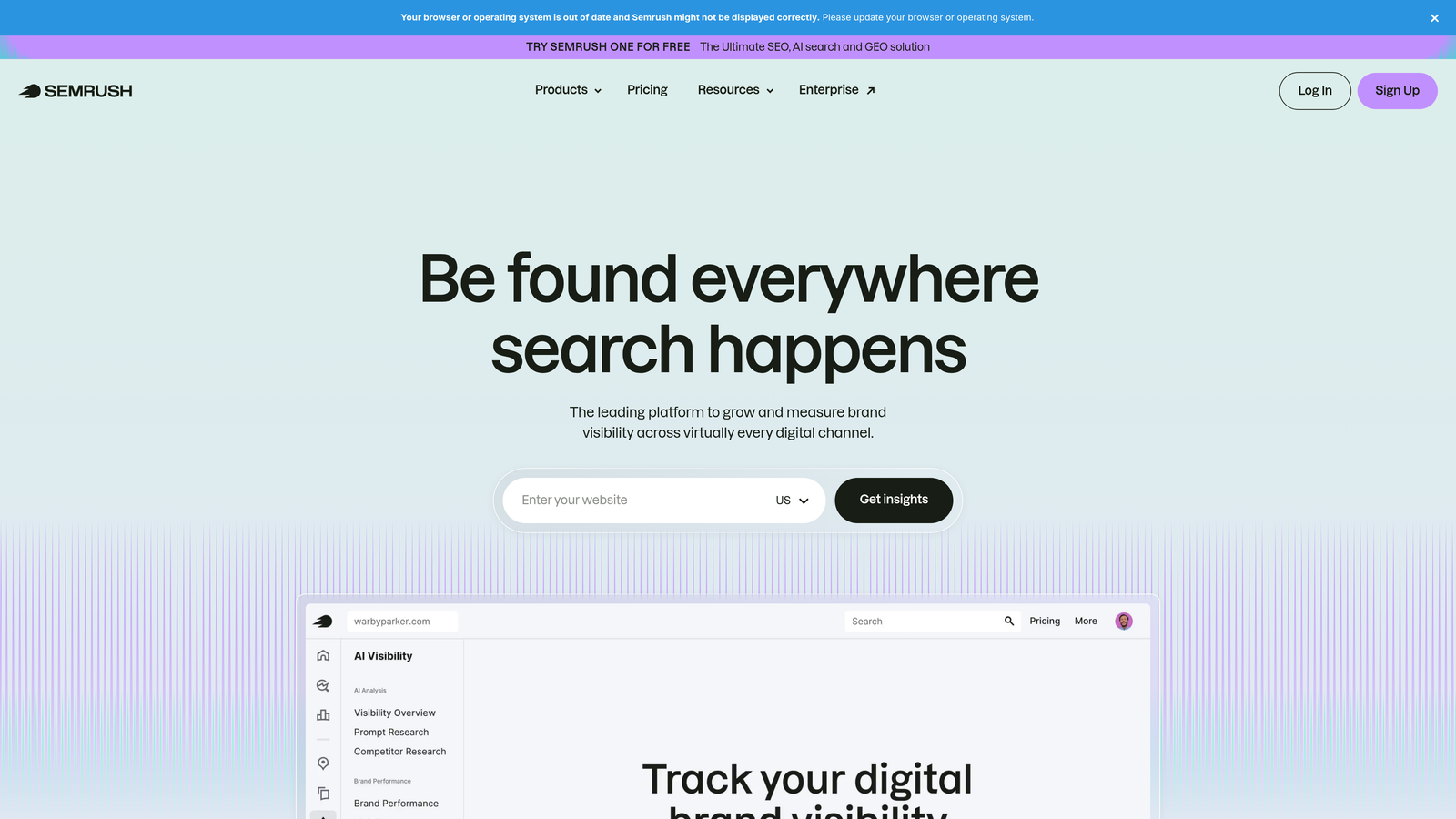
Semrush is an enterprise SEO suite with integrated AI optimization features for comprehensive digital marketing workflows.
Where This Tool Shines
Semrush adds AI optimization layers on top of its large keyword database and competitive intelligence infrastructure. If your team already uses Semrush for traditional SEO, the AI toolkit fits into existing workflows with no new tool to adopt.
Its competitive AI visibility analysis lets you benchmark against industry rivals. You can see which competitors appear most often in AI-generated responses and which content strategies drive their citations.
Key Features
AI Writing Assistant: SEO-integrated content creation that optimizes for both traditional rankings and AI comprehension.
Competitive Visibility Analysis: Track how competitors appear in AI responses and find gaps in their coverage you can exploit.
Content Optimization Recommendations: Real-time suggestions for improving content structure, entity relationships and topical authority.
Comprehensive Marketing Suite: Keyword research, backlink analysis, rank tracking and site audits alongside the AI features.
Historical Data Access: Use Semrush's extensive historical search data to inform AI optimization strategies.
Best For
Large marketing departments and agencies with existing Semrush subscriptions that want to extend into generative search optimization without fragmenting their tool stack.
Pricing
Starts at $139.95/month. AI-specific features are available in higher-tier plans starting around $249/month.
3. Surfer SEO
Best for: Content teams focused on creating LLM-friendly, well-structured articles at scale
Surfer SEO is a content optimization platform with AI-powered editing tools designed for maximum comprehension by language models.
Where This Tool Shines
Surfer's real-time content editor uses NLP analysis to guide writers toward better structure, heading hierarchy and entity coverage. LLMs favor well-organized, comprehensive information, so this approach produces content that language models can easily parse and cite.
The SERP analyzer shows what top-ranking content covers. That helps you build topical authority, which translates into both traditional rankings and AI citations. Writers also get immediate feedback on content quality instead of waiting for post-publication performance data.
Key Features
Real-Time Content Editor: NLP-driven suggestions for content structure, keyword usage and topical coverage as you write.
Surfer AI Content Generation: Automated drafts optimized for both search engines and language models.
SERP Analysis Tools: Competitive insights into which content elements drive visibility for your target topics.
Content Audit Capabilities: Analyze existing pages to find optimization opportunities and set refresh priorities.
Team Collaboration Features: Share content briefs, track projects and manage multiple writers from one dashboard.
Best For
Content marketing teams producing high volumes of articles that need efficient workflows and consistent quality across multiple writers.
Pricing
Starts at $89/month for the Essential plan. AI content generation is available as an add-on from $29/month.
4. Clearscope
Best for: Creating comprehensive, authoritative content that performs in both traditional and AI search
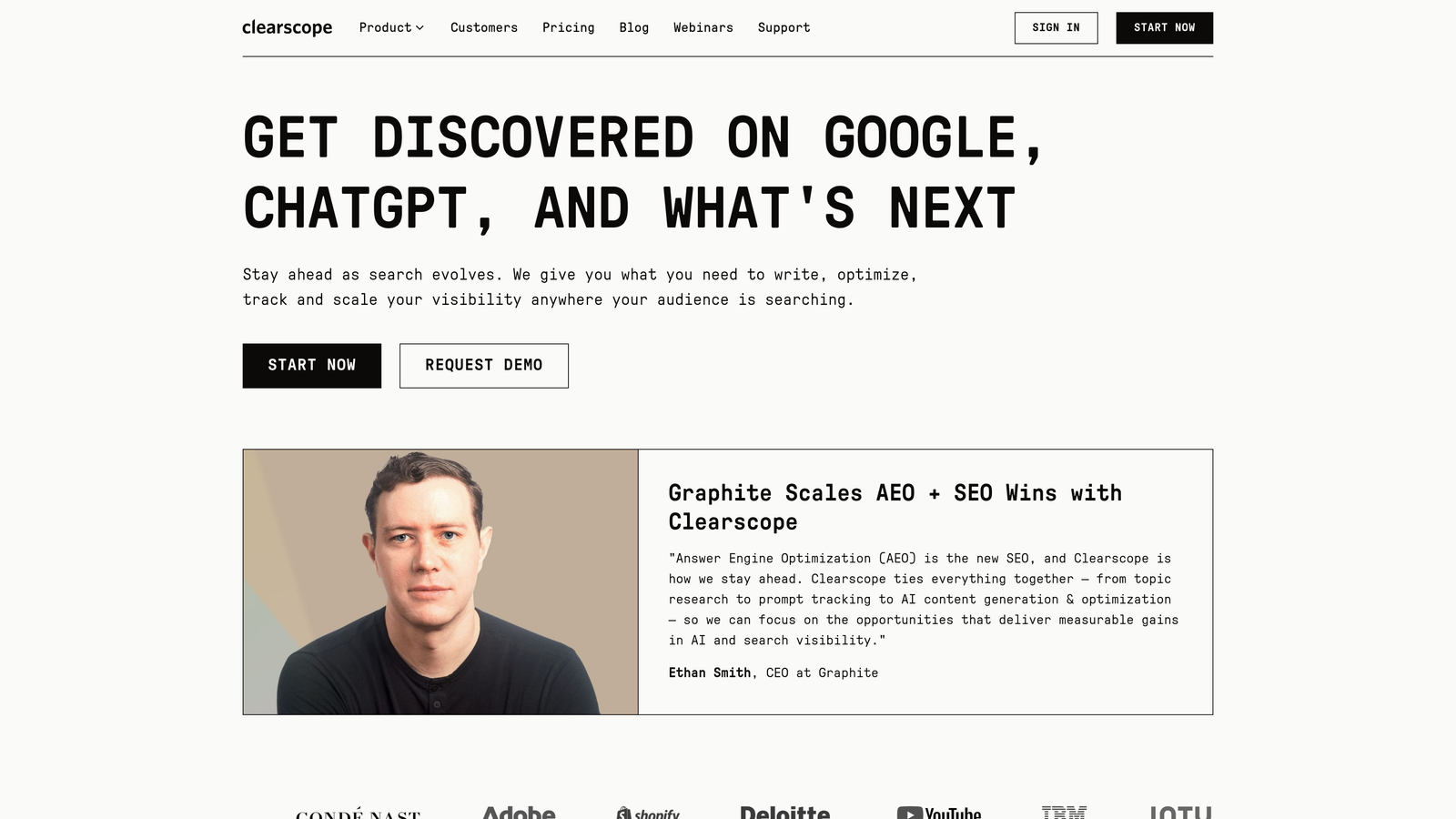
Clearscope is a semantic content optimization tool that helps build topical depth and authority.
Where This Tool Shines
Clearscope's AI-powered grading system scores how comprehensive your content is and flags gaps in topic coverage that could cost you AI citations. It goes beyond keyword lists: it shows writers which concepts and subtopics make content authoritative and citable.
Because it integrates with Google Docs and WordPress, writers can optimize in the tools they already use. Less switching means less friction in content workflows and better adoption across teams.
Key Features
AI Content Grading: Quantitative scores showing how thoroughly your content covers target topics compared with top performers.
Native CMS Integrations: Work directly in Google Docs, WordPress and other platforms with real-time optimization feedback.
Competitor Analysis: Understand what makes top-ranking content authoritative and how to differentiate your approach.
Real-Time Suggestions: Immediate recommendations on terms, concepts and structure as you write.
Team Reporting: Track content performance across writers and spot training opportunities to keep quality consistent.
Best For
Editorial teams that prioritize quality and depth over volume, particularly B2B companies building thought leadership in technical or complex industries.
Pricing
Starts at $170/month for the Essentials plan. Custom enterprise pricing is available for larger teams.
5. MarketMuse
Best for: Strategic content planning and building topical authority through comprehensive coverage
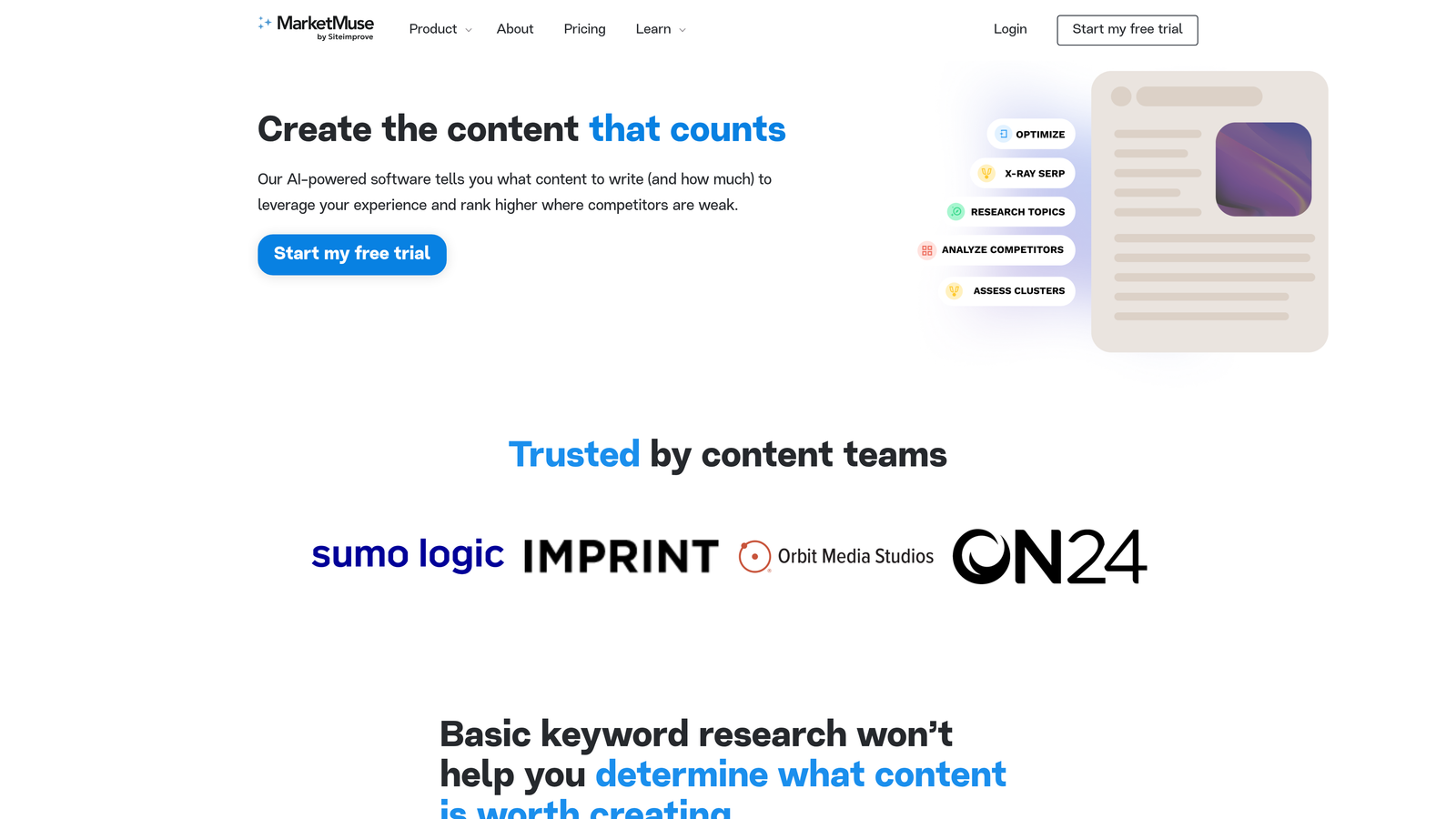
MarketMuse is an AI-driven content strategy platform focused on content cluster planning and authority building.
Where This Tool Shines
MarketMuse's personalized difficulty scores account for your site's existing authority, so you get realistic estimates of ranking potential. Teams can then put content investment where they can actually compete, instead of chasing topics dominated by established players.
Its content cluster planning tools map related topics and subtopics so you can build comprehensive coverage. Clustered coverage signals topical authority to both search engines and language models, which raises the odds of AI citations across related queries.
Key Features
Personalized Difficulty Scoring: Realistic competitiveness assessments based on your site's current authority and backlink profile.
Content Cluster Planning: Map topic relationships and build coverage strategies that establish expertise.
Automated Content Briefs: Detailed outlines with recommended structure, topics and questions to address.
Competitive Gap Analysis: Find topics your competitors cover that you're missing.
Content Inventory Analysis: Audit existing content to identify refresh opportunities and consolidation candidates.
Best For
Content strategists and SEO teams focused on long-term authority building rather than quick wins, particularly in competitive industries that require sustained investment.
Pricing
A free tier is available with limited features. Paid plans start at $149/month for individuals and scale to custom enterprise pricing.
6. Frase
Best for: Streamlined answer engine optimization for smaller teams on tighter budgets
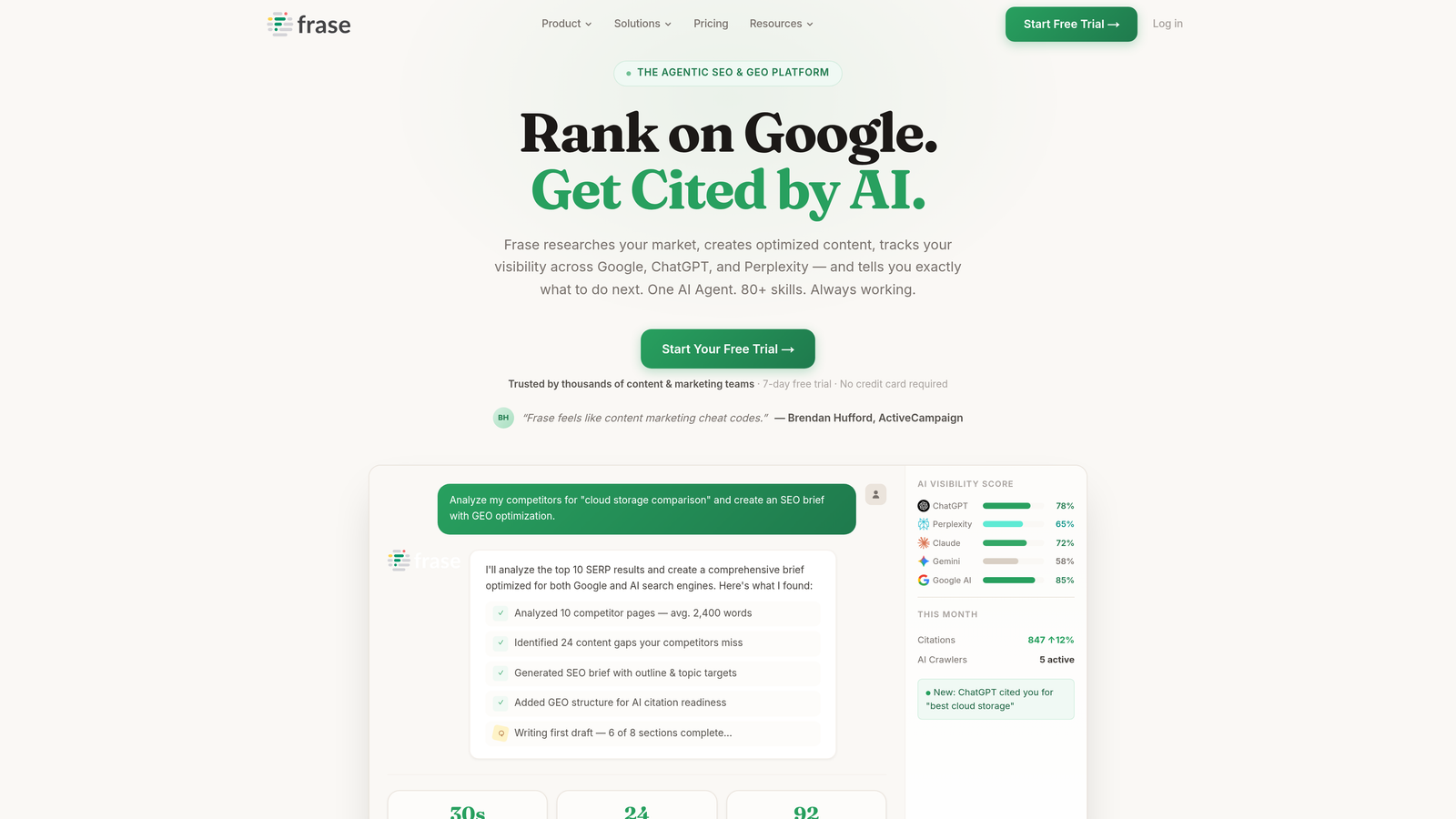
Frase is a content research and optimization tool with specific answer engine optimization capabilities.
Where This Tool Shines
Frase analyzes SERP results to build content briefs around the specific questions users ask. AI models favor content that answers queries directly with clear, structured responses, so this question-first approach suits generative search well.
Its AI writing assistant helps teams produce content faster without giving up optimization quality. For small teams juggling several content projects, that speed can noticeably increase output while still following GSO best practices.
Key Features
AI Content Briefs: Outlines generated from SERP analysis that show which questions to answer and topics to cover.
Answer Engine Optimization: Features for formatting content so it can appear in AI-generated responses and featured snippets.
AI Writing Assistant: Generate content sections or complete drafts from your briefs and optimization recommendations.
Content Analytics: Track how published content performs and find optimization opportunities in existing pages.
Team Collaboration: Manage multiple projects, assign tasks and track progress across writers and editors.
Best For
Small marketing teams and freelance content creators who need professional GSO capabilities without enterprise pricing or complexity.
Pricing
Starts at $15/month for the Solo plan. The Team plan, at $45/month, adds collaboration features and higher usage limits.
7. Originality.ai
Best for: Ensuring content authenticity signals that build credibility with AI models
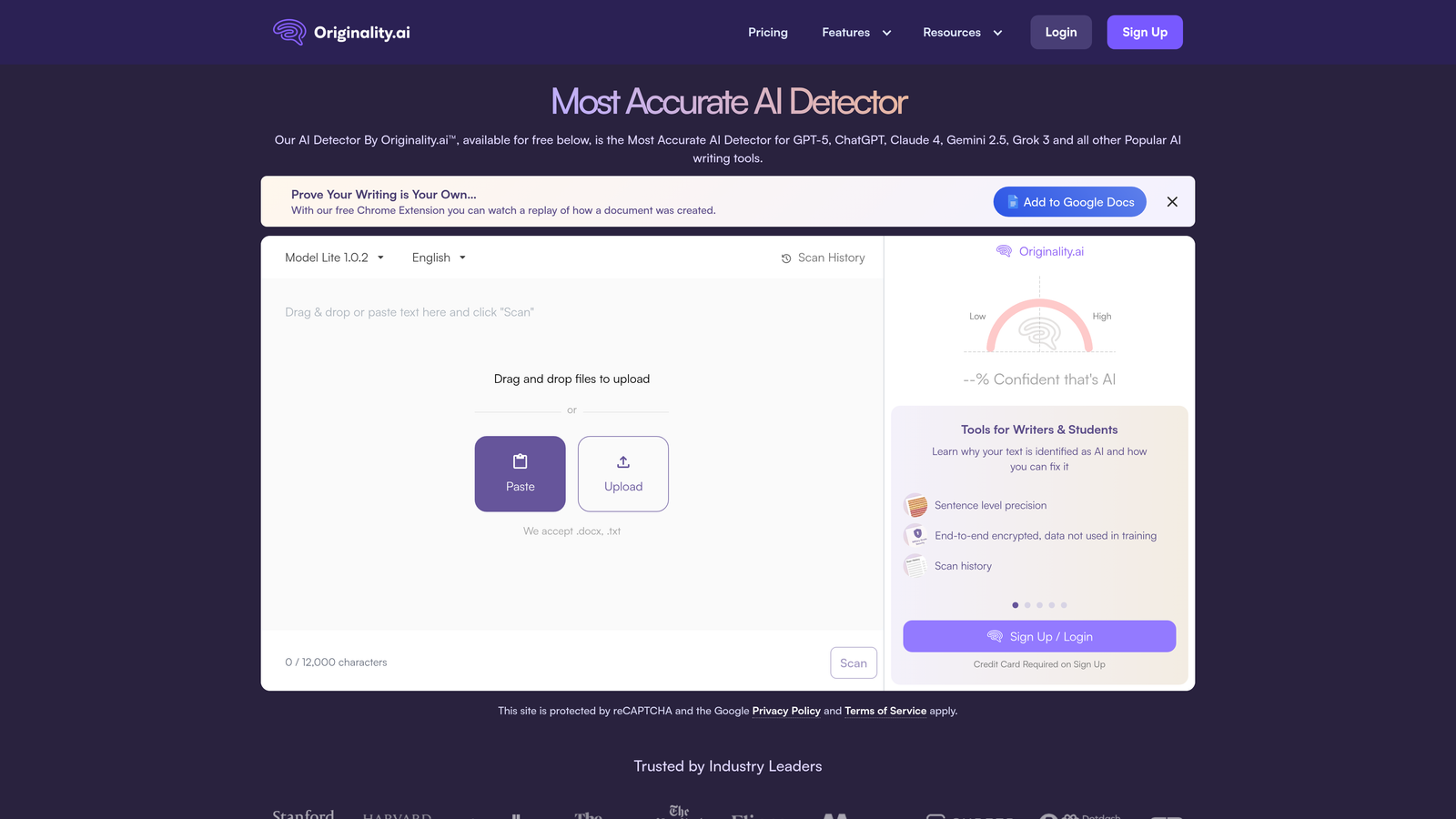
Originality.ai is an AI content detection tool that helps maintain authenticity in your content strategy.
Where This Tool Shines
As AI-generated content floods the web, language models increasingly favor content with authenticity signals. Originality.ai helps you verify that published content keeps the human expertise and original insight that AI models value when choosing what to cite.
Its confidence scores pinpoint which sections of a piece appear AI-generated. You can then revise those sections with human expertise and original research. This kind of quality control matters more as search engines and AI platforms get better at detection.
Key Features
AI Detection with Confidence Scores: Flag AI-generated sections with percentage-based confidence ratings for targeted revision.
Plagiarism Checking: Verify originality across the web and protect against duplicate content problems.
Team Management: Scan content from multiple writers, track usage across projects and maintain quality standards.
API Access: Build detection into your content workflow, CMS or custom publishing pipeline.
Batch Scanning: Check multiple pages or documents at once for efficient content audits.
Best For
Content teams using AI writing tools that need to verify authenticity before publication, and agencies managing content quality across multiple clients or writers.
Pricing
Pay-as-you-go pricing starts at $0.01 per credit (100 words). Monthly subscriptions start at $14.95/month for regular users.
8. Letterdrop
Best for: B2B content operations with built-in distribution optimized for thought leadership
Letterdrop is a content operations platform combining SEO optimization with automated distribution workflows.
Where This Tool Shines
Letterdrop is built on the idea that GSO success depends on distribution, not just publishing. It automates syndication to social media, email newsletters and other channels, which creates more places where AI models can discover and reference your content.
For B2B companies building thought leadership, Letterdrop's editor includes SEO features that structure content for both human readers and AI comprehension. That helps the same piece perform across traditional search, social platforms and generative engines.
Key Features
Automated Distribution: Publish once and automatically syndicate to LinkedIn, Twitter, newsletters and other channels.
Built-In SEO Optimization: The editor gives real-time suggestions on content structure, keywords and readability.
Social Media Management: Schedule and track social posts that drive traffic to your optimized content.
Performance Analytics: Monitor engagement across channels to see which topics and formats resonate.
Team Workflows: Manage content calendars, assign tasks and collaborate on drafts in one platform.
Best For
B2B marketing teams focused on thought leadership that need creation, optimization and distribution in one place.
Pricing
Contact for pricing. Plans are typically based on team size and content volume.
9. Dashword
Best for: Budget-conscious startups needing essential GSO capabilities without premium pricing
Dashword is a streamlined content optimization tool offering core GSO features at accessible price points.
Where This Tool Shines
Dashword sticks to essential optimization features and skips the complexity and cost of enterprise platforms. Startups and small teams just starting with GSO get the fundamentals for improving AI visibility without straining budgets or workflows.
Its real-time content scoring gives writers immediate feedback, which teaches them what makes content AI-friendly. Over time, that speeds up the team's skill development in generative search optimization.
Key Features
AI-Powered Content Briefs: Optimization guidelines based on competitive analysis and search intent research.
Real-Time Content Scoring: Track optimization quality as you write, with immediate feedback on improvements.
Competitor Analysis: See what top-performing content covers and how to differentiate your approach.
Team Collaboration: Share briefs, track projects and keep work consistent across multiple writers.
Simple Interface: A streamlined design that shortens the learning curve and speeds up team adoption.
Best For
Startups and small businesses taking their first steps into generative search optimization without the budget for premium enterprise tools.
Pricing
Starts at $99/month for the Startup plan. The Business plan, at $349/month, adds advanced features and higher usage limits.
Making the Right Choice
There's a GSO tool for every budget and use case. For AI visibility tracking combined with content generation, Sight AI is the most complete option: multi-platform monitoring plus specialized AI agents that automate the workflow from tracking to publishing.
Enterprises already running on Semrush should look at its integrated AI toolkit, which adds generative search capabilities to familiar SEO workflows. Content-focused teams will get the most from Surfer SEO or Clearscope, which improve both traditional rankings and AI citations.
Strategic planners building long-term topical authority should consider MarketMuse's content cluster approach. Smaller teams will benefit from Frase's streamlined answer engine optimization, and budget-conscious startups can start with Dashword and upgrade as their GSO program matures.
The key is to match your primary need to each tool's core strength:
- Tracking how AI models reference your brand: prioritize visibility monitoring capabilities.
- Content production is your bottleneck: focus on platforms with strong AI writing features.
- Optimizing existing content: look for strong analysis and recommendation engines.
How to run a 90-day pilot
- Weeks 1–2: Define 30–50 prompts your buyers actually ask, and record your baseline mention rate, citation rate and sentiment across each AI platform.
- Weeks 3–8: Publish or refresh 8–12 pages targeting the prompts where competitors are cited and you are not.
- Weeks 9–12: Re-measure the same prompt set and compare share of voice against the baseline. Judge the tool on whether its data led to changes you could act on, not on dashboard volume.
For the metrics to track along the way, see our 6-step framework for measuring AI visibility performance.
Most importantly, GSO success requires consistent execution over time. Choose a tool your team will actually use over the most feature-rich option that sits idle. The best GSO software is the one that fits smoothly into your existing workflows and gets used every day.
Frequently asked questions
What is the best SEO tool for generative search?
It depends on the gap you need to close. If you don't yet know where your brand appears in AI answers, start with a visibility tracker such as Sight AI, which monitors mentions, citations and sentiment across ChatGPT, Claude, Perplexity and Google AI Overviews. If you already have that data, a content optimizer such as Surfer SEO or Clearscope improves the pages you want AI models to cite.
Which tools track visibility in Microsoft Copilot?
Coverage varies by vendor and changes often, so check each tool's current list of supported platforms before you buy. Copilot draws heavily on Bing's index, which means strong Bing indexing (for example, through IndexNow, which Sight AI supports) also helps you get cited there. Content-only optimizers like Clearscope, Frase or Dashword do not monitor Copilot answers at all.
What should an enterprise LLM search optimization platform include?
At minimum: prompt-level tracking across several AI engines, competitor share-of-voice benchmarking, sentiment analysis, multi-brand or multi-client workspaces, and data export or API access for reporting. Teams with large content programs should also look for workflow automation and indexing integrations. Semrush and Sight AI cover most of this list, while the content-only tools on this page cover only part of it.
How long does it take to see results from generative search optimization?
Expect initial movement in 4–12 weeks for AI engines that retrieve live web results, such as Perplexity, Google AI Overviews and ChatGPT search. Changes to what a model knows from its training data take much longer. That's why a 90-day pilot with a fixed set of prompts is a practical way to evaluate a tool; the pilot section above lays out the steps.
Start tracking your AI visibility today and see exactly where your brand appears across top AI platforms. Stop guessing how AI models like ChatGPT and Claude talk about your brand. Get visibility into every mention, track content opportunities, and automate your path to organic traffic growth.