AI content platforms have evolved far beyond basic text generation. Today's leading tools combine content creation, SEO optimization, AI visibility tracking, and automated publishing into unified workflows — a critical advantage for marketers and agencies competing in both traditional search and AI-powered discovery engines like ChatGPT, Claude, and Perplexity.
But not every platform is built the same. Some focus on writing assistance, others on brand monitoring across AI models, and a few tackle the full content-to-indexing pipeline. Choosing the wrong tool means leaving organic traffic — and AI mentions — on the table.
This comparison covers the best AI content platforms available in 2026, evaluated on content quality, SEO/GEO optimization capabilities, AI visibility features, workflow automation, and value for marketers, founders, and growing agencies. For deeper context on AI-powered content workflows, see our guides on AI post writing tools and content marketing automation platforms.
1. Sight AI
Best for: Teams that need AI visibility tracking, SEO/GEO content generation, and automated indexing in one platform.
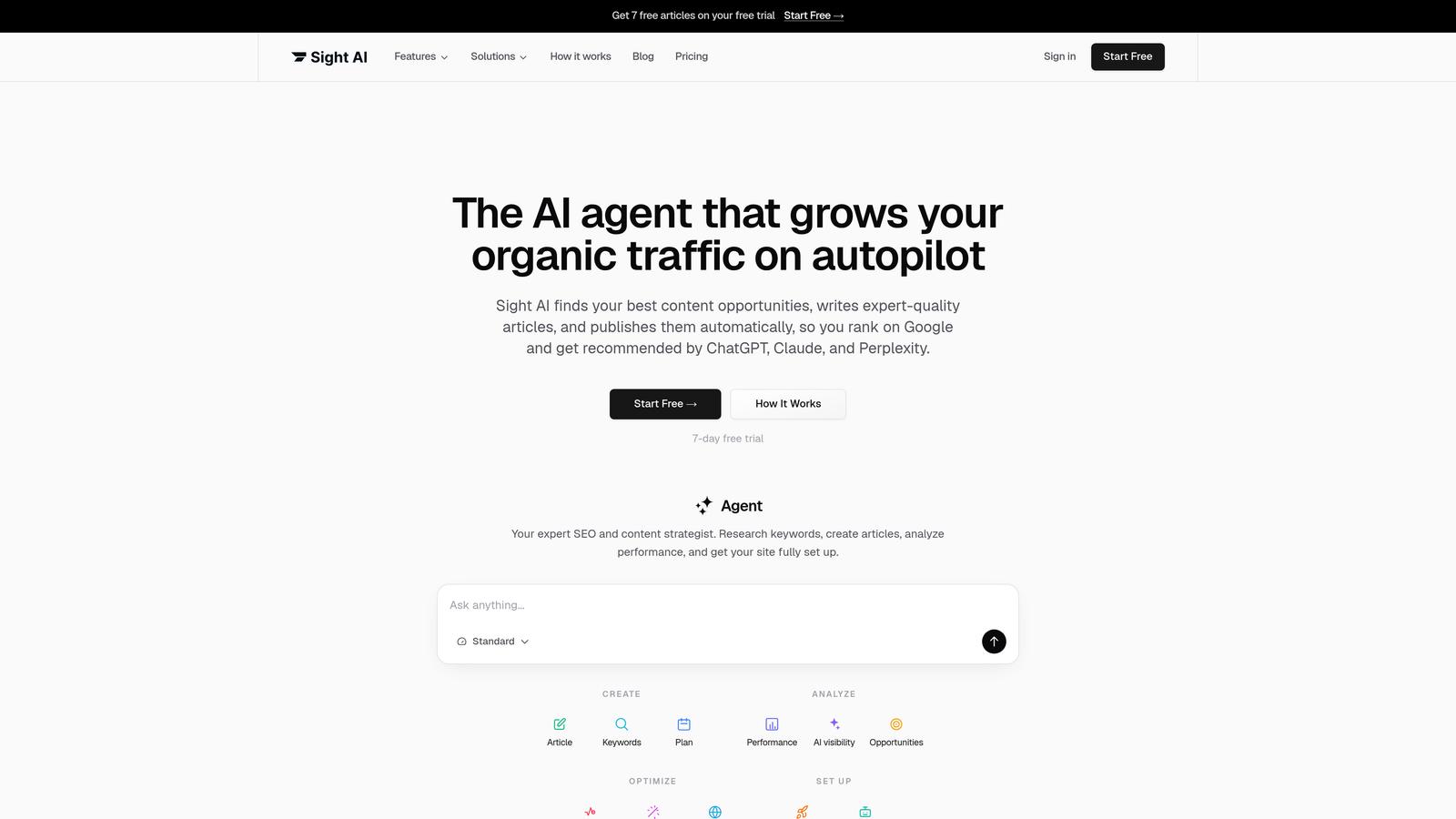
Sight AI is an all-in-one platform that tracks brand mentions across 6+ AI models, generates SEO/GEO-optimized content through 13+ specialized AI agents, and automates indexing with IndexNow integration.
Where This Tool Shines
Most platforms force you to choose between understanding your AI visibility and actually doing something about it. Sight AI closes that gap. You can see exactly how ChatGPT, Claude, and Perplexity are referencing your brand, identify the content gaps driving those patterns, and immediately spin up targeted content to address them.
The Autopilot Mode is particularly compelling for growing agencies. Rather than manually triggering content runs, the platform continuously generates and publishes optimized articles while you focus on strategy. Combined with IndexNow integration, new content gets discovered and indexed faster than standard sitemap-based workflows typically allow.
Key Features
AI Visibility Score: Tracks brand mentions across ChatGPT, Claude, Perplexity, and three additional AI platforms, with sentiment analysis built in.
Prompt Tracking: Monitors which specific queries surface your brand in AI-generated answers, giving you actionable data on where to focus content efforts.
13+ Specialized AI Agents: Purpose-built agents for listicles, guides, explainers, and other formats optimized for both SEO and Generative Engine Optimization (GEO).
Autopilot Mode: Hands-off, continuous content generation that keeps your content pipeline moving without manual intervention.
IndexNow Integration: Automated sitemap updates and IndexNow submission ensure new content is indexed quickly after publishing.
CMS Auto-Publishing: Connects content generation directly to your CMS for streamlined deployment without extra manual steps.
Best For
Marketers, founders, and agencies who want to compete in both traditional search and AI-generated discovery. Particularly strong for teams that have an AI visibility blind spot today and want a single platform to both understand that gap and execute content to close it.
Pricing
Contact Sight AI directly for current pricing and plan details. Given the platform's breadth of features, it's worth scheduling a demo to understand which tier fits your content volume and monitoring needs.
2. Writesonic
Best for: Agencies and content teams producing high-volume, multi-format content across blogs, ads, and social.
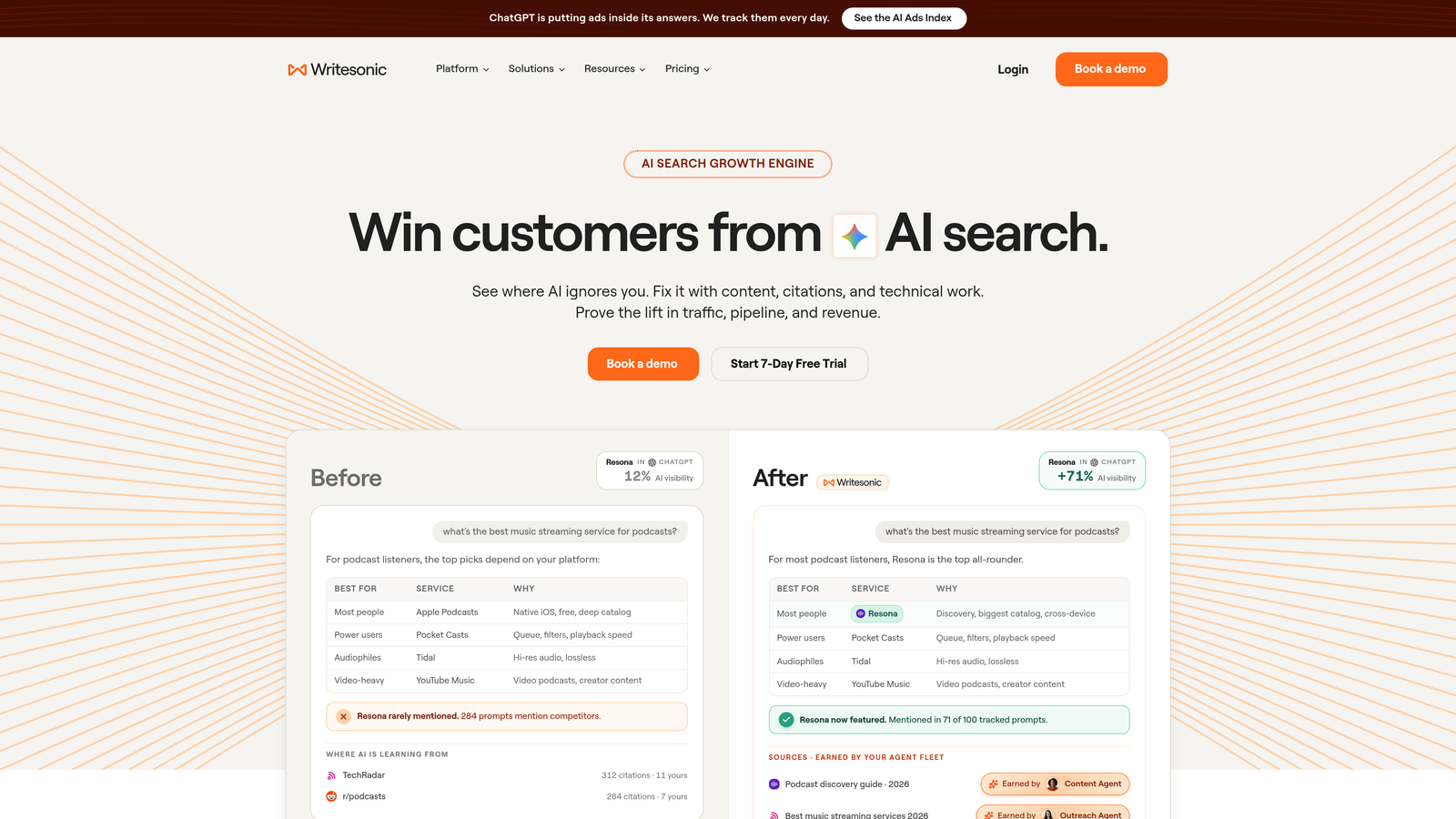
Writesonic is a versatile AI writing platform with a broad template library, web-aware content generation via Chatsonic, and SEO-mode articles designed for diverse content operations.
Where This Tool Shines
Writesonic's strength is breadth. If your agency manages clients across different industries and content types, the template library covers a wide range of formats without requiring you to build custom workflows. Chatsonic's real-time web awareness is a genuine differentiator for content that needs to stay current, like news-adjacent articles or trend-driven social content.
The SEO-mode articles integrate keyword targeting directly into the generation process, which reduces the back-and-forth between your writer and your SEO team. Brand voice customization and team collaboration tools make it a reasonable fit for mid-sized content operations that need consistency across multiple contributors.
Key Features
Template Library: Covers blogs, ads, product descriptions, social posts, and more — reducing setup time for diverse client needs.
Chatsonic: Web-aware content generation with real-time data access for timely, relevant content.
SEO Mode: Keyword integration built into the article generation flow for search-optimized output.
Brand Voice Customization: Lets teams define and apply consistent tone across all generated content.
Team Collaboration Tools: Multi-user support for agencies managing content at scale.
Best For
Content agencies and marketing teams that need a reliable, high-volume writing tool across many formats. Less suited for teams whose primary need is AI visibility monitoring or automated indexing — Writesonic is fundamentally a content generation tool, not a full-stack AI visibility platform.
Pricing
Free tier available. Paid plans scale based on word count and feature access, making it accessible for smaller teams and scalable as output requirements grow.
3. AirOps
Best for: Content operations teams that need repeatable, no-code AI workflows connected to internal data and CMS platforms.
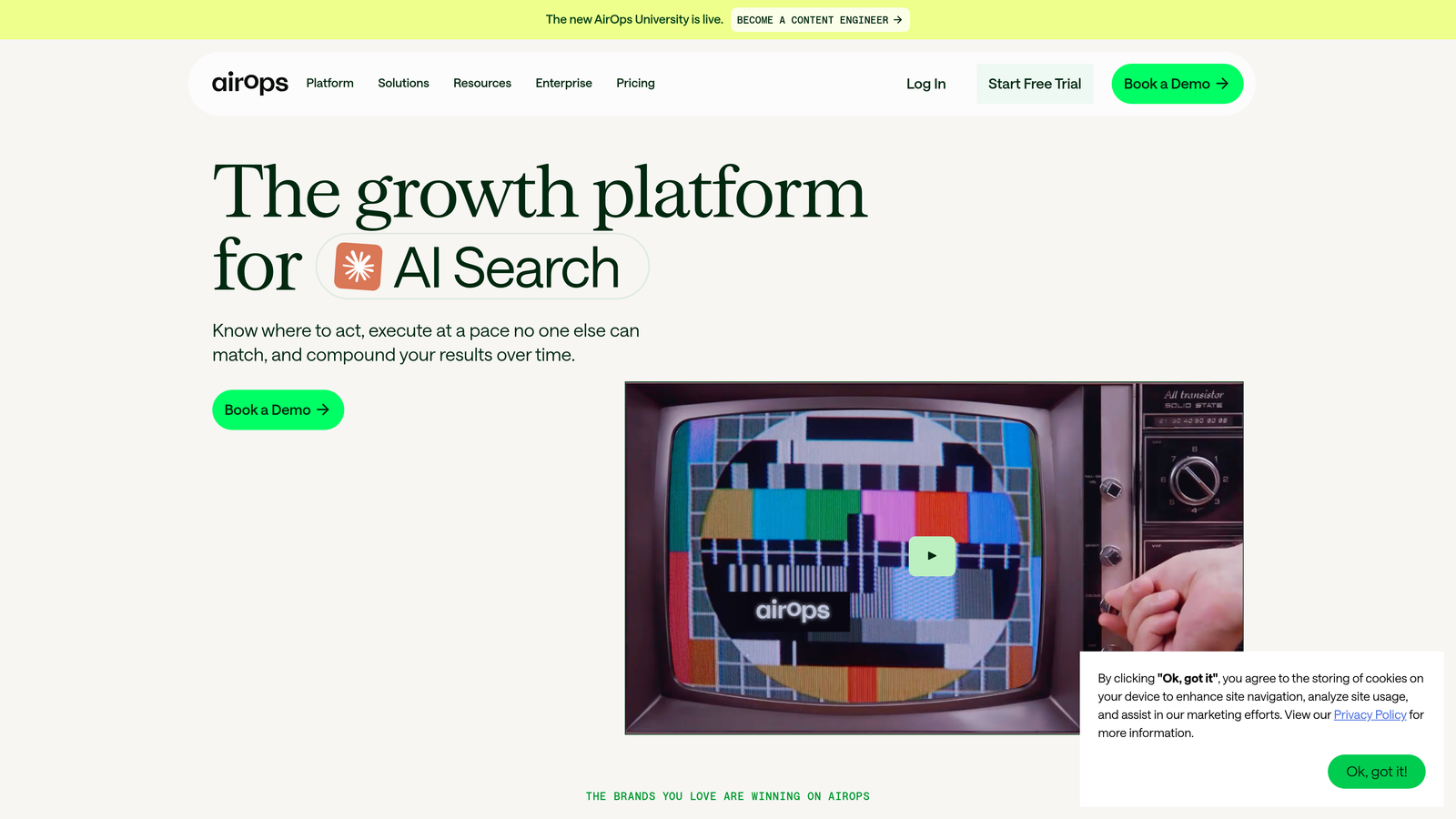
AirOps is a no-code AI workflow automation platform that connects large language models to internal data sources, spreadsheets, and CMS platforms for scalable content pipeline management.
Where This Tool Shines
AirOps approaches content differently from most tools on this list. Rather than being a writing interface, it's a workflow builder. Think of it like connecting the AI brain to your existing systems: your product database, your CMS, your internal spreadsheets. The result is content pipelines that generate output based on your actual business data rather than generic prompts.
For agencies running programmatic content at scale, this architecture is powerful. You can build a workflow once and replicate it across hundreds of pages or clients. The no-code interface means content ops managers can build and maintain these pipelines without engineering support.
Key Features
No-Code Workflow Builder: Visual interface for connecting LLMs to data sources, CMS platforms, and internal systems without writing code.
CMS Integrations: Native connections to platforms like Webflow and WordPress for direct content deployment.
Data-Driven Content Generation: Uses proprietary business data as inputs, enabling highly specific and accurate content output.
Repeatable Pipeline Automation: Build once, run continuously — ideal for high-volume programmatic content strategies.
Scalable Workflow Management: Handles complex, multi-step content operations without manual intervention at each stage.
Best For
Content operations teams, growth agencies, and technical marketers who need structured, repeatable AI content pipelines connected to real data. Not the right fit for teams looking for a standalone writing tool or AI visibility monitoring capabilities.
Pricing
Contact AirOps directly for current plan pricing. Enterprise and agency tiers are available based on workflow complexity and volume.
4. Profound
Best for: Enterprise marketing teams managing brand reputation and visibility across AI answer engines.
Profound is an AI answer engine monitoring platform that tracks how brands appear in AI-generated responses, with sentiment analysis and citation tracking built for enterprise-scale brand management.
Where This Tool Shines
Profound is purpose-built for one thing: understanding how your brand shows up when people ask AI platforms questions in your category. That focus translates into depth. The citation tracking feature is particularly useful for understanding which of your existing content assets are actually influencing AI-generated answers, giving your SEO and content teams a clear signal on where to double down.
The enterprise-focused reporting dashboards make it easier to communicate AI search performance to leadership teams who may not yet have a mental model for GEO. If your organization is at the stage of building internal buy-in for AI visibility as a strategic priority, Profound's reporting layer helps make that case.
Key Features
Brand Mention Monitoring: Tracks how and where your brand appears across major AI answer engines at scale.
Sentiment Analysis: Evaluates the tone and context of AI-generated brand references, not just their frequency.
Citation Tracking: Identifies which content assets are driving AI mentions, informing content strategy decisions.
Enterprise Reporting Dashboards: Structured reporting designed for marketing leadership and brand reputation teams.
Competitive Intelligence: Monitors competitor presence in AI-generated answers to benchmark your share of voice.
Best For
Enterprise marketing and brand teams with a specific mandate to manage and improve AI search visibility. Profound is a monitoring and analytics tool, not a content generation platform, so it works best as part of a broader stack rather than a standalone solution.
Pricing
Contact Profound directly for enterprise pricing. Given the enterprise positioning, expect custom pricing based on brand scope and monitoring volume.
5. Peec
Best for: SEO managers and brand strategists measuring share of voice in AI-generated search results.
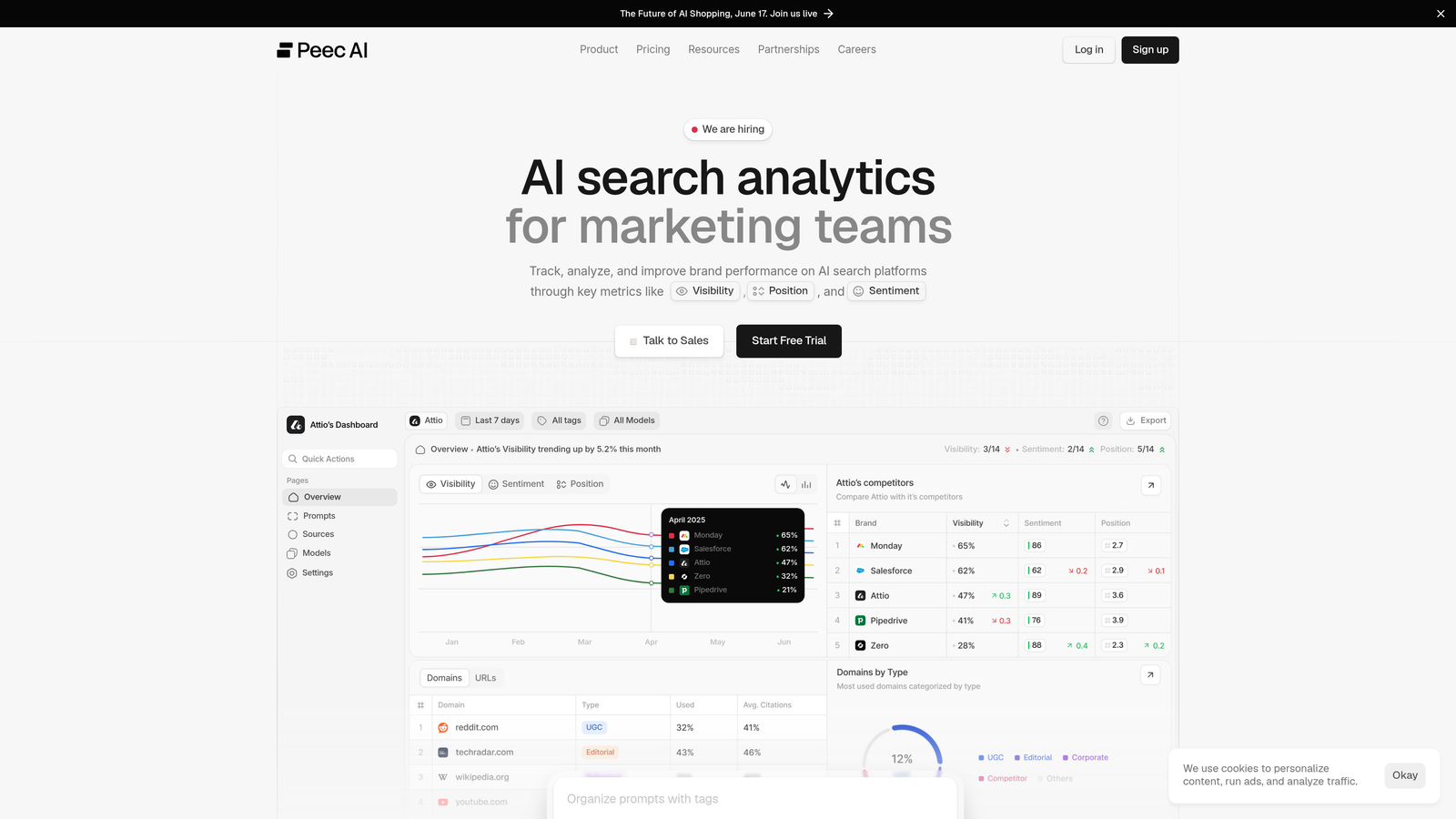
Peec is an AI visibility analytics tool that tracks brand and competitor mentions in AI-generated answers, helping teams understand and improve their positioning in AI search.
Where This Tool Shines
Where Profound leans enterprise, Peec takes a more focused analytics approach that appeals to SEO practitioners who think in terms of share of voice and competitive benchmarking. The ability to track competitor mentions alongside your own gives you a relative measure of AI search positioning, which is more actionable than absolute mention counts alone.
The alerting system for changes in AI-generated brand mention patterns is useful for teams that want to stay responsive without manually checking dashboards. If your brand's AI search presence shifts, you'll know about it quickly enough to investigate and respond.
Key Features
Brand Mention Tracking: Monitors how your brand appears in AI-generated content and answers across platforms.
Competitor Mention Tracking: Benchmarks your AI search presence against competitors for share-of-voice analysis.
Visibility Trend Reporting: Tracks changes in AI mention patterns over time to identify momentum or decline.
Focused Analytics Dashboard: Streamlined interface designed for SEO and brand teams rather than broad marketing suites.
Mention Alerts: Notifies teams when significant changes occur in AI-generated brand mention patterns.
Best For
SEO managers, brand strategists, and digital marketing teams that want a dedicated analytics layer for AI search visibility. Like Profound, Peec is a monitoring tool rather than a content generation platform, so it's most effective when paired with a content execution workflow.
Pricing
Contact Peec directly for current pricing details. Plans likely vary based on the number of brands and competitors being tracked.
6. Promptwatch
Best for: Marketers testing prompt strategies and tracking how specific queries surface brand mentions in AI outputs.
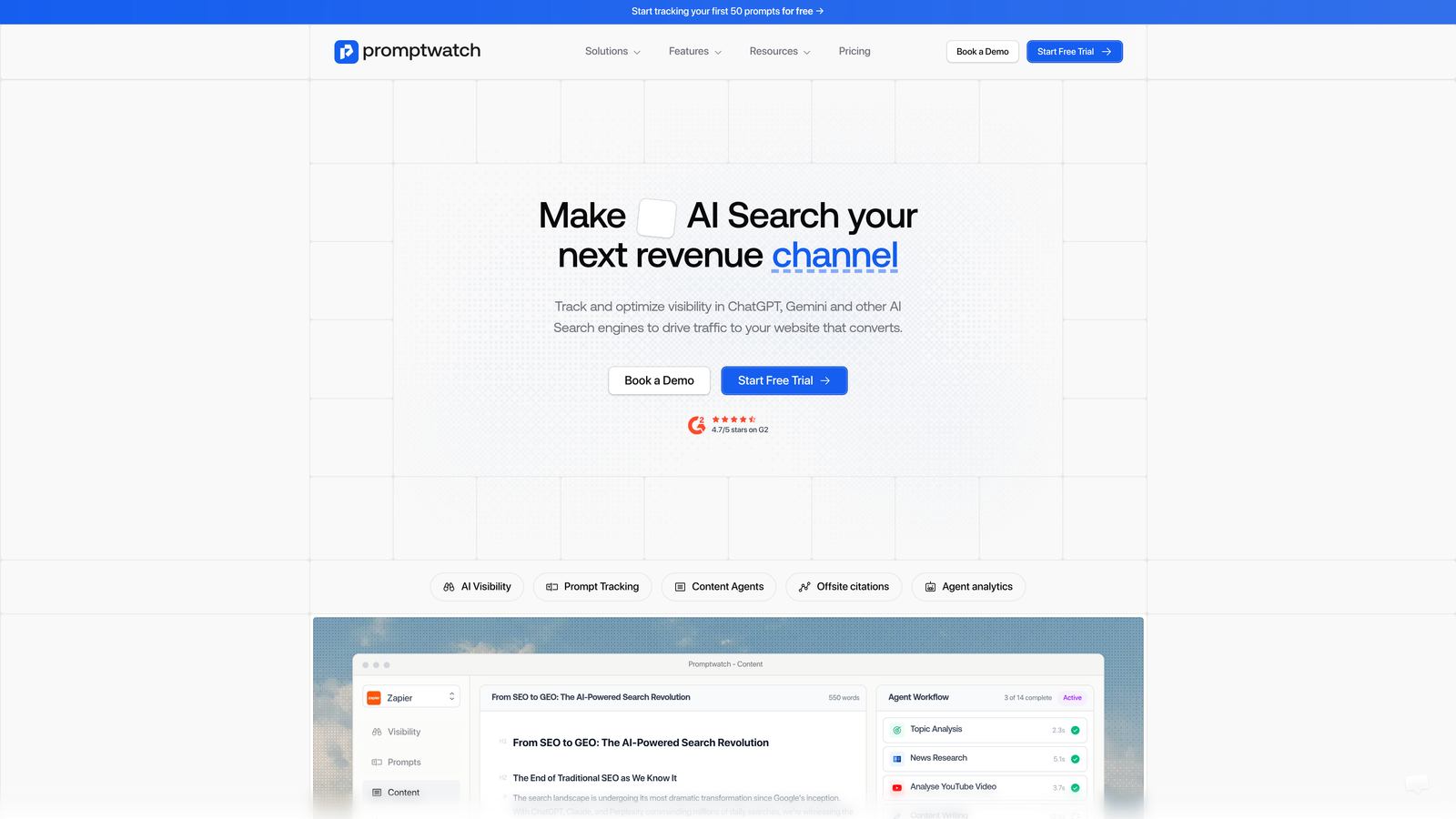
Promptwatch is a prompt-level AI monitoring tool that tracks how specific queries surface brand mentions in AI model outputs, with alerting and reporting for marketers focused on AI visibility testing.
Where This Tool Shines
Promptwatch operates at a more granular level than the other monitoring tools in this list. Rather than tracking broad brand mention trends, it focuses on the prompt-to-output relationship: which specific queries drive AI models to mention your brand, and which suppress it. For marketers actively running prompt strategy experiments, that level of detail is genuinely useful.
The alerting system means you don't have to run manual checks to know when something changes. If a query that previously surfaced your brand stops doing so, you'll get notified and can investigate whether it's a content gap, a competitor's recent publication, or a shift in how the AI model is interpreting the topic.
Key Features
Prompt-Level Tracking: Monitors how specific queries and prompts influence brand mention frequency in AI model responses.
Alerting System: Notifies marketers when AI-generated brand visibility changes at the prompt level.
Prompt Strategy Testing: Supports structured experimentation to understand which content and positioning drives AI mentions.
Multi-Model Monitoring: Tracks brand mentions across multiple AI platforms from a single interface.
Query-Level Reporting: Shows which specific queries drive or suppress brand mentions, enabling targeted content responses.
Best For
Marketers and SEO strategists who are actively experimenting with AI visibility tactics and want granular data on prompt-to-mention relationships. Promptwatch is narrowly focused, which makes it a specialist tool rather than a primary platform for most content teams.
Pricing
Contact Promptwatch directly for current pricing details.
Which Platform Is Right for Your Stack?
The right AI content platform depends on the specific gap you're solving. If you need high-volume content creation with broad format support, Writesonic is a strong starting point for agencies managing diverse client needs. If your priority is building repeatable, data-driven content pipelines connected to your CMS and internal systems, AirOps offers a workflow architecture that scales well.
For teams focused specifically on AI search visibility, the monitoring tools each have a distinct angle. Profound is built for enterprise brand reputation management with citation tracking and leadership-ready reporting. Peec takes a competitive benchmarking approach that resonates with SEO practitioners thinking in share-of-voice terms. Promptwatch goes deeper at the prompt level, making it a fit for marketers running active AI visibility experiments.
Here's the practical challenge: most of these tools solve either the content creation problem or the AI visibility monitoring problem, but not both. You track mentions in one platform, then switch to another to generate content, then manually push it through indexing. That fragmentation adds friction and slows down your ability to act on what you're learning.
For teams that want to close that loop, Sight AI is the only platform in this comparison that combines AI visibility tracking, content generation, and automated indexing in a single workflow. You can identify which AI platforms are mentioning your brand and how, generate SEO/GEO-optimized content through 13 specialized agents to address the gaps, and push that content live with IndexNow integration ensuring fast discovery. Autopilot Mode keeps the engine running without requiring manual intervention at every step.
If you're building a content operation designed to compete in both traditional search and AI-generated discovery, start with a platform that handles the full pipeline. Start tracking your AI visibility today and see exactly where your brand appears across top AI platforms.
Explore more resources to sharpen your strategy:
Best AI tools for content creation