As AI-generated answers increasingly replace traditional search results, marketers and founders face a critical decision: which platform actually helps your brand show up — not just in Google, but in ChatGPT, Claude, and Perplexity? AirOps sparked the conversation about AI-assisted content workflows, but the landscape has expanded significantly.
Today, a new category of platforms combines content generation, AI visibility tracking, and indexing automation. Pure content workflow tools simply don't offer all three. This guide compares AirOps against the most relevant AI content platforms available in 2026, evaluating each on content quality, SEO/GEO optimization, AI brand visibility, and workflow automation.
Whether you're a solo founder, a growth marketer, or running an agency, here are the top tools to consider — with Sight AI featured first as the strongest all-in-one option for teams that need both content output and AI search presence.
1. Sight AI
Best for: Teams that want SEO content generation and AI brand visibility tracking in one platform.
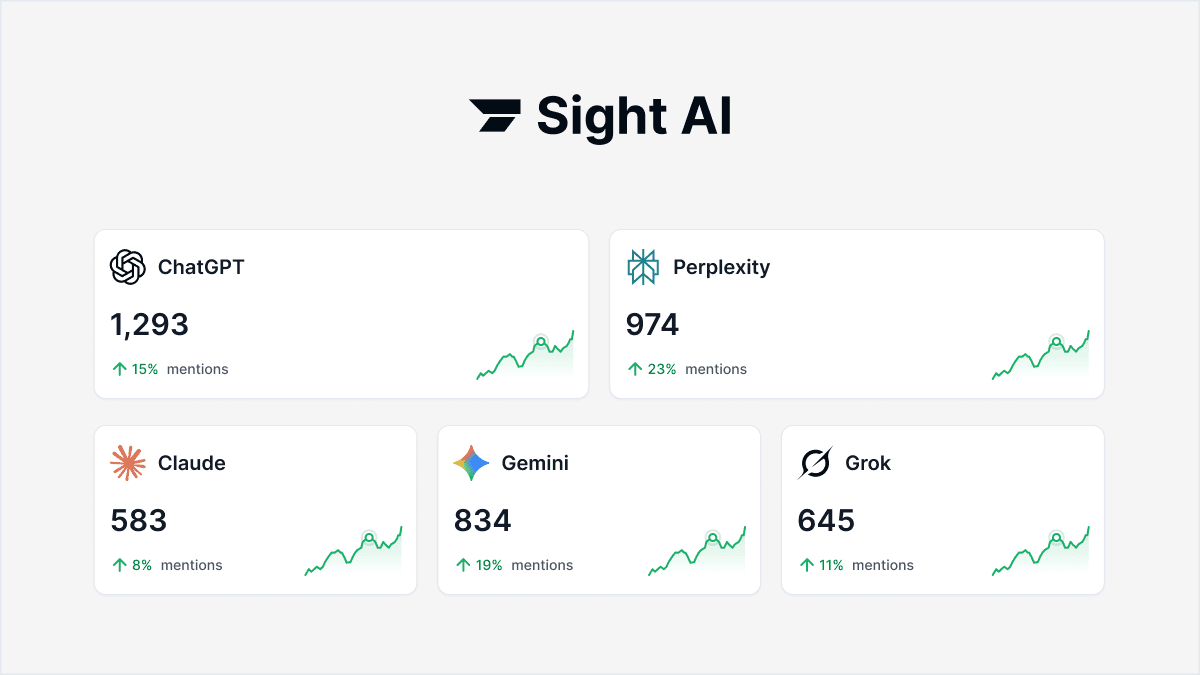
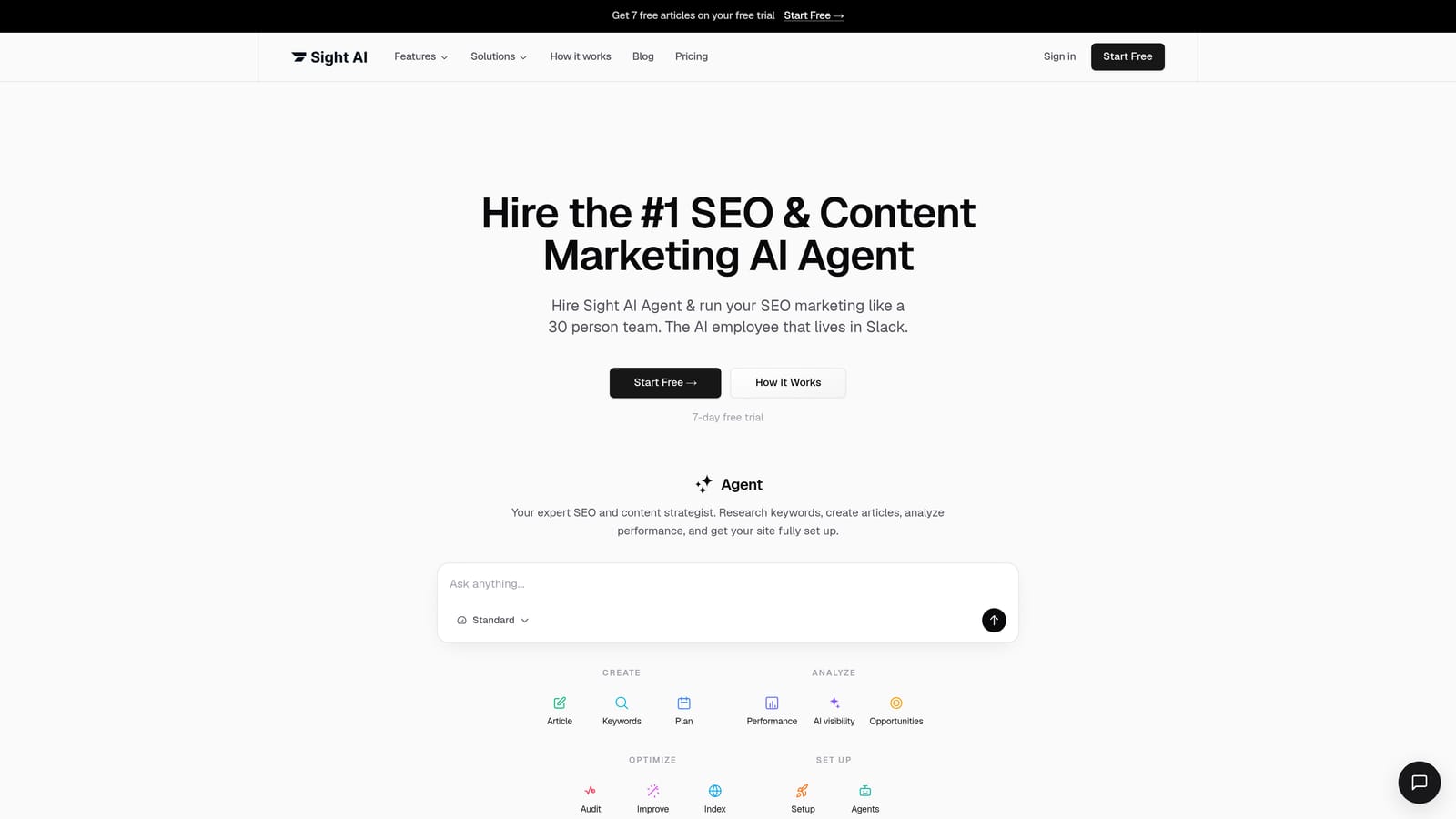
Sight AI is an all-in-one platform that tracks brand mentions across AI models, generates SEO/GEO-optimized content with 13+ specialized AI agents, and automates website indexing via IndexNow.
Where This Tool Shines
Most tools in this space force you to choose: either you get content generation or you get AI visibility monitoring. Sight AI is built around the idea that these two capabilities belong together. You can see exactly how AI models describe your brand today, then use that insight to create content that improves your positioning in those same AI answers tomorrow.
The platform's GEO-optimized content generation is particularly noteworthy. Rather than producing generic articles optimized only for traditional search, Sight AI's agents are designed to create content structured for AI answer engines — the kind of content that gets cited when someone asks ChatGPT or Perplexity a question in your category.
Key Features
AI Visibility Score: Tracks brand mentions across ChatGPT, Claude, Perplexity, and 3+ additional AI models with sentiment analysis and competitive benchmarking.
13+ Specialized AI Agents: Purpose-built agents for listicles, guides, explainers, and other formats — each optimized for both SEO and GEO performance.
IndexNow Integration: Automates sitemap updates and content indexing so new articles get discovered faster by search engines.
CMS Auto-Publishing and Autopilot Mode: Connects directly to your CMS for hands-off content workflows, reducing the manual steps between content creation and publication.
Prompt Tracking: Monitors which specific prompts trigger brand mentions or omissions across AI platforms, giving you actionable data for content strategy.
Best For
Sight AI is the strongest fit for growth marketers, agency teams, and founders who want to compete in both traditional search and AI-generated answers simultaneously. If your growth strategy depends on organic traffic and you're starting to think seriously about AI search presence, this platform is built for exactly that intersection.
Pricing
Paid plans available across multiple tiers. Visit trysight.ai for current pricing details and to explore plan options.
2. AirOps
Best for: Technical teams building custom LLM-powered content pipelines and data enrichment workflows.
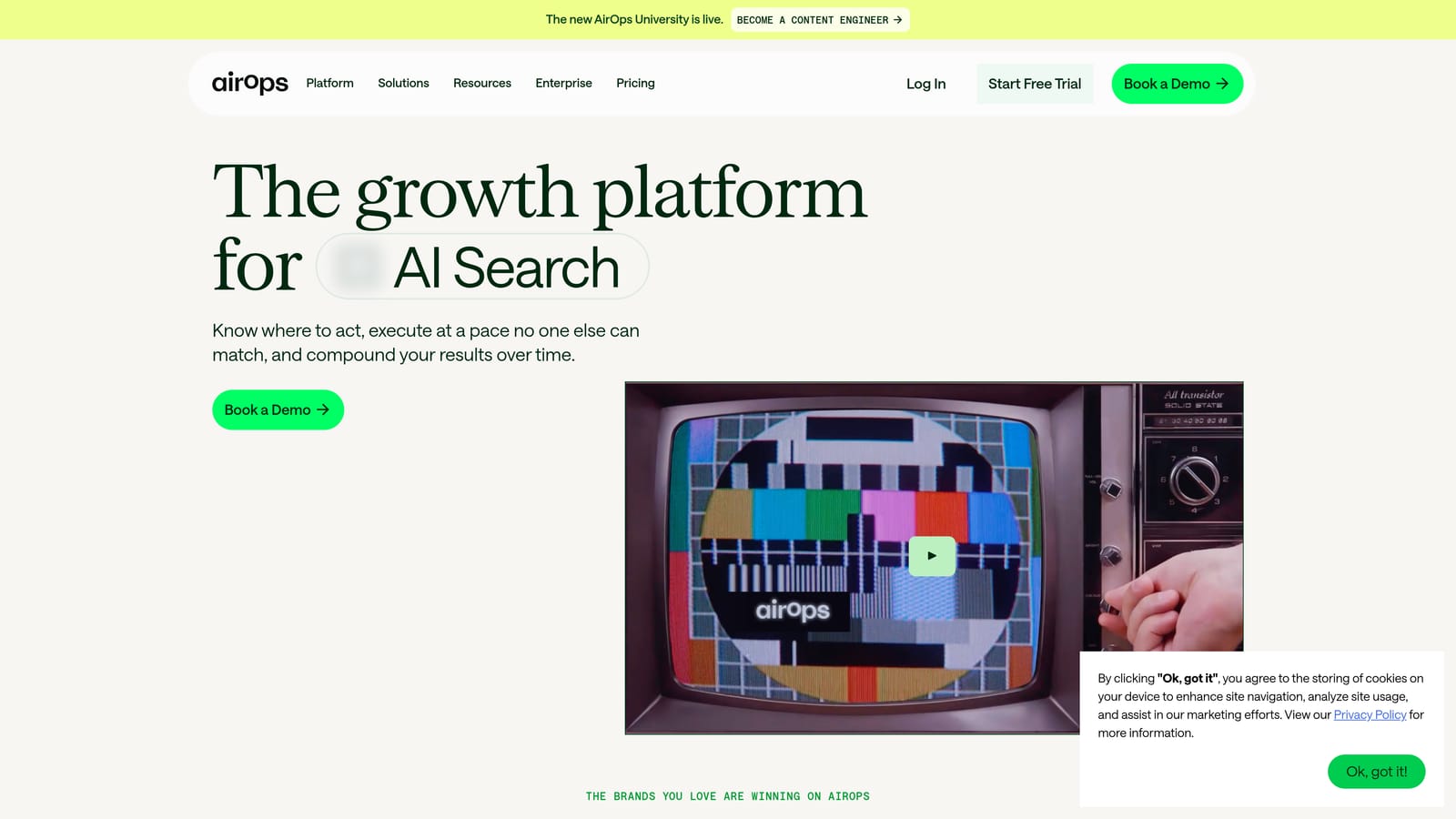
AirOps is a flexible LLM workflow automation platform that lets teams construct AI-powered content and data processes using a visual workflow builder.
Where This Tool Shines
AirOps excels in customization. If your team has specific, non-standard content or data workflows that off-the-shelf tools can't accommodate, AirOps gives you the building blocks to construct exactly what you need. Think of it like a visual programming environment for AI processes, where you connect prompts, data sources, and outputs in ways that fit your unique stack.
For growth and SEO teams running large-scale content operations — enriching thousands of product descriptions, generating programmatic pages, or transforming data into structured content — AirOps handles batch processing well. The tradeoff is that it requires more technical setup than most point-and-click content tools.
Key Features
Visual LLM Workflow Builder: Drag-and-drop interface for constructing multi-step AI pipelines across multiple models without writing code.
Data Enrichment Pipelines: Transform raw data from CRMs, databases, or spreadsheets into structured content outputs at scale.
CRM and CMS Integrations: Connects with popular content management systems and customer data platforms to pull context into workflows.
Scalable Batch Processing: Designed to handle large-volume content operations efficiently, making it suitable for programmatic SEO projects.
Custom Prompt Engineering: Full control over prompt logic and workflow branching for teams with advanced AI workflow requirements.
Best For
AirOps is best suited for technical growth teams, SEO engineers, and ops-heavy organizations that need to build bespoke AI workflows rather than use a pre-built solution. It is not designed for AI visibility monitoring or GEO optimization, so teams with those needs will need to supplement it with additional tools.
Pricing
Free tier available; paid plans scale with usage volume. Visit airops.com for current plan details.
3. Writesonic
Best for: High-volume content teams producing blog posts, ads, and landing pages at scale.
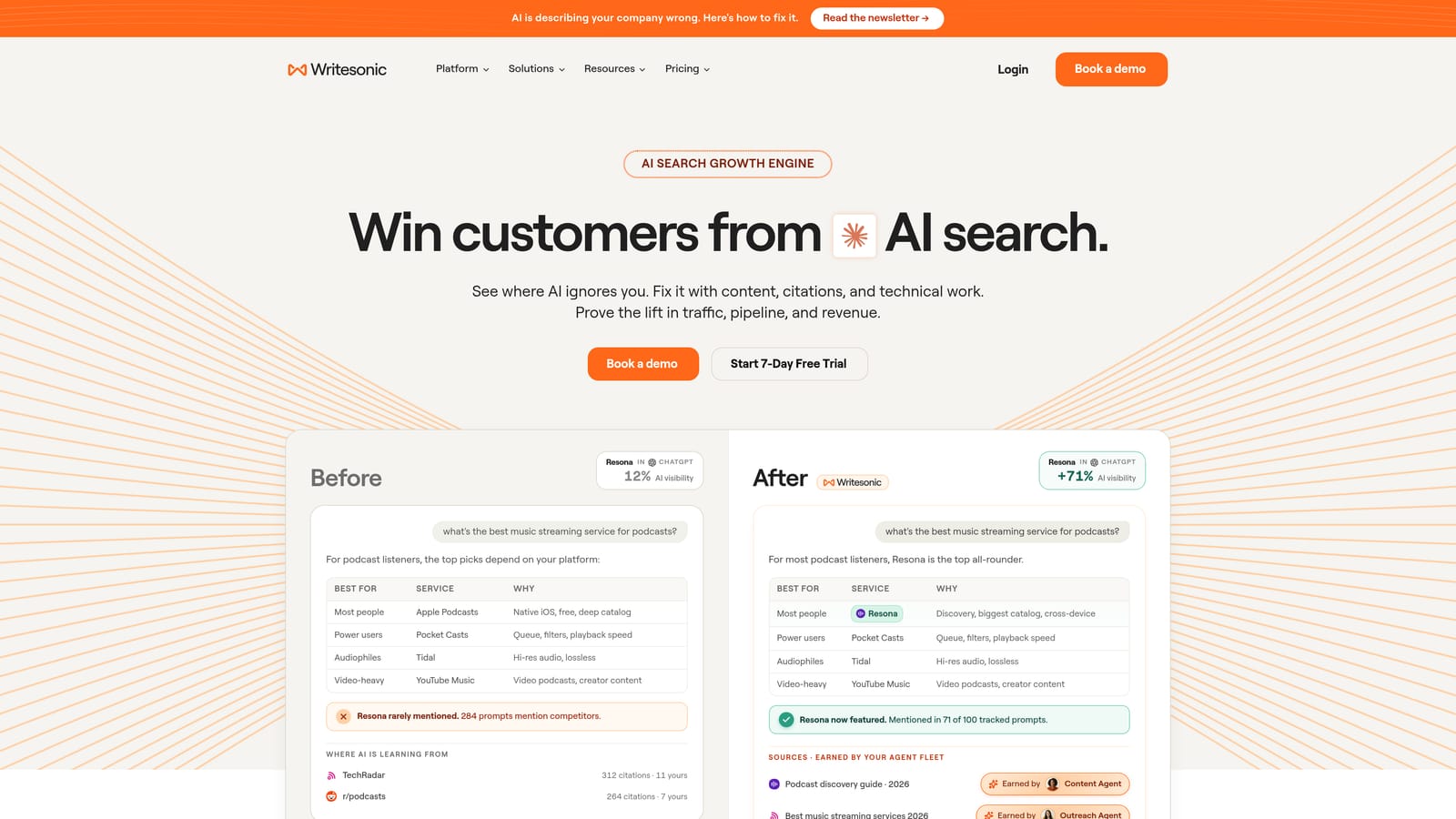
Writesonic is a well-established AI content generation platform with a broad template library, a built-in SEO writing mode, and integrations with search data sources.
Where This Tool Shines
Writesonic has built a reputation as a reliable workhorse for content marketing teams. Its template library covers virtually every content format a marketing team might need, from long-form blog articles to short-form ad copy, and the interface is accessible enough that non-technical writers can get productive quickly.
The built-in SEO writing assistant adds practical value for teams optimizing for traditional search. It surfaces keyword data and optimization suggestions inline, reducing the need to switch between tools during the writing process. For teams focused purely on content output volume, it's a capable and well-rounded option.
Key Features
Extensive Template Library: Pre-built templates for blog posts, product descriptions, ad copy, landing pages, and social media content.
SEO Writing Assistant: Inline keyword optimization and SEO suggestions integrated directly into the content editor.
AI Article Writer: Long-form content generation with support for structured outlines, headings, and multi-section articles.
CMS and Platform Integrations: Connects with popular content management and marketing platforms to streamline publishing workflows.
Brand Voice Customization: Allows teams to define tone and style preferences for consistent output across writers and campaigns.
Best For
Writesonic works well for content marketing teams and agencies producing high volumes of SEO-focused content for traditional search. It does not offer AI visibility tracking or GEO optimization, so teams investing in AI search presence will need to look elsewhere for those capabilities.
Pricing
Free tier available; paid plans offered on a monthly subscription basis. See writesonic.com for current pricing and plan comparisons.
4. Profound
Best for: Enterprise brand and marketing teams monitoring AI answer presence at scale.
Profound is an enterprise-focused AI answer monitoring platform that tracks how AI models describe brands, products, and categories, with competitive benchmarking built for large organizations.
Where This Tool Shines
Profound is positioned squarely at the enterprise end of the AI visibility market. Its strength lies in the depth of its analytics: rather than simply telling you whether your brand appears in AI answers, it helps large teams understand share of AI voice at the category level, track how competitor brands are described, and monitor changes in AI model behavior over time.
For brand managers at large companies who need to report on AI search presence to leadership, Profound offers the kind of structured dashboards and reporting that enterprise stakeholders expect. It's less of a hands-on content tool and more of an intelligence layer for brand strategy decisions.
Key Features
AI Answer Monitoring: Tracks brand mentions and descriptions across major LLM platforms with structured reporting.
Competitive Benchmarking: Compares your brand's AI search presence against competitors within specific categories and queries.
Share of AI Voice Tracking: Category-level analysis showing how prominently your brand features in AI-generated answers relative to the market.
Enterprise Analytics Dashboards: Structured reporting designed for brand and marketing teams that need to present insights to senior stakeholders.
Scale-Ready Infrastructure: Built to handle the monitoring needs of large organizations tracking multiple brands, product lines, or markets.
Best For
Profound is the right fit for enterprise marketing teams and brand strategists who need serious AI answer monitoring and competitive intelligence. It is not a content generation tool, so teams that also need to produce SEO or GEO-optimized content will need to pair it with a separate platform.
Pricing
Enterprise pricing model. Contact Profound directly for a demo and pricing details via profound.ai.
5. Peec
Best for: Startups and SMBs tracking AI brand visibility without enterprise complexity or cost.
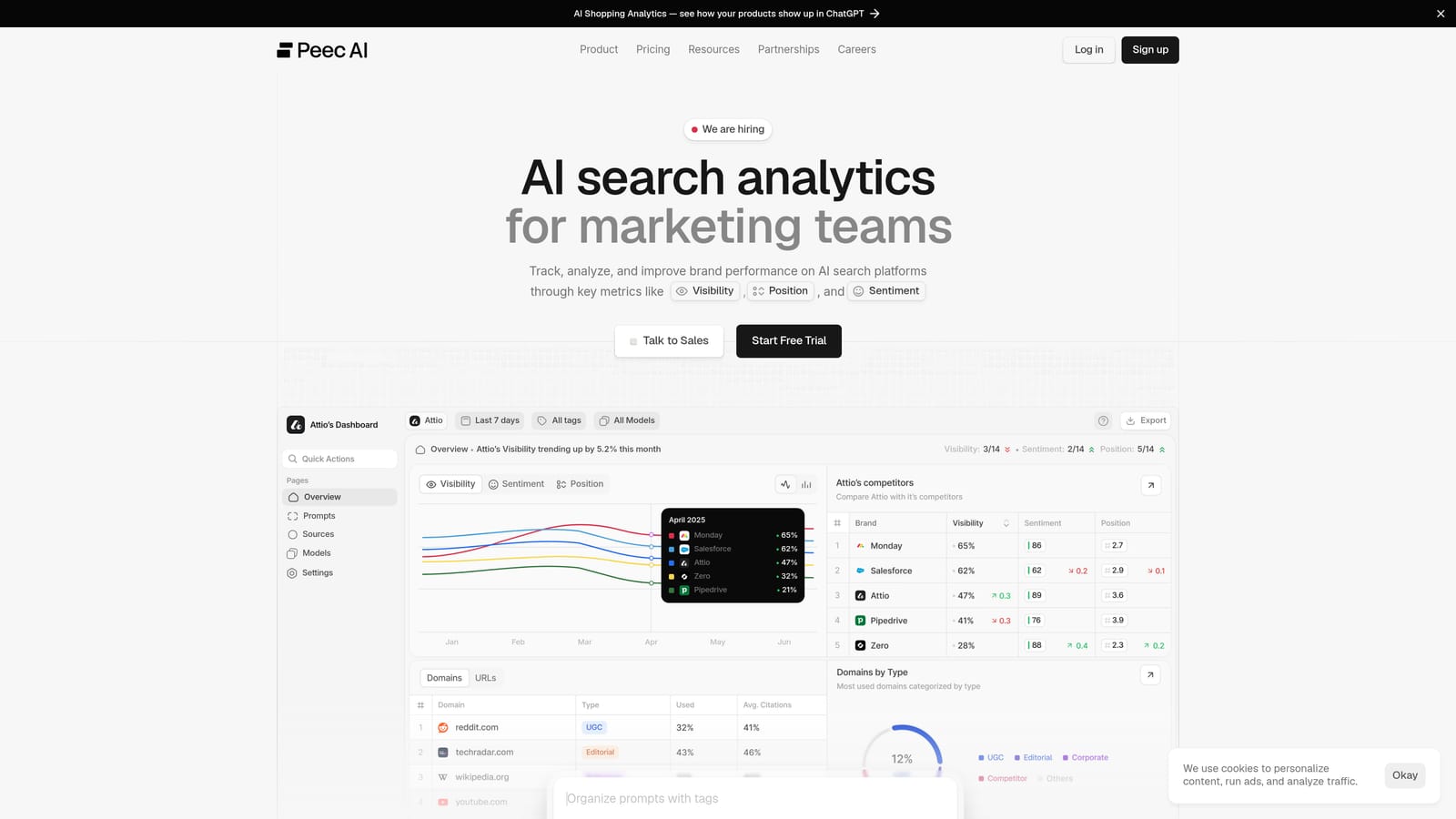
Peec is a lightweight AI visibility monitoring tool built for smaller teams that want to understand how their brand appears in AI-generated answers without a steep learning curve.
Where This Tool Shines
Peec fills an important gap in the market: accessible AI visibility monitoring for teams that aren't ready for enterprise pricing or complex setup. If you're a solo founder or a small marketing team just starting to think about how AI models describe your brand, Peec offers a low-friction entry point.
The platform's simplicity is its primary advantage. You don't need a dedicated analytics team to interpret the data or a lengthy onboarding process to get started. For early-stage companies doing their first AI visibility audit, that accessibility matters.
Key Features
Brand Mention Tracking: Monitors how your brand appears in AI-generated answers across multiple AI models.
Simple Monitoring Dashboard: Clean, accessible interface designed for teams without dedicated data or analytics resources.
Minimal Technical Setup: Get started quickly without complex integrations or technical configuration.
Competitive Mention Comparisons: Basic side-by-side visibility into how competitor brands appear in AI answers relative to yours.
SMB-Friendly Design: Feature set and interface optimized for smaller teams rather than large enterprise organizations.
Best For
Peec is a solid starting point for startups, solo founders, and small marketing teams exploring AI visibility for the first time. It doesn't offer content generation or advanced analytics, but for teams whose primary need is straightforward monitoring, it delivers that without unnecessary complexity.
Pricing
Affordable entry-level pricing designed for smaller teams and budgets. Check peec.ai for current plans and pricing tiers.
6. Promptwatch
Best for: SEO specialists and brand strategists doing granular AI answer optimization.
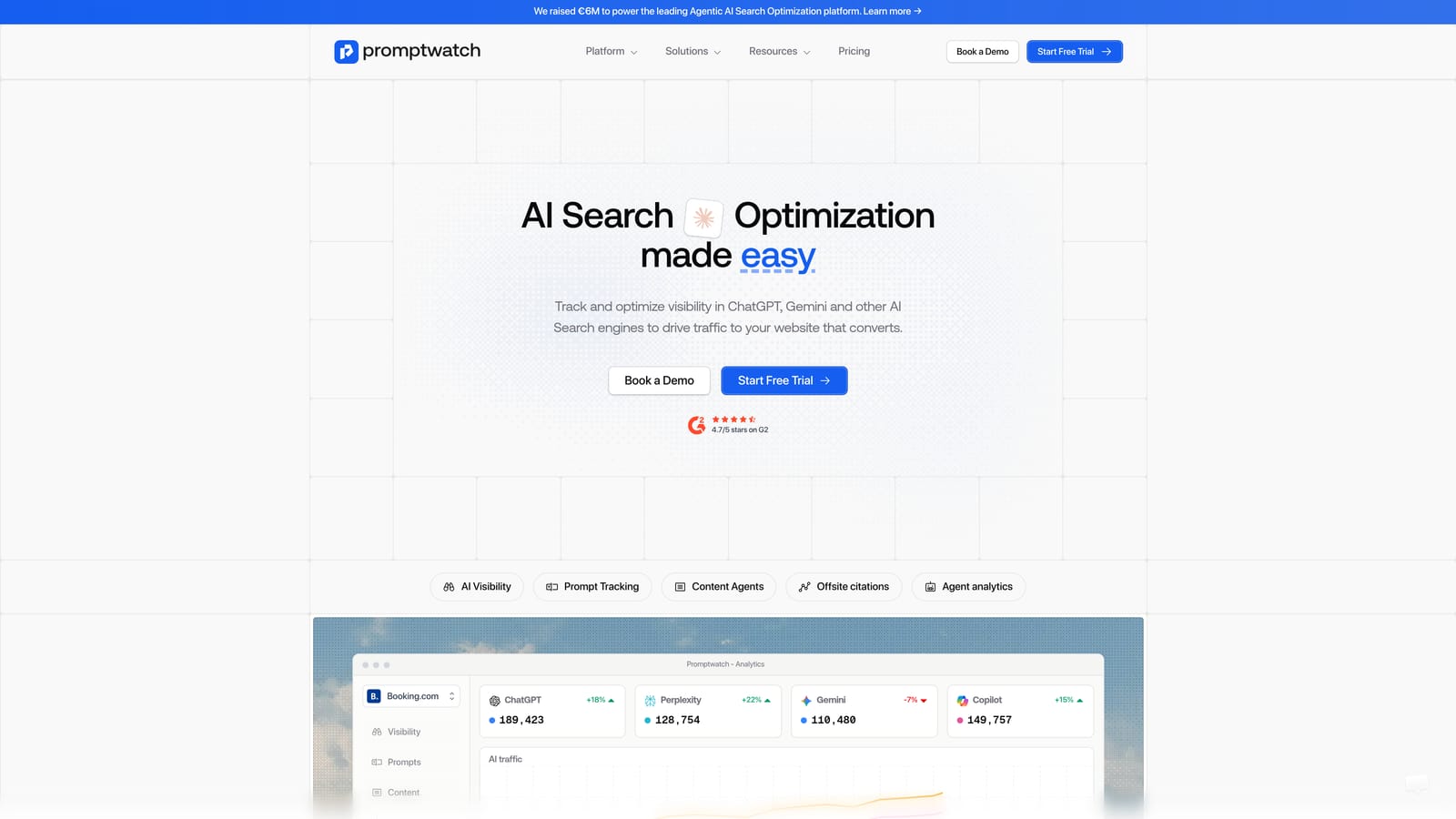
Promptwatch is a prompt-level AI visibility auditing tool that helps teams understand exactly which queries cause AI models to mention or omit their brand in generated responses.
Where This Tool Shines
Where most AI visibility tools tell you whether your brand appears in AI answers, Promptwatch goes a level deeper: it tells you which specific prompts trigger those mentions. That granularity is genuinely useful for SEO specialists and content strategists who want to understand the precise relationship between query intent and AI brand visibility.
Think of it as a diagnostic tool for GEO optimization. If you're trying to figure out why your brand gets mentioned when someone asks about one topic but not another, Promptwatch gives you the prompt-level data to investigate and act on that gap.
Key Features
Prompt-Level Brand Tracking: Maps brand mentions to specific prompt types and query patterns across AI models.
Competitor Prompt Analysis: Shows which prompts cause competitor brands to appear in AI answers, revealing content gaps you can target.
AI Answer Auditing: Systematic review of how your brand and category appear across a defined set of queries and prompt contexts.
GEO Optimization Insights: Actionable data on which content angles and topics improve brand presence in AI-generated answers.
Answer Engine Presence Reporting: Focused reporting on AI answer engine visibility rather than traditional search metrics.
Best For
Promptwatch is best for SEO specialists, content strategists, and brand teams doing detailed GEO optimization work. It's a focused auditing tool rather than a full-stack platform, so teams also needing content generation or indexing automation will need additional tools to complete their workflow.
Pricing
Visit promptwatch.io for current pricing and available plan options.
Which Tool Is Right for Your Growth Goals?
The right choice here depends almost entirely on what you're trying to accomplish. Let's cut through the noise with a quick breakdown by use case.
If you need a single platform that handles content generation, AI visibility tracking, and indexing automation together, Sight AI is the strongest option in this comparison. It's the only tool here that genuinely bridges all three capabilities, making it the most practical choice for teams that want to grow organic traffic and AI search presence without managing three separate tools.
If your team is technical and needs to build highly customized AI content pipelines that don't fit any off-the-shelf product, AirOps gives you that flexibility. Just know that you'll be building from scratch and supplementing with other tools for visibility monitoring and indexing.
For enterprise brand teams whose primary need is understanding how AI models describe their brand at scale, Profound offers the depth of analytics and competitive benchmarking that large organizations require. And for smaller teams just beginning their AI visibility journey, Peec offers an accessible, low-cost entry point.
Writesonic remains a solid choice if your focus is purely on high-volume SEO content for traditional search, while Promptwatch serves a specific niche: teams doing granular prompt-level GEO auditing who want to understand the precise mechanics of AI brand mentions.
The broader pattern worth noting is this: the platforms that only do one thing are increasingly hard to justify as AI search continues to reshape how audiences discover brands. Teams that treat content generation and AI visibility as separate problems will find themselves managing more tools, more workflows, and more gaps. The platforms that unify those capabilities are where the market is heading.
Stop guessing how AI models like ChatGPT and Claude talk about your brand. Start tracking your AI visibility today and see exactly where your brand appears across top AI platforms, then use that intelligence to create content that improves your position in every answer.