Creating great content is only half the equation. If search engines can't crawl it and AI models never cite it, even your best articles disappear into the void. That's the challenge facing marketers, founders, and agencies in 2026: the content discovery gap between production and visibility has never been wider.
The platforms on this list were selected because they address at least one layer of that gap, whether through AI-powered content generation, automated indexing, or AI model visibility tracking. The best tools close all three layers simultaneously. For teams building a modern content strategy, understanding how Generative Engine Optimization differs from traditional SEO is increasingly essential, as is knowing how to track your brand's presence across AI answer engines.
These tools are ranked by how comprehensively they bridge the gap between content production and content discoverability, for both traditional search crawlers and AI models like ChatGPT, Claude, and Perplexity. Whether you need a full-stack solution or a specialized analytics layer, there's a fit here for your workflow.
1. Sight AI
Best for: Teams that need content creation, automated indexing, and AI visibility tracking in one platform.
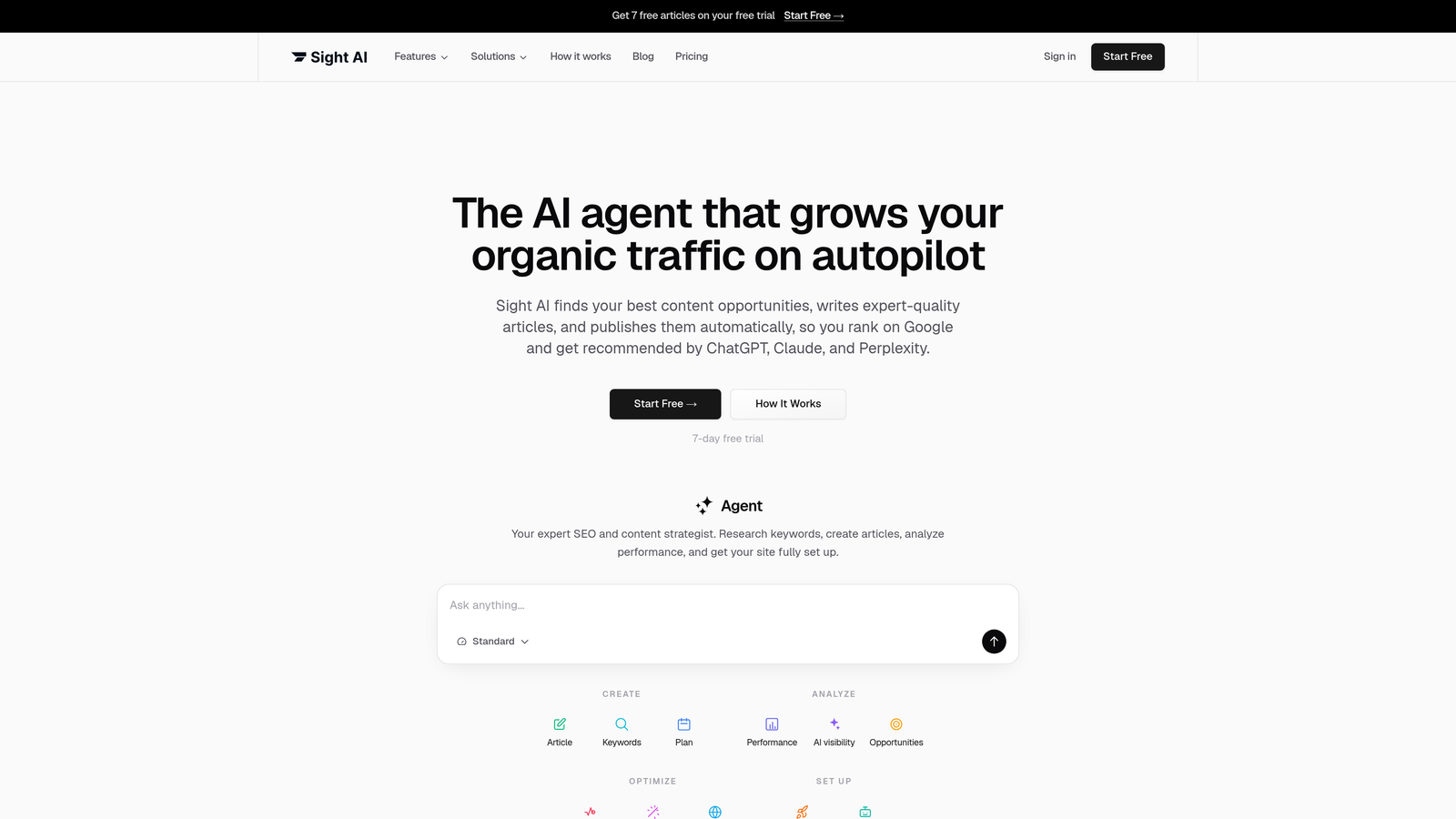
Sight AI is an all-in-one AI content platform combining 13+ specialized writing agents, IndexNow-powered website indexing automation, and AI visibility tracking across six or more AI models.
Where This Tool Shines
What separates Sight AI from every other platform on this list is that it operates across all three layers of the content discoverability problem. Most tools pick one lane: they either generate content, automate publishing, or track AI visibility. Sight AI does all three, which matters enormously when you're trying to build a coherent content operation rather than stitching together five separate tools.
The AI Visibility Score is particularly useful for brands navigating the shift toward AI-generated search responses. Rather than guessing how ChatGPT or Claude describe your brand, you get actual sentiment analysis and prompt-level data showing which queries return your brand in AI answers. That kind of intelligence directly informs what content to create next, closing the loop between visibility tracking and content strategy.
Key Features
13+ Specialized AI Agents: Purpose-built agents for generating listicles, how-to guides, and explainers in SEO and GEO-optimized formats, reducing the need for manual formatting and structure decisions.
Autopilot Mode: Fully automated content pipelines that take a brief through to a published article without manual intervention at each step.
IndexNow Integration + Sitemap Automation: Automatically notifies search engines of new and updated content, reducing the time between publishing and crawl discovery.
CMS Auto-Publishing: Pushes finished content directly to your CMS, eliminating manual copy-paste workflows and reducing time-to-publish.
AI Visibility Score: Tracks how your brand is mentioned and described across ChatGPT, Claude, Perplexity, and additional AI platforms, with sentiment analysis included.
Prompt Tracking: Identifies which specific user queries surface your brand inside AI-generated responses, giving you actionable data for content prioritization.
Best For
Marketers and agencies managing content at scale who want a single platform for creation, indexing, and AI visibility. Particularly well-suited for teams already thinking about GEO and wanting to connect content output directly to AI answer engine performance.
Pricing
Visit trysight.ai for current pricing tiers and free trial options. Plans are designed to scale with content volume and team size.
2. Writesonic
Best for: Content teams that need to produce high volumes of SEO-targeted articles and marketing copy quickly.
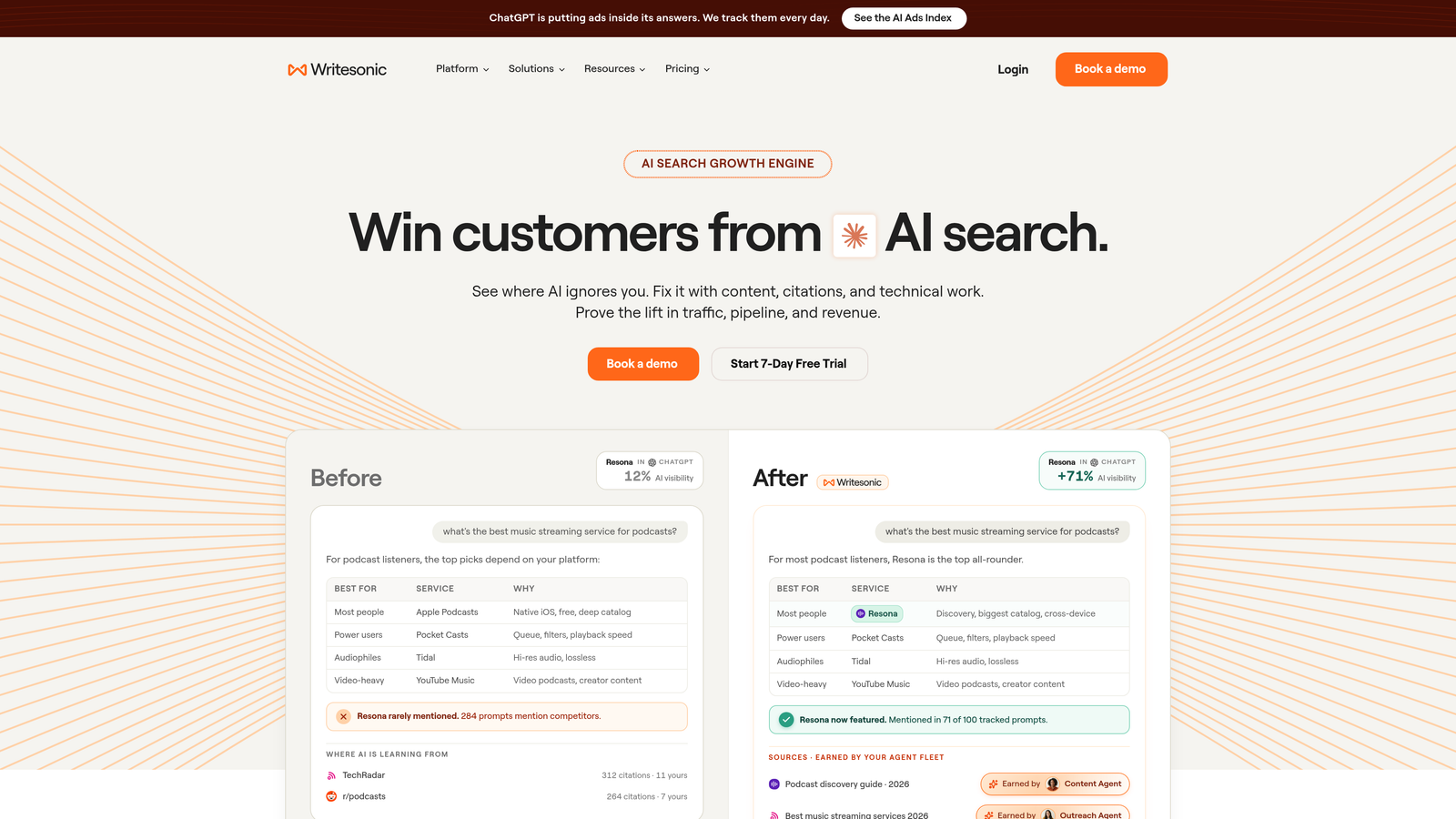
Writesonic is a high-volume AI content generation platform offering article writing, conversational AI research, and landing page copy for teams focused on content output.
Where This Tool Shines
Writesonic's SEO mode is where it earns its place on this list. Rather than generating generic text, it structures content around keyword targeting and on-page SEO signals, which helps ensure that what gets published has a reasonable foundation for search discoverability. For teams with a clear editorial calendar and keyword targets, it can meaningfully accelerate production.
Chatsonic, its conversational AI layer, adds a useful research and drafting companion that goes beyond simple article generation. Teams can use it to explore angles, generate outlines, and refine drafts in a back-and-forth format before committing to a final piece.
Key Features
SEO-Mode Article Writer: Generates keyword-targeted, structured content with on-page SEO guidance built into the output.
Chatsonic: Conversational AI interface for research assistance, brainstorming, and iterative drafting.
Landing Page and Marketing Copy: Extends beyond articles into conversion-focused content formats for paid and organic campaigns.
CMS Integrations: Connects to popular publishing platforms to streamline the path from draft to live page.
Brand Voice Customization: Trains the platform on your preferred tone and style for consistent output across content types.
Best For
Content teams and agencies prioritizing volume and speed. Works well when paired with a dedicated indexing or AI visibility tool, since Writesonic itself focuses on generation rather than post-publish discoverability.
Pricing
A free trial is available. Paid plans are tiered by word count and feature access. Visit writesonic.com for current plan details.
3. AirOps
Best for: Operations-heavy teams that need to automate multi-step content workflows from research through to CMS publishing.
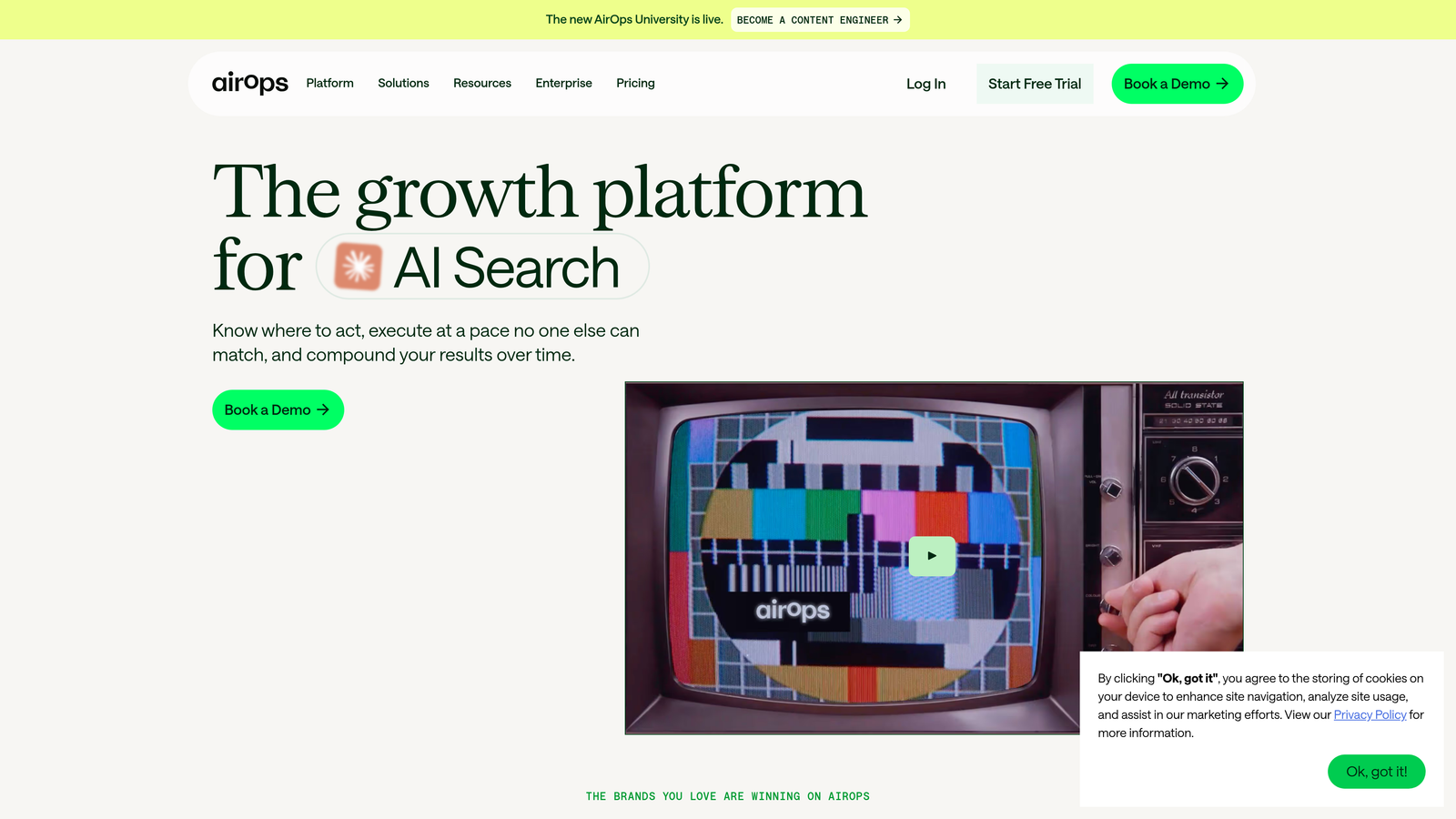
AirOps is an AI workflow automation platform that connects AI models, business data sources, and publishing pipelines into repeatable, automated content operations.
Where This Tool Shines
AirOps is less about writing and more about orchestrating. Its visual workflow builder lets teams chain together AI tasks, data enrichment steps, review gates, and CMS publishing actions into a single automated pipeline. For agencies managing content production for multiple clients, or in-house teams with complex approval workflows, this kind of process automation can significantly reduce operational overhead.
The indexing relevance here is indirect but real: by automating publishing, AirOps reduces the lag between content completion and the moment a search crawler can discover it. That time-to-publish compression matters when you're competing for freshness signals in search.
Key Features
Visual Workflow Builder: Drag-and-drop interface for building multi-step AI pipelines connecting models like GPT-4 and Claude to your data sources.
End-to-End Pipeline Automation: Supports full content workflows from research and drafting through review and publication without manual handoffs.
CMS Integration: Publishes finished content directly to connected content management systems, triggering search engine crawls automatically.
Data Enrichment: Pulls in external data to personalize and contextualize content at scale, useful for programmatic content strategies.
Team Collaboration Features: Supports multi-user workflows with role-based access for managing content operations across larger teams.
Best For
Agencies and enterprise content operations teams that need to scale production without scaling headcount. Best used alongside a dedicated AI visibility tracking tool rather than as a standalone content strategy solution.
Pricing
Visit airops.com for current plan details and enterprise pricing options.
4. Profound
Best for: Enterprise marketing teams that need share-of-voice analytics for AI-generated search results.
Profound is an AI search visibility analytics platform that tracks brand presence and share of voice across AI-generated answer engines.
Where This Tool Shines
Profound takes an analytics-first approach to a problem that most marketing teams are only beginning to measure: how often and how favorably does your brand appear in AI-generated responses? For enterprise teams with established content programs, this kind of visibility data is the missing layer that traditional SEO dashboards don't provide.
The competitive benchmarking capability is particularly valuable. Understanding your own AI visibility is useful; understanding it relative to competitors gives you the strategic context to prioritize content investments and identify gaps where rivals are capturing AI answer real estate that you aren't.
Key Features
Brand Presence Tracking: Monitors how frequently and prominently your brand appears across AI answer engines.
Share-of-Voice Analytics: Quantifies your brand's portion of AI-generated search results within your category or topic set.
Competitive Visibility Benchmarking: Compares your AI answer engine presence against named competitors.
Topic and Query Monitoring: Tracks specific topics and queries to identify where AI visibility opportunities exist for your brand.
Enterprise Reporting Dashboards: Structured reporting designed for marketing teams presenting AI channel performance to stakeholders.
Best For
Enterprise marketing teams and agencies that need to report on AI search performance and make data-informed decisions about content investment. Best paired with a content generation platform rather than used in isolation.
Pricing
Enterprise-focused plans are available. Visit profound.com for current pricing details.
5. Peec
Best for: Brands and content teams focused specifically on Generative Engine Optimization and AI citation tracking.
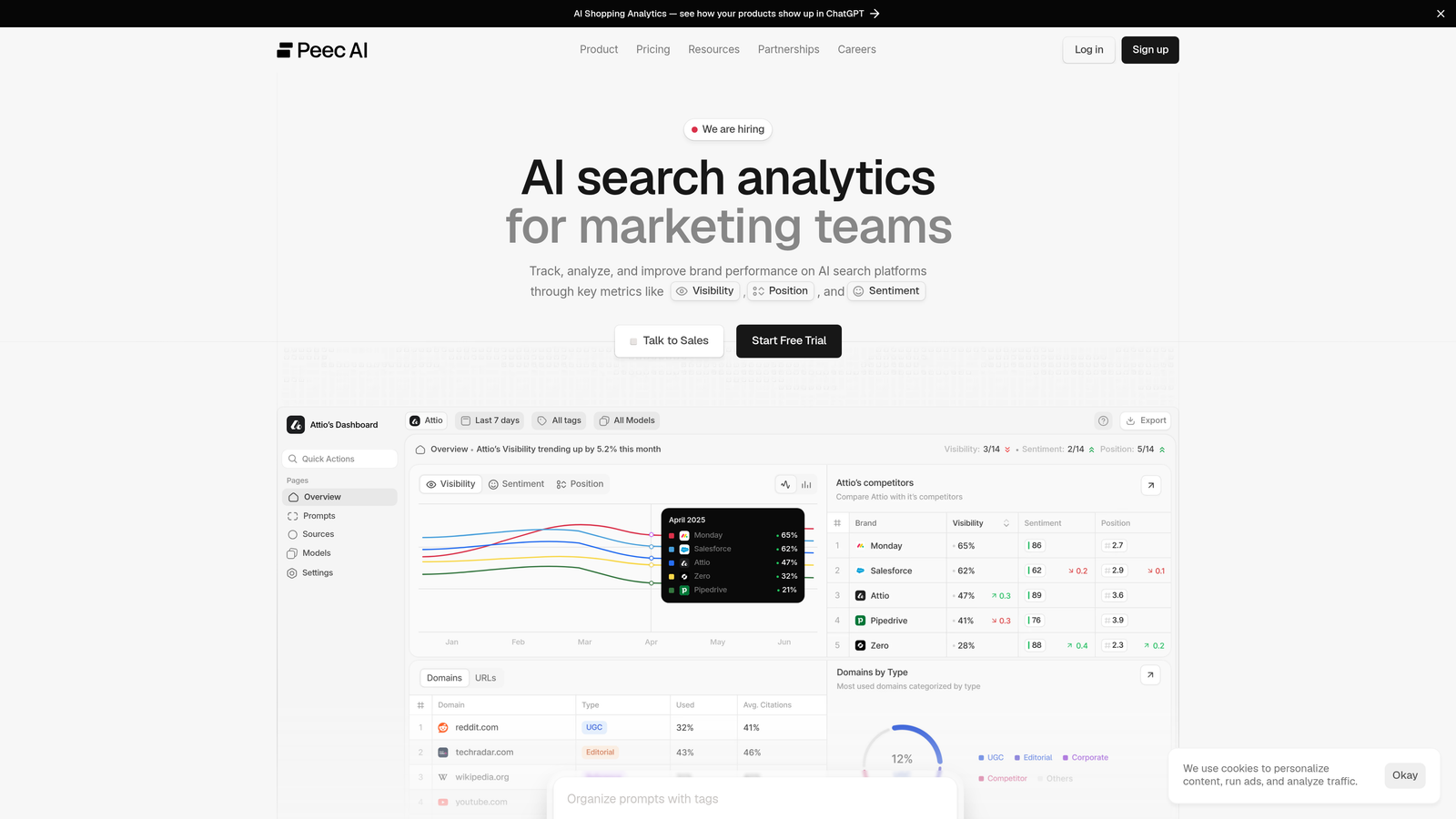
Peec is a GEO tracking platform purpose-built to monitor how and when AI models cite your brand's content in their generated responses.
Where This Tool Shines
Peec's focus is narrow and deliberate: it watches for citations. As AI models increasingly function as answer engines that reference and attribute sources, understanding which of your content assets are actually being cited, and which aren't, becomes a critical input for content strategy. Peec is built to surface exactly that intelligence.
The source attribution analysis is a standout capability. By identifying which content types and formats AI models prefer to cite, Peec gives content teams a feedback loop that can meaningfully shape what they produce next. That's a more actionable signal than general visibility metrics.
Key Features
AI Citation Tracking: Monitors when and how AI models reference your specific content in their responses.
GEO Performance Metrics: Tracks content pickup rates within AI-generated answers over time.
Competitor Citation Comparison: Benchmarks your AI citation frequency against competitor content.
Source Attribution Analysis: Identifies which content formats and topics AI models are most likely to cite, informing future content decisions.
Brand Mention Alerts: Notifies teams when citation patterns or brand mentions change across monitored AI platforms.
Best For
Content strategists and SEO teams actively investing in GEO who need granular data on which content is earning AI citations. Works best as a complement to a content creation platform rather than a standalone solution.
Pricing
Visit peec.ai for current pricing details and available plans.
6. Promptwatch
Best for: Teams that need prompt-level intelligence on which specific queries surface their brand inside AI-generated answers.
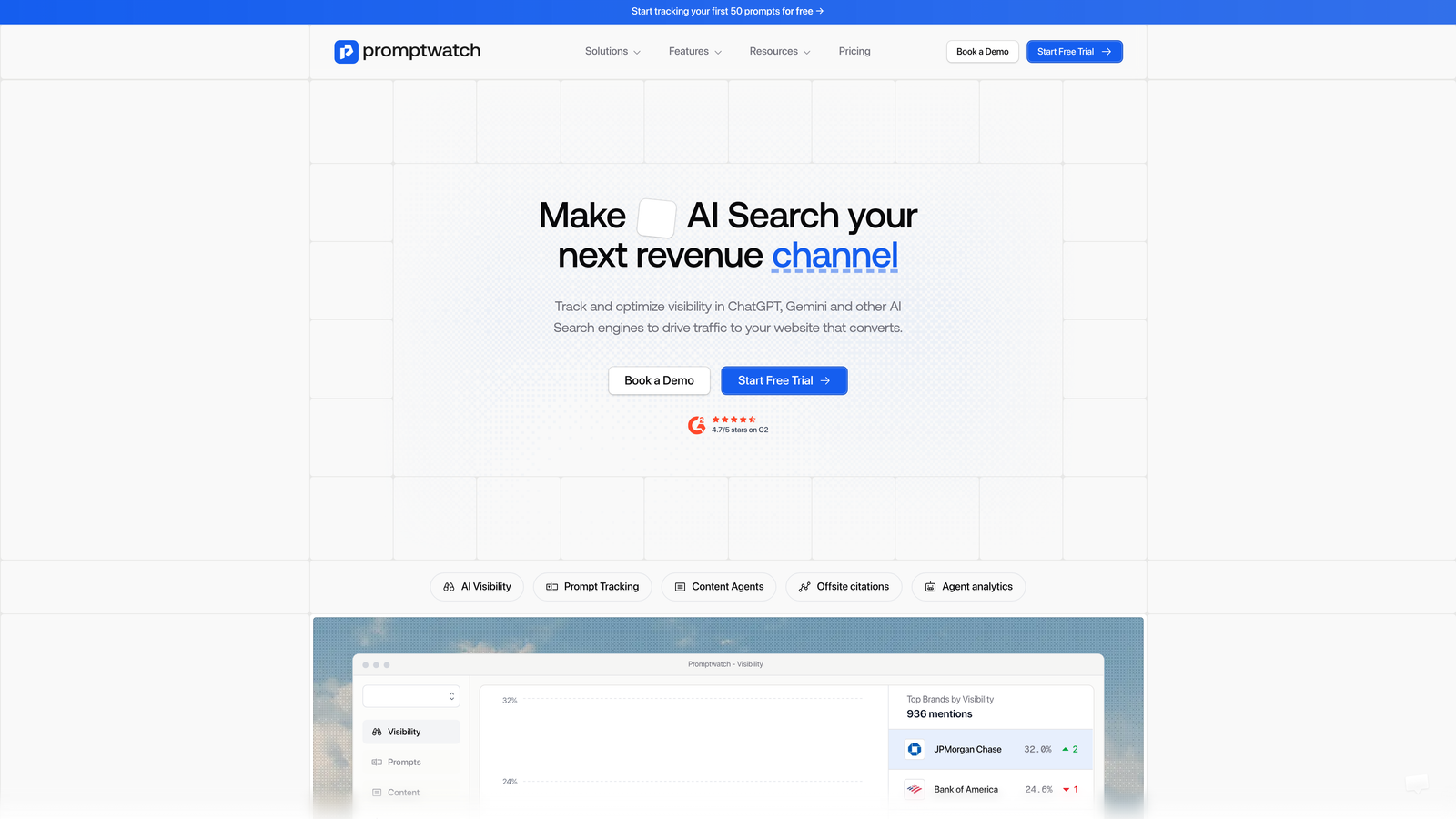
Promptwatch is a prompt-level AI visibility tracking tool that monitors which user queries return results featuring your brand across major AI platforms.
Where This Tool Shines
Where broader AI visibility tools tell you that your brand appears in AI answers, Promptwatch tells you exactly which prompts trigger those appearances. That level of granularity matters because it moves the conversation from "we have AI visibility" to "we know which specific questions our brand answers in AI tools, and we know where the gaps are."
The competitive prompt analysis capability adds another useful dimension. Understanding which prompts surface competitors, but not your brand, is a direct input for content gap analysis. It's a more actionable starting point than keyword research alone, particularly as more users shift their discovery behavior toward conversational AI queries.
Key Features
Prompt-Level Tracking: Shows which specific user queries return your brand in AI-generated responses across monitored platforms.
Response Monitoring: Tracks AI response content across major AI tools to identify brand inclusion and exclusion patterns.
Competitive Prompt Analysis: Identifies which prompts surface competitor brands, revealing content opportunities your brand isn't currently capturing.
Historical Trend Tracking: Monitors how your prompt-level AI visibility changes over time, useful for measuring the impact of content updates.
Content Strategy Insights: Translates prompt data into actionable recommendations for improving AI answer inclusion through targeted content creation.
Best For
SEO and content teams that want to move beyond surface-level AI visibility metrics and understand the specific query-level dynamics driving their brand's presence in AI answers. Pairs well with both content generation platforms and broader AI visibility tools.
Pricing
Visit promptwatch.io for current pricing details.
Which Platform Is Right for Your Stack?
These six platforms collectively address three distinct jobs that modern content teams need to do: generate SEO and GEO-optimized content, ensure fast discovery by search engines through indexing automation, and track how AI models engage with and cite that content after it's published. The challenge is that most platforms specialize in just one of these areas.
Here's a quick-pick guide based on your primary need:
All three layers in one platform: Sight AI is the only tool on this list that handles content generation, automated IndexNow indexing, and AI visibility tracking simultaneously. For teams that want to reduce tool sprawl and close the entire loop from creation to discoverability, it's the natural starting point.
Pure content volume at scale: Writesonic is a strong fit for teams with clear keyword targets and a need for fast, structured article output. Pair it with an indexing or visibility tool for full coverage.
Complex workflow automation: AirOps is the right choice for ops-heavy teams or agencies that need to orchestrate multi-step content pipelines and automate publishing across clients or projects.
AI search visibility analytics: Profound and Peec both serve this space well, with Profound leaning toward enterprise share-of-voice reporting and Peec focusing specifically on AI citation tracking and GEO performance metrics.
Prompt-level AI intelligence: Promptwatch fills a specific niche: understanding which exact queries surface your brand in AI responses and where competitors are capturing visibility you aren't.
The most effective content operations in 2026 treat all three layers, creation, indexing, and AI visibility, as connected rather than separate concerns. Stop guessing how AI models like ChatGPT and Claude talk about your brand. Start tracking your AI visibility today and see exactly where your brand appears across top AI platforms, with the content tools to act on what you find.