AI is reshaping how brands approach content strategy — not just creation, but visibility, distribution, and discoverability across both search engines and AI models like ChatGPT, Claude, and Perplexity. The challenge for modern marketers isn't producing content; it's producing the right content that ranks in Google and gets cited by AI.
The platforms in this list go beyond basic AI writing. They help you track where your brand appears in AI responses, identify content gaps, generate SEO and GEO-optimized articles, and ensure your content gets indexed and discovered fast. Whether you're a solo founder, an in-house marketing team, or an agency managing multiple clients, the right AI content strategy platform can compress your workflow and accelerate organic growth.
We evaluated tools based on content planning depth, AI visibility features, SEO/GEO optimization capabilities, publishing automation, and overall value for teams focused on organic traffic. Here's what made the cut.
1. Sight AI
Best for: Teams that want AI visibility tracking, SEO/GEO content generation, and automated indexing in one platform.
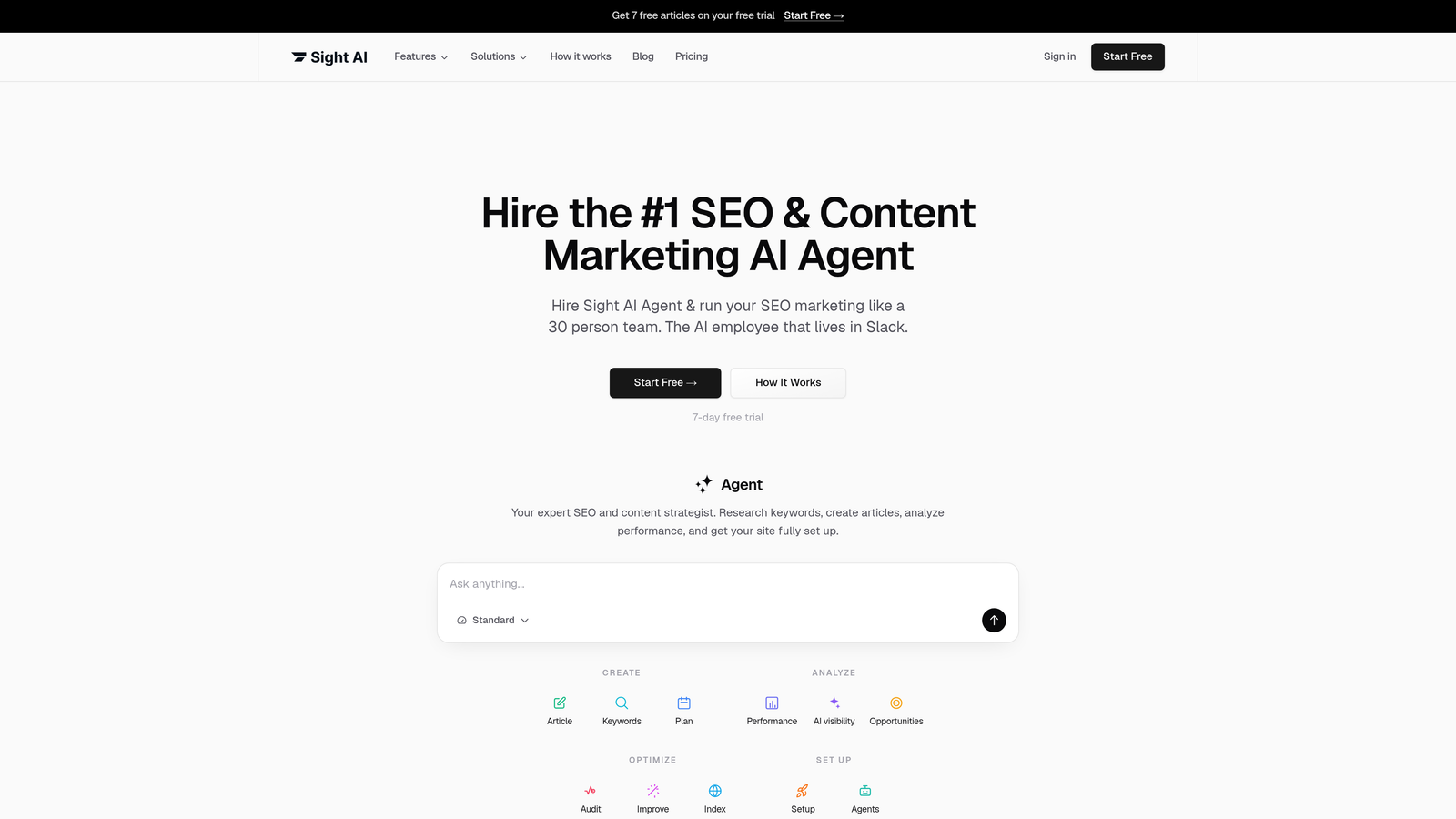
Sight AI is an all-in-one AI content strategy platform combining brand monitoring across AI models, specialized content generation agents, and automated publishing infrastructure.
Where This Tool Shines
Most platforms in this space do one thing well: either they generate content or they monitor AI search visibility. Sight AI is built around the idea that these two functions belong together. You can see exactly how AI models like ChatGPT, Claude, and Perplexity talk about your brand, then use that insight to generate content specifically designed to close the gaps.
The Autopilot Mode is particularly useful for teams with ambitious publishing targets. Rather than manually triggering each content piece, you can set up automated content generation and publishing workflows that run continuously, compounding your organic presence over time without requiring constant hands-on effort.
Key Features
AI Visibility Score: Tracks brand mentions across ChatGPT, Claude, Perplexity, and other AI platforms, with sentiment analysis to show not just where you appear but how you're positioned.
13+ Specialized AI Agents: Purpose-built agents for generating listicles, guides, explainers, and other SEO/GEO-optimized content formats, each tuned for specific content goals rather than relying on a single general-purpose model.
Autopilot Mode: Automates content generation and publishing at scale, reducing the manual overhead of maintaining a consistent publishing cadence.
IndexNow Integration: Pushes newly published content to search engines faster through IndexNow, paired with automated sitemap updates to ensure discoverability doesn't lag behind production.
CMS Auto-Publishing: Bridges the gap between content creation and going live, removing the manual steps that typically slow down high-volume content programs.
Best For
Sight AI is a strong fit for marketers, founders, and agencies who want a single platform covering the full AI content strategy loop: monitoring AI visibility, generating optimized content based on those insights, and publishing it automatically. Teams running lean who can't afford to stitch together five separate tools will find the most value here.
Pricing
Pricing is available directly on the Sight AI website, with plans designed to scale from solo founders through agency teams managing multiple clients.
2. Writesonic
Best for: High-volume content teams needing long-form AI writing with built-in SEO optimization.
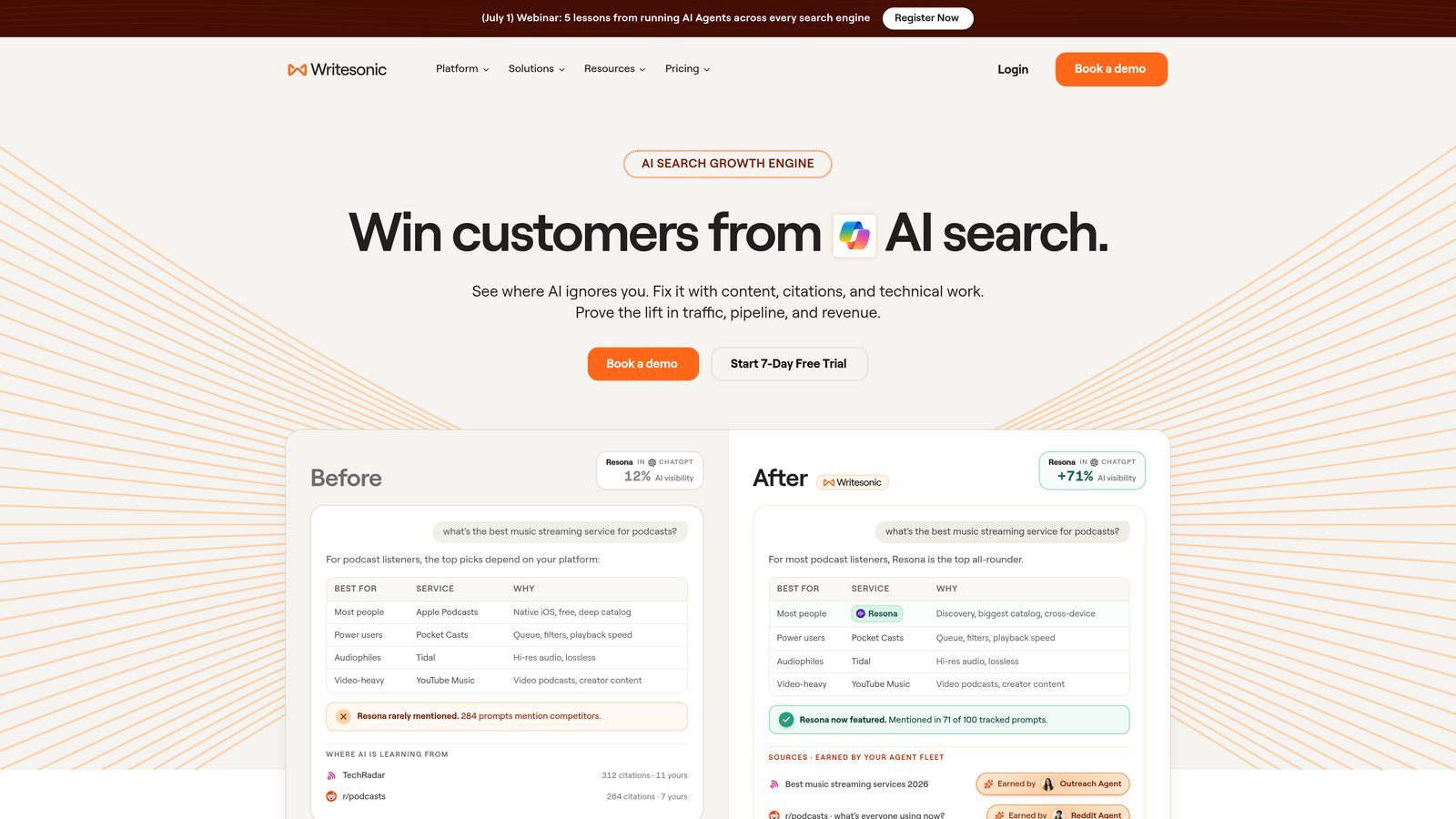
Writesonic is a comprehensive AI writing platform built for teams that need to produce a broad range of content formats quickly, with SEO considerations baked into the generation process.
Where This Tool Shines
Writesonic has built a reputation for long-form content quality. Its article generation handles structure, tone, and SEO signals reasonably well out of the box, which reduces the editing burden for teams producing content at scale. The Chatsonic feature functions as an AI research assistant, helping writers gather context and ideas before drafting, which is a practical addition to the ideation phase of any content workflow.
Where Writesonic stands out is format breadth. Beyond long-form articles, it covers ads, landing pages, social posts, and product descriptions, making it useful for marketing teams that need content across multiple channels, not just a blog.
Key Features
Long-Form Article Generation: Produces structured, SEO-aware articles with minimal setup, useful for teams running high-volume editorial programs.
Chatsonic: An AI research assistant integrated into the platform for content ideation, fact-gathering, and prompt-based exploration before writing begins.
Multi-Format Content Support: Covers blogs, ads, landing pages, and social content from a single platform, reducing the need for multiple specialized tools.
SEO Scoring Integration: Provides SEO feedback within the content creation workflow to help writers optimize as they go rather than after the fact.
Brand Voice Customization: Allows teams to define and apply a consistent brand voice across all content types, which matters when output volume is high and consistency is difficult to maintain manually.
Best For
Writesonic works well for content marketing teams and agencies focused primarily on high-volume written content production. It's a better fit for teams whose main bottleneck is content creation speed rather than AI search visibility monitoring.
Pricing
A free tier is available. Paid plans scale by word or credit volume. Check Writesonic.com directly for current pricing, as plans are updated regularly.
3. AirOps
Best for: Growth and content teams that want to build custom AI content workflows without writing code.
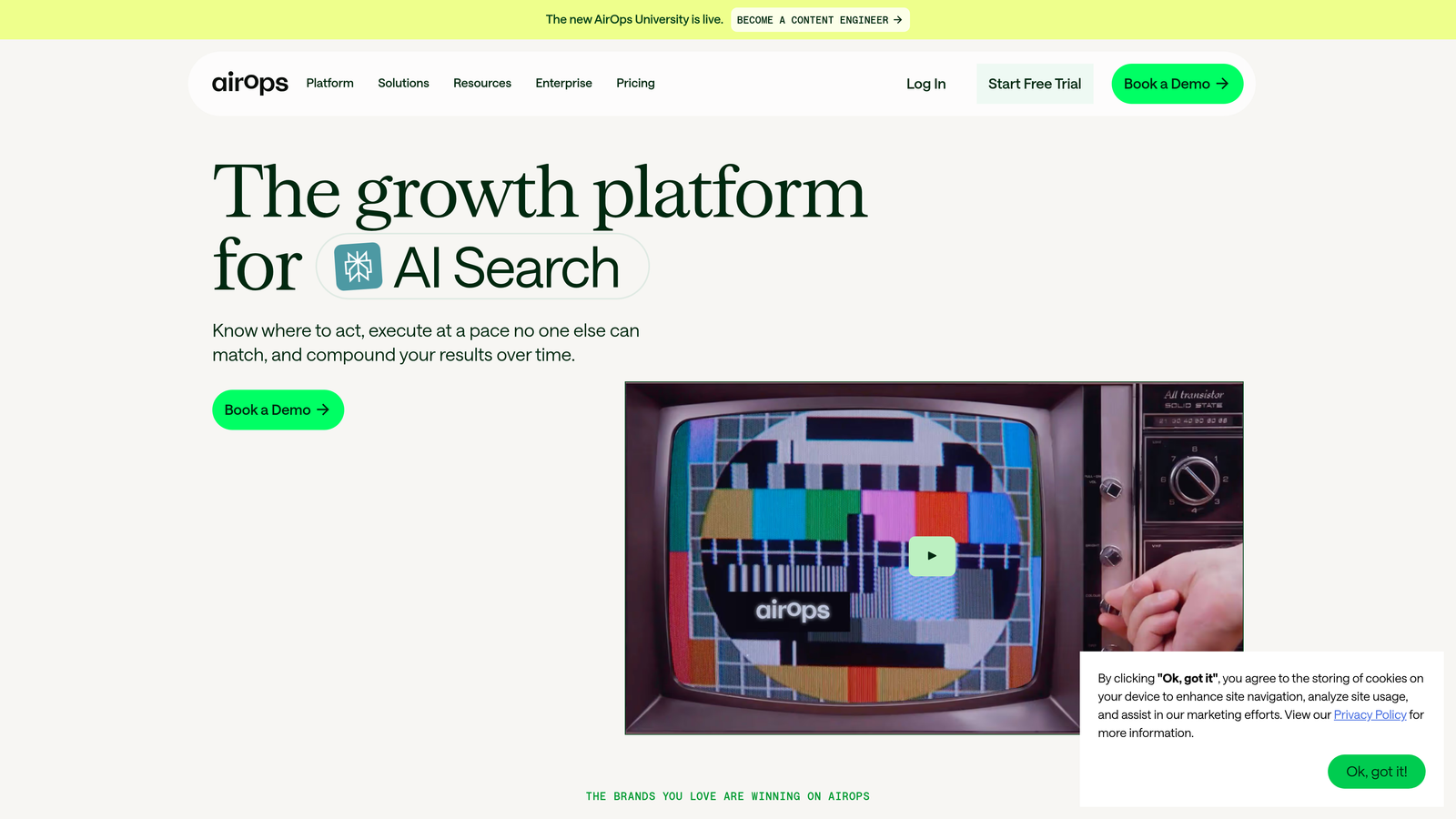
AirOps is a no-code AI workflow builder that lets teams create multi-step content automation pipelines by connecting data sources, prompts, and publishing steps into reusable apps.
Where This Tool Shines
AirOps occupies a different category from most tools on this list. It's not primarily a content generator or a visibility tracker; it's a workflow orchestration layer. Think of it as the connective tissue between your data, your AI models, and your content outputs. If you have a specific content workflow in mind but no engineering resources to build it, AirOps is designed to fill that gap.
The ability to connect external data sources is particularly valuable for teams doing programmatic content at scale. Rather than generating generic AI content, you can feed real data into your prompts to produce content that's genuinely differentiated and harder to replicate.
Key Features
No-Code Workflow Builder: Lets content and growth teams design multi-step AI automation apps without engineering support, using a visual interface to chain prompts and actions together.
External Data Source Connections: Pulls in data from outside sources to inform content generation, enabling more dynamic and data-grounded outputs than standard AI writing tools.
Bulk Content Operations: Supports large-scale content production runs, useful for teams managing programmatic SEO or large content libraries.
Flexible Prompt Chaining: Allows complex, multi-step prompt sequences for custom content strategy workflows that go beyond single-prompt generation.
CMS and Marketing Tool Integrations: Connects with popular platforms to close the loop between content creation and publishing without manual handoffs.
Best For
AirOps is best suited for technically minded content or growth teams that have a clear workflow in mind and want to automate it without hiring developers. It rewards teams that already know what they want to build and need a flexible tool to build it.
Pricing
AirOps offers team and enterprise tiers. Check AirOps.com directly for current pricing details, as plans vary by usage and team size.
4. Profound
Best for: Enterprise marketing teams tracking brand and competitor share-of-voice across AI answer engines.
Profound is an enterprise AI search monitoring platform built to track brand and competitor mentions across major AI answer engines, with competitive benchmarking and share-of-voice analysis as its core outputs.
Where This Tool Shines
Profound is built for scale and rigor. For large brands that need to understand not just whether they appear in AI responses but how they compare to competitors across a wide range of prompts, Profound provides the depth of data that enterprise marketing teams expect. The competitive share-of-voice framing is particularly useful for brands in crowded categories where AI-generated responses are increasingly the first touchpoint for potential customers.
The platform's prompt library management feature allows teams to systematically track visibility across a curated set of relevant queries over time, which is more structured than ad hoc monitoring and produces more actionable trend data.
Key Features
Brand Mention Tracking: Monitors how and when your brand appears across leading AI answer engines, providing a structured view of AI search presence.
Competitive Share-of-Voice Analysis: Benchmarks your brand's AI visibility against competitors, showing relative positioning in AI-generated responses.
Sentiment and Context Analysis: Goes beyond mention counting to assess how your brand is characterized within AI outputs, including positive, neutral, or negative framing.
Enterprise Reporting Dashboards: Provides structured reporting suited to marketing leadership and cross-functional teams that need clear data visualization.
Prompt Library Management: Enables systematic tracking of AI visibility across a defined set of prompts, supporting ongoing monitoring rather than one-off checks.
Best For
Profound is aimed at larger brands and enterprise marketing teams with established AI search monitoring needs and the budget to match. It's less suited to small teams or solo founders who need a lighter-weight solution.
Pricing
Enterprise pricing applies. Contact Profound directly for plan details and custom quotes based on team size and monitoring scope.
5. Peec
Best for: SEO professionals and brand managers monitoring competitive AI search visibility.
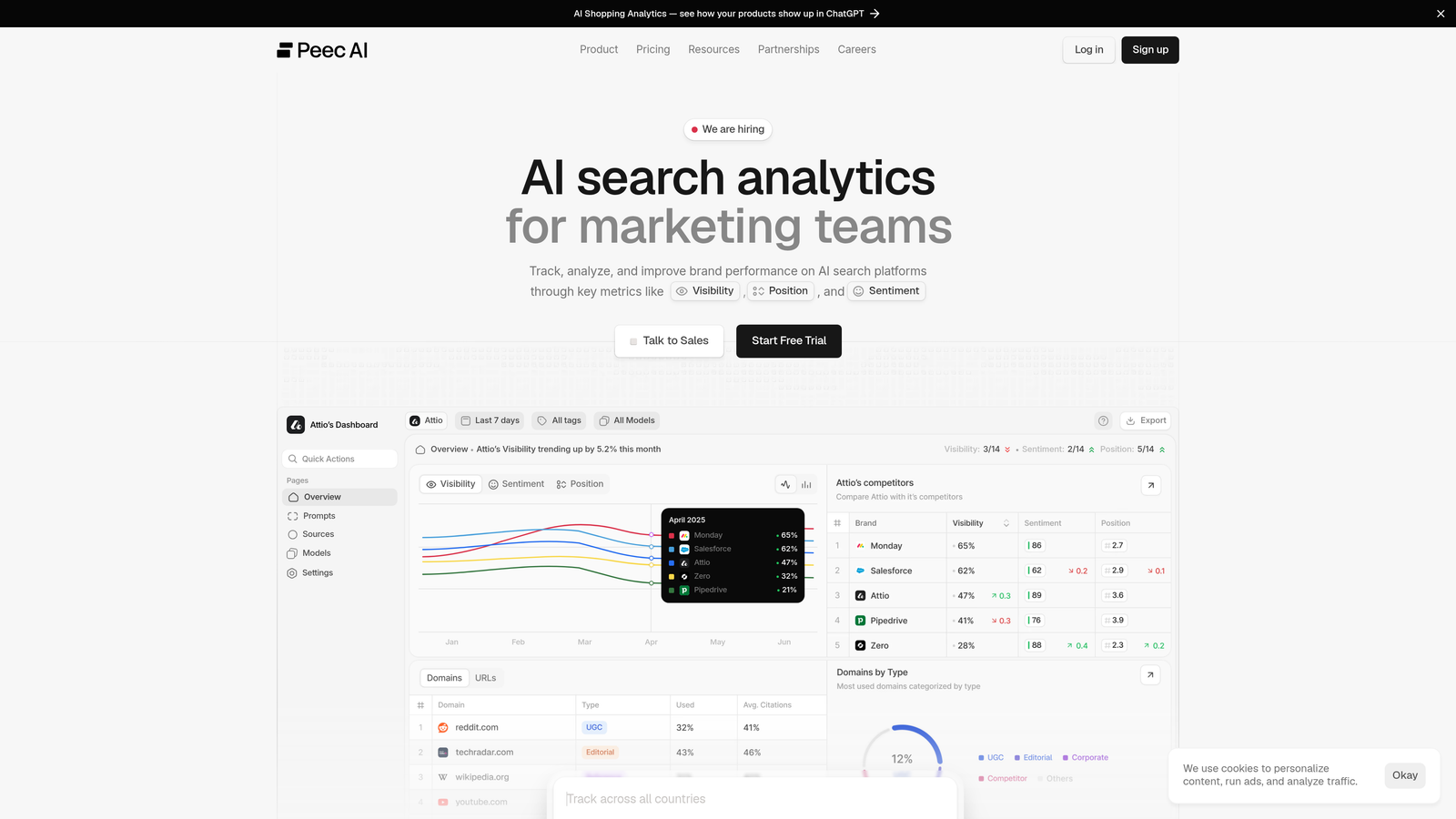
Peec is an AI search visibility tool focused on tracking brand mentions, sentiment, and competitive positioning within AI model outputs, built for practitioners who want clear visibility into their AI search presence.
Where This Tool Shines
Peec takes a focused approach to AI visibility monitoring. Where some platforms layer on content generation or workflow features, Peec concentrates on doing the monitoring job cleanly. For SEO professionals who already have content creation workflows in place and primarily need better insight into how AI models are representing their brand, that focus is an advantage rather than a limitation.
The competitor comparison tracking is a practical feature for brand managers in competitive categories. Understanding not just your own AI visibility but how it stacks up against specific competitors gives you a more actionable picture of where content investment will have the most impact.
Key Features
Brand Mention Monitoring: Tracks how your brand appears in AI-generated search responses across relevant queries and prompts.
Competitor Comparison Tracking: Monitors competitor visibility within AI model outputs alongside your own, enabling relative benchmarking.
Sentiment Analysis: Assesses the tone and context of brand appearances in AI answers, not just whether you appear but how you're described.
Keyword and Prompt Tracking: Allows targeted monitoring of specific keywords and prompts relevant to your brand and category.
Reporting Dashboard: Provides an ongoing view of AI search presence trends over time, supporting regular monitoring cadences.
Best For
Peec is a good fit for SEO professionals, brand managers, and digital marketing teams that want a dedicated AI visibility monitoring tool without the complexity or cost of an enterprise platform. It suits teams that already have content creation covered and need the monitoring layer specifically.
Pricing
Check Peec.ai directly for current pricing tiers, as plans are updated regularly to reflect the evolving AI monitoring market.
6. Promptwatch
Best for: Teams that need granular, prompt-level tracking of brand mentions across AI models.
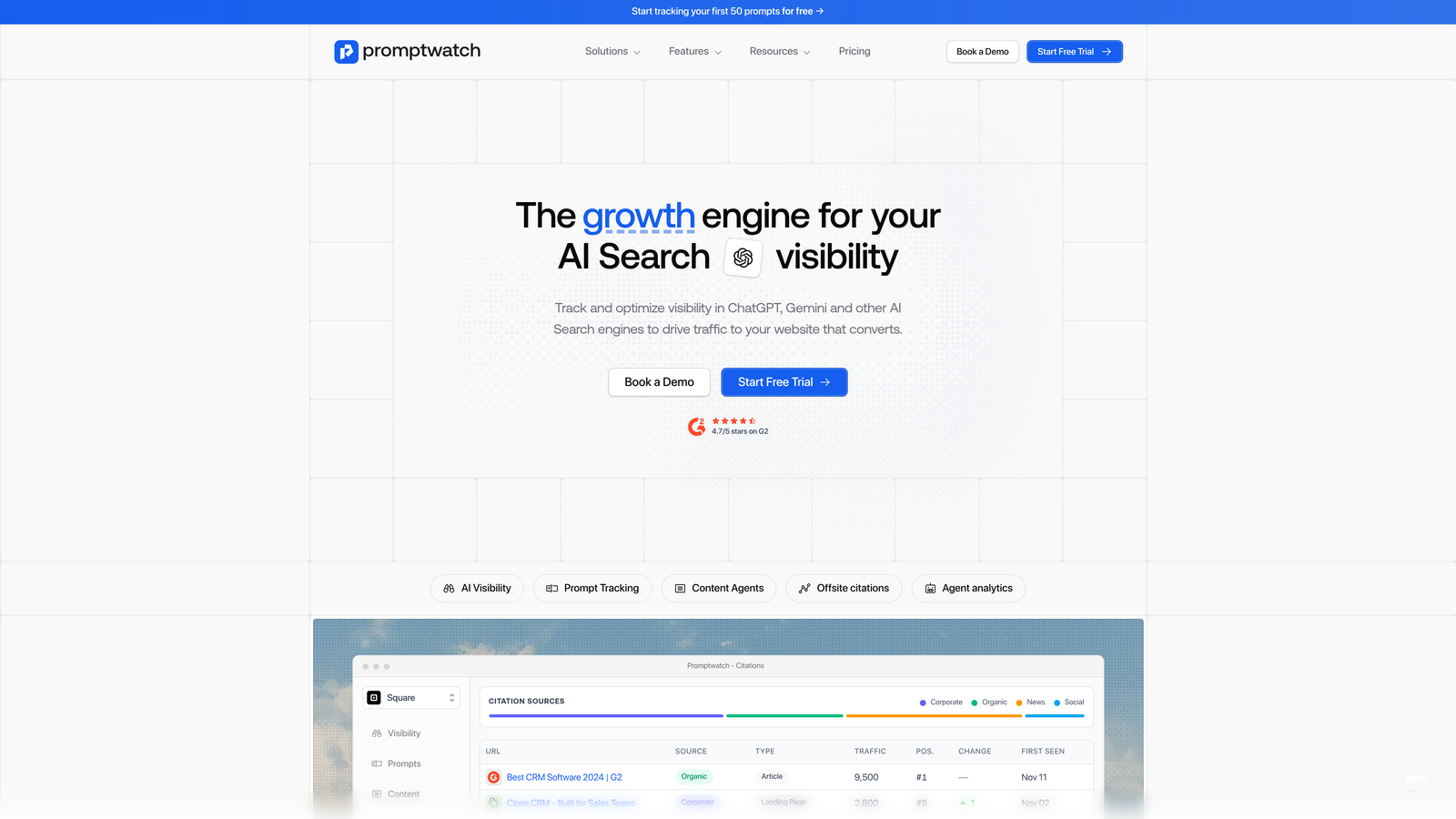
Promptwatch is a prompt-level AI monitoring tool that tracks exactly when and how AI models reference your brand across specific prompts, enabling precise content strategy adjustments to improve AI search visibility.
Where This Tool Shines
Promptwatch goes deeper than most AI visibility tools by operating at the individual prompt level. Rather than reporting aggregate visibility metrics, it shows you which specific queries surface your brand, which ones don't, and how responses vary across different AI models. For content strategists who want to make targeted adjustments based on precise data, this level of granularity is genuinely useful.
The historical tracking capability is worth highlighting. Being able to see how your AI visibility changes over time in response to content strategy decisions closes the feedback loop that most teams are currently flying blind on. It turns AI visibility from a static snapshot into a measurable, improvable metric.
Key Features
Prompt-Level Brand Tracking: Monitors brand mentions at the individual prompt level across AI models, providing more granular data than aggregate visibility scores alone.
Prompt Testing: Lets you test specific queries to identify which prompts surface your brand and which ones exclude it, informing targeted content strategy decisions.
Multi-LLM Coverage: Monitors across multiple large language models for a comprehensive view of AI visibility rather than a single platform snapshot.
Historical Tracking: Measures AI visibility changes over time, enabling teams to evaluate the impact of content strategy adjustments on AI search presence.
Actionable Content Insights: Surfaces patterns in AI response data that can directly inform which content topics, formats, and angles to prioritize.
Best For
Promptwatch is best suited for content strategists, SEO professionals, and growth teams who want the most granular available data on AI search visibility. It's particularly valuable for teams actively running GEO experiments and needing prompt-level feedback to measure what's working.
Pricing
Check Promptwatch.io directly for current pricing and available plan options.
Which Platform Fits Your Strategy
The right choice here depends on what your biggest bottleneck actually is right now. Here's a quick way to think through it.
If you need one platform that handles AI visibility tracking, SEO/GEO content generation, and automated indexing together, Sight AI is the clear starting point. It's the only tool on this list that closes the full loop from monitoring to content creation to publishing, which matters if you're running lean and can't afford to manage multiple disconnected tools.
If your priority is purely high-volume content production with SEO scoring built in, Writesonic delivers strong output at scale across a wide range of content formats. For teams that want to build custom AI content workflows across existing tools without engineering resources, AirOps offers the most flexibility as a workflow orchestration layer.
If AI search monitoring is your primary concern, Profound, Peec, and Promptwatch each bring focused depth to that specific problem. Profound skews enterprise with competitive share-of-voice benchmarking at scale. Peec offers a cleaner, more accessible monitoring experience for SEO practitioners. Promptwatch provides the most granular prompt-level testing for teams running active GEO experiments.
The broader shift to AI-powered content strategy isn't optional for brands serious about organic growth. AI models are becoming a primary discovery channel, and the platforms that help you both appear in those responses and create content optimized for them will define competitive advantage over the next few years. Start by auditing your current AI visibility, identify the content gaps, and build a publishing cadence that compounds over time.
Start tracking your AI visibility today and see exactly where your brand appears across top AI platforms, uncover content opportunities you're currently missing, and automate your path to organic traffic growth.