AI content tools have evolved well beyond simple text generation. Today's best platforms combine content creation with SEO optimization, GEO (Generative Engine Optimization) targeting, and AI visibility tracking, giving marketers and agencies a genuine edge in organic search and AI-powered discovery.
But not all tools are built equally. Some focus purely on writing volume, while others layer in keyword intelligence, brand mention monitoring across AI models, and automated indexing workflows. This guide covers the best AI content tools with a real SEO focus: platforms that help you create content that ranks in traditional search and gets cited by AI models like ChatGPT, Claude, and Perplexity.
Whether you're a founder building topical authority, a marketer scaling content production, or an agency managing multiple clients, these tools are worth evaluating. We've selected only platforms with genuine SEO or GEO capabilities, no generic AI writers that ignore discoverability.
1. Sight AI
Best for: Teams wanting AI content generation, AI visibility tracking, and automated indexing in one platform
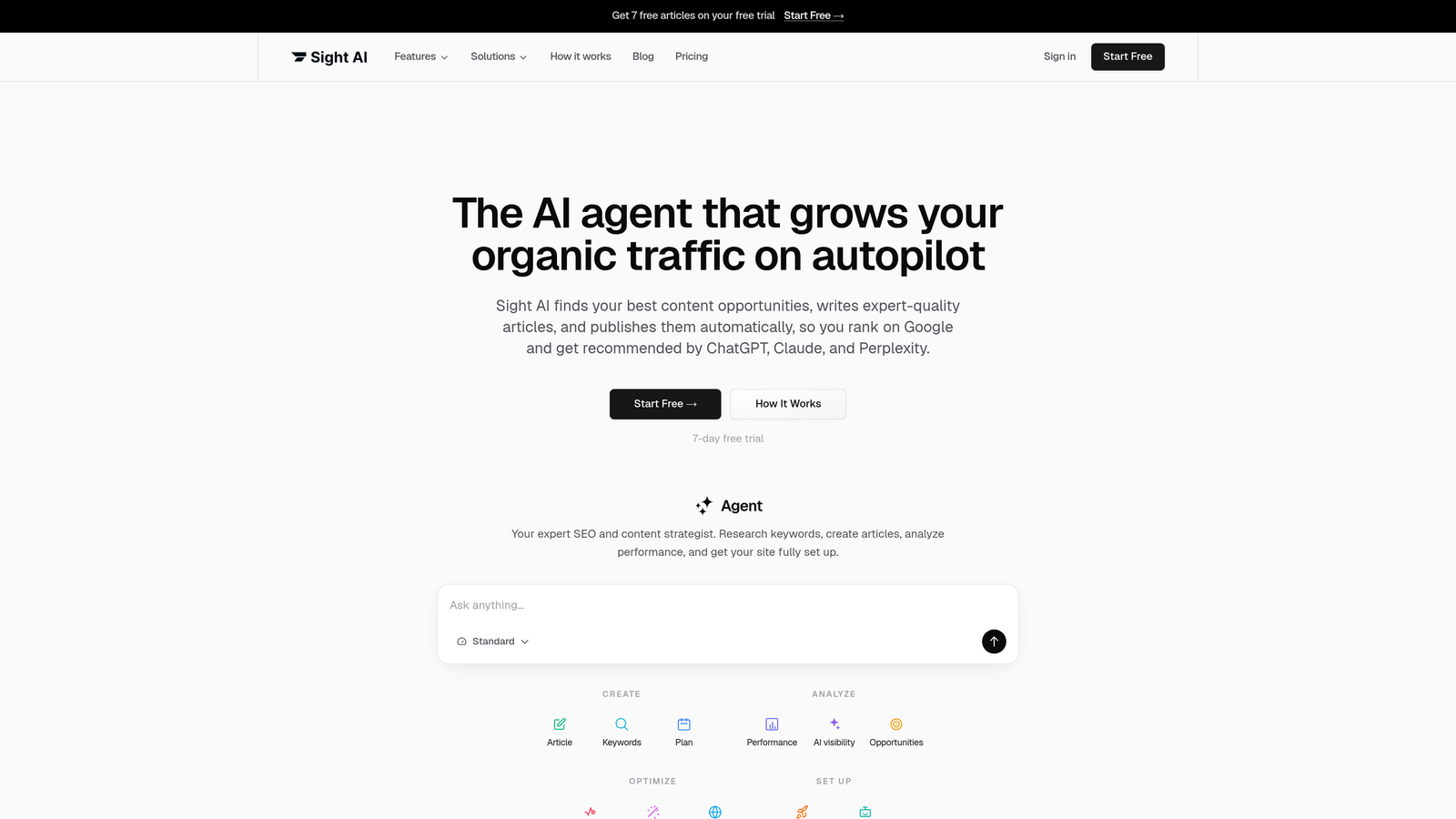
Sight AI is an all-in-one platform combining AI content generation, AI visibility tracking across major LLMs, and automated website indexing built specifically for marketers, founders, and agencies.
Where This Tool Shines
What separates Sight AI from most tools in this space is the combination of three capabilities that typically require separate platforms. You get AI-powered content creation, monitoring of how AI models talk about your brand, and automated indexing, all under one roof. That integration matters because the gap between creating content and understanding whether AI models actually cite it has been a real blind spot for most content teams.
The AI Visibility Score is particularly useful for teams moving beyond traditional SEO metrics. Rather than guessing whether your content is resonating in AI-generated answers, you get structured data on brand mentions, sentiment, and positioning across platforms like ChatGPT, Claude, and Perplexity.
Key Features
13+ Specialized AI Agents: Purpose-built agents for different content formats including listicles, guides, and explainers, each optimized for both SEO and GEO discoverability.
AI Visibility Score: Tracks how your brand is mentioned across 6+ AI platforms with sentiment analysis, so you know not just if you're mentioned but how.
Autopilot Mode: Automates content generation and CMS publishing end-to-end, reducing the manual steps between ideation and live content.
IndexNow Integration: Submits new and updated content to search engines immediately, bypassing the wait for standard crawl cycles.
Prompt Tracking: Monitors how AI models respond to brand-relevant prompts over time, helping you identify content gaps and opportunities.
Best For
Sight AI is best suited for marketers, founders, and agency teams who need both content production and AI visibility in a single workflow. It's especially valuable for teams that have started asking "how does ChatGPT describe our brand?" and want a structured, data-driven answer alongside content tools to act on it.
Pricing
See trysight.ai for current pricing plans. Multiple tiers are available depending on team size and usage requirements.
2. Writesonic
Best for: Content teams prioritizing SEO article production volume with structured keyword targeting
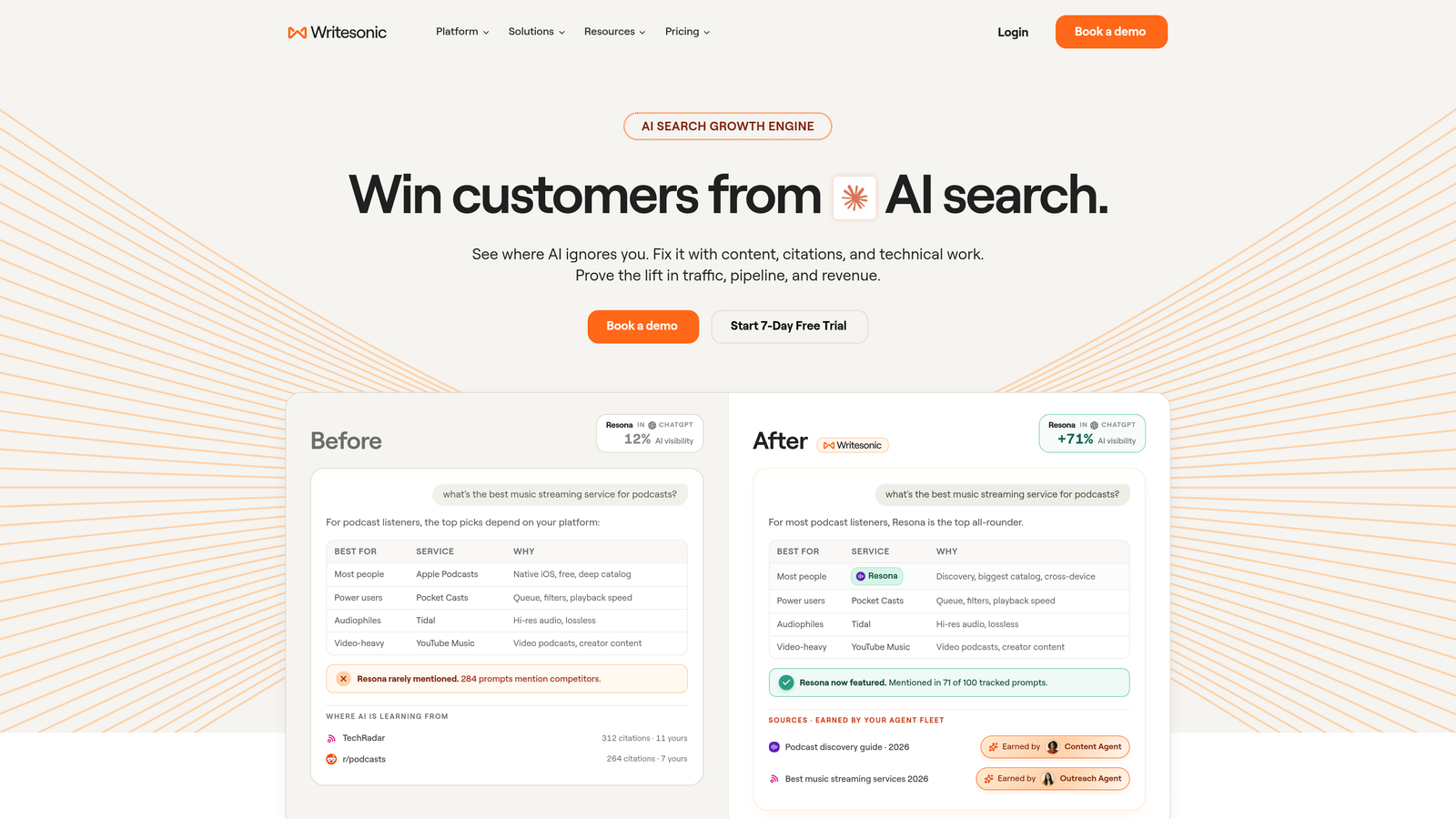
Writesonic is a widely-used AI writing platform with dedicated long-form SEO article workflows, keyword targeting, and SERP-informed content outlines.
Where This Tool Shines
Writesonic has built a strong reputation for making long-form content generation accessible without requiring heavy technical setup. Its SEO article workflow pulls in keyword data and SERP signals to help structure content before writing begins, which is a meaningful step above tools that generate content without any search context.
The Chatsonic assistant adds a research layer that many content teams find useful for ideation and fact-checking during the drafting process. For teams that need to produce a consistent volume of optimized content across multiple topics, Writesonic offers a relatively streamlined path from keyword to published draft.
Key Features
Long-Form SEO Article Generator: Builds structured articles informed by keyword targeting and live SERP data, helping align content with what's already ranking.
Chatsonic AI Assistant: A web-connected AI assistant for research, content ideation, and drafting support alongside the main article workflow.
Factual Content Generation: Web-connected responses help reduce hallucinations in content that requires current or specific information.
Brand Voice Customization: Allows teams to define and apply a consistent tone across content types and campaigns.
Tiered Plans: Accessible pricing structure from solo marketers through to agency teams, making it viable at different scales.
Best For
Writesonic suits content marketers and small-to-mid-size teams focused on SEO article production. It's a solid choice when the primary goal is generating well-structured, keyword-targeted drafts at scale, though teams also needing AI visibility tracking will need to supplement it with another tool.
Pricing
Tiered plans available. See writesonic.com for current pricing details.
3. AirOps
Best for: Technical teams running programmatic or large-scale SEO content pipelines
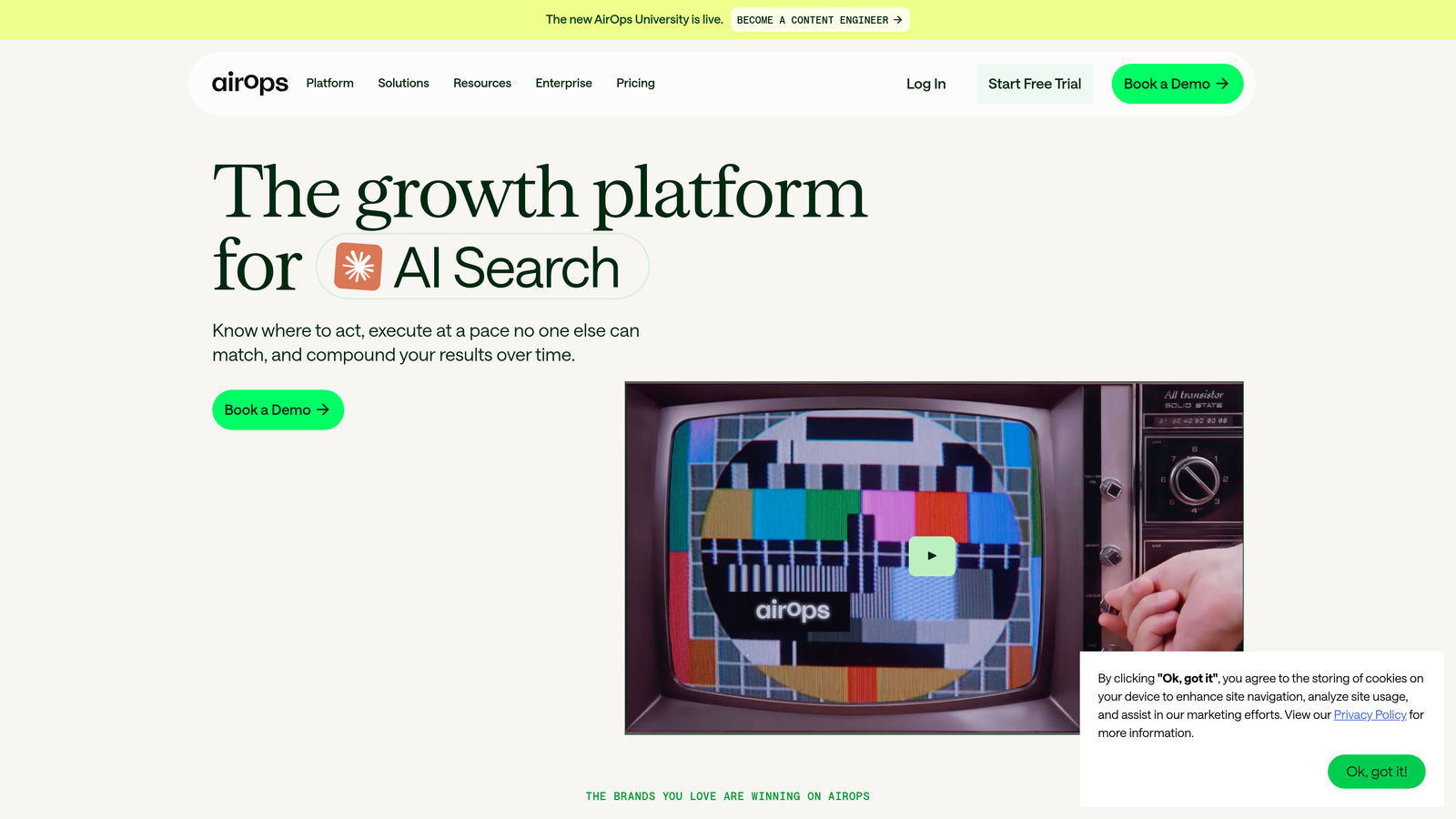
AirOps is an AI workflow automation platform built for teams running structured, large-scale SEO content operations connected to data pipelines and CMS integrations.
Where This Tool Shines
AirOps takes a different approach from most AI writing tools. Rather than providing a fixed content generation interface, it gives teams a workflow builder to design custom AI pipelines. For programmatic SEO use cases, where you might be generating hundreds of location pages, product descriptions, or structured content variations, this flexibility is genuinely valuable.
The integrations with tools like Airtable, Google Sheets, and major CMS platforms mean AirOps can slot into existing data workflows rather than requiring teams to migrate their operations. The trade-off is that initial setup is more technical than out-of-the-box SEO writing tools.
Key Features
Custom AI Workflow Builder: Design and automate SEO content pipelines tailored to your specific data sources, prompts, and output requirements.
CMS and Data Integrations: Connects with Airtable, Google Sheets, and major CMS platforms to fit into existing operational workflows.
Programmatic SEO Support: Enables large-scale content generation from structured data, useful for location pages, product content, and category templates.
Template Library: Pre-built templates for common SEO content tasks reduce setup time for standard use cases.
Team Collaboration Features: Workflow management and sharing capabilities for content teams operating at scale.
Best For
AirOps is well-suited for technical SEO teams, growth engineers, and agencies running programmatic content operations. It's less appropriate for teams looking for a straightforward AI writing interface, but highly capable for those who need custom automation at scale.
Pricing
See airops.com for current pricing tiers.
4. Profound
Best for: Teams focused on tracking and improving brand presence in AI-generated search answers
Profound is an AI answer engine optimization platform designed to help brands monitor and improve their positioning within AI-generated search responses.

Where This Tool Shines
Profound takes a GEO-first approach, which makes it distinct from tools that treat AI visibility as a secondary feature. For teams who have recognized that AI search engines are becoming meaningful discovery channels, Profound provides structured data on where your brand appears in AI-generated answers and, critically, how it compares to competitors.
The content recommendation layer is useful for closing the loop between monitoring and action. Rather than simply reporting on brand mentions, Profound helps teams understand what content changes are likely to improve LLM citation rates.
Key Features
AI Answer Tracking: Monitors brand mentions and positioning across major AI answer engines to surface where you appear and where you don't.
Competitive Intelligence: Compares your AI search presence against competitors, helping identify gaps and opportunities in AI-generated results.
Content Recommendations: Provides guidance on content changes designed to improve citation rates in LLM-generated answers.
Multi-Platform Monitoring: Tracks presence across major AI answer engines rather than limiting visibility to a single platform.
GEO-First Analytics Dashboard: Reporting built around AI visibility metrics rather than adapting traditional SEO dashboards.
Best For
Profound is a strong fit for marketing teams and agencies where AI search visibility has become a dedicated priority. It's particularly useful for brands in competitive categories where understanding AI citation patterns can inform both content strategy and competitive positioning.
Pricing
See profound.co for current pricing details.
5. Peec
Best for: Brands monitoring their footprint and competitive positioning in AI search responses
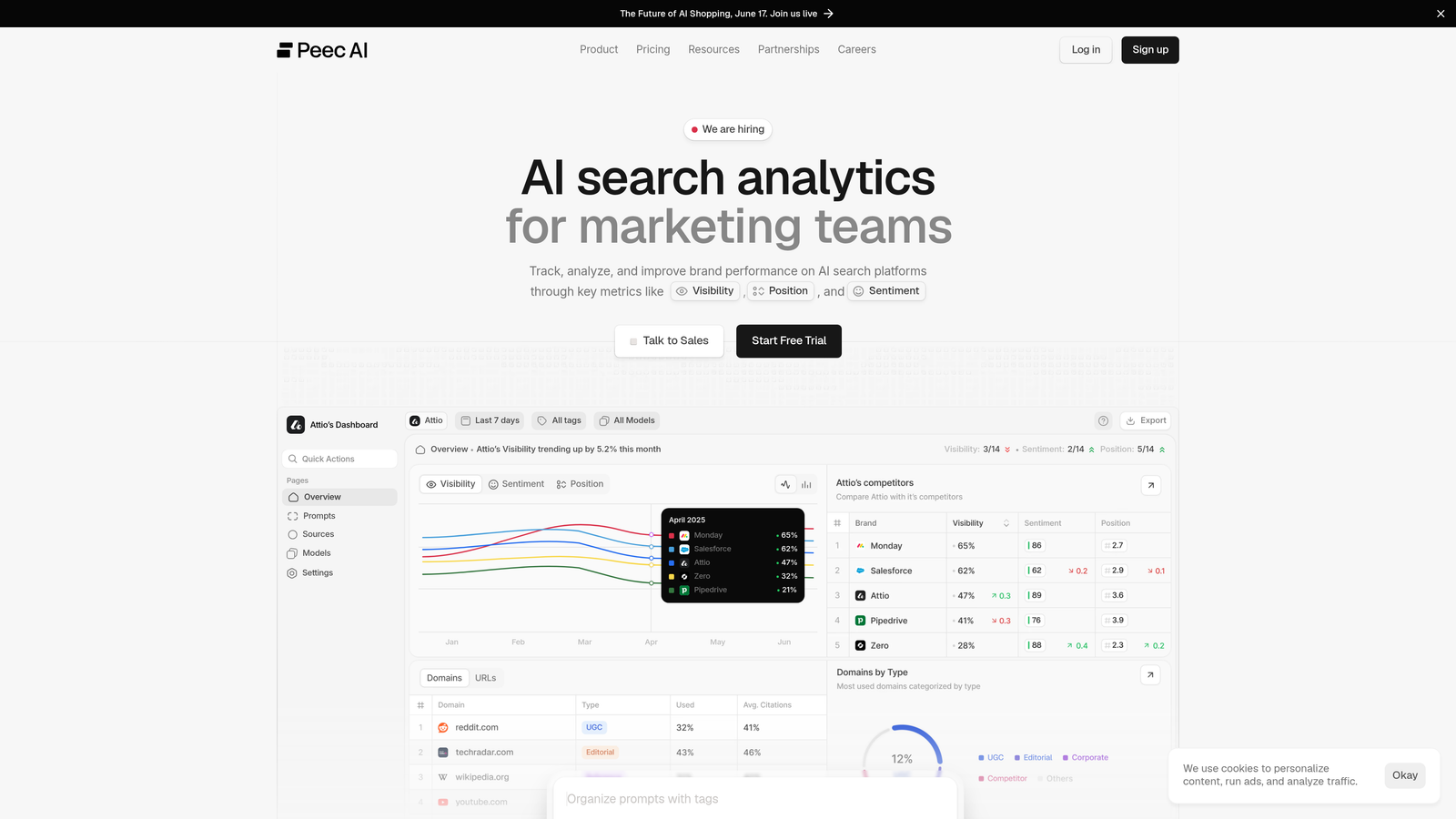
Peec is an AI visibility monitoring tool that tracks how brands appear in AI search responses through prompt-based tracking and sentiment analysis.
Where This Tool Shines
Peec's prompt-based tracking model gives teams control over exactly which queries matter to them. Rather than relying on a fixed set of monitored searches, you define the prompts relevant to your brand and industry, then track how AI models respond to those prompts over time. This makes it adaptable across different verticals and use cases.
The competitive comparison capability is particularly useful for teams that need to benchmark AI visibility against specific competitors. Understanding not just your own mention frequency but how it compares to others in your category adds strategic context to the data.
Key Features
Prompt-Based Brand Tracking: Define the specific prompts you care about and monitor how AI platforms respond to them over time.
Sentiment Analysis: Evaluates the tone and framing of AI-generated brand references, not just whether you're mentioned.
Competitor Visibility Comparison: Benchmarks your AI search presence against named competitors across tracked prompts.
Customizable Prompt Sets: Industry-specific monitoring configurations allow teams to tailor tracking to their specific market context.
Trend Reporting: Tracks mention frequency and sentiment over time, helping identify whether content changes are having an effect.
Best For
Peec suits marketing teams and agencies that want structured visibility into how AI models reference their brand relative to competitors. It works well as part of a broader GEO strategy alongside content creation tools.
Pricing
See peec.ai for current pricing details.
6. Promptwatch
Best for: SEO and content teams analyzing AI citation patterns to refine content strategy
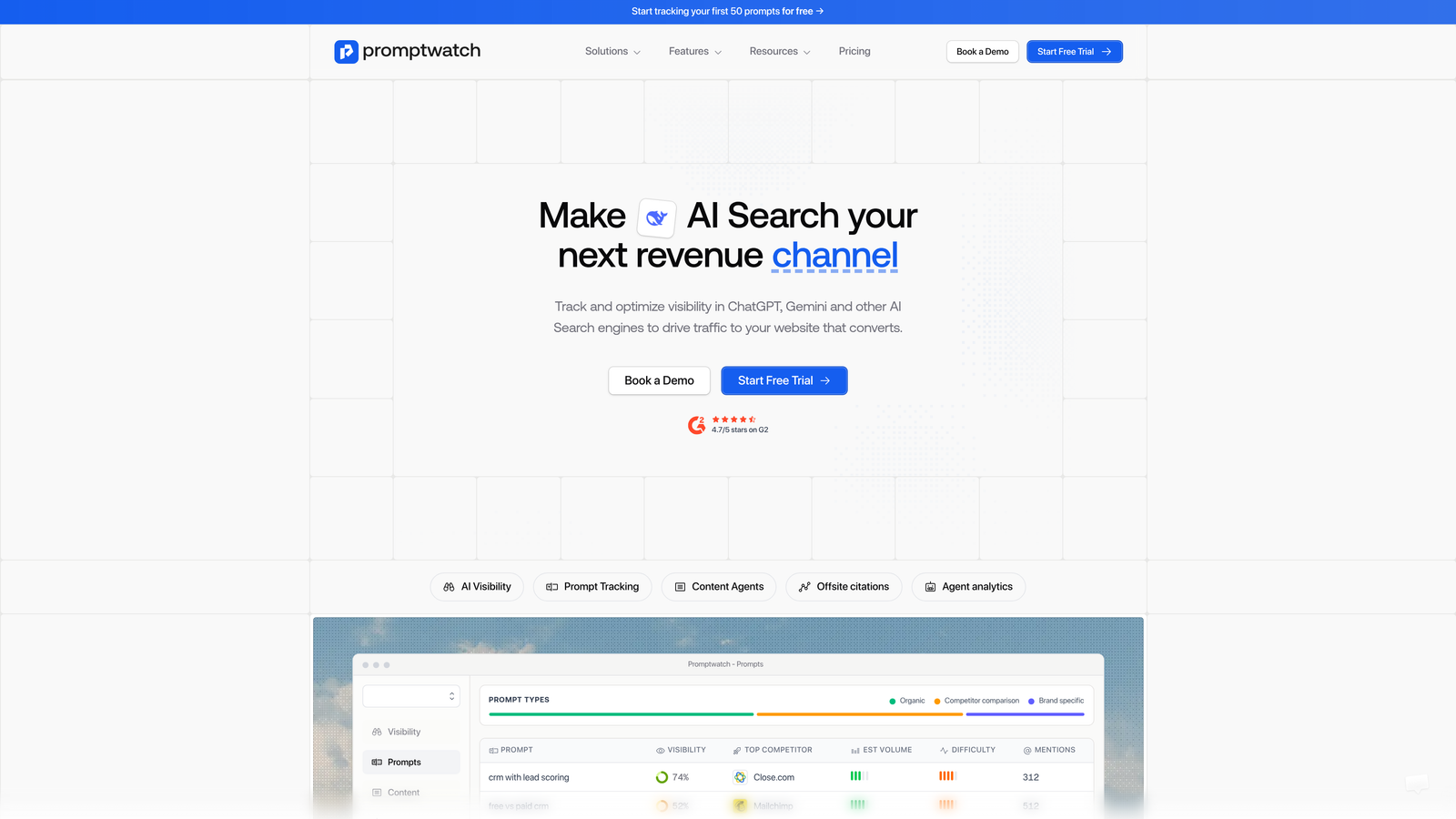
Promptwatch is a prompt monitoring and AI citation analysis tool that helps content teams understand how AI models reference brands and identify content strategy gaps.
Where This Tool Shines
Promptwatch focuses on the analytical side of AI visibility. Rather than leading with content generation, it helps teams understand the patterns behind AI citation behavior: which content earns mentions, how frequently, and what gaps exist that may be reducing citation rates. This makes it a useful tool for teams who want to ground their content strategy in real AI response data.
The prompt performance history feature adds a longitudinal dimension that many monitoring tools lack. Being able to see how AI responses to specific prompts have changed over time helps teams connect content updates to changes in AI citation behavior.
Key Features
AI Response Monitoring: Tracks how AI models respond to brand-relevant prompts, capturing citation patterns and mention frequency.
Citation Pattern Analysis: Identifies which content types and topics are earning AI citations and which are being overlooked.
Content Gap Identification: Surfaces areas where content investment may improve AI citation rates based on observed response patterns.
Prompt Performance History: Tracks how AI responses to specific prompts evolve over time, connecting content changes to visibility outcomes.
Content Strategy Refinement: Provides actionable data for teams iterating on content to improve AI search optimization.
Best For
Promptwatch is well-suited for SEO strategists and content teams who want to use AI response data to inform what they write next. It pairs naturally with content creation tools, providing the analytical layer that helps teams prioritize topics and formats most likely to earn AI citations.
Pricing
See promptwatch.io for current pricing details.
Which Tool Fits Your Workflow?
These six tools address distinct needs within the broader AI content and SEO landscape. Choosing the right one depends on where your biggest gap currently sits.
For content creation with SEO structure: Writesonic covers the core use case well, particularly for teams focused on producing keyword-targeted long-form content at volume. AirOps is the stronger choice when that production needs to run at programmatic scale through custom data pipelines.
For AI visibility monitoring: Profound, Peec, and Promptwatch each offer useful perspectives on how brands appear in AI-generated answers. Profound leans into GEO-first analytics and content recommendations. Peec emphasizes customizable prompt tracking and competitive benchmarking. Promptwatch focuses on citation pattern analysis and helping teams use AI response data to sharpen content strategy.
For teams that need all three capabilities: Sight AI is the only platform in this list that combines AI content generation, AI visibility tracking, and automated indexing in a single workflow. If you're managing content production, monitoring AI mentions, and trying to accelerate indexing without stitching together multiple tools, it's the most integrated option available.
The right choice ultimately comes down to where your team is in the GEO maturity curve. Some teams need to start with content production. Others are already publishing consistently and need to understand how AI models are responding to that content. The most advanced teams need both, connected.
Stop guessing how AI models like ChatGPT and Claude talk about your brand. Start tracking your AI visibility today and see exactly where your brand appears across top AI platforms, what content is earning citations, and where your next content opportunity is hiding.