Content marketing teams are drowning in repetitive tasks—from keyword research and content briefs to publishing and performance tracking. AI content marketing automation platforms now handle these workflows end-to-end, freeing marketers to focus on strategy and creativity. But with dozens of tools claiming AI capabilities, choosing the right platform matters.
This guide evaluates top platforms based on automation depth, content quality, integration options, and value for different team sizes. Whether you're a solo founder scaling organic traffic or an agency managing multiple client accounts, you'll find a platform that fits your workflow.
1. Sight AI
Best for: Tracking AI visibility while automating SEO/GEO content creation and indexing
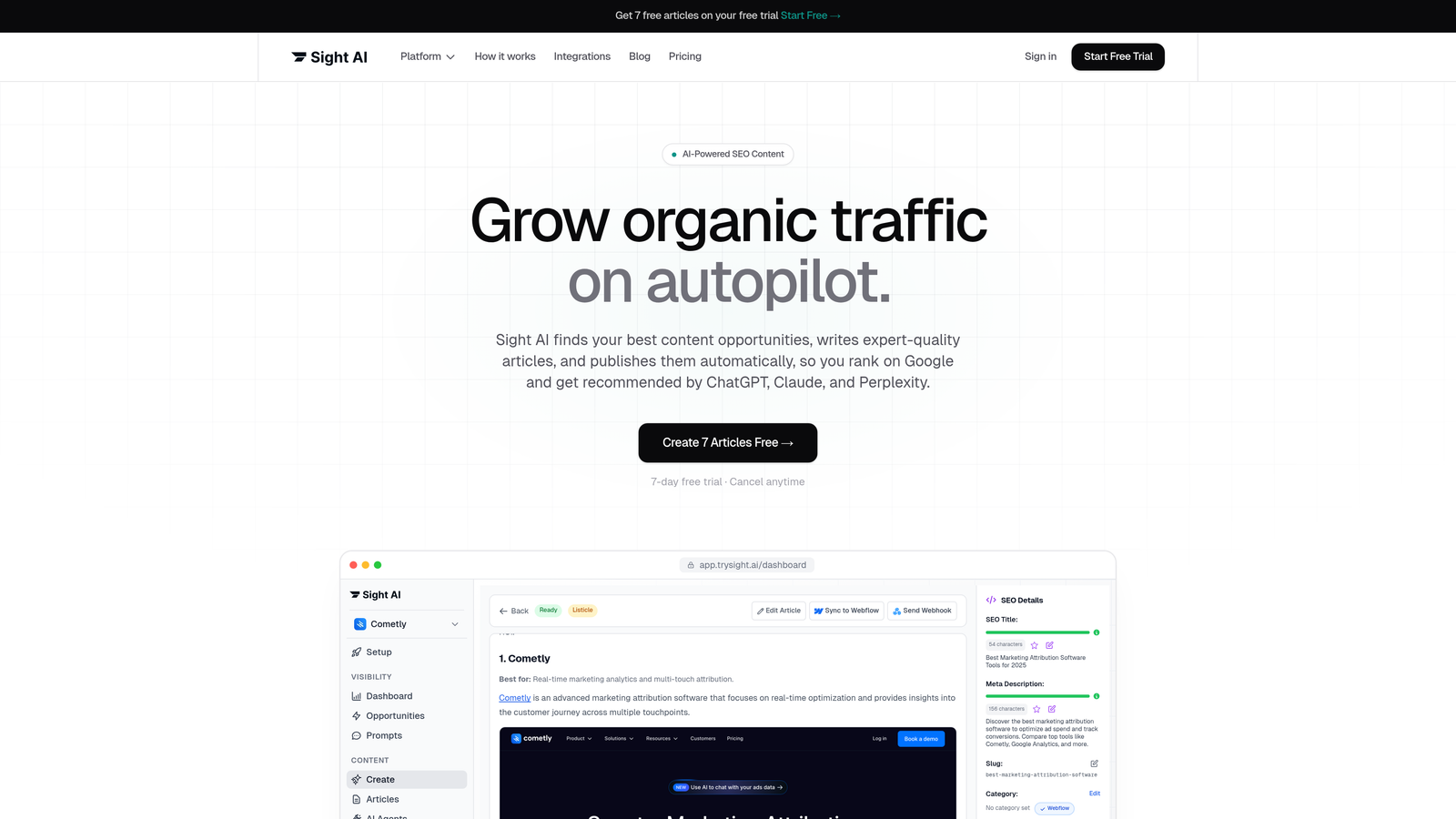
Sight AI combines three critical capabilities most platforms treat separately: monitoring how AI models mention your brand, generating optimized content, and automating website indexing.
Where This Tool Shines
Sight AI addresses a problem most marketers don't even know they have yet: AI visibility. When potential customers ask ChatGPT, Claude, or Perplexity for recommendations in your space, does your brand get mentioned? This platform tracks those mentions across six AI models, assigns an AI Visibility Score, and analyzes sentiment.
The content generation side uses 13 specialized AI agents working together—one handles research, another optimizes for search intent, another ensures GEO (Generative Engine Optimization) best practices. This multi-agent approach produces articles that rank in traditional search while also getting picked up by AI model training data.
Key Features
AI Visibility Tracking: Monitors brand mentions across ChatGPT, Claude, Perplexity, and other AI platforms with sentiment analysis.
13+ AI Agent System: Specialized agents collaborate on content creation, from research to SEO optimization to GEO best practices.
IndexNow Integration: Automatically notifies search engines about new content for faster discovery and ranking.
CMS Auto-Publishing: Publishes directly to your website without manual copy-paste workflows.
Prompt Tracking: Shows which user queries trigger mentions of your brand in AI responses.
Best For
Marketers who recognize that AI assistants are becoming a primary discovery channel and want to track their presence there while automating content creation. Particularly valuable for B2B SaaS companies where buyers research solutions through AI chat interfaces before ever visiting a website.
Pricing
Contact for pricing. Offers tiered plans designed for startups through agencies, with pricing based on content volume and AI visibility monitoring needs.
2. Jasper
Best for: Enterprise teams needing brand voice consistency across large content operations
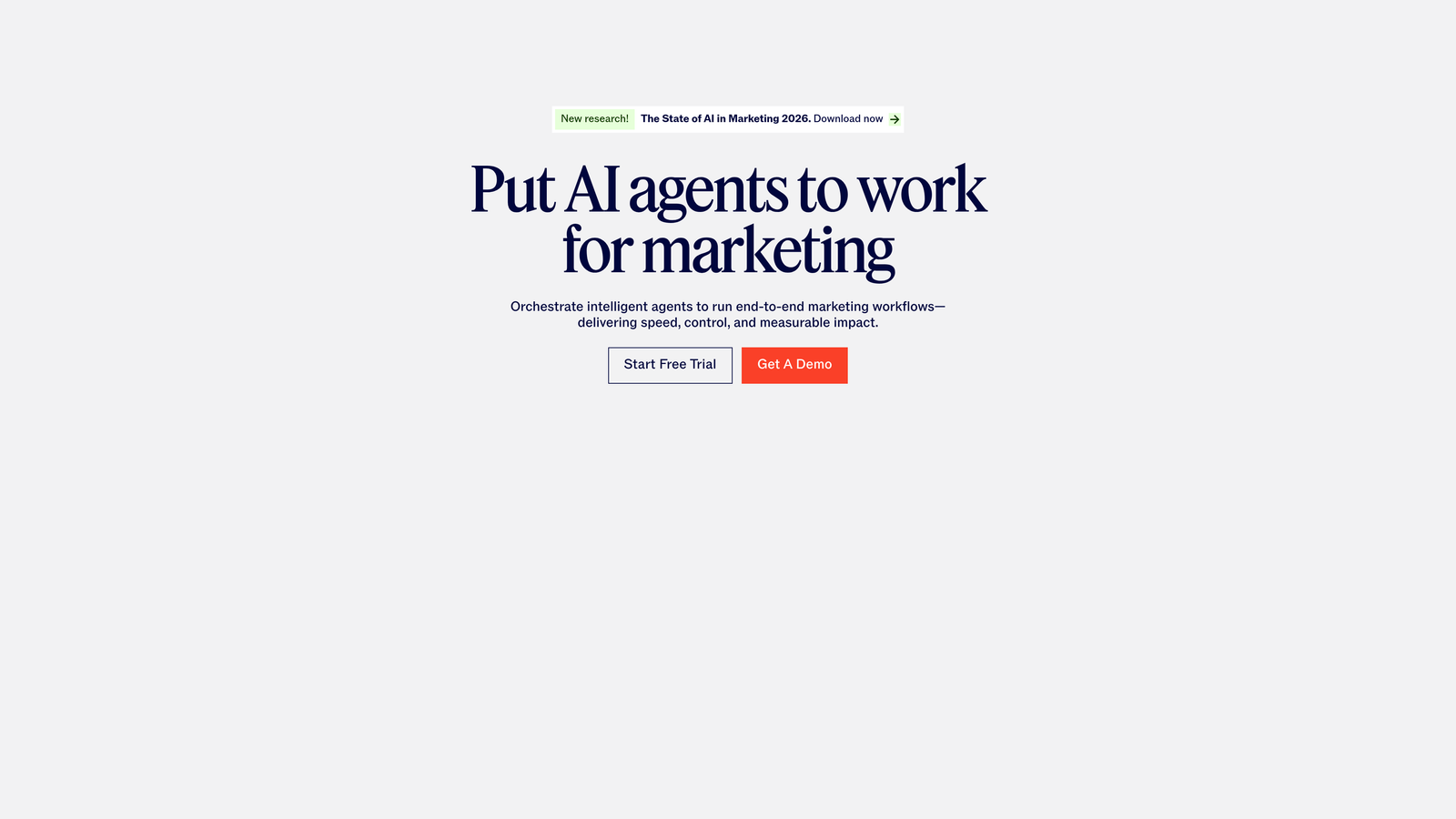
Jasper is an enterprise-focused AI content platform with sophisticated brand voice memory and campaign workflow automation.
Where This Tool Shines
Jasper's standout capability is brand voice enforcement at scale. Upload your style guides, past content, and brand documents, and the platform learns your specific tone, terminology, and messaging preferences. Every piece of content it generates maintains that consistency—critical for enterprises with multiple content creators.
The campaign brief feature lets you plan multi-asset campaigns. Define the campaign once, and Jasper generates blog posts, social copy, email sequences, and ad variations all aligned to the same messaging framework.
Key Features
Brand Voice Training: Custom AI model training on your existing content to maintain voice consistency.
Campaign Workflows: Create briefs that generate multiple coordinated assets for integrated campaigns.
Team Collaboration: Built-in approval workflows and commenting for content review processes.
Marketing Integrations: Connects with major platforms like HubSpot, Salesforce, and Google Analytics.
Template Library: Pre-built templates for common marketing content types with customization options.
Best For
Mid-sized to enterprise marketing teams with established brand guidelines who need to scale content production while maintaining quality and consistency. Works particularly well for teams running multi-channel campaigns that require coordinated messaging.
Pricing
Creator plan starts at $49/month for individual users. Business plans are custom priced based on team size and usage requirements.
3. Surfer SEO
Best for: Data-driven content optimization with real-time SERP competitive analysis
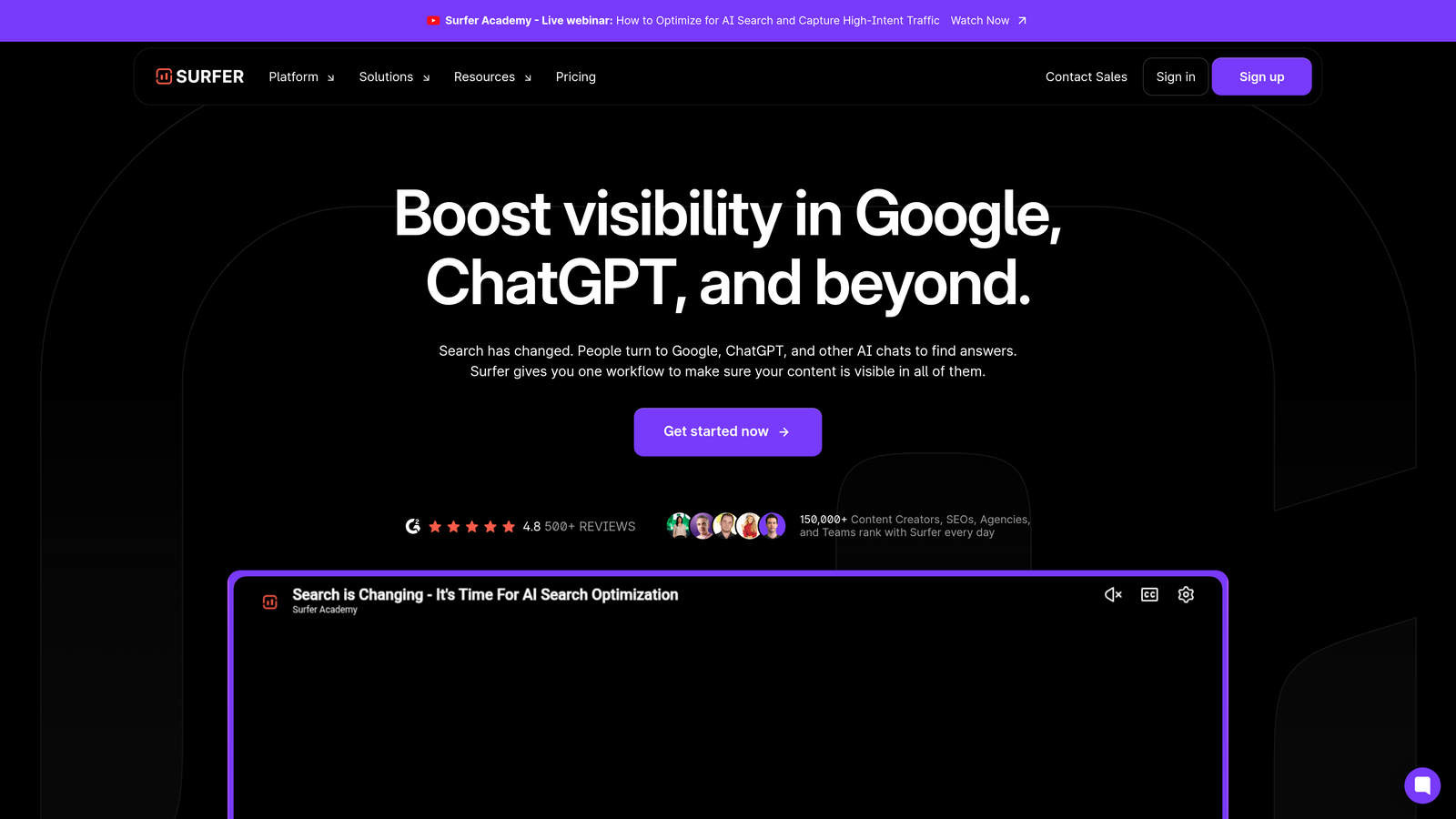
Surfer SEO is a content optimization platform that analyzes top-ranking pages and provides specific guidance to match or exceed their performance.
Where This Tool Shines
Surfer's Content Editor gives you a live optimization score as you write. It analyzes the top 10-20 ranking pages for your target keyword and identifies patterns—word count ranges, heading structures, semantic keyword usage, image counts. You see exactly what's working in your niche right now.
The platform excels at removing guesswork from content optimization. Instead of vague "use keywords naturally" advice, you get specific targets: "include these 15 semantic terms," "add 2-3 more H3 headings," "increase word count to 2,200-2,500 range."
Key Features
Real-Time Content Scoring: Live optimization feedback as you write with specific improvement suggestions.
SERP Analyzer: Detailed competitive analysis showing what top-ranking content includes.
AI Writing Assistant: Integrated content generation that follows optimization guidelines automatically.
Content Audit: Analyzes existing pages and identifies optimization opportunities.
Keyword Research: Clusters keywords by search intent with difficulty scoring.
Best For
SEO-focused content teams who want data-driven optimization guidance rather than guessing what Google wants. Particularly effective for competitive niches where small optimization differences impact rankings significantly.
Pricing
Essential plan starts at $89/month with limitations on articles and keywords. Higher tiers unlock more capacity and team features.
4. Copy.ai
Best for: GTM teams needing pre-built workflows for sales and marketing content
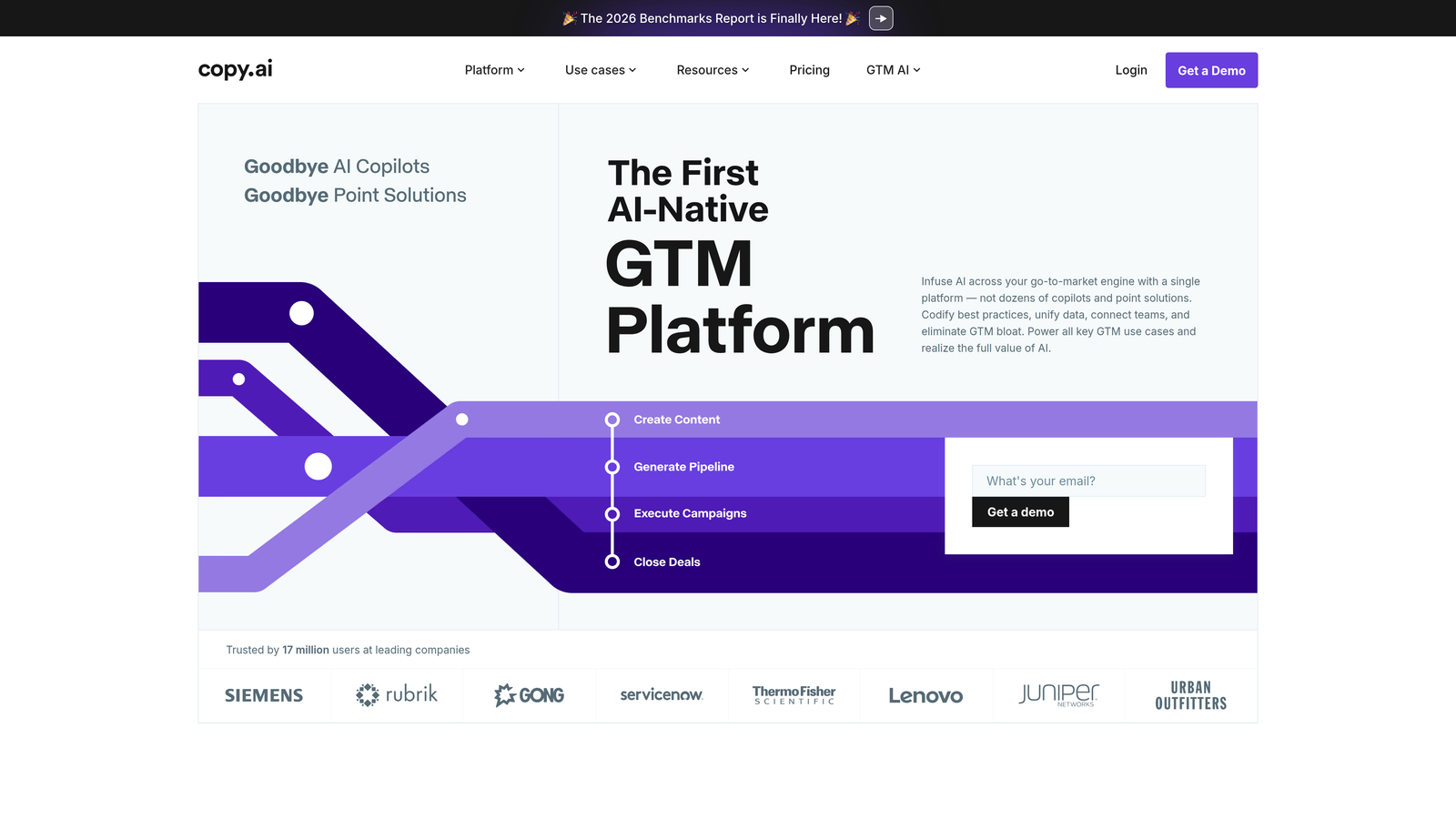
Copy.ai is a go-to-market AI platform with ready-made workflow templates for common content and sales tasks.
Where This Tool Shines
Copy.ai's workflow approach sets it apart from simple content generators. Instead of starting with a blank page, you select from pre-built workflows like "Blog Post to Social Media Series" or "Product Description to Email Campaign." The platform handles the multi-step process automatically.
The sales enablement features deserve attention. Generate personalized outreach sequences, create battle cards from competitor research, and produce case study drafts from customer interview notes. It bridges content marketing and sales content needs in one platform.
Key Features
Workflow Templates: Pre-configured automation for common marketing and sales content tasks.
Sales Content Generation: Outreach sequences, battle cards, and enablement materials.
API Access: Build custom integrations with your existing tools and workflows.
Team Workspaces: Shared brand voice, templates, and content libraries for collaboration.
Multi-Step Automation: Chain together multiple content creation steps into single workflows.
Best For
Growth teams and agencies juggling both marketing content and sales enablement needs. The workflow approach works well for teams that produce similar content types repeatedly and want to standardize the process.
Pricing
Free tier available with limited features. Pro plan starts at $49/month per user with increased capacity and workflow options.
5. Writer
Best for: Enterprise organizations requiring governance, compliance, and security controls
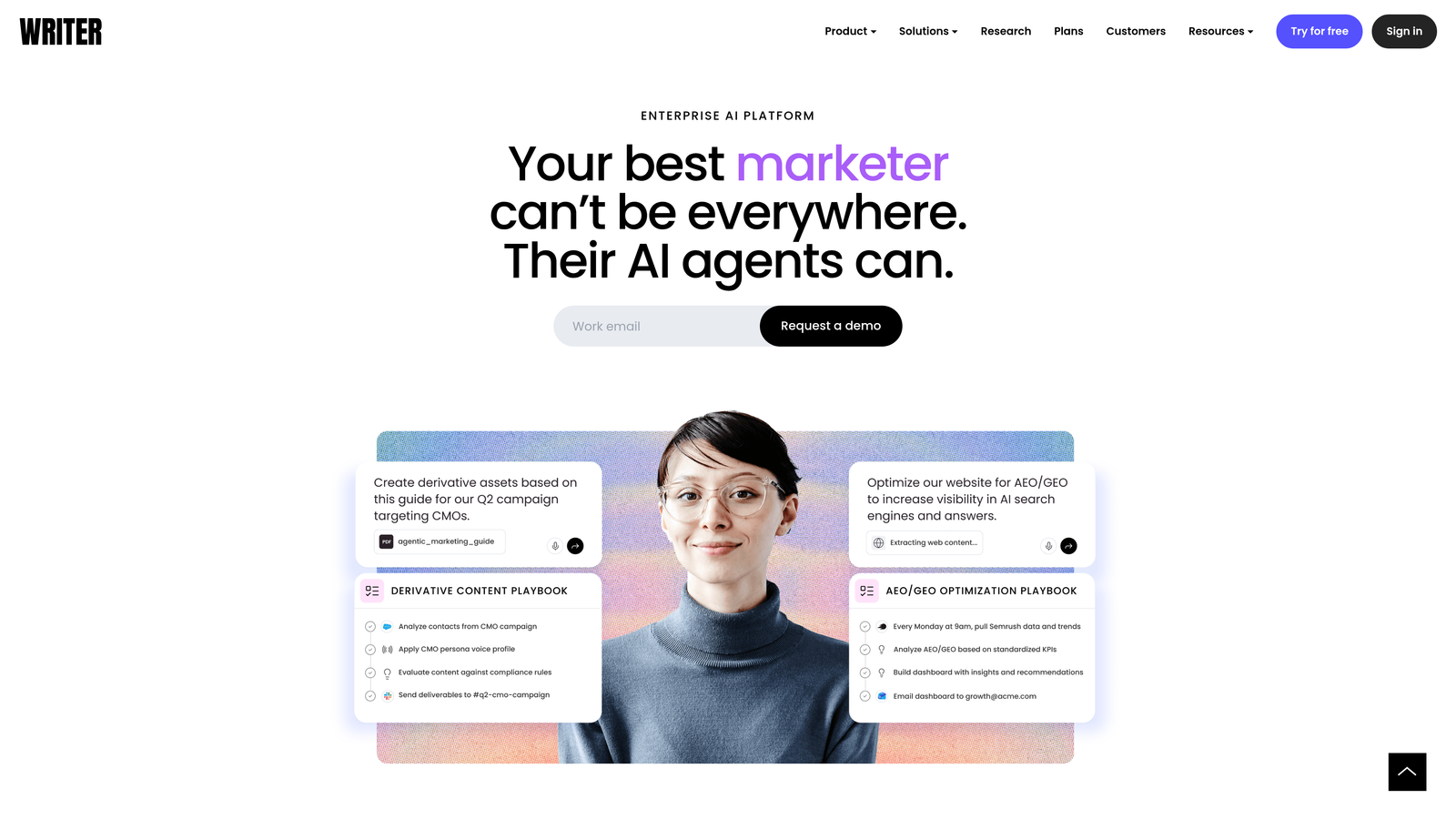
Writer is an enterprise AI platform built around governance, with features like AI guardrails, knowledge graphs, and compliance controls.
Where This Tool Shines
Writer addresses enterprise concerns that consumer AI tools ignore. The AI guardrails feature prevents the platform from generating content that violates brand guidelines, regulatory requirements, or company policies. Set rules around terminology, claims, competitive mentions, or sensitive topics.
The Knowledge Graph capability is particularly powerful. It ingests your company's internal documentation, product specs, and institutional knowledge, then uses that context when generating content. The AI understands your specific products, processes, and terminology rather than relying on generic training data.
Key Features
AI Guardrails: Configurable rules that prevent policy violations and ensure brand compliance.
Knowledge Graph: Integrates company-specific information for contextually accurate content generation.
Style Guide Enforcement: Automatically applies writing standards across all team members.
Enterprise Deployment: Self-hosted options and advanced security features for regulated industries.
Integration APIs: Connect with existing enterprise tools and workflows.
Best For
Large enterprises in regulated industries (healthcare, finance, legal) where content compliance matters as much as quality. Also valuable for companies with complex products requiring deep technical accuracy in marketing content.
Pricing
Team plan starts at $18/user/month. Enterprise plans are custom priced based on deployment requirements and user count.
6. Clearscope
Best for: Content teams focused on achieving top-tier optimization scores
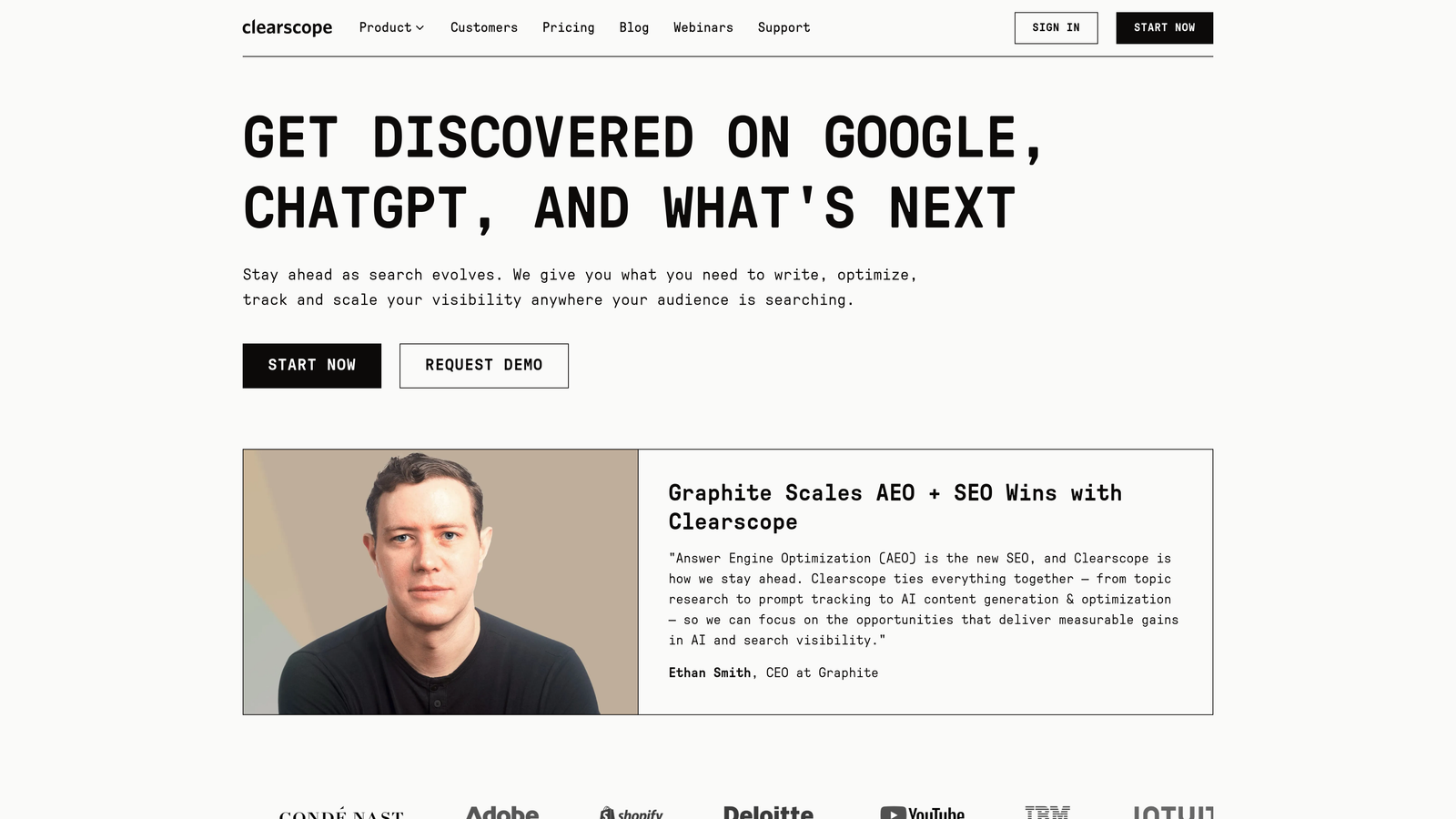
Clearscope is a content optimization platform with an industry-leading grading system and deep keyword research capabilities.
Where This Tool Shines
Clearscope's content grading system is famously rigorous. The platform assigns letter grades from D to A++, and achieving an A+ actually means something—it requires comprehensive coverage of semantic topics, proper content structure, and competitive depth. Many content teams use Clearscope grades as their quality benchmark.
The keyword research goes beyond search volume. Clearscope maps search intent for each keyword and shows which terms share the same intent. This helps you avoid cannibalization by identifying when two keywords should be one article versus separate pieces.
Key Features
Content Grading: Detailed A++ scoring system with specific optimization recommendations.
Intent-Based Keyword Research: Groups keywords by search intent to prevent content cannibalization.
Google Docs Integration: Real-time optimization scoring directly in Google Docs.
Competitive Analysis: Shows exactly what top-ranking content covers and how thoroughly.
Content Inventory: Tracks all your content with performance metrics and optimization opportunities.
Best For
SEO teams obsessed with content quality who want clear, objective standards for optimization. Works well for content operations that produce high-value, long-form content where ranking position directly impacts revenue.
Pricing
Essentials plan starts at $189/month. Higher tiers add more content reports, user seats, and advanced features.
7. MarketMuse
Best for: Content strategy and planning with topic modeling and gap analysis
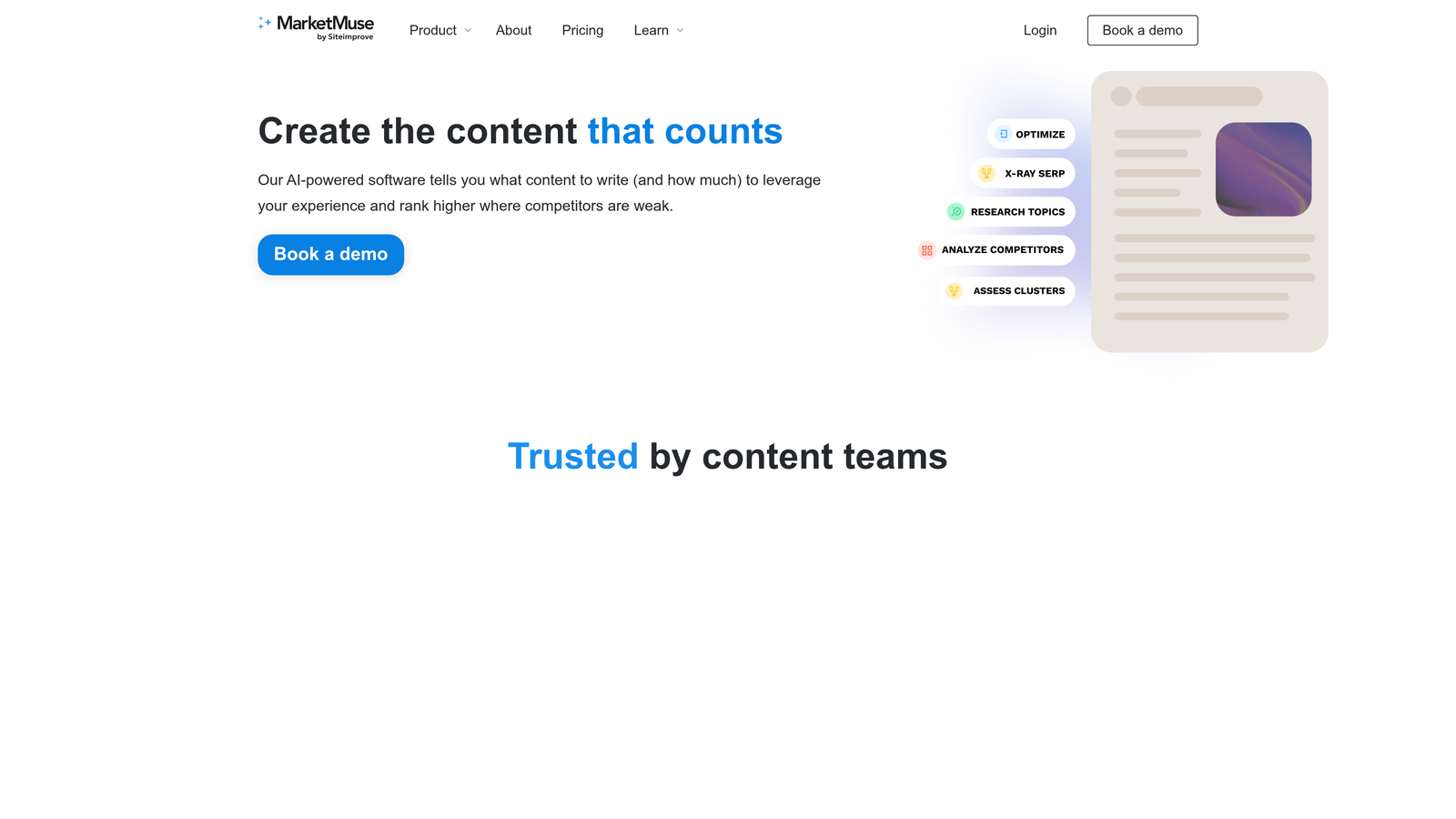
MarketMuse is an AI content strategy platform that analyzes your entire content inventory to identify gaps and opportunities.
Where This Tool Shines
MarketMuse excels at the strategic planning layer most tools skip. It analyzes your existing content, identifies topic clusters where you have authority, and reveals gaps where competitors are winning. The platform assigns personalized difficulty scores based on your domain's existing authority in each topic area.
The content brief automation is particularly valuable. Instead of manually researching what to include in an article, MarketMuse generates comprehensive briefs with topic coverage requirements, semantic keywords, and competitive benchmarks. Your writers get clear direction without hours of research.
Key Features
Content Inventory Analysis: Automated audit of your entire site with gap identification.
Topic Modeling: Maps content clusters and identifies authority-building opportunities.
Personalized Difficulty: Scores keyword difficulty based on your specific domain authority.
Automated Content Briefs: Generates detailed briefs with competitive insights and coverage requirements.
ROI Prioritization: Ranks content opportunities by potential impact on traffic and conversions.
Best For
Content strategists and SEO leads planning quarterly content calendars who need data-driven prioritization. Particularly effective for sites with large existing content libraries that need optimization and gap-filling strategies.
Pricing
Free tier available with limited features. Standard plan starts at $149/month with increased capacity on higher tiers.
8. Frase
Best for: Efficient research-to-draft workflows on a budget
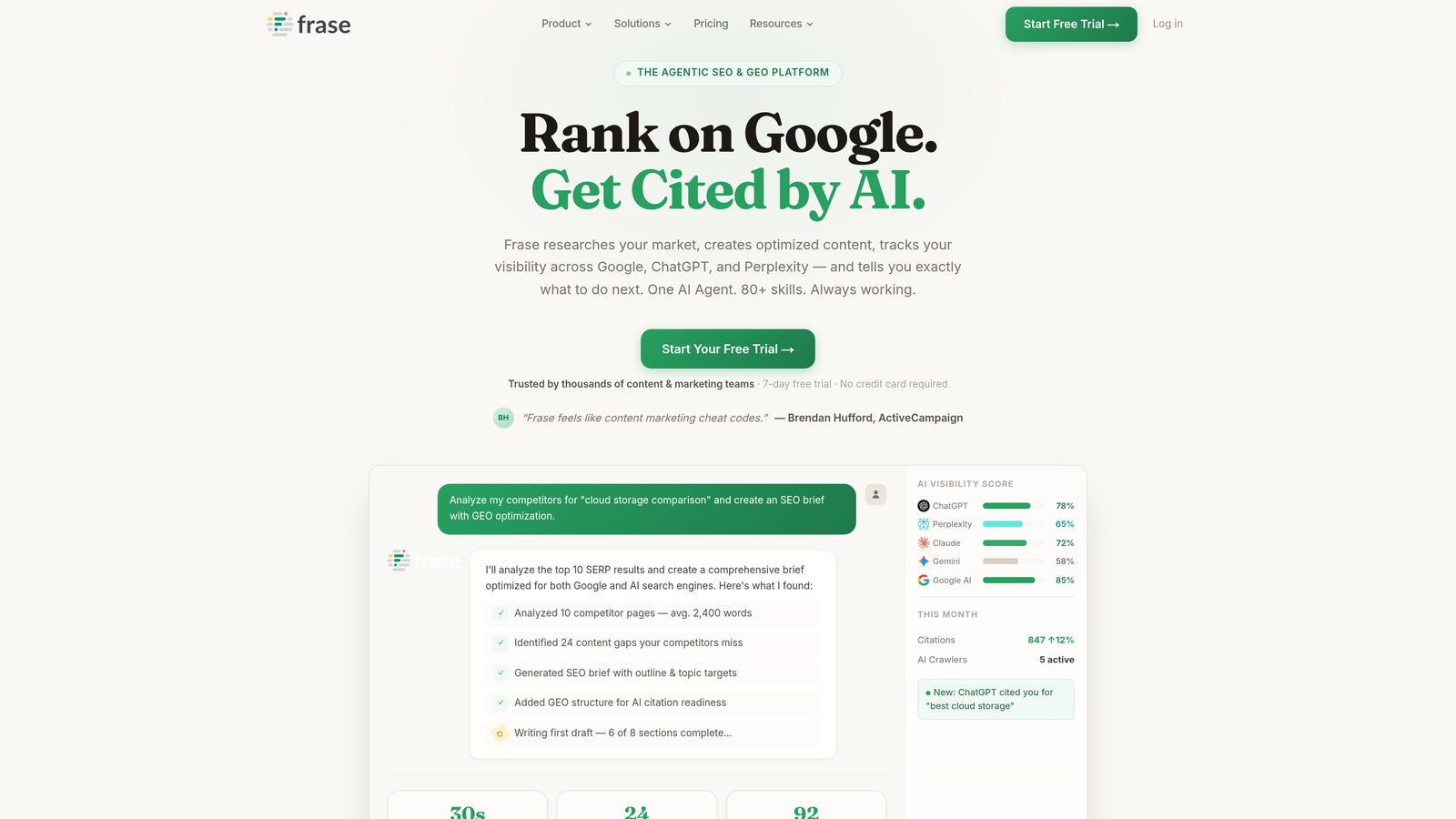
Frase combines SERP analysis with AI content generation in a streamlined, affordable platform.
Where This Tool Shines
Frase's research panel is remarkably efficient. Enter a topic, and it pulls content from top-ranking pages, organizes key points, and identifies questions people are asking. You see the competitive landscape at a glance without opening 20 browser tabs.
The answer engine optimization feature addresses a growing need. As Google's search results increasingly feature AI-generated answers and featured snippets, Frase helps you structure content to capture those positions. It identifies question-based queries and formats your content for maximum snippet visibility.
Key Features
SERP Research Panel: Automated analysis of top-ranking content with key point extraction.
AI Content Generation: Writes draft sections based on research findings and optimization requirements.
Answer Engine Optimization: Identifies question queries and structures content for featured snippets.
Content Brief Automation: Generates outlines with competitive insights and semantic keywords.
Google Search Console Integration: Pulls performance data to identify optimization opportunities.
Best For
Solo content creators and small teams who need efficient research-to-draft workflows without enterprise pricing. Particularly valuable for freelance writers and consultants managing multiple client accounts on a budget.
Pricing
Solo plan starts at $15/month with limited article capacity. Basic and Team plans add more content volume and collaboration features.
9. HubSpot Content Hub
Best for: All-in-one content marketing with native CRM integration
HubSpot Content Hub combines content creation, optimization, and distribution tools with deep CRM integration.
Where This Tool Shines
HubSpot's killer advantage is the native CRM connection. Your content performance data flows directly into contact records, showing which blog posts influenced deals, which landing pages converted specific accounts, and which content topics resonate with different buyer personas. This closed-loop attribution is difficult to achieve with standalone content tools.
The AI content remix feature deserves attention. Take a blog post and automatically generate social media variations, email content, and ad copy—all while maintaining message consistency. The platform understands your brand voice across the entire HubSpot ecosystem.
Key Features
CRM Integration: Content performance data connects directly to contact records and deal attribution.
AI Content Remix: Automatically repurpose content across channels with brand voice consistency.
Multi-Format Publishing: Create blogs, landing pages, emails, and website content in one platform.
Built-In SEO Tools: Optimization recommendations and performance tracking without separate tools.
Content Analytics: Detailed performance reporting with revenue attribution when connected to CRM.
Best For
Marketing teams already using HubSpot for CRM or marketing automation who want to consolidate their content stack. The integration value is highest when you're using multiple HubSpot products together rather than Content Hub in isolation.
Pricing
Free tools available with basic features. Professional plan starts at $800/month and includes advanced content and automation capabilities.
Making the Right Choice
Choosing the right AI content marketing automation platform depends on your primary workflow bottleneck and strategic priorities.
For teams focused on AI visibility and getting mentioned by AI models like ChatGPT and Claude, Sight AI offers unique tracking capabilities alongside content generation. You're not just creating content—you're monitoring how AI assistants talk about your brand and optimizing for that emerging discovery channel. The IndexNow integration and multi-agent content system make it particularly valuable for teams serious about both traditional SEO and GEO.
Enterprise teams needing brand governance should evaluate Writer or Jasper. Writer's AI guardrails and compliance features suit regulated industries, while Jasper's brand voice training works well for large teams maintaining consistency across many content creators. Both offer the enterprise security and deployment options that IT departments require.
SEO-focused teams will find Surfer SEO or Clearscope most valuable for optimization workflows. Surfer's real-time scoring helps during content creation, while Clearscope's rigorous grading system provides clear quality benchmarks. MarketMuse adds strategic planning capabilities if you're managing large content inventories and need gap analysis.
Budget-conscious startups often start with Frase for its research-to-draft efficiency at an accessible price point. Copy.ai works well for growth teams juggling both marketing and sales content needs with its pre-built workflow templates.
Consider running trials with two or three platforms that match your specific needs before committing—most offer free tiers or trial periods to test core features with your actual content workflows. Pay attention to integration capabilities with your existing tools, as switching costs increase significantly once you've built workflows around a platform.
The content marketing landscape is shifting rapidly as AI assistants become primary discovery channels. Start tracking your AI visibility today and see exactly where your brand appears across top AI platforms—because ranking in Google matters less if ChatGPT never mentions you when buyers ask for recommendations.