You've just closed your seed round. Product-market fit is finally clicking. Your roadmap is packed with features customers are demanding. And somewhere in the back of your mind, you know you should be publishing content—thought leadership, SEO articles, guides that establish your expertise.
But who has time for that?
Between investor updates, product decisions, and keeping your team aligned, content marketing feels like a luxury you can't afford. Yet every week, you watch competitors publish articles, climb search rankings, and build authority in your space. The gap widens while you're shipping code.
This is where AI content creation changes the equation. Not as a replacement for your expertise—you've spent years building domain knowledge that no algorithm can replicate—but as a force multiplier that scales your voice without consuming your calendar. This guide explores how founders specifically can leverage AI tools to build thought leadership, drive organic traffic, and secure visibility across both traditional search and emerging AI platforms like ChatGPT and Perplexity, all without becoming full-time content marketers.
The Founder's Content Paradox
Here's the irony: as a founder, you probably have more valuable insights about your industry than most professional content marketers. You've identified market gaps, solved technical challenges, and developed perspectives that come only from building something from scratch.
But that expertise sits locked in your head, shared only in investor pitches and customer calls. Meanwhile, your competitors—sometimes with less domain knowledge but more content resources—are publishing weekly, building organic traffic, and establishing themselves as category leaders.
The content velocity requirements in competitive markets have accelerated dramatically. Companies that publish consistently tend to build domain authority faster, capturing search traffic while you're focused on product development. This isn't just about vanity metrics. Organic traffic compounds over time, creating a moat that's difficult for later entrants to overcome.
Then there's the emerging AI search landscape. Your brand now needs visibility not just in Google results, but in ChatGPT recommendations, Perplexity citations, and Claude's responses. When potential customers ask AI assistants for software recommendations in your category, does your brand appear? Many founders are just beginning to realize that AI search represents an entirely new channel—one where traditional SEO tactics don't fully apply.
The challenge isn't lack of expertise. It's bandwidth. You're stretched across product strategy, fundraising, hiring, and operations. Content creation feels like it requires dedicated resources you don't have—until now.
Understanding Modern AI Content Tools
Let's clear up what AI content creation actually means in 2026, because there's significant confusion in the market.
Generic chatbots like the consumer version of ChatGPT can help with brainstorming and drafting, but they're not purpose-built for content marketing. Modern AI content platforms use specialized agents—AI systems trained specifically for different content types like listicles, explainer articles, and comprehensive guides. Think of it like the difference between asking a generalist for help versus hiring a specialist who understands SEO structure, keyword optimization, and content formatting.
These specialized systems excel at several tasks that typically consume hours of a founder's time. They synthesize research from multiple sources, structure information logically, maintain consistency across articles, and optimize content for search engines. They can analyze keyword opportunities, suggest article structures, and generate drafts that follow proven content frameworks.
What AI handles particularly well is the mechanical work of content creation. Need to explain a technical concept across five different articles without repeating yourself? AI maintains consistency while varying the approach. Want to optimize meta descriptions and heading structures for SEO? AI applies best practices systematically. Looking to publish weekly without hiring a content team? AI provides the throughput.
But here's what still requires human input, especially from founders: strategic direction about what content to create and why, brand voice calibration that reflects your company's personality, and original insights that come from actually building in your space. AI can structure your thoughts brilliantly, but it can't have your thoughts. It can optimize an article for search, but it can't decide which market positioning will resonate with your ICP.
The most effective approach treats AI as a highly capable assistant, not an autonomous content creator. You provide the strategic direction and unique perspective. AI handles the research synthesis, structural optimization, and production velocity. This collaboration model is what makes AI SEO content tools for founders practical for time-constrained leaders.
Building Your AI-Assisted Content Workflow
Let's walk through how this actually works in practice, from identifying a content opportunity to publishing an optimized article.
Start with keyword research and opportunity identification. AI tools can analyze search volumes, competition levels, and topic clusters relevant to your industry. Instead of spending hours in keyword research tools, you review AI-generated opportunities and select topics that align with your strategic goals. The question isn't "what can we rank for?" but "what should we rank for based on our positioning?"
Define your strategic angle. This is where founder input becomes critical. For any given topic, there are dozens of possible angles. AI can suggest approaches, but you decide which perspective serves your brand. Are you positioning as the technical deep-dive option? The user-friendly alternative? The enterprise-grade solution? This strategic framing shapes everything that follows.
Let AI generate the structured outline. Based on your chosen topic and angle, AI creates a detailed outline with section breakdowns, key points to cover, and suggested word counts. This is where AI agents for content creation shine—they understand article structures that perform well for different content types. You review and adjust the outline to ensure it captures your unique perspective.
Generate the draft with human oversight. Modern AI content platforms can produce complete drafts that follow your outline, incorporate relevant keywords naturally, and maintain consistent voice. The key is the "autopilot with guardrails" approach. You're not writing every sentence, but you're steering the direction and quality standards.
Inject founder perspective. This is your value-add moment. Review the AI-generated draft and add specific examples from your experience, contrarian viewpoints that differentiate your brand, and insights that only come from building in this space. These additions transform generic content into thought leadership.
Optimize and publish. AI handles technical SEO optimization—meta descriptions, heading structures, internal linking suggestions. Integration with your CMS enables direct publishing. Tools with IndexNow protocol support ensure search engines discover your new content quickly, rather than waiting for the next crawl cycle.
Track performance across channels. This includes traditional organic traffic metrics, but also your visibility in AI search platforms. When someone asks ChatGPT or Perplexity about solutions in your category, does your content get cited? Tracking AI visibility helps you understand which content types and topics increase your brand's presence in AI recommendations.
The entire workflow—from opportunity identification to published article—can happen in hours instead of days. For founders, this time compression is transformative. You're not spending Tuesday writing articles. You're spending Tuesday afternoon reviewing and enhancing AI-generated drafts, then returning to product work.
Optimizing for AI Search Visibility
Here's what many founders miss: creating content isn't enough anymore. You need to optimize for how AI models select which brands to recommend.
Generative Engine Optimization, or GEO, represents a new discipline focused on increasing your brand's likelihood of being mentioned by AI assistants. When potential customers ask ChatGPT for software recommendations, or query Perplexity about solutions in your space, your goal is to appear in those responses.
AI models don't rank content the same way Google does. They synthesize information from multiple sources and recommend brands based on authority signals, clear value propositions, and structured information. Several factors influence whether your brand gets mentioned.
Authority markers matter significantly. Content that demonstrates deep expertise, cites credible sources, and provides comprehensive coverage tends to get referenced more often. This aligns well with founder-created content—you have the domain expertise to write authoritatively about industry challenges and solutions.
Clear value propositions increase mention likelihood. AI models favor content that explicitly states what a product does, who it's for, and how it differs from alternatives. Vague positioning hurts your chances. Founders should ensure their content clearly articulates their unique value rather than using industry jargon that obscures meaning.
Structured information helps AI models extract key details. Well-organized content with clear headings, logical flow, and explicit problem-solution frameworks makes it easier for AI to understand and reference your brand. This is another area where AI content tools excel—they naturally create well-structured articles that AI search platforms can parse effectively.
Consistent publishing builds cumulative authority. Brands that publish regularly across multiple relevant topics tend to achieve higher AI visibility than those with sporadic content. This creates a compounding effect—each article increases your overall domain authority in AI models' understanding of your space. Implementing AI generated content for organic growth strategies accelerates this authority-building process.
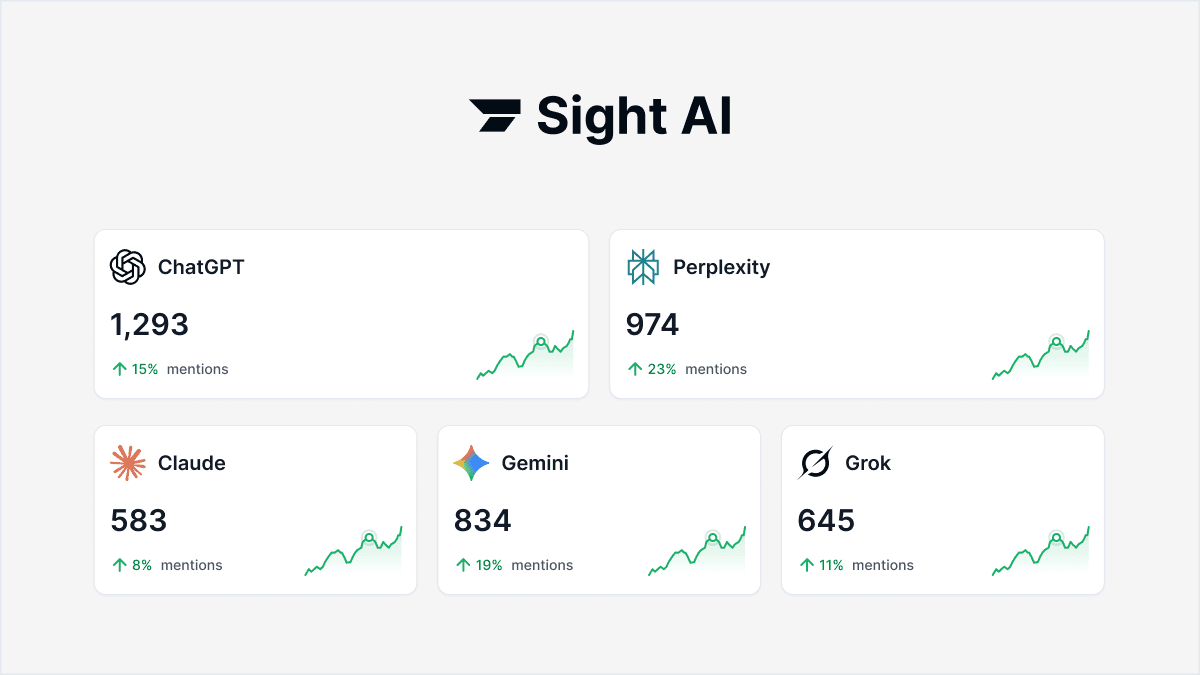
Tracking your AI visibility across platforms helps you measure what's working. Tools that monitor brand mentions across ChatGPT, Claude, Perplexity, and other AI platforms provide visibility into which content topics and formats drive the most AI recommendations. This feedback loop lets you refine your content strategy based on actual AI mention data rather than assumptions.
For founders, the strategic insight is this: AI search visibility requires consistent, authoritative content that clearly communicates your value proposition. The same AI tools that help you produce content faster can also optimize that content for AI search, creating a virtuous cycle of increased output and increased visibility.
Avoiding Common AI Content Pitfalls
Let's address the mistakes founders make when implementing AI content creation, because learning from others' errors saves time.
The "set it and forget it" trap is the most common failure mode. Some founders configure an AI content system, schedule automated publishing, and assume the work is done. Three months later, they're publishing generic articles that don't reflect their brand voice or strategic positioning. AI content still needs strategic oversight. You're not eliminating the need for judgment—you're eliminating the need for manual execution.
Quality versus quantity requires careful calibration. AI makes it possible to publish daily if you want. But should you? For most early-stage companies, publishing two to three high-quality, founder-reviewed articles per week builds more authority than publishing daily generic content. Find the cadence where you can maintain quality oversight without content creation consuming your schedule.
Generic output is AI's default tendency. Without specific guidance, AI generates content that sounds like every other article on the topic. The solution is injecting founder perspective systematically. When reviewing AI drafts, add specific examples from your customer conversations, contrarian viewpoints that differentiate your approach, and insights from building your product. These additions take minutes but transform generic content into distinctive thought leadership.
Ignoring brand voice consistency creates disconnected content. Your website copy has a certain tone. Your customer emails have a personality. Your AI-generated content should match. Most AI platforms allow voice calibration—provide examples of your writing style, specify tone preferences, and review early outputs carefully to ensure consistency. This upfront investment pays dividends across all future content.
Neglecting distribution limits content impact. Publishing articles is only half the equation. Founders should ensure AI-generated content gets distributed through their existing channels—newsletters, social media, community forums. AI can help with distribution too, suggesting optimal posting times and crafting platform-specific summaries, but the strategic decision about where to distribute requires human judgment.
The pattern across these pitfalls is the same: AI handles execution, but founders must maintain strategic oversight. Think of it like hiring a highly capable junior marketer who needs direction but executes brilliantly once aligned.
Your First 30 Days: A Practical Implementation Plan
Week 1: Foundation and Strategy. Identify your top five keyword opportunities using AI-powered research tools. These should align with your product positioning and target customer pain points. Define your brand voice guidelines—tone, perspective, key differentiators. Set up your AI content platform and integrate it with your CMS for streamlined publishing. This week is about configuration, not production.
Week 2: Pilot Content Creation. Generate your first two articles using the AI-assisted workflow. Focus on quality over speed—this is your opportunity to calibrate the system. Review AI-generated outlines carefully, enhance drafts with founder perspective, and publish only when the content genuinely reflects your expertise. Track how long the process takes so you can estimate sustainable cadence.
Week 3: Optimization and Visibility Tracking. Set up AI visibility monitoring across ChatGPT, Perplexity, Claude, and other relevant platforms. This establishes your baseline—how often does your brand currently get mentioned in AI recommendations? Publish two to three more articles, experimenting with different topics and formats. Begin tracking organic traffic to your new content.
Week 4: Refinement and Scaling Decisions. Review your first month's metrics: organic traffic trends, AI visibility scores, time invested in content oversight. Identify which topics drove the most engagement and AI mentions. Decide on your sustainable publishing cadence moving forward—the frequency where you can maintain quality oversight without content work overwhelming your schedule.
Key metrics to track beyond traffic include AI visibility scores across platforms, content production velocity compared to your previous output, and time saved versus traditional content creation. These quantitative measures help you assess ROI and make data-driven decisions about scaling.
Signals that your content engine is ready for increased volume include consistent organic traffic growth, improving AI visibility scores, and efficient workflow where content oversight takes under two hours per week. When you reach this point, consider increasing publishing frequency or expanding into additional content types like case studies or technical deep-dives. Exploring content marketing tools for founders can help identify the right solutions for scaling.
Scaling Your Voice, Not Replacing It
The fundamental insight about AI content creation for founders is this: it's not about replacing your expertise—it's about scaling it. You've spent years developing domain knowledge, market insights, and strategic perspective that no algorithm can replicate. AI simply removes the execution bottleneck that previously prevented you from sharing that expertise at scale.
The workflow works because it leverages what each party does best. You provide strategic direction, unique insights, and quality oversight. AI handles research synthesis, structural optimization, and production velocity. This collaboration model lets you build thought leadership and organic traffic without becoming a full-time content marketer.
The competitive advantage of early adoption is significant. Companies that establish strong organic traffic and AI search visibility now are building moats that become increasingly difficult for later entrants to overcome. Content compounds—each article contributes to domain authority, and that authority makes future content rank faster and perform better.
For founders stretched across product, fundraising, and operations, content creation automation represents a practical solution to a real problem. You need content velocity to compete, but you don't have time to write manually. AI provides the throughput while you provide the perspective that makes content valuable.
The emerging importance of AI search visibility adds urgency to this approach. Traditional SEO captures customers actively searching on Google. AI search visibility captures customers asking AI assistants for recommendations—a behavior that's growing rapidly as AI tools become more integrated into daily workflows. Brands that optimize for both channels position themselves to capture traffic regardless of how search behavior evolves.
Start tracking your AI visibility today and see exactly where your brand appears across top AI platforms. Stop guessing how AI models like ChatGPT and Claude talk about your brand—get visibility into every mention, track content opportunities, and automate your path to organic traffic growth. The tools exist to combine content generation for founders with visibility tracking, giving you a complete system for building organic presence without sacrificing product focus.
Your expertise is valuable. AI content creation simply ensures that expertise reaches the audience that needs it, at the scale required to compete in modern markets. The question isn't whether to adopt AI for content—it's whether you can afford not to while competitors build authority and capture traffic in your space.