Choosing website ranking software starts with deciding what "ranking" means for your site. Google positions, technical health, on-page quality, and whether AI models mention your brand are separate jobs, and few tools do all of them well. This list is for marketers, founders, and agency leads who need to match a tool to the job in front of them. Each tool was judged on ranking data accuracy, scope across traditional and AI search, how well it turns data into action, integrations, and pricing transparency. Where prices move often, check the vendor site; all pricing notes below reflect what was true as of November 2026.
Quick Comparison of the Website Ranking Software Options
- Sight AI: teams that want to measure and improve how AI models mention their brand; pricing on the website; links AI-model mention tracking directly to content generation and indexing.
- Semrush: marketers who want one suite for research, tracking, and audits; paid subscription, see website; the largest all-in-one competitive research toolkit.
- Ahrefs: link-focused SEOs analyzing why competitors rank; paid subscription, see website; a backlink index with link-gap analysis.
- Moz Pro: small businesses and beginners; paid subscription, see website; Domain Authority as a widely recognized benchmark.
- SE Ranking: agencies and freelancers reporting to multiple clients; paid subscription scaled by keyword volume, see website; white-label reporting at accessible pricing.
- AccuRanker: enterprise teams tracking thousands of keywords; paid subscription scaled by keyword volume, see website; fast on-demand rank refreshes at high volume.
- Google Search Console: every site owner as the baseline source of truth; free; first-party query data straight from Google.
- Screaming Frog SEO Spider: technical SEOs fixing crawl and indexability issues; free up to 500 URLs, paid annual license beyond that; deep, configurable desktop crawling.
- Surfer SEO: content teams optimizing pages for target keywords; paid subscription, see website; live SERP-based content scoring while you write.
1. Sight AI
Sight AI is an all-in-one platform for AI visibility tracking, SEO/GEO content generation, and website indexing. GEO (generative engine optimization) is the practice of shaping content so AI models cite or recommend your brand in their answers. Sight AI is built for marketers, founders, and agencies who want to know what ChatGPT, Claude, and Perplexity say about them, and then act on it.
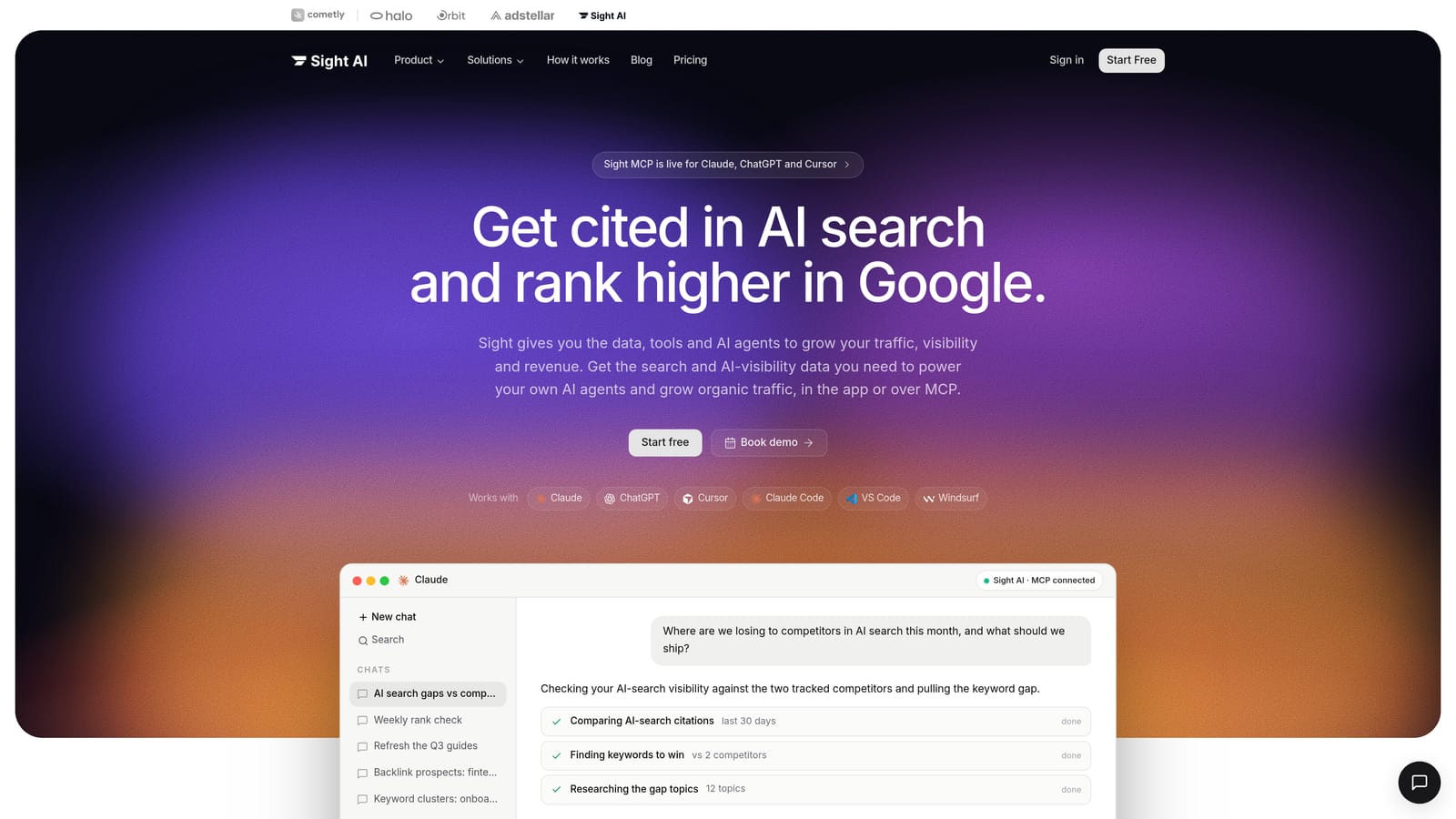
Its distinctive strength is the loop. Most tools on this list stop at reporting. Sight AI connects the measurement of AI-model brand mentions to content creation and indexing in one workflow, so a gap you find in tracking can become a published, submitted article without switching products.
- An AI Visibility Score with sentiment analysis across 6+ AI platforms shows how often and how favorably models mention you.
- Prompt tracking monitors the specific questions buyers ask in ChatGPT, Claude, and Perplexity, so you see where you appear and where competitors do instead.
- An AI Content Writer with 13+ specialized agents drafts SEO/GEO-optimized articles such as listicles, guides, and explainers, and Autopilot Mode reduces hands-on production.
- IndexNow integration and automated sitemap updates notify participating search engines of new and changed pages faster than waiting for a crawl.
- CMS auto-publishing pushes finished articles to your site without copy and paste.
Setup centers on connecting your site and CMS, and a marketer can run it day to day without engineering help. Integrations are focused: IndexNow and CMS publishing rather than a long list of third-party analytics connectors.
The limitation is scope. Sight AI is not a traditional SERP position tracker or a backlink database, so it complements a tool like Search Console, Ahrefs, or AccuRanker rather than replacing it. If your only question is "what position am I in on Google for this keyword," look elsewhere. Pricing is listed on the website; as of November 2026, confirm current plan details there.
Best for: Teams that want to measure and improve how AI models mention their brand.
2. Semrush
Semrush is a broad SEO suite covering position tracking, site audits, keyword research, and competitor analysis. It targets marketing teams that want most of their SEO workflow inside one login.
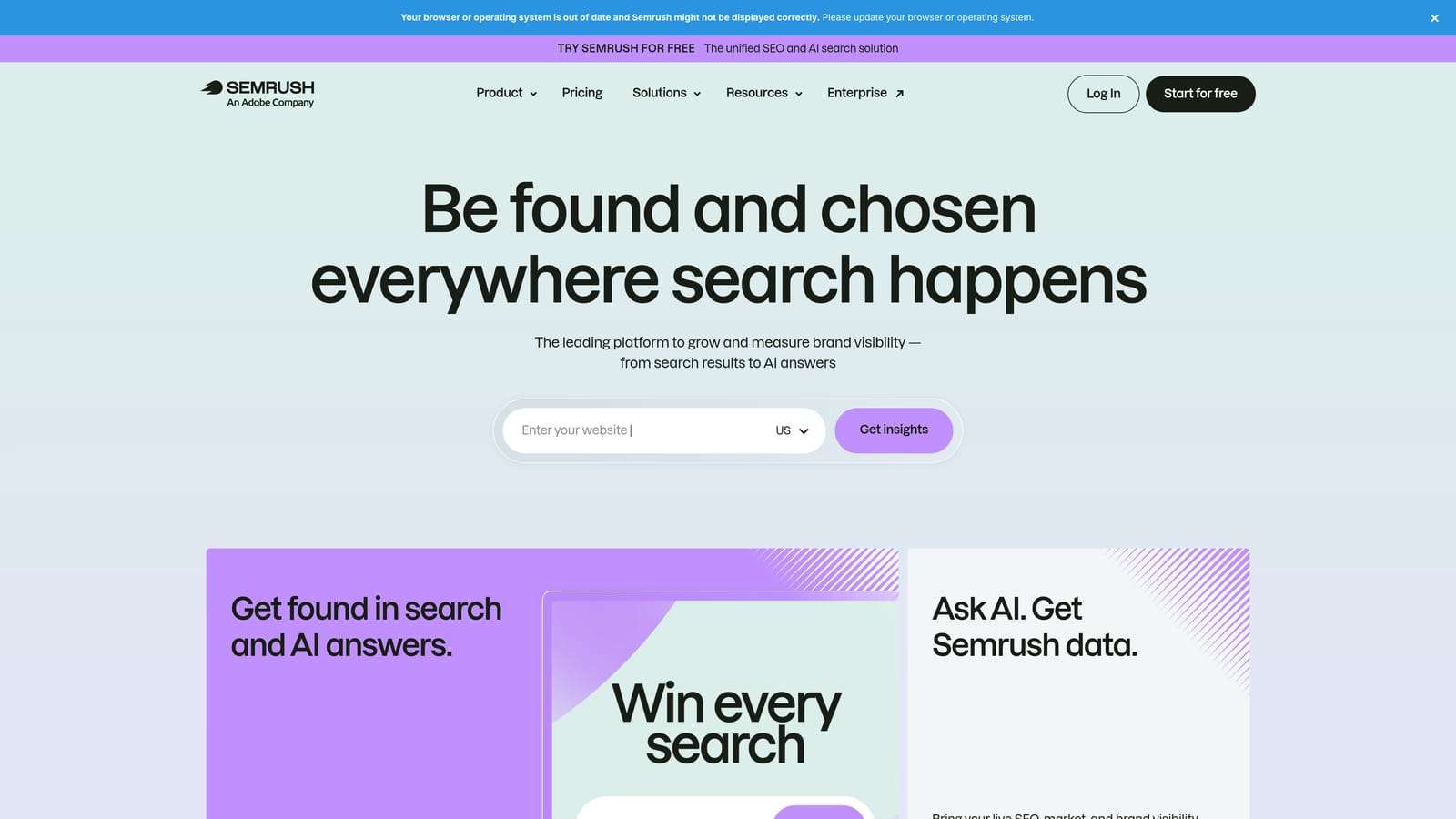
What sets it apart on this list is breadth of competitive research. You can move from a competitor's top keywords to their backlinks to your own audit issues without leaving the product.
- Position Tracking monitors your keywords by location and device, with competitor comparison alongside.
- Site Audit crawls your site and ranks technical problems by severity so you know what to fix first.
- Keyword Magic Tool expands a seed term into large, filterable keyword lists for planning content.
- Backlink Analytics shows who links to you and to rivals.
- Competitor research reveals the organic and paid footprint of other domains.
It connects with Google Search Console, Google Analytics, and Looker Studio, which makes reporting straightforward. Setup is quick for basic tracking, but getting full value takes time because the toolset is large, and an experienced SEO usually owns it.
The trade-off is complexity and cost. Small teams may use a fraction of the features, and add-ons raise the bill beyond the base plan. It is a subscription product, so check the website for current plans; limits on projects, tracked keywords, and reports are what typically move the price.
Best for: Marketers who want one suite for research, tracking, and audits.
3. Ahrefs
Ahrefs is an SEO suite best known for its backlink index, alongside rank tracking and site audits. It is built for SEOs who want to understand why a competitor outranks them, not only that they do.
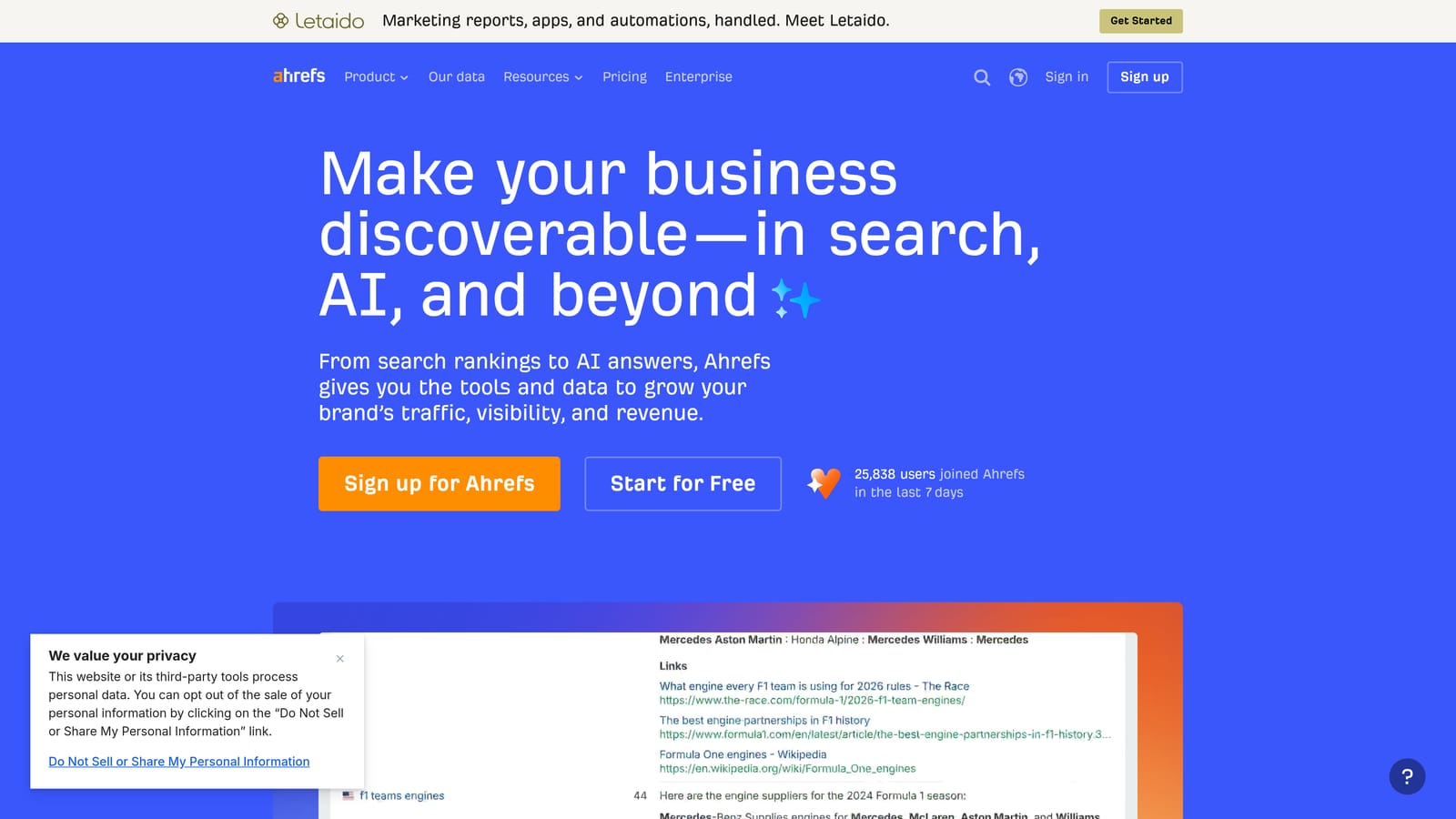
Link-gap analysis is where it separates itself: you can see which domains link to several competitors but not to you, which turns into a concrete outreach list.
- Rank Tracker follows your positions over time against chosen competitors.
- Site Explorer breaks down any domain's organic traffic, top pages, and backlink profile.
- Site Audit finds technical issues that hold pages back.
- Keywords Explorer sizes opportunities and shows ranking difficulty.
- Brand Radar extends monitoring toward brand visibility in AI-driven search; confirm current coverage and scope on the vendor site, since AI features change often.
It integrates with Google Search Console and Google Analytics, and offers an API for custom reporting. Setup is simple, and the interface suits an SEO specialist more than a casual user.
Limitations: usage limits apply on reports and credits depending on plan, and there is no content production, so you will need a separate writing workflow. It is a subscription product; seat counts, usage limits, and the plan tier drive price. See the website for current numbers.
Best for: Link-focused SEOs analyzing why competitors rank.
4. Moz Pro
Moz Pro is an SEO platform with rank tracking, site crawling, keyword research, and link analysis, aimed at small businesses and newcomers who want a gentler learning curve.
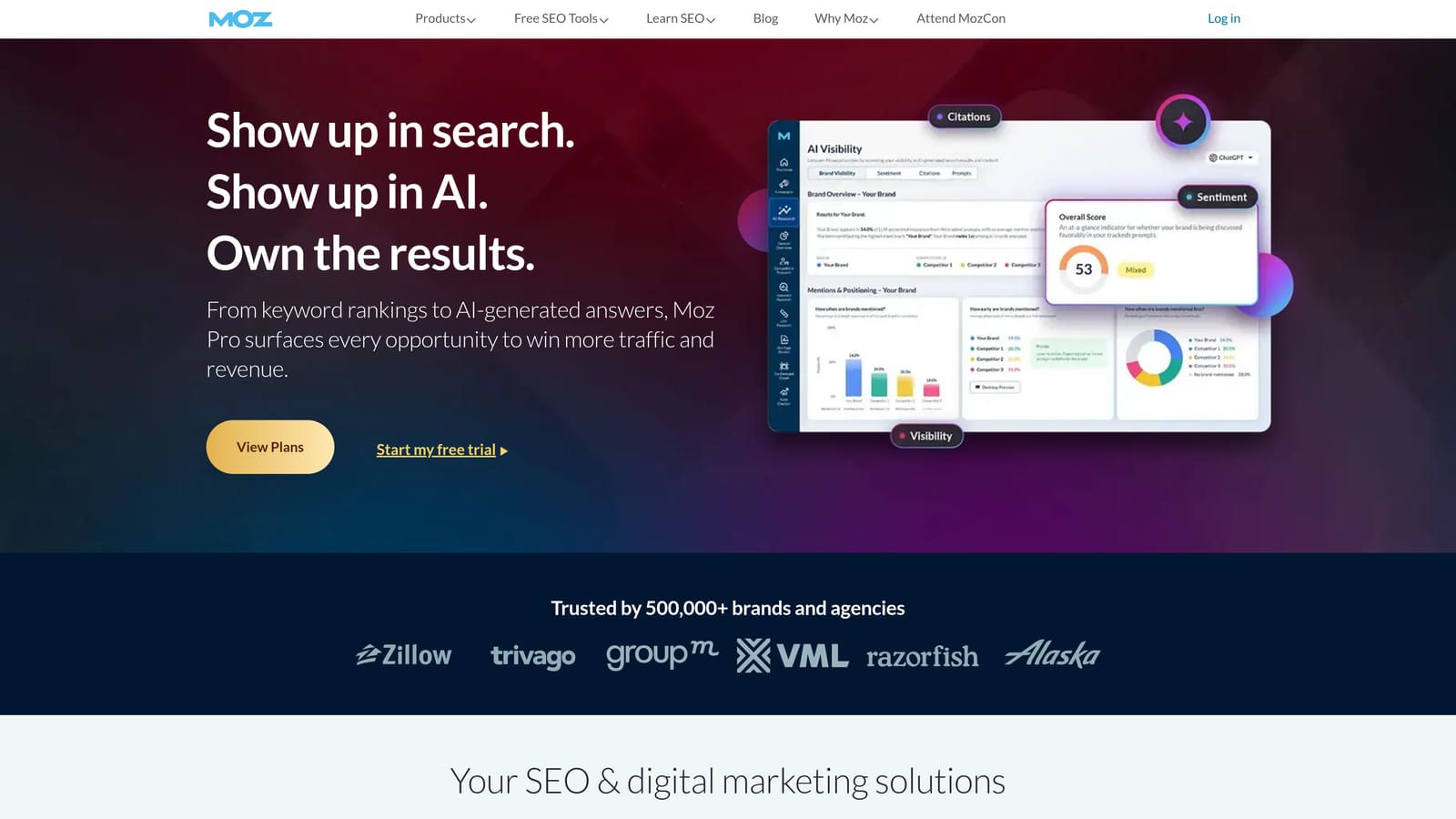
It is also the home of Domain Authority, Moz's proprietary 1 to 100 score predicting how likely a site is to rank. Worth stating plainly: Google does not use Domain Authority, so treat it as a comparison benchmark for link profiles, not a ranking factor you can optimize directly. Its recognition is the reason many agencies and clients still ask for it.
- Rank tracking records keyword positions so you can see movement after changes.
- Site Crawl flags technical issues with plain-language explanations.
- Keyword Explorer suggests terms and estimates difficulty and opportunity.
- Domain Authority and Page Authority give quick benchmarks against competitors.
- Link research surfaces linking domains and anchor text.
It works with Google Analytics and Google Search Console and has an API. Setup takes minutes, and a generalist marketer can run it without specialist training.
The limitation is data size: its index and keyword database are smaller than the largest suites, which can matter for competitive research in crowded niches. It is a subscription product; tier, tracked keywords, and campaign counts shape pricing, so check the website for current plans.
Best for: Small businesses and beginners wanting an approachable interface.
5. SE Ranking
SE Ranking is an affordable SEO platform combining rank tracking, audits, backlink checks, and client-ready reporting. It is designed for agencies and freelancers who report to several clients and need to keep per-client costs down.
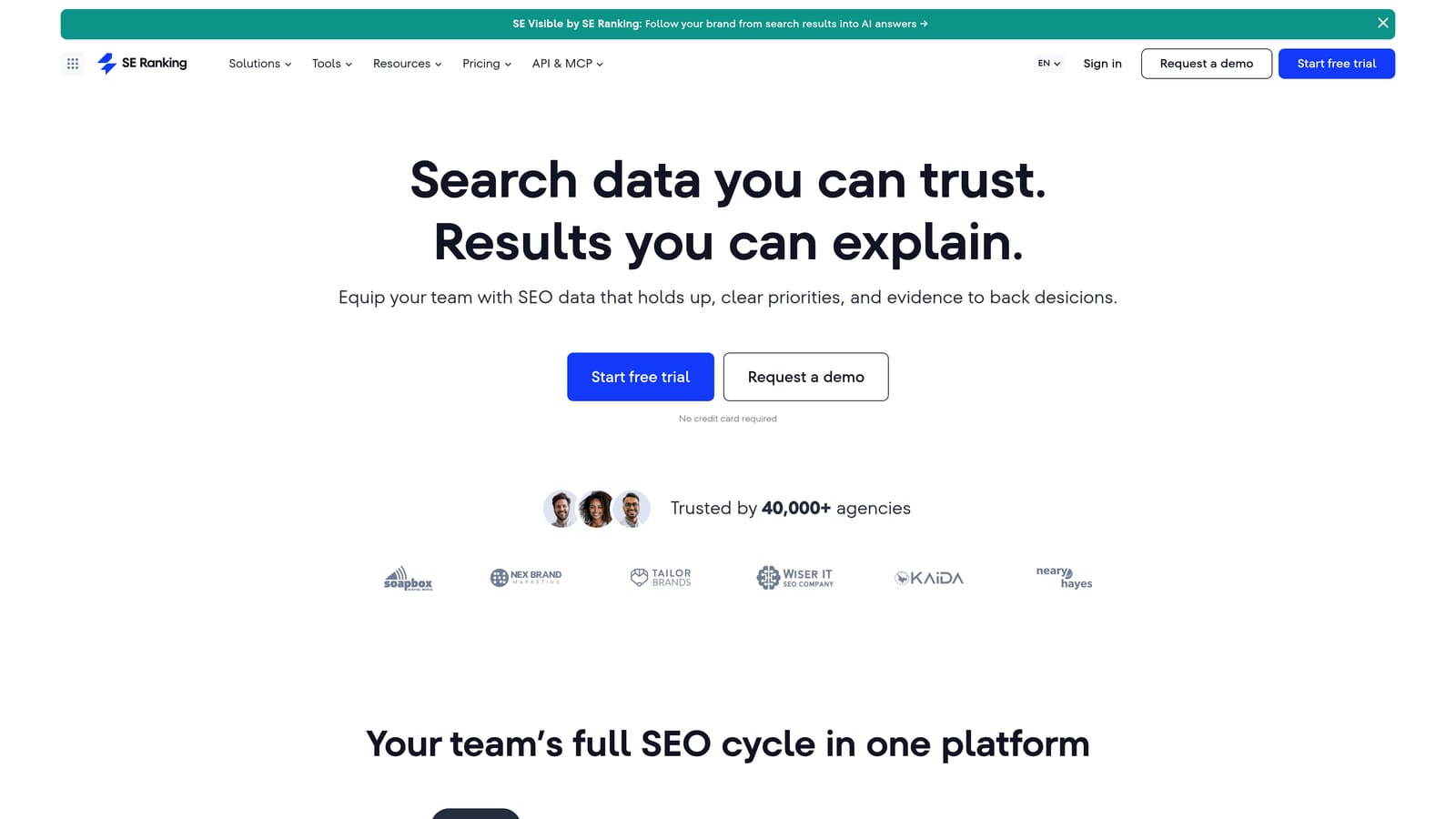
The white-label reporting is its clearest advantage: you can deliver branded reports under your own name without paying enterprise-suite prices.
- A rank tracker with local and mobile tracking shows how positions differ by city and device.
- Website audit highlights technical fixes to prioritize for each client site.
- A backlink checker monitors link profiles without a separate tool.
- White-label reports let you send branded PDFs or dashboards to clients.
- Competitor research shows rivals' keywords and traffic estimates.
It integrates with Google Search Console, Google Analytics, and Looker Studio. Setup per project is quick, and an account manager or SEO can run it.
Limitations: competitive data is less extensive than at the top suites, so deep market research may feel thinner. Pricing is a subscription scaled by keyword volume, so the number of keywords you track, and how often you refresh them, moves the cost. See the website for current plans.
Best for: Agencies and freelancers reporting to multiple clients.
6. AccuRanker
AccuRanker is a dedicated rank tracker built for speed and very large keyword sets. It is made for enterprise SEO teams and big agencies that care about fresh position data more than a bundled toolset.
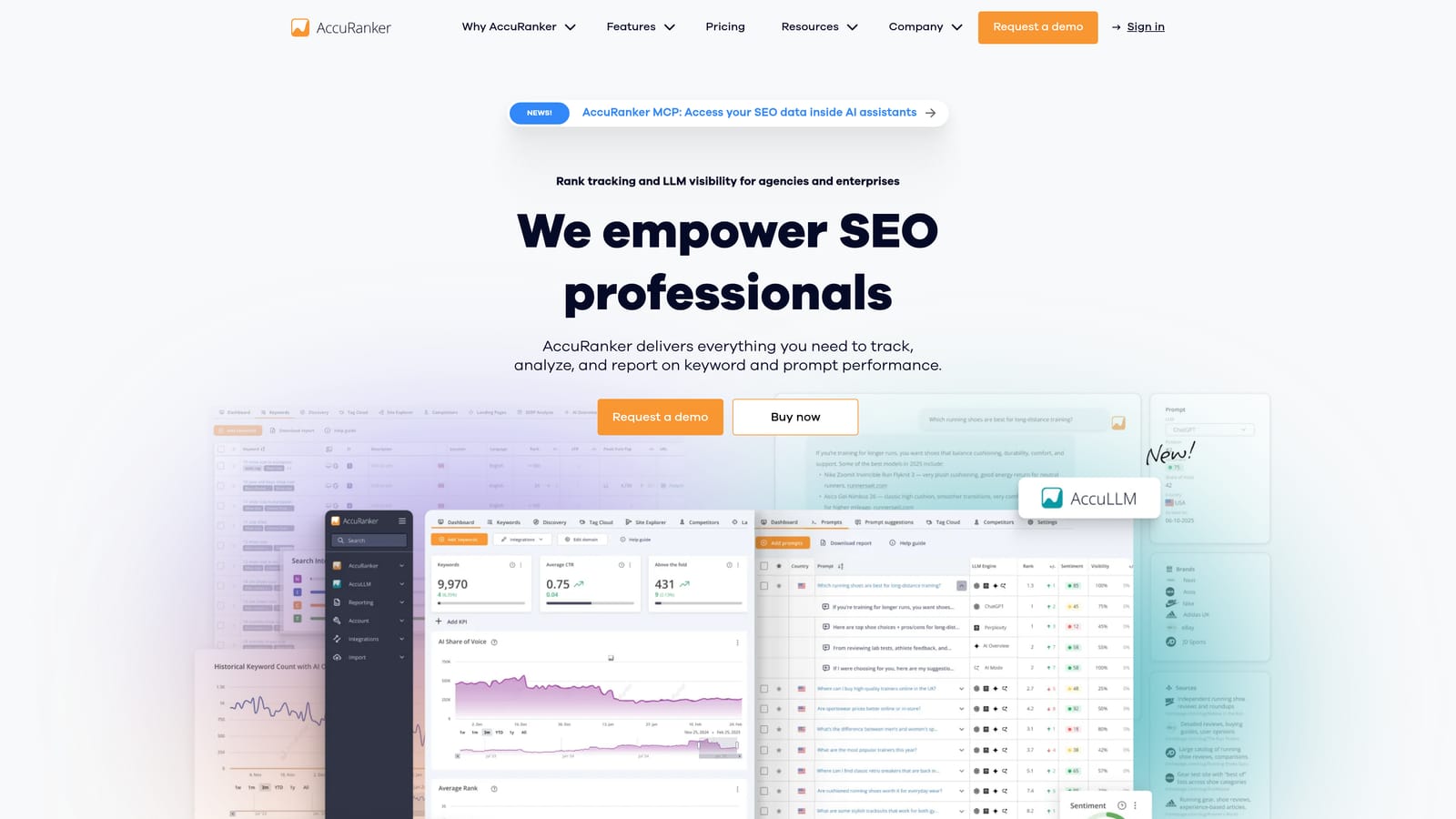
Its edge is on-demand refreshes at volume: when you ship a change or see a volatile day, you can pull current positions rather than wait for the next scheduled update.
- On-demand rank refreshes let you verify the effect of a release immediately.
- SERP feature tracking shows whether you hold snippets, local packs, or other features, not just blue-link position.
- Large keyword volume support handles tens of thousands of terms without slowing down.
- Share-of-voice reporting summarizes visibility across a keyword set against competitors.
- API and dashboards feed rank data into your own reporting stack.
It connects with Looker Studio, Google Search Console, and via API, so it slots into data teams' existing workflows. Setup is light, since you import keywords and go, and an SEO analyst usually owns it.
The limitation is focus: it only tracks. There is no audit, content, or backlink tooling, so you will pair it with other products. Pricing is a subscription by keyword volume, so the size of your tracked set is the main driver. See the website for current tiers.
Best for: Enterprise teams tracking thousands of keywords.
7. Google Search Console
Google Search Console is Google's free tool showing how verified sites perform in search and how Google indexes them. Every site owner should have it set up, whatever else they buy.
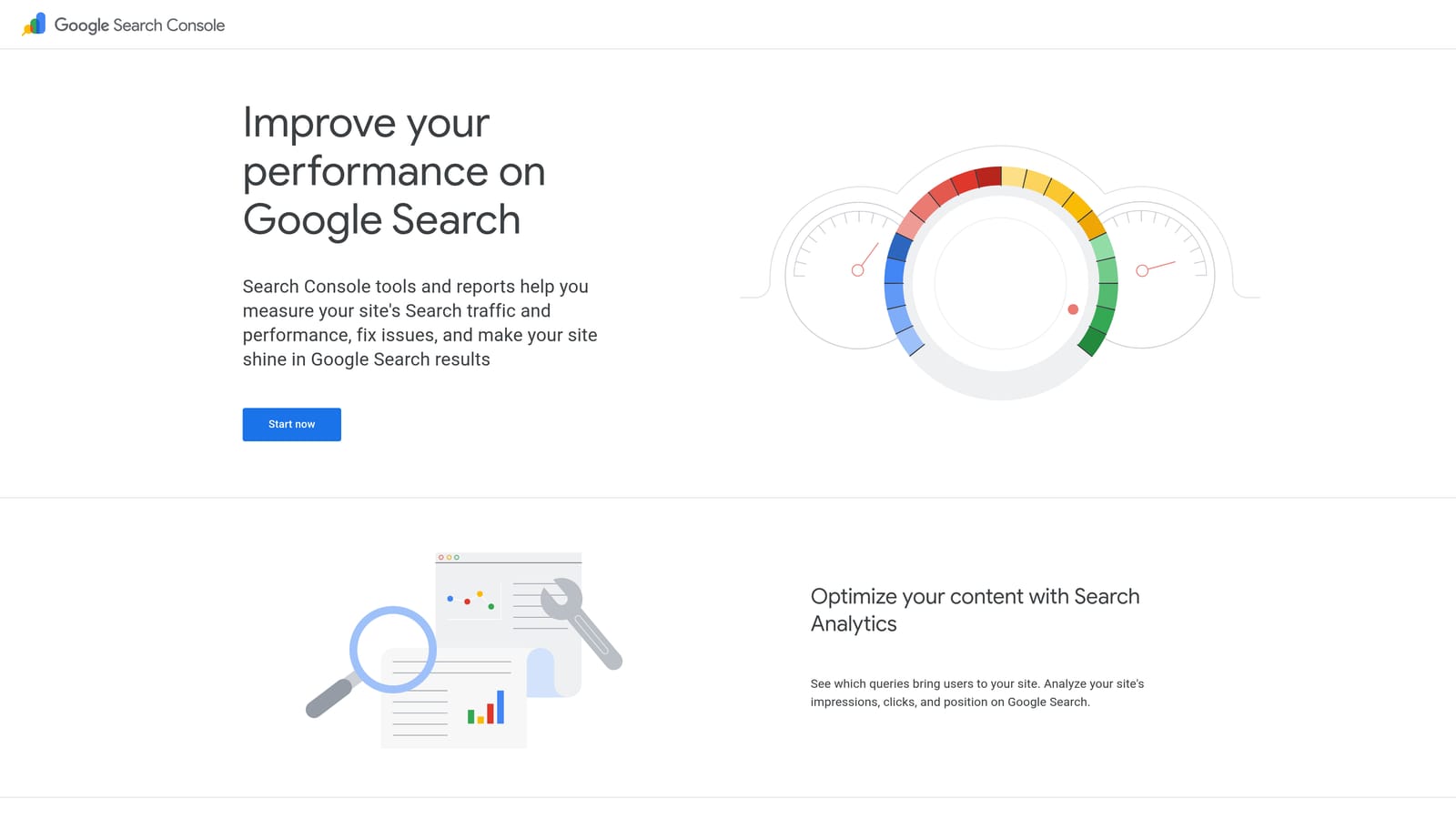
Its advantage is provenance: the query, click, and impression data comes first-party from Google, not from sampled or estimated scraping.
- The Performance report shows clicks, impressions, click-through rate, and average position by query and page.
- URL Inspection tells you whether a page is indexed and how Google rendered it.
- Indexing reports list pages that are excluded and the reasons why.
- Core Web Vitals reports flag slow or unstable pages.
- Sitemap submission tells Google where your pages live.
It links with Google Analytics, Looker Studio, and an API, and many third-party tools on this list pull from it. Setup means verifying domain ownership, usually via DNS, and takes minutes.
Limitations deserve care. Average position is an average across every impression, locations, and devices, so it is not a fixed rank like "position 4." There is no competitor data, history is limited, and it says nothing about AI answers. It is free, with nothing that moves the price.
Best for: Every site owner as the baseline source of truth.
8. Screaming Frog SEO Spider
Screaming Frog SEO Spider is a desktop crawler for technical SEO audits. It does not track rankings; it finds the on-site problems that quietly stop pages from ranking.
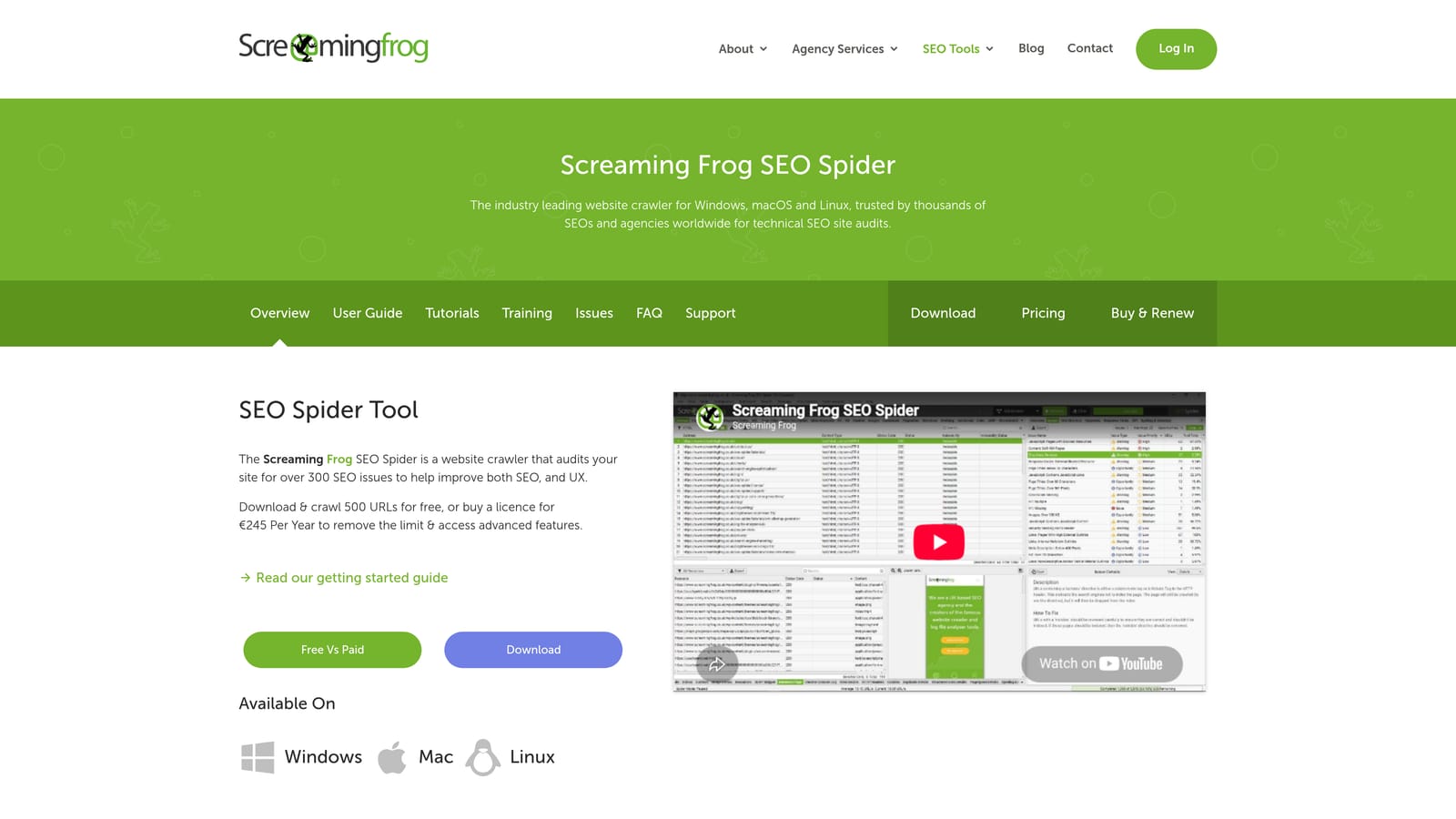
Its distinction is depth and control. You configure exactly what to crawl and extract, and you see raw results for every URL rather than a summarized score.
- Broken link and redirect detection finds dead ends and redirect chains that waste crawl budget.
- Duplicate content and metadata checks catch missing, duplicate, or oversized titles and descriptions.
- JavaScript rendering lets you audit sites that build content in the browser.
- Crawl comparison shows what changed between two crawls, which is useful after migrations or releases.
- Sitemap generation creates XML sitemaps from what the crawler found.
It can pull data from Google Search Console, Google Analytics, and PageSpeed Insights into the crawl. Install and first crawl are quick, but mastering configuration takes time, and a technical SEO typically runs it.
Limitations: no rank tracking and a steep learning curve for non-specialists. It runs on your machine, so very large sites need memory and patience. The free version crawls up to 500 URLs; beyond that you need an annual paid license, with current price on the website.
Best for: Technical SEOs fixing crawl and indexability issues.
9. Surfer SEO
Surfer SEO is an on-page optimization tool that scores your content against the pages already ranking for a target keyword. It is built for content teams and writers who want data-backed guidance while drafting.
The standout is live scoring: as you write, the editor updates its recommendations for terms, structure, and length based on current search results.
- The Content Editor guides drafts toward the terms and topics that top-ranking pages cover.
- The SERP analyzer shows what ranking pages have in common for a keyword.
- Keyword research groups related terms into topics for planning.
- Content audit reviews existing pages and suggests updates.
- Internal linking suggestions point to relevant pages on your own site.
It integrates with Google Docs, WordPress, and Jasper, so writers can stay in their usual tools. Setup is minimal and a content manager or writer can run it.
The limitation is scope: it is not a full rank tracker or site auditor, and a high content score does not guarantee a ranking. It is a subscription product; plan tier and usage, such as content editor articles or audits, shape price. Check the website for current plans.
Best for: Content teams optimizing pages for target keywords.
Matching the Right Tool to Your Ranking Problem
No single product covers every job, so pair tools by need. A small stack often beats one expensive suite.
- Budget-conscious technical teams: Google Search Console plus Screaming Frog gives real query data and deep crawl diagnostics for little or nothing.
- Full-suite research: Semrush or Ahrefs. Choose Semrush for breadth, Ahrefs if backlink analysis drives your strategy.
- Rank tracking at scale or for agencies: AccuRanker for very large keyword sets, SE Ranking for multi-client reporting.
- On-page work: Surfer SEO for scoring drafts against live results.
- AI-search visibility, content creation, and indexing: Sight AI, alongside a classic tracker, since it does not measure Google positions.
Stop guessing how AI models like ChatGPT and Claude talk about your brand. Get visibility into every mention, track content opportunities, and automate your path to organic traffic growth. Start tracking your AI visibility today and see exactly where your brand appears across top AI platforms.