If you need to know where your site ranks and what to do about it, you now have two places to check: classic Google results and the answers generated by AI models. This list is for marketers, founders, and agencies who need both views. The tools were chosen on rank-tracking accuracy, depth of supporting SEO data, coverage of AI search visibility, pricing transparency, and fit for different team sizes. Pricing and plan details change often, so confirm current figures on each vendor's site.
Quick Comparison of the Site Ranking Tools
- Sight AI: teams growing AI-search mentions and publishing optimized content; pricing on the website; turns AI visibility gaps into published, indexed articles.
- Semrush: marketing teams wanting one platform for research, tracking, and audits; subscription tiers, see website; the largest all-in-one toolkit with SERP feature and visibility share tracking.
- Ahrefs: SEOs doing link-driven competitive analysis; subscription tiers, see website; backlink data that helps explain ranking changes.
- SE Ranking: small agencies and SMBs on a budget; subscription tiers, see website; value-priced white-label reporting.
- AccuRanker: enterprises and agencies tracking thousands of keywords; keyword-volume pricing, see website; fast on-demand refreshes at scale.
- Google Search Console: every site owner as a free baseline; free; Google's own first-party query data.
- Moz Pro: beginners and small teams learning SEO; subscription tiers, see website; Domain Authority plus guided recommendations.
- Serpstat: budget-conscious multi-region sites; subscription tiers, see website; built-in keyword clustering at a low price.
- Advanced Web Ranking: agencies delivering branded ranking reports; keyword-count tiers, see website; highly customizable white-label client reporting.
1. Sight AI
Sight AI is our own product, so weigh this entry with that in mind. It is built for teams who care about how AI models such as ChatGPT, Claude, and Perplexity describe their brand, and who want to act on what they find. Where the other tools on this list mostly report Google positions, Sight AI measures whether you are mentioned in AI answers at all, then helps you publish the content that closes the gap.
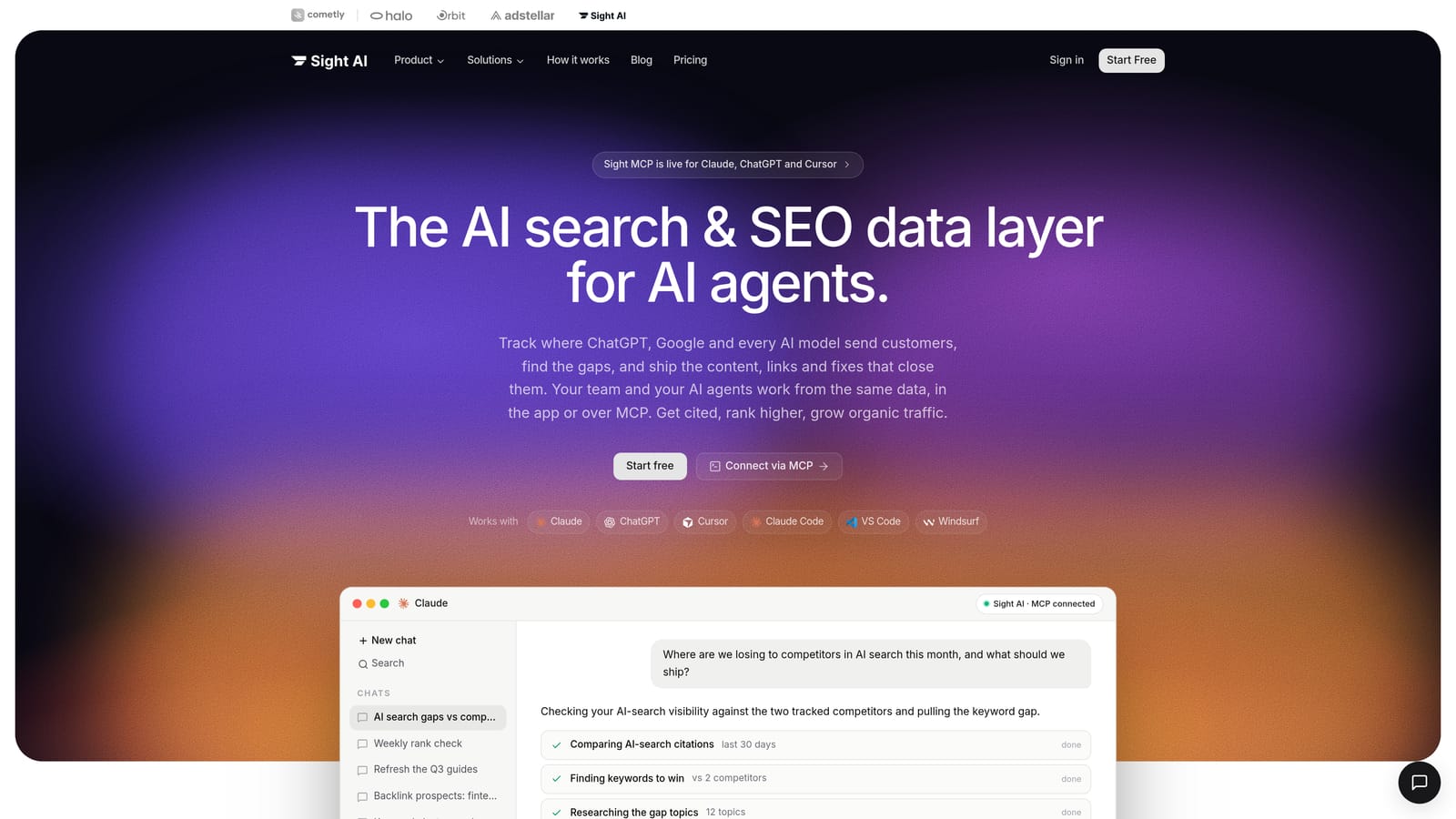
That loop is its distinguishing strength: track mentions, find the prompts where you are absent, generate an article aimed at them, publish it, and get it indexed, all inside one platform. The practical goal is GEO (generative engine optimization), meaning content structured so AI systems are more likely to cite it.
- AI Visibility Score with sentiment analysis across 6+ AI platforms shows how often you appear and whether the tone is favorable.
- Prompt tracking lets you monitor the specific questions your buyers ask and see which brands the models recommend.
- AI Content Writer with 13+ agents drafts SEO/GEO-optimized listicles, guides, and explainers, and Autopilot Mode reduces hands-on production time.
- IndexNow indexing and automated sitemap updates notify participating search engines of new pages instead of waiting for a crawl.
- CMS auto-publishing sends finished articles to your site without copy-and-paste.
Setup is light: connect your site and CMS, define the brand and prompts you want tracked, and a marketer can run it day to day without developer help. Integrations centre on IndexNow and CMS publishing rather than a wide third-party connector list.
The limitation is plain: Sight AI is not a traditional keyword position tracker for Google SERPs. If you need daily rank history for thousands of keywords, pair it with one of the dedicated trackers below. Pricing is listed on the website; check there for current plans.
Best for: Teams that want to grow AI-search mentions and publish optimized content.
2. Semrush
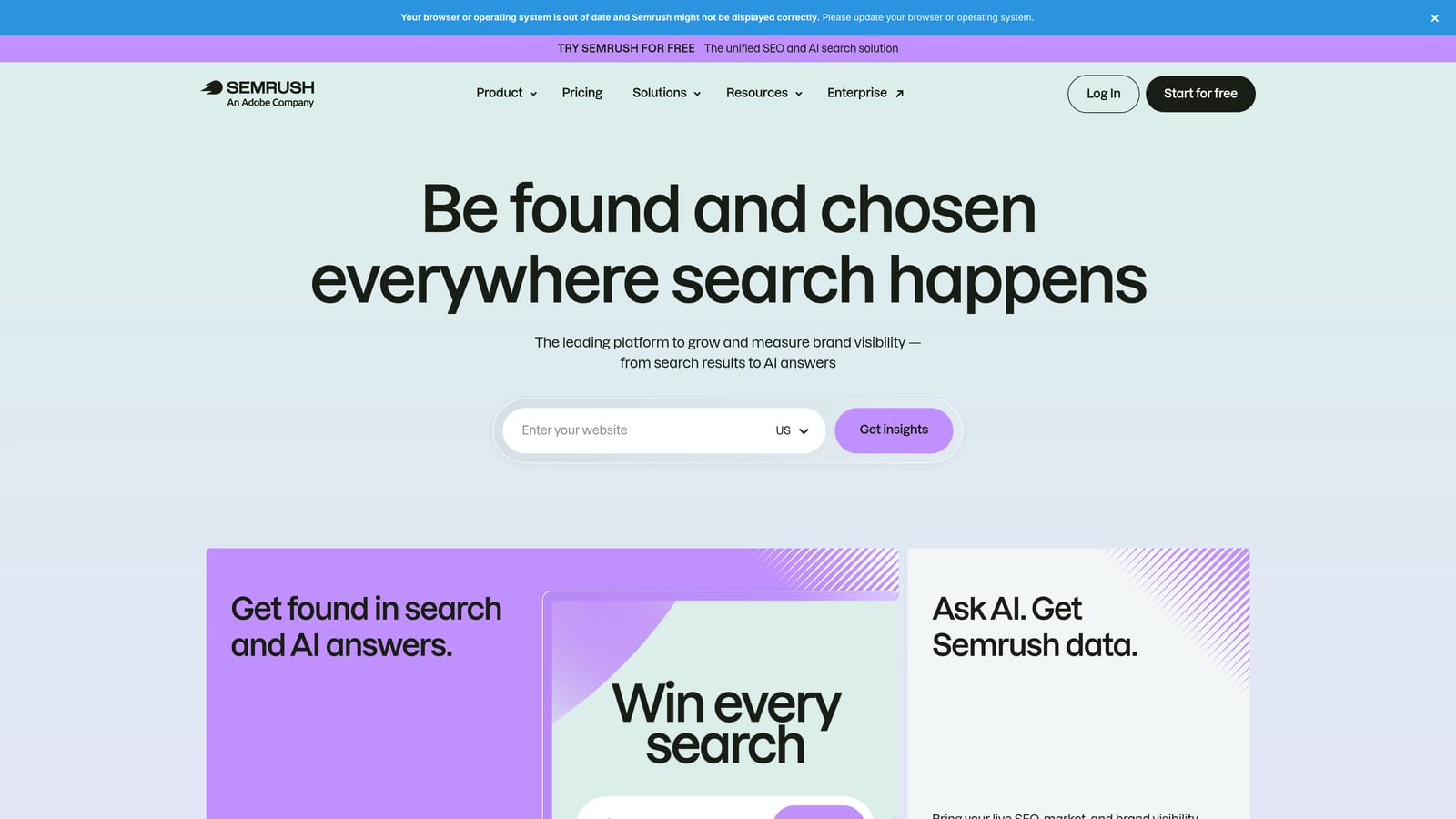
Semrush is the broadest all-in-one SEO suite here, aimed at marketing teams that would rather run research, tracking, and audits in one login than stitch together several tools. Its Position Tracking monitors daily rankings for a project, and it reports SERP features and a visibility share metric against named competitors, which is useful for judging whether you are gaining ground or just moving individual keywords.
- Position Tracking follows your keywords by location and device, so you see rankings as a specific audience would.
- Keyword Magic Tool generates and groups large keyword lists for planning what to rank for next.
- Site Audit crawls your site and flags technical problems that can hold rankings back.
- Backlink analytics shows who links to you and to competitors.
- Competitor research reveals the keywords and pages driving rivals' traffic.
It connects to Google Search Console, Google Analytics, and Looker Studio, so setup is mostly authorizing accounts and building a tracking project. An SEO or content marketer typically owns it, though the breadth means onboarding takes real time.
The drawbacks are cost and density. Add-ons push the bill above the base plan, and the interface can overwhelm a newcomer. Semrush has also added AI-search visibility features; as of 2026, confirm the current scope and whether they sit in the core plan or an add-on. Pricing is subscription-tiered, so check the website for current rates and limits on projects and tracked keywords.
Best for: Marketing teams wanting one platform for research, tracking, and audits.
3. Ahrefs
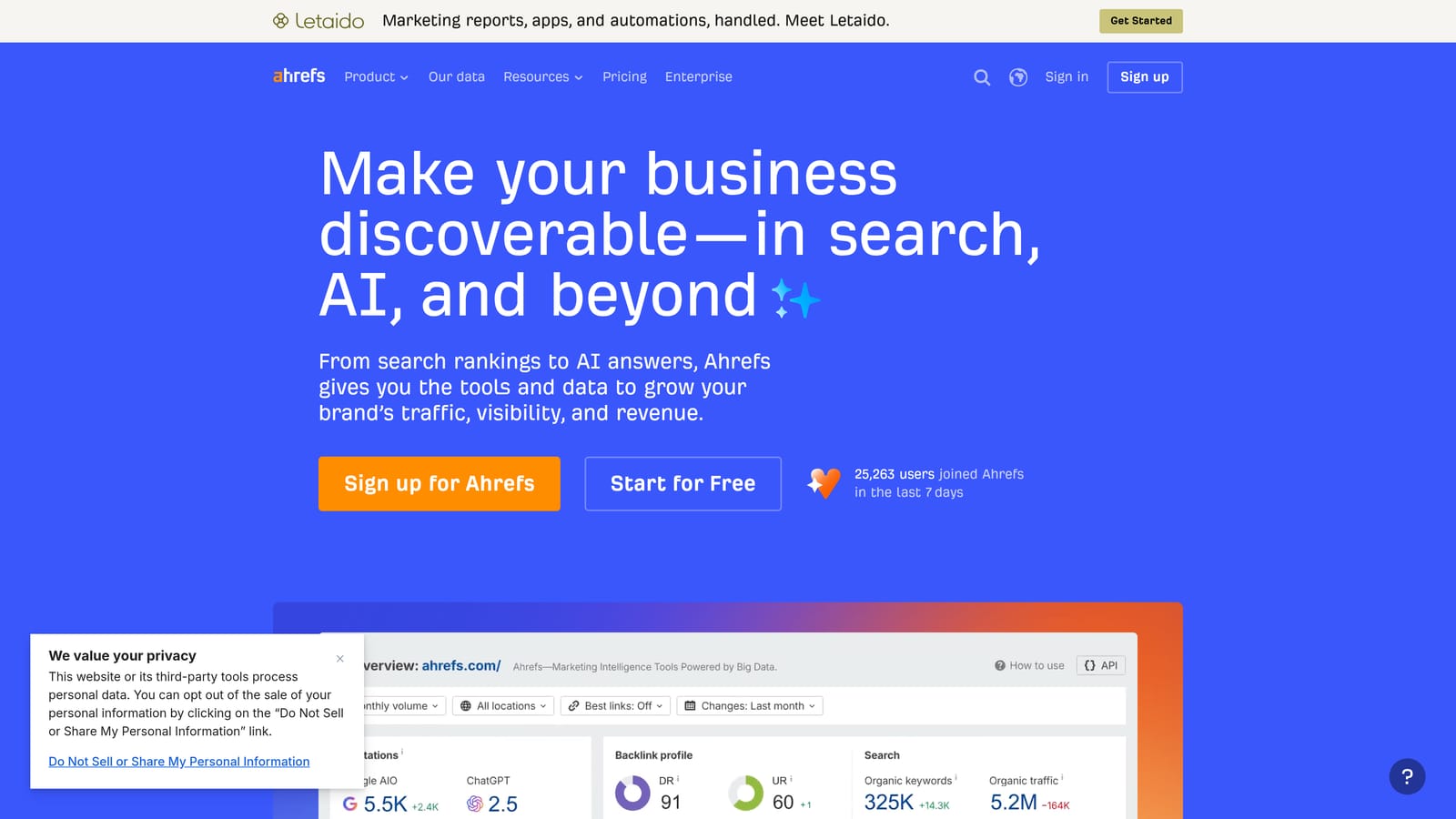
Ahrefs is best known for its backlink index, and that is what sets it apart for ranking work. When a page jumps or drops, Site Explorer and its link data often show whether a competitor earned new links or you lost some, which is a faster route to a cause than rank data alone.
What you get
- Rank Tracker monitors positions over time with location and device options, and compares you with competitors.
- SERP history shows who held the results for a keyword in the past, helping you understand a ranking change.
- Site Explorer breaks down any domain's backlinks and organic keywords.
- Keywords Explorer estimates difficulty and surfaces related queries.
- Site Audit finds technical issues across your pages.
Setup, limits, and cost
Integrations include Google Search Console, Google Analytics, and an API. Setup is quick, and the tool is usually run by an SEO specialist who is comfortable reading link profiles. Beginners may find the data richer than they need.
The main constraint is usage limits on lower tiers: caps on tracked keywords, projects, and report rows can bite as you scale. Ahrefs has also expanded into AI-search monitoring; as of 2026, verify what is included and at which plan. Pricing is subscription-tiered and moves with the plan level and add-ons, so check the website.
Best for: SEOs focused on link-driven competitive analysis.
4. SE Ranking
SE Ranking is an affordable all-round SEO platform with solid rank tracking and strong agency features. Its pitch is value: much of what the largest suites do, with reporting tools that let a small agency present polished client deliverables without a large software bill.
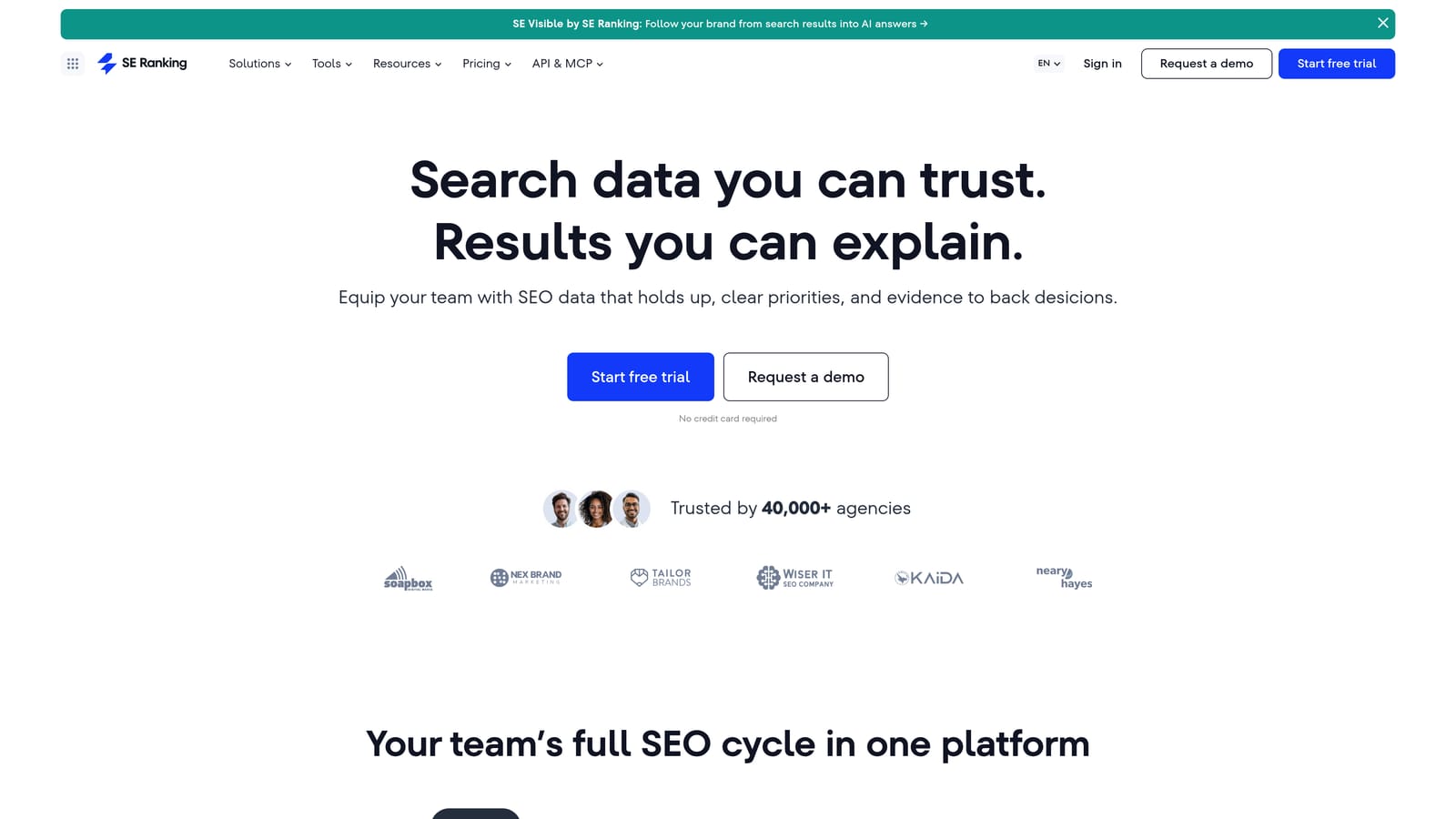
The white-label reporting is the differentiator. You can brand reports with your own identity and send them to clients, which for a small agency replaces hours of manual spreadsheet work.
- Daily rank tracking keeps position data fresh for the keywords you care about.
- Local and mobile tracking shows how rankings differ by place and device, which matters for service businesses.
- Competitor monitoring compares your positions with rivals' on shared keywords.
- Website audit highlights on-page and technical fixes.
- White-label reports let agencies deliver branded updates to clients.
It integrates with Google Search Console, Google Analytics, and Looker Studio. Setup is straightforward and an in-house marketer or agency account manager can run it. The interface is generally lighter than the biggest suites.
The trade-off is a smaller data index than the largest platforms, so keyword and backlink databases may be less complete for competitive research. Pricing is subscription-tiered and scales with the number of tracked keywords and the features you need; see the website for current plans. As of 2026, check how its AI-visibility tracking is packaged if that matters to you.
Best for: Small agencies and SMBs on a budget.
5. AccuRanker
AccuRanker does one job: tracking rankings quickly across very large keyword sets. It is not a research suite, and that focus is the point. Teams managing thousands of keywords across many domains or markets use it as a dedicated rank data source.
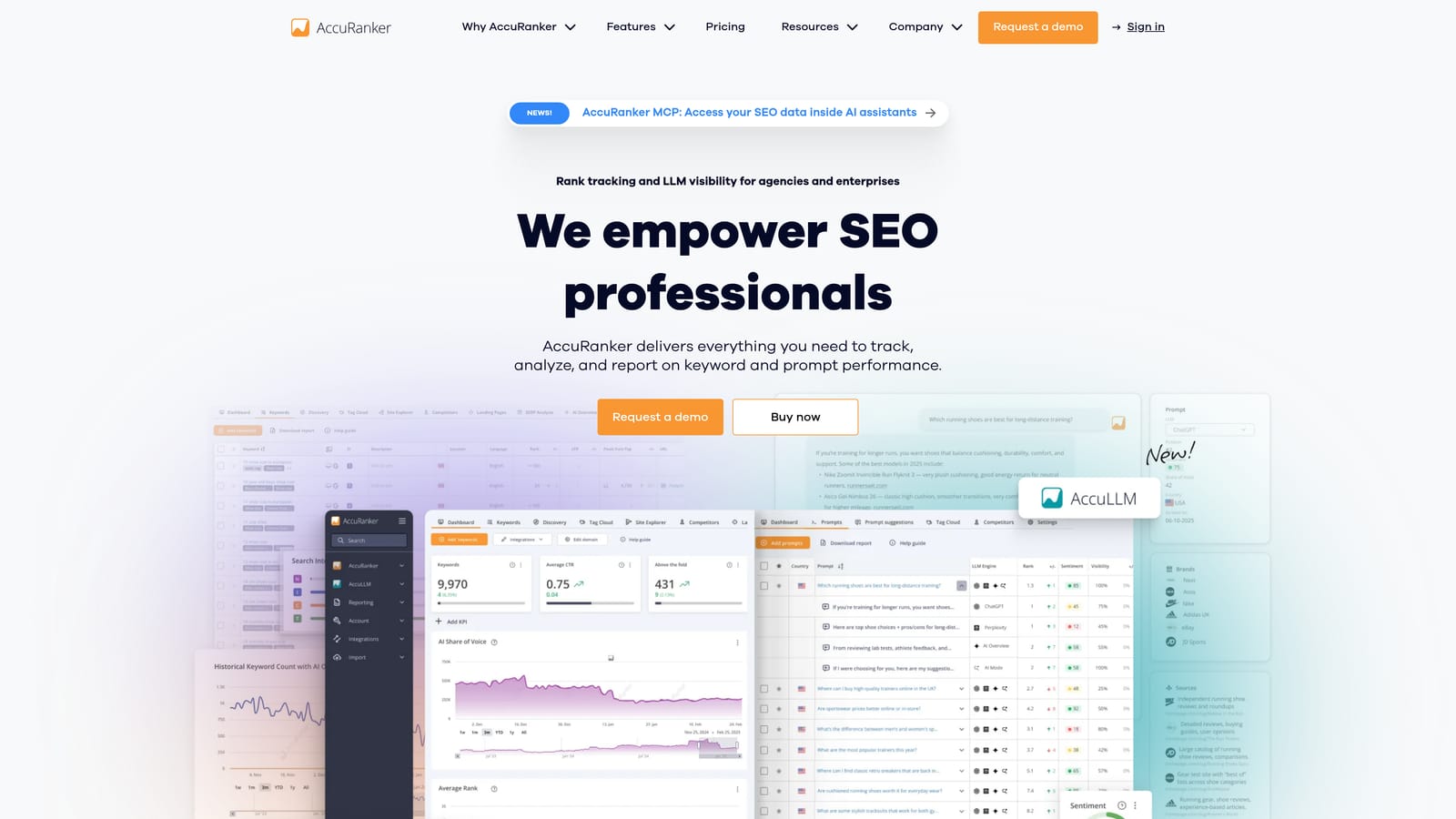
Its edge is on-demand refreshes. Rather than waiting for the next scheduled update after a site release or algorithm shift, you can pull fresh positions when you need them, even at scale.
- On-demand rank refreshes let you check the effect of a change right away.
- Keyword tagging and segmentation organizes huge lists by product line, market, or funnel stage.
- Share of voice summarizes visibility across a keyword group instead of one term at a time.
- API access pipes ranking data into your own dashboards and warehouses.
- Custom reporting produces views tailored to stakeholders.
It integrates with Google Search Console, Google Analytics, Looker Studio, and an API. Setup involves importing keywords and defining tags, and it is typically run by an SEO analyst or data-minded agency team.
The limitation is scope: tracking only, with no keyword research, audits, or backlink tools, so most teams use it alongside another platform. Pricing is based on keyword volume, which means cost grows as your tracked list grows; see the website for current tiers.
Best for: Enterprise teams and agencies tracking thousands of keywords.
6. Google Search Console
Google Search Console is Google's free tool and the only place to get Google's own first-party data on how your site performs. Every other tool on this list estimates or samples rankings; Search Console reports what actually happened in search for your property.
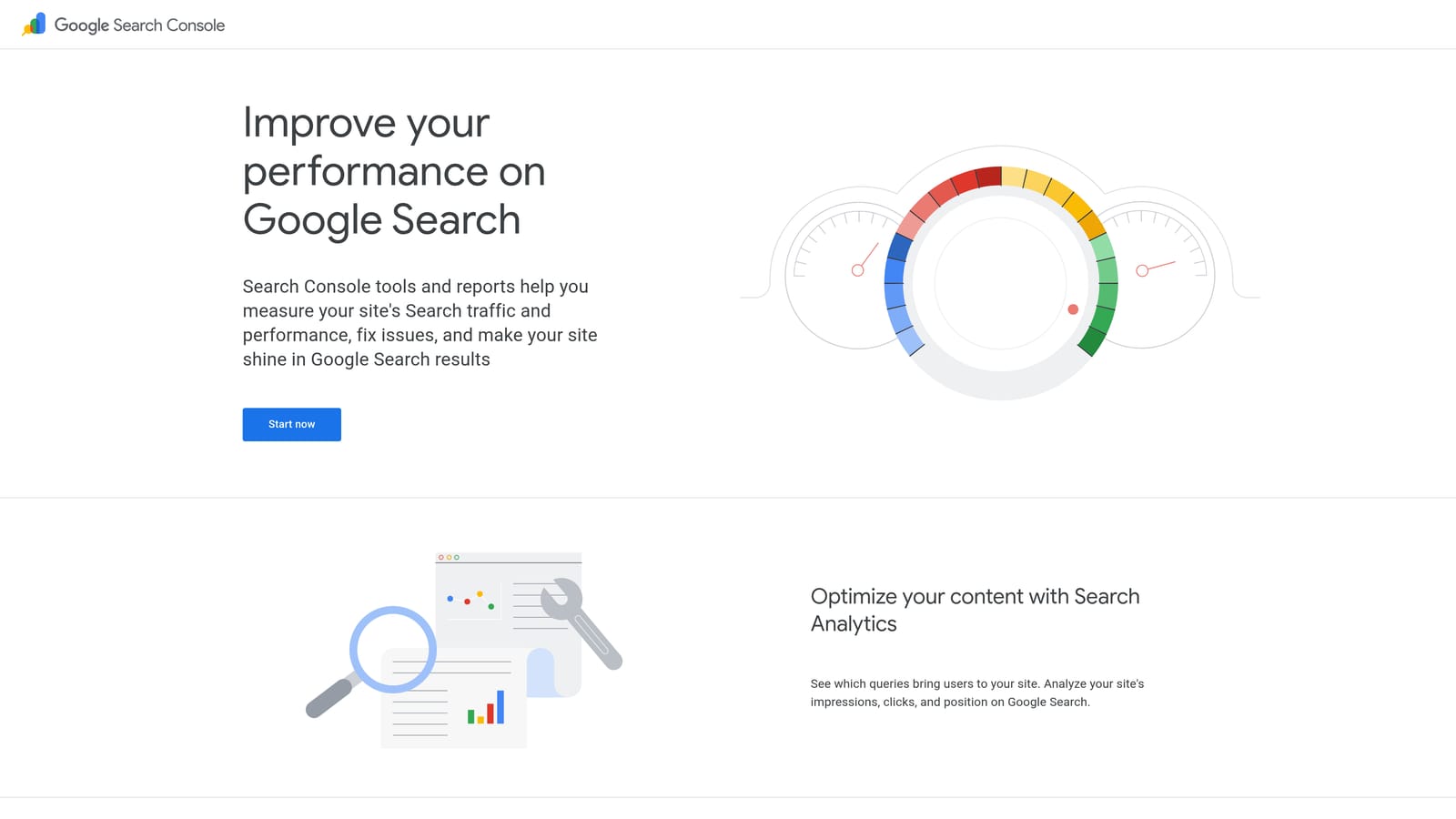
One caution: the average position figure is an average across all impressions, queries, locations, and devices. It is not a single rank, so a page can show an average of 8 while sitting first for some searchers and far lower for others.
- Performance report shows clicks, impressions, click-through rate, and average position by query, page, country, and device.
- URL Inspection tells you whether a page is indexed and how Google sees it.
- Indexing reports list pages with coverage problems so you can fix them.
- Core Web Vitals flags slow or unstable pages.
- Sitemaps lets you submit and monitor your sitemap files.
Setup means verifying ownership of your domain, usually through a DNS record or a file upload, and data starts accumulating from then on. It links with Google Analytics and Looker Studio. Marketers and developers both use it.
Its limits are real: no competitor data, no keyword research beyond queries you already appear for, and a 16-month data window, so you should export or store history if you want longer trends. It is free, with no pricing tiers.
Best for: Every site owner as a free baseline.
7. Moz Pro
Moz Pro is an SEO suite that suits people still learning the discipline. Beyond rank tracking and keyword research, it gives guided recommendations that tell you what to fix and why, which reduces the guesswork for a small team without a dedicated SEO.
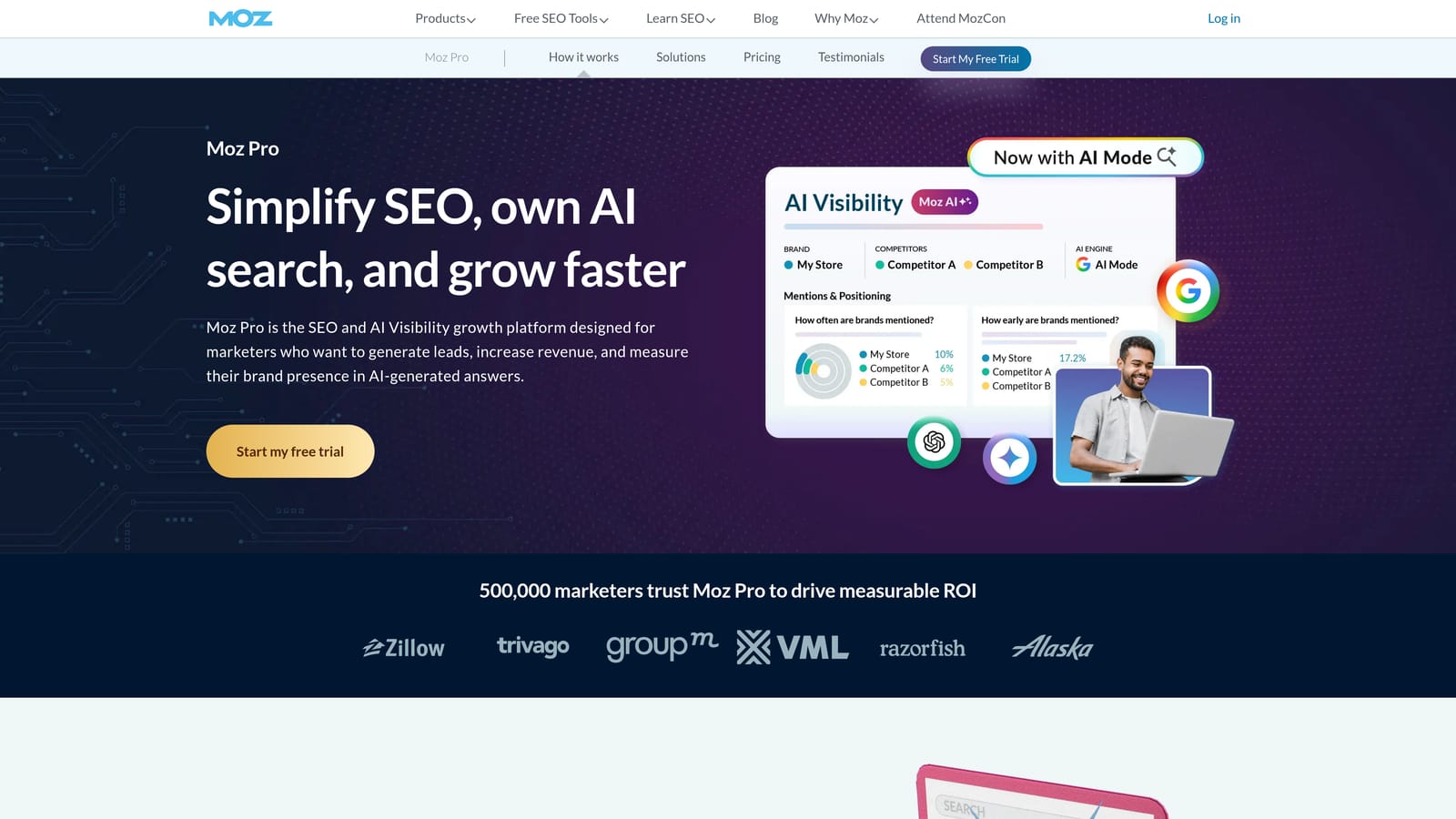
Its best-known feature is Domain Authority, a third-party score that predicts how likely a site is to rank compared with others. Treat it as a comparison aid only. It is a Moz metric, not a Google ranking factor, and Google does not use it.
- Rank tracking follows your keyword positions over time so you can see whether changes are working.
- Keyword Explorer suggests terms and gives difficulty and priority guidance.
- Site Crawl finds technical issues and explains how to address them.
- Domain Authority gives a quick benchmark against competitors.
- Link research helps you evaluate your link profile and prospects.
It integrates with Google Analytics and Google Search Console, and setup is simple enough for a generalist marketer to handle alone. Those wanting deep customization may feel boxed in.
The limitation is depth: it is less advanced than the larger suites, and power users often outgrow it. Pricing is subscription-tiered and varies with plan level and tracking limits; check the website for current rates.
Best for: Beginners and small teams learning SEO.
8. Serpstat
Serpstat is a lower-cost all-in-one platform that covers rank tracking, audits, backlinks, and competitor research without the price of the big names. It appeals to teams that need breadth on a tight budget, particularly those watching several countries.
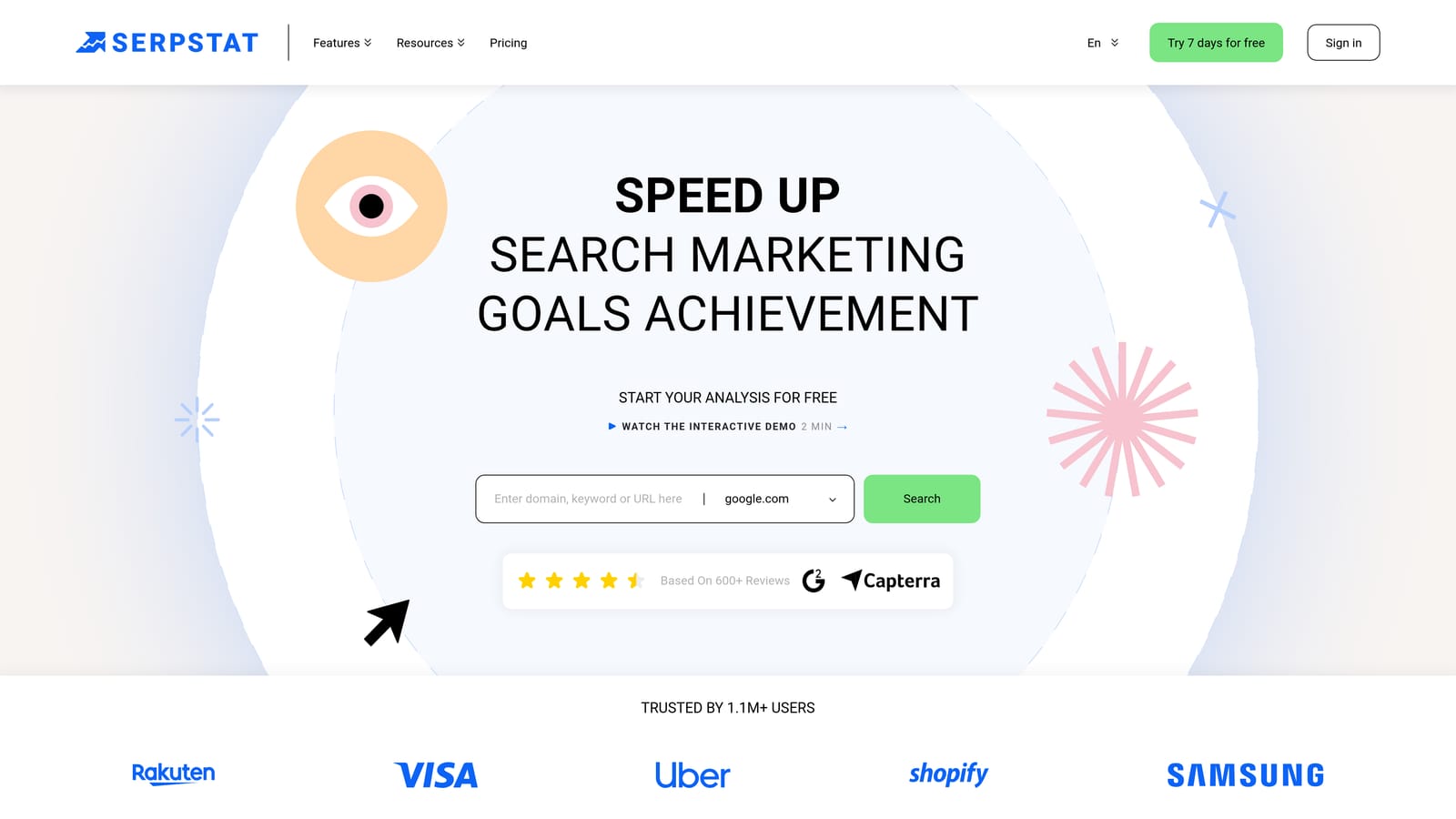
What it does distinctively is include keyword clustering at a budget price. Grouping thousands of keywords by shared search intent helps you decide which pages to build and avoid creating near-duplicate content for similar queries.
- Rank tracking monitors positions across regions and search engines for multi-market sites.
- Keyword clustering groups related queries so each page targets a coherent set of terms.
- Site audit surfaces technical problems for you to prioritize.
- Backlink analysis reveals your link profile and competitors' links.
- Competitor research shows which keywords rivals rank for that you do not.
It integrates with Google Analytics, Google Search Console, and an API. Setup is quick, and a marketer or small agency can run it. The interface is functional rather than polished.
The limitation is that data depth trails the major platforms, so for high-stakes competitive research you may want a second source to cross-check. Pricing is subscription-tiered and depends on plan and usage limits such as tracked keywords and reports; see the website for current plans.
Best for: Budget-conscious multi-region sites.
9. Advanced Web Ranking
Advanced Web Ranking (AWR) is a reporting-focused rank tracker built for agencies. Where other tools treat reports as an add-on, AWR makes them central: you design dashboards and client-facing reports around the metrics each account cares about.
Its distinguishing feature is how customizable the white-label output is. An agency can present rankings, competitor movement, and SERP features under its own brand, in a layout tailored to each client.
- Rank tracking records positions across locations, devices, and search engines.
- Custom dashboards let you arrange the exact views a client or executive wants.
- White-label reports carry your branding and can be scheduled for delivery.
- SERP feature tracking shows when snippets, local packs, and similar elements appear for your terms.
- Competitor tracking benchmarks you against named rivals on the same keywords.
It integrates with Google Search Console, Google Analytics, Looker Studio, and an API. Setup takes some time because of the dashboard design, and an account manager or SEO lead usually runs it.
The limitation is that keyword research and link data are limited, so you will need another tool for discovery and backlink work. Pricing uses keyword-count tiers, so cost rises with how many keywords you track; see the website for current tiers. As of 2026, check what AI-search tracking it currently offers.
Best for: Agencies delivering branded ranking reports.
Matching the Right Tool to Your Ranking Problem
"Site ranking" now covers two jobs, and few tools do both well. Start with the free baseline: Google Search Console should be set up for every site regardless of what else you buy. Then choose by situation.
- AI-search visibility plus content and indexing: Sight AI, with the caveat that it does not replace a Google position tracker.
- All-in-one SEO: Semrush for breadth, or Ahrefs if backlink analysis drives your decisions.
- Tight budgets: SE Ranking or Serpstat.
- Rank-tracking specialists: AccuRanker for scale and speed, Advanced Web Ranking for client reporting.
A common pairing is Search Console plus one classic tracker for Google positions, plus Sight AI for the AI answers those trackers do not fully cover. Before committing, confirm current pricing, plan limits, and AI-tracking features on each vendor's site, since all of these change.
Stop guessing how AI models like ChatGPT and Claude talk about your brand: get visibility into every mention, track content opportunities, and automate your path to organic traffic growth. Start tracking your AI visibility today and see exactly where your brand appears across top AI platforms.