Search engines don't have unlimited patience. Every domain gets a finite crawl budget, and if your pages aren't discovered quickly after publishing, they simply can't rank. For most sites, that gap between "published" and "indexed" is where organic traffic opportunities quietly disappear.
Modern websites make this harder. JavaScript-heavy frameworks, dynamic content, and large e-commerce catalogs with thousands of SKUs all create crawl complexity that outdated tooling can't handle. The good news is that the right combination of tools can dramatically compress that discovery window.
The tools below were selected based on five criteria: IndexNow or API support for push-based notifications, crawl budget optimization features, ease of integration with existing workflows, pricing transparency, and real-time monitoring capabilities. Whether you're a solo founder publishing content daily or an enterprise team managing millions of URLs, there's a solution here that fits your scale.
1. Sight AI
Best for: Teams that want content creation, indexing automation, and AI visibility tracking in one platform.
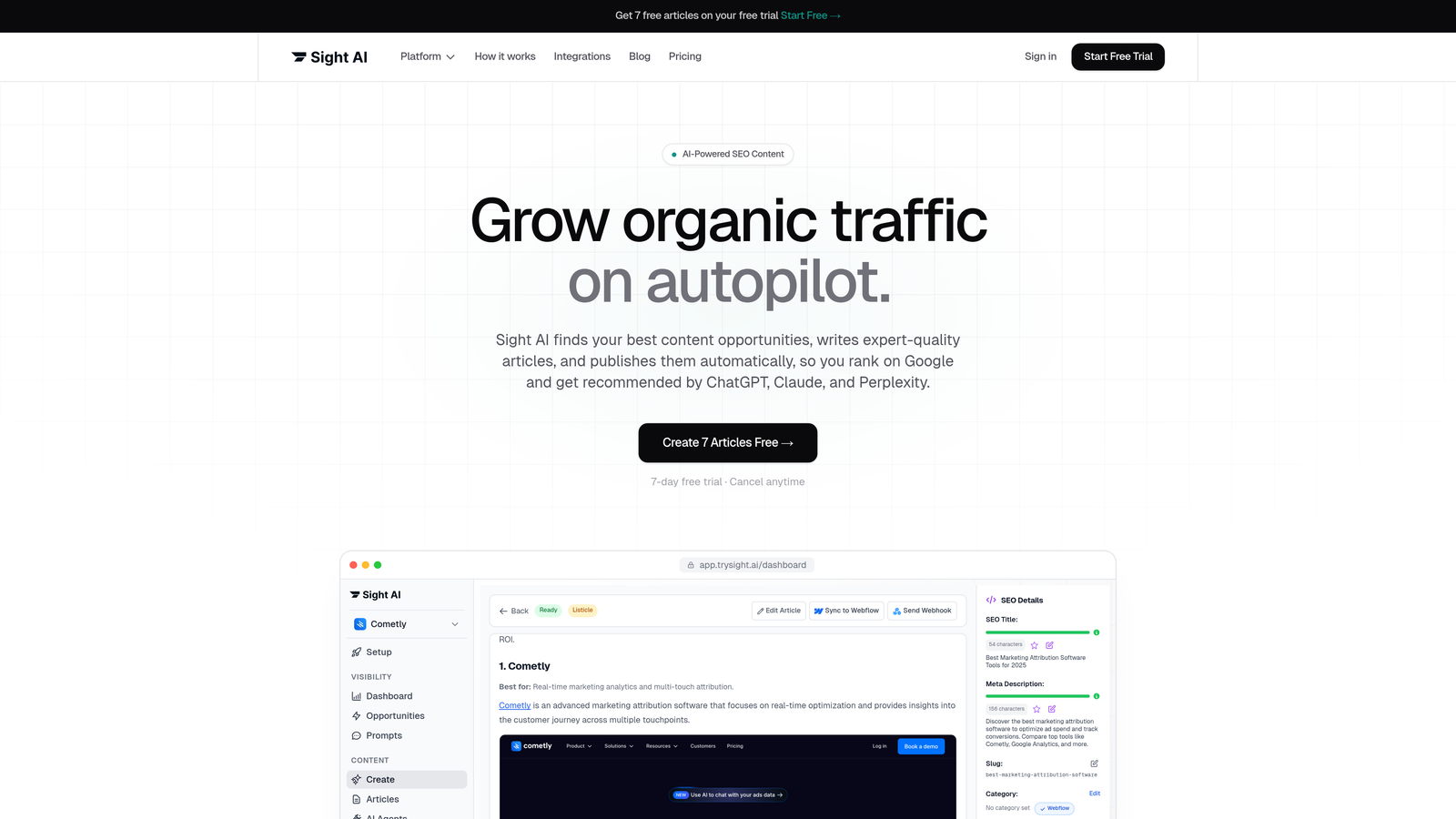
Sight AI is an all-in-one platform combining AI-powered content generation, automated website indexing via IndexNow, and AI visibility tracking to accelerate how quickly search engines and AI models discover your content.
Where This Tool Shines
Most crawl acceleration tools solve one piece of the puzzle. Sight AI takes a different approach by connecting the content creation pipeline directly to the indexing layer. When you publish an article through Sight AI's CMS auto-publishing feature, an IndexNow notification fires automatically, removing the manual step that most teams skip entirely.
The AI Visibility tracking layer is what sets it apart from every other tool on this list. Beyond getting pages indexed by Google, Sight AI monitors how AI models like ChatGPT, Claude, and Perplexity reference your brand, giving you a complete picture of both traditional and AI-driven discovery.
Key Features
IndexNow Integration: Automatically notifies participating search engines the moment new content is published, eliminating crawl delay at the source.
Automated Sitemap Generation: Keeps your sitemap current without manual updates, ensuring crawlers always have an accurate map of your content.
AI Content Writer with 13+ Agents: Specialized agents generate SEO and GEO-optimized articles, listicles, guides, and explainers built for both search engine and AI model discovery.
AI Visibility Tracking: Monitors brand mentions across ChatGPT, Claude, Perplexity, and more, with sentiment analysis and prompt tracking to show how AI models describe your brand.
CMS Auto-Publishing: Built-in indexing triggers fire on every publish event, creating a seamless loop from content creation to crawl notification.
Best For
Marketers, founders, and agencies who want to accelerate organic traffic growth without managing five separate tools. Particularly strong for content-heavy operations where publishing frequency is high and indexing speed directly impacts traffic performance.
Pricing
Free tier available. Paid plans start at competitive SaaS pricing. Visit trysight.ai for current rates and plan details.
2. Screaming Frog SEO Spider
Best for: Technical SEO audits and deep crawl diagnostics on any size website.
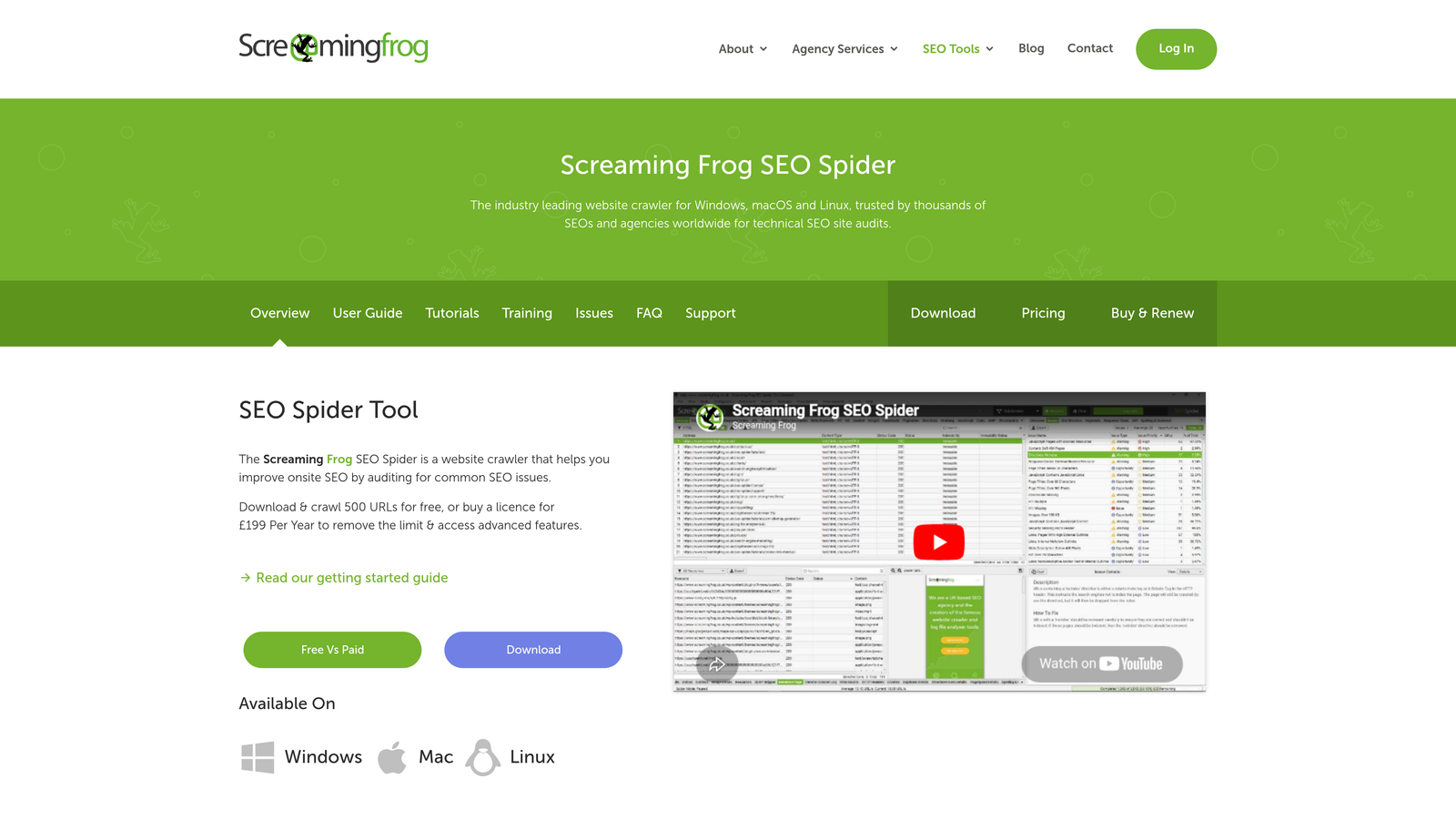
Screaming Frog SEO Spider is the industry-standard desktop crawler for identifying crawl issues including broken links, redirect chains, duplicate content, and JavaScript rendering problems.
Where This Tool Shines
Screaming Frog has earned its reputation as the go-to diagnostic tool for technical SEOs because it surfaces issues with surgical precision. The JavaScript rendering via an integrated Chromium browser means you're seeing pages the way Googlebot actually sees them, not just the raw HTML.
The scheduling and automation features in the paid version allow you to run recurring crawls and catch regressions before they compound into traffic losses. It's a workhorse that technical SEO teams return to repeatedly.
Key Features
Unlimited Crawling: The paid license removes the 500 URL cap, making full-site audits on large domains practical.
JavaScript Rendering: Integrated Chromium browser renders JS-heavy pages to identify content that bots might miss.
Custom Extraction: XPath, CSS selectors, and regex support let you pull any data point from crawled pages.
Third-Party Integrations: Connects with Google Search Console, Google Analytics, and PageSpeed Insights for enriched reporting.
Scheduled Crawls: Automate recurring audits and receive alerts when issues appear (paid version).
Best For
Technical SEOs, in-house SEO managers, and agency teams conducting periodic site audits. Best used as a diagnostic companion alongside push-notification tools rather than as a standalone crawl acceleration solution.
Pricing
Free for up to 500 URLs. Full-featured license costs £259 per year per seat.
3. Cloudflare Crawler Hints
Best for: Sites already on Cloudflare that want passive crawl acceleration with zero configuration.
Cloudflare Crawler Hints is a passive crawl acceleration feature built into Cloudflare's CDN that automatically signals search engines via IndexNow whenever content changes are detected at the edge.
Where This Tool Shines
The appeal here is simplicity. If your site runs on Cloudflare, Crawler Hints requires no code changes and no additional configuration. Change detection happens at the CDN layer, meaning the notification goes out before your origin server is even aware of the crawl request.
For teams that haven't implemented IndexNow directly, Crawler Hints is the fastest path to push-based crawl notifications. It's not a replacement for a full indexing strategy, but as a passive layer it adds meaningful acceleration with essentially zero effort.
Key Features
Automatic IndexNow Notifications: Detects content changes and notifies participating search engines without any developer involvement.
Edge-Level Detection: Changes are identified at the CDN layer, enabling faster signal delivery than server-side implementations.
Broad Engine Support: Works with Bing, Yandex, and other IndexNow-supporting search engines.
Zero-Cost Activation: Available on all Cloudflare plans, including the free tier.
Best For
Any website already using Cloudflare as a CDN. Particularly useful for smaller teams that want IndexNow benefits without building a custom integration or installing a plugin.
Pricing
Free. Included with any Cloudflare plan at no additional cost.
4. Botify
Best for: Enterprise sites that need crawl intelligence combined with log file analysis and revenue-impact prioritization.
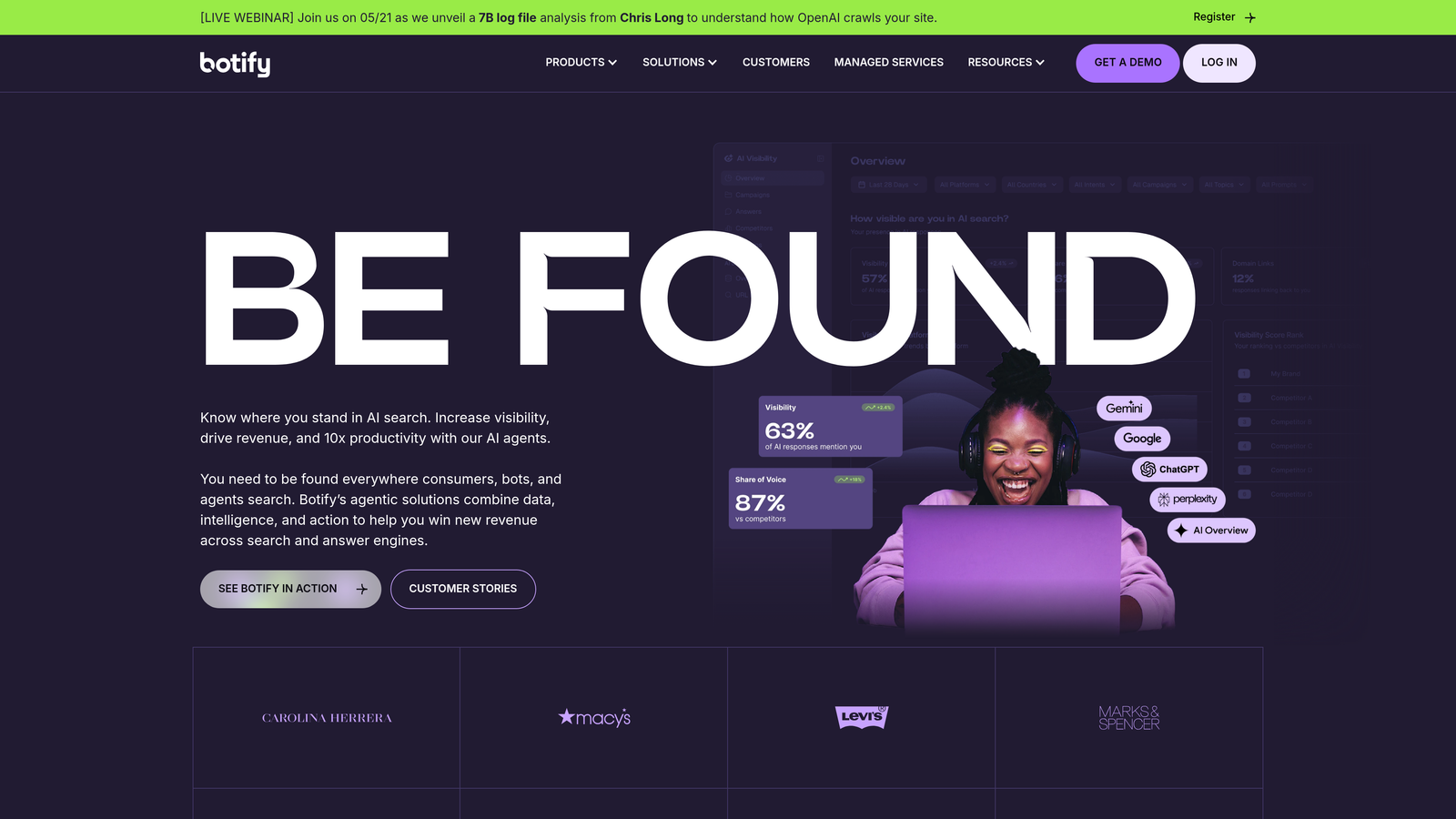
Botify is an enterprise crawl intelligence platform that combines website crawling, log file analysis, and search intent data to help large-scale sites maximize crawl budget efficiency.
Where This Tool Shines
Botify's real differentiator is the log file analysis layer. While most crawlers tell you what's on your site, Botify overlays actual Googlebot behavior from server logs, showing you which pages are being crawled, how often, and whether that crawl activity is aligned with your highest-value content.
The SpeedWorkers feature addresses a specific enterprise pain point: server-side rendering for JavaScript-heavy pages that Googlebot struggles to process. For large-scale sites where crawl budget waste is measurable in lost revenue, Botify's ActionBoard helps teams prioritize fixes by estimated business impact.
Key Features
Full-Site Crawl Analytics: Segment crawl data by page type, content category, or URL pattern for granular analysis.
Log File Analysis: Reveals real Googlebot behavior, including crawl frequency, status codes served, and budget allocation.
ActionBoard: Prioritizes SEO tasks by estimated revenue impact, helping enterprise teams focus on what matters most.
SpeedWorkers: Server-side rendering solution that improves crawlability for JavaScript-dependent pages.
Enterprise Integrations: Connects with data warehouses and BI tools for custom reporting pipelines.
Best For
Enterprise SEO teams at large publishers, e-commerce platforms, and media companies managing hundreds of thousands to millions of URLs, where crawl budget inefficiency has a direct revenue impact.
Pricing
Custom enterprise pricing. Contact Botify directly for a quote based on site size and feature requirements.
5. Lumar (formerly Deepcrawl)
Best for: Development teams and SEO engineers who need continuous crawl monitoring with CI/CD pipeline integration.
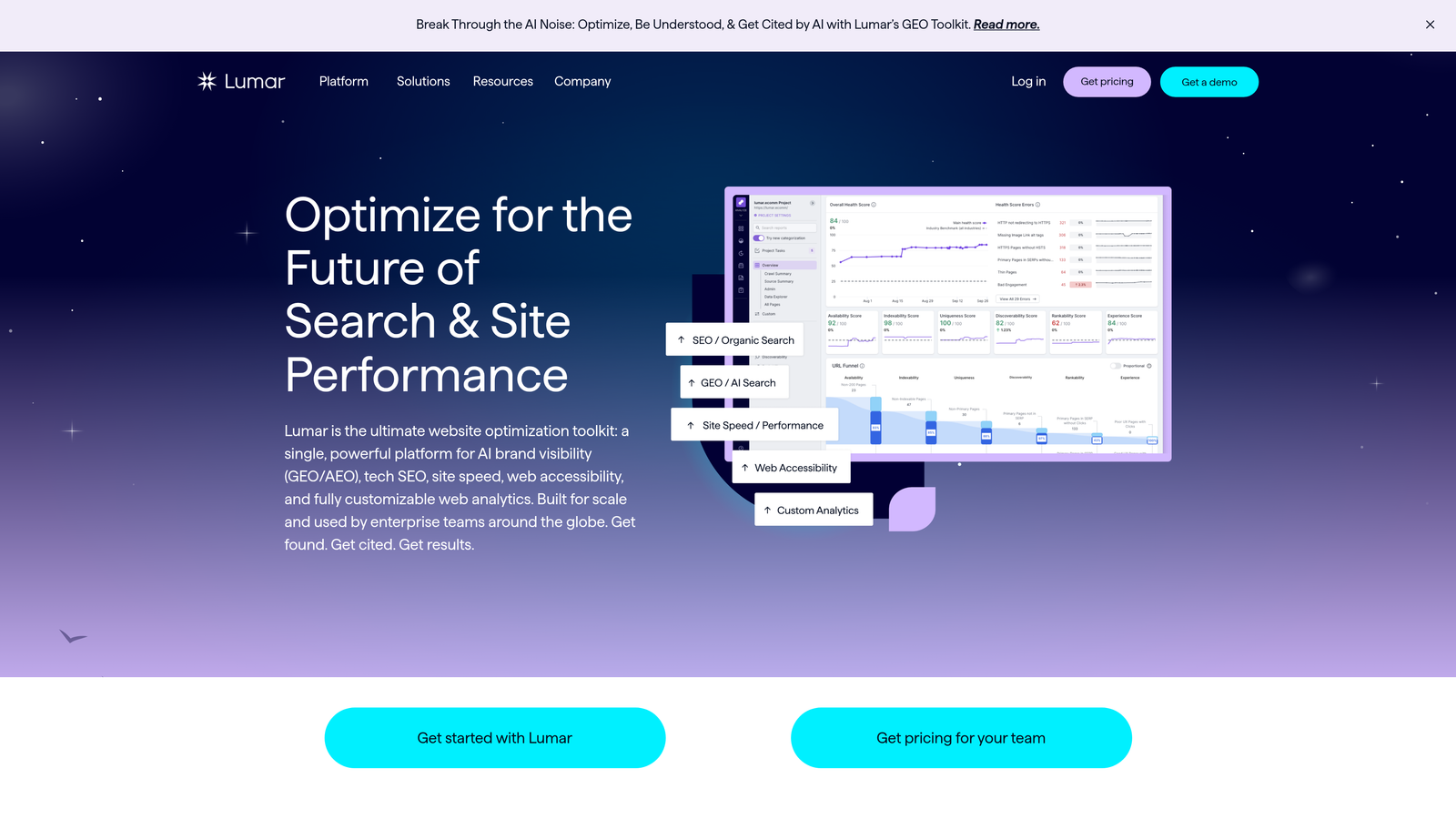
Lumar is a cloud-based website intelligence platform offering continuous crawl monitoring, QA testing, and accessibility checks with CI/CD pipeline integrations for development teams.
Where This Tool Shines
Lumar occupies an interesting position: it bridges the gap between SEO and engineering. The CI/CD integration means crawl regressions can be caught before a deployment ever reaches production, which is a capability that most SEO tools simply don't offer.
The continuous monitoring approach also separates it from point-in-time crawlers. Rather than scheduling periodic audits, Lumar runs ongoing checks and surfaces alerts when something changes, making it better suited for fast-moving development environments.
Key Features
Continuous Crawl Monitoring: Ongoing crawls with automated alerts when issues are detected, rather than periodic snapshots.
CI/CD Integration: Catch SEO regressions in staging environments before code ships to production.
Crawl Comparisons: Compare crawl results across time periods to identify what changed and when.
Accessibility Auditing: Combines SEO and accessibility checks in a single platform.
API Access: Enables custom workflows and integration with existing reporting infrastructure.
Best For
Mid-to-large organizations with active development teams where SEO regressions from code changes are a recurring risk. Strong fit for companies that ship frequently and need SEO checks embedded in their deployment workflow.
Pricing
Custom pricing based on site size and crawl volume. Free trial available to evaluate the platform before committing.
6. Google Search Console + Indexing API
Best for: Any website owner who needs free, direct insight into how Google crawls and indexes their content.
Google Search Console is Google's free webmaster suite offering URL inspection, sitemap submission, crawl stats reporting, and the Indexing API for near-instant crawl requests on eligible page types.
Where This Tool Shines
No tool gives you more authoritative data about Google's crawl behavior than Google Search Console itself. The Crawl Stats report shows Googlebot's actual activity on your domain over the past 90 days, including response times, crawl request volume, and file type distribution. That's ground truth data you can't get anywhere else.
The Indexing API is particularly valuable for sites with job postings or live-stream content, the officially supported page types, but developers have used it more broadly to accelerate crawl requests. Combined with URL Inspection for on-demand crawl triggers, GSC remains an indispensable free layer in any crawl acceleration stack.
Key Features
URL Inspection Tool: Check the current index status of any URL and submit individual pages for crawling.
Sitemap Submission: Submit and monitor sitemaps directly, with error reporting for malformed entries.
Crawl Stats Report: Visualize Googlebot's crawl activity trends over 90 days to identify anomalies.
Indexing API: Programmatic crawl requests for eligible page types, enabling near-instant indexing at scale.
Coverage Reports: Identify pages excluded from the index and the specific reason for each exclusion.
Best For
Every website, without exception. Google Search Console is a foundational tool that should be active regardless of what other crawl acceleration tools you use. The Indexing API adds meaningful value for developers managing high-volume publishing workflows.
Pricing
Completely free. No paid tiers or usage limits for standard features.
7. IndexNow Protocol
Best for: Developers and site owners who want to implement push-based URL submission directly without relying on third-party tools.
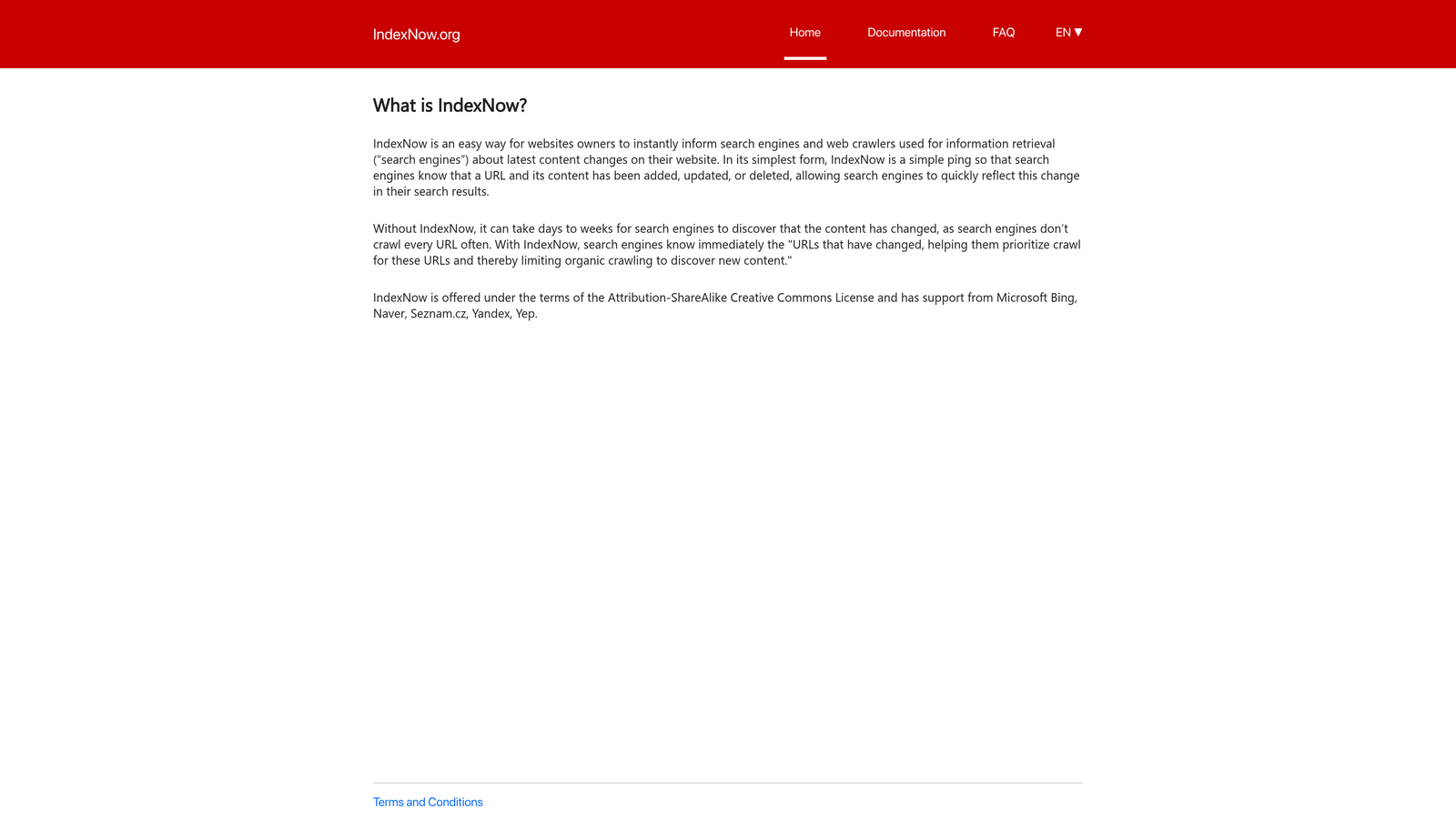
IndexNow is an open-source protocol developed by Microsoft and Yandex that allows website owners to instantly notify participating search engines when content is created, updated, or deleted.
Where This Tool Shines
IndexNow flips the traditional crawl model on its head. Instead of waiting for search engine bots to discover your content on their own schedule, you push a notification the moment something changes. A single HTTP request with your API key is all it takes to notify every participating engine simultaneously.
The protocol's open-source nature means it's available as plugins for WordPress, Wix, Duda, and other major platforms, lowering the implementation barrier significantly. It also reduces unnecessary crawl load on your servers by replacing speculative bot visits with targeted, event-driven notifications.
Key Features
Push-Based Submission: Notify search engines instantly on content creation, update, or deletion without waiting for crawlers.
Multi-Engine Support: A single API call notifies Bing, Yandex, Naver, Seznam, and other participating engines simultaneously.
Simple API: Implementation requires a single HTTP request with an API key, making it accessible to developers of any level.
CMS Plugins: Ready-made integrations for WordPress, Wix, Duda, and other major platforms.
Reduced Server Load: Event-driven notifications replace redundant speculative crawls, lowering infrastructure overhead.
Best For
Developers building custom publishing pipelines, site owners on supported CMS platforms, and any team looking to implement push-based crawl notifications without a SaaS dependency. Note that Google has not officially adopted IndexNow; pair with Google Search Console's Indexing API for full coverage.
Pricing
Free and open-source. No licensing costs, usage fees, or vendor lock-in.
8. Sitebulb
Best for: SEO consultants and agencies who need client-ready visual reports alongside technical crawl data.
Sitebulb is a desktop and cloud-based SEO auditing tool known for visual crawl reports, prioritized hints, and accessibility scoring that makes technical SEO approachable for non-developers.
Where This Tool Shines
Sitebulb's Priority Hints system is genuinely useful for teams that struggle to communicate technical issues to stakeholders. Instead of presenting a raw list of crawl errors, it ranks issues by SEO impact and explains why each one matters, which makes prioritization conversations with clients or executives significantly easier.
The visual crawl maps and internal link structure diagrams provide an intuitive way to understand site architecture at a glance. For agencies managing multiple client sites, the cloud version enables collaborative audits without requiring every team member to run local crawls.
Key Features
Priority Hints System: Ranks crawl issues by SEO impact with plain-language explanations, making technical findings accessible to non-technical stakeholders.
Visual Crawl Maps: Graphical representations of site structure and internal link relationships.
JavaScript Rendering: Handles JS-heavy pages to ensure crawl results reflect what search engines actually see.
PDF Report Generation: Produces polished, client-ready reports directly from crawl data.
Cloud Version: Enables team collaboration on audits without requiring local software installations.
Best For
SEO agencies, freelance consultants, and in-house teams that regularly present technical findings to clients or non-technical stakeholders. The visual reporting layer makes it particularly strong for client-facing work.
Pricing
Lite plan starts at £13.50 per month. Pro plan at £35 per month. Cloud pricing available separately.
9. OnCrawl
Best for: Data-driven SEO teams who need to correlate crawl behavior with server log data in a single dashboard.
OnCrawl is an SEO crawler and log analyzer that overlays server log data with crawl results to reveal exactly how search engines interact with your site and where crawl budget is wasted.
Where This Tool Shines
The combined crawl-plus-log analysis is OnCrawl's core value proposition. Crawl data alone tells you what's on your site; log data tells you what search engines are actually visiting. Overlaying both in one dashboard reveals the gap between the two, which is often where the most significant crawl budget waste is hiding.
Orphan page detection is a particularly practical feature. Pages that receive no internal links but are still being crawled represent wasted budget. OnCrawl surfaces these automatically, giving technical SEOs a clear action list for reclaiming crawl efficiency.
Key Features
Combined Crawl and Log Analysis: Single dashboard correlating what's on your site with what search engines are actually crawling.
Crawl Budget Waste Identification: Segments URLs by crawl frequency versus value to highlight where budget is being misallocated.
Orphan Page Detection: Identifies pages with no internal links that are consuming crawl budget without contributing to site structure.
Data Studio and API Integrations: Connects with Google Data Studio and custom reporting tools for flexible visualization.
Advanced Segmentation: Filters crawl data by page depth, HTTP status code, content type, and more.
Best For
Mid-size to enterprise SEO teams with access to server log files who want to move beyond surface-level crawl audits into quantitative crawl budget analysis. Strong fit for e-commerce sites and large publishers with complex URL structures.
Pricing
Plans start around €69 per month. Enterprise tiers available for higher crawl volumes and additional users.
Which Tool Is Right for Your Stack
Crawl acceleration isn't a single-tool problem. The most effective setups layer push notifications, technical auditing, and continuous monitoring to cover every angle of the discovery pipeline.
Here's how to think about it by use case:
Solo founders and small teams: Start with Sight AI for automated IndexNow notifications and content creation, then layer in Google Search Console for free crawl diagnostics. This combination covers both push-based discovery and ongoing monitoring without significant cost or complexity.
Mid-size content teams: Sight AI handles the content-to-indexing pipeline, Screaming Frog provides deep technical audits on a recurring basis, and the IndexNow protocol (or Cloudflare Crawler Hints if you're already on Cloudflare) ensures every publish triggers an immediate notification. This stack is practical, cost-effective, and covers the full crawl lifecycle.
Enterprise teams: Botify or Lumar provides the crawl intelligence and log analysis depth that large-scale sites require. Pair either with Sight AI to accelerate the content pipeline and gain visibility into how AI models are referencing your brand, a dimension that enterprise SEO teams increasingly can't afford to ignore.
The shift toward AI-driven search makes the "indexed but not mentioned by AI" problem just as important as the traditional crawl gap. Getting your content discovered quickly is step one. Understanding how AI models interpret and reference it is what comes next.
Start tracking your AI visibility today and see exactly where your brand appears across top AI platforms. Sight AI combines automated indexing, AI content generation, and cross-platform visibility tracking into one place, so you're not just getting indexed faster, you're building the kind of presence that AI search rewards.