When a potential customer asks ChatGPT, Claude, or Perplexity which product to buy, is your brand in the answer? AI platforms have quietly become one of the first stops for purchase decisions, product comparisons, and vendor recommendations. Yet most marketing teams are flying blind, with no visibility into how these models talk about them, position them, or whether they appear at all.
Tracking AI platform recommendations is no longer a nice-to-have. It's a core part of any modern brand monitoring strategy. The tools below cover the best options available for monitoring how AI models mention, recommend, and position your brand, from dedicated AI visibility platforms to content generation tools that help you influence those recommendations in the first place.
Each tool was evaluated on depth of AI model coverage, actionability of insights, ease of use, and value for marketers, founders, and agencies focused on organic and AI-driven growth.
1. Sight AI
Best for: Teams that need to track AI visibility, generate optimized content, and auto-index it in one platform.
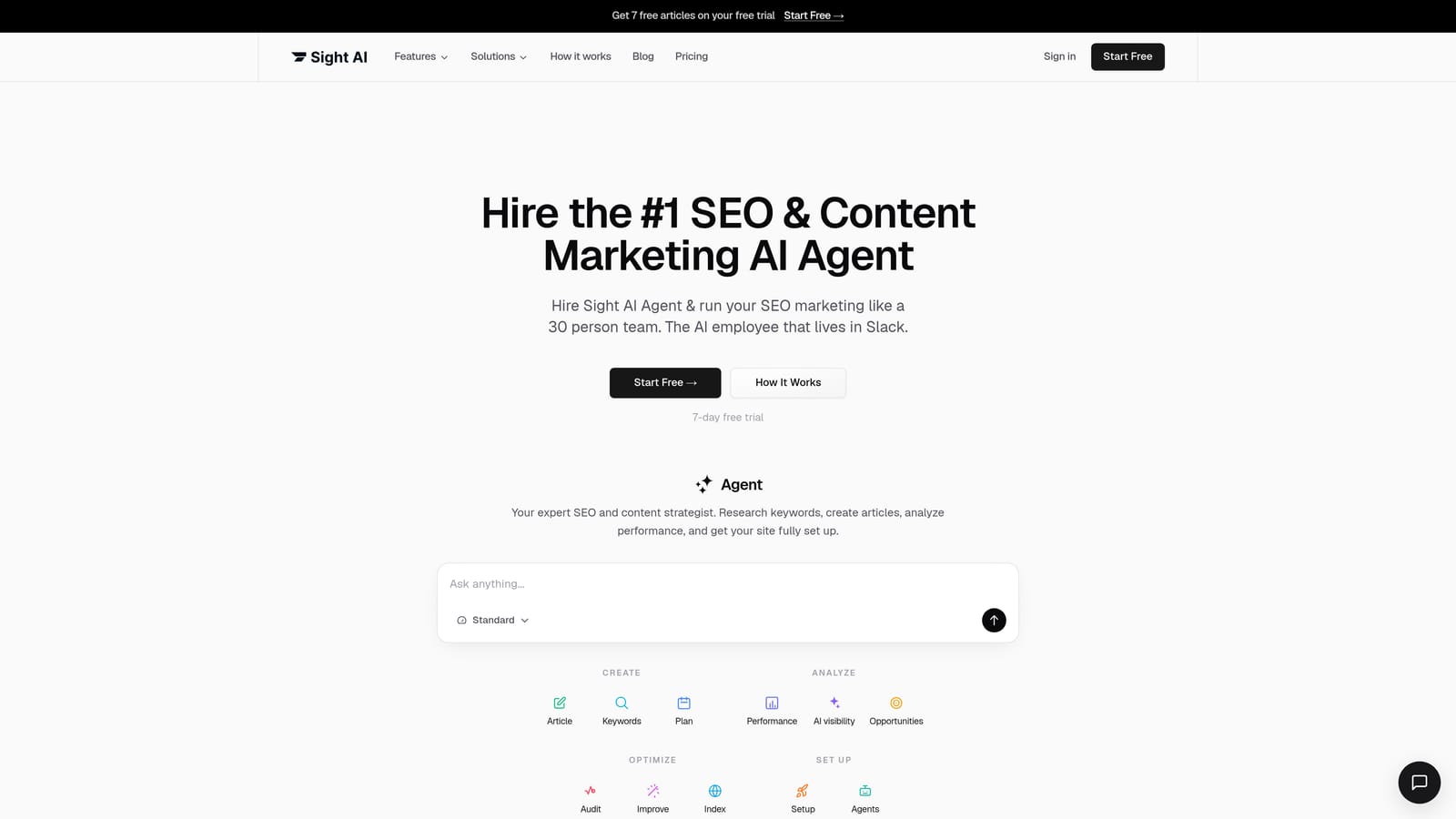
Sight AI is an all-in-one AI visibility platform that tracks brand mentions across 6+ AI models, generates SEO/GEO-optimized content to improve those mentions, and auto-indexes published content via IndexNow, covering the full AI visibility loop in a single platform.
Where This Tool Shines
Most AI monitoring tools stop at reporting. Sight AI closes the loop. You can see exactly where your brand appears across ChatGPT, Claude, Perplexity, and other major AI platforms, and then immediately act on those gaps with built-in content generation tools designed specifically to improve AI recommendation presence.
The combination of monitoring, content creation, and automatic indexing means you're not just watching your AI visibility score, you're actively moving it. For agencies and growth-focused teams, this eliminates the need to stitch together three separate tools to accomplish what Sight AI handles natively.
Key Features
AI Visibility Score: Tracks brand mentions across ChatGPT, Claude, Perplexity, and more, with sentiment analysis to show whether mentions are positive, neutral, or negative.
Prompt Tracking: Monitors specific queries over time to show whether your brand appears in AI-generated answers to the searches that matter most to your business.
13+ Specialized AI Agents: Generates SEO/GEO-optimized articles, listicles, and guides through purpose-built agents, each designed for a specific content format and optimization goal.
IndexNow Integration: Automatically submits newly published content to search engines via IndexNow and updates your sitemap, accelerating content discovery.
Autopilot Mode: Enables hands-off content operations with CMS auto-publishing, so your content pipeline runs without constant manual intervention.
Best For
Marketers, founders, and agencies who want a single platform to track AI visibility gaps, generate content that closes those gaps, and publish it automatically. Particularly valuable for teams that are scaling content output and need AI visibility monitoring to be integrated with their content workflow rather than siloed.
Pricing
Contact for pricing or visit trysight.ai for current plans. Pricing is not publicly listed at a flat rate, so reaching out directly is the best path for an accurate quote.
2. Promptwatch
Best for: SEO professionals and brand teams tracking prompt-level AI mention trends over time.
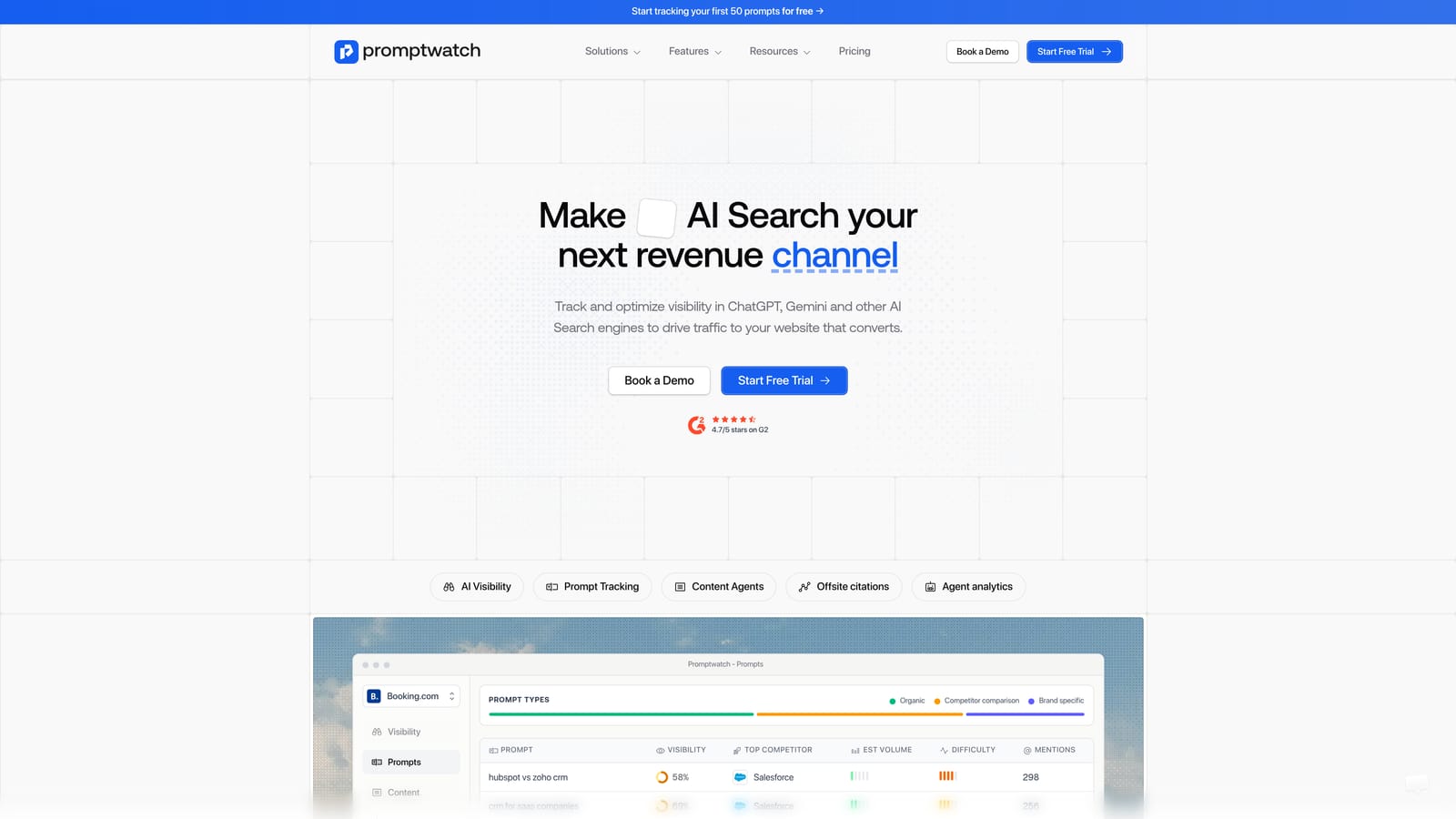
Promptwatch is a prompt-level AI monitoring tool that tracks how specific queries return brand mentions across AI platforms, giving marketers historical trend data on their AI recommendation presence.
Where This Tool Shines
Promptwatch is built around a specific and genuinely useful insight: not all queries matter equally, and your brand's presence in AI answers can shift over time. By tracking individual prompts rather than just broad brand mentions, it gives SEO professionals a granular view of where they're winning and where they're losing ground in AI-generated responses.
The historical trend data is where Promptwatch earns its place in a monitoring stack. If you publish a piece of content or land a major press mention, you can watch whether that effort translates into improved AI recommendation presence on the specific prompts you care about.
Key Features
Prompt-Specific Tracking: Monitors individual queries across major AI models rather than tracking brand mentions in aggregate.
Historical Trend Data: Shows changes in brand mention frequency over time, making it possible to connect content or PR efforts to AI visibility outcomes.
Visibility Alerts: Notifies teams when brand visibility shifts on monitored prompts, so changes don't go unnoticed.
SEO-Oriented Design: Built with the vocabulary and workflow of SEO professionals in mind, making it intuitive for teams already running traditional rank tracking.
Best For
SEO teams and brand monitoring professionals who want prompt-level precision in tracking AI recommendation presence. Best suited for teams with a defined set of high-priority queries they need to monitor consistently, rather than teams looking for broad discovery of new mention opportunities.
Pricing
See promptwatch.io for current pricing. Plans and tiers are subject to change, so checking directly is recommended.
3. Profound
Best for: Enterprise marketing teams needing structured competitive benchmarking in AI-generated answers.
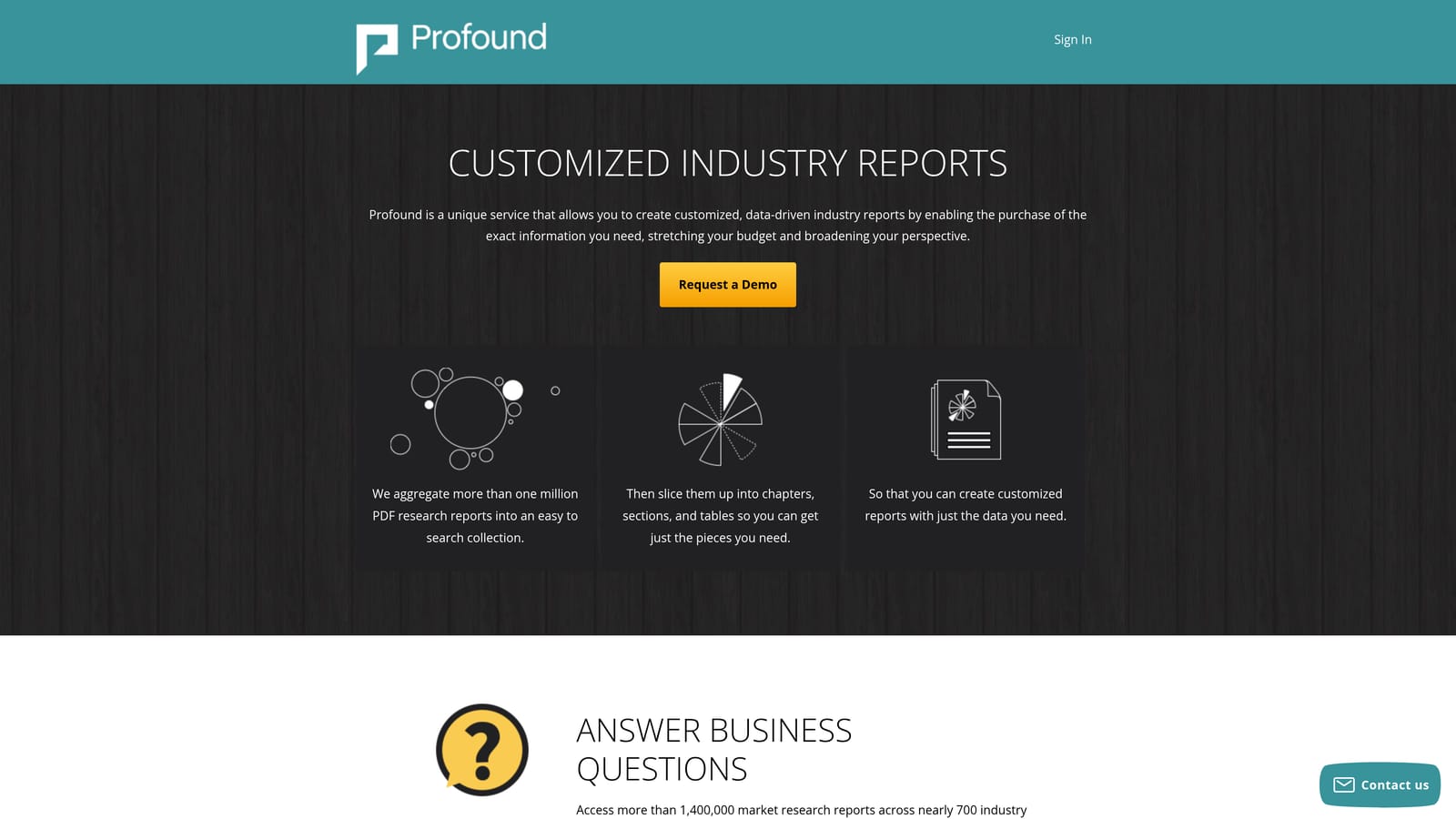
Profound is an enterprise-focused AI answer intelligence platform that monitors how AI models respond to category and brand queries, with structured competitive benchmarking reports designed for larger marketing teams.
Where This Tool Shines
Profound is built for the scale and reporting requirements of enterprise brand and marketing teams. Where smaller tools give you a dashboard to check, Profound is oriented toward structured intelligence: how does your brand compare to competitors in AI-generated answers across category-level queries, and how is that changing over time?
For organizations with dedicated competitive intelligence functions, this framing is a natural fit. Profound translates the messy, conversational world of AI responses into structured data that can inform brand strategy, messaging decisions, and content investment priorities.
Key Features
Category and Brand Query Monitoring: Tracks AI responses to both broad category queries and specific brand queries across major AI platforms.
Competitive Benchmarking: Structured reporting on how your brand compares to named competitors in AI-generated answers.
Enterprise Reporting: Designed for marketing teams that need shareable, structured outputs rather than self-serve dashboards.
Brand Framing Insights: Surfaces how AI models describe and position your brand in recommendations, not just whether you appear.
Best For
Enterprise marketing and brand teams with dedicated competitive intelligence needs. Organizations that need to present AI visibility data to leadership or cross-functional stakeholders will find Profound's reporting structure particularly useful.
Pricing
Enterprise pricing applies. Contact Profound directly for details, as pricing is not publicly listed and is likely scoped to team size and query volume.
4. Peec
Best for: Performance marketers and agencies who want share-of-voice reporting applied to AI recommendations.
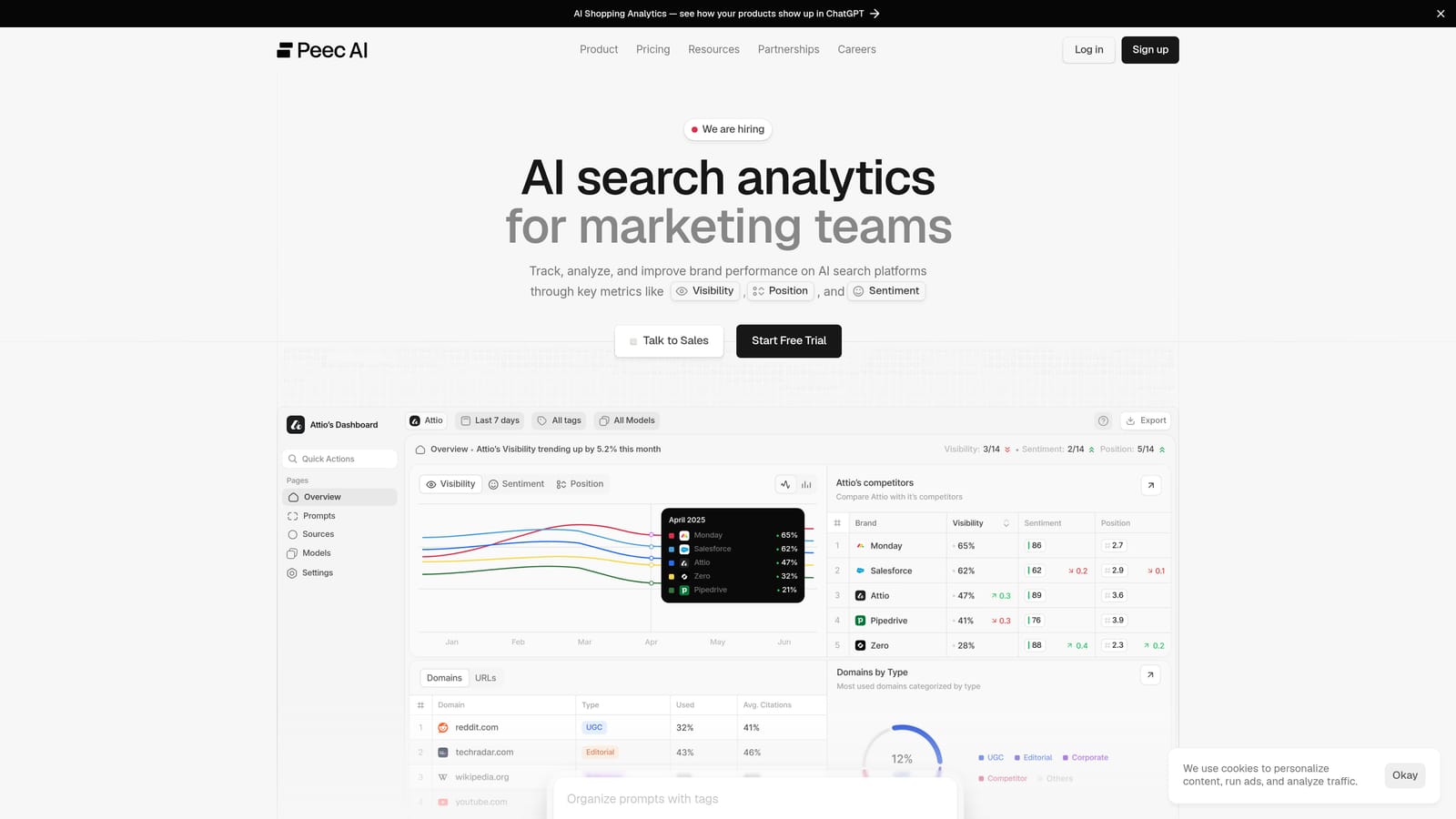
Peec is an AI recommendation tracking tool that applies a share-of-voice framework to monitor how often a brand appears in AI-generated answers relative to competitors across a defined set of queries.
Where This Tool Shines
Peec's insight is that performance marketers already understand share-of-voice as a metric. Rather than inventing a new framework for AI visibility, Peec maps AI recommendation presence onto a concept that paid media and SEO teams already use to measure competitive positioning. That makes adoption and internal reporting significantly easier.
For agencies managing multiple clients, the multi-brand support and competitive comparison features make Peec practical at scale. You can show clients not just whether they appear in AI answers, but how their presence compares to the competitors they care most about.
Key Features
Share-of-Voice Reporting: Quantifies AI recommendation presence as a share of voice metric relative to competitors across monitored queries.
Competitor Comparison: Side-by-side visibility into how your brand and competitors appear in AI-generated answers.
Performance Marketing Framing: Uses familiar metrics and reporting structures that SEO and paid media teams can immediately understand and act on.
Multi-Brand Support: Built to support agencies or in-house teams tracking AI visibility for multiple brands simultaneously.
Best For
SEO teams, performance marketers, and agencies who want to frame AI recommendation tracking in terms of competitive share rather than absolute mention counts. Particularly useful for client-facing reporting where competitive context is essential.
Pricing
See peec.ai for current pricing. Plans are not permanently fixed, so checking the site directly is the most reliable approach.
5. AirOps
Best for: Content teams and agencies building scalable, structured AI-assisted content pipelines.
AirOps is a content workflow automation platform that helps teams build scalable, structured AI-assisted content pipelines, improving the volume and quality of content that influences AI model recommendations.
Where This Tool Shines
AirOps takes a different angle than the monitoring-first tools on this list. The premise is straightforward: AI models recommend brands that appear in high-quality, widely-distributed content. If you want to improve your AI recommendation presence, producing more and better content is one of the most reliable levers available. AirOps makes that content production scalable and repeatable.
For content teams that have hit the ceiling of what they can produce manually, AirOps provides the workflow infrastructure to operationalize AI-assisted content at scale. Customizable AI agents, integrations with major CMS platforms, and structured pipelines mean that content quality and consistency don't degrade as volume increases.
Key Features
Workflow Automation: Builds repeatable, structured content pipelines that can run at scale without constant manual oversight.
Customizable AI Agents: Allows teams to configure AI agents for specific content types, tones, and output requirements.
CMS and Data Integrations: Connects with major content management systems and data sources to pull context directly into content workflows.
Scalable Output: Designed for content teams and agencies that need consistent, high-volume output rather than one-off content generation.
Best For
Content teams and agencies focused on using content volume and quality as a strategy for improving AI recommendation presence. Best for organizations that have a clear content strategy and need infrastructure to execute it at scale, rather than teams still figuring out what content to create.
Pricing
See airops.com for current plans. Pricing tiers vary by usage and team size.
6. Writesonic
Best for: Individual marketers and small teams needing fast, SEO-aware content volume to expand AI recommendation surface area.
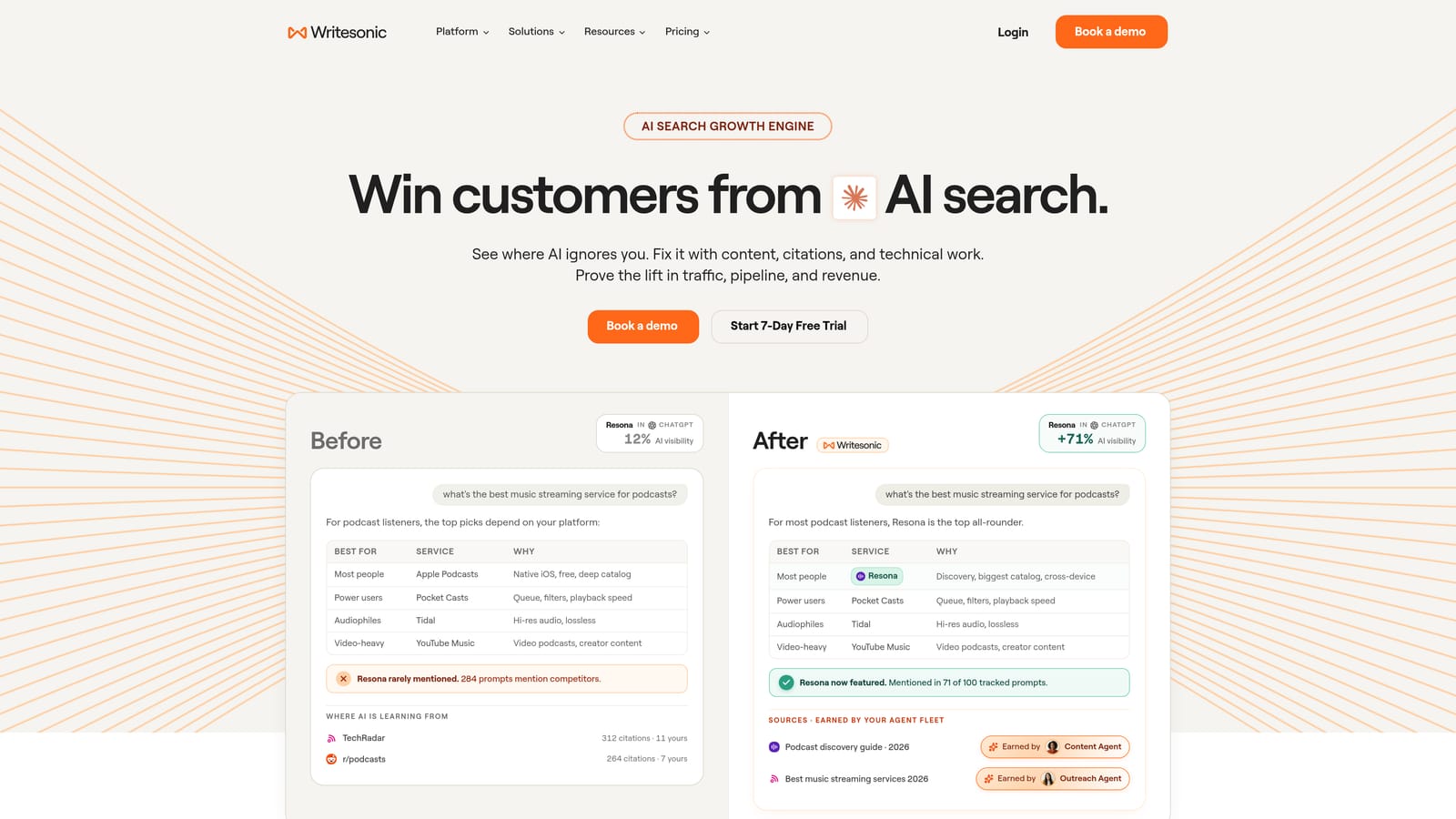
Writesonic is a widely-used AI writing platform with GEO-oriented features that help marketers produce SEO-aware content at scale, increasing the brand surface area that AI models draw from when generating recommendations.
Where This Tool Shines
Writesonic has evolved beyond general-purpose AI writing to include features specifically oriented toward Generative Engine Optimization, the practice of creating content that AI models are more likely to surface in their responses. For marketers who understand that content is a direct lever for AI visibility, Writesonic provides a fast, accessible way to increase content output without a large team or complex workflow infrastructure.
The large template library and relatively low barrier to entry make it practical for individual marketers and small teams who need to move quickly. It won't give you the monitoring data or workflow depth of other tools on this list, but for pure content velocity, it delivers.
Key Features
AI Article Generation: Produces full-length articles and blog posts with SEO-aware outputs designed to rank in traditional search and appear in AI-generated answers.
GEO Features: Includes features specifically oriented toward Generative Engine Optimization and AI search visibility.
Template Library: A broad library covering blogs, landing pages, marketing copy, and more, reducing setup time for common content types.
Accessibility: Designed for individual marketers and small teams, with a free plan and paid tiers that don't require enterprise budgets.
Best For
Individual marketers, small teams, and early-stage companies that want to increase content volume and AI recommendation surface area without significant workflow investment. A strong starting point for teams new to GEO-oriented content strategy.
Pricing
A free plan is available. Paid plans start at approximately $16/month, though pricing changes periodically. Verify current plans at writesonic.com.
Which Tool Is Right for Your Team?
The right tool depends almost entirely on where you are in your AI visibility journey and what you need to do next.
If you only need monitoring, Promptwatch, Profound, and Peec each offer a distinct angle. Promptwatch is best for prompt-level precision, Profound is built for enterprise competitive intelligence, and Peec is the natural choice for teams already fluent in share-of-voice reporting. All three will tell you what's happening with your brand in AI answers, but none of them will help you change it.
If content production is your primary strategy for improving AI recommendations, AirOps and Writesonic are both worth evaluating. AirOps suits teams that need scalable, structured pipelines; Writesonic suits those who need speed and simplicity at a lower price point.
If you want to track visibility gaps and close them in the same platform, Sight AI is the only tool on this list that does both. Monitoring without action is just a dashboard. Sight AI pairs AI Visibility Score tracking and prompt monitoring with 13+ specialized content agents, IndexNow-powered indexing, and Autopilot Mode, so the insight and the response are part of the same workflow. For most marketers, founders, and agencies, that integration is what makes the difference between knowing there's a problem and actually solving it.
Stop guessing how AI models like ChatGPT and Claude talk about your brand. Start tracking your AI visibility today and see exactly where your brand appears across top AI platforms, then use built-in content tools to improve it automatically.