This list is for marketers, agency teams, and founders who need to know where their pages rank and, increasingly, whether AI answers mention their brand. The tools were compared on data accuracy, update frequency, SERP feature and local coverage, reporting, API access, and price at scale. Pricing changes often, so every figure below is hedged and should be checked on the vendor's site before you buy.
Quick Comparison of the Tools
- Sight AI: teams that want to measure and grow brand visibility in AI search; pricing on the website; tracks brand mentions inside AI model answers and connects findings to content creation and publishing.
- Semrush Position Tracking: marketing teams wanting one suite for research and tracking; around $140/month for Pro as of October 2026, verify on the website; rank tracking embedded in a broad keyword, content, and competitor suite.
- Ahrefs Rank Tracker: link-focused SEOs; pricing on the website; rankings viewed next to Ahrefs' backlink data and historical SERP snapshots.
- SE Ranking: small and mid-size agencies producing client reports; pricing on the website; white-label client reporting at a mid-market price.
- AccuRanker: enterprise and large-agency teams; pricing on the website; fast on-demand refreshes across very large keyword sets.
- Advanced Web Ranking: agencies needing tailored multi-client reporting; pricing on the website; highly customizable reports and client dashboards.
- Mangools SERPWatcher: freelancers and small sites on a tight budget; pricing on the website; a single performance index in a beginner-friendly tracker.
- Nightwatch: agencies focused on local and reporting-driven tracking; pricing on the website; reporting integrations aimed at agency workflows, including Looker Studio.
- SerpApi: developers and data teams; usage-based with a free tier, verify on the website; raw programmable SERP data for building your own tracker.
1. Sight AI
Sight AI is the company's own product, so weigh this entry with that in mind. It is an AI visibility platform that monitors how AI models talk about your brand, then gives you content and indexing tools to act on what it finds. It is built for marketers, founders, and agencies who care about being mentioned in AI-generated answers, not only about blue-link positions.
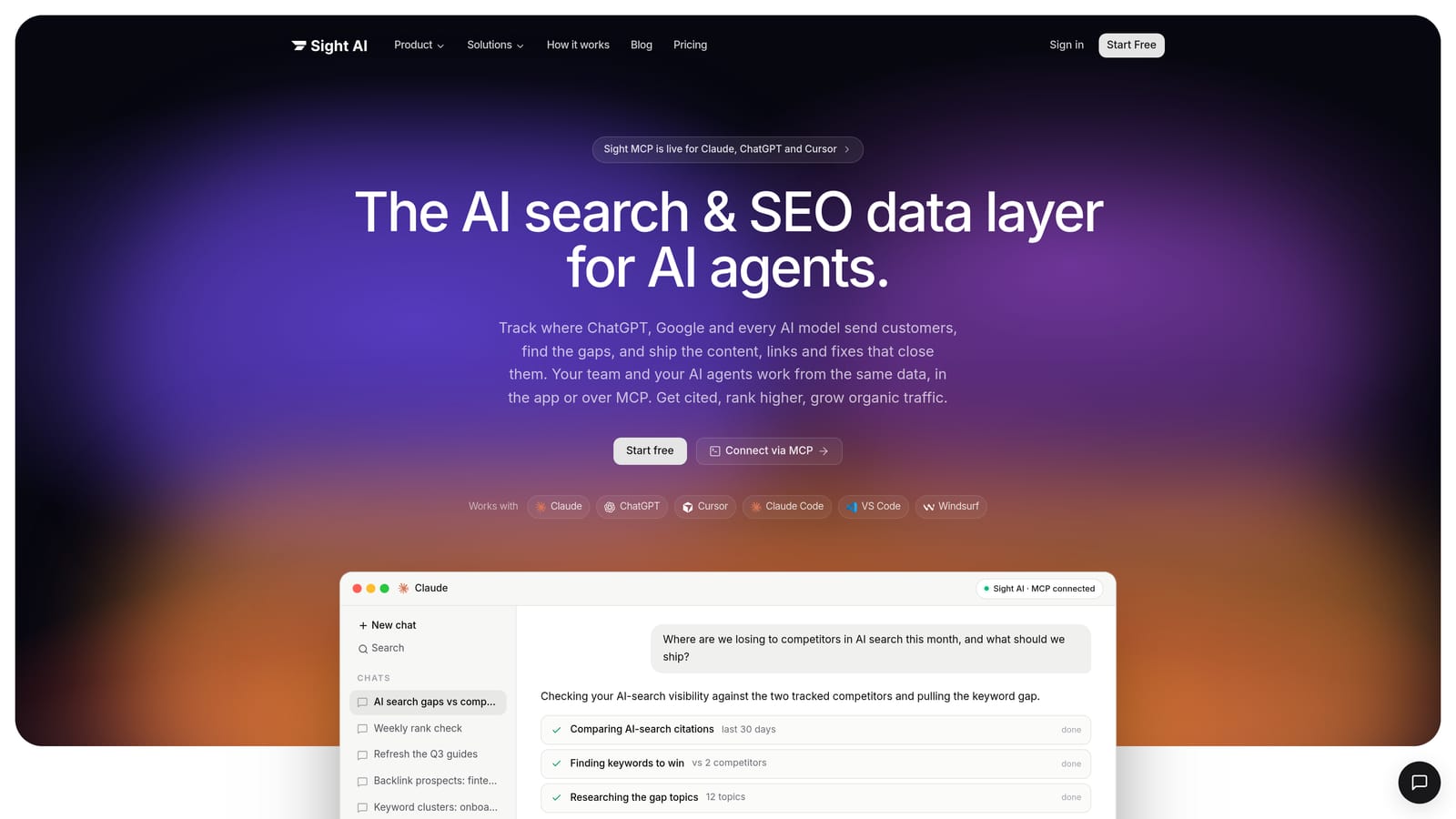
What sets it apart on this list is where it measures. Every other tool here reports where a URL sits in a results page. Sight AI tracks whether and how ChatGPT, Claude, Perplexity, and other models mention your brand, and then connects that to a workflow for producing and publishing content.
- AI Visibility Score with sentiment analysis shows how often your brand appears in AI answers and whether the framing is positive, neutral, or negative.
- Prompt tracking across 6+ AI platforms, including ChatGPT, Claude, and Perplexity, lets you watch the specific questions your buyers ask and see which brands get named.
- AI Content Writer with 13+ agents and Autopilot Mode produces SEO and GEO-optimized articles such as listicles, guides, and explainers, so gaps you find can become drafts quickly.
- IndexNow indexing and automated sitemap updates push new and changed pages to participating search engines faster than waiting for a crawl.
- CMS auto-publishing sends finished articles to your site without a manual copy-and-paste step.
Setup is light: connect your brand and prompts, then link your CMS and sitemap if you want publishing and indexing automation. A marketer or content lead can run it day to day without developer help.
The limitation is important. Sight AI does not track traditional Google keyword positions, so it does not replace a classic rank tracker. Most teams should pair it with one of the tools below. If you only need position reports for a client deck, it is the wrong purchase.
Pricing: see the website for current plans and what moves the price.
Best for: Teams that want to measure and grow brand visibility in AI search.
2. Semrush Position Tracking
Semrush includes Position Tracking as a module inside its larger SEO suite, aimed at marketing teams that already use it for keyword research, content planning, and competitor analysis. Its distinguishing trait is breadth: rankings sit next to the research that tells you which keywords to chase in the first place.
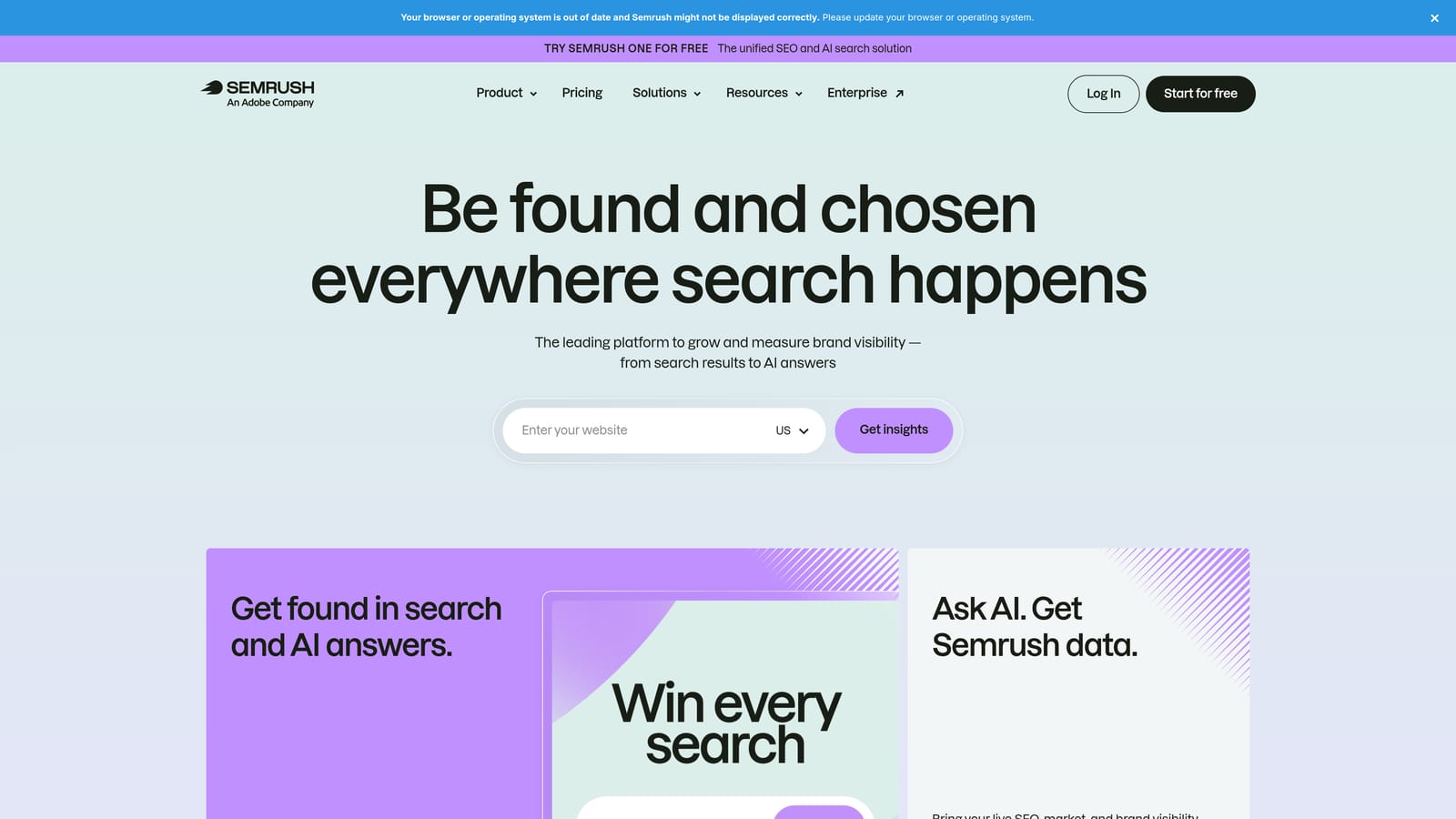
Tracking is targeted by device and location, so you can see that a keyword ranks differently on mobile in one city than on desktop in another. That matters because a ranking is not one number; it shifts with location, device, and personalization.
- Daily position tracking keeps trend lines current enough to spot drops after an update or a site change.
- SERP feature ownership shows which of your keywords trigger features such as snippets and whether you hold them.
- Competitor visibility and share of voice summarizes how much of the tracked keyword set each rival captures.
- Device and location targeting segments results to the markets you actually sell in.
It connects with Google Search Console, Google Analytics, and Looker Studio. Setup is straightforward for the tracker itself, though the full suite takes time to learn, and an SEO or marketing manager typically owns it.
The drawback is cost and weight. Add-ons and plan limits raise the bill, and if all you need is rankings, much of the suite goes unused. Check its current AI-search tracking options on the vendor site before counting on them.
Pricing: around $140/month for Pro as of October 2026. Subscription tiers and add-ons change, so verify on the website.
Best for: Marketing teams wanting one suite for research and tracking.
3. Ahrefs Rank Tracker
Ahrefs offers Rank Tracker inside its platform, tied to its backlink index and Site Explorer. If you think about rankings in terms of links, that connection is the point: you can see a position change and look at the link profile behind it without switching tools.
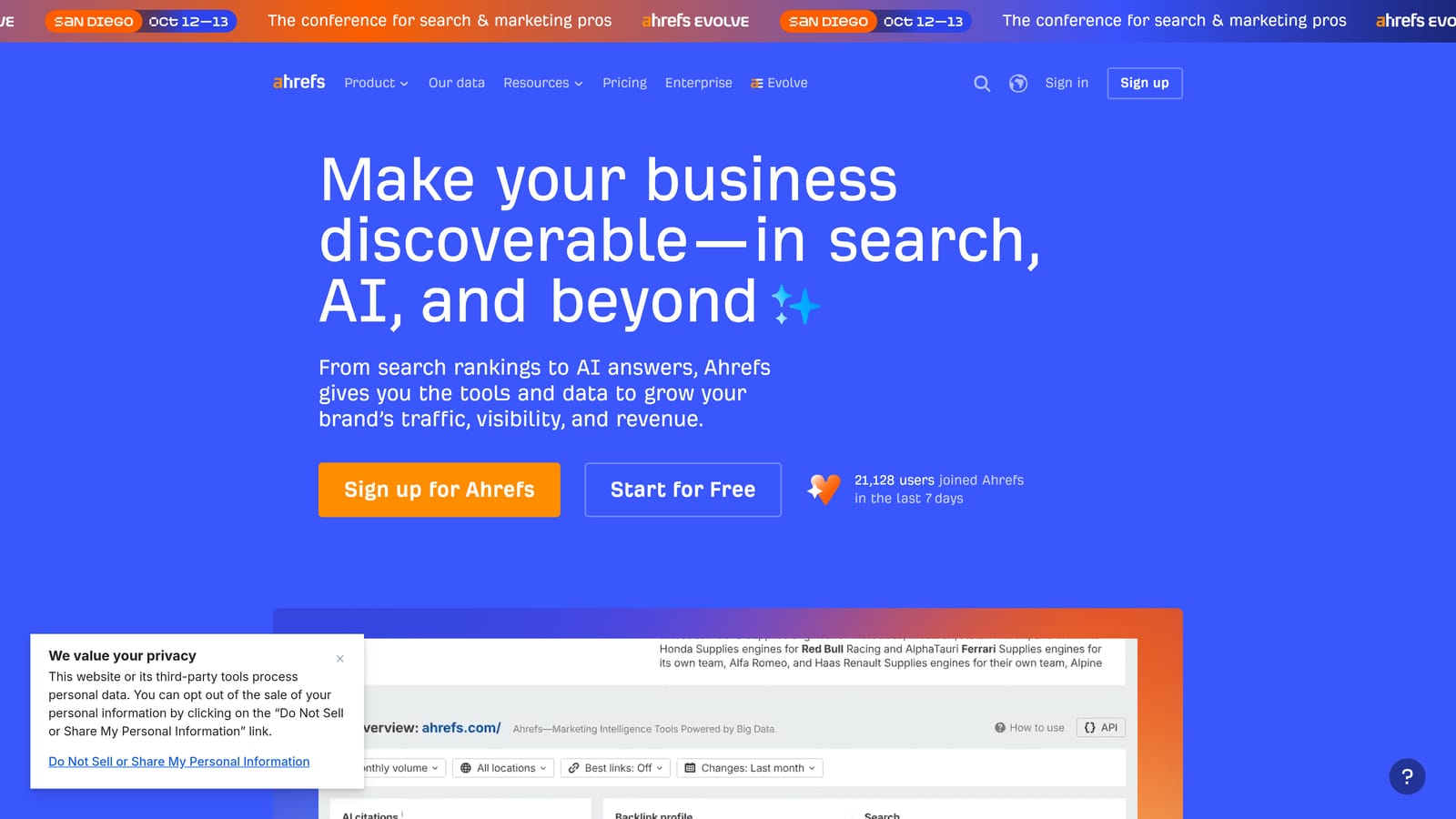
Its historical SERP overview is a quiet strength. When a page drops, you can look back at who occupied the results before and after, which helps separate your own decline from a competitor's gain.
- Rankings by location and device let you check the markets and screens that matter to you.
- SERP feature tracking flags which results carry features and who owns them.
- Competitor comparison puts your positions beside rival domains for the same keywords.
- Historical SERP overview preserves past results pages so you can diagnose movement.
It works with Google Search Console, Google Analytics, and Looker Studio. Setup is quick, and an SEO specialist usually runs it.
The constraint is that tracked-keyword limits and update frequency depend on your plan, so a cheaper tier may refresh less often than you expect. Confirm both before committing, along with any AI-search features it currently offers.
Pricing: see the website. Cost is driven by plan tier, seats, and tracking limits; verify current tiers as of October 2026.
Best for: Link-focused SEOs who want rankings and backlink data together.
4. SE Ranking
Agencies often start with a tool that gets client reporting right at a sane price, and SE Ranking is built around that. It is a mid-priced SEO platform with rank tracking, site audits, and white-label reporting.
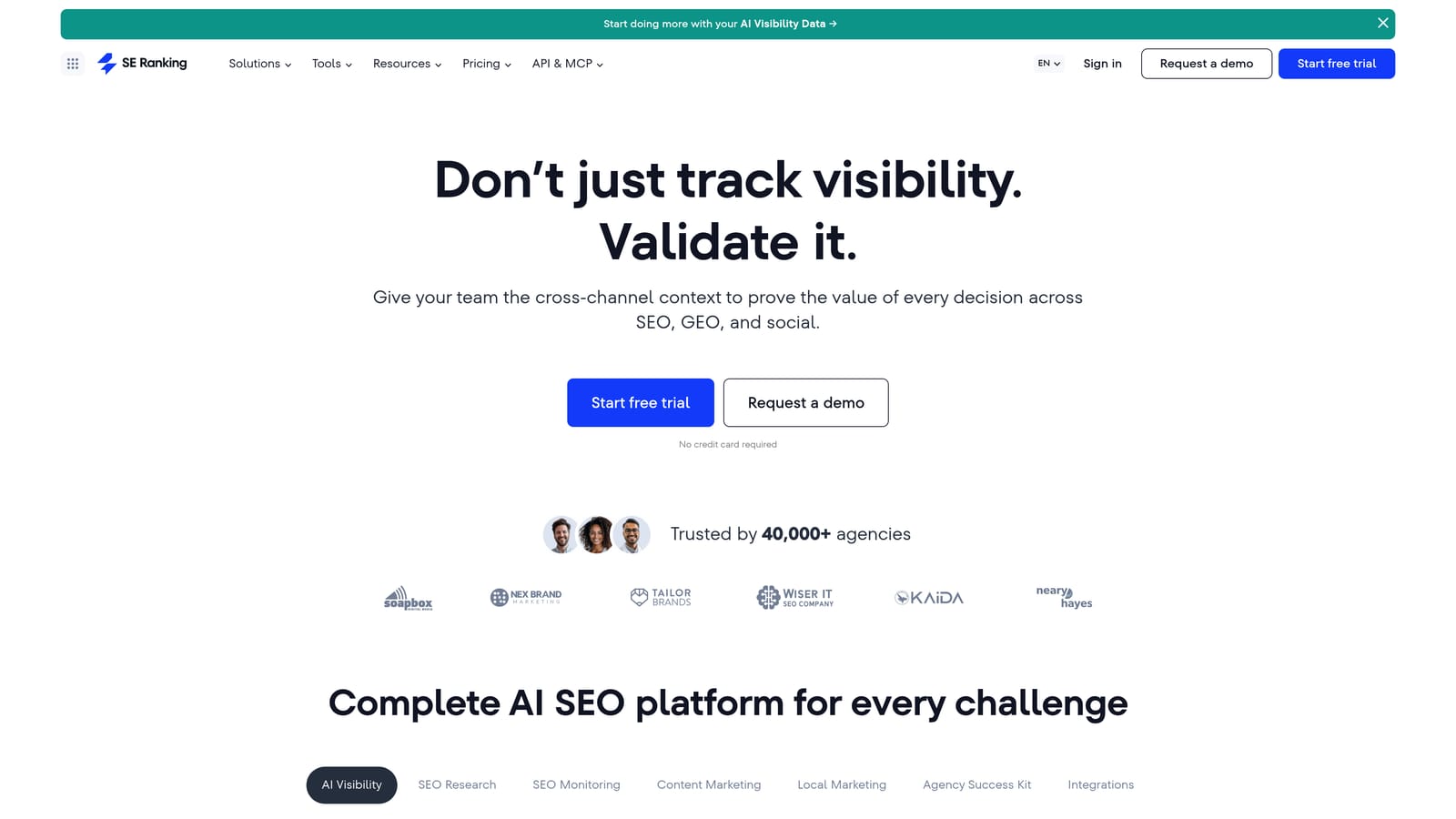
The white-label output is the headline. You can send clients branded reports instead of screenshots from a tool with someone else's logo on it, without paying enterprise prices.
What you get
- Daily rank tracking provides fresh positions for client keyword sets.
- White-label reports carry your branding, which saves hours of manual deck building.
- Competitor tracking shows how clients compare with the rivals they care about.
- Site audit surfaces technical issues in the same account as the rankings.
Fit and limits
It connects with Google Search Console, Google Analytics, and Looker Studio. Setup is simple enough that an account manager can configure a new client project without an SEO lead. The trade-off is depth: its backlink and research data are thinner than what the largest suites provide, so link-heavy analysis may send you elsewhere.
Pricing: subscription plans scale with the number of keywords you track. See the website for current figures and verify them as of October 2026.
Best for: Small and mid-size agencies producing client reports.
5. AccuRanker
AccuRanker is a dedicated rank tracker built around speed and scale. It does one job and does not try to be a research suite, which makes it a fit for teams where tracking volume is the main problem.
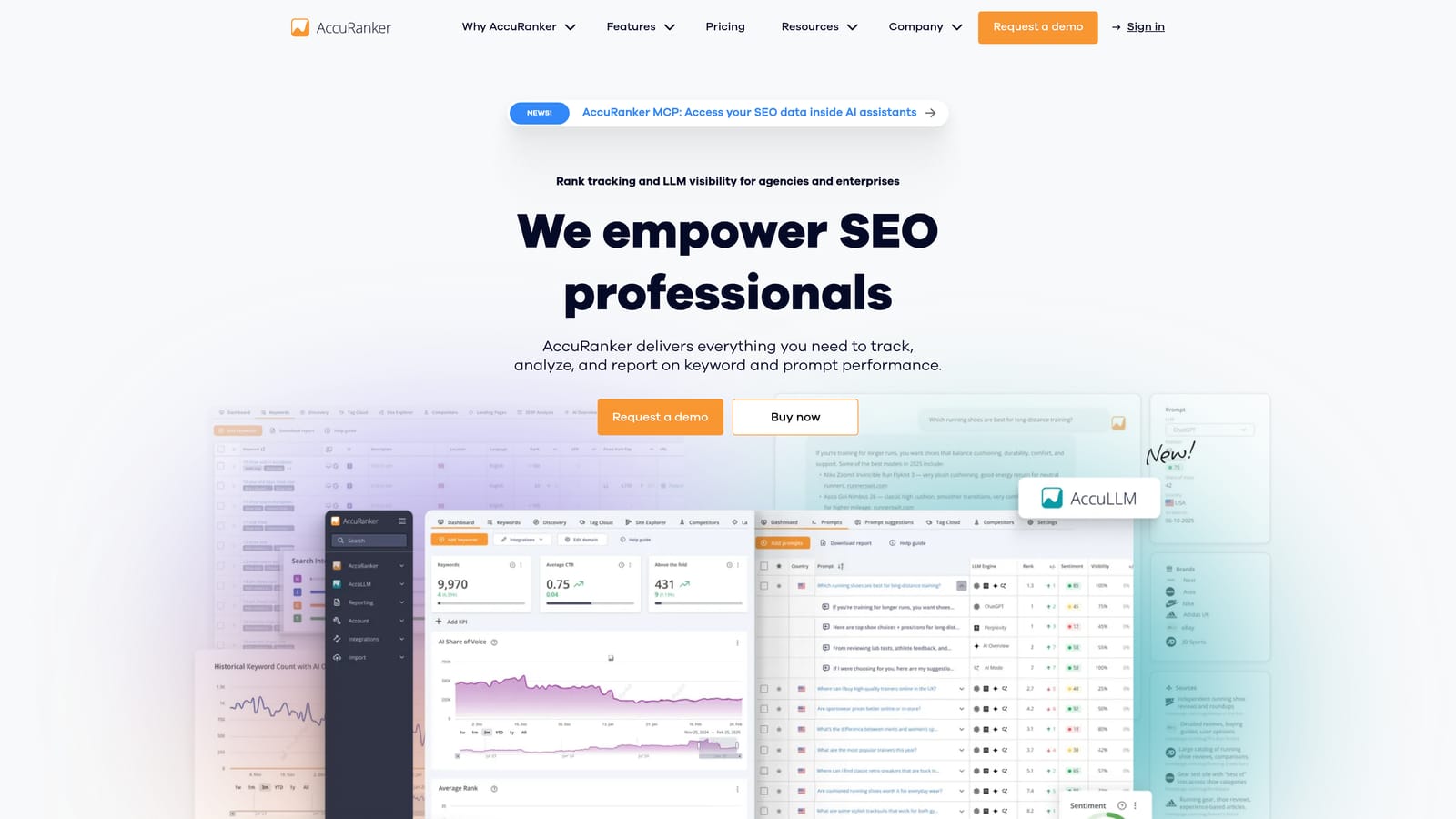
Its distinctive feature is on-demand refreshes. Instead of waiting for the next scheduled update after a deploy or algorithm shift, you can request fresh data for large keyword sets and see the effect sooner.
- On-demand rank refreshes let you verify the impact of a change without waiting for the next cycle.
- Large keyword capacity supports portfolios with many thousands of terms across sites and markets.
- Share of voice condenses a big keyword set into a single visibility trend you can report upward.
- Keyword tagging and segmentation lets you slice results by product line, region, or funnel stage.
Integrations include Google Search Console, Google Analytics, and API access, so data can flow into your own warehouse or dashboards. Setup takes some planning for tagging structure, and the day-to-day owner is usually an SEO analyst or data-minded specialist.
The limitation follows from its focus: it is rank tracking only, with no keyword research, audits, or content tools. You will pair it with other software. It is also probably more than a freelancer needs.
Pricing: plans are based on keyword volume. See the website and verify as of October 2026.
Best for: Enterprise and large-agency teams tracking many thousands of keywords.
6. Advanced Web Ranking
Advanced Web Ranking (AWR) is a rank tracking and reporting platform designed for agencies that want control over how data is presented. Where other tools hand you a template, AWR lets you build the report.
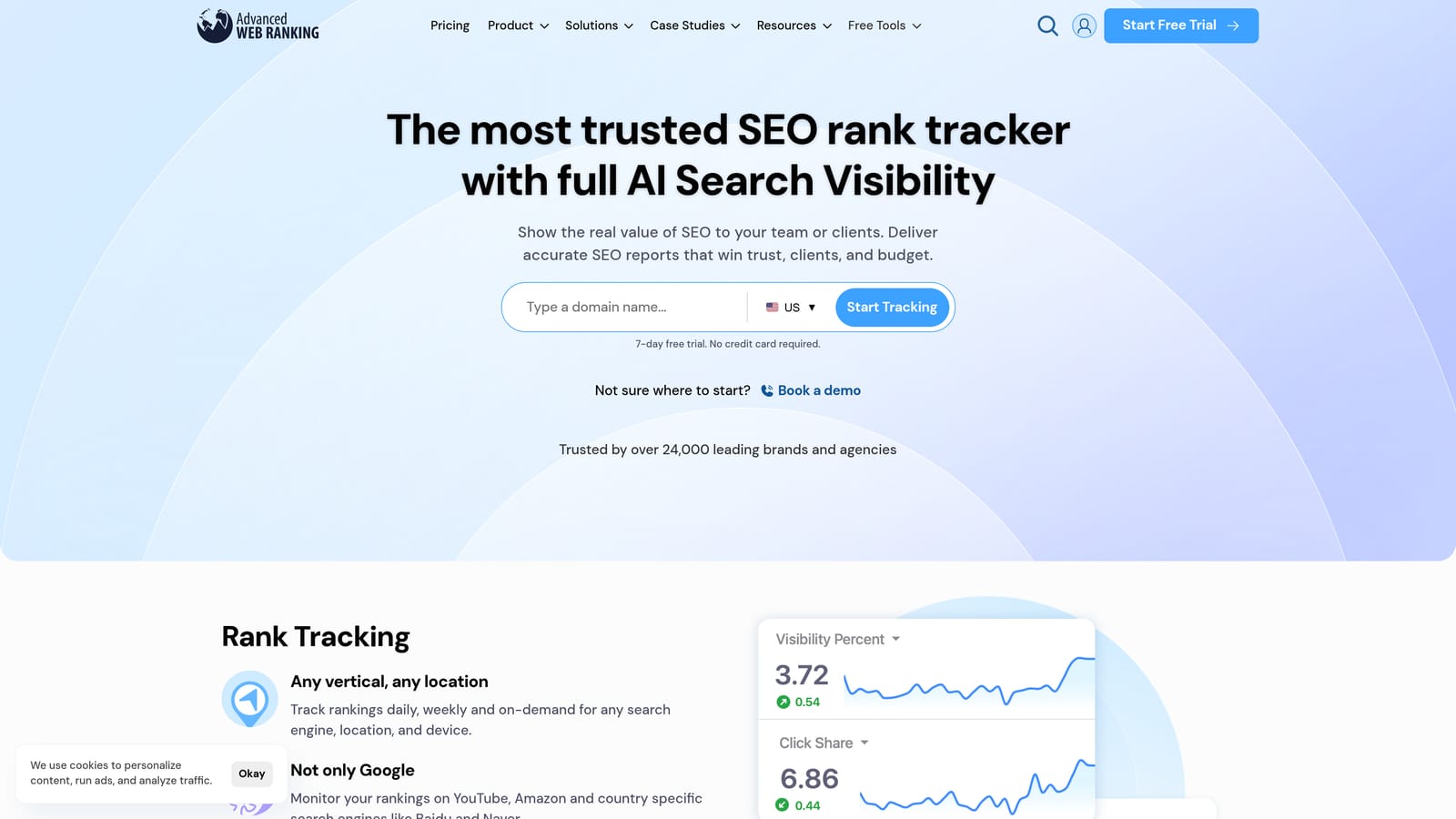
That flexibility is its edge. Client-facing dashboards and customizable reports suit agencies with several clients who each want different metrics, layouts, or search engines.
- Customizable reports let you match each client's preferred metrics instead of forcing one format on everyone.
- Client dashboards give customers a live view, which cuts down on status-update emails.
- Local and device tracking covers the markets and screens a client sells into.
- Multiple search engine support helps when clients care about engines beyond Google.
It integrates with Google Search Console and Google Analytics and offers API access. Expect a longer setup, because customization means decisions: someone on the agency side, often a reporting or SEO lead, needs to own templates and project structure.
The cost of that power is a steeper learning curve than lighter tools. A solo marketer who wants a quick number will find it more than necessary.
Pricing: subscription plans; see the website and verify current tiers as of October 2026.
Best for: Agencies needing tailored multi-client reporting.
7. Mangools SERPWatcher
SERPWatcher is the rank tracker in the Mangools toolset, aimed at people who want something simple and affordable. It is bundled with KWFinder, so keyword research and tracking live in one inexpensive subscription.
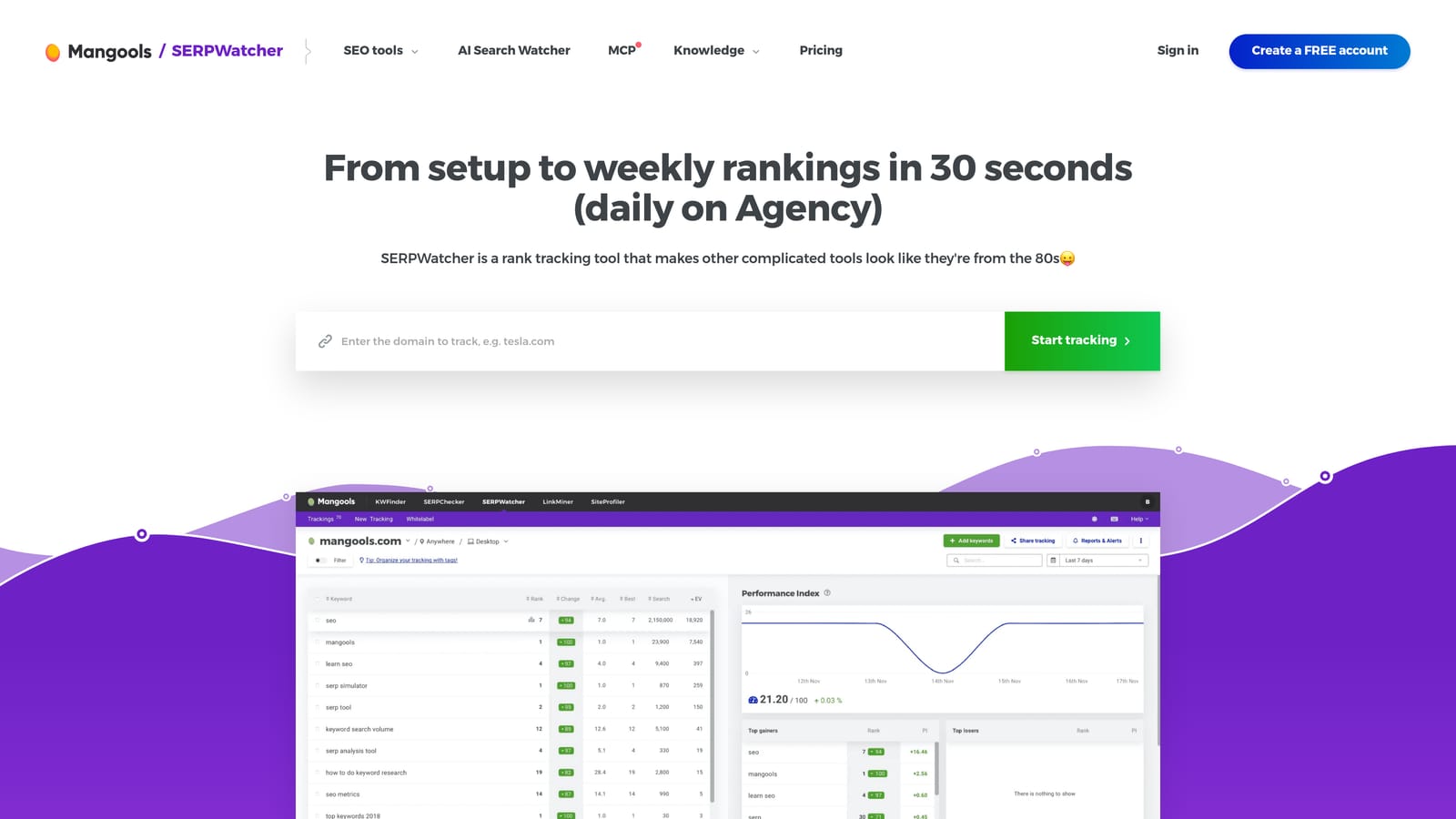
Its unusual idea is the performance index, a single metric that summarizes how your tracked keywords are doing. For beginners and small-site owners, one number is easier to follow than a grid of positions.
- Daily tracking keeps positions current without manual checks.
- Performance index condenses overall progress into one trend line you can glance at.
- Location targeting checks rankings for the city or country you serve.
- Bundled with KWFinder lets you move from finding keywords to tracking them in one account.
It integrates with Google Search Console. Setup takes minutes, and the person running it is usually the site owner or a freelancer.
The limits are scale and depth. Keyword caps are lower and advanced features are fewer, so it will feel cramped for agencies or large catalogs. If you need white-label reporting or heavy segmentation, look at other entries.
Pricing: a bundled subscription across the Mangools tools. See the website and verify as of October 2026.
Best for: Freelancers and small sites on a tight budget.
8. Nightwatch
Nightwatch is a rank tracking platform with local and device views and reporting suited to agencies. It is a good match when clients care about where they appear in specific cities and want that shown in dashboards they already use.
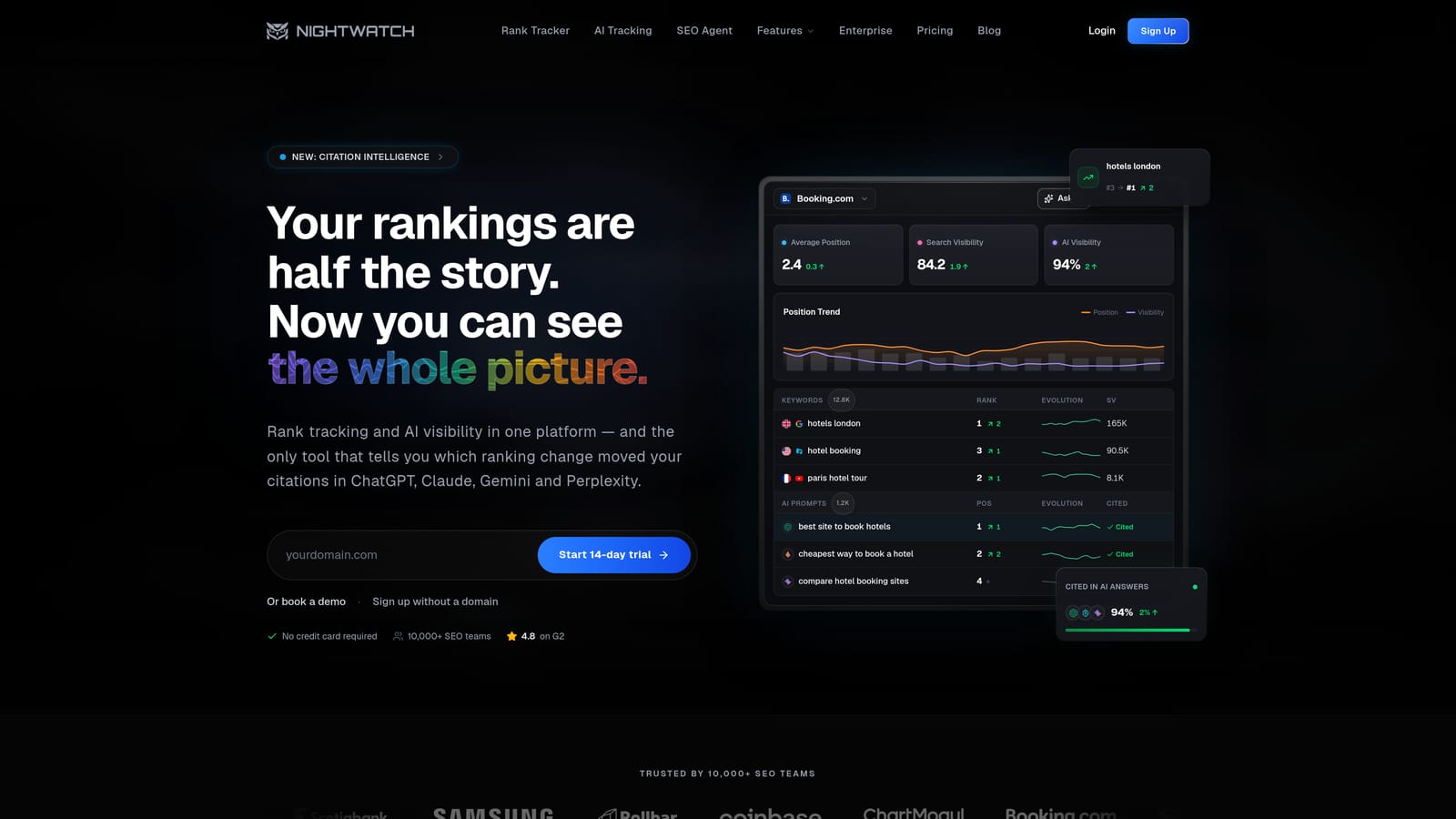
The standout is reporting integration, including Looker Studio, which lets agencies fold ranking data into the dashboards clients already read rather than asking them to log in somewhere new.
- Local rank tracking shows how positions differ by city or area, useful for multi-location businesses.
- Mobile and desktop views separate the two, since they often rank differently.
- Reporting dashboards present results in a client-ready format.
- Competitor tracking benchmarks your positions against rivals on the same keywords.
It connects to Looker Studio and Google Search Console. Setup is moderate, mainly building location lists and reports, and an agency SEO or reporting specialist typically manages it.
Its ecosystem is smaller than the big suites', and you should verify the current feature set, including any AI-search tracking, before you buy. It is not a research platform.
Pricing: plans are based on the number of keywords tracked. See the website and verify as of October 2026.
Best for: Agencies focused on local and reporting-driven tracking.
9. SerpApi
SerpApi is different in kind from the rest of the list: it is an API that returns structured, live search results, not a tracking application. You send a query with location and device parameters and receive JSON you can store, analyze, and chart however you like.
That makes it the choice for building a custom tracker, feeding a data warehouse, or monitoring result types the off-the-shelf tools do not report the way you want.
- Structured SERP JSON removes the need to scrape and parse pages yourself.
- Multiple search engines let one integration cover more than Google.
- Location and device parameters reproduce the localized, device-specific results your customers see.
- Many result types expose elements beyond the standard organic listings for custom analysis.
Access is through a REST API with client libraries for common languages. Setup depends entirely on your build: a developer or data engineer writes the scheduling, storage, and reporting layers.
That is also the limitation. There is no built-in reporting interface, so a marketer without engineering support cannot use it alone, and you take on the maintenance of whatever you build.
Pricing: usage-based plans with a free tier; volume of searches moves the price. Verify current terms as of October 2026.
Best for: Developers and data teams building custom rank monitoring.
Matching a Tracker to Your Situation
Most teams need two layers: a classic rank tracker for positions, and something that shows how AI answers treat the brand. The right pairing depends on who you are.
- Agencies: SE Ranking for mid-market white-label reports, Advanced Web Ranking for heavily customized client dashboards, or Nightwatch if local reporting leads.
- Solo marketers on a budget: Mangools SERPWatcher keeps cost and complexity low.
- Enterprise scale: AccuRanker for large keyword sets and fast refreshes.
- Developers building custom pipelines: SerpApi for raw, programmable results.
- One suite for research and tracking: Semrush, or Ahrefs if backlink data drives your decisions.
For teams adding AI visibility alongside classic rankings, Sight AI is the pick. It will not tell you your Google position, so run it next to one of the trackers above. What it adds is a view of whether ChatGPT, Claude, and Perplexity mention you, how they frame you, and a way to turn gaps into published content.
Stop guessing how AI models like ChatGPT and Claude talk about your brand. Get visibility into every mention, track content opportunities, and automate your path to organic traffic growth. Start tracking your AI visibility today and see exactly where your brand appears across top AI platforms.