Marketing agencies managing multiple client accounts face a unique SEO challenge in 2026: the search landscape no longer lives in one place. You're not just chasing Google rankings anymore. You're tracking how AI models like ChatGPT, Perplexity, and Claude mention your clients, producing content at scale across dozens of accounts, and making sure every published page gets indexed before the competition does.
The tools that served agencies well three years ago weren't built for this. The list below covers platforms purpose-built or well-suited for modern agency workflows, evaluated on scalability, AI-readiness, feature depth, and value for multi-client operations. If you want a broader framework for evaluating performance across all these dimensions, our guide on how to measure SEO success is a solid starting point.
Here are the top SEO tools for marketing agencies in 2026.
1. Sight AI
Best for: Agencies needing AI visibility tracking, content generation, and indexing in one platform.
Sight AI is an all-in-one AI-powered SEO and content platform that addresses three core agency needs simultaneously: tracking how AI models mention client brands, generating SEO and GEO-optimized content at scale, and ensuring that content gets indexed fast.
Where This Tool Shines
What separates Sight AI from most tools on this list is its scope. Most platforms solve one piece of the modern agency puzzle. Sight AI connects AI visibility monitoring, content production, and technical indexing into a single workflow, which matters when you're managing ten or twenty client accounts and can't afford to stitch together six different tools.
The AI visibility layer is particularly relevant for agencies in 2026. As more search queries get answered directly by AI platforms rather than traditional SERPs, knowing whether your clients are being mentioned, recommended, or ignored by ChatGPT and Claude is no longer optional. Sight AI's tracking across 6+ AI models gives agencies that visibility where most SEO platforms still have a blind spot.
Key Features
AI Visibility Score: Tracks brand mentions across ChatGPT, Claude, Perplexity, and three or more additional AI platforms, giving agencies a quantifiable measure of AI search presence.
Sentiment Analysis and Prompt Tracking: Goes beyond mention frequency to analyze how AI models frame client brands in their responses, helping agencies identify positioning issues before they compound.
13+ Specialized AI Content Agents: Generates listicles, how-to guides, and explainers optimized for both traditional SEO and Generative Engine Optimization (GEO), with each agent tuned to a specific content format.
Autopilot Mode: Enables hands-off, automated content publishing for agencies that need to maintain consistent output across multiple client accounts without manual oversight at every step.
IndexNow Integration and Automated Sitemap Updates: Pushes newly published content to search engines faster, reducing the lag between publication and discovery that often costs agencies rankings on competitive topics.
CMS Auto-Publishing: Connects directly to client CMS platforms, removing the manual step of copying and uploading content and streamlining the end-to-end production workflow.
Best For
Agencies that want to consolidate their AI visibility tracking, content production, and indexing operations into one platform rather than managing separate tools for each function. Particularly strong for agencies whose clients are in competitive verticals where AI search presence is becoming a meaningful traffic driver.
Pricing
Contact Sight AI for agency pricing. Tiered plans are available based on account volume and feature requirements.
2. Writesonic
Best for: Agencies producing high volumes of SEO-optimized content across multiple formats and clients.
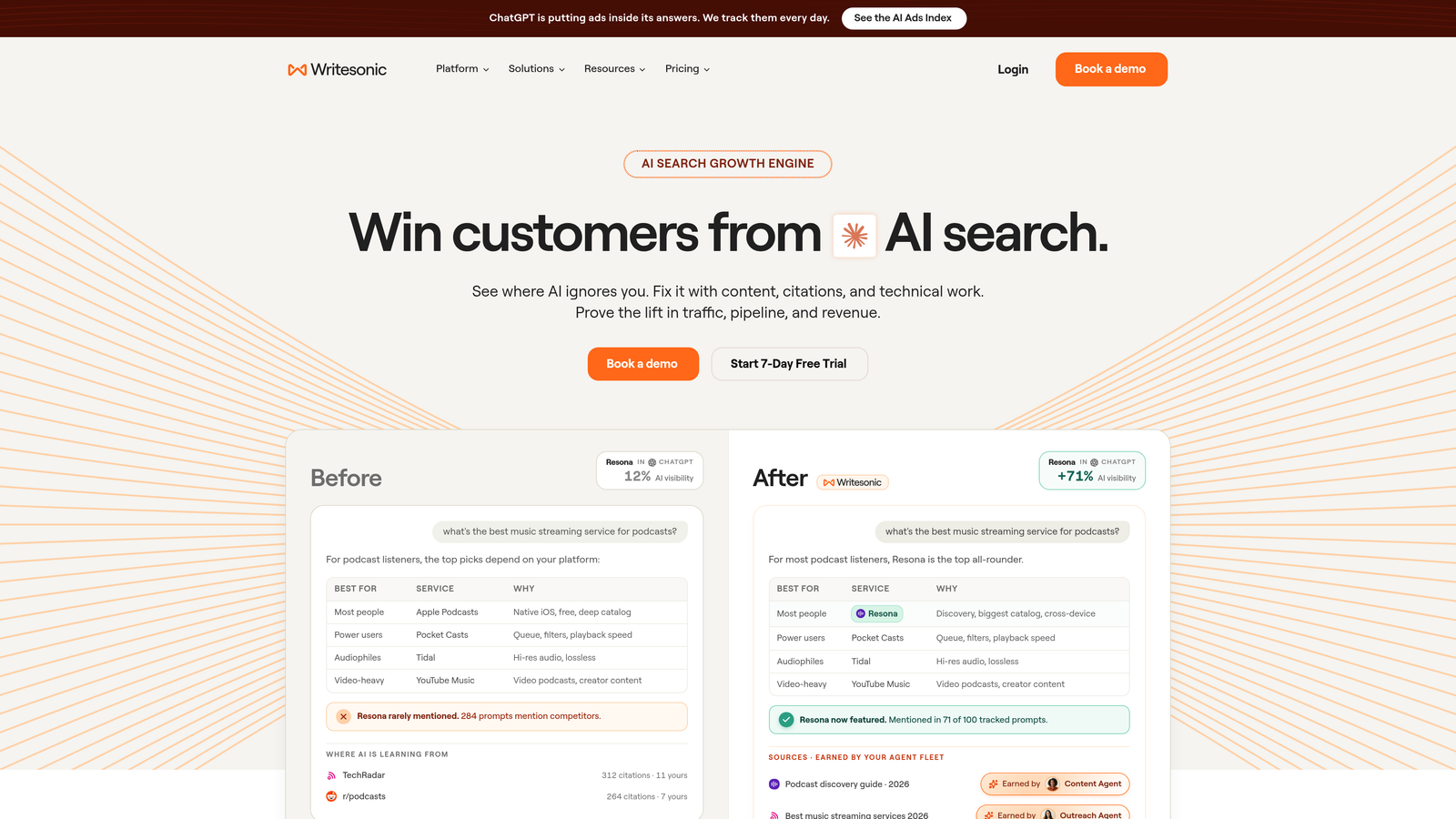
Writesonic is an AI content generation platform with built-in SEO optimization modes, designed for agencies that need to move fast and produce a lot.
Where This Tool Shines
Writesonic's strength is volume with structure. Agencies that need to produce blog posts, landing pages, and ad copy across multiple clients simultaneously will find its multi-format output useful. The SEO optimization layer helps ensure that generated content is structured around target keywords and search intent, rather than producing generic AI text that needs heavy editing before it's useful.
The team collaboration features are worth noting for agency workflows. Multiple team members can work within shared workspaces, which helps with review processes and keeps client work organized without relying on external project management tools for every handoff.
Key Features
AI Article and Blog Generation with SEO Layer: Produces long-form content with keyword targeting and structure optimization built into the generation process, reducing post-editing time.
Multi-Format Output: Handles landing pages, social content, ad copy, and long-form articles from a single platform, reducing the number of tools agencies need for content production.
Team Collaboration Features: Shared workspaces and role-based access make it practical for agencies with multiple writers and account managers working across client portfolios.
CMS and SEO Platform Integrations: Connects to popular publishing and optimization platforms, supporting a smoother handoff from content creation to live publication.
Best For
Content-heavy agencies that prioritize production speed and format variety. Well-suited for teams that need to maintain consistent output across a large client roster without sacrificing basic SEO structure in the output.
Pricing
Credit-based plans with team and agency tiers available. Check writesonic.com for current pricing, as plans update frequently.
3. AirOps
Best for: Technically sophisticated agencies building custom AI-powered workflows for SEO and content operations.
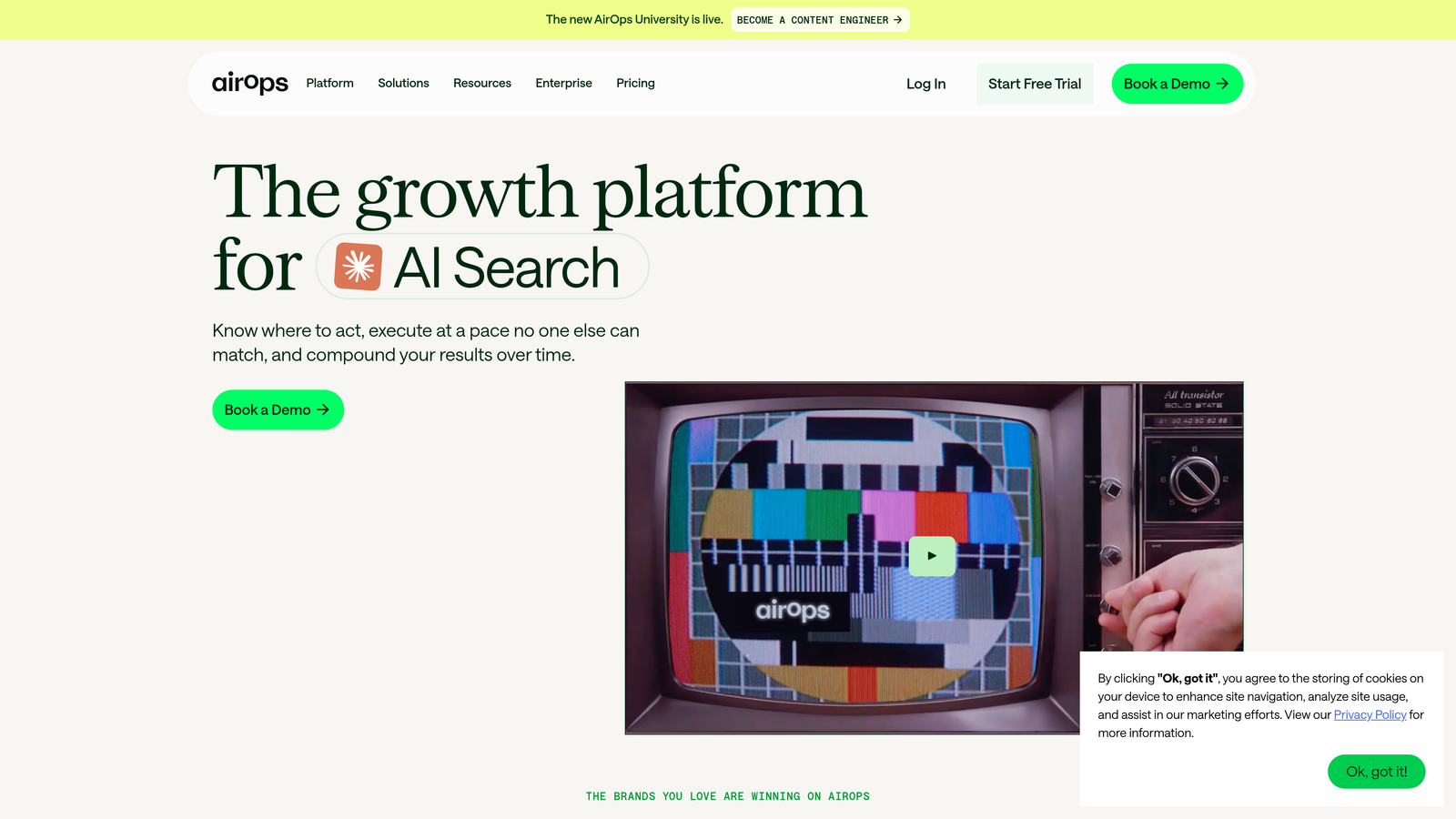
AirOps is a workflow automation platform that lets agencies design and run custom AI pipelines for content production, SEO operations, and data-driven marketing tasks at scale.
Where This Tool Shines
AirOps is less of an out-of-the-box SEO tool and more of a platform for building exactly the workflow your agency needs. If your team has specific, repeatable processes, such as generating content briefs from keyword data, running batch SEO audits, or building client reporting pipelines, AirOps lets you automate those processes using AI models connected to your own data.
This flexibility makes it particularly appealing to agencies with technical staff who want to move beyond the constraints of pre-built tools. The tradeoff is setup time: getting real value out of AirOps requires thoughtful workflow design upfront, which isn't ideal for smaller teams without dedicated operations or technical resources.
Key Features
Custom AI Workflow Builder: Drag-and-drop pipeline creation for repeatable SEO and content operations, without requiring deep coding knowledge for basic automations.
Proprietary Data Integration: Connects AI models to agency-specific and client-specific data sources, enabling outputs that reflect real business context rather than generic AI responses.
Scalable Pipeline Automation: Handles content brief generation, SEO audits, and optimization tasks at scale across multiple client accounts simultaneously.
Multiple AI Model Support: Integrates with a range of AI models, giving agencies flexibility to choose the right model for each specific workflow or task type.
Best For
Agencies with technical teams that want to build bespoke SEO and content automation pipelines. Best suited for operations-focused shops that have already identified specific repeatable workflows they want to systematize with AI.
Pricing
Tiered plans based on usage volume. Verify current pricing at airops.com.
4. Profound
Best for: Agencies focused on improving client visibility in AI-generated search answers and answer engine optimization.
Profound is an AI answer engine optimization platform that tracks how brands appear in AI-generated search responses, helping agencies understand and improve client presence in LLM-driven results.
Where This Tool Shines
Profound is built specifically for the shift toward AI-generated answers in search. Where traditional SEO tools measure rankings and click-through rates, Profound focuses on whether a brand is being surfaced, cited, or recommended when AI platforms respond to relevant queries. For agencies whose clients are in categories where AI-generated answers carry significant influence, this kind of tracking is increasingly hard to ignore.
The competitive benchmarking capability is particularly useful for agency reporting. Being able to show clients how their AI search presence compares to competitors adds a dimension to SEO reporting that most agencies haven't been able to include until recently.
Key Features
AI Answer Presence Tracking: Monitors whether and how client brands appear in AI-generated responses across major platforms, providing a structured view of AI search visibility.
Gap and Opportunity Identification: Surfaces areas where competitors are being mentioned and clients are not, creating actionable input for GEO content strategy.
Competitive Benchmarking in AI Search: Compares brand visibility in AI-generated results against direct competitors, supporting stronger client reporting and strategy conversations.
GEO Strategy Recommendations: Provides actionable guidance for improving how AI models reference and recommend client brands in relevant query contexts.
Best For
Agencies that have started fielding questions from clients about AI search visibility and need a dedicated platform for tracking and improving performance in that channel. Strong fit for agencies working with brands in competitive, high-consideration categories.
Pricing
Contact Profound for pricing details. Verify current plans at profound.ai.
5. Peec
Best for: Agencies tracking brand share-of-voice and mention frequency across AI-generated search results.
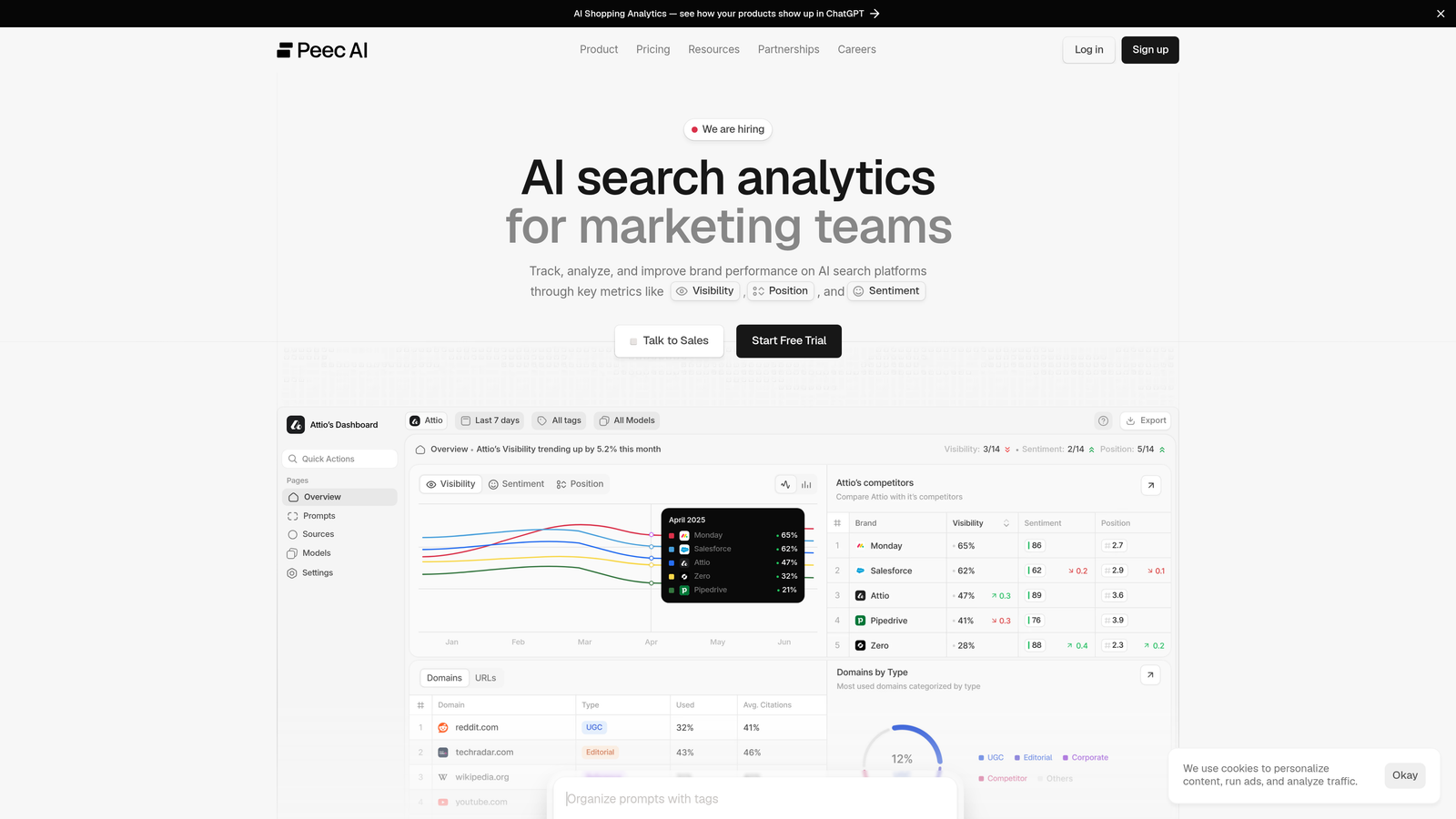
Peec is an AI search visibility analytics tool that measures how often and how prominently brands are mentioned in AI-generated responses, with a focus on competitive share-of-voice analysis.
Where This Tool Shines
Peec approaches AI visibility from an analytics and measurement angle. Rather than focusing primarily on content recommendations or strategy guidance, it gives agencies clean data on mention frequency, competitive positioning, and visibility trends over time. For agencies that need to build reporting around AI search performance, this kind of structured, trackable data is genuinely useful.
The trend monitoring capability adds longitudinal value. Agencies can track whether content and GEO optimization efforts are moving the needle on AI mention rates over weeks and months, giving both the agency team and clients a clearer picture of what's working.
Key Features
Brand Mention Tracking Across AI Platforms: Monitors how frequently client brands appear in AI-generated responses across key search platforms, establishing a baseline for ongoing measurement.
Competitive Share-of-Voice Analysis: Quantifies how a client's AI mention rate compares to direct competitors, providing context that makes visibility data more meaningful in reporting.
Trend Monitoring: Tracks brand visibility changes over time, helping agencies connect content and optimization activities to shifts in AI search presence.
Agency-Friendly Reporting: Outputs are structured in a format suitable for client-facing deliverables, reducing the time needed to translate raw data into presentable reports.
Best For
Agencies that need structured, reportable data on AI search visibility for client reporting. Particularly useful for teams that want to demonstrate measurable progress on GEO efforts over time.
Pricing
Verify current pricing and plan options at peec.ai.
6. Promptwatch
Best for: Agencies building GEO strategies who need granular, prompt-level insight into how AI models respond to brand-related queries.
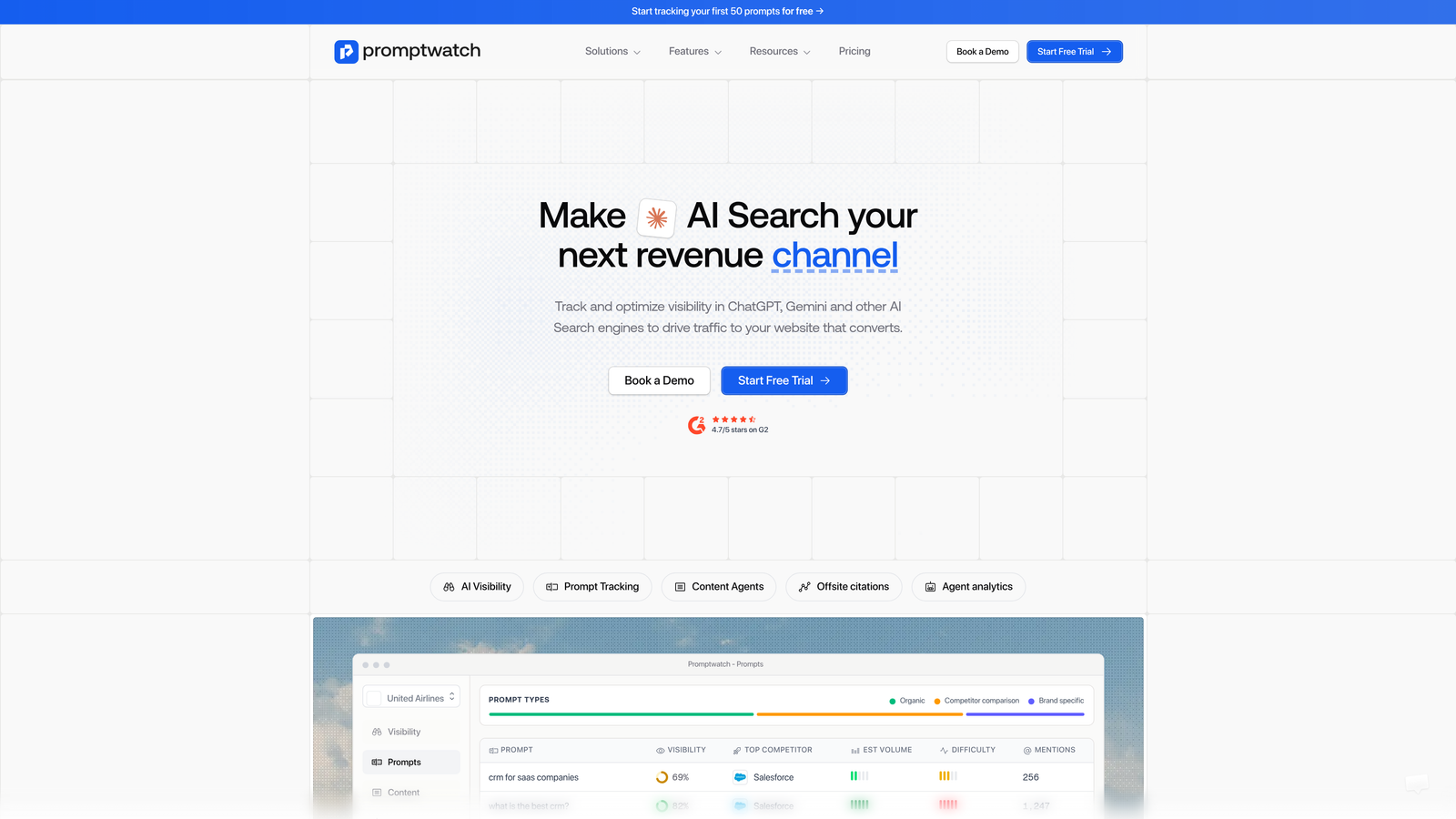
Promptwatch is a prompt-level AI monitoring tool that tracks how AI models respond to specific brand and topic queries, giving agencies detailed visibility into AI model behavior for GEO strategy development.
Where This Tool Shines
Where most AI visibility tools focus on aggregate mention tracking, Promptwatch goes a level deeper. It monitors how AI models respond to specific prompts, which means agencies can track not just whether a brand is mentioned, but how it's framed, what context surrounds it, and how those responses shift over time as AI models update their training or knowledge. That granularity is valuable when you're trying to understand why a brand's AI visibility is improving or declining.
The prompt library management feature is practical for agencies running ongoing GEO monitoring across multiple clients. Rather than recreating monitoring setups for each account, teams can organize and manage prompt sets systematically, keeping tracking consistent and scalable.
Key Features
Prompt-Level Response Monitoring: Tracks AI model responses to specific brand and topic queries, providing detail that aggregate mention tracking tools typically don't capture.
Brand Positioning Change Tracking: Monitors how AI model responses to brand-related prompts evolve over time, helping agencies detect shifts in AI-generated brand perception before they affect visibility metrics.
GEO Strategy Validation: Enables agencies to test whether content and optimization changes are influencing how AI models respond to relevant prompts, creating a feedback loop for GEO work.
Prompt Library Management: Organizes monitoring prompts across clients and campaigns, making it practical to maintain consistent, scalable AI response tracking across a full agency portfolio.
Best For
Agencies that are actively building or refining GEO strategies and need detailed, prompt-level data to guide that work. Best suited for teams that want to go beyond surface-level mention tracking and understand the mechanics of how AI models position client brands.
Pricing
Verify current pricing at promptwatch.io.
Choosing the Right Tools for Your Agency Stack
No single tool covers every need, but the right combination depends on where your agency is focused right now.
If you want one platform that handles AI visibility, content, and indexing: Sight AI is the most complete option on this list. It's built specifically for agencies that don't want to manage separate tools for each function, and its AI visibility tracking across 6+ platforms addresses the gap that most traditional SEO tools still can't fill.
If your primary need is high-volume content production: Writesonic handles multi-format output with an SEO layer built in, making it a practical choice for content-heavy agencies managing large client rosters.
If your team is technically sophisticated and wants custom automation: AirOps gives you the flexibility to build exactly the workflows you need, connecting AI models to your own data and processes at scale.
If you're focused specifically on AI answer visibility and GEO reporting: Profound and Peec both address this space from slightly different angles. Profound leans toward strategy and gap analysis; Peec leans toward structured analytics and client-facing reporting. Many agencies will find value in using both alongside a broader platform.
If you need granular, prompt-level AI monitoring for GEO strategy work: Promptwatch fills a niche that the other tools on this list don't cover, making it a strong complement to any AI visibility stack.
The agencies winning in 2026 are those that treat AI search visibility as a real, measurable channel alongside traditional SEO, not as a future consideration. Stop guessing how AI models like ChatGPT and Claude talk about your brand. Start tracking your AI visibility today and see exactly where your brand appears across top AI platforms.