Agencies are under mounting pressure to deliver more content, better reporting, and measurable organic growth — faster than ever. AI marketing software has become the operational backbone for agencies that want to scale without proportionally scaling headcount. But not all AI marketing tools are built with agency workflows in mind.
Some excel at content generation. Others track brand visibility across AI search engines like ChatGPT, Claude, and Perplexity — a channel that's rapidly reshaping how clients get discovered. This list covers the best AI marketing software for agencies in 2026, selected based on agency-specific utility, feature depth, and how well each tool supports the full content and visibility lifecycle.
Whether you're managing SEO deliverables for a dozen clients or trying to ensure your clients appear in AI-generated answers, there's a tool here built for your workflow. If you want a deeper look at analytics-focused platforms, check out our SEO reporting tools for agencies guide as a companion resource.
1. Sight AI
Best for: Agencies that want a unified platform for AI visibility tracking, content generation, and automated publishing.
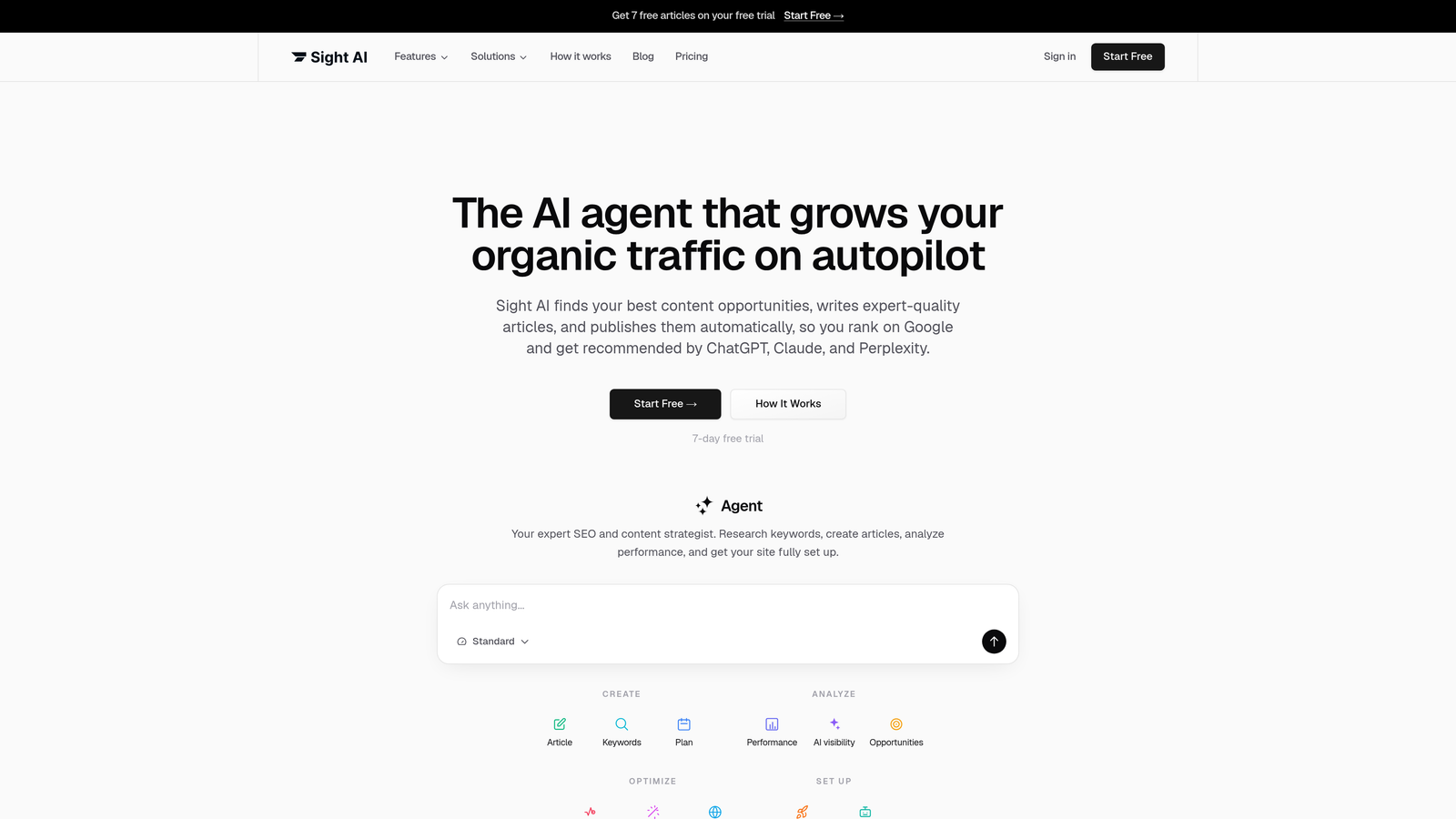
Sight AI is an all-in-one AI marketing platform combining AI visibility tracking, a 13-agent content writer, IndexNow-powered indexing, and CMS auto-publishing in a single workflow.
Where This Tool Shines
Most agencies are currently stitching together three or four separate tools to cover content creation, AI search monitoring, and publishing. Sight AI consolidates that stack. The platform tracks how client brands appear across six AI platforms simultaneously, giving agencies a reportable AI Visibility Score they can actually put in front of clients.
The content side is equally strong. Rather than relying on a single generalist AI, Sight AI deploys 13 specialized agents that generate SEO and GEO-optimized content formats: listicles, how-to guides, explainers, and more. Pair that with Autopilot Mode and CMS auto-publishing, and agencies can run content operations at a scale that would otherwise require significantly more headcount.
Key Features
AI Visibility Score: Tracks client brand mentions across ChatGPT, Claude, Perplexity, and three or more additional AI platforms, with sentiment analysis built in.
Prompt Tracking: Identifies which specific queries are triggering client brand mentions in AI responses — and which queries are missing them entirely, creating a clear content gap map.
13+ Specialized AI Writing Agents: Generates SEO and GEO-optimized content across multiple formats, each agent tailored to a specific content type rather than relying on a one-size-fits-all model.
IndexNow Integration: Automatically submits new content to search engines via IndexNow for faster indexing and discovery, removing a manual step from the agency publishing workflow.
CMS Auto-Publishing and Sitemap Updates: Pushes content directly to client CMS platforms and keeps sitemaps current without manual intervention.
Best For
Agencies managing multiple clients who need both content output and AI search visibility reporting in one platform. Particularly well-suited for teams that want to offer GEO reporting as a client deliverable without building a separate monitoring stack from scratch.
Pricing
Sight AI offers tiered plans designed for agency-scale usage. Verify current pricing and available agency tiers directly at trysight.ai.
2. Writesonic
Best for: Agencies needing high-volume content output across diverse formats with consistent brand voice.
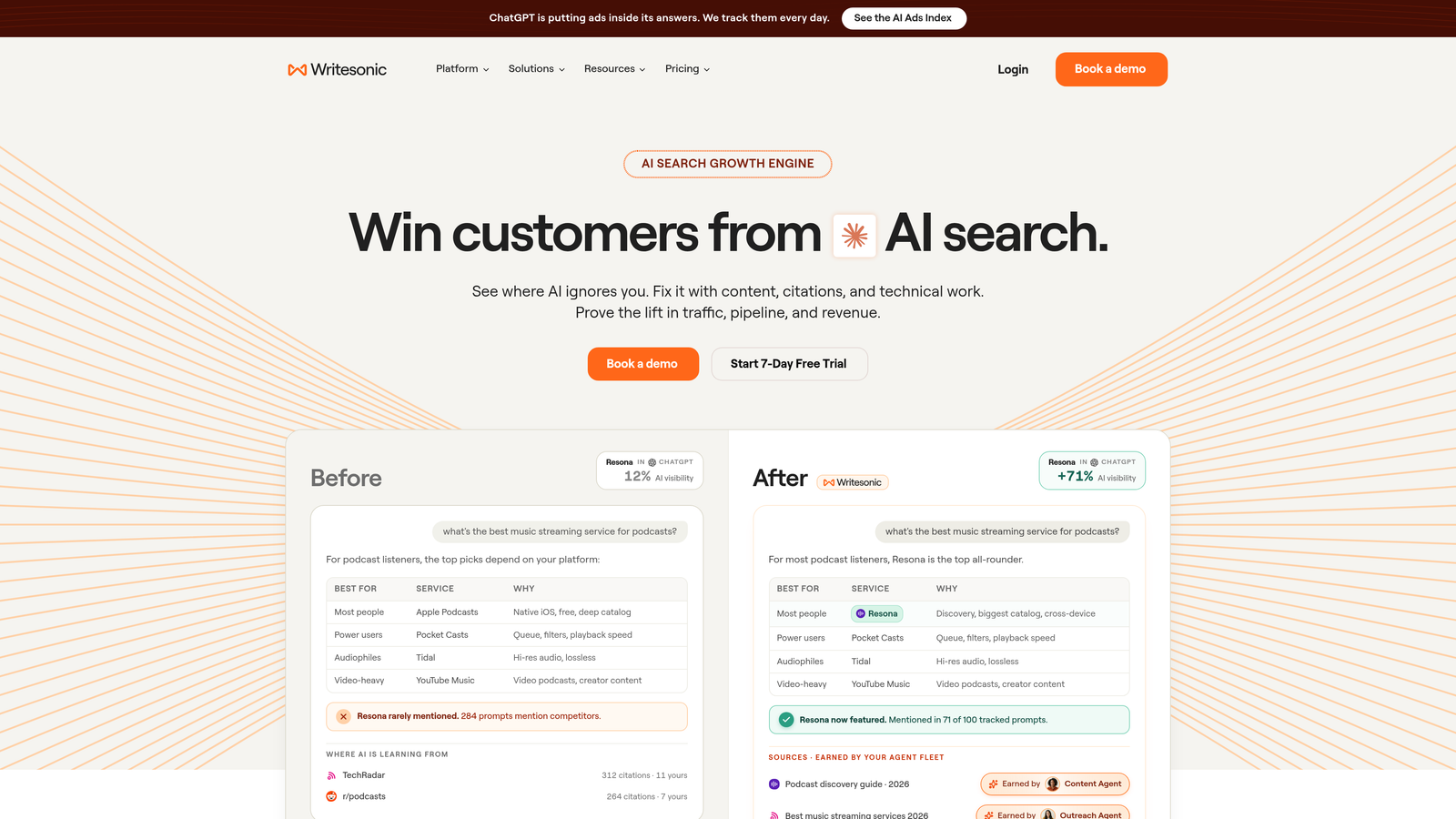
Writesonic is an AI content generation platform with a broad template library covering blog posts, ad copy, landing pages, and product descriptions.
Where This Tool Shines
Writesonic's strength is breadth. For agencies juggling multiple clients across different industries, the template library covers enough ground that writers can move quickly between content types without rebuilding from scratch each time. The brand voice customization feature is particularly useful for agencies managing clients with established tone guidelines.
The platform has also expanded its SEO capabilities over time, integrating article writing with SEO-focused features that help align content with search intent. Chatsonic, its conversational AI assistant, gives team members a flexible tool for ideation and quick drafting tasks beyond formal templates.
Key Features
Broad Template Library: Covers blog posts, ad copy, landing pages, product descriptions, and more — reducing ramp-up time when switching between client content types.
Brand Voice Customization: Allows agencies to define and save distinct brand voices per client, helping maintain consistency across high-volume content production.
AI Article Writer with SEO Integrations: Generates long-form content with search optimization considerations built into the workflow.
Chatsonic: A conversational AI assistant useful for ideation, quick copy generation, and ad hoc content tasks.
Agency-Scale Pricing Tiers: Team and agency plans accommodate multiple users and higher usage volumes.
Best For
Content-heavy agencies that need to produce large volumes of diverse marketing copy across multiple clients and formats. Best suited for teams where output velocity is the primary bottleneck.
Pricing
Writesonic offers multiple tiers including team and agency plans. Verify current pricing at writesonic.com before committing.
3. AirOps
Best for: Technically sophisticated agencies that want to build custom, repeatable AI-powered content and marketing workflows.
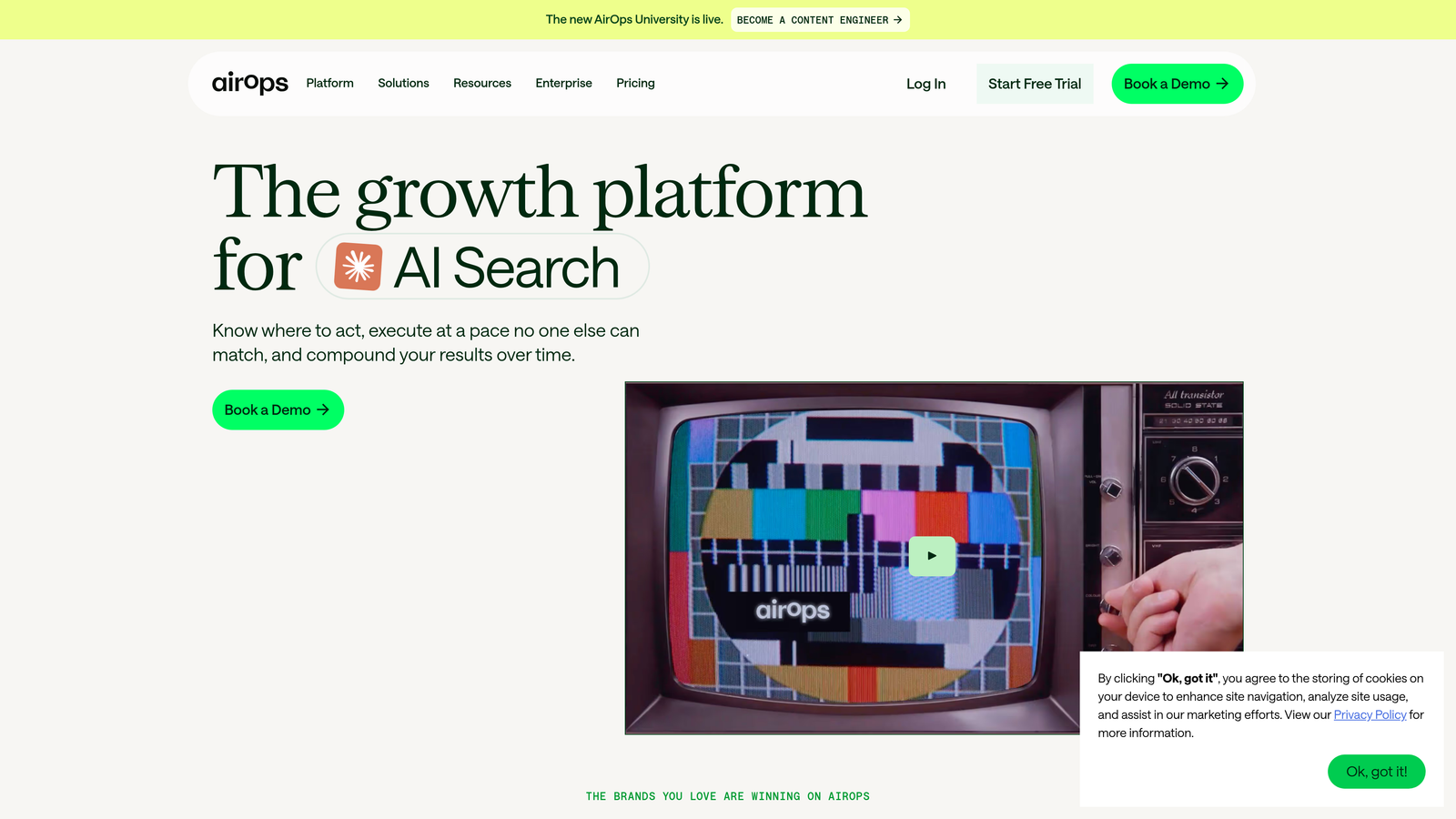
AirOps is an AI workflow automation platform that lets agencies design and run custom AI pipelines using a visual workflow builder.
Where This Tool Shines
AirOps is less of a plug-and-play content tool and more of an infrastructure layer for agencies that want to build their own AI-powered processes. Think bulk content brief generation, automated content refresh pipelines, or SEO audit workflows that connect directly to a client's CMS. If your agency has specific, repeatable operations that don't fit neatly into off-the-shelf tools, AirOps gives you the building blocks to construct exactly what you need.
The ability to connect multiple LLMs to existing agency data sources is a meaningful differentiator. Rather than working inside a closed system, AirOps acts as an orchestration layer that can pull in client data, run it through AI models, and push outputs to wherever they need to go.
Key Features
Visual Workflow Builder: Lets agencies design custom AI automation pipelines without deep engineering resources, using a drag-and-drop interface.
LLM Flexibility: Supports multiple AI models, allowing agencies to choose the best model for each specific task within a workflow.
Data Source Connections: Integrates with existing agency data sources and CMS platforms, enabling workflows that pull real client data into AI operations.
Bulk Content Operations: Well-suited for large-scale tasks like mass brief generation, content audits, or structured content refresh programs.
Custom Pipeline Design: Agencies can build proprietary workflows that become a differentiating operational asset rather than relying on shared templates.
Best For
Agencies with technical team members who want to automate complex, repeatable content and marketing operations. Less ideal for teams looking for a simple, out-of-the-box content generation solution.
Pricing
Verify current AirOps pricing and plan details at airops.com, as tiers vary based on workflow volume and team size.
4. Profound
Best for: Agencies whose clients are asking whether they appear in AI-generated search results and need data to answer that question.
Profound is an AI search visibility platform that tracks how brands appear inside responses generated by major large language models.

Where This Tool Shines
The question agencies are increasingly fielding from clients is a simple one: "Are we showing up when people ask ChatGPT about our category?" Profound is built specifically to answer that. It monitors brand presence inside AI-generated responses across major LLMs, giving agencies the data layer they need to build a credible GEO reporting practice.
The platform's competitive visibility comparisons are particularly useful for client-facing deliverables. Rather than presenting abstract concepts about generative engine optimization, agencies can show clients exactly where they stand relative to competitors inside AI search responses — a concrete, reportable metric that resonates with clients who are already familiar with traditional share-of-voice reporting.
Key Features
AI Response Brand Tracking: Monitors how and when client brands appear inside AI-generated answers across major LLMs.
GEO Strategy Support: Provides data to inform and validate generative engine optimization efforts for client accounts.
Competitive Visibility Comparisons: Benchmarks client brand presence against competitors inside AI search responses.
Reportable Metrics: Surfaces data in formats suitable for client-facing reporting, making AI visibility tangible for stakeholders.
LLM Coverage: Tracks presence across multiple major AI platforms, including ChatGPT and others.
Best For
Agencies building GEO services into their offering and needing a dedicated AI visibility data source to support client reporting and strategy development.
Pricing
Verify current Profound pricing at profound.co — plans may vary based on the number of brands and queries tracked.
5. Peec
Best for: Agencies that need competitive share-of-voice benchmarking inside AI search responses for multi-client reporting.
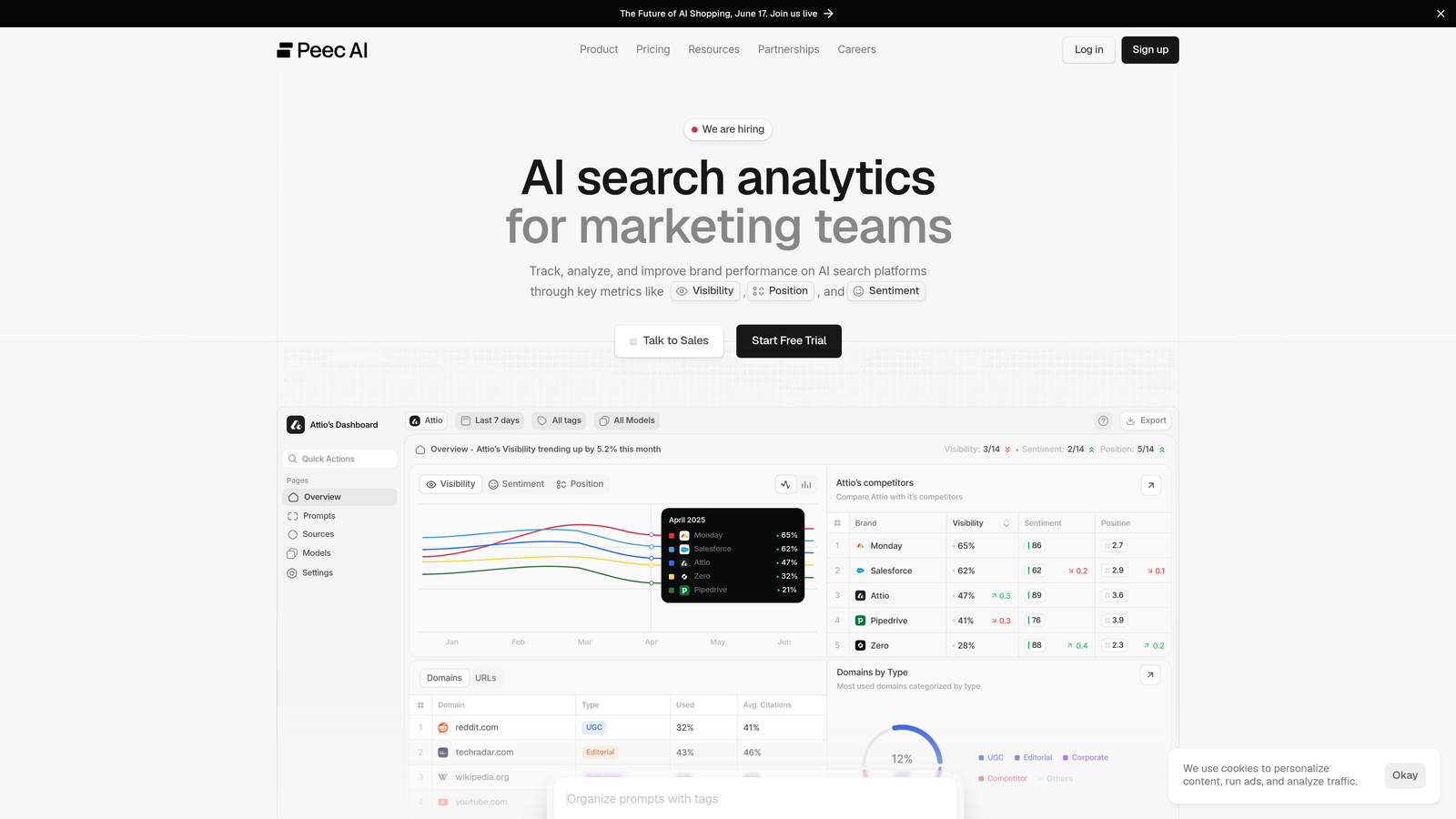
Peec is an AI visibility monitoring tool that tracks brand mentions across AI search platforms and benchmarks client performance against competitors.
Where This Tool Shines
Peec's differentiating angle is competitive context. Rather than just telling you whether a client brand appears in AI responses, it benchmarks that presence against competitors — giving agencies the share-of-voice framing that clients already understand from traditional SEO and paid media reporting. That familiar framing makes it easier to communicate AI visibility performance in client meetings without having to re-educate stakeholders on an entirely new concept.
The multi-client management capabilities make it practical for agency use specifically. Tracking AI visibility for a single brand is one thing; managing that data across a portfolio of clients and presenting it in a coherent, comparable format is another. Peec is designed with that agency operational reality in mind.
Key Features
Brand Mention Tracking: Monitors client brand mentions across AI search platforms on an ongoing basis.
Competitive Share-of-Voice Benchmarking: Compares client AI search presence against named competitors, providing context beyond raw mention counts.
Visibility Trend Tracking: Surfaces how AI search presence changes over time, enabling agencies to demonstrate progress to clients.
Multi-Client Management: Supports agency workflows that require managing AI visibility monitoring across multiple client accounts simultaneously.
GEO Reporting Integration: Designed to slot into agency reporting workflows for generative engine optimization deliverables.
Best For
Agencies that want to add competitive AI visibility benchmarking to their client reporting stack, particularly those already delivering traditional share-of-voice reports who want to extend that model to AI search.
Pricing
Verify current Peec pricing at peec.ai — plans likely scale based on the number of brands and competitors tracked.
6. Promptwatch
Best for: Agencies building structured GEO programs that need prompt-level granularity on where clients appear — and where they don't — in AI responses.
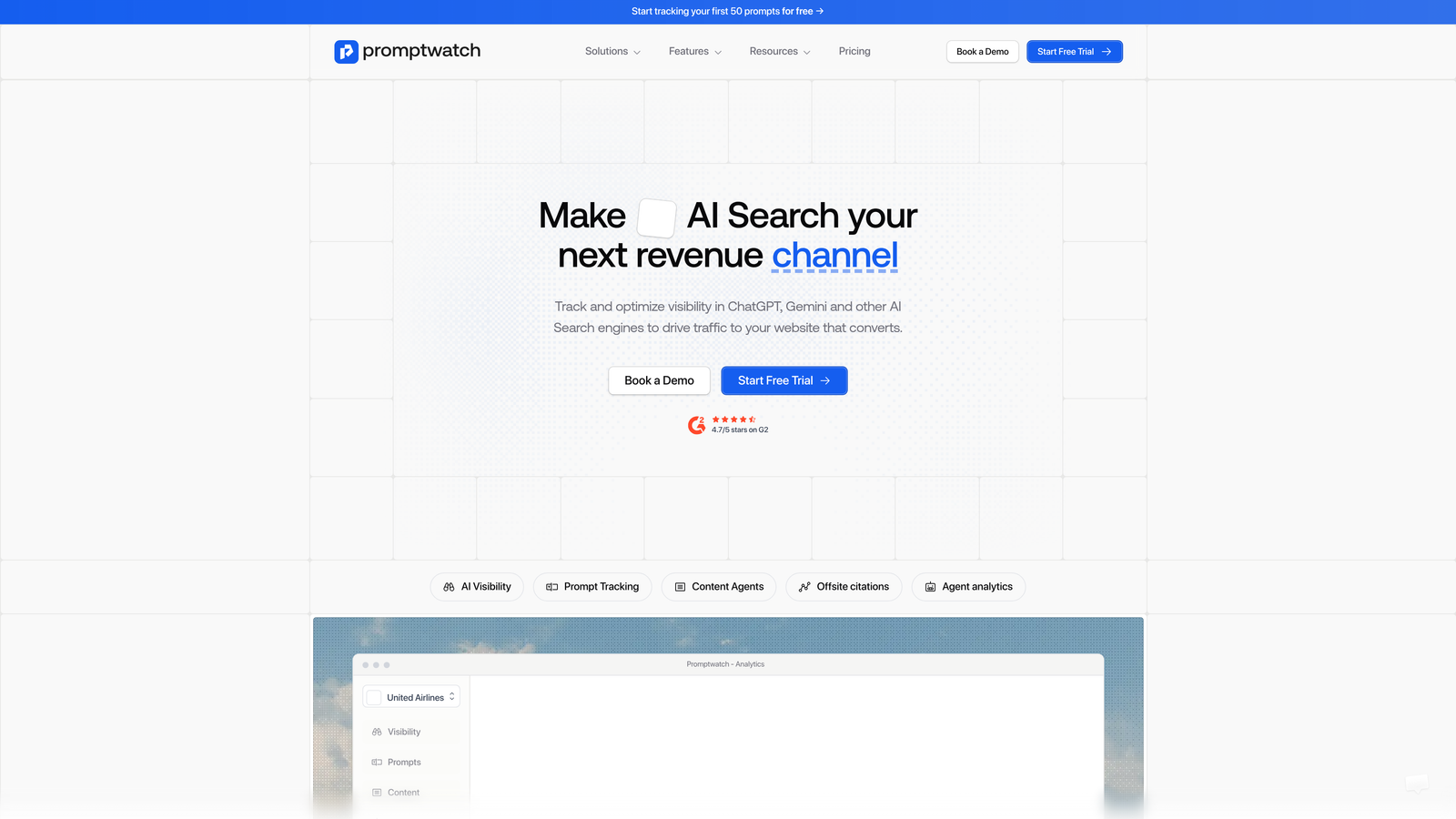
Promptwatch is a prompt-level AI visibility tracker that identifies which specific queries trigger or fail to trigger client brand mentions inside AI tools.
Where This Tool Shines
Most AI visibility tools tell you whether a brand is appearing in AI responses. Promptwatch goes a level deeper: it tells you which specific prompts are generating those appearances and, critically, which queries are returning results that don't mention your client at all. That gap analysis is where the real content strategy value lives.
For agencies building GEO programs, this kind of prompt-level data is the difference between saying "we need more AI-visible content" and saying "these twelve specific query types aren't surfacing your brand, and here's the content we're creating to address each one." That level of specificity makes for much stronger client deliverables and a more defensible content strategy.
Key Features
Prompt-Level Brand Mention Tracking: Goes beyond platform-level monitoring to identify exactly which queries are and aren't surfacing client brands in AI responses.
Content Gap Identification: Surfaces specific queries where clients are absent from AI answers, creating a direct input for content strategy.
GEO Strategy Development Support: Provides the query-level data needed to build structured, evidence-based generative engine optimization programs.
Query-Level Granularity: Enables precise, targeted optimization rather than broad, directional content adjustments.
Agency Reporting Integration: Designed to support agencies adding AI search reporting to their client deliverable stack.
Best For
Agencies that are serious about building GEO as a formal service offering and need granular prompt-level data to inform content creation and demonstrate strategic rigor to clients.
Pricing
Verify current Promptwatch pricing at promptwatch.io before recommending to clients or building into your agency stack.
Choosing the Right Tool for Your Agency
The right choice here depends heavily on what your agency's primary bottleneck actually is. Not every tool on this list solves the same problem, and combining a content generation platform with an AI visibility tracker often makes more sense than trying to find a single tool that does everything adequately.
Here's a quick way to think about it by agency type:
Content-heavy agencies that need to scale output across multiple clients and formats will find the most immediate value in Writesonic for volume and variety, or Sight AI if they also want to ensure that content is optimized for AI search visibility from the start.
AI visibility-focused agencies building GEO reporting into their service offering should evaluate Profound and Peec for platform-level brand tracking, and Promptwatch for the prompt-level granularity that supports more strategic GEO programs. Sight AI's AI Visibility Score and prompt tracking also cover this ground within a unified platform.
Automation-first agencies with technical team members who want to build proprietary workflows will find AirOps the most flexible option. For agencies that want automation without the build-it-yourself overhead, Sight AI's Autopilot Mode and CMS auto-publishing deliver similar operational leverage out of the box.
If you're looking for a single platform that covers content generation, AI visibility tracking, and automated publishing without stitching together multiple tools, Sight AI is worth evaluating first. Start tracking your AI visibility today and see exactly where your brand appears across top AI platforms — so you can stop guessing and start building a content strategy grounded in real AI search data.