AI is reshaping how brands get discovered, and not just through Google. ChatGPT, Claude, Perplexity, and other AI-powered answer engines are increasingly the first place people turn for recommendations, comparisons, and product research. If your SEO strategy doesn't account for how AI models talk about your brand, you're operating with a significant blind spot.
The tools in this list help marketers, founders, and agencies tackle two interconnected challenges: generating content that performs in AI-driven search, and monitoring how AI models surface and describe their brand. Whether you need an all-in-one platform or a specialized point solution, there's a purpose-built option here for your workflow.
Each tool was selected based on feature depth, AI-first design, and practical value for teams focused on organic growth. We start with the most comprehensive option and move through specialized alternatives.
1. Sight AI
Best for: Teams that want AI visibility tracking, content generation, and indexing in one platform.
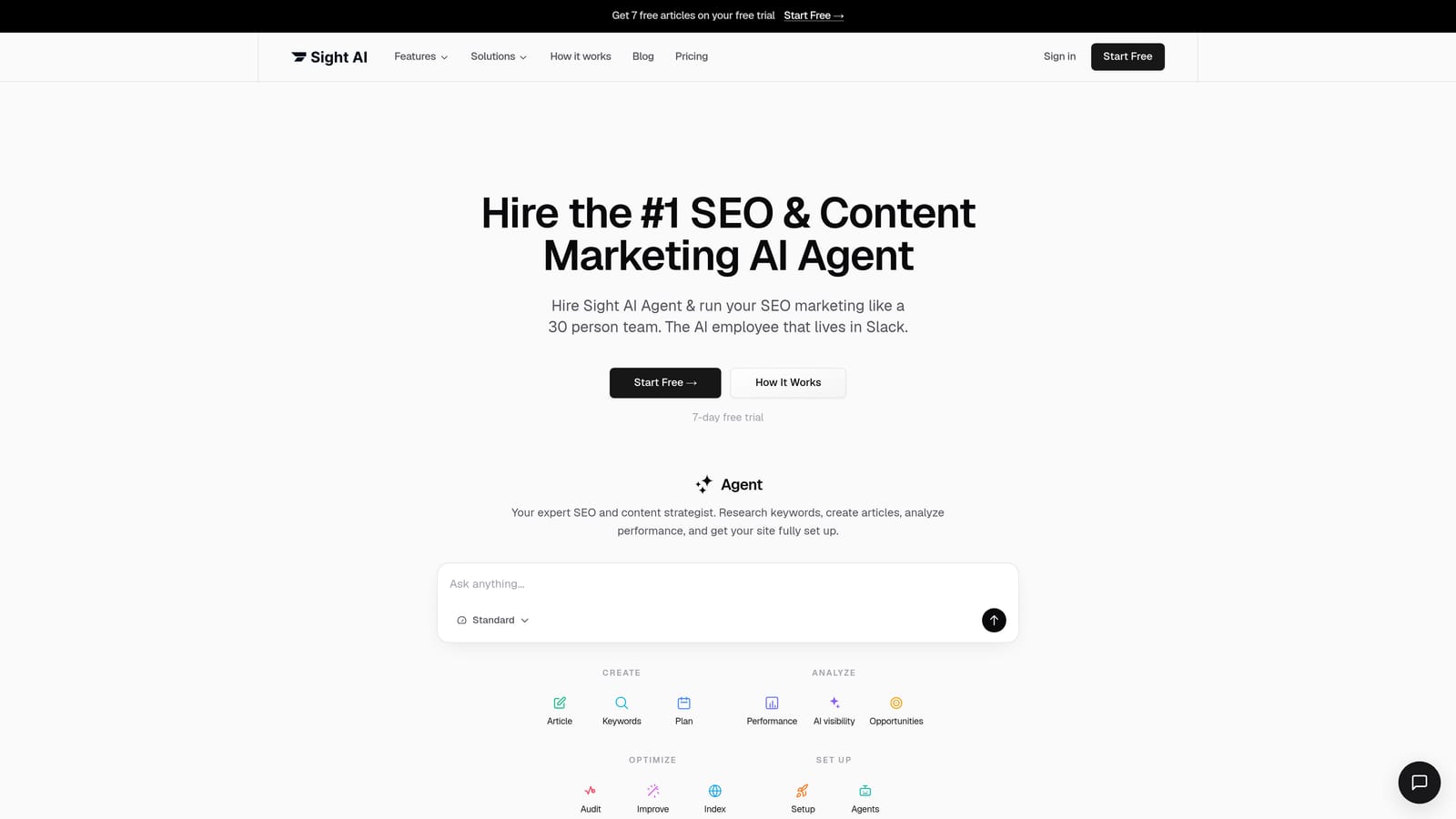
Sight AI is an all-in-one AI SEO platform that combines brand mention tracking across AI models, GEO/SEO-optimized content generation, and automated indexing under a single roof.
Where This Tool Shines
Most tools in this space do one thing well. Sight AI is one of the few platforms that genuinely bridges AI visibility monitoring and content production. You can see exactly how ChatGPT, Claude, Perplexity, and other major AI platforms describe your brand, then act on that data by generating optimized content designed to improve those mentions.
The Autopilot Mode is particularly useful for lean teams. Once your content strategy is configured, the platform can run continuous content production without requiring hands-on management for every piece. That's a meaningful operational advantage for agencies and founders juggling multiple priorities.
Key Features
AI Visibility Score: Tracks brand mentions across 6+ AI platforms with sentiment analysis and prompt-level reporting so you understand not just whether you're mentioned, but how.
13+ Specialized AI Agents: Purpose-built agents for generating listicles, guides, explainers, and other SEO/GEO-optimized content formats, each tuned for a specific content type.
Autopilot Mode: Hands-off, continuous content production that keeps your publishing cadence consistent without requiring constant manual input.
IndexNow Integration: Automatically notifies search engines of new and updated pages, accelerating the time between publishing and discovery.
CMS Auto-Publishing and Sitemap Updates: Connects directly to your CMS to publish content and keep your sitemap current without manual intervention.
Best For
Sight AI is best suited for marketers, agency teams, and growth-focused founders who want a single platform covering the full loop: monitor AI visibility, create content that improves it, and index that content fast. It's particularly valuable for teams adopting a GEO strategy alongside traditional SEO.
Pricing
Multiple tiers are available for individuals, teams, and agencies. Visit trysight.ai for current pricing details.
2. Writesonic
Best for: Content teams that need fast, structured AI writing with SEO optimization modes.
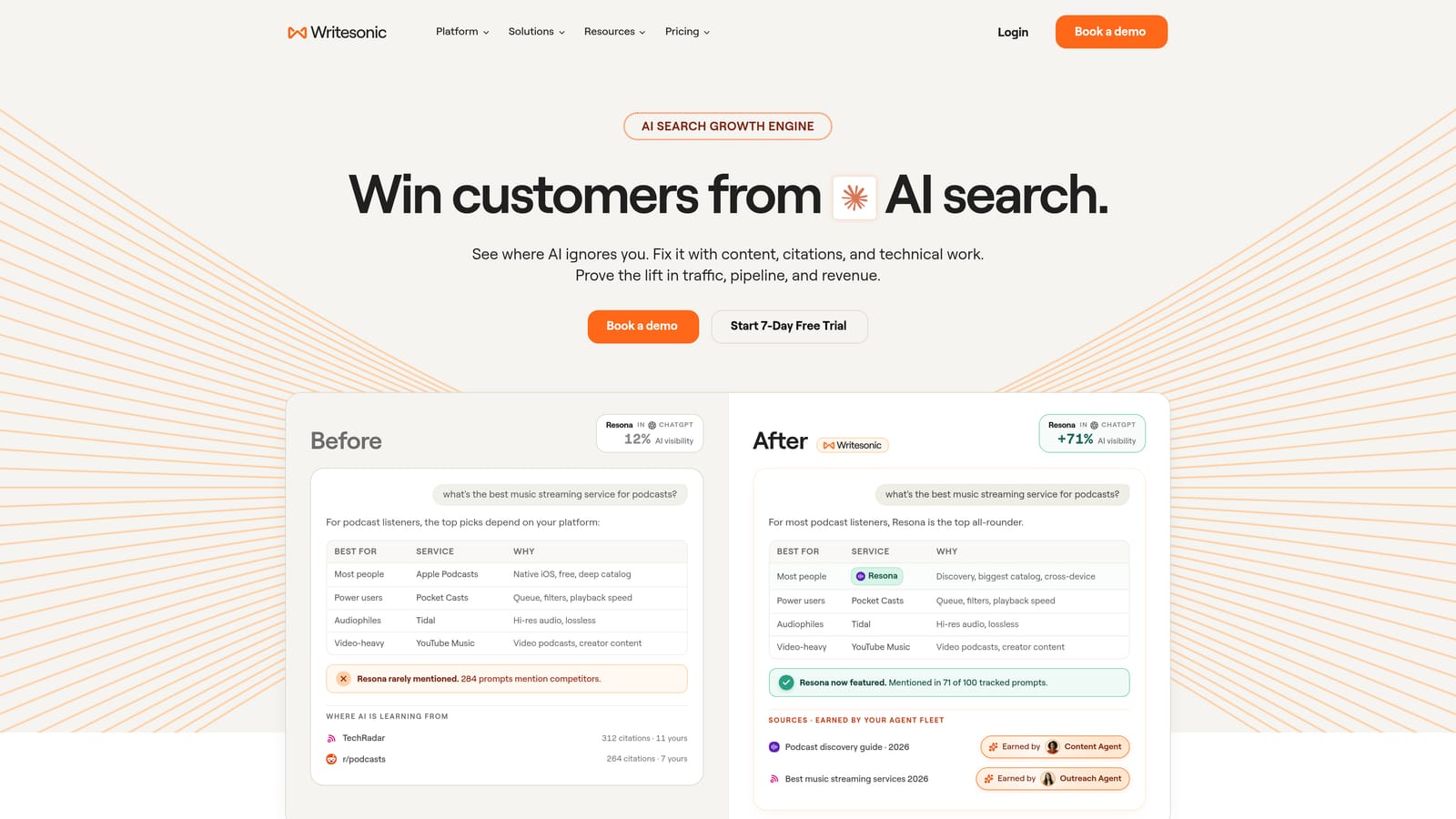
Writesonic is an established AI writing platform built for speed and volume, offering a broad template library and SEO-focused content generation for teams that need to produce at scale.
Where This Tool Shines
Writesonic has been in the AI writing space long enough to refine its output quality and workflow integrations. The platform covers a wide range of content formats, from long-form blog posts to product descriptions, and its SEO optimization modes help align generated content with search intent. For teams that primarily need content output rather than AI visibility analytics, it's a solid, well-established option.
The Chatsonic feature adds a conversational research layer, letting writers explore topics, gather context, and draft outlines through a chat interface before committing to a full article. This can meaningfully speed up the research-to-draft workflow.
Key Features
AI Article and Blog Generation: Produces long-form content with SEO optimization modes that help align output with search intent and keyword targets.
Template Library: A broad collection of templates covering blog posts, ads, emails, product descriptions, and more, reducing setup time for common content types.
Chatsonic: A conversational AI assistant for research, brainstorming, and drafting, with access to current information for time-sensitive topics.
Brand Voice Customization: Allows teams to train the platform on their brand tone to produce more consistent output across writers and projects.
CMS and Publishing Integrations: Connects with popular content management and publishing platforms to streamline the path from draft to live.
Best For
Content marketing teams and individual creators who need high-volume AI writing output with SEO alignment. Writesonic is a strong fit if your primary need is content generation rather than AI brand monitoring or visibility analytics.
Pricing
A free plan is available. Paid plans start at a monthly subscription rate. Check Writesonic.com for current pricing and tier details.
3. AirOps
Best for: Operations-minded content teams that want to build custom, repeatable AI-powered SEO workflows.
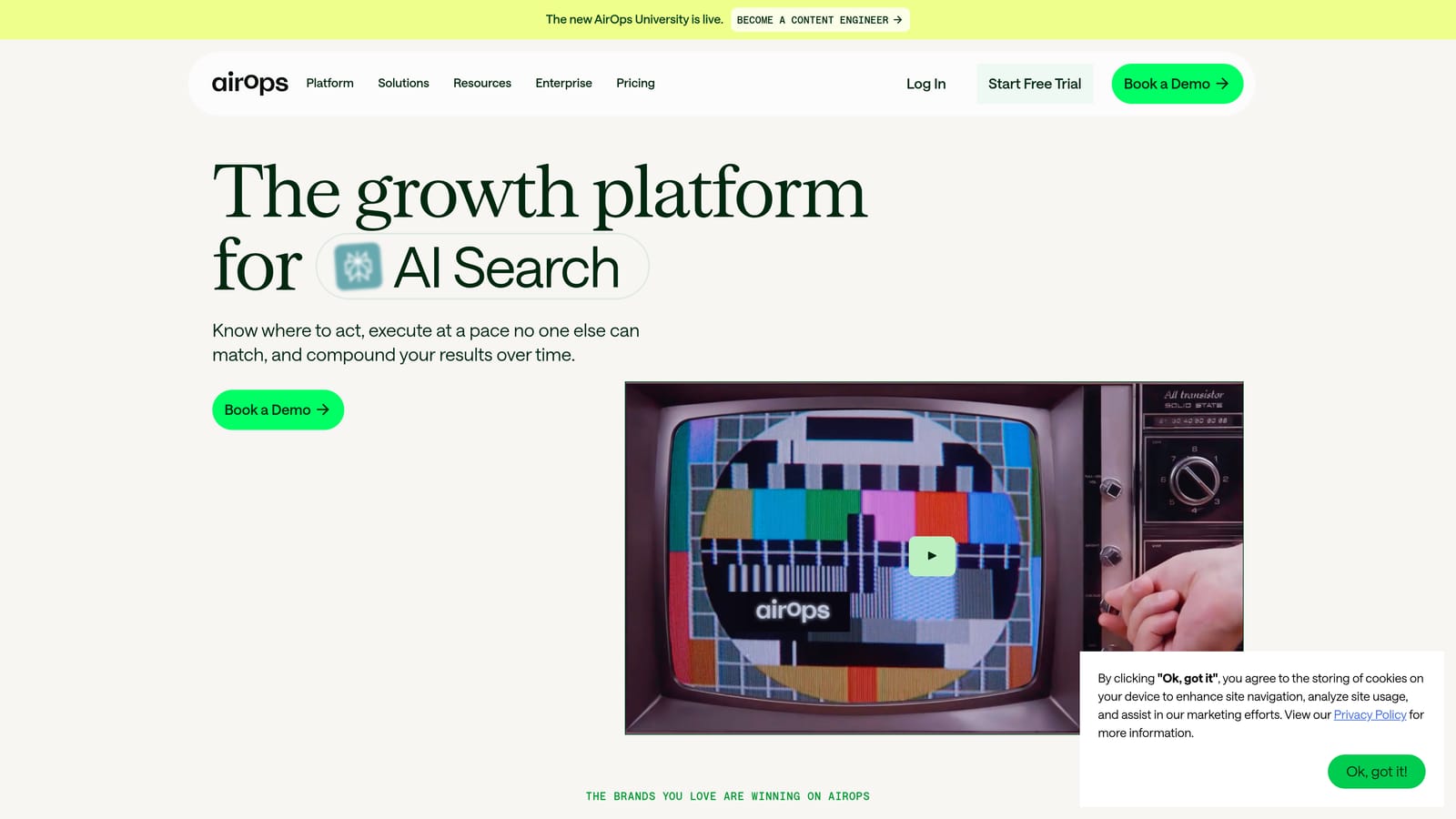
AirOps is a workflow automation platform that lets marketing and content teams design custom AI pipelines for content production, SEO tasks, and operational processes.
Where This Tool Shines
AirOps takes a fundamentally different approach than most AI writing tools. Rather than giving you a fixed interface for generating content, it gives you the building blocks to design your own repeatable workflows. Think of it as a programmable layer on top of multiple LLMs, letting you chain steps together: pull a keyword brief, generate a draft, run it through an optimization check, and push it to a CMS.
This makes AirOps especially powerful for teams with established content processes they want to systematize. If you've already figured out what good content looks like for your audience, AirOps helps you reproduce that quality at scale without starting from scratch each time.
Key Features
Custom AI Workflow Builder: A visual interface for constructing multi-step AI pipelines tailored to your specific content and SEO tasks.
Multi-LLM Support: Run different language models within a single workflow, selecting the best model for each step in the pipeline.
Repeatable Automation: Build workflows for content briefs, first drafts, optimization passes, and other recurring tasks that can run consistently without manual setup each time.
Team Collaboration Features: Shared workflow libraries and collaboration tools designed for content teams working at scale.
Data Source and CMS Integrations: Connect external data sources and publishing platforms to keep workflows end-to-end.
Best For
Content operations leads, SEO managers, and technical marketers who want to build systematic, scalable AI content pipelines rather than use a fixed-template tool. Best suited to teams comfortable with workflow design and process thinking.
Pricing
Tiered pricing is available. Check AirOps.com for current plan details.
4. Profound
Best for: Enterprise brand teams monitoring how AI-generated answers surface and frame their brand.
Profound is an AI brand monitoring platform focused on tracking how major LLM-powered search engines include and describe brand mentions within their generated answers.

Where This Tool Shines
Profound is built specifically for the question that's becoming increasingly important in 2026: not just whether you rank, but whether AI models recommend you. The platform monitors AI-generated responses across multiple LLM platforms and surfaces data on how often your brand appears, in what context, and how that compares to competitors in the same space.
For brand managers and marketing leaders at larger organizations, this kind of share-of-voice data in AI-generated answers is genuinely new territory. Profound gives it structure, making it reportable and actionable rather than something teams have to manually spot-check.
Key Features
AI Answer Monitoring: Tracks brand presence within AI-generated responses across major LLM platforms, not just traditional search results.
AI Share-of-Voice Tracking: Measures how often your brand appears relative to competitors in AI-generated answers for relevant queries.
Competitor Mention Analysis: Surfaces how AI models reference competing brands, giving context to your own visibility performance.
Reporting Dashboards: Structured dashboards for tracking brand visibility trends over time, designed for marketing and brand teams.
Alert System: Notifies teams when AI model coverage of their brand shifts meaningfully, enabling faster response to changes.
Best For
Enterprise marketing teams, brand managers, and PR professionals who need structured, reportable data on how AI models describe and recommend their brand. Less suited to teams whose primary need is content generation.
Pricing
Enterprise-focused pricing tiers are available. Check Profound.co for current details.
5. Peec
Best for: SEO analysts who need granular, prompt-level data on brand visibility in AI search engines.
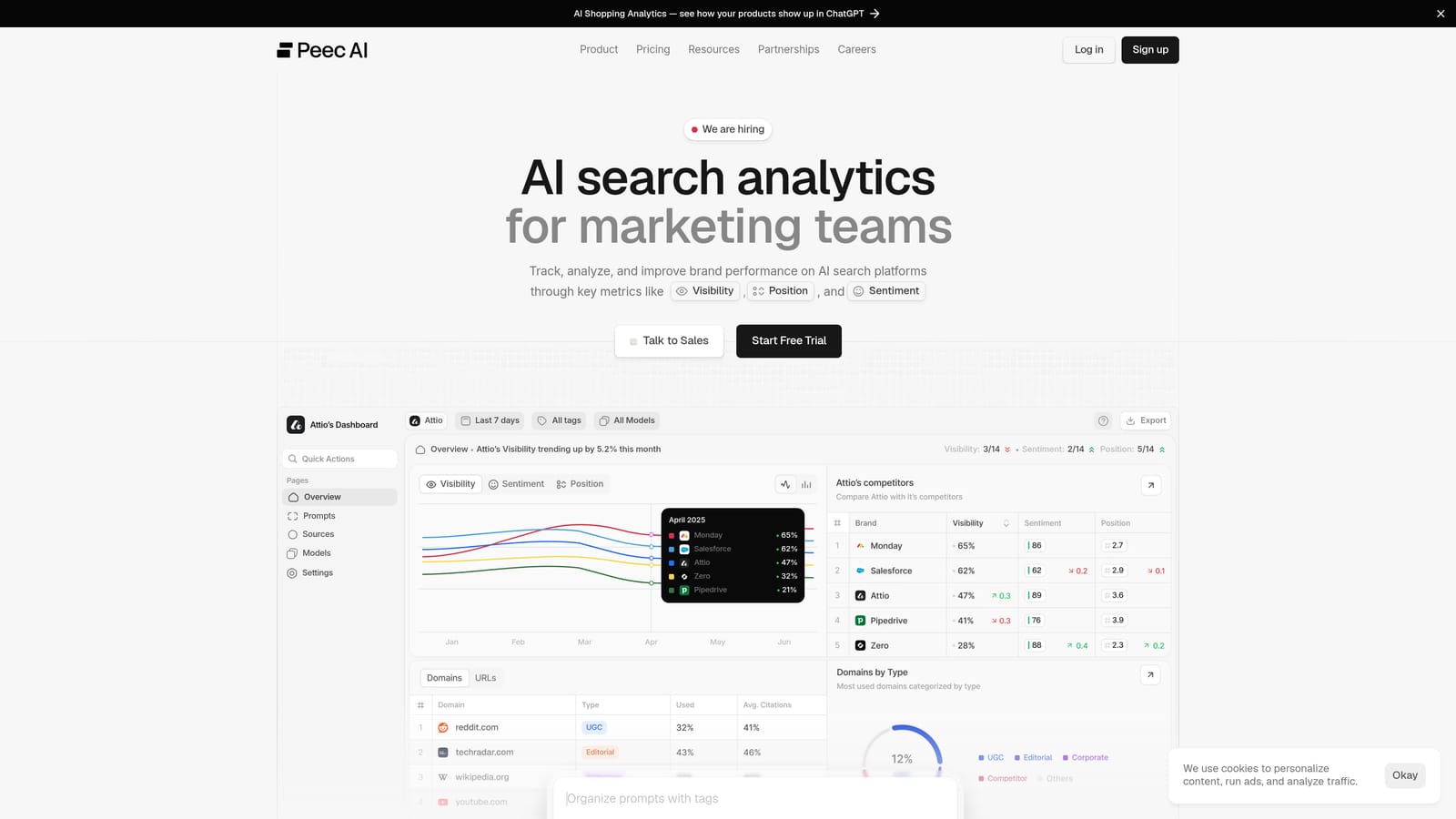
Peec is an AI search visibility analytics tool that provides prompt-level tracking to help SEO teams understand which queries surface their brand across AI-powered search engines.
Where This Tool Shines
Peec goes deep on the analytics side of AI visibility. Where some monitoring tools give you a broad picture of brand presence, Peec lets you drill into specific prompts and queries to see exactly where your brand appears, how consistently, and how that visibility shifts over time. For SEO analysts accustomed to keyword-level granularity in traditional search, this approach will feel familiar and useful.
The competitor comparison layer adds meaningful context. Knowing you appear in AI results for a given query matters more when you also know whether your closest competitors appear more or less frequently for the same prompts.
Key Features
Prompt-Level Tracking: Monitors which specific prompts and queries surface your brand in AI search engines, providing granular visibility data.
AI SERP Analytics: Trend reporting on AI search visibility over time, helping teams identify patterns and track improvement.
Keyword and Query Mapping: Maps your existing keyword strategy to AI-generated results, bridging traditional SEO and GEO analysis.
Brand vs. Competitor Comparisons: Side-by-side visibility data showing how your brand stacks up against competitors in AI-generated responses.
Data Export: Export capabilities for integrating AI visibility data into existing SEO reporting workflows and dashboards.
Best For
SEO analysts and data-driven marketing teams who want granular, query-level insight into AI search visibility. A strong fit for teams already running structured SEO reporting who want to add an AI visibility layer.
Pricing
Check Peec.ai for current pricing tiers.
6. Promptwatch
Best for: Brand and PR teams that need real-time alerts when AI model descriptions of their brand change.
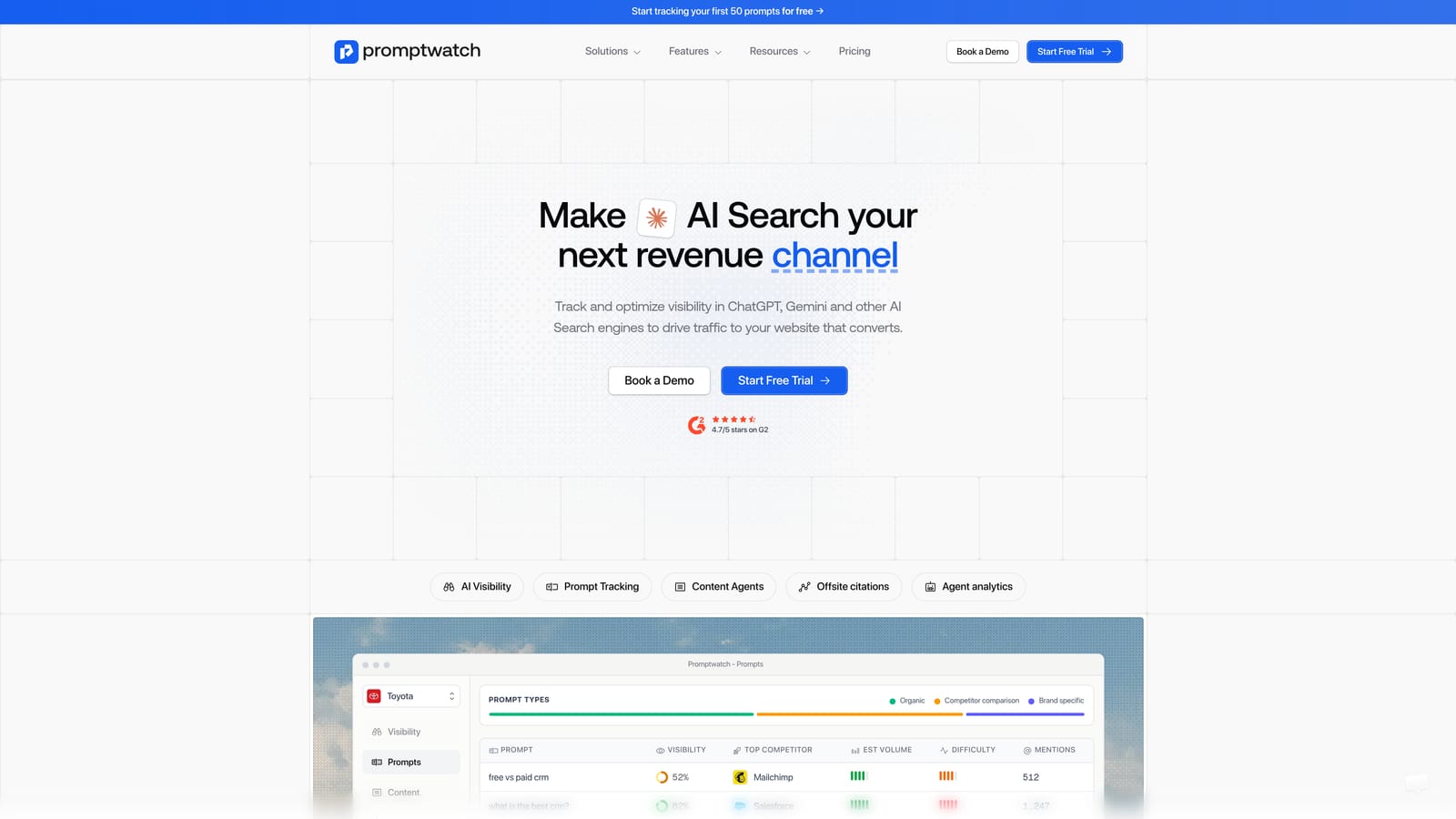
Promptwatch is a brand monitoring tool built around tracking AI prompt responses for brand and competitor mentions, with a focus on real-time alerting when AI-generated descriptions shift.
Where This Tool Shines
The core value proposition of Promptwatch is speed of detection. AI models update their behavior over time, and the way a model describes your brand today may be noticeably different from how it describes you after a model update or a shift in the underlying training data. Promptwatch is designed to catch those changes early, giving brand and PR teams the ability to respond before a problematic description becomes widely seen.
The historical response logging feature is a useful complement to the alerting system. It creates a record of how AI models have described your brand over time, which is valuable both for tracking improvement efforts and for understanding how model updates affect brand perception.
Key Features
Real-Time Brand Mention Monitoring: Continuously monitors AI model responses for brand mentions, flagging new appearances as they occur.
Change Alerts: Notifies teams when AI-generated descriptions of their brand shift, enabling rapid response to unfavorable or inaccurate portrayals.
Competitor Mention Tracking: Monitors how AI models reference competing brands within the same responses, providing competitive context.
Historical Response Logging: Maintains a record of AI-generated brand descriptions over time for trend analysis and benchmarking.
Brand Protection Focus: Designed with PR and brand protection use cases in mind, making it a practical tool for communications teams alongside SEO teams.
Best For
Brand managers, PR professionals, and communications teams who need to know immediately when AI models change how they describe their brand. Also useful for competitive intelligence teams monitoring how AI positions their competitors.
Pricing
Check Promptwatch.io for current pricing details.
Which Tool Is Right for Your Team?
The right choice here depends on what problem you're actually trying to solve. Let's break it down by use case.
If you want a single platform that handles AI visibility monitoring, content generation, and indexing without switching between tools, Sight AI is the clear starting point. Its combination of an AI Visibility Score, 13+ specialized content agents, and IndexNow-powered indexing makes it the most comprehensive option on this list for teams serious about GEO and SEO in 2026.
If your primary need is content output at volume, Writesonic is a proven platform with broad format coverage and solid SEO alignment features. For teams that want to build custom, repeatable AI content pipelines rather than use a fixed tool, AirOps offers the workflow automation layer that operations-minded marketers will appreciate.
On the monitoring side, Profound and Peec both offer structured analytics on AI brand visibility, with Profound leaning toward enterprise share-of-voice reporting and Peec going deeper on prompt-level query data. Promptwatch fills a more specific niche: real-time alerting for brand and PR teams who need to catch AI description changes as they happen.
The broader takeaway is that AI search visibility is no longer a future consideration. It's a present one. The brands that understand how AI models describe them, and that create content specifically designed to earn positive mentions in AI-generated answers, are building a durable organic advantage.
Stop guessing how AI models like ChatGPT and Claude talk about your brand. Start tracking your AI visibility today and see exactly where your brand appears across top AI platforms, what it says, and how to improve it.