Search engines and AI models have moved well beyond keyword matching. They now evaluate content based on topical depth, entity relationships, and semantic relevance. For marketers, founders, and agencies chasing organic growth, this shift means that stuffing a page with target keywords no longer moves the needle.
Semantic content optimization tools help you understand how search engines and AI systems interpret your content, identify topical gaps, and produce articles that genuinely satisfy search intent. In 2026, that challenge has expanded: you're not just optimizing for Google rankings anymore. You're optimizing for AI-generated answers in ChatGPT, Perplexity, Claude, and similar platforms.
This list covers the best semantic content optimization tools available right now, selected for their ability to help you create content that ranks in traditional search and surfaces in AI-generated answers. We've kept this list tight — fewer options than most roundups, but higher signal.
1. Sight AI
Best for: Teams that want semantic content generation and AI visibility tracking in one platform.
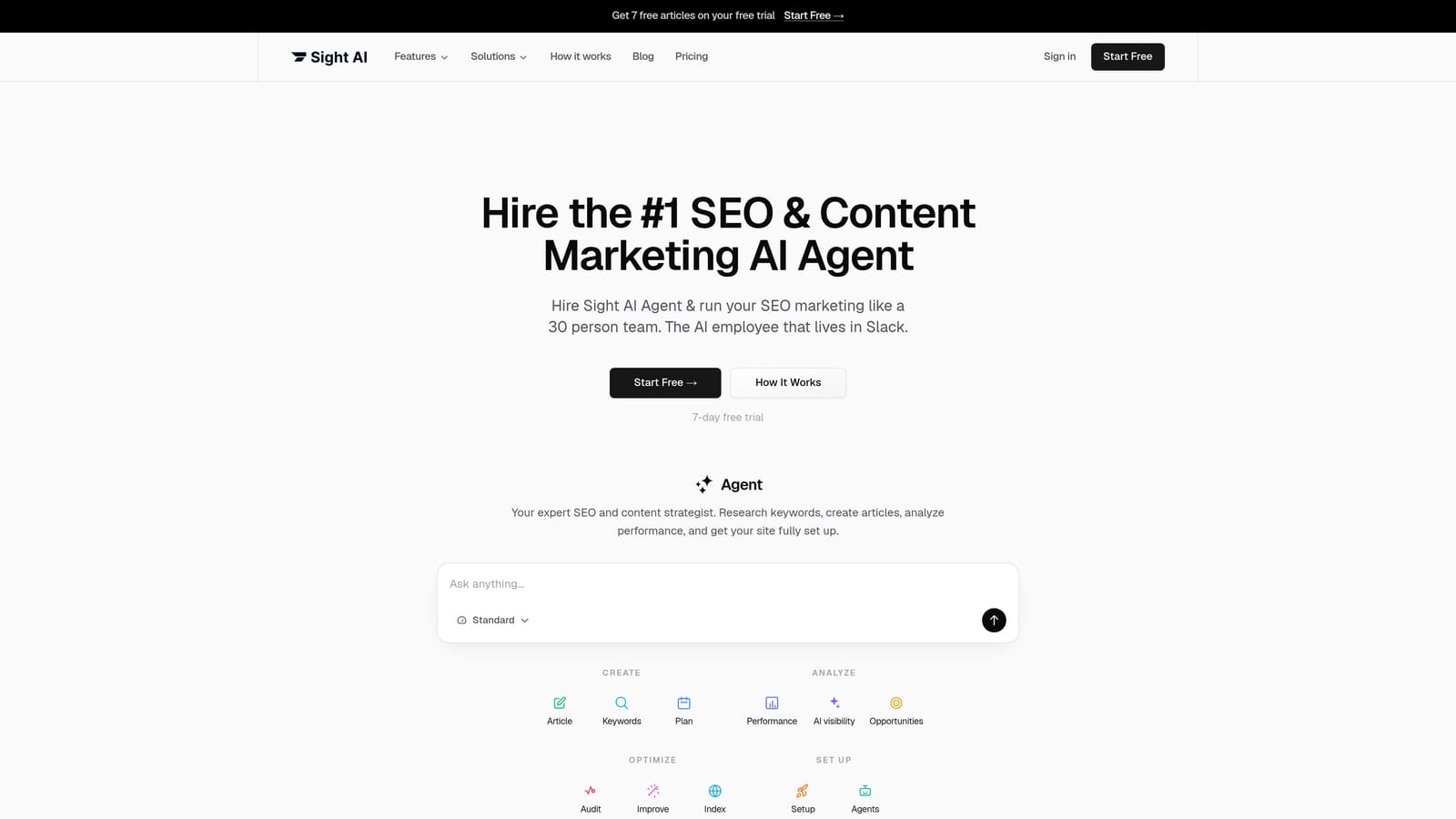
Sight AI is an all-in-one platform that combines AI-powered semantic content generation with brand mention tracking across major AI models, letting teams create and monitor GEO/SEO-optimized content within a single workflow.
Where This Tool Shines
Most semantic content tools solve either the creation problem or the tracking problem. Sight AI addresses both. You can generate topically rich articles using specialized AI agents, then monitor whether those articles are actually surfacing when users query AI models on relevant topics. That feedback loop is genuinely rare in the current tooling landscape.
The Autopilot Mode is particularly useful for teams scaling content production. Rather than treating each article as a one-off project, you can build repeatable content operations that maintain semantic consistency across dozens of pieces.
Key Features
13+ Specialized AI Agents: Purpose-built agents for generating semantically rich listicles, guides, and explainers with topical depth built in from the start.
AI Visibility Score: Tracks how your brand is mentioned across ChatGPT, Claude, Perplexity, and three or more additional AI platforms, with sentiment analysis included.
Autopilot Mode: Enables scalable, hands-off semantic content production for teams that need consistent output without constant manual oversight.
IndexNow Integration: Automated sitemap updates and IndexNow integration push newly published content to search engines faster, shortening the gap between publication and discovery.
CMS Auto-Publishing: Streamlines the full content-to-index pipeline so content moves from generation to live page without unnecessary friction.
Best For
Sight AI is a strong fit for growth-focused marketers, founders, and agencies who want to compete in both traditional search and AI-generated answers. If you're managing content at scale and need visibility into how AI models talk about your brand, the combined workflow here is hard to replicate with separate tools.
Pricing
Visit trysight.ai for current pricing tiers. The platform offers options suited to different team sizes and content volumes.
2. Writesonic
Best for: Teams scaling AI-assisted long-form content with SEO brief integration.
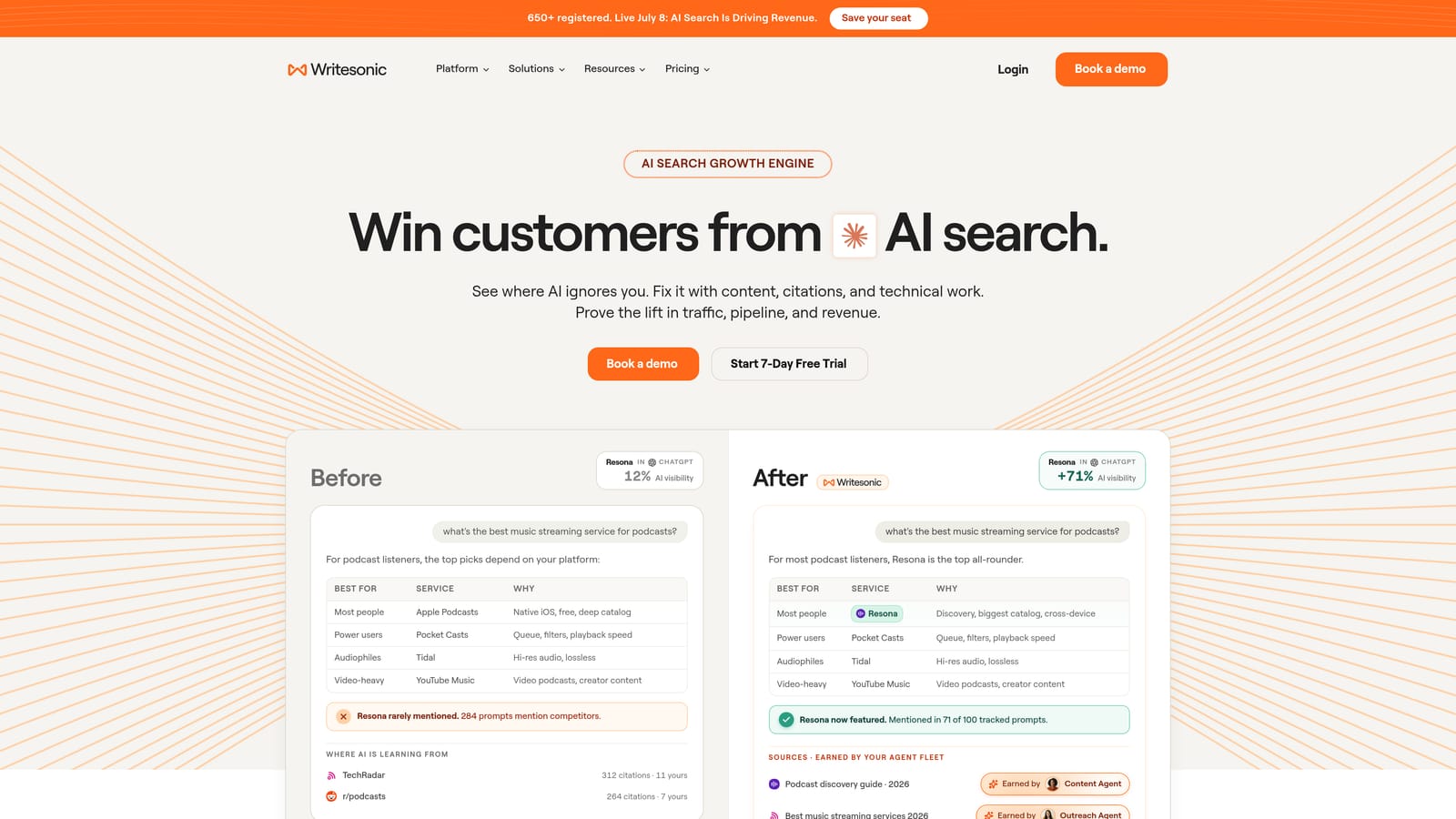
Writesonic is a broad AI writing platform with a strong emphasis on SEO-focused long-form article generation, web-grounded research, and content optimization features for teams producing content at volume.
Where This Tool Shines
Writesonic's strength is its breadth. The platform covers everything from blog articles to landing pages to social content, making it a practical choice for content teams that need one tool to handle multiple formats. The Chatsonic feature adds web-connected research to the mix, which helps ground generated content in current information rather than model training data alone.
For semantic content work specifically, the SEO brief integration is the most relevant feature. It allows writers to build content around structured topic coverage rather than just targeting individual keywords.
Key Features
AI Article Writer with SEO Brief Integration: Generates long-form content structured around topical coverage, helping teams move beyond single-keyword targeting.
Chatsonic: A web-connected AI chat interface that supports factually grounded content research, useful for verifying entity relationships and current information.
Long-Form Editor with Semantic Structure Guidance: Provides structural suggestions that help writers organize content for topical depth and clarity.
Multi-Format Content Generation: Covers blogs, landing pages, social content, and more, reducing the number of tools teams need to manage.
Best For
Writesonic suits content teams and agencies that need high-volume article production with built-in SEO guidance. It's a generalist platform, so teams with very specific semantic SEO or AI visibility requirements may find they need supplementary tools alongside it.
Pricing
Visit writesonic.com for current pricing tiers, including individual and team plan options.
3. AirOps
Best for: Technical growth teams building custom LLM-powered content pipelines at scale.
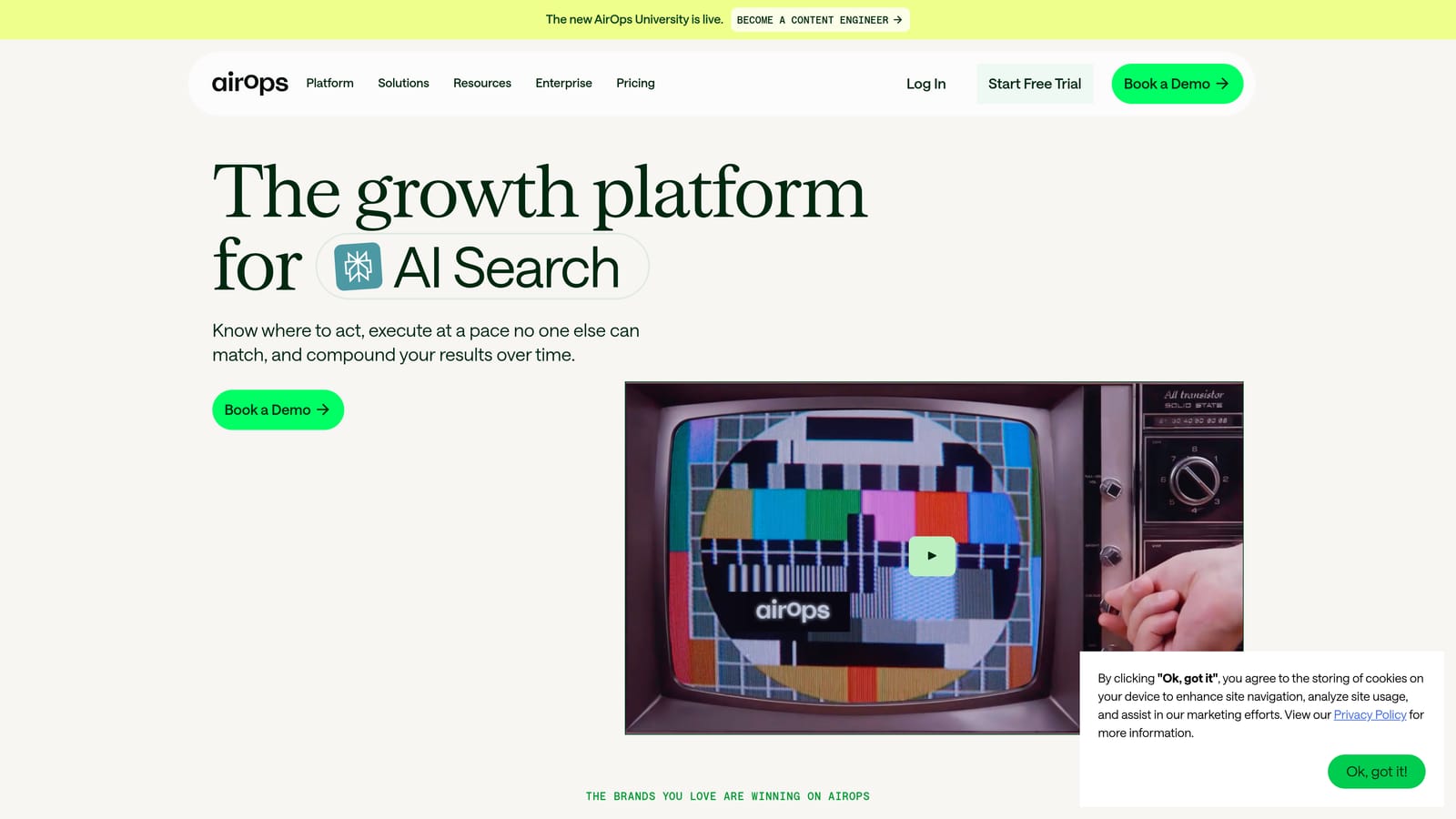
AirOps is a workflow automation platform that lets content and growth teams build custom AI-powered pipelines for producing semantically structured content consistently and at scale.
Where This Tool Shines
AirOps sits closer to the infrastructure layer than most content tools. Rather than giving you a pre-built editor, it gives you the building blocks to construct your own content workflows using LLMs. That flexibility is genuinely powerful for teams with specific semantic content requirements that off-the-shelf tools don't address.
Think of it like this: if Writesonic is a fully assembled vehicle, AirOps is the engine and chassis you configure yourself. That distinction matters a lot depending on your team's technical capacity and content complexity.
Key Features
Custom AI Workflow Builder: Lets teams design repeatable content operations tailored to their specific semantic content requirements and internal processes.
LLM-Powered Templates: Structured templates that enforce semantic consistency across large content batches, reducing drift in topical coverage and entity handling.
Data Source and CMS Integrations: Connects to existing data sources and content management systems, making it easier to incorporate proprietary data into content workflows.
Flexible Pipeline Design: Built for technical growth teams who need content automation that adapts to complex, non-standard use cases.
Best For
AirOps is best suited for technical growth teams, SEO engineers, and content operations leads who want to build custom, scalable content pipelines. Teams without technical resources may find the setup process steeper than point-and-click alternatives.
Pricing
Visit airops.com for current pricing information and plan details.
4. Profound
Best for: SEO leads and brand managers monitoring content visibility in AI-generated responses.
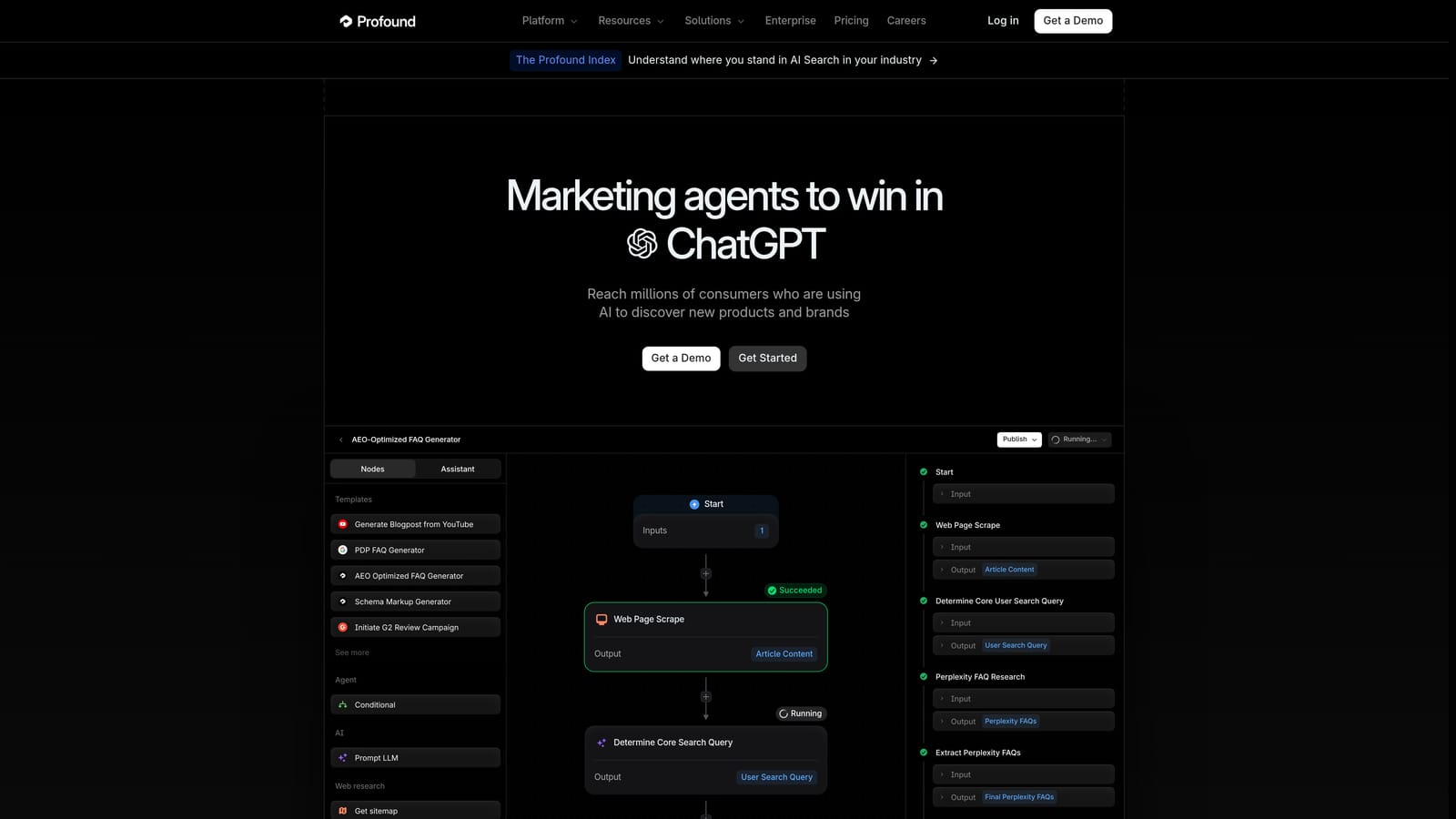
Profound is an AI answer engine monitoring platform that tracks how brands and their content appear in AI-generated responses, helping teams close the feedback loop on their semantic content strategy.
Where This Tool Shines
The core insight behind Profound is that publishing content is only half the challenge. Understanding whether that content is actually influencing AI-generated answers is the other half, and most teams have no visibility into it. Profound fills that gap with structured monitoring and reporting.
The share of voice analytics are particularly useful for competitive contexts. Rather than just knowing whether you appear in AI responses, you can see how your presence compares to others in your space, which informs where to focus semantic content efforts next.
Key Features
Brand Visibility Tracking Across AI Answer Engines: Monitors how your brand appears in AI-generated responses across major platforms, providing a consistent signal on content performance.
Share of Voice Analytics: Measures your relative presence in AI-generated answers compared to competitors, helping prioritize content investment.
Topic and Entity Monitoring: Identifies semantic content gaps by surfacing the topics and entities where your brand is underrepresented in AI responses.
Reporting for SEO Leads and Brand Managers: Structured reporting designed for the stakeholders who need to act on AI visibility data and communicate it to broader teams.
Best For
Profound is a strong choice for SEO leads, brand managers, and agencies that need structured reporting on AI visibility. It's a monitoring tool rather than a content creation tool, so it works best alongside a content production workflow rather than as a standalone solution.
Pricing
Visit tryprofound.com for current pricing and plan options.
5. Peec
Best for: Marketers who want direct signal on whether their semantic content is surfacing in AI answers.
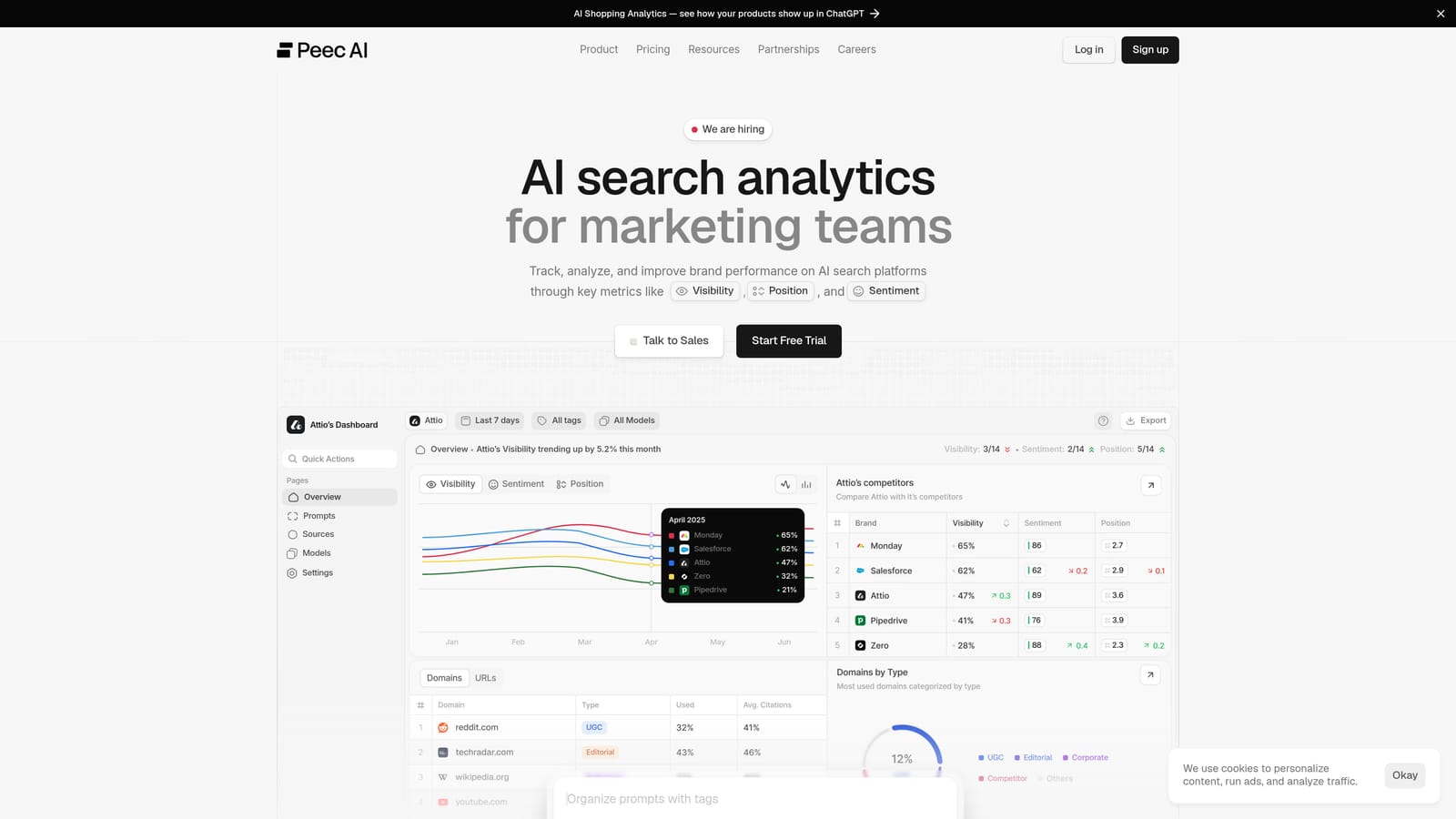
Peec is an AI visibility tracking tool focused on monitoring brand and content mentions within AI-generated answers, giving marketers a clear signal on whether their semantic content strategy is producing results.
Where This Tool Shines
Peec is built around a straightforward but important question: when someone asks an AI model about topics in your space, does your brand come up? The platform answers that question with prompt-level analysis, so you can see not just whether you appear, but which specific queries are driving or missing your mentions.
The competitive benchmarking feature adds useful context. Knowing your absolute AI mention frequency is helpful; knowing how that compares to others in your category is more actionable.
Key Features
AI Mention Tracking Across Major Platforms: Monitors brand and content references across the AI answer platforms your audience is actively using.
Prompt-Level Analysis: Breaks down which specific queries surface your content in AI responses, enabling more targeted semantic content adjustments.
Competitive Visibility Benchmarking: Compares your AI response presence against competitors to identify relative strengths and gaps in your content coverage.
Actionable Insights for Semantic Content Targeting: Surfaces recommendations for refining content topics and entity coverage based on actual AI response data.
Best For
Peec suits marketers and SEO practitioners who want a focused, accessible tool for tracking AI visibility without the complexity of a full enterprise monitoring platform. It pairs well with any content production workflow as a feedback layer.
Pricing
Visit peec.ai for current pricing details.
6. Promptwatch
Best for: Marketers who want to understand exactly how AI models reference their content at the prompt level.
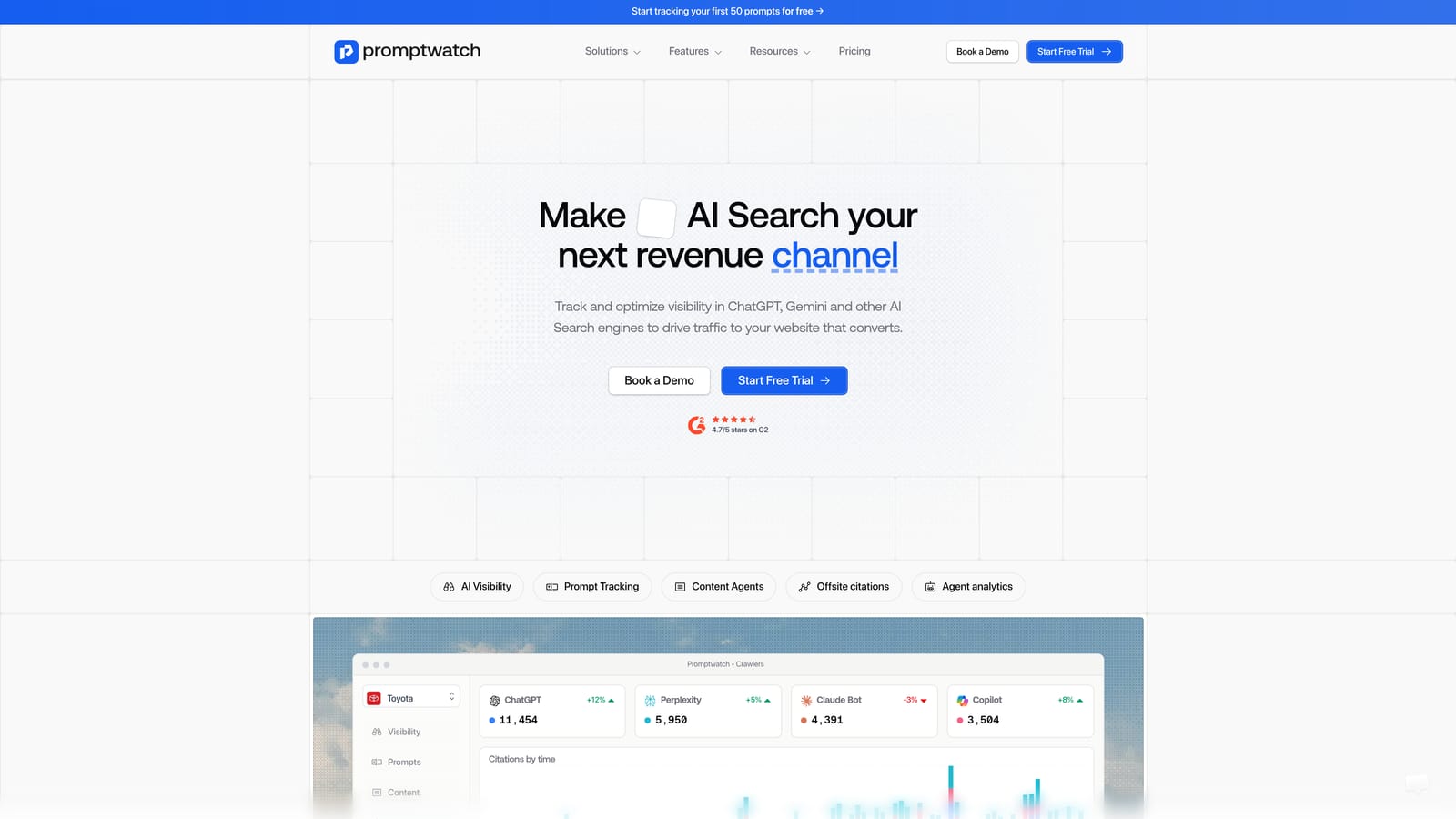
Promptwatch is a prompt monitoring and AI response tracking tool that helps marketers understand exactly how their content is referenced, or overlooked, when users query AI models on relevant topics.
Where This Tool Shines
Where some AI visibility tools give you aggregate brand mention data, Promptwatch goes deeper into the mechanics of how specific prompts interact with your content. That granularity is useful when you're trying to understand not just that you're being mentioned, but why certain content gets cited while other pieces don't.
For teams actively iterating on their semantic content strategy, that prompt-level feedback creates a tighter optimization loop. You can test content changes and observe whether they shift how AI models respond to relevant queries.
Key Features
Prompt-Specific Monitoring: Tracks how individual prompts across AI model responses interact with your content, providing granular visibility beyond aggregate mention counts.
Content Citation Frequency Tracking: Measures how often your content is cited in AI-generated answers, helping prioritize which pages and topics deserve further semantic investment.
Topic and Entity Opportunity Identification: Surfaces the topics and entities most likely to drive AI mention opportunities, informing future content planning.
Iterative Content Optimization Support: Designed to support ongoing semantic content refinement based on real AI response data rather than assumptions.
Best For
Promptwatch is well suited for SEO practitioners and content strategists who want detailed, prompt-level insight into AI model behavior around their content. It's a specialist tool that rewards teams willing to engage with granular data.
Pricing
Visit promptwatch.io for current pricing information.
Which Tool Is Right for Your Workflow?
Semantic content optimization now spans two distinct challenges: creating content that search engines understand as topically authoritative, and ensuring that content surfaces when AI models generate answers. The best tools in this space address one or both of those challenges.
For teams primarily focused on content production at scale, Writesonic and AirOps offer strong AI-assisted writing and workflow automation. Writesonic is the more accessible starting point; AirOps rewards teams with the technical capacity to build custom pipelines.
For monitoring how your brand and content appear in AI-generated answers, Profound, Peec, and Promptwatch each offer specialized tracking capabilities. Profound is strongest on reporting and share of voice analytics. Peec offers accessible prompt-level benchmarking. Promptwatch goes deepest on the mechanics of how specific queries interact with your content.
If you want a single platform that handles both semantic content generation and AI visibility tracking, from writing GEO-optimized articles to monitoring brand mentions across ChatGPT, Claude, and Perplexity, Sight AI is built for exactly that use case. It's the only tool on this list that closes the loop between creation and tracking in a single workflow.
The right choice depends on where your biggest gap is. If you're unsure, start by auditing your current AI visibility, then identify whether your content gaps are a creation problem, a distribution problem, or a tracking problem. From there, the tools above map cleanly to each need.
Start tracking your AI visibility today and see exactly where your brand appears across top AI platforms, then use that data to drive every content decision that follows.