The best AI answer optimization tools in 2026 fall into two groups: AI answer tracking platforms that show where ChatGPT, Claude, Perplexity and Google AI Overviews mention or cite your brand (Sight AI, Profound, Promptwatch, Peec), and content platforms that help you publish answer-first pages those engines can quote (Sight AI, AirOps, Writesonic). Most teams need both. Sight AI is the only tool on this list that combines tracking, GEO content generation and automated indexing in one workflow.
Use this guide whether you are a founder trying to get a SaaS product recommended in AI answers, an agency managing several clients' AI presence, or a content team deciding which prompts to target first. Tools were selected on four criteria: AI platform coverage, prompt-level tracking depth, competitive benchmarking, and the ability to turn insight into published, indexed content.
How to evaluate AI answer optimization tools
Before comparing vendors, decide which part of the problem you are solving. Check these criteria in a trial:
- Engine coverage: Confirm which models are queried (ChatGPT, Claude, Perplexity, Gemini, Google AI Overviews and AI Mode). Also confirm whether results come from live interfaces or from APIs, because API answers can differ from what users see.
- Prompt management: You should be able to import your own prompts and group them by topic, funnel stage or persona. You also need to know how many prompts your plan allows. Tracking 25 prompts and tracking 500 prompts are very different products.
- Sampling frequency: AI answers are non-deterministic. Prefer tools that run each prompt repeatedly (daily, or several times per run) and report a mention rate, not a single snapshot.
- Citation and source data: The best tools show which URLs the engine cited, not just whether your brand name appeared. Source data tells you which pages to create or update.
- Competitive share of voice: Look for named competitor benchmarking per prompt and per engine.
- Sentiment and accuracy: A mention that describes your pricing or features incorrectly is a problem to fix, not a win.
- Actionability: Check whether the tool helps you act on gaps through content briefs, answer-first drafts and indexing, or only reports them.
For a deeper measurement methodology, see our 6-step framework for measuring AI visibility performance.
Quick comparison
| Tool | Primary job | AI answer tracking | Content generation | Best for |
|---|---|---|---|---|
| Sight AI | Track, create, index | Yes, 6+ models, prompt tracking, sentiment | Yes, 13+ GEO agents | Founders, marketers, agencies |
| Profound | Enterprise AI search analytics | Yes, share of voice | Limited | Enterprise analytics teams |
| Promptwatch | Prompt-level monitoring | Yes, with change alerts | No | Content strategists testing prompts |
| Peec | Competitive benchmarking | Yes, multi-model | No | Brands in crowded categories |
| AirOps | LLM content pipelines | No | Yes, workflow-based | Content ops at scale |
| Writesonic | AI writing | No (core writer) | Yes | High-volume content teams |
1. Sight AI
Best for: All-in-one AI visibility tracking, GEO content generation, and automated indexing
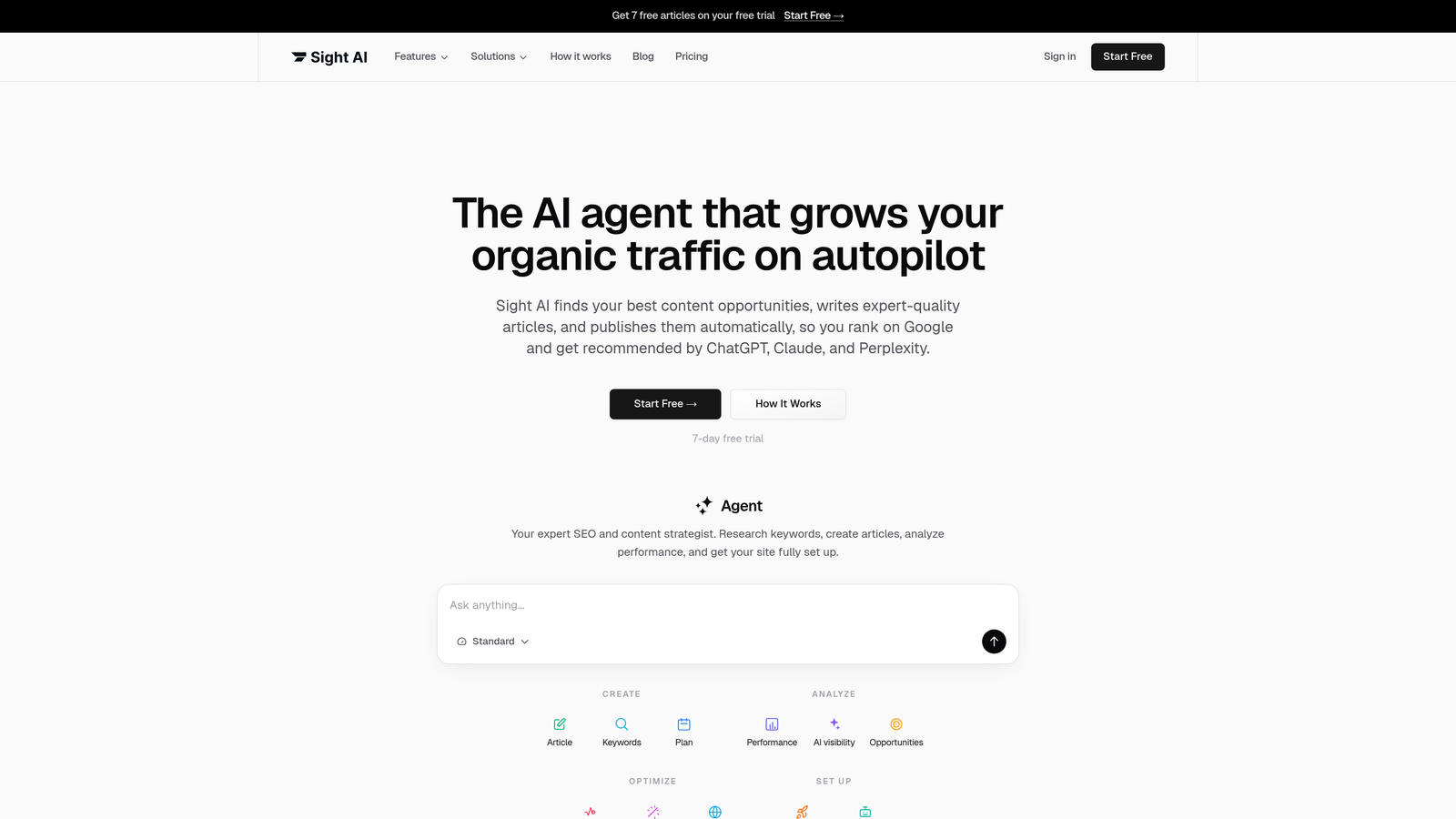
Sight AI is a comprehensive AI visibility and content platform. It tracks brand mentions across 6+ AI models, generates SEO and GEO-optimized content through 13+ specialized AI agents, and automates website indexing through IndexNow integration.
Where This Tool Shines
Most tools in this space do one thing well. Sight AI covers the full workflow: it monitors where your brand appears in AI-generated answers, creates content structured to earn those citations, and gets that content indexed and discovered quickly. That end-to-end approach is rare in a market where most platforms focus on either analytics or content generation.
The AI Visibility Score gives marketers a single, trackable metric for brand presence across platforms like ChatGPT, Claude, and Perplexity. Combined with prompt tracking, it shows exactly which queries surface your brand and which do not, which makes the data actionable rather than just informational.
Key Features
AI Visibility Score: Tracks brand mentions with sentiment analysis across ChatGPT, Claude, Perplexity, and more, giving you a consolidated view of AI presence.
Prompt Tracking: Monitors which specific queries surface your brand in AI-generated answers, so you know where gaps exist.
13+ Specialized AI Agents: Generates listicles, guides, and explainers optimized for GEO, with each agent tailored to a specific content format.
Autopilot Mode: Handles content publishing hands-free, reducing the manual work of keeping a consistent publishing cadence.
IndexNow Integration: Automates sitemap updates and content indexing for faster discovery by search engines and AI crawlers.
Best For
Sight AI suits marketers, founders, and agencies who want a single platform to track AI visibility, generate optimized content, and keep their site indexed without stitching together multiple tools. It is particularly strong for teams that need to move fast and stay consistent across both SEO and GEO strategies.
Pricing
Paid plans are available. Visit trysight.ai for current pricing details, as plans and tiers are updated regularly.
2. Profound
Best for: Enterprise AI search analytics and competitive share-of-voice reporting
Profound is an enterprise-focused AI search analytics platform that provides brand visibility monitoring and competitive intelligence across AI-generated answers.

Where This Tool Shines
Profound is built for organizations that need rigorous, data-driven insight into how their brand performs across AI search platforms. Its share-of-voice tracking shows enterprise marketing teams how their AI citation rate compares to competitors. This is especially valuable for brands in crowded categories where AI recommendations carry significant weight.
The analytics dashboards are designed for teams that report on AI visibility as a formal marketing metric. That makes Profound a strong fit for larger organizations with dedicated analytics functions rather than solo operators or small teams.
Key Features
AI Share-of-Voice Tracking: Measures how often your brand is cited in AI-generated answers relative to competitors across major platforms.
Competitive Benchmarking: Compares your AI citation performance directly against named competitors, surfacing gaps and opportunities.
Enterprise Analytics Dashboards: Provides structured reporting views designed for marketing teams that need to present AI visibility data to stakeholders.
Brand Mention Monitoring: Tracks how and when your brand appears in AI-generated responses across platforms.
Best For
Profound is best suited for enterprise marketing teams and larger organizations with dedicated analytics needs. If your main goal is understanding competitive positioning in AI search rather than generating content, Profound offers a focused, data-heavy approach to that problem.
Pricing
Enterprise pricing applies. Contact Profound directly through their website for a quote and to discuss plan options.
3. Promptwatch
Best for: Granular, prompt-level tracking of brand mentions in AI model outputs
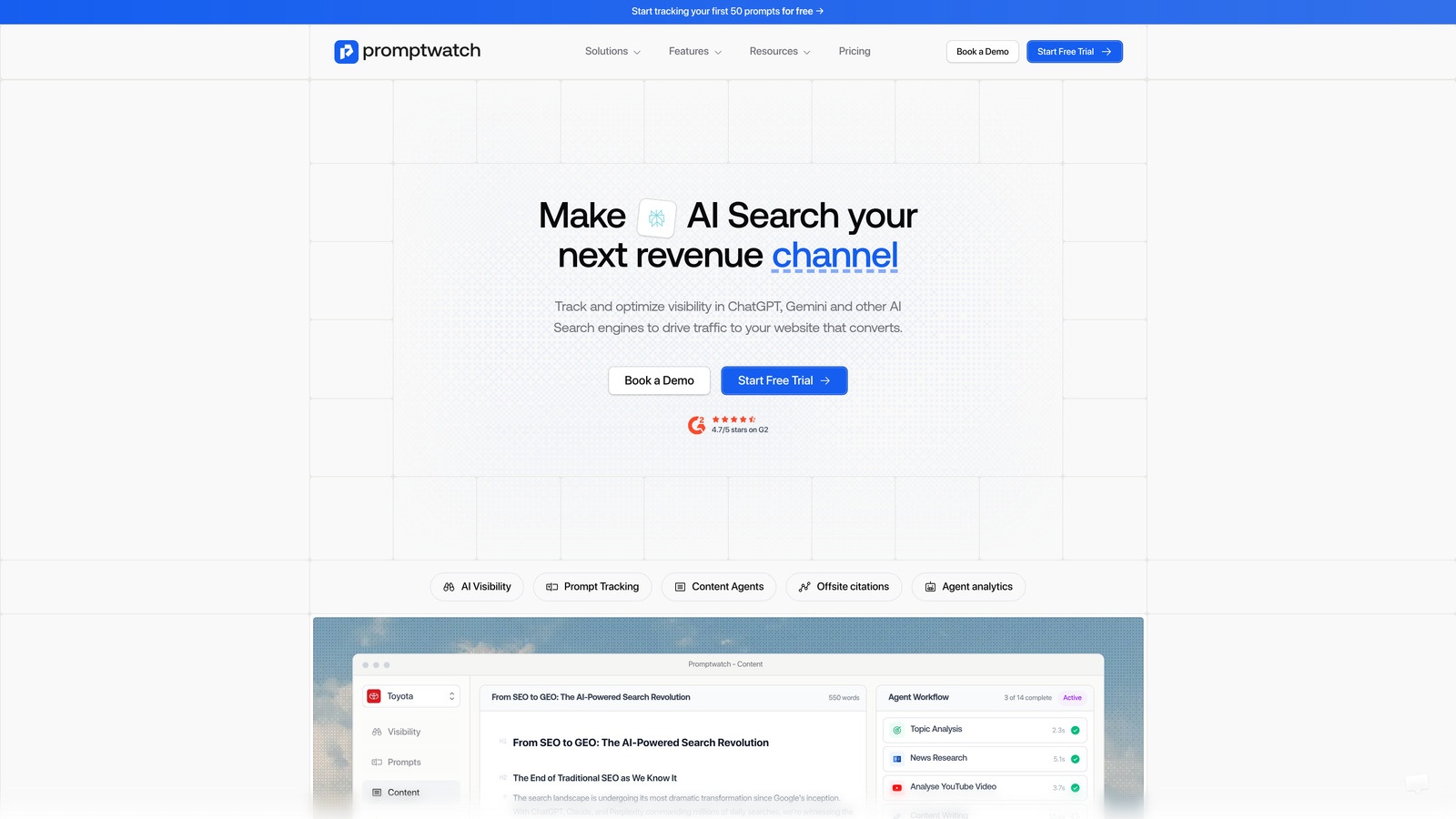
Promptwatch is a prompt-level AI monitoring tool that tracks how specific queries return brand-relevant results across AI models over time.
Where This Tool Shines
Promptwatch takes a more surgical approach than broad visibility dashboards. It does not just tell you that your brand appears in AI outputs. It tracks exactly which prompts trigger your brand mentions and how those outputs change over time. This is especially useful when you run a content strategy aimed at specific AI queries and need to know whether it is working.
The alerting system is a practical feature for ongoing monitoring. When AI models change how they respond to a tracked prompt, you get notified. You can then respond with updated content or a revised strategy instead of discovering the change weeks later.
Key Features
Prompt-Level Tracking: Monitors branded and category-level queries individually, giving you granular data on which prompts surface your brand.
Output Monitoring Over Time: Tracks how AI model responses to specific prompts evolve, helping you detect shifts in brand representation.
Change Alerts: Notifies you when AI model outputs for tracked prompts change significantly, enabling a faster response.
Brand Mention Detection: Identifies when and how your brand appears within AI-generated answers for monitored queries.
Best For
Promptwatch suits brands and marketers who want precise, query-level insight into AI model behavior. It is particularly useful for content strategists who are actively testing whether specific content investments influence AI outputs for targeted prompts.
Pricing
Pricing tiers are available on their website. Visit promptwatch.io for current plan details.
4. Peec
Best for: Competitive AI citation benchmarking across multiple AI models
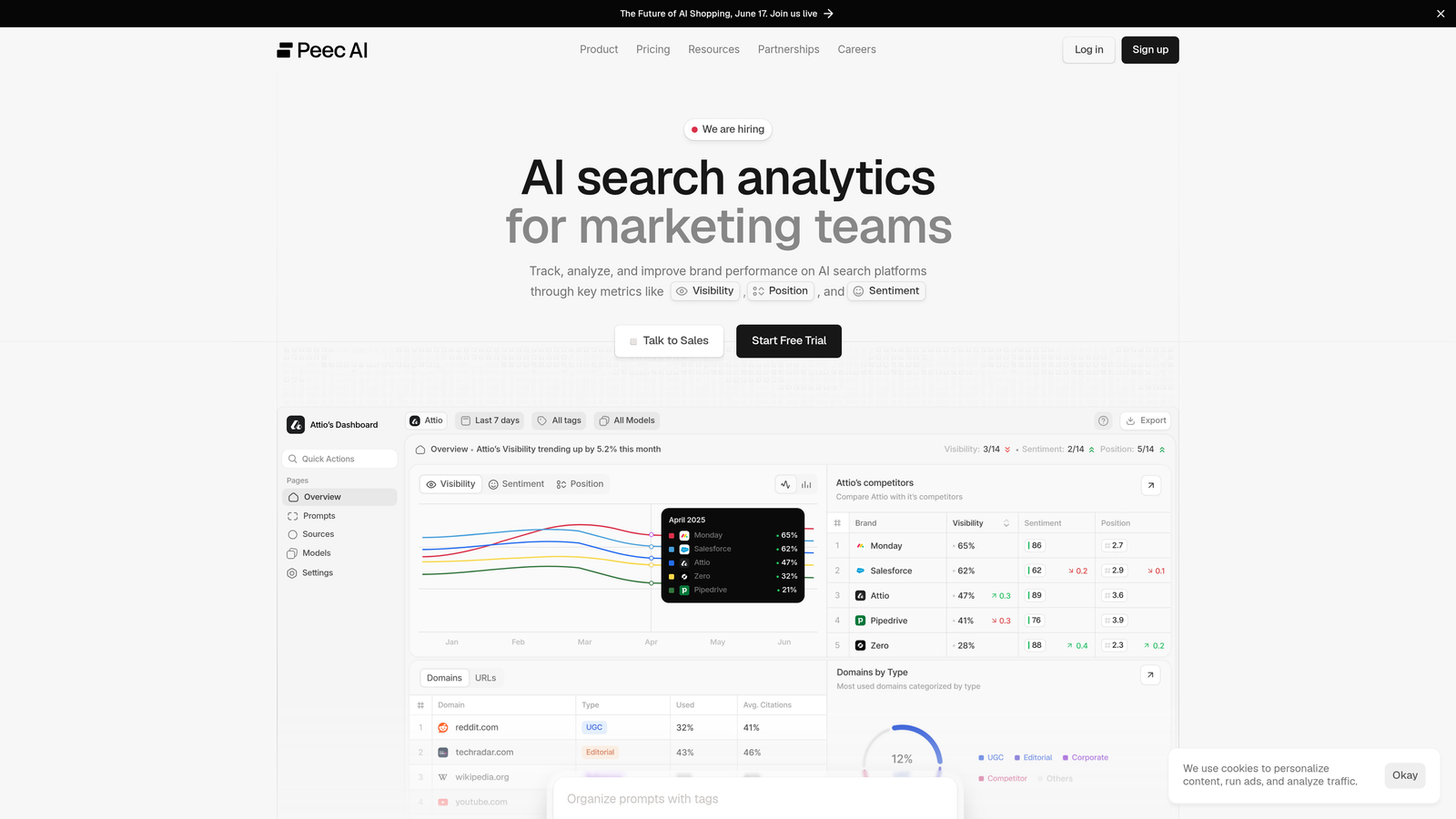
Peec is an AI visibility benchmarking tool that helps brands measure and compare their citation rates across multiple AI models against competitors.
Where This Tool Shines
Peec's core value is competitive context. Knowing that your brand appears in AI outputs is useful. Knowing how that compares to your direct competitors across multiple AI platforms is more actionable. Peec focuses on that comparative layer and provides share-of-voice data that puts your AI visibility in perspective.
The multi-model tracking approach also matters. Different AI platforms have different training data, retrieval strategies, and citation tendencies, so a brand that performs well in Perplexity may show up differently in ChatGPT. Peec surfaces those differences so you can prioritize accordingly.
Key Features
Competitive AI Citation Benchmarking: Compares your brand's citation rate directly against competitors across multiple AI models.
Multi-Model Visibility Tracking: Monitors brand presence separately across different AI platforms to surface platform-specific patterns.
Share-of-Voice Reporting: Provides structured reports on your relative presence in AI-generated answers within your category.
Trend Monitoring: Tracks changes in brand visibility over time so you can connect content efforts to AI citation performance.
Best For
Peec is a strong fit for brands in competitive markets where relative AI visibility matters as much as absolute visibility. It works well for marketing teams that already track traditional SEO share of voice and want to extend that practice into AI search.
Pricing
Current pricing tiers are listed on their website. Visit peec.ai for up-to-date plan information.
5. AirOps
Best for: Building and scaling LLM-powered content pipelines for high-volume production
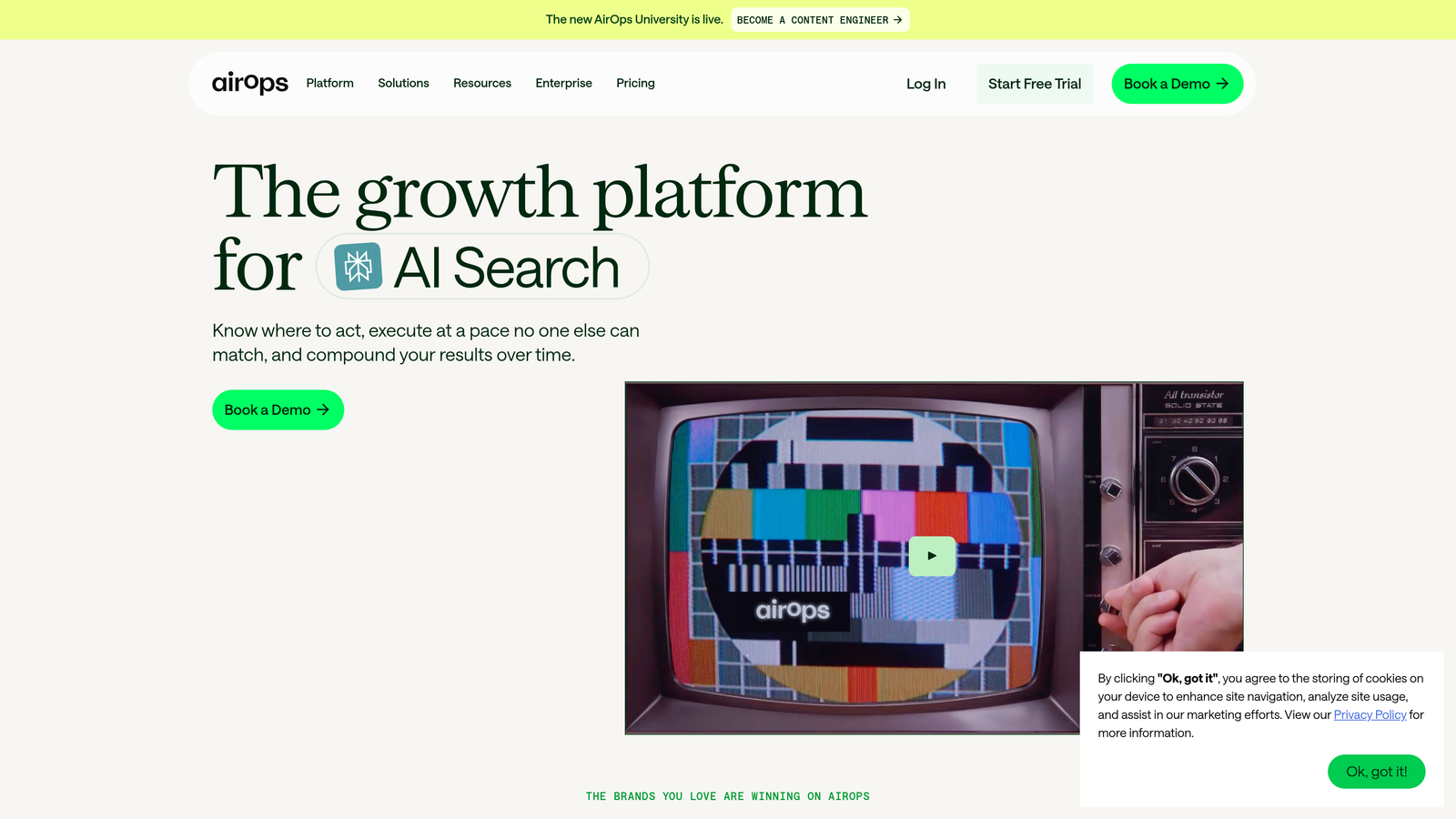
AirOps is a workflow automation platform that lets content teams build and scale LLM-powered content pipelines for structured, high-volume AI content production.
Where This Tool Shines
AirOps is less about monitoring AI visibility and more about scaling content operations. If your challenge is producing large volumes of structured, AI-generated content efficiently, AirOps lets content teams build repeatable pipelines with prompt engineering built in. Think of it as the infrastructure layer for teams that have outgrown one-off AI writing tools and need something more systematic.
The integrations with popular CMS platforms and data sources make it practical for agencies and enterprise content operations teams. They can connect AI-generated content to existing publishing workflows without rebuilding everything from scratch.
Key Features
LLM-Powered Workflow Automation: Lets teams build structured content pipelines that run consistently at scale without manual intervention for each piece.
Prompt Engineering and Pipeline Management: Provides tools to design, test, and manage prompts across content workflows so output quality stays consistent.
CMS and Data Source Integrations: Connects to popular content management systems and data sources so generated content flows directly into existing publishing setups.
Scalable Content Operations: Designed for agencies and enterprise teams running high-volume content programs rather than individual writers.
Best For
AirOps is best suited for content operations teams, agencies managing large content programs, and enterprises that need to systematize AI content production. It is not a visibility monitoring tool, so teams that need AI mention tracking will have to pair it with a dedicated monitoring platform.
Pricing
Tiered plans are available. Check airops.com for current pricing and plan details.
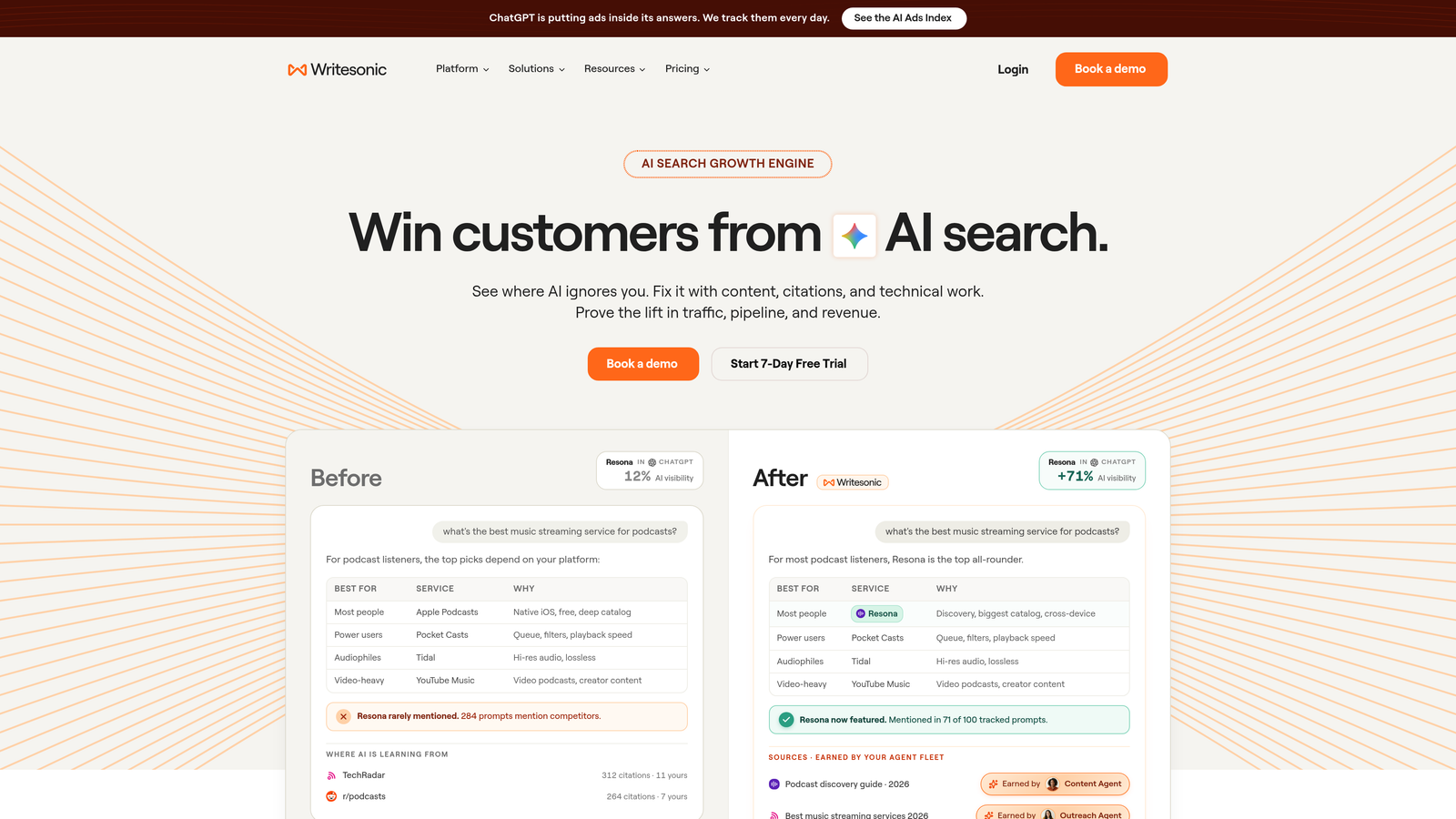
6. Writesonic
Best for: High-volume AI content generation with SEO optimization and real-time data
Writesonic is a broad AI writing platform with SEO-focused features, real-time data integration, and high-volume content generation for marketers and content teams.
Where This Tool Shines
Writesonic has been in the AI writing space long enough to develop a mature feature set for content marketers. Its real-time web data integration is a practical differentiator. Content generated through Writesonic can pull in current information, which helps with relevance and accuracy on fast-moving topics. This matters for teams producing content at scale who cannot manually fact-check every piece against current events.
The range of supported content formats is also broad. Beyond long-form articles, Writesonic handles ads, landing pages, and other marketing assets. That makes it a versatile option for teams that need AI writing support across multiple content types, not just blog posts.
Key Features
AI Article and Blog Post Generation: Produces long-form content with SEO optimization built into the generation process, handling keywords and structure together.
Real-Time Web Data Integration: Pulls current information into generated content, reducing the risk of outdated claims in fast-moving topic areas.
Multi-Format Content Generation: Supports a wide range of content types, including ads, landing pages, product descriptions, and long-form articles.
Brand Voice Customization: Lets teams define and apply a consistent brand voice across generated content at scale.
Best For
Writesonic is a solid choice for marketing teams and content creators who need high-volume AI writing with SEO features and do not require dedicated AI visibility monitoring. It is a generalist platform that performs well for content production. It does not offer the AI mention tracking or GEO-specific capabilities found in purpose-built AI answer optimization tools.
Pricing
A free tier is available. Paid plans with expanded features and higher usage limits are listed on writesonic.com.
Which Tool Is Right for You
The right tool depends on which part of the AI answer optimization problem you are trying to solve. Here is a quick breakdown to help you decide.
If you need an end-to-end solution that covers AI visibility monitoring, GEO content generation, and automated indexing in one platform, Sight AI is the most comprehensive option on this list. It is built for the full workflow, from tracking where your brand appears in AI outputs to publishing content designed to earn more citations.
If your priority is enterprise-level analytics and competitive share-of-voice data, Profound is designed for that use case. For granular, prompt-level monitoring of how specific queries surface your brand, Promptwatch offers the most focused approach. If competitive benchmarking across multiple AI models is your main need, Peec delivers that comparison layer clearly.
For teams focused on scaling content production pipelines rather than monitoring AI visibility, AirOps provides the workflow automation infrastructure to do that systematically. If you need a versatile AI writing tool for high-volume content across multiple formats, Writesonic covers that ground with a mature, well-rounded feature set.
Frequently asked questions
What is AI answer tracking?
AI answer tracking means running a fixed set of prompts through engines such as ChatGPT, Claude, Perplexity and Google AI Overviews on a schedule. Each answer is checked for brand mentions, cited URLs, competitor presence and sentiment. Because answers vary between runs, good tools sample each prompt repeatedly and report a mention rate over time. Platforms like Sight AI, Promptwatch and Peec automate this. For a platform-specific walkthrough, see our guide to tracking brand visibility on Perplexity.
Which is better for content teams choosing high-impact prompts, Profound or Otterly AI?
Otterly AI is not reviewed in this list, so we cannot give a hands-on verdict. As a rule, judge any tracker on four things: whether it lets you import and cluster your own prompts, shows the cited sources behind each answer, benchmarks named competitors per prompt, and links gaps to content actions. Profound is strongest on enterprise share-of-voice analytics. Teams that also want content generation built in should look at Sight AI.
How do I evaluate answer-first formatting tools?
Test whether the tool produces a direct 2–3 sentence answer under each question heading. It should also support FAQ and table structures, generate clean semantic HTML, and help pages get indexed quickly. Then measure the result: track the target prompts before and after publishing to see whether citations increase. The evaluation checklist near the top of this article covers the full criteria.
Can I pay a service to appear in AI-generated answers?
No AI assistant sells placement in organic answers, so treat any service promising guaranteed inclusion with caution. Agencies and platforms can improve your odds. They do this by publishing clear, citable content, earning mentions on sources that AI engines retrieve, fixing crawlability, and tracking results. This discipline is called generative engine optimization; our explainer on what GEO is covers how it works.
Are AI answer optimization tools different from rank trackers?
Yes. Rank trackers report positions in a list of blue links. AI answer tools report whether your brand is mentioned or cited inside a generated response, which has no fixed position. Many teams run both, because Google rankings still feed the sources that AI Overviews and Perplexity cite.
The AI answer optimization space is still changing quickly. The tools that matter most help you both understand your current AI visibility and take concrete steps to improve it. Stop guessing how AI models like ChatGPT and Claude talk about your brand. Start tracking your AI visibility today and see exactly where your brand appears across top AI platforms.