As AI-powered search engines reshape how users discover information, traditional SEO alone no longer guarantees visibility. Generative Engine Optimization (GEO) has emerged as the critical discipline for ensuring your content gets cited by AI models like ChatGPT, Claude, Perplexity, and Google's AI Overviews. The right GEO optimization tools help you track where AI mentions your brand, identify content gaps, and create articles structured for AI comprehension.
Here are the top tools that address different aspects of the GEO workflow—from AI visibility tracking to content generation to technical optimization—so you can build a strategy that gets your brand mentioned when it matters most.
1. Sight AI
Best for: Comprehensive AI visibility tracking combined with GEO-optimized content generation
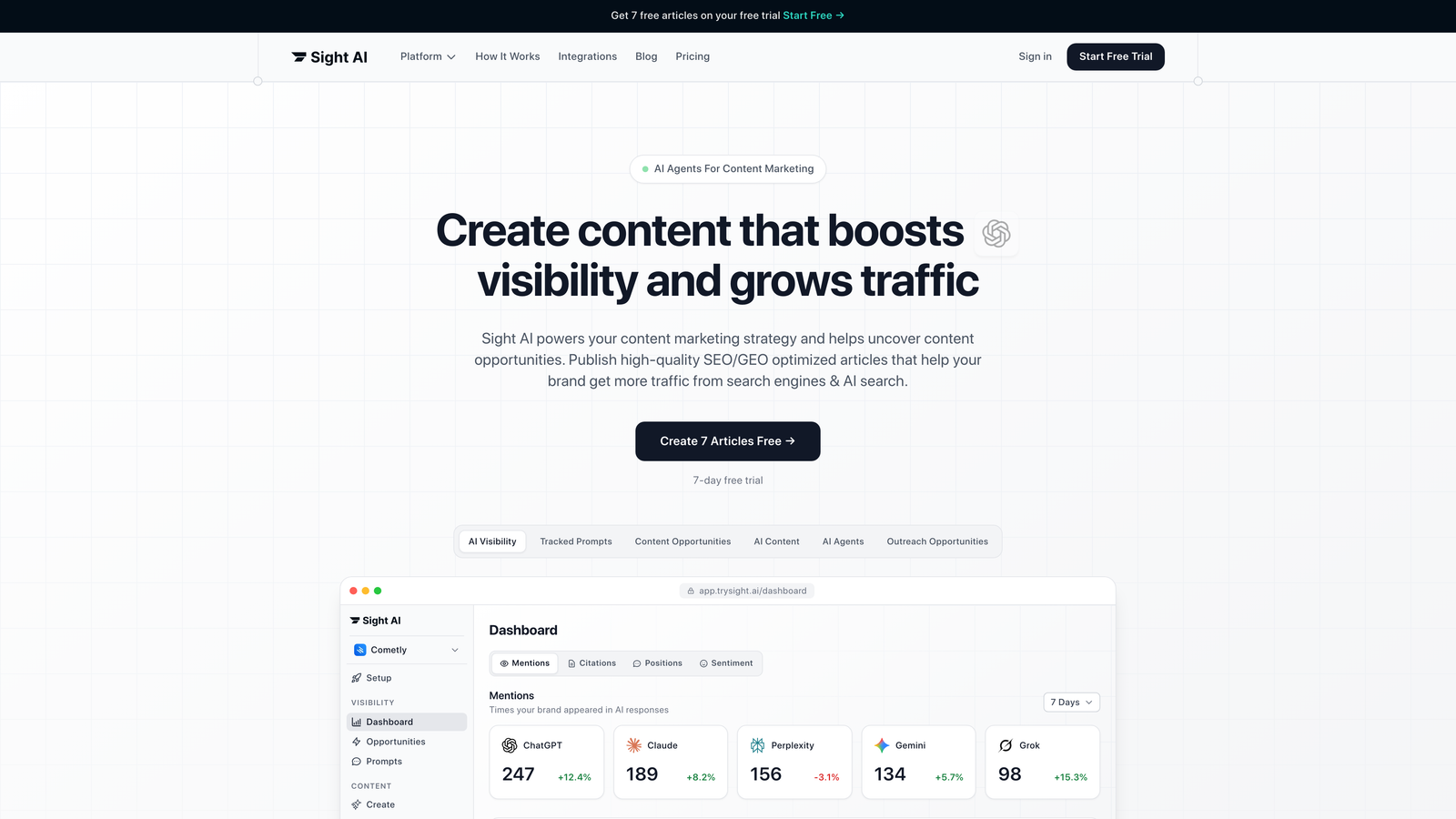
Sight AI is an all-in-one platform that monitors how AI models talk about your brand while providing content creation tools specifically designed for AI citation.
Where This Tool Shines
Sight AI addresses the complete GEO workflow in a single platform. You can track brand mentions across ChatGPT, Claude, Perplexity, and other AI models, then use that intelligence to create content that fills the gaps. The AI Visibility Score provides a quantifiable metric for monitoring your progress over time.
The content generation system uses 13 specialized AI agents that understand GEO principles—creating articles with the semantic depth, entity coverage, and structural clarity that AI models favor when generating citations. This eliminates the disconnect between tracking visibility and taking action to improve it.
Key Features
AI Visibility Score: Track brand mentions across 6+ AI platforms with sentiment analysis and prompt tracking.
13+ Specialized AI Agents: Generate GEO-optimized listicles, guides, and explainers with Autopilot mode for automated workflows.
IndexNow Integration: Automatically notify search engines and AI crawlers about new content for faster discovery.
Prompt Tracking: See exactly which user queries trigger AI mentions of your brand.
Content Gap Analysis: Identify topics where competitors get cited but you don't.
Best For
Marketing teams and agencies that need both visibility intelligence and content production capabilities. Particularly valuable if you're building a GEO strategy from scratch and need an integrated solution rather than cobbling together multiple tools.
Pricing
Contact for pricing; free trial available to test AI visibility tracking and content generation features.
2. Perplexity Pages
Best for: Understanding how AI models structure answers and cite sources
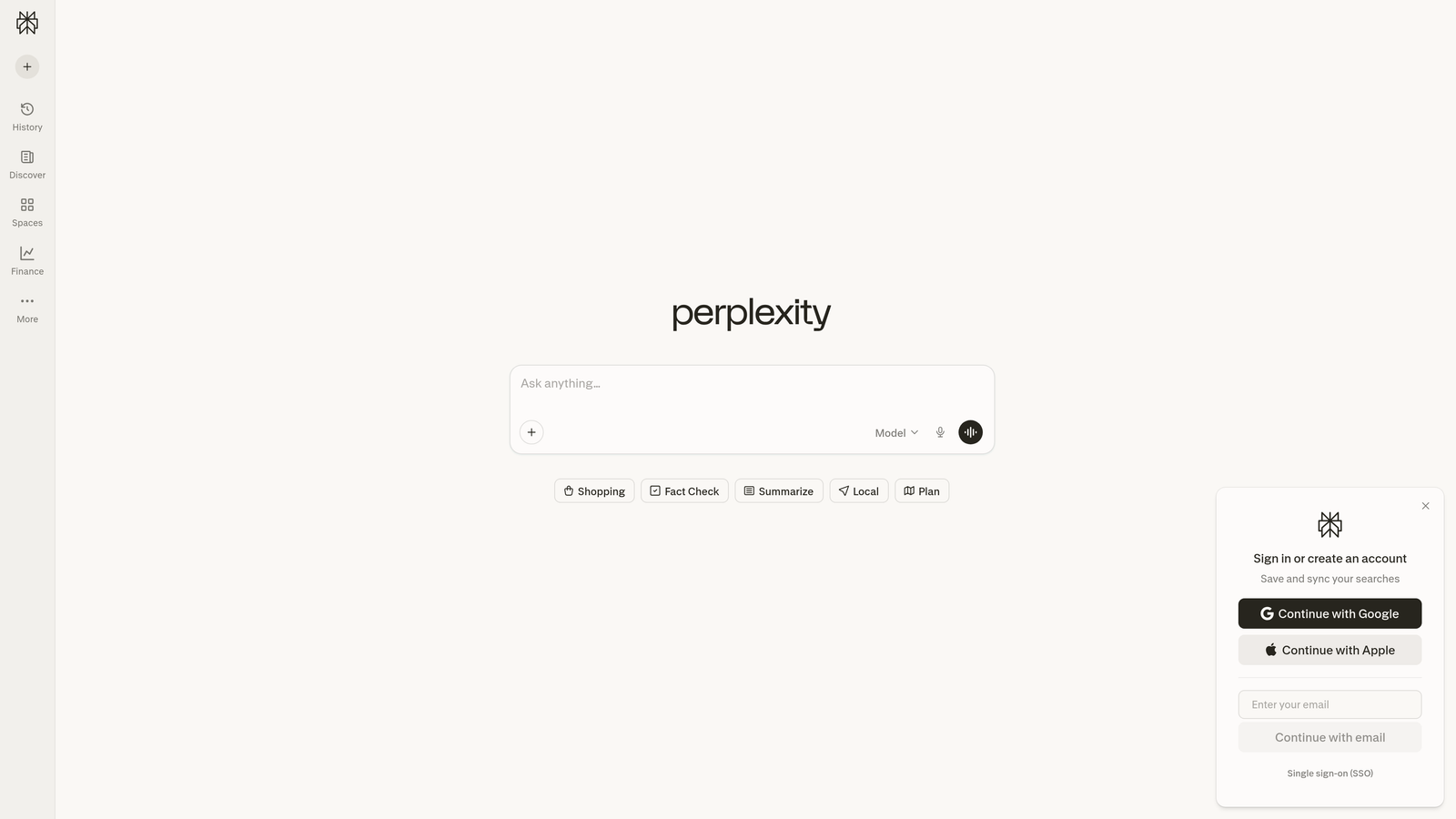
Perplexity Pages is a research platform that reveals citation patterns and content structure preferences across AI-powered search.
Where This Tool Shines
Perplexity gives you a window into how AI models think about topics in your industry. By analyzing how it structures answers and which sources it cites, you gain insights into the content characteristics that earn AI mentions. This intelligence informs your content strategy at a foundational level.
The platform excels at competitive research. You can see which competitors consistently appear in AI-generated answers and reverse-engineer what makes their content citation-worthy. This competitive intelligence is difficult to gather through traditional SEO tools.
Key Features
Citation Pattern Analysis: See which sources AI models prefer when answering queries in your niche.
Answer Structure Insights: Understand how AI organizes information for different query types.
Competitor Citation Tracking: Identify which competitors dominate AI-generated answers.
Topic Coverage Research: Discover subtopics and angles that AI models prioritize.
Best For
Content strategists and SEO professionals who need to understand AI citation behavior before building content. Works best as a research tool to inform strategy rather than a production platform.
Pricing
Free tier available for basic research; Pro subscription at $20/month unlocks unlimited queries and advanced features.
3. Surfer SEO
Best for: Real-time content optimization with NLP analysis and AI Overview monitoring
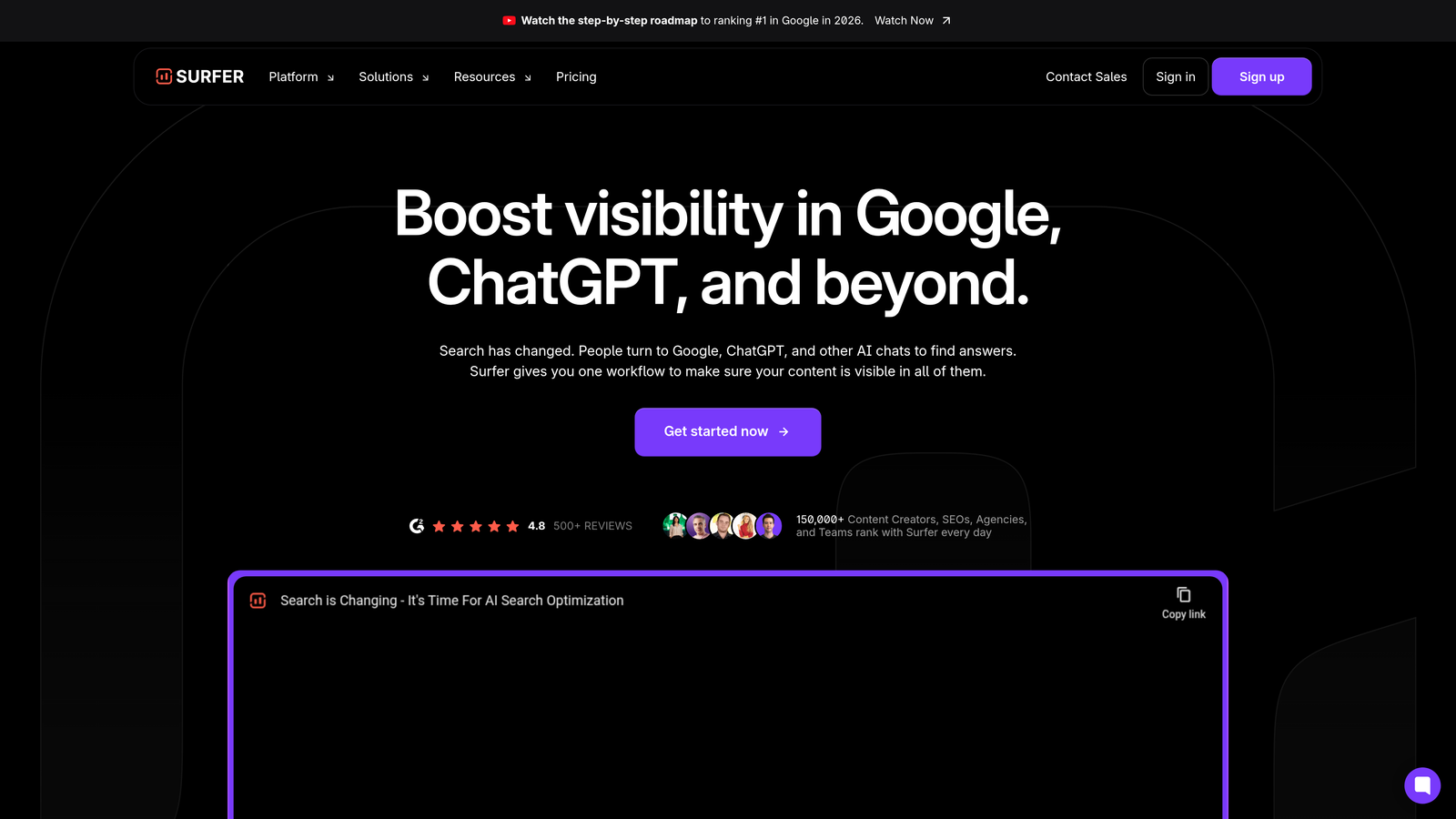
Surfer SEO is a content optimization platform that combines traditional SERP analysis with AI Overview tracking and semantic scoring.
Where This Tool Shines
Surfer's Content Editor provides real-time feedback as you write, scoring your content against top-ranking pages and AI Overview results. The NLP analysis identifies semantic gaps—missing entities, related concepts, and topic clusters that AI models expect to see in comprehensive content.
The SERP Analyzer now tracks AI Overviews alongside traditional search results, letting you optimize for both visibility channels simultaneously. This dual-focus approach makes Surfer particularly valuable during the transition period when both traditional search and AI-powered search matter.
Key Features
Content Editor with NLP Scoring: Real-time optimization feedback based on semantic analysis of top content.
AI Overview Tracking: Monitor which content appears in Google's AI-generated answers.
Content Audit: Analyze existing pages for optimization opportunities and semantic gaps.
Keyword Research with Intent Analysis: Identify terms and topics that align with user search behavior.
Best For
Content creators and SEO teams that need hands-on optimization guidance while writing. The real-time scoring works best for those who want immediate feedback rather than post-production analysis.
Pricing
Starts at $89/month for the Essential plan with basic optimization features; higher tiers add team collaboration and API access.
4. Clearscope
Best for: Enterprise-level semantic coverage and entity mapping
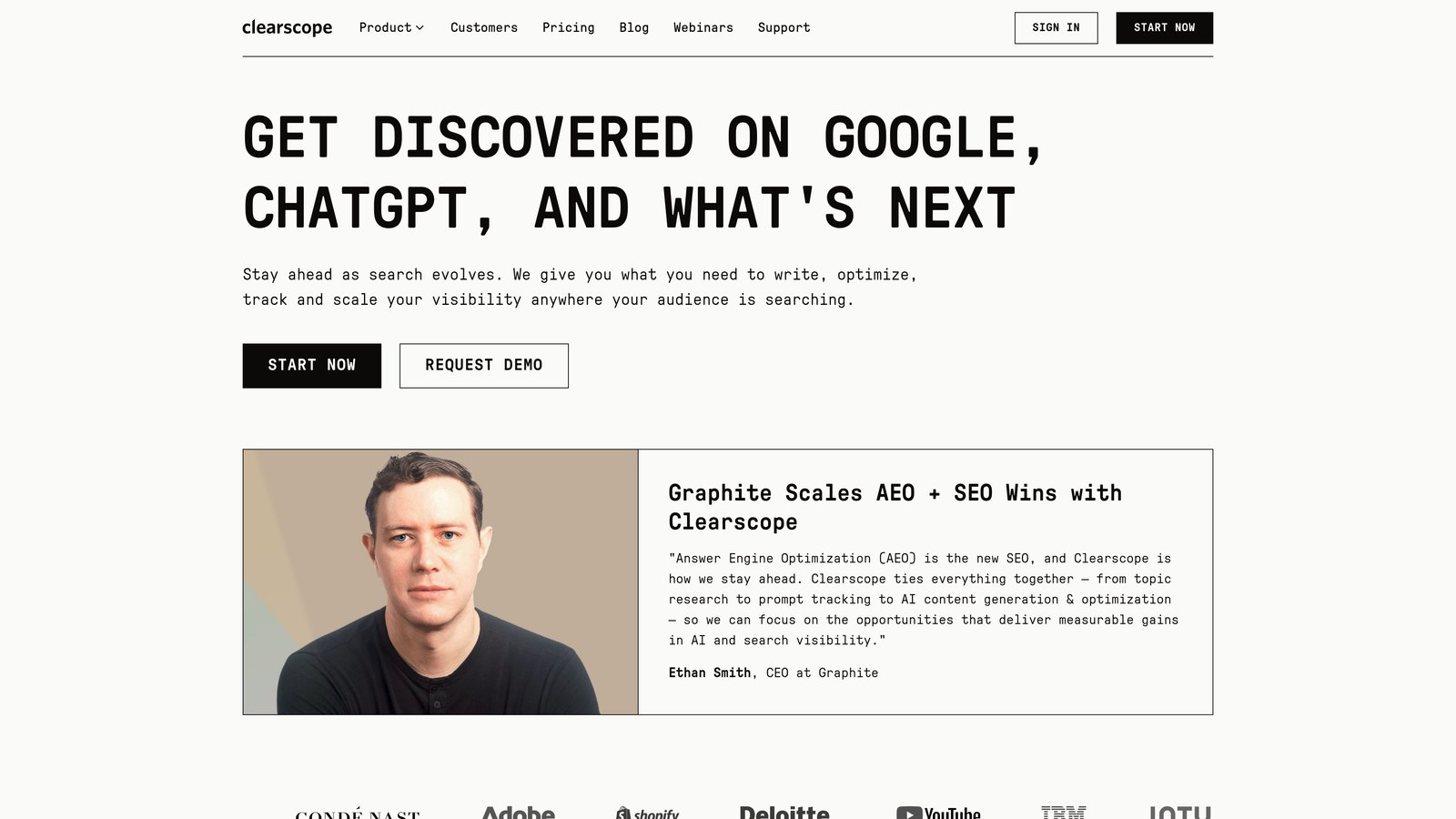
Clearscope is a content optimization platform focused on comprehensive topic coverage and entity relationships.
Where This Tool Shines
Clearscope excels at identifying the semantic territory your content needs to cover. Its grading system evaluates whether you've addressed all the entities, concepts, and subtopics that AI models expect in authoritative content. This thoroughness directly impacts AI citation likelihood.
The platform's entity mapping reveals relationships between concepts that might not be obvious. Understanding these connections helps you create content with the semantic depth that AI models favor when selecting sources to cite.
Key Features
Content Grading: Score existing or draft content for comprehensiveness and semantic coverage.
Entity and Topic Analysis: Identify missing concepts and relationships that complete your content.
Google Docs Integration: Optimize content directly in your writing environment without switching tools.
Team Collaboration: Share optimization insights and track content performance across your organization.
Best For
Enterprise marketing teams and content agencies managing large content operations. The higher price point makes sense when you're optimizing dozens of articles monthly and need consistent quality standards.
Pricing
Starts at $170/month for the Essentials plan; custom pricing available for enterprise teams with higher volume needs.
5. MarketMuse
Best for: Content gap analysis and topic authority building
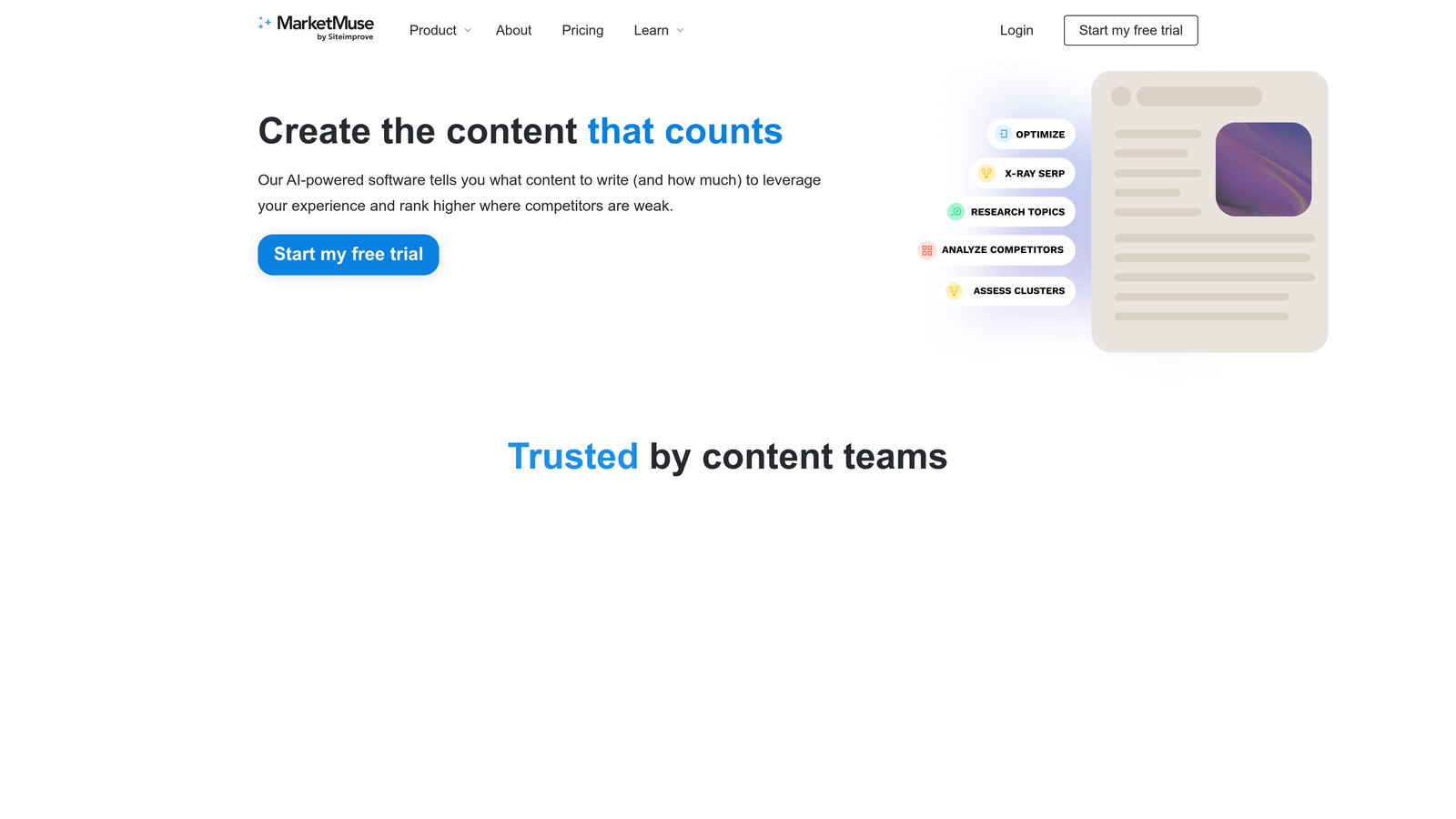
MarketMuse is an AI-powered content intelligence platform that identifies opportunities to build topical authority.
Where This Tool Shines
MarketMuse approaches GEO from a strategic level. Its content inventory analysis reveals where you have authority and where competitors dominate. This gap identification is critical for GEO because AI models favor sources with demonstrated expertise across a topic cluster, not just individual articles.
The AI-generated content briefs specify exactly what to cover to achieve topical comprehensiveness. These briefs translate complex semantic analysis into actionable writing instructions, making it easier for writers to create content that meets AI citation standards.
Key Features
Content Inventory Analysis: Map your existing content against topic clusters to identify coverage gaps.
AI-Generated Briefs: Receive detailed outlines specifying entities, subtopics, and semantic requirements.
Topic Authority Scoring: Measure your expertise level across topic areas compared to competitors.
Competitive Content Analysis: Understand where competitors have built authority that earns AI citations.
Best For
Content strategists and SEO directors building long-term topical authority. Works best when you're planning content programs across multiple related topics rather than optimizing individual articles.
Pricing
Free tier available with limited features; paid plans start at $149/month for Standard with full analysis capabilities.
6. Frase
Best for: Combined SERP analysis and AI-assisted content creation
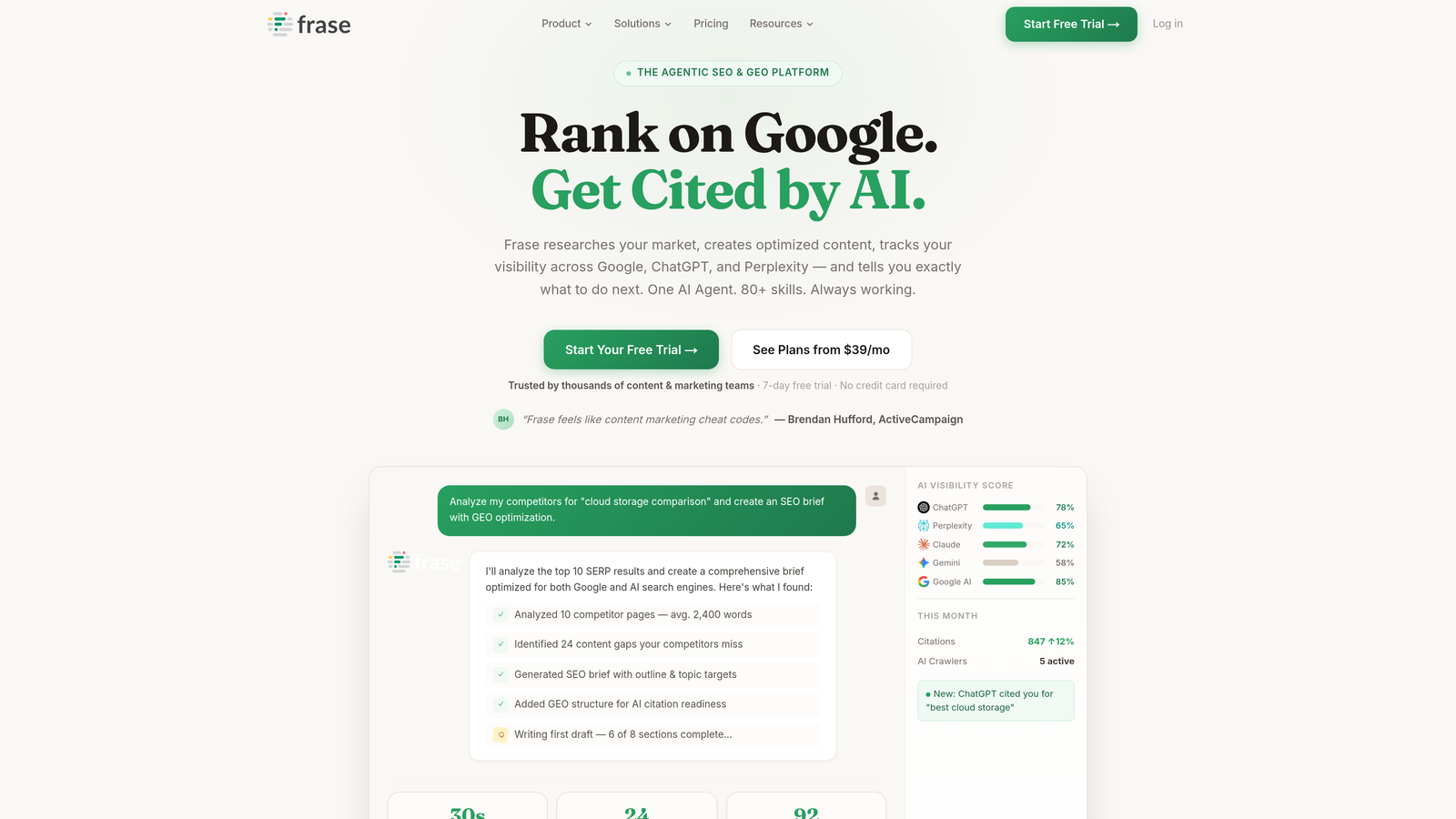
Frase is a content creation tool that extracts insights from search results and provides AI writing assistance.
Where This Tool Shines
Frase bridges research and writing in a single workflow. Its SERP analysis extracts questions, topics, and entities from top-ranking content, then its AI writing assistant helps you address those elements comprehensively. This integrated approach reduces the friction between analysis and content production.
The question research feature is particularly valuable for GEO. AI models often structure answers around common questions, so understanding which questions your content should address improves citation likelihood. Frase surfaces these questions directly from search results and related sources.
Key Features
SERP Analysis with Answer Extraction: Automatically identify topics, questions, and entities from top content.
AI Content Generation: Create draft content based on research insights and optimization requirements.
Content Optimization Scoring: Track how well your content covers identified topics and entities.
Question Research: Discover questions users ask that your content should answer.
Best For
Solo content creators and small teams that need affordable tools combining research, writing, and optimization. The lower price point makes it accessible for businesses testing GEO strategies.
Pricing
Starts at $15/month for the Solo plan with basic features; higher tiers add team collaboration and increased usage limits.
7. Semrush ContentShake AI
Best for: AI writing integrated with competitive intelligence data
Semrush ContentShake AI is an AI writing tool that leverages Semrush's competitive data for content creation.
Where This Tool Shines
ContentShake AI differentiates itself by feeding competitive intelligence into the writing process. It knows which topics competitors rank for, which keywords drive traffic, and which content gaps exist in your niche. This data-informed approach produces content that addresses real market opportunities rather than generic topics.
The brand voice customization ensures consistency across content while maintaining the semantic depth needed for AI citations. The one-click WordPress publishing streamlines the workflow from creation to publication, reducing the time between optimization insights and live content.
Key Features
Competitive Data Integration: AI writing informed by Semrush's traffic and ranking intelligence.
Brand Voice Customization: Maintain consistent tone while optimizing for AI comprehension.
One-Click Publishing: Push optimized content directly to WordPress without manual transfers.
Performance Tracking: Monitor how published content performs in search and AI results.
Best For
Existing Semrush users who want to extend their subscription into content creation. The competitive intelligence integration provides the most value when you're already using Semrush for SEO research.
Pricing
Included with Semrush subscriptions; available as standalone tool at $60/month for teams not using full Semrush platform.
8. NeuronWriter
Best for: Budget-friendly NLP optimization with Google integration
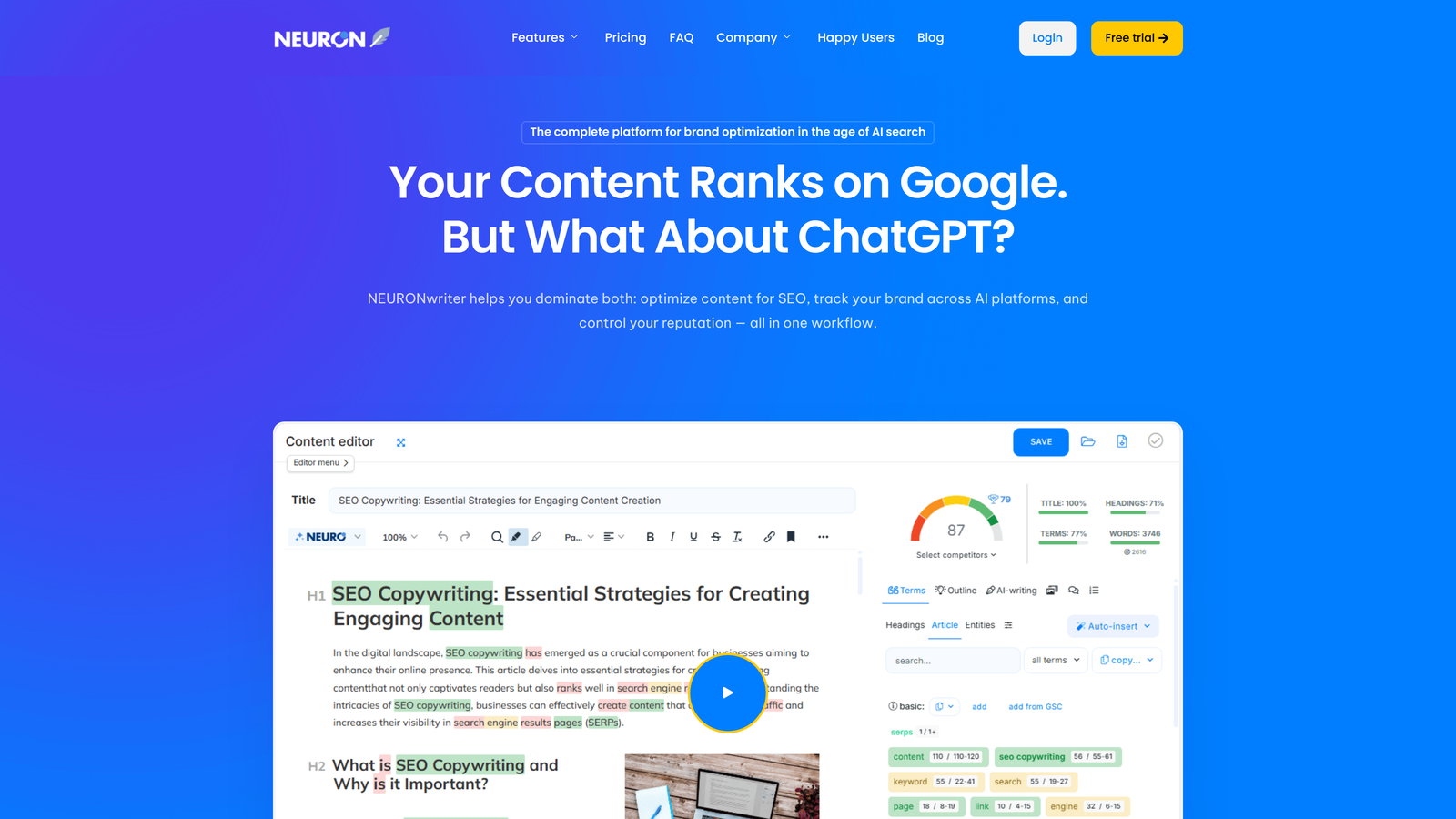
NeuronWriter is an NLP-focused content optimization tool offering competitive features at accessible pricing.
Where This Tool Shines
NeuronWriter delivers enterprise-level semantic analysis at a fraction of typical costs. The Google NLP API integration provides the same entity and sentiment analysis that powers Google's understanding of content, giving you direct insight into how search algorithms interpret your writing.
The competition analysis with semantic scoring reveals not just what competitors write about, but how comprehensively they cover topics. This depth of analysis helps you create content that exceeds existing standards rather than merely matching them.
Key Features
Google NLP API Integration: Analyze content using the same natural language processing that powers Google's algorithms.
Competition Analysis with Semantic Scoring: Compare your content's semantic depth against top competitors.
Content Planning and Management: Organize optimization projects and track progress across multiple articles.
AI Writing Assistance: Generate content sections based on semantic requirements and optimization targets.
Best For
Budget-conscious teams and freelancers who need professional optimization capabilities without enterprise pricing. Particularly valuable for agencies managing multiple client accounts.
Pricing
Starts at $19/month for the Bronze plan with core optimization features; higher tiers add increased usage limits and team features.
9. Originality.ai
Best for: Maintaining content authenticity and credibility for AI trust signals
Originality.ai is an AI detection and fact-checking tool that helps maintain content quality standards.
Where This Tool Shines
Originality.ai addresses a critical but often overlooked aspect of GEO: content credibility. AI models increasingly evaluate source trustworthiness when selecting citations. Content that appears AI-generated without human oversight or contains factual errors gets deprioritized.
The fact-checking capabilities help verify claims before publication, reducing the risk of spreading misinformation that could damage your authority. This verification step becomes more important as AI-generated content proliferates and differentiation depends on accuracy and reliability.
Key Features
AI Content Detection: Identify AI-generated text that may need human refinement for authenticity.
Plagiarism Checking: Ensure content originality to maintain source credibility with AI models.
Fact-Checking Capabilities: Verify claims and statistics before publication to protect authority.
Team Management: Coordinate quality control across multiple writers and content creators.
Best For
Content teams using AI writing tools who need quality control to maintain credibility. Essential for organizations where factual accuracy directly impacts trust and authority.
Pricing
Pay-as-you-go from $0.01/credit for occasional use; unlimited scanning at $14.95/month for regular content auditing.
Choosing Your GEO Toolstack
Selecting the right GEO optimization tool depends on where you need the most help in your workflow. For comprehensive AI visibility tracking combined with content generation, Sight AI offers the most integrated solution—you can see where AI models currently mention your brand, then create content specifically designed to increase those citations.
If you're focused primarily on optimizing existing content structure, Surfer SEO and Clearscope excel at semantic analysis. They'll tell you exactly which entities and topics to add for better AI comprehension. MarketMuse and Frase work best for content planning and gap identification, helping you understand where to focus efforts before writing begins.
Budget-conscious teams should consider NeuronWriter for solid NLP optimization at lower cost. It delivers professional-grade semantic analysis without the enterprise price tag. For research and competitive intelligence, Perplexity Pages provides unique insights into AI citation patterns that inform broader strategy.
The most effective GEO strategy typically combines visibility tracking to understand where you stand, content optimization tools to improve structure, and generation capabilities to scale production. Start by auditing your current AI mentions to establish baseline visibility. Identify the topics where competitors get cited but you don't. Then build your toolstack around closing those gaps with optimized content.
Start tracking your AI visibility today and see exactly where your brand appears across top AI platforms. Understanding your current position is the foundation for any successful GEO strategy—you can't optimize what you don't measure.