Every internet session begins the same way. You open a browser, click into that bar at the top of the screen, and start typing. Maybe it's a full web address. Maybe it's a quick question. Maybe it's just a brand name you half-remember. That single bar, labeled "search or enter web address," is the entry point to the entire internet, and yet most people interact with it on pure autopilot.
For everyday users, that's fine. But for marketers, founders, and agencies trying to grow organic traffic, that little bar tells a much bigger story. The way people use it reveals their intent, their familiarity with your brand, and ultimately whether they end up on your site or a competitor's. And as AI-powered search continues to reshape how queries are answered, understanding what happens inside that bar has never been more strategically important.
This article breaks down the mechanics of the browser address bar from a technical standpoint, explores how user behavior within it connects to SEO and brand authority, and explains why the next frontier of discoverability extends well beyond traditional search results into AI-generated answers. Whether you're new to SEO or a seasoned marketer looking for fresh perspective, this is the lens you didn't know you needed.
The Unified Bar: How Browsers Merged Search and Navigation
There was a time when browsers had two separate input fields: one for entering web addresses and one for searching. It sounds almost quaint now. When Google Chrome launched in 2008, it introduced what the Chrome team called the "omnibox," a single unified bar that handled both navigation and search in one place. Firefox, Edge, Safari, and every major browser followed suit. The placeholder text you see today, "Search or enter web address" or "Search or type a URL," is the direct descendant of that design decision.
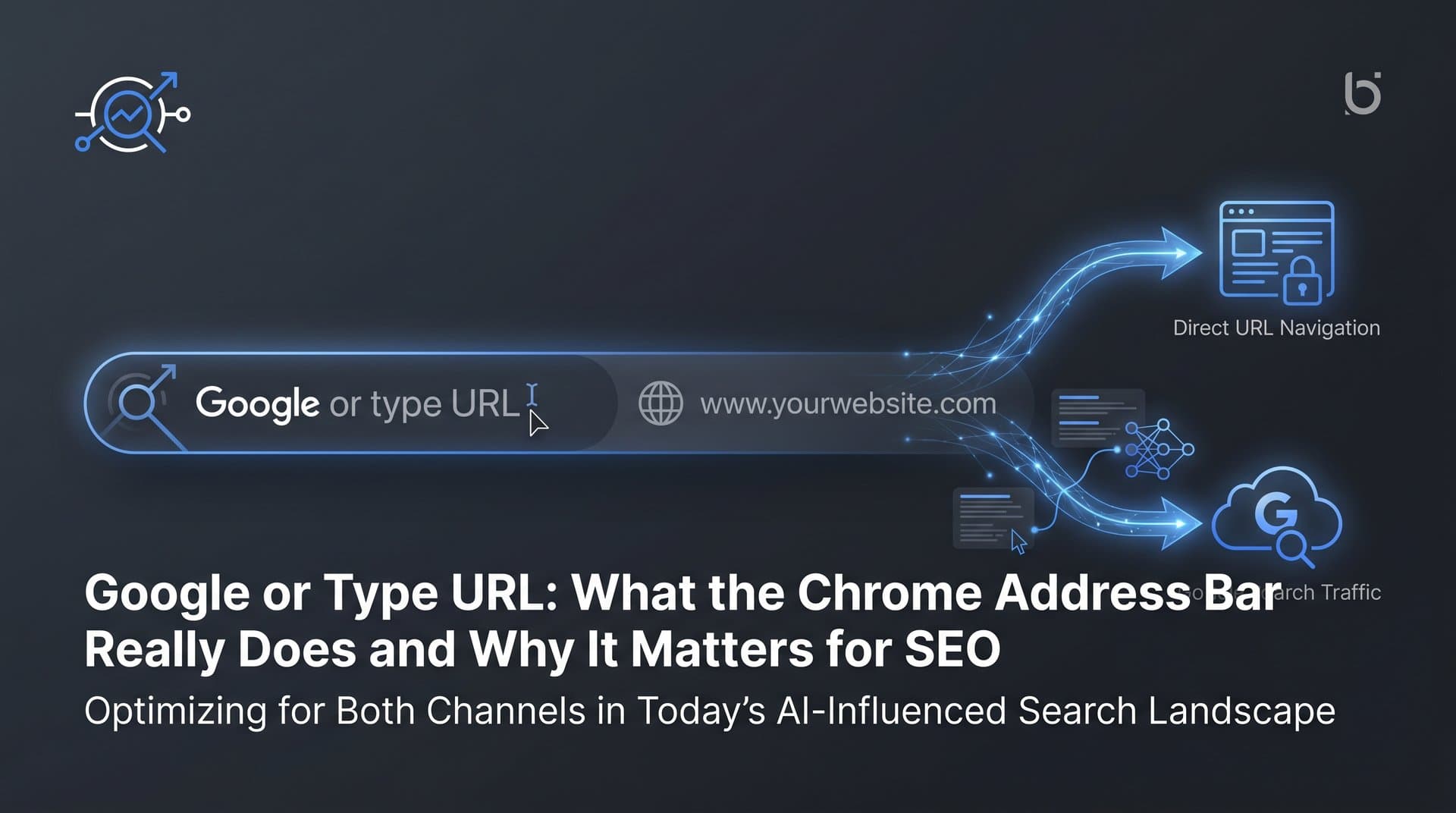
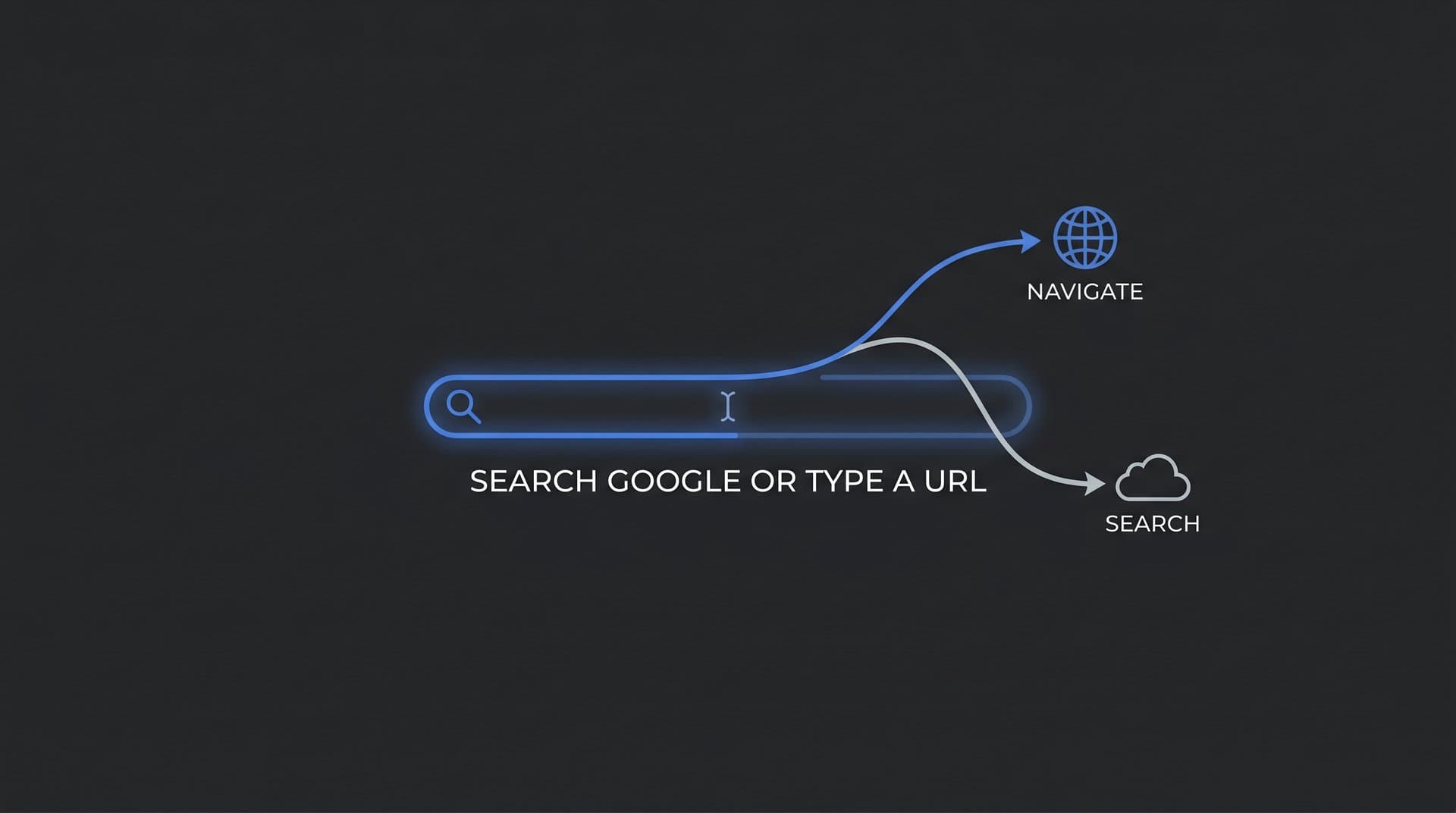
The mechanics behind it are straightforward but worth understanding. When you type something into the bar, the browser runs a quick check: does this look like a valid URL? If the text contains a recognizable top-level domain (like .com, .org, or .io), has no spaces, and follows URL formatting conventions, the browser treats it as a web address and navigates directly. If it doesn't match that pattern, the browser routes your text to whichever search engine you've set as your default.
That routing decision matters more than most marketers realize. If your default search engine is Google, your queries go to Google. If it's Bing, they go to Bing. If someone has switched to DuckDuckGo or Brave Search, your content needs to be indexed and visible there too. Understanding how AI search engines work is becoming just as important as understanding traditional search routing.
Here's where it gets strategically interesting. The browser's autocomplete feature draws from three sources simultaneously: your browsing history, your saved bookmarks, and live suggestions from the default search engine. This means the omnibox isn't just a passive input field. It's actively shaping what users end up searching for by surfacing predictions before they finish typing. For well-known brands, this creates a powerful advantage. For newer or less-searched brands, it creates a visibility gap that content strategy and SEO must work to close.
Understanding the omnibox as a system, rather than just a text field, is the foundation for everything that follows. It's the first decision point in every user journey, and what happens there determines whether traffic flows to your site, a competitor's, or an AI-generated answer page that never sends a click to anyone.
Navigational vs. Search Intent: What Users Actually Type
Not all address bar behavior is created equal. When you look closely at how people actually use the "search or enter web address" field, three distinct patterns emerge, and each one tells a different story about user intent and brand health.
Direct URL entry: The user types a complete or partial web address, like "trysight.ai" or "nytimes.com," and navigates straight to the site. This is navigational intent in its purest form. The user knows exactly where they want to go. No search engine is involved, no competition exists at that moment. This type of traffic shows up in analytics as direct traffic, and it's one of the strongest signals of brand recognition you can have.
Branded search queries: The user types a company or product name, like "Sight AI" or "Nike running shoes," into the bar without a URL. The browser routes this to the default search engine, which returns branded results. This is still navigational intent, but with a search engine as the intermediary. It's worth noting that branded searches are a powerful signal of brand authority. Search engines interpret high volumes of branded queries as evidence that people are actively looking for a specific entity, which tends to reinforce ranking strength for that brand's own web properties.
Generic keyword searches: The user types a question or topic, like "best project management tools" or "how to improve SEO." This is informational or transactional intent. Understanding what search intent means in SEO helps you map content to each of these behavior types effectively.
The autocomplete system creates feedback loops that compound over time. When a brand is frequently searched, it appears in autocomplete suggestions for other users with similar partial queries. Those suggestions drive more clicks, which reinforce the suggestion's prominence. Established brands benefit from this cycle continuously. Emerging brands have to earn their way into it through consistent search volume growth, which is exactly why content strategy and brand awareness efforts are inseparable from SEO.
Browser history adds another layer. If a user has visited your site before, your URL or brand name may appear in their personal autocomplete suggestions before they finish typing. This means repeat visitors are easier to recapture than new ones, and it underscores why the first visit, however it happens, carries outsized long-term value.
For marketers, the practical takeaway is this: branded search volume is a metric worth monitoring closely. Growth in branded queries signals that your awareness efforts are working. A plateau or decline can be an early warning that brand recall is softening, even if organic traffic numbers look stable on the surface.
Why the Address Bar Matters More Than You Think for SEO
Most SEO conversations focus on keyword rankings, backlinks, and on-page optimization. Those things matter enormously. But the behavior happening inside the "search or enter web address" bar connects to SEO in ways that often go unexamined, particularly around how analytics tools classify traffic and how search engines interpret brand signals.
In Google Analytics and most other analytics platforms, direct traffic is defined as visits where no referrer URL is passed to the site. This typically includes users who typed your URL directly, clicked a bookmark, or opened the site from a desktop shortcut. However, branded searches that are routed through a search engine will usually appear as organic search traffic, not direct traffic, because the search engine is the referrer. This distinction matters for attribution: your "organic" numbers may include a meaningful portion of branded navigational queries, not just content-driven discovery.
Why does that matter? Because if branded search volume drops, you might see a decline in organic traffic without any change in your non-branded keyword rankings. Separating branded from non-branded organic search traffic in your reporting gives you a much cleaner picture of what's actually driving growth.
On the search engine side, navigational query volume functions as a soft ranking signal. When a significant number of users type a brand name into their browser and click through to that brand's site from search results, it tells the search engine that this entity is well-known, trusted, and worth surfacing prominently. Sites that people actively seek out tend to accumulate authority signals over time, creating a virtuous cycle between brand awareness and search visibility.
There's a foundational requirement underneath all of this that often gets overlooked: indexing. For any address bar behavior to result in a visit to your site, whether the user typed a URL directly or searched your brand name, your site needs to be properly indexed and crawlable. If search engines can't access your pages, or if your content isn't indexed promptly after publication, you're leaving traffic on the table even from users who are actively looking for you. Learning how to get indexed by search engines faster can close this gap significantly.
This is where technical SEO intersects directly with the address bar story. Clean URL structures, properly configured XML sitemaps, and fast indexing protocols like IndexNow ensure that when someone types your brand name or URL into that bar, the infrastructure is in place to deliver them to the right destination. It sounds basic, but indexing gaps are surprisingly common, especially for growing sites that publish content frequently without systematic indexing workflows.
The AI Search Layer: From Browser Bars to AI-Generated Answers
The "search or enter web address" paradigm is undergoing its most significant transformation since the omnibox was invented. AI-powered search tools are fundamentally changing what happens after a user types a query, and in many cases, they're intercepting the journey before it ever reaches a traditional results page.
Google's AI Overviews now appear at the top of many search results, providing synthesized answers that draw from multiple sources. Bing Copilot integrates conversational AI responses directly into the search experience. Perplexity operates as a standalone AI search engine that answers questions with cited sources. ChatGPT with browsing capabilities can pull current web content into its responses. Users who type a query into their browser bar and get routed to any of these surfaces may receive a complete answer without ever clicking through to a website.
This has significant implications for traffic. Informational queries, the kind where a user is trying to learn something, are most susceptible to being "answered" by AI without generating a click. Navigational and transactional queries are somewhat more resilient, because users with specific destinations or purchase intent are more likely to click through regardless of what an AI summary says. But the landscape is shifting, and the trend is toward more AI interception, not less. Understanding what the search generative experience is helps contextualize this shift.
The question for marketers becomes: if users aren't clicking through, how do you still get value from being findable? The answer lies in being the source that AI models cite. When Perplexity answers a question, it lists its sources. When Google AI Overviews synthesize information, they pull from indexed web content. When ChatGPT discusses a topic, the brands and resources it mentions by name receive a form of visibility that doesn't require a click but does influence perception and future search behavior.
This is the core concept behind Generative Engine Optimization, or GEO. It's an emerging discipline focused on structuring content so that AI models can easily parse, understand, and cite it. The principles overlap significantly with traditional SEO: authoritative content, clear structure, factual accuracy, and strong topical coverage. Our comprehensive AI search engine optimization guide covers these principles in depth.
Tracking AI visibility, meaning monitoring whether your brand is being mentioned by AI models like ChatGPT, Claude, and Perplexity, is becoming as strategically important as tracking keyword rankings. A brand that ranks on page one of Google but never appears in AI-generated answers is increasingly invisible to a growing segment of searchers. The address bar is still the starting point, but the destination is no longer always a traditional results page, and marketers need visibility into both layers.
Optimizing Your Brand for Every Type of Address Bar Query
Understanding the mechanics of the address bar is useful. Knowing how to act on that understanding is where strategy lives. Here's how to ensure your brand captures value from every type of query that bar generates.
Start with indexing fundamentals: None of the traffic opportunities discussed in this article are accessible if your site isn't properly indexed. Audit your index coverage regularly using Google Search Console or equivalent tools. Ensure your XML sitemap is current, accurately reflects your site structure, and is submitted to all major search engines. If you publish content frequently, consider implementing IndexNow, a protocol that proactively notifies search engines of new or updated content for faster discovery. Our guide on search engine indexing optimization walks through this process step by step.
Build clean, crawlable URL structures: Direct URL entry and branded searches only work smoothly when your URL structure is logical and consistent. Avoid parameter-heavy URLs, duplicate content issues, and redirect chains that can confuse both users and crawlers. A user who types your brand name and lands on the wrong page, or a broken redirect, has a poor experience that undermines the brand signal the visit was supposed to reinforce.
Create content that earns citations: For both traditional search rankings and AI visibility, authoritative and well-structured content is the common denominator. Focus on depth over breadth: comprehensive coverage of topics relevant to your audience signals expertise to search engines and gives AI models more material to cite. Use clear headings, factual claims, and structured formats that make it easy for both algorithms and humans to extract value quickly.
Monitor branded search volume separately: Set up segmented reporting in your analytics platform to distinguish branded from non-branded organic traffic. Track branded query volume over time as a leading indicator of brand awareness. Growth in branded searches often precedes growth in direct traffic, making it a useful early signal that your content and marketing efforts are building recognition.
Track your AI visibility alongside traditional SEO metrics: As AI search continues to grow, knowing whether your brand appears in AI-generated answers for relevant queries becomes a critical data point. Dedicated AI search visibility tools let you see exactly how AI models like ChatGPT, Claude, and Perplexity discuss your brand, which queries surface your name, and where gaps exist in your AI presence. This kind of visibility lets you optimize proactively rather than discovering blind spots after traffic has already declined.
Align content with all three intent types: Navigational content (clear brand pages, well-structured homepages), informational content (guides, explainers, research-backed articles), and transactional content (product pages, comparison guides, clear CTAs) each serve a different segment of address bar behavior. A balanced content strategy ensures you're capturing value regardless of how a user initiates their session.
Own the First Click
The browser address bar is easy to overlook precisely because it's so familiar. It's been there every time you've opened a browser for the past two decades. But for marketers and founders, it represents something worth examining carefully: the first decision point in every customer journey, the moment when a user's intent becomes action.
When someone types your brand name directly, that's trust made visible. When they type a query and your content appears, that's discoverability at work. When an AI model cites your site in a generated answer, that's a new form of authority that didn't exist five years ago. Each of these outcomes is connected to the same starting point: a user, a browser bar, and a few keystrokes.
The marketers who will win the next phase of organic growth are the ones who understand all three layers: traditional search indexing and rankings, branded search volume as a brand health metric, and AI visibility as an emerging channel that's already influencing how users perceive and discover brands. Auditing your presence across all three layers isn't optional anymore. It's foundational.
Start by checking your indexing health, reviewing your branded search trends, and then asking a harder question: when someone asks ChatGPT or Perplexity about the problem your brand solves, do you appear in the answer?
If you're not sure, that's exactly the gap worth closing. Start tracking your AI visibility today and see exactly where your brand appears across top AI platforms, so you can optimize for every way users begin their search, from the first keystroke in that familiar bar at the top of the browser to the AI-generated answer that shapes what they click next.