Rankings no longer live only in ten blue links. Marketers, founders, and agencies now need to know where pages rank, why they move, and whether AI answers mention their brand at all. The tools below were chosen on rank-tracking accuracy, keyword and competitor data, reporting, AI search coverage, and how well each fits a team's size and budget. Pricing details change often, so plan names and limits should be confirmed on each vendor's site; the pricing notes here reflect what was current as of November 2026.
Quick Comparison of the Tools
- Sight AI: best for teams that want mentions in ChatGPT, Claude, and Perplexity; pricing on its website; connects AI mention tracking to content creation and indexing in one platform.
- Semrush: best for marketing teams wanting one broad platform; tiered subscriptions, see website; the widest module range across SEO, PPC, content, and social.
- Ahrefs: best for link-focused SEOs and agencies; tiered subscriptions, see website; the deepest backlink data for explaining ranking gaps.
- Google Search Console: best for every site owner; free; first-party impression and indexing data straight from Google.
- SE Ranking: best for small agencies and SMBs; tiered subscriptions, see website; white-label client dashboards at accessible pricing.
- AccuRanker: best for enterprises and agencies with huge keyword sets; keyword-volume pricing, see website; fast, high-volume tracking and nothing else.
- Moz Pro: best for teams new to SEO; tiered subscriptions, see website; Domain Authority plus beginner-friendly recommendations.
- Serpstat: best for freelancers and small businesses on tight budgets; tiered subscriptions, see website; keyword clustering at a low entry cost.
- Mangools (SERPWatcher): best for solo creators and small sites; tiered subscriptions, see website; the simplest interface, with a single Dynamic Rank Index metric.
1. Sight AI
Sight AI is our own product, so read this entry with that in mind. It is an AI visibility and content platform: it monitors how AI models mention your brand, then helps you create and index content designed to earn more of those mentions. It is built for marketers, founders, and agencies who want to influence what ChatGPT, Claude, and Perplexity say about them, in addition to where they rank in Google.
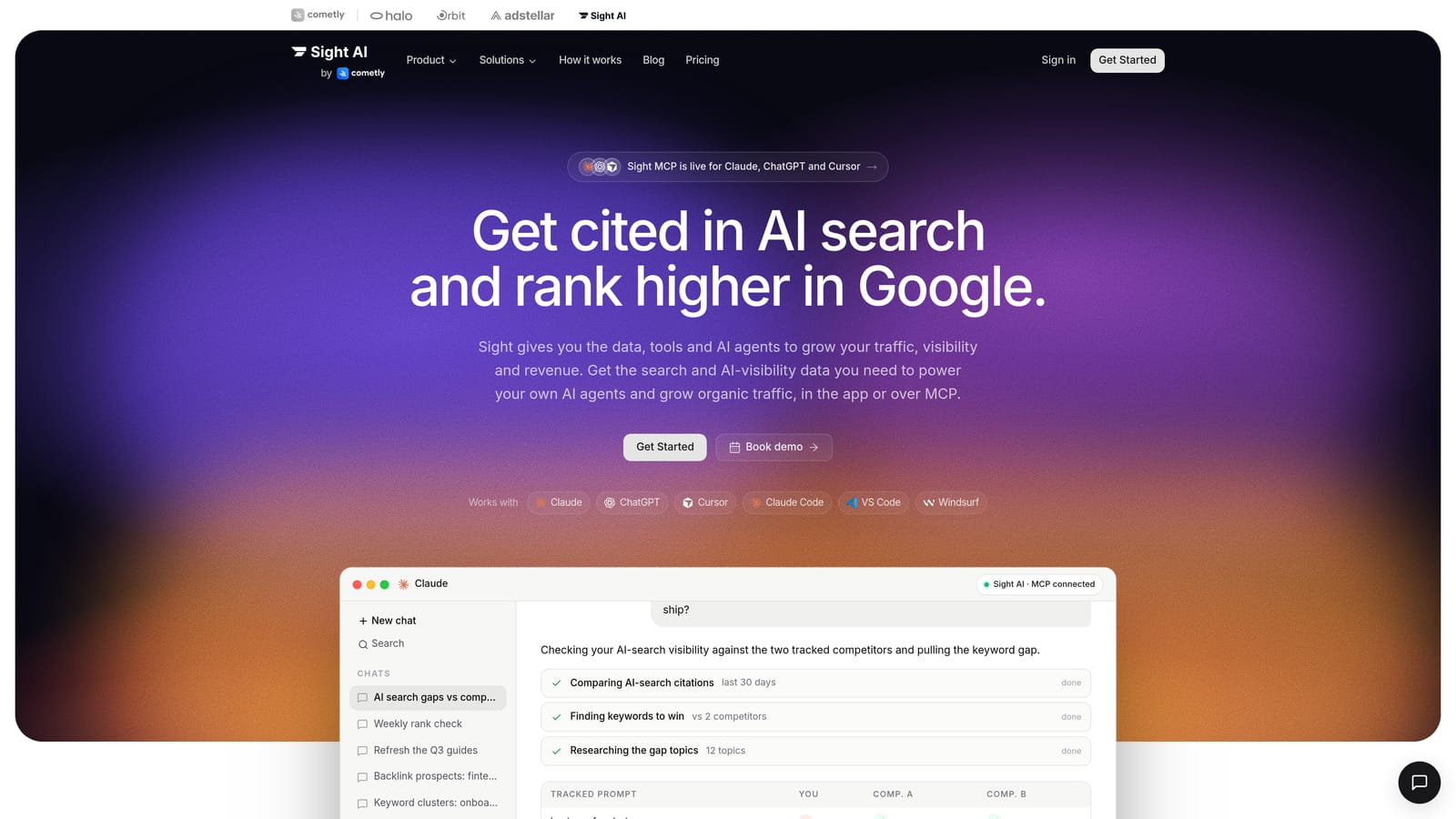
What sets it apart on this list is the loop. Other tools here tell you where you rank. Sight AI tracks brand mentions inside AI answers and connects that data to content production and indexing, so the same platform that shows a gap can help you close it.
- An AI Visibility Score with sentiment analysis shows not just whether you are mentioned, but whether the framing is favorable.
- Prompt tracking across 6+ AI platforms lets you see which questions surface your brand and which surface competitors.
- The AI Content Writer uses 13+ specialized agents, with an Autopilot Mode, to produce SEO and GEO-optimized articles such as listicles, guides, and explainers.
- IndexNow integration and automated sitemap updates push new pages to search engines quickly instead of waiting for a crawl.
- CMS auto-publishing sends finished articles to your site without manual copy-paste.
Setup centers on connecting your site and CMS, then defining the brand and prompts you want to monitor. A marketer or content lead can run it day to day; it does not require a technical SEO.
The limitation is plain: it is not a traditional keyword-position SERP tracker. It will not give you daily rank charts for a list of keywords, so it works best alongside one of the rank trackers below. Pricing is listed on the Sight AI website; confirm current plans there.
Best for: Teams that want to win mentions in ChatGPT, Claude, and Perplexity as well as search.
2. Semrush
Semrush is an all-in-one SEO and marketing suite that pairs position tracking with keyword research and competitor analysis. It is designed for marketing teams that want research, tracking, and reporting under one login rather than stitching together several specialist tools.
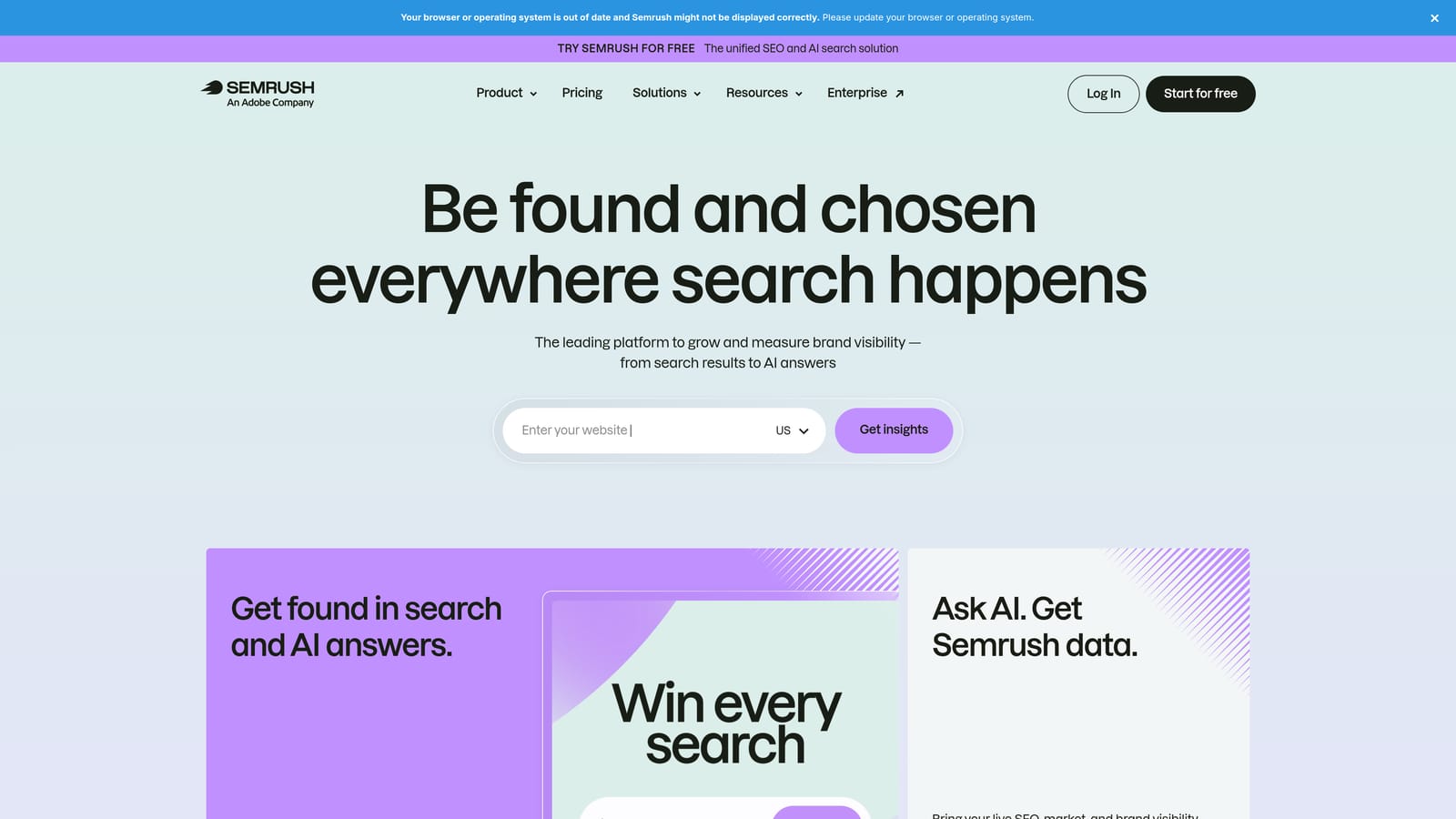
Its distinguishing strength is breadth. Semrush covers SEO, PPC, content, and social in a single suite, which matters when one team owns several channels and wants shared data across them.
- Position Tracking by device and location shows how rankings differ between mobile and desktop, or between cities.
- Keyword Magic Tool expands a seed term into large keyword sets for planning content.
- Competitor gap analysis reveals keywords rivals rank for that you do not.
- Site Audit flags technical issues that may be holding pages back.
- AI visibility add-ons extend monitoring toward AI search, though these are extra modules.
It connects to Google Search Console, Google Analytics, and Google Looker Studio, so you can pull first-party data and push reports into dashboards. Setup is quick for basic tracking, but getting full value means learning many modules, and that takes time.
The trade-offs are cost and complexity. Add-ons raise the bill, and the interface can overwhelm beginners who only need to watch a handful of keywords. Pricing is tiered subscriptions; as of November 2026, check the website for current plans, and expect cost to move with the plan tier and any add-ons you attach.
Best for: Marketing teams wanting one broad platform for research and tracking.
3. Ahrefs
Ahrefs is an SEO toolset best known for its backlink data, alongside keyword research and rank tracking. It is built for SEO specialists and agencies who need to understand why a competitor outranks them, not just that they do.
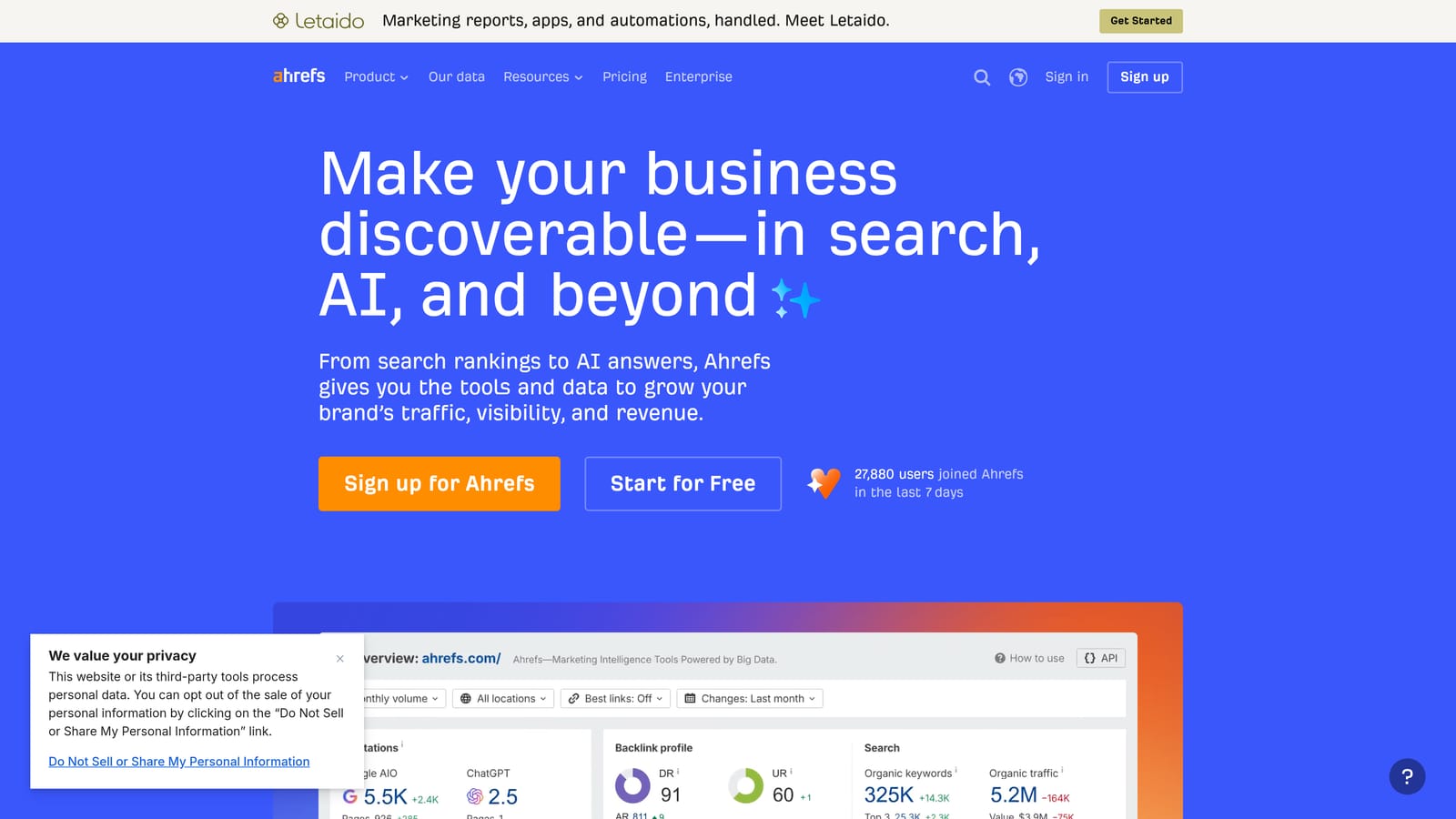
Its standout is the depth of its backlink index. When a competitor holds a position you want, Site Explorer lets you inspect the links behind it, which turns a ranking gap into a concrete outreach or content plan.
- Rank Tracker monitors your keywords and compares your positions against competitors over time.
- Site Explorer breaks down any domain's backlinks, top pages, and organic keywords.
- Keywords Explorer supplies volume, difficulty, and related-term ideas for planning.
- Site Audit crawls your site for technical problems.
- Content Explorer finds high-performing pages on a topic, useful for spotting what earns links and traffic.
It integrates with Google Search Console and Google Analytics. Setup is straightforward, though getting the most from the backlink and competitor tools rewards someone with real SEO experience.
Be aware of usage limits and credits on lower tiers, which can constrain heavy research or large tracking projects. Pricing is tiered subscriptions; see the website for current plans, and note that limits and seat counts are what separate the tiers.
Best for: Link-focused SEOs and agencies running competitor audits.
4. Google Search Console
Google Search Console is Google's free tool for query, click, impression, and indexing data. Every site owner should have it set up, whatever else they use, because it reports what Google itself recorded rather than an estimate.
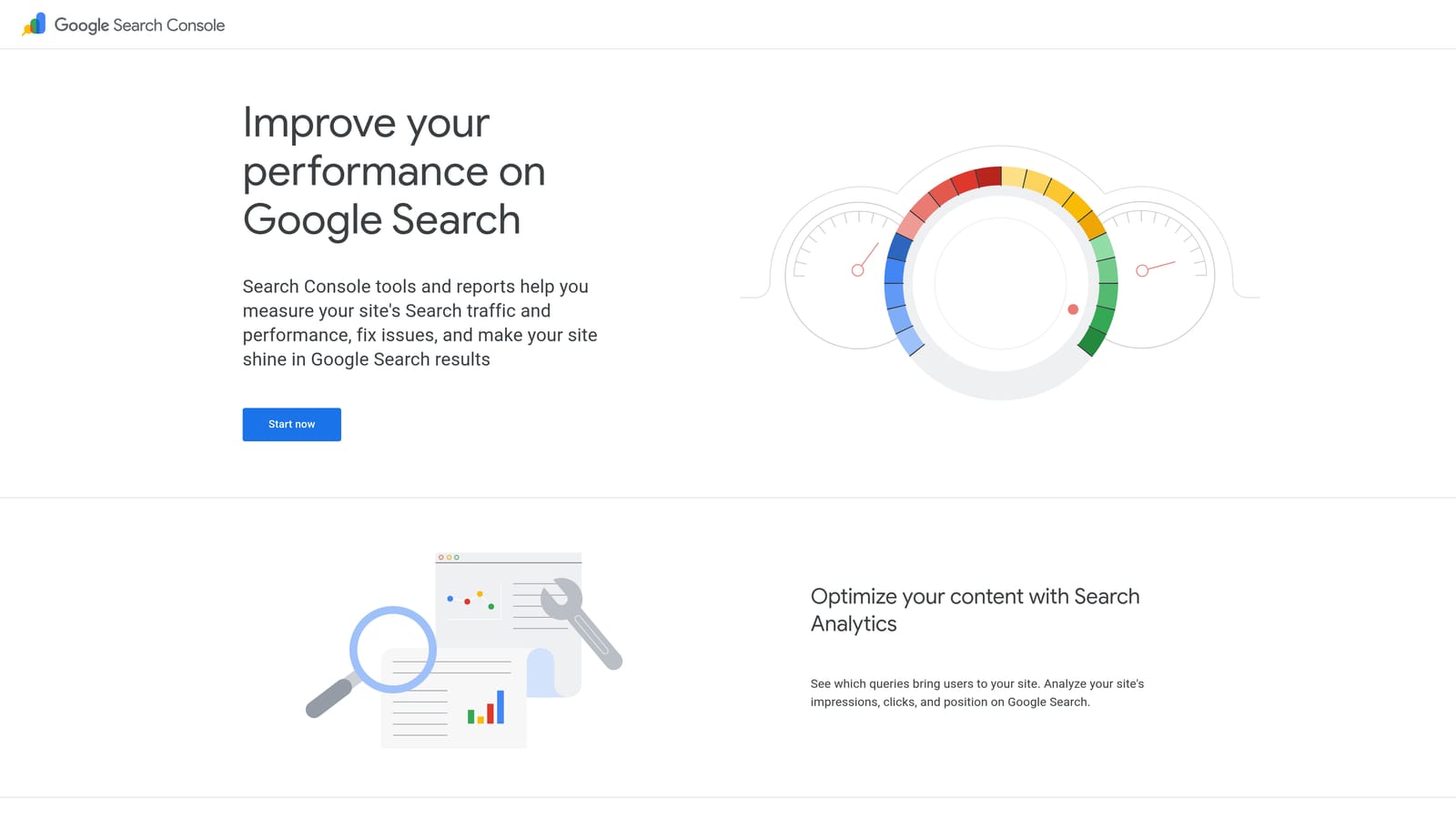
That first-party status is what it does better than anything else here. Real impressions and indexing status come straight from Google, which makes it the baseline source of truth that third-party tools get checked against.
- The Performance report shows clicks, impressions, click-through rate, and position by query, page, country, and device.
- URL Inspection tells you whether a specific page is indexed and how Google last crawled it.
- Indexing and coverage reports surface pages that are excluded or erroring, so you can fix them.
- The Core Web Vitals report highlights pages with poor loading, interactivity, or stability.
Setup means verifying ownership of your site, usually through DNS or a tag, and a marketer or developer can do it in minutes. It feeds Google Analytics and Looker Studio.
Its limits matter. The position it reports is an average across all the impressions a query received, so it is not the same as a keyword's rank at a given moment, which is a common misreading. It has no competitor data, and history is limited, so you need to export data if you want long-term records. It also says nothing about AI answers from other platforms. It is free.
Best for: Every site owner as the baseline source of truth.
5. SE Ranking
SE Ranking is an affordable all-in-one SEO platform with daily rank tracking and reporting aimed at agencies. It targets small agencies and SMBs that need to show clients progress without paying enterprise prices.
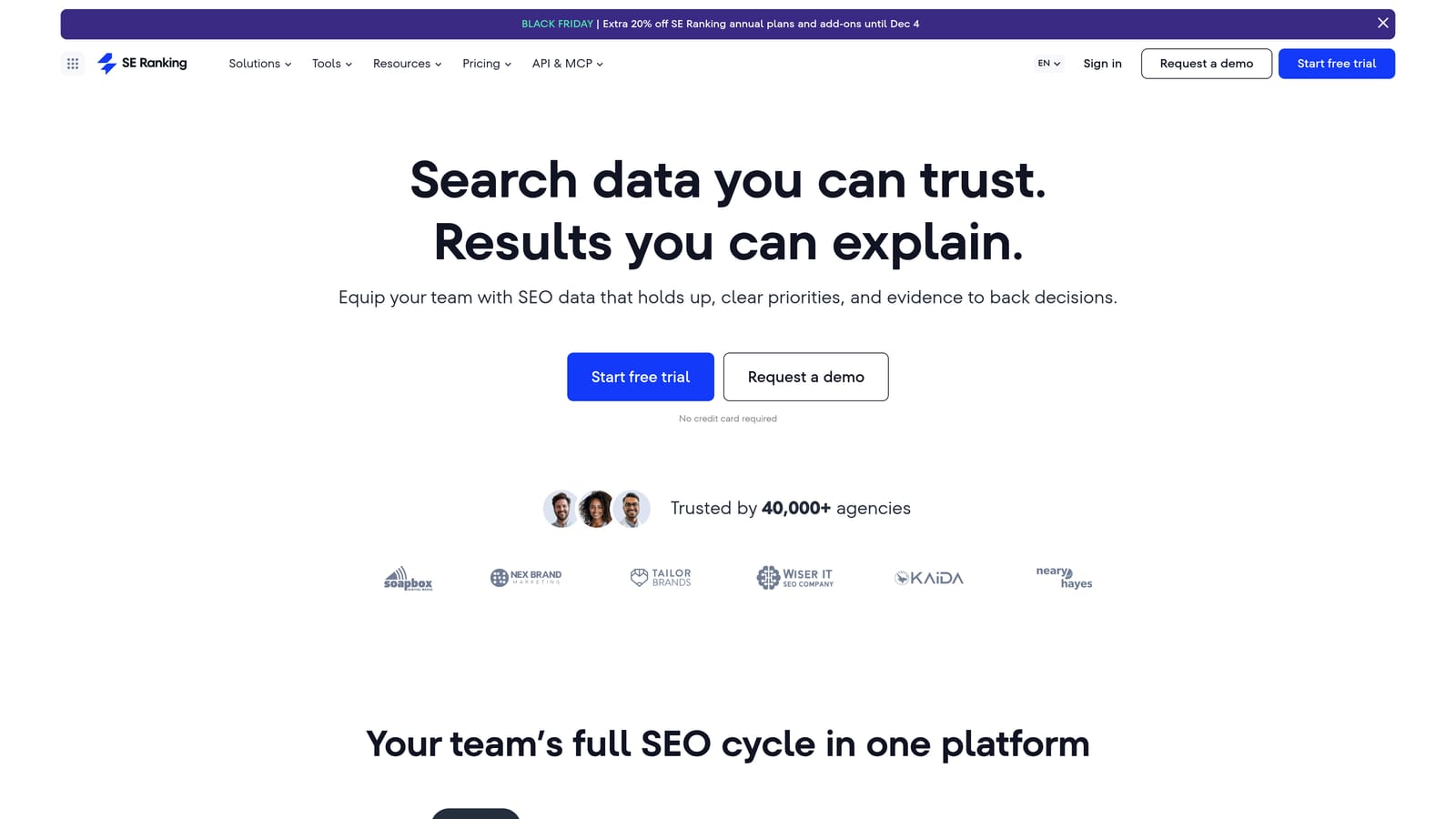
Its distinguishing feature is white-label client dashboards at accessible pricing. You can present reports under your own brand, which many larger suites reserve for higher tiers.
- Daily rank tracking keeps position data fresh enough to catch movement quickly.
- White-label reports let agencies send branded updates to clients.
- Keyword research supports content and targeting decisions.
- Website audit finds technical issues to fix.
- Competitor research shows which keywords and pages rivals are winning with.
It connects with Google Search Console, Google Analytics, and Looker Studio. Setup is light, and an account manager or SEO generalist can run it without specialist training.
The limitation is data scale: its keyword and backlink databases are smaller than those of the largest suites, so deep competitor link analysis is less thorough. Pricing is tiered subscriptions; see the website for current plans, and expect the number of tracked keywords and projects to move the price.
Best for: Small agencies and SMBs needing client reporting.
6. AccuRanker
AccuRanker is a dedicated rank tracking platform built for speed and scale. It is designed for enterprises and agencies that monitor very large keyword sets and want fast, reliable position data without the extras of a full suite.
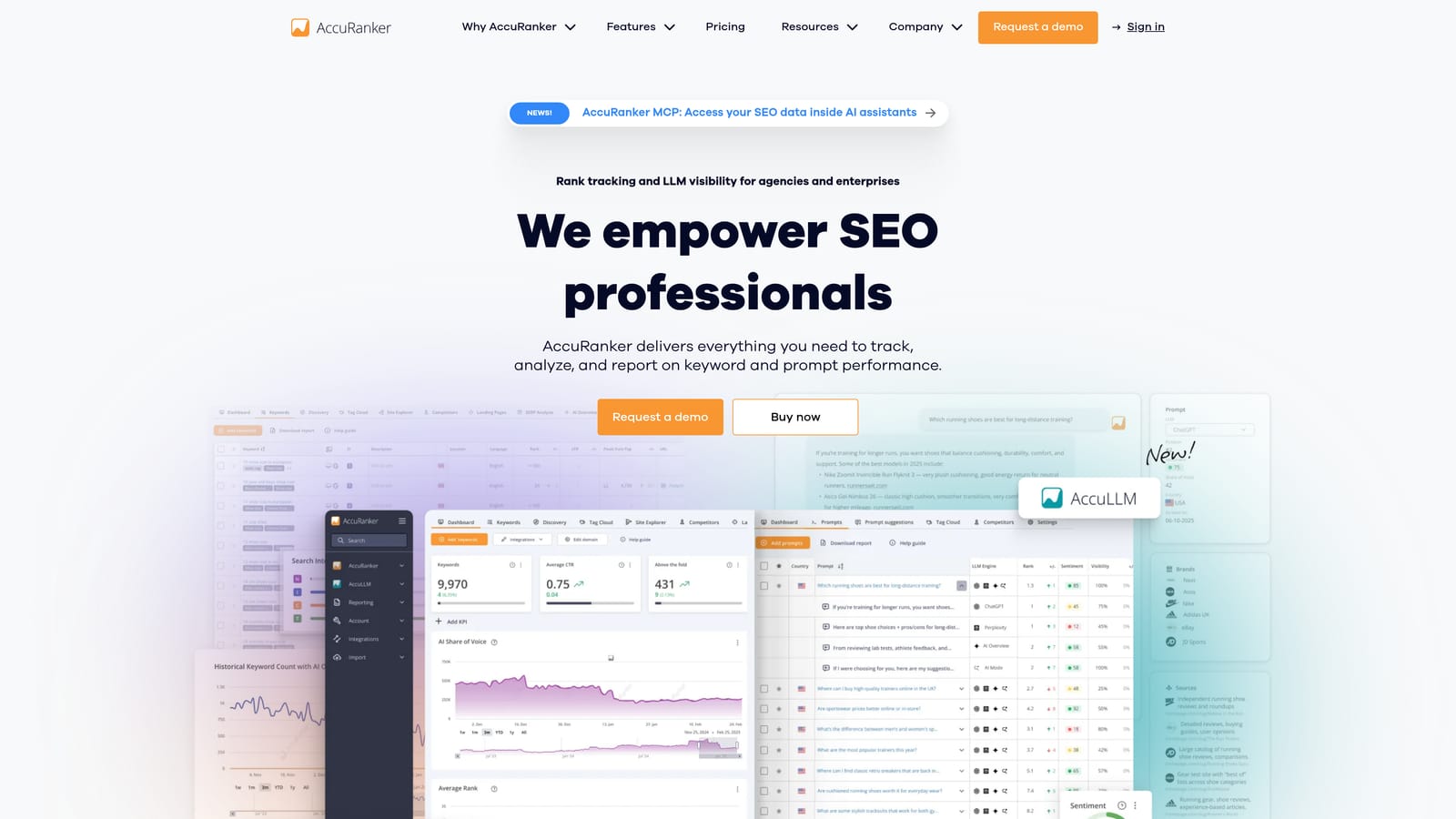
Its edge is focus. Because it does only rankings, it handles high-volume tracking quickly and lets you refresh positions on demand rather than waiting for a scheduled update.
- On-demand rank refreshes let you check the effect of a change right after you ship it.
- Keyword segmentation groups thousands of terms by tag, page type, or market so reports stay readable.
- Share of voice reporting shows how much visibility you hold across a keyword set compared with competitors.
- SERP feature tracking records when snippets, local packs, and similar elements appear.
It integrates with Google Search Console, Google Analytics, and Looker Studio, so it slots into existing reporting stacks. Setup mostly involves importing keywords and organizing them into segments, and an SEO analyst typically owns it.
The trade-off follows from the focus: there is no broad keyword research or content tooling, so you will need another tool for ideation and audits. Pricing is based on keyword volume; see the website for current plans, since the number of tracked keywords is the main driver.
Best for: Enterprises and agencies tracking very large keyword sets.
7. Moz Pro
Moz Pro is an SEO suite that combines rank tracking, keyword research, and site crawling. It suits teams that are new to SEO and want guidance rather than a wall of raw data.
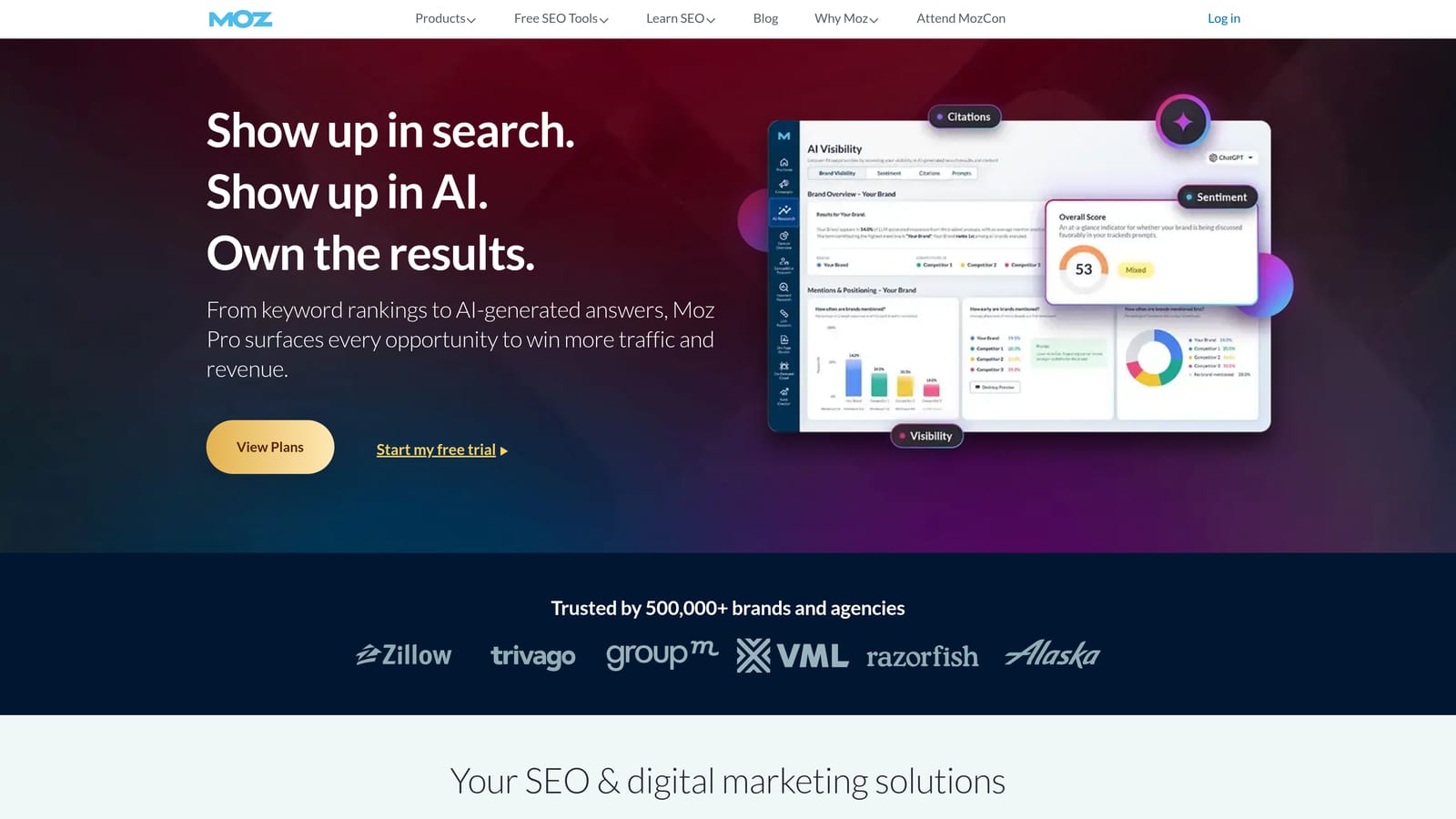
Its signature is Domain Authority, a widely recognized metric for comparing site strength, paired with recommendations that explain what to fix and why. That approachable framing is where it differs most from the heavier research suites on this list.
- Rank tracking follows keyword positions so you can see progress over time.
- Keyword Explorer helps you pick terms and estimate their difficulty.
- Site Crawl identifies technical issues and prioritizes them.
- Domain Authority gives a quick comparative read on your site against others.
- Link research shows who links to you and your competitors.
It integrates with Google Analytics and Google Search Console. Setup is simple, and a generalist marketer can work through its recommendations without prior SEO depth.
Its data index is smaller than those of larger competitors, so keyword and link coverage may feel thinner for aggressive competitive research. Remember too that Domain Authority is a Moz-created score, not a Google ranking factor. Pricing is tiered subscriptions; see the website for current plans.
Best for: Teams new to SEO wanting approachable guidance.
8. Serpstat
Serpstat is a budget all-in-one SEO platform covering rank tracking, clustering, and audits. It is aimed at freelancers and small businesses that need several SEO functions without paying for a premium suite.
Its most useful differentiator is keyword clustering at a low entry cost. Grouping related keywords by shared search results helps you decide which terms belong on one page and which need their own, a task that is often locked behind pricier plans elsewhere.
- Rank tracking monitors positions for your chosen keywords.
- Keyword clustering groups terms so you can plan pages around topics instead of single phrases.
- Site audit highlights technical issues that need attention.
- Backlink analysis shows your link profile and that of competitors.
- Competitor research reveals the keywords and pages driving rivals' traffic.
It connects with Google Analytics, Google Search Console, and Looker Studio. Setup is modest, and one person can run it alone.
The compromise is quality at the edges: data depth and polish trail the market leaders, so expect less comprehensive datasets and a less refined interface. Pricing is tiered subscriptions; see the website for current plans, and expect limits on tracked keywords and requests to separate them.
Best for: Freelancers and small businesses on tight budgets.
9. Mangools (SERPWatcher)
Mangools is a beginner-friendly SEO suite whose SERPWatcher tool tracks rankings alongside KWFinder and other utilities. It is built for solo creators and small-site owners who want a clear read on performance rather than exhaustive data.
What stands out is simplicity. SERPWatcher rolls performance into a single Dynamic Rank Index metric, so you can judge whether your tracked keywords are improving without interpreting dozens of columns.
- SERPWatcher tracks keyword positions and summarizes movement in plain terms.
- KWFinder finds keyword ideas with difficulty scores, aimed at less competitive opportunities.
- SERPChecker analyzes the results page for a keyword to show how hard it is to beat.
- LinkMiner surfaces backlinks to a page or domain.
- Dynamic Rank Index condenses ranking performance into one trackable number.
It integrates with Google Search Console and Google Analytics. Setup is quick, and the person who writes the content can usually run it without help.
The limits are tracking caps and the absence of enterprise features such as extensive segmentation or heavy reporting, so it will not scale to large keyword sets or multi-client agency work. Pricing is tiered subscriptions; see the website for current plans, with tracking limits as the main difference between tiers.
Best for: Solo creators and small sites wanting clarity over depth.
Matching a Tool to Your Situation
No single product covers every layer of visibility. Search Console reports what Google recorded, a rank tracker watches specific keywords, and an AI visibility tool shows what language models say about you. Most teams pair a rank tracker with Search Console and an AI visibility tool.
- Free baseline: Google Search Console. Set it up first, whatever else you buy.
- Agency reporting: SE Ranking for white-label dashboards at modest cost, or Ahrefs when competitor link audits are central to the work.
- Enterprise scale: AccuRanker for fast tracking of very large keyword sets, with Semrush when you also need research across channels.
- Budget: Serpstat or Mangools, depending on whether you value clustering or simplicity.
- AI-visibility tracking: Sight AI, which tracks brand mentions across AI platforms and links them to content creation and indexing.
Stop guessing how AI models like ChatGPT and Claude talk about your brand. Get visibility into every mention, track content opportunities, and automate your path to organic traffic growth. Start tracking your AI visibility today and see exactly where your brand appears across top AI platforms.