Google processes the vast majority of global search queries, but it's no longer the only game in town. A growing number of marketers, founders, and agencies are diversifying their search and discovery strategies, especially as AI-powered platforms reshape how users find information and how brands get discovered.
When most people hear "search engine alternatives to Google," they think of privacy-focused engines or Bing. And those still matter. But in 2026, the most consequential shift for marketers and founders is the rise of AI-native answer engines: platforms like Perplexity that synthesize real-time web data into direct, cited responses rather than lists of blue links.
This changes everything about how brands earn visibility. If your audience is asking ChatGPT, Claude, or Perplexity for recommendations, and your brand isn't being mentioned in those responses, you're invisible to a fast-growing segment of searchers. Here are the top tools and platforms worth knowing if you want to capture visibility across all of them.
1. Sight AI
Best for: Tracking and improving brand visibility across AI search platforms and generating GEO-optimized content.
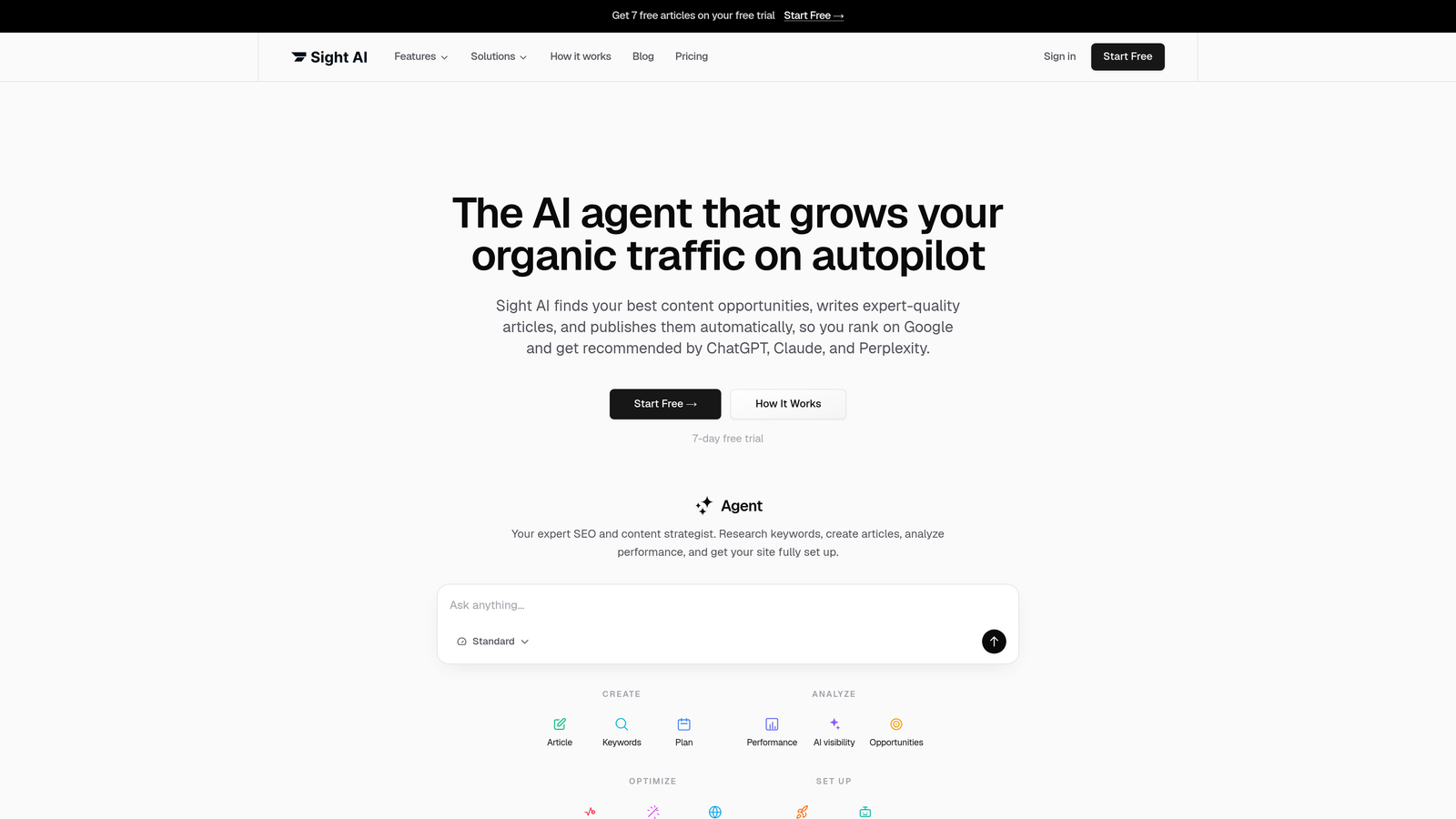
Sight AI is an all-in-one AI visibility and content platform built for marketers, founders, and agencies who want to understand and improve how their brand appears across AI-powered search engines.
Where This Tool Shines
Most SEO tools are built for Google. Sight AI is built for the new search landscape, where your brand might be recommended (or ignored) by ChatGPT, Claude, Perplexity, and other AI platforms before a user ever visits a traditional search engine. It gives you a concrete AI Visibility Score with sentiment analysis, so you can see not just whether you're being mentioned, but how you're being portrayed.
The platform also closes the loop between tracking and action. Rather than just showing you gaps, Sight AI includes a full AI Content Writer with 13+ specialized agents designed to produce SEO and GEO-optimized articles, listicles, and guides that actually improve your chances of being cited by AI models. Combined with IndexNow integration and CMS auto-publishing, it handles the full content-to-indexing workflow in one place.
Key Features
AI Visibility Score: Monitors your brand's presence and sentiment across 6+ AI platforms including ChatGPT, Claude, and Perplexity in a single dashboard.
Prompt Tracking: Tracks how AI models respond to specific queries about your brand, your competitors, and your category, so you know exactly where you stand.
AI Content Writer: 13+ specialized agents generate SEO and GEO-optimized content types, from listicles to explainers, designed to earn citations in AI-generated responses.
IndexNow Integration: Automatically submits new content to search engines for faster indexing and discovery, reducing the lag between publishing and ranking.
CMS Auto-Publishing: Streamlines content operations by publishing directly to your CMS, cutting manual steps out of the production workflow.
Best For
Sight AI is best suited for growth-focused marketers, agency teams managing multiple clients, and founders who want to compete in AI search without hiring a dedicated GEO specialist. If you're already investing in content marketing and want to extend that investment to AI-driven discovery, this platform is purpose-built for that goal.
Pricing
Paid plans are available. Visit trysight.ai for current pricing details and plan options.
2. Perplexity
Best for: Users who want synthesized, cited answers instead of a traditional list of search results.
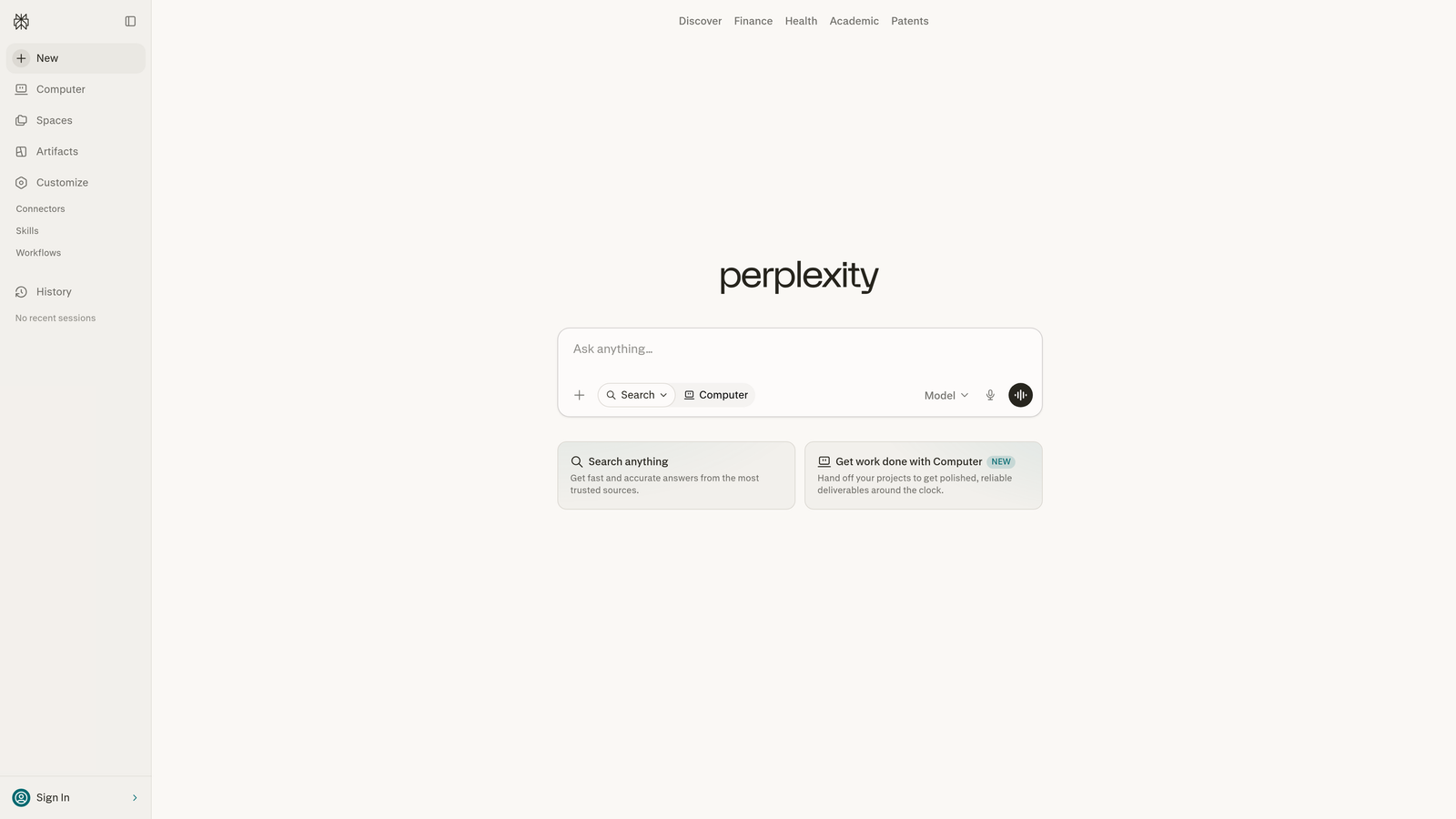
Perplexity is an AI-native answer engine that pulls real-time web data and delivers conversational, sourced responses to search queries.
Where This Tool Shines
Perplexity doesn't just retrieve links, it reads them, synthesizes them, and presents a direct answer with inline citations. For knowledge workers, researchers, and tech-savvy users, this is a genuinely faster way to get information. It's one of the clearest examples of how AI is reshaping search behavior at a structural level.
For marketers, Perplexity matters for a different reason: it's a destination where your brand can be cited or overlooked. If Perplexity is answering questions in your category and your brand isn't appearing in those responses, you're losing mindshare to competitors who have optimized for AI visibility. Understanding how Perplexity surfaces content is increasingly a core part of modern SEO strategy.
Key Features
Real-Time Web Search: Powered by large language models with live web access, so answers reflect current information rather than a static training cutoff.
Inline Source Citations: Every response includes linked sources, giving users transparency and giving publishers a path to being cited.
Conversational Follow-Ups: Users can refine their queries in a back-and-forth format, making it feel more like research than search.
Pro Tier with Model Selection: Perplexity Pro unlocks access to multiple underlying AI models, including more powerful options for complex queries.
API Access: Developers can integrate Perplexity's search capabilities into their own applications.
Best For
Perplexity is ideal for researchers, analysts, and knowledge workers who want direct answers with sourced references. For marketers, it's less a tool to use and more a platform to optimize for, making it essential context for anyone building an AI visibility strategy.
Pricing
A free tier is available. Perplexity Pro starts at approximately $20/month. Verify current pricing at perplexity.ai.
3. Writesonic
Best for: Teams that need to produce high-volume, SEO-optimized content across traditional and AI search platforms.
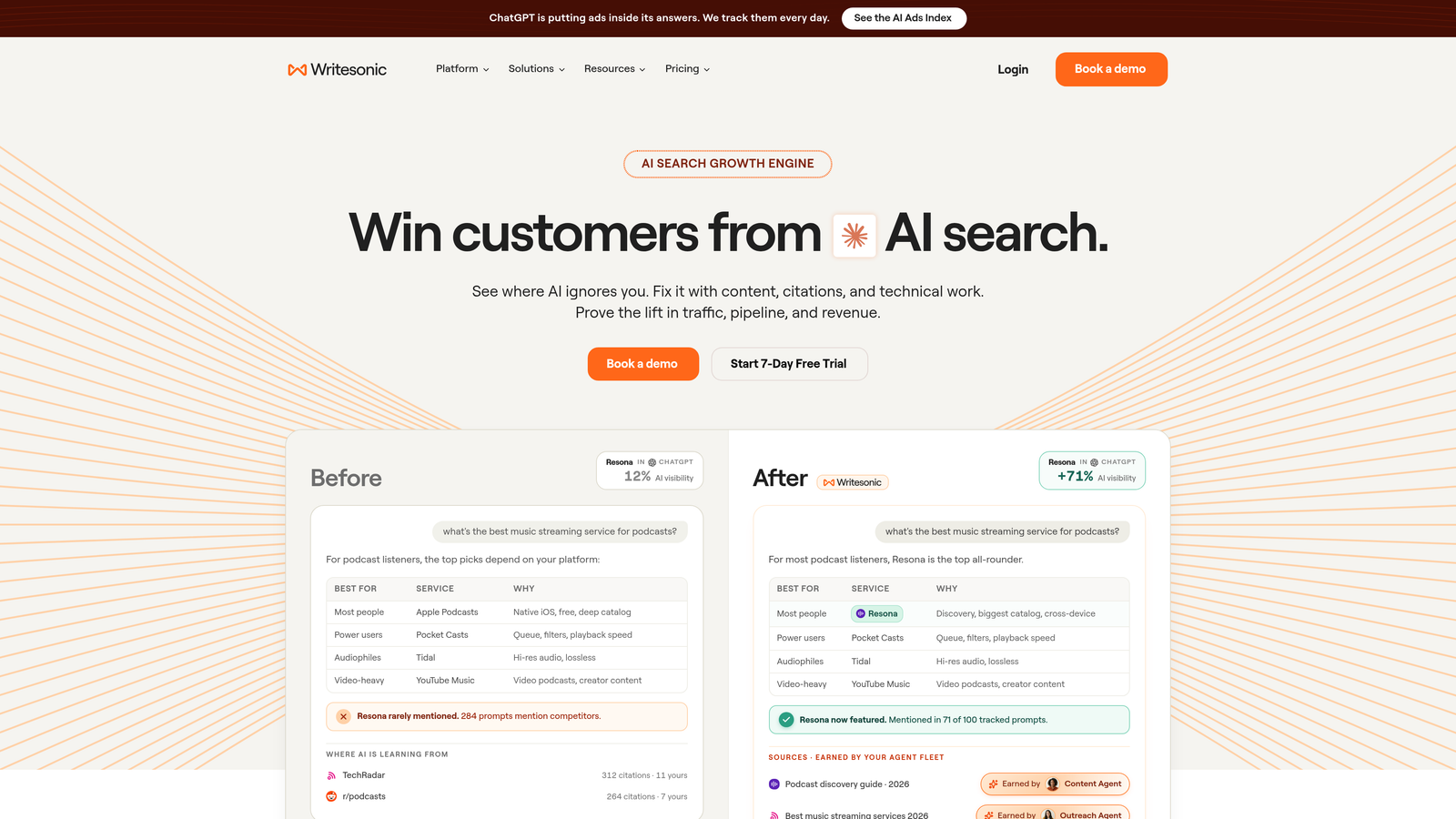
Writesonic is an AI content generation platform with built-in SEO optimization, designed to help marketing teams scale content production efficiently.
Where This Tool Shines
Writesonic sits at the intersection of content velocity and search optimization. For teams that need to publish consistently across multiple topics and formats, it reduces the time from brief to draft significantly. The platform includes real-time data access for factual content generation, which helps avoid the stale information problem that plagues many AI writers.
It's also worth noting that content volume and quality are both factors in how AI search engines decide which sources to cite. Writesonic helps teams build the content library needed to be seen as an authoritative source across both traditional and AI-driven search platforms.
Key Features
AI Article Writer: Generates long-form articles with SEO optimization built into the workflow, including keyword targeting and structure recommendations.
Real-Time Data Access: Pulls current information to support factual, up-to-date content generation rather than relying solely on training data.
Brand Voice Customization: Allows teams to define and maintain a consistent tone and style across all generated content.
Bulk Content Generation: Supports high-volume content production, useful for teams managing large content calendars or multiple client accounts.
CMS Integrations: Connects with popular content management systems to streamline the publishing process.
Best For
Writesonic is well-suited for content marketing teams, agencies managing multiple clients, and growth marketers who need to produce consistent, optimized content at scale without a large editorial team.
Pricing
A free trial is available. Paid plans start at approximately $16/month. Verify current pricing at writesonic.com.
4. Profound
Best for: Brands that want deep analytics on how they appear in AI-generated search responses and how they compare to competitors.
Profound is an AI search analytics platform focused on helping brands measure and improve their visibility within AI-generated responses across major platforms.
Where This Tool Shines
Profound takes a data-first approach to AI visibility. Rather than just telling you whether you're being mentioned, it gives you benchmarking data to understand how your visibility compares to competitors across AI search platforms. This competitive context is valuable for teams that need to prioritize where to invest their GEO efforts.
The platform also surfaces content gaps, areas where AI search engines are answering questions in your category but not citing your brand. This turns visibility data into actionable content strategy rather than just a reporting exercise.
Key Features
AI Search Visibility Monitoring: Tracks how and how often your brand appears in AI-generated search responses across major platforms.
Competitive Benchmarking: Compares your AI search visibility against competitors so you can identify gaps and opportunities.
Brand Mention Tracking: Monitors the frequency and context of brand mentions within AI-generated content.
Content Recommendations: Identifies gaps in your content coverage based on what AI search platforms are responding to in your category.
Reporting Dashboard: Centralizes analytics into a structured view for reporting to stakeholders or clients.
Best For
Profound is a strong fit for enterprise marketing teams and agencies that need structured reporting and competitive intelligence around AI search visibility, particularly those already running sophisticated SEO programs who want to extend into GEO.
Pricing
Contact Profound directly for current pricing. Visit withprofound.com for details.
5. Peec
Best for: Marketers who want prompt-level tracking of how their brand appears in AI search responses.
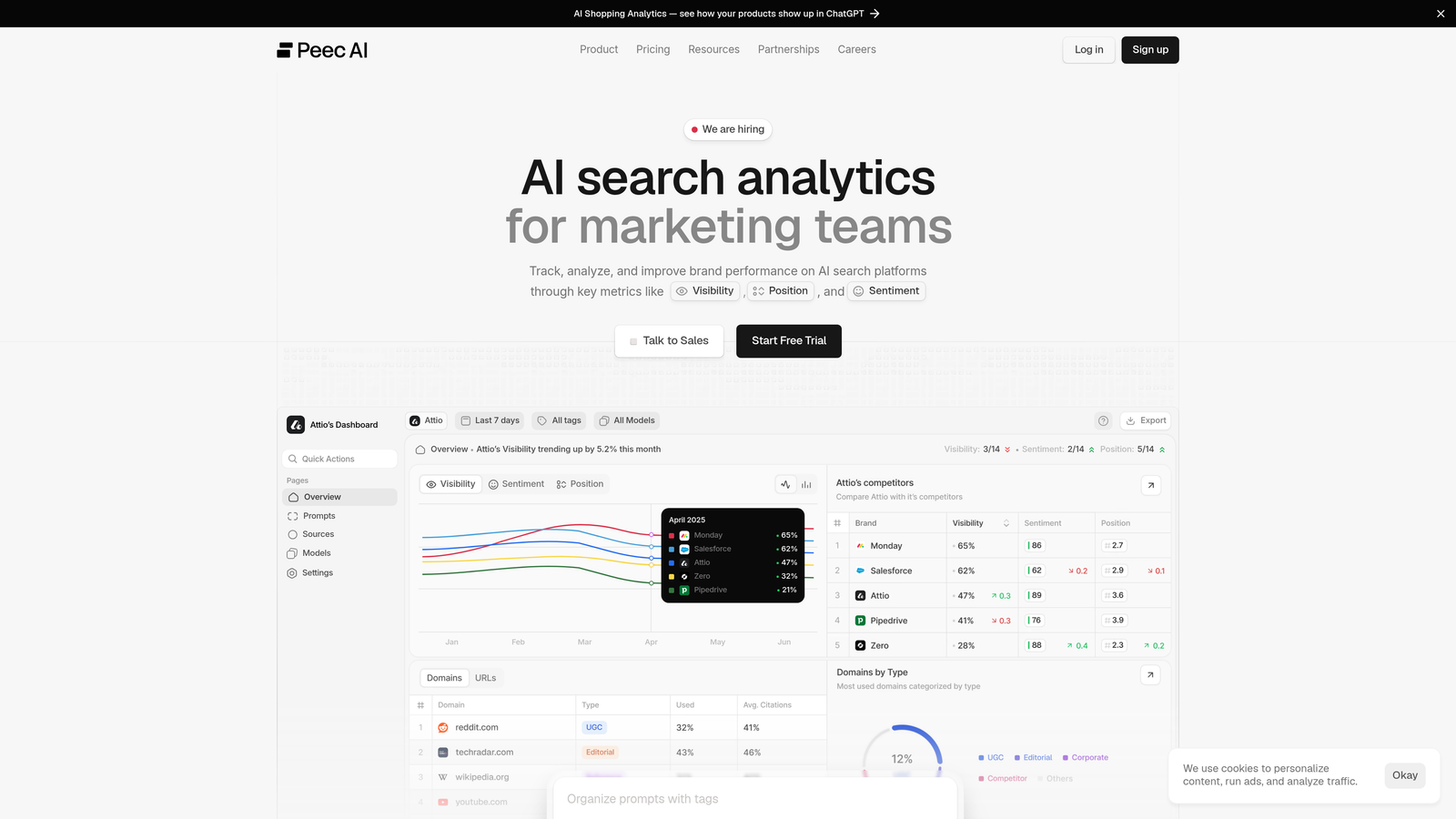
Peec is an AI search visibility tool that monitors brand mentions and sentiment across AI platforms at the individual prompt level.
Where This Tool Shines
Peec's core strength is granularity. Instead of giving you a broad visibility score, it tracks how AI models respond to specific prompts relevant to your brand and category. This level of detail helps you understand exactly which queries are driving mentions, which are missing you entirely, and what your competitors are being cited for instead.
For teams building GEO strategies from the ground up, this kind of prompt-level intelligence is particularly useful. It tells you not just that you have a visibility gap, but where that gap exists and what kind of content might close it.
Key Features
Prompt-Level Tracking: Monitors AI model responses to specific queries, giving granular insight into where your brand is and isn't appearing.
Mention Frequency and Sentiment: Tracks how often your brand is cited and whether the context is positive, neutral, or negative.
Competitor Visibility Comparison: Shows how your AI search presence stacks up against named competitors across the same prompts.
GEO Strategy Insights: Surfaces patterns in your visibility data to inform content and optimization priorities.
Actionable Recommendations: Provides suggestions for improving AI search presence based on identified gaps and competitor performance.
Best For
Peec is well-suited for SEO and content teams that want detailed, prompt-specific data to inform their GEO strategy, particularly those in competitive categories where understanding competitor positioning in AI search is critical.
Pricing
Check current pricing and plan options at peec.ai.
6. AirOps
Best for: Operations and content teams that want to build scalable AI workflows for content production across multiple search platforms.
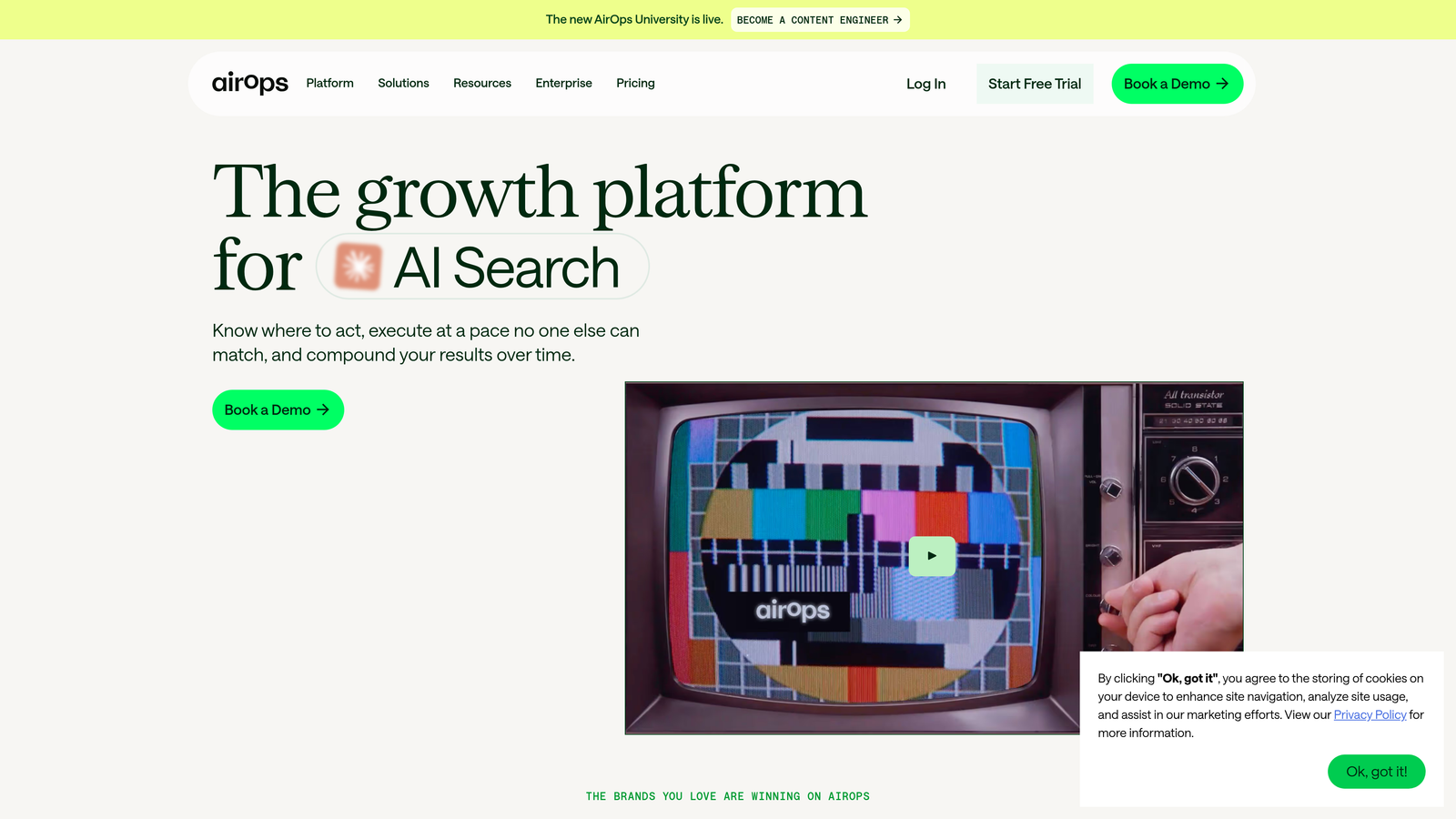
AirOps is an AI workflow automation platform that connects large language models to content and operational workflows, helping teams scale production without proportionally scaling headcount.
Where This Tool Shines
AirOps is less about tracking visibility and more about building the operational infrastructure to earn it. Its visual workflow builder lets non-technical teams design and deploy AI-powered content processes without writing code. This makes it particularly useful for agencies or in-house teams that need repeatable, consistent content at scale.
The platform's strength is flexibility. Because it connects to multiple LLMs and integrates with CMS platforms and APIs, teams can build custom workflows tailored to their specific content types, brand requirements, and publishing cadence. It's a strong choice for organizations that have outgrown off-the-shelf content tools but aren't ready to build custom AI infrastructure.
Key Features
Visual Workflow Builder: Drag-and-drop interface for designing AI-powered content and operations workflows without requiring technical expertise.
Multi-LLM Integration: Connects to multiple large language models, allowing teams to select the best model for each specific task or content type.
Structured Data Inputs: Supports consistent, scalable content production by feeding structured inputs into AI workflows for repeatable output quality.
Team Collaboration Tools: Workflow management features designed for teams, including sharing, versioning, and role-based access.
API and CMS Integrations: Connects to publishing platforms and external systems to enable automated, end-to-end content operations.
Best For
AirOps is ideal for content operations teams, agencies managing large content programs, and growth teams that need to build custom AI-powered workflows for consistent, scalable content production across multiple channels and platforms.
Pricing
A free tier is available. Paid plans vary based on usage and team size. Check current pricing at airops.com.
Which Tool Is Right for Your Strategy?
The tools on this list serve different parts of the same challenge: earning visibility in a search landscape that now spans traditional search engines, AI answer engines, and conversational AI platforms. The right choice depends on where you are in that journey.
If you want to track and improve AI visibility across all platforms: Sight AI is the most comprehensive option, combining AI Visibility Score, prompt tracking, content generation, and automated indexing in a single platform. It's built specifically for the problem this article is about.
If you need an AI search engine to actually use: Perplexity is the standout option for users who want synthesized, cited answers in real time. It's also the platform your audience may already be using to research your category.
If content production at scale is the bottleneck: Writesonic and AirOps both address the volume problem from different angles. Writesonic is faster to get started with; AirOps offers more custom workflow flexibility for teams with complex operations.
If competitive intelligence in AI search is the priority: Profound and Peec are both focused on this space, with Profound leaning toward benchmarking and reporting, and Peec offering more granular prompt-level tracking.
The broader takeaway is that AI search isn't a future trend to prepare for. It's a present reality that's already influencing how brands get discovered and recommended. Teams that start tracking and optimizing for AI visibility now will have a meaningful head start over those waiting for the landscape to stabilize.
Stop guessing how AI models like ChatGPT and Claude talk about your brand. Start tracking your AI visibility today and see exactly where your brand appears across top AI platforms, which content gaps are costing you mentions, and how to build a content strategy that earns citations across every search surface that matters.