Programmatic SEO has transformed how businesses scale their content strategies. Instead of writing hundreds of landing pages manually, you can generate them automatically using templates and structured data—think real estate sites creating pages for every city, or job boards building pages for each job title and location combination.
But here's the challenge: executing programmatic SEO well requires the right tooling. You need platforms that can handle automation without sacrificing quality, integrate with your data sources, index pages quickly, and increasingly, optimize content for both traditional search engines and AI models like ChatGPT and Perplexity.
The tools below represent the best options for scaling content in 2026. Each excels in different areas—from AI-powered content generation to no-code database syncing to enterprise-grade CMS architecture. Here are the top programmatic SEO tools to consider for your stack.
1. Sight AI
Best for: AI-optimized content generation at scale with built-in indexing and visibility tracking
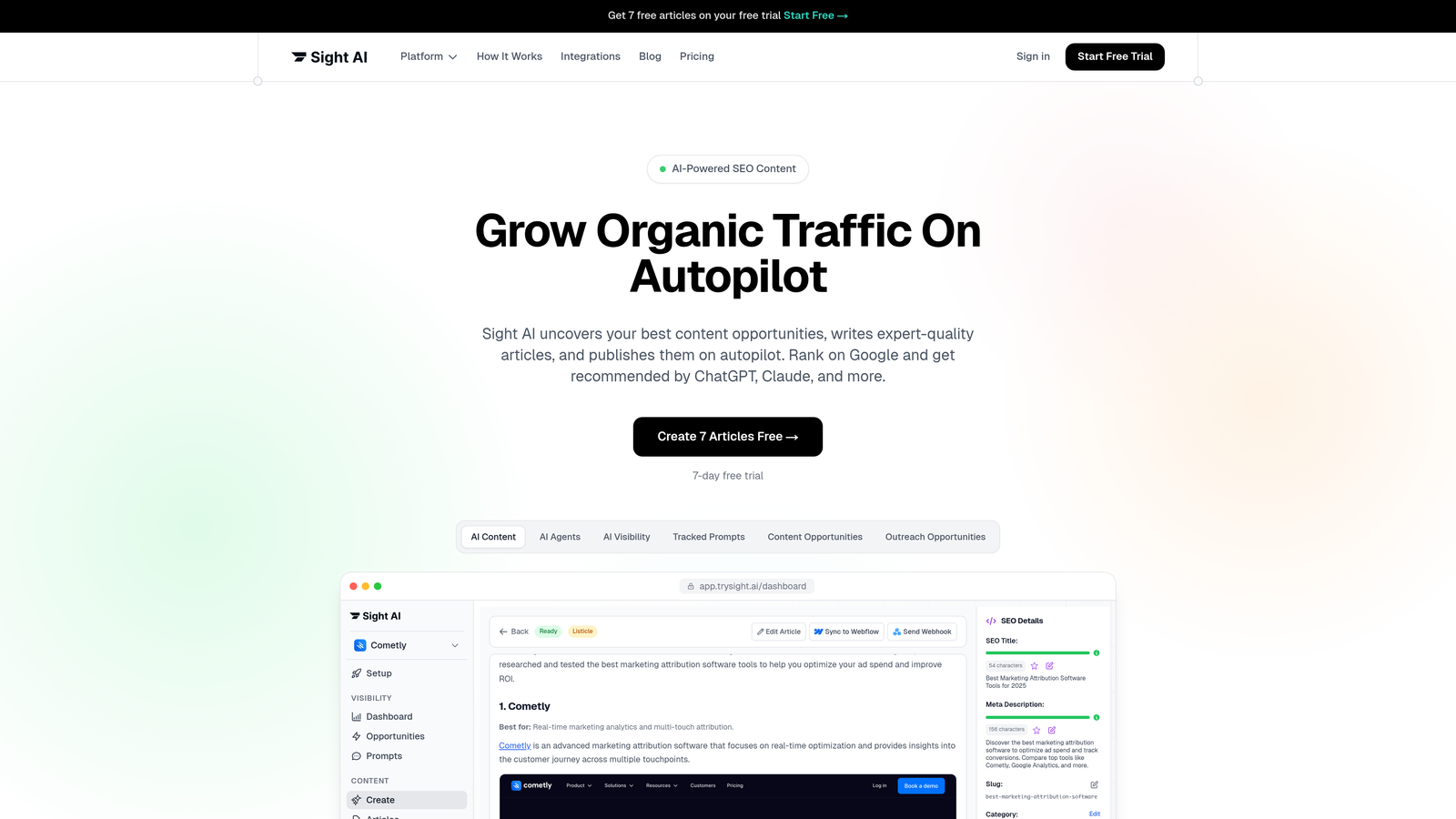
Sight AI is an AI-powered content platform designed specifically for programmatic SEO and GEO (Generative Engine Optimization) workflows.
Where This Tool Shines
What sets Sight AI apart is its dual focus on content generation and AI visibility. While most tools stop at publishing, Sight AI tracks how AI models like ChatGPT, Claude, and Perplexity mention your brand across their responses. This creates a feedback loop: you generate content, monitor where it gets your brand mentioned in AI search results, then optimize your content strategy based on real visibility data.
The platform's IndexNow integration pushes your content to search engines the moment it's published, dramatically reducing the time between publishing and indexing. For programmatic campaigns creating dozens or hundreds of pages, this speed advantage compounds quickly.
Key Features
13+ Specialized AI Agents: Different agents handle listicles, guides, explainers, and other content types with format-specific optimization.
Autopilot Mode: Fully automated content generation based on your parameters and content calendar.
IndexNow Integration: Automatic submission to search engines for faster discovery and indexing of new pages.
AI Visibility Tracking: Monitor brand mentions across ChatGPT, Claude, Perplexity, and other AI platforms with sentiment analysis.
CMS Auto-Publishing: Direct publishing to your website without manual intervention.
Best For
Marketing teams and agencies running large-scale content operations who need both volume and quality. Particularly valuable for brands prioritizing visibility in AI search results alongside traditional SEO, and for teams that want end-to-end automation from content creation through indexing and performance tracking.
Pricing
Contact for pricing. Offers tiered plans based on content volume and feature access.
2. Webflow
Best for: Design-focused teams building visually polished programmatic pages with CMS collections
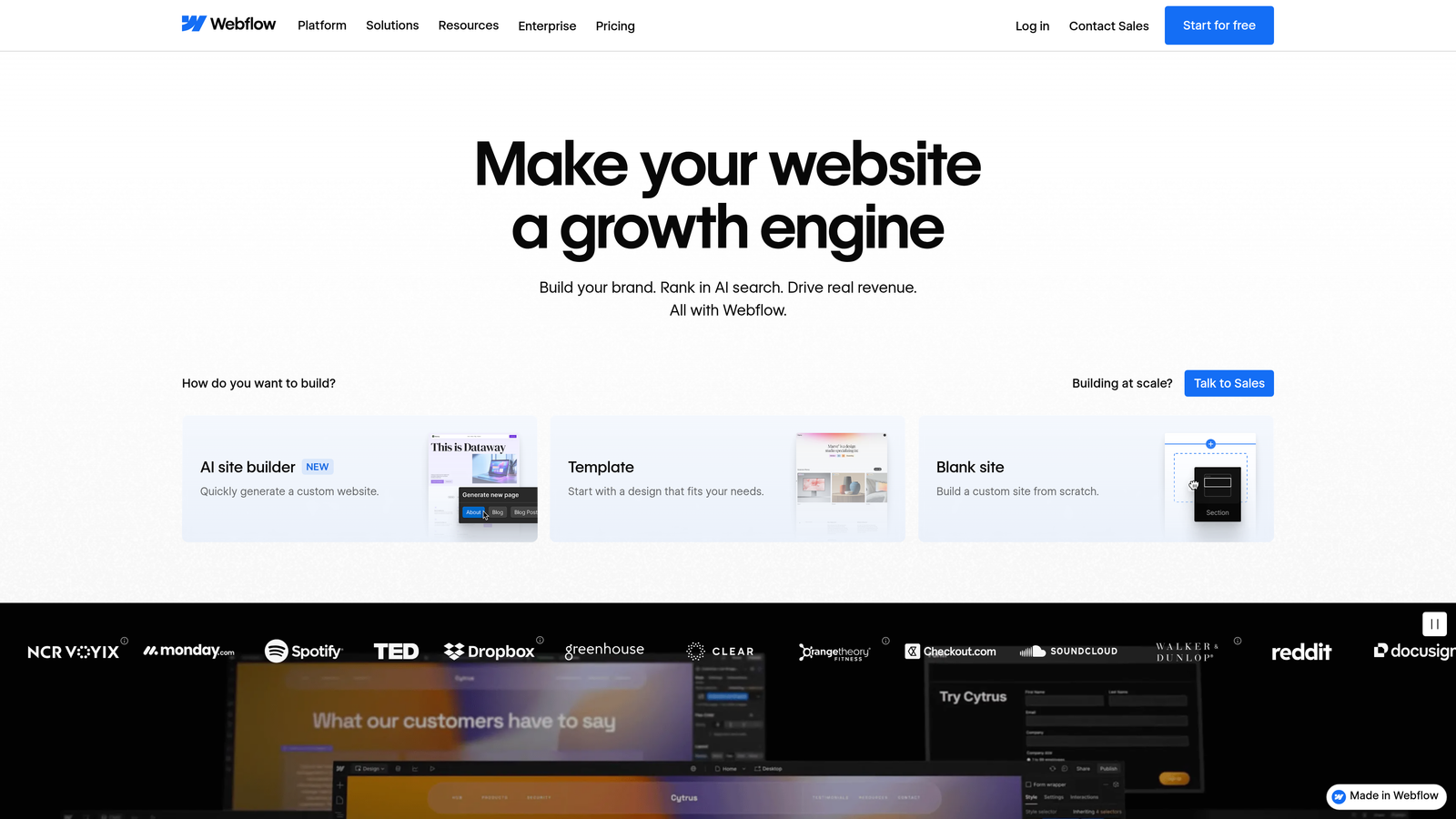
Webflow is a visual website builder with powerful CMS capabilities that enable programmatic page generation through dynamic content binding.
Where This Tool Shines
Webflow's visual builder gives you pixel-perfect control over design while its CMS collections handle the programmatic heavy lifting. You create one template, connect it to a collection, and Webflow generates individual pages for each collection item. The design-first approach means your programmatic pages don't look programmatic—they maintain the same visual quality as hand-crafted pages.
The platform's native hosting includes CDN distribution, which keeps programmatic pages fast even when you're generating hundreds of them. API access lets technical teams pipe in data from external sources, creating truly dynamic content at scale.
Key Features
Visual CMS Builder: Design templates visually and bind dynamic content without touching code.
Collection-Based Architecture: Create one template that automatically generates pages for each database entry.
Native CDN Hosting: Built-in performance optimization for fast page loads across all programmatic pages.
API Integration: Connect external data sources to populate CMS collections programmatically.
Responsive Design Controls: Ensure programmatic pages look perfect across all device sizes.
Best For
Design-conscious brands and agencies that refuse to compromise on visual quality when scaling content. Works well for teams with design skills but limited development resources, and for projects where brand consistency across hundreds of pages is non-negotiable.
Pricing
CMS plans start at $23/month. Business plans at $39/month unlock higher limits and additional features.
3. Whalesync
Best for: No-code teams syncing Airtable or Notion databases to website builders
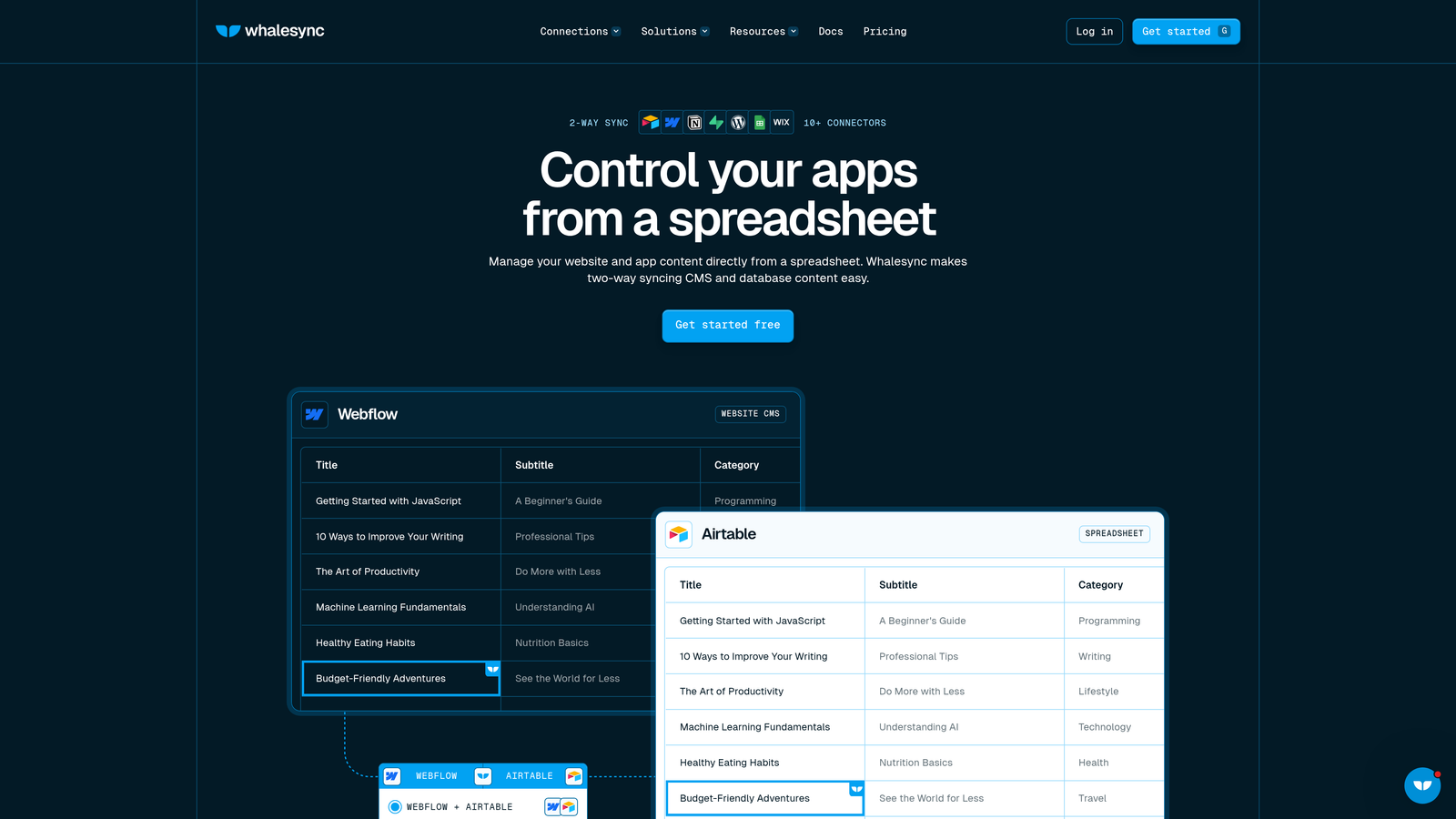
Whalesync is a two-way database sync tool that connects spreadsheet-like databases to website platforms for automated page generation.
Where This Tool Shines
Whalesync eliminates the technical barrier between your content database and your website. You manage all your page data in Airtable or Notion—tools your team already knows—and Whalesync automatically creates and updates pages on Webflow, Framer, or other supported platforms. Change a field in Airtable? The corresponding page updates in real-time.
This two-way sync is particularly powerful for programmatic SEO because it turns your database into a single source of truth. Marketing teams can manage thousands of pages from a familiar spreadsheet interface without touching the website directly.
Key Features
Two-Way Database Sync: Changes flow automatically between your database and website in both directions.
Multi-Platform Support: Connects Airtable and Notion to Webflow, Framer, and other builders.
No-Code Setup: Non-technical users can configure complex sync workflows through a visual interface.
Real-Time Updates: Pages reflect database changes within minutes, keeping content current.
Bulk Operations: Generate or update hundreds of pages simultaneously from database records.
Best For
Non-technical marketing teams comfortable with Airtable or Notion who want to scale content without learning to code. Ideal for agencies managing multiple client sites from centralized databases, and for businesses that need real-time content updates across large page sets.
Pricing
Starts at $49/month for basic sync capabilities. Pricing scales with the number of records being synced.
4. Letterdrop
Best for: B2B content teams needing workflow automation with built-in SEO optimization
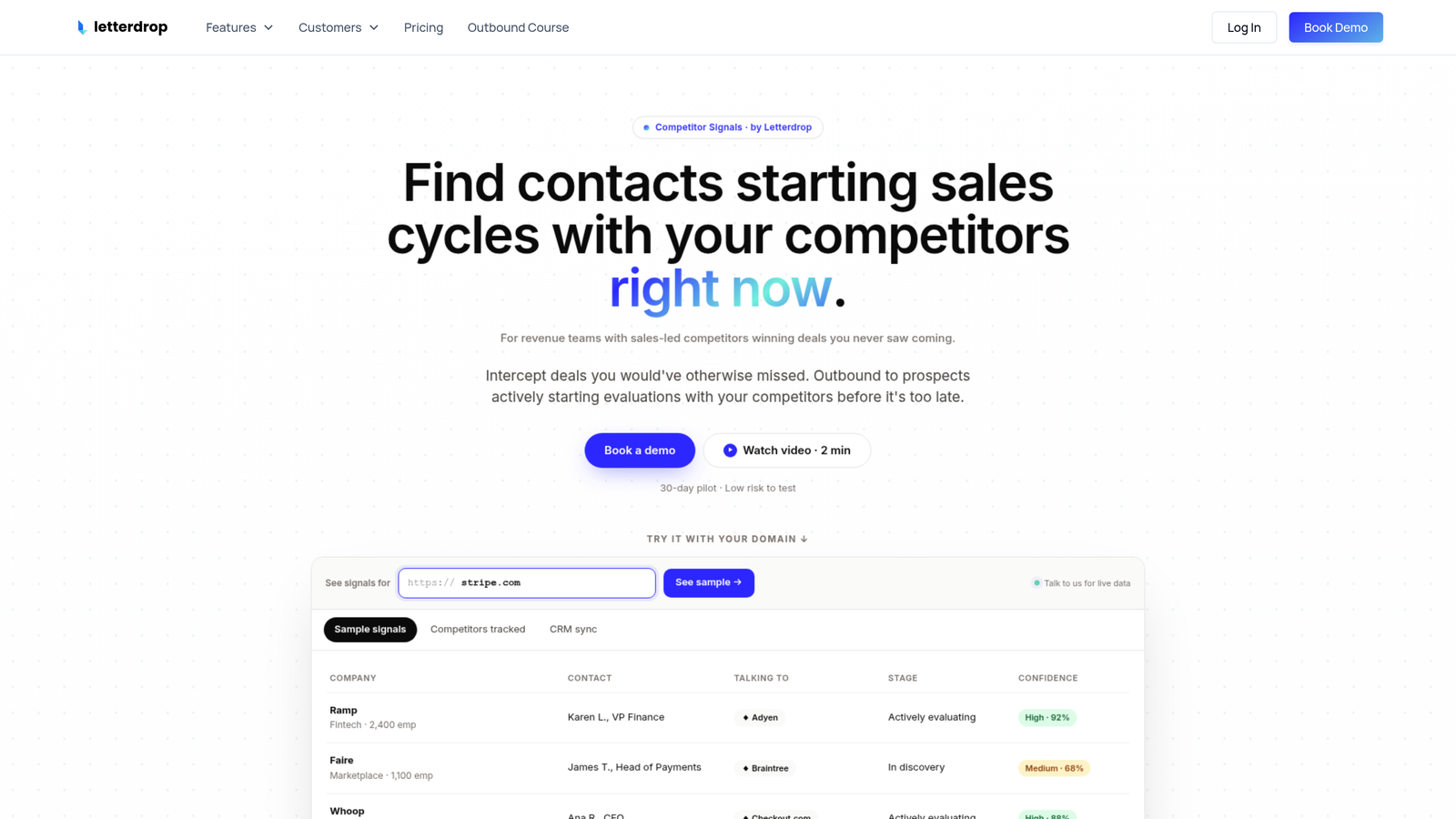
Letterdrop is a content operations platform that combines programmatic capabilities with workflow management and optimization tools.
Where This Tool Shines
Letterdrop treats programmatic SEO as part of a broader content operation rather than an isolated tactic. You get template-based page generation alongside editorial workflows, approval processes, and performance analytics. The platform's built-in SEO optimization analyzes content as you create it, suggesting improvements before pages go live.
For B2B teams especially, this integrated approach prevents programmatic content from feeling disconnected from your broader content strategy. You can mix programmatic pages with editorial content in a single workflow, maintaining consistent quality standards across both.
Key Features
Content Workflow Automation: Build approval processes and publishing schedules for programmatic content.
Built-In SEO Optimization: Real-time suggestions for improving content quality and search performance.
Programmatic Templates: Create templates that generate pages from structured data inputs.
Multi-Channel Publishing: Distribute content to your website, LinkedIn, and other platforms simultaneously.
Performance Analytics: Track how programmatic pages perform compared to editorial content.
Best For
B2B marketing teams running complex content operations that blend programmatic and editorial approaches. Works well for companies with multiple stakeholders in the content process who need approval workflows, and for teams that want integrated analytics across all content types.
Pricing
Custom pricing based on team size and content volume. Contact for specific quotes.
5. Typemat
Best for: WordPress users wanting simple spreadsheet-to-page generation
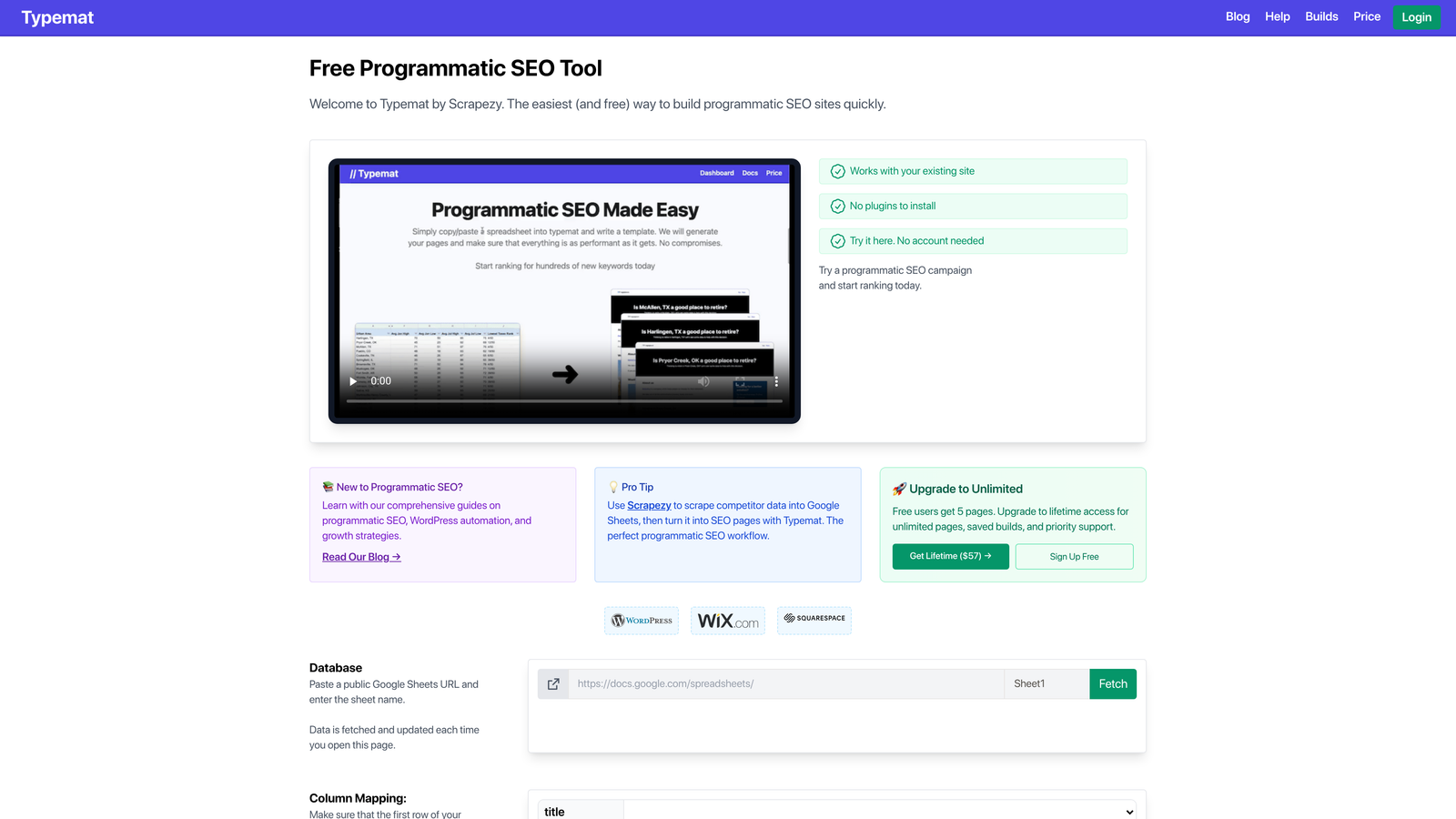
Typemat is a straightforward tool that generates WordPress pages directly from Google Sheets data.
Where This Tool Shines
Typemat's simplicity is its strength. If you're running WordPress and comfortable with spreadsheets, you can start generating programmatic pages in minutes. Each row in your Google Sheet becomes a page, with columns mapping to different page elements. No complex setup, no learning curve—just spreadsheet data transformed into published pages.
This approach works particularly well for straightforward programmatic campaigns where you don't need complex logic or dynamic relationships between pages. Location pages, product variations, or simple directory listings all fit perfectly into Typemat's row-to-page model.
Key Features
Direct Google Sheets Integration: Connect your spreadsheet and watch it transform into pages automatically.
Row-Based Page Generation: Each spreadsheet row creates one page with mapped content fields.
Template Customization: Define how spreadsheet data appears on the page through simple templates.
Bulk Publishing: Generate and publish hundreds of pages simultaneously from spreadsheet updates.
WordPress Native: Works directly with WordPress without requiring additional platforms.
Best For
WordPress users who want the fastest path from spreadsheet to published pages. Perfect for small businesses and solopreneurs who need programmatic SEO without technical complexity, and for teams already managing content data in Google Sheets.
Pricing
Starts at $29/month for basic features with reasonable page generation limits.
6. Bardeen
Best for: Automating data collection and scraping to feed programmatic workflows
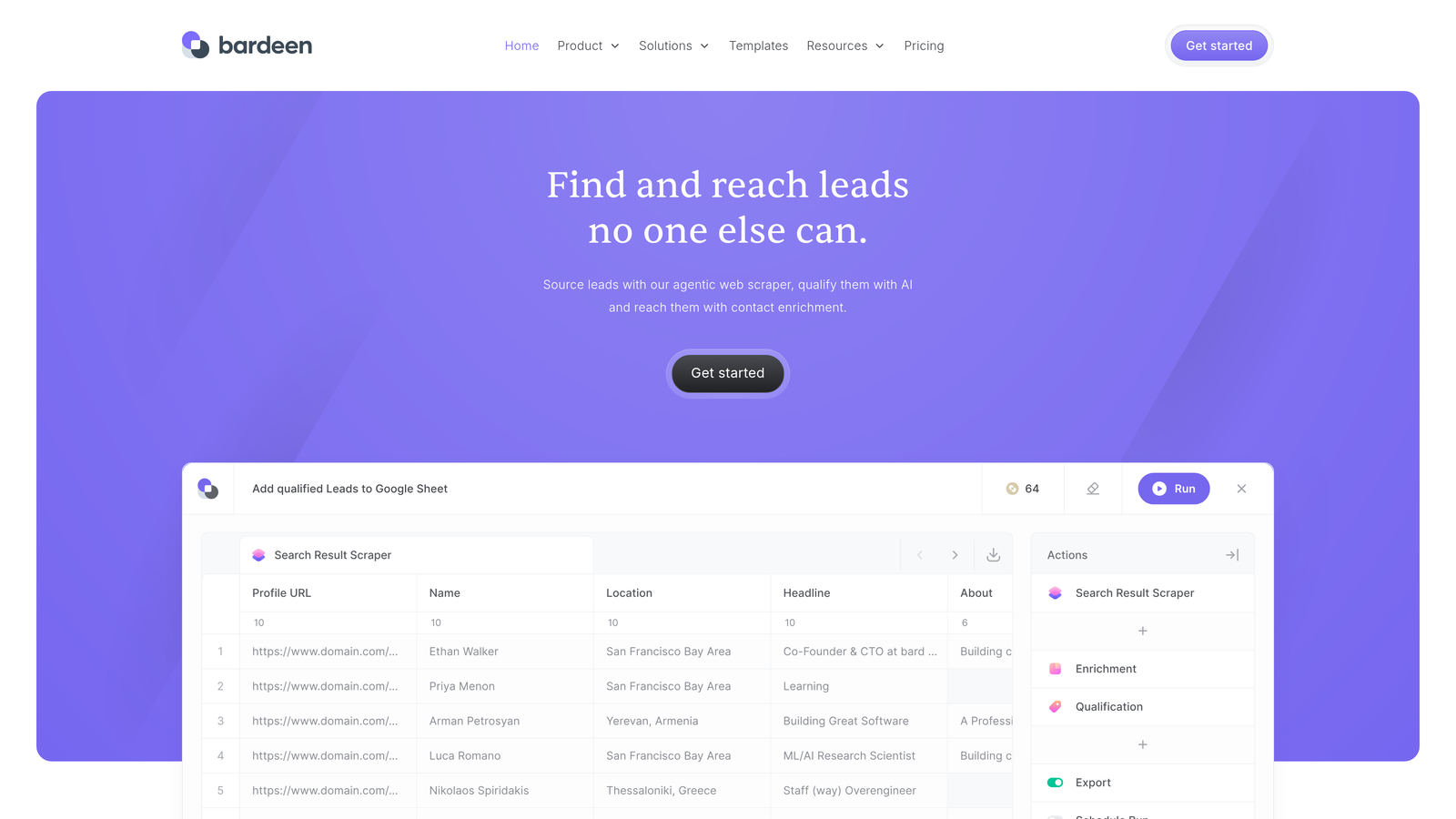
Bardeen is a browser automation tool that handles data collection, scraping, and workflow automation for programmatic content pipelines.
Where This Tool Shines
Bardeen doesn't generate pages directly—it excels at gathering the data that powers programmatic pages. Need competitor pricing for comparison pages? Bardeen can scrape it. Want to pull public data from multiple sources into a unified database? Bardeen automates that workflow. The browser-based approach means you can automate tasks that would otherwise require custom scripts.
The platform's AI-powered suggestions learn from your workflows and recommend automation opportunities you might have missed. This makes it particularly valuable for teams building complex programmatic systems that pull data from multiple sources.
Key Features
Browser-Based Automation: Automate data collection and scraping directly in your browser.
Pre-Built Templates: Start with ready-made automations for common data collection tasks.
100+ App Integrations: Connect scraped data to spreadsheets, databases, and other tools in your stack.
AI Workflow Suggestions: Get intelligent recommendations for automating repetitive tasks.
No-Code Builder: Create complex automation workflows through a visual interface.
Best For
Teams building programmatic systems that require data from multiple external sources. Valuable for competitive intelligence pages, market comparison content, and any programmatic approach that depends on regularly updated external data.
Pricing
Free tier available with basic features. Pro plans start at $10/month for increased automation capacity.
7. PageFactory (by Dorik)
Best for: Rapid landing page generation from CSV uploads with minimal setup
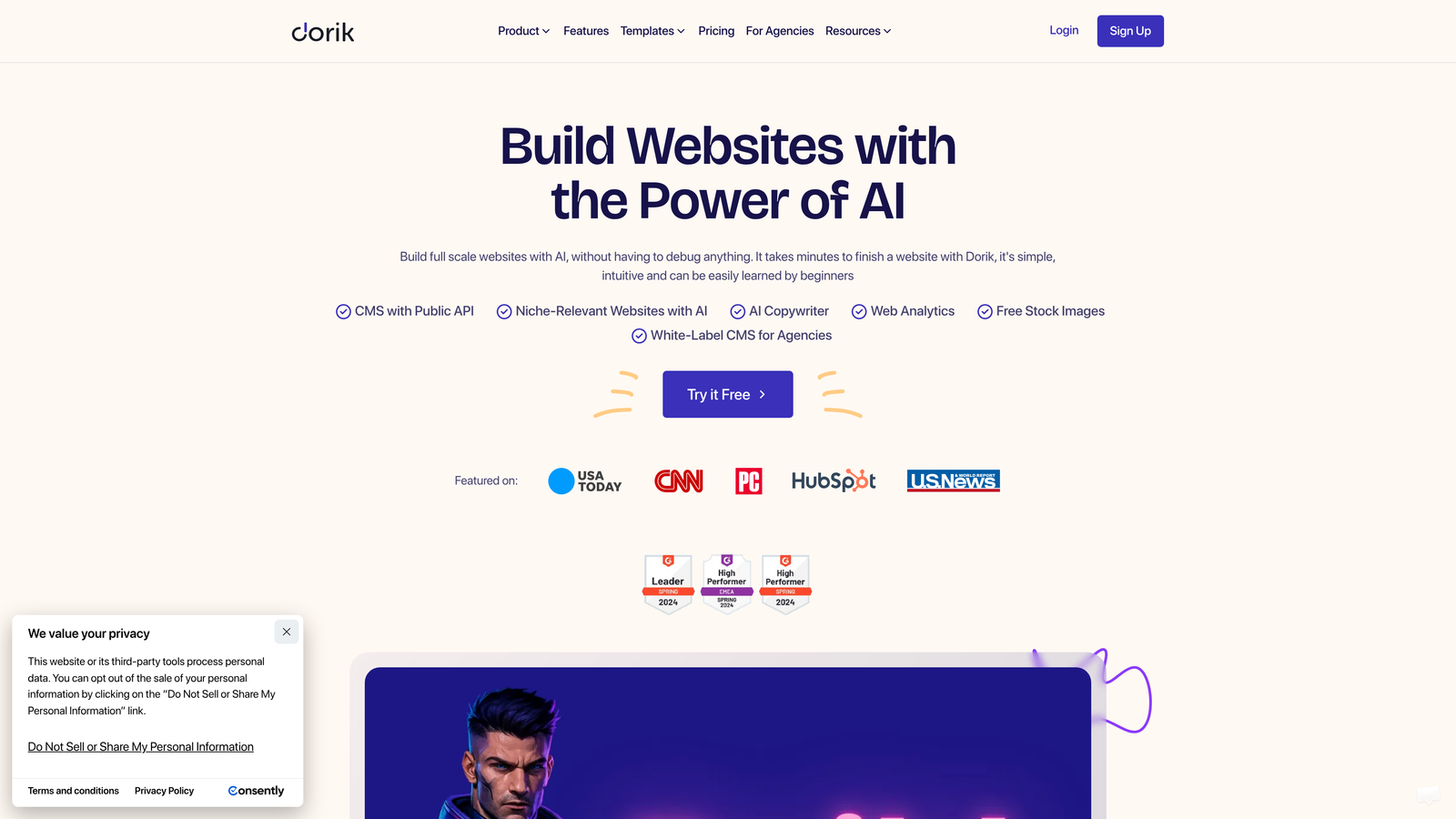
PageFactory is Dorik's specialized tool for creating landing pages at scale from CSV data uploads.
Where This Tool Shines
PageFactory prioritizes speed and simplicity. Upload a CSV file, map columns to template fields, and generate dozens or hundreds of landing pages in minutes. The built-in hosting means pages go live immediately without requiring separate infrastructure. For agencies managing multiple client sites, the multi-site management features let you run programmatic campaigns across different brands from a single dashboard.
The tool's SEO settings apply at the individual page level, giving you granular control over meta tags, descriptions, and other optimization elements even when generating pages in bulk.
Key Features
CSV Upload System: Generate pages in bulk by uploading structured data files.
Template-Based Generation: Create one design that scales across all generated pages.
Built-In Hosting: Pages go live on Dorik's infrastructure without additional setup.
Page-Level SEO Controls: Customize meta tags and optimization settings for each generated page.
Multi-Site Management: Run programmatic campaigns across multiple client sites from one account.
Best For
Agencies and freelancers managing programmatic campaigns for multiple clients. Works well for straightforward landing page campaigns where speed matters more than complex functionality, and for teams that want to avoid managing separate hosting infrastructure.
Pricing
Included with Dorik plans starting at $23/month, with higher tiers offering increased page limits.
8. Airtable + Make (Integromat)
Best for: Technical teams building completely custom programmatic workflows
Airtable combined with Make (formerly Integromat) creates a flexible foundation for custom programmatic SEO systems.
Where This Tool Shines
This combination offers maximum flexibility for teams with technical resources. Airtable provides a relational database that's more powerful than spreadsheets but more accessible than traditional databases. Make connects Airtable to virtually any platform through complex automation scenarios. The result is a programmatic system tailored exactly to your needs rather than constrained by pre-built tool limitations.
You can build conditional logic, multi-step workflows, and sophisticated data transformations that simpler tools can't handle. This power comes with complexity, but for teams with technical investment, it unlocks programmatic approaches that aren't possible with out-of-the-box solutions.
Key Features
Relational Database Structure: Airtable handles complex data relationships beyond simple spreadsheet capabilities.
Make Automation Scenarios: Build multi-step workflows with conditional logic and data transformations.
Universal API Connections: Connect to any platform with an API, not just pre-built integrations.
Highly Customizable Workflows: Design programmatic systems that match your exact requirements.
Scalable Architecture: Grows with your needs as programmatic campaigns become more sophisticated.
Best For
Technical teams or agencies with development resources who need complete control over their programmatic systems. Ideal for complex use cases that don't fit into pre-built tools, and for organizations building programmatic SEO as a long-term competitive advantage worth technical investment.
Pricing
Airtable offers a free tier for small projects. Make starts at $9/month for basic automation scenarios. Total cost scales with usage complexity.
9. Contentful
Best for: Enterprise organizations managing programmatic content at massive scale
Contentful is a headless CMS with API-first architecture designed for enterprise-grade content operations.
Where This Tool Shines
Contentful separates content management from presentation, giving you complete flexibility in how and where programmatic content appears. The headless architecture means you can publish the same content to websites, mobile apps, digital displays, and any other channel simultaneously. For enterprises running programmatic SEO across multiple brands, regions, or platforms, this multi-channel capability becomes essential.
The platform's structured content modeling lets you define exactly how content should be organized and related, ensuring consistency even when generating thousands of pages. Enterprise-grade scalability means performance remains solid whether you're managing hundreds or hundreds of thousands of programmatic pages.
Key Features
Headless CMS Architecture: Separate content management from presentation for maximum flexibility.
Powerful Content APIs: Deliver content programmatically to any platform or channel.
Structured Content Modeling: Define precise content structures that enforce consistency at scale.
Multi-Channel Publishing: Distribute programmatic content to websites, apps, and other platforms simultaneously.
Enterprise Scalability: Handle massive content volumes with reliable performance and uptime.
Best For
Large enterprises managing programmatic content across multiple brands, regions, or channels. Works well for organizations with development teams who can leverage the headless architecture, and for companies where content infrastructure is a strategic investment rather than a tactical tool.
Pricing
Free tier available for small projects and testing. Team plans start at $489/month, with Enterprise pricing customized based on scale and requirements.
Finding Your Perfect Match
The right programmatic SEO tool depends on your specific situation. If you're prioritizing AI visibility alongside traditional search rankings, Sight AI's combination of content generation, indexing automation, and AI tracking creates a complete ecosystem for modern SEO. The platform's strength is in closing the loop between content creation and performance measurement across both traditional and AI search.
For design-focused teams, Webflow delivers visual control without sacrificing programmatic capabilities. If you're already managing data in Airtable or Notion, Whalesync provides the fastest path to programmatic pages without learning new tools. Enterprise teams with complex multi-channel needs will find Contentful's headless architecture worth the investment.
Many successful programmatic strategies combine multiple tools—using Bardeen to collect data, Airtable to organize it, and Webflow or Sight AI to generate and publish pages. The key is matching tool capabilities to your team's skills and your content's complexity.
Think about your current bottlenecks. Is it content creation speed? Data collection? Indexing time? Design quality at scale? Each tool above excels in different areas. Start with your biggest constraint and build from there.
Stop guessing how AI models like ChatGPT and Claude talk about your brand—get visibility into every mention, track content opportunities, and automate your path to organic traffic growth. Start tracking your AI visibility today and see exactly where your brand appears across top AI platforms.