Programmatic SEO lets you create hundreds or thousands of pages from templates and data—think location pages, comparison tables, or directory listings. The challenge? Execution at scale requires the right tools for content generation, data management, template building, and indexing. Whether you're building a directory site or scaling content operations, these tools handle different pieces of the programmatic SEO puzzle. Here are the top tools making large-scale content creation both possible and practical.
1. Sight AI
Best for: Teams scaling SEO/GEO-optimized content with AI-powered automation and instant indexing
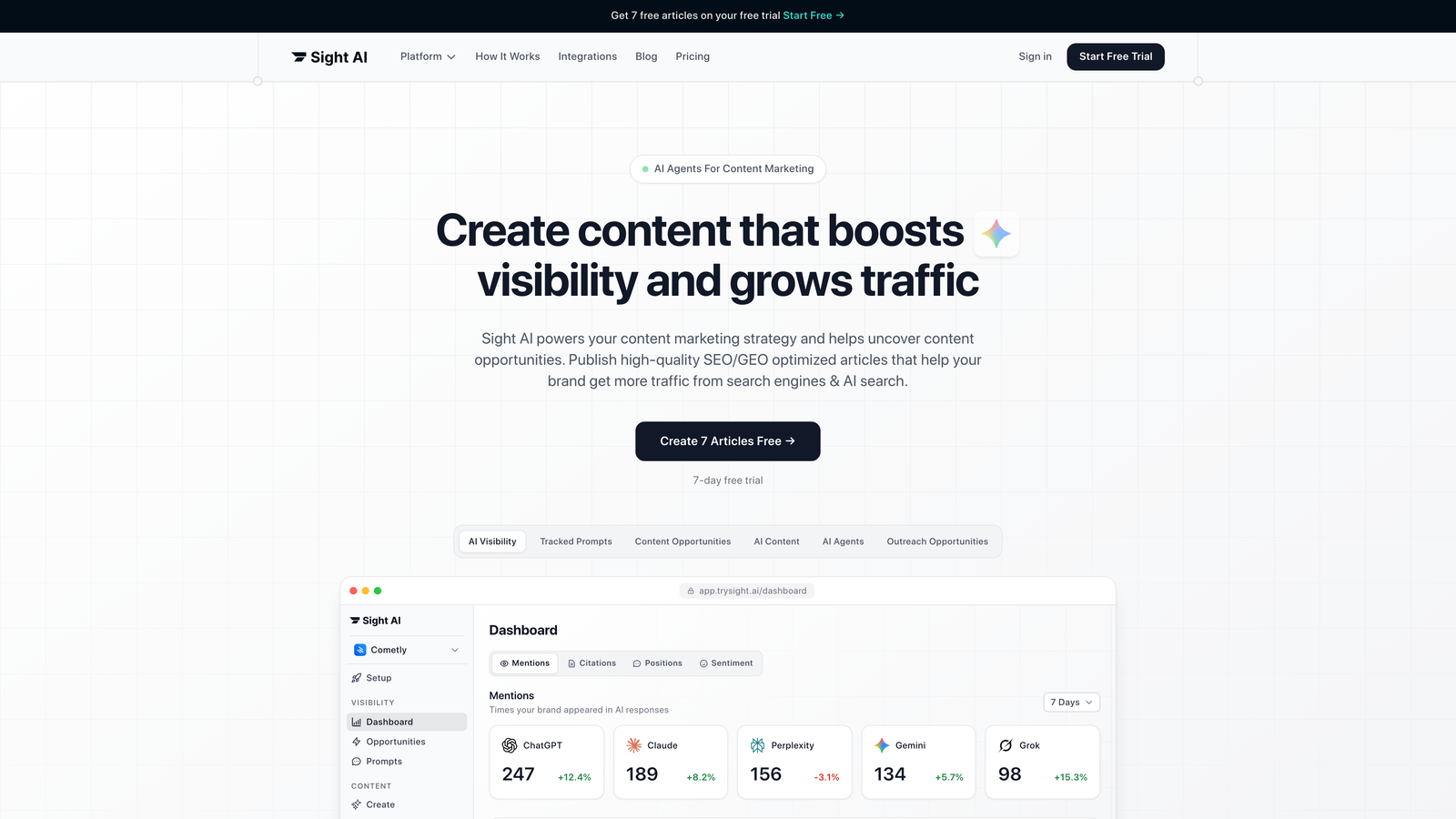
Sight AI combines content generation, AI visibility tracking, and automatic indexing in one platform.
Where This Tool Shines
Sight AI approaches programmatic content differently by focusing on both creation and distribution. The platform uses 13+ specialized AI agents trained for specific content types—listicles, guides, explainers—rather than generic AI writing. This means your programmatic pages get content that actually matches search intent.
The IndexNow integration solves a common pSEO bottleneck: getting hundreds of new pages discovered quickly. Instead of waiting weeks for search engines to crawl your new pages, Sight AI notifies them instantly through IndexNow, dramatically reducing time-to-indexing.
Key Features
13+ Specialized AI Agents: Different agents handle different content formats, ensuring quality across various page types.
Autopilot Mode: Set parameters once and let the system generate content continuously without manual intervention.
IndexNow Integration: Automatic submission of new pages to search engines for faster discovery and indexing.
AI Visibility Tracking: Monitor how AI models like ChatGPT and Claude mention your brand across platforms.
CMS Auto-Publishing: Direct publishing to your website eliminates manual upload steps in your workflow.
Best For
Marketing teams and agencies managing content operations at scale who need both generation and indexing in one workflow. Particularly valuable if you're tracking AI search visibility alongside traditional SEO metrics.
Pricing
Visit the pricing page for current plans tailored to different content volume needs.
2. Whalesync
Best for: No-code teams connecting Airtable databases to Webflow CMS for automated page creation
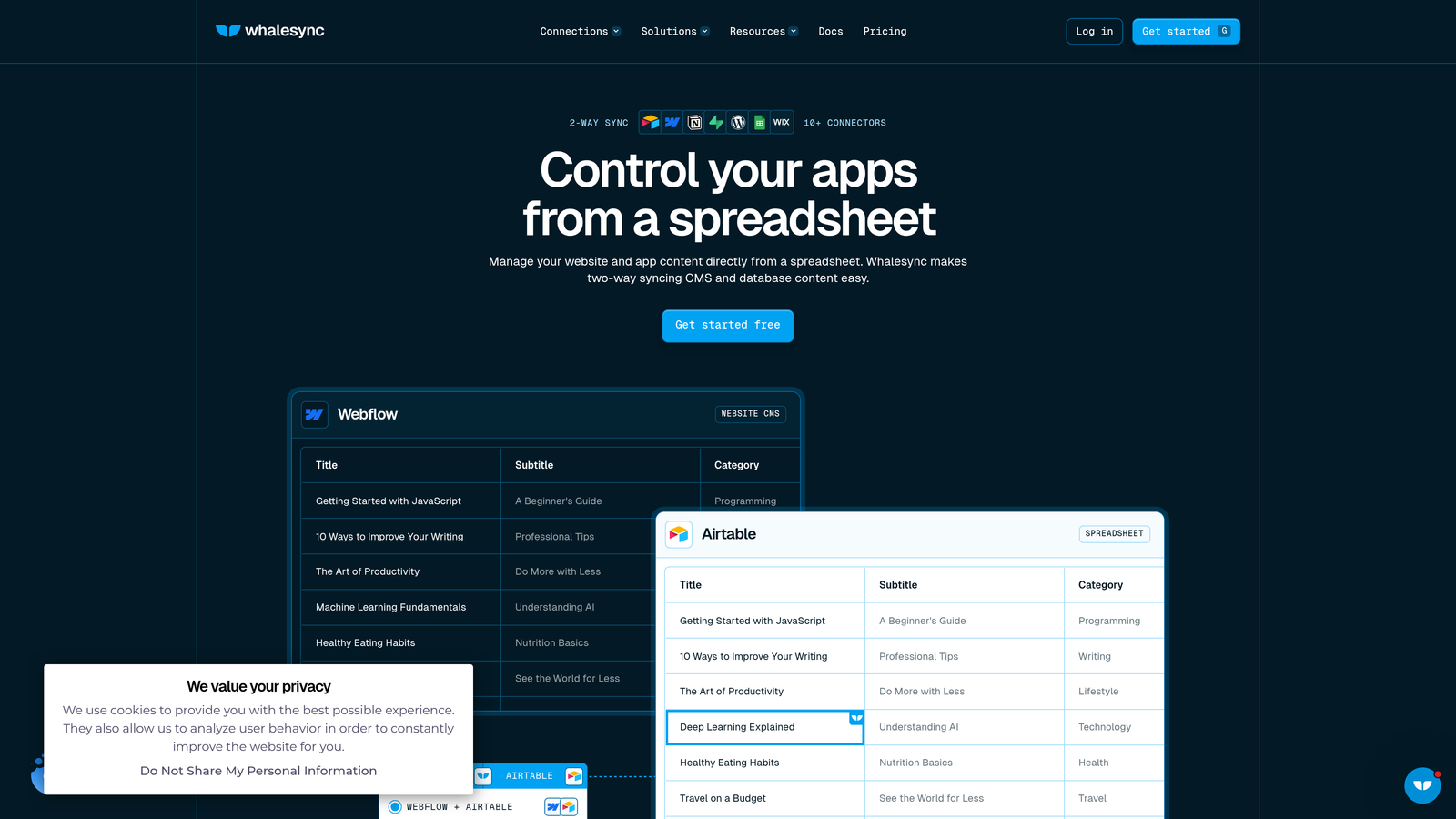
Whalesync creates two-way sync between Airtable and Webflow, turning database records into live website pages.
Where This Tool Shines
Whalesync eliminates the technical barrier between data management and website publishing. You build your content database in Airtable—which non-technical team members actually understand—and Whalesync automatically creates corresponding CMS items in Webflow. Change a field in Airtable? The Webflow page updates within minutes.
The two-way sync means your database stays the source of truth. Add a new restaurant to your directory in Airtable, and a new location page appears on your Webflow site automatically. No exports, no manual data entry, no developer bottlenecks.
Key Features
Real-Time Two-Way Sync: Changes in either Airtable or Webflow reflect automatically in both platforms.
Automatic CMS Item Creation: New Airtable records become new Webflow CMS items without manual publishing.
Field Mapping: Connect Airtable columns to Webflow CMS fields for template variable population.
No Coding Required: Visual interface for setting up syncs without touching code or APIs.
Best For
Marketing teams using Webflow who want programmatic page creation without hiring developers. Ideal for location pages, product directories, or any templated content where Airtable serves as your data hub.
Pricing
Free tier for testing workflows; paid plans start at $49/month with higher limits for larger databases.
3. Letterdrop
Best for: B2B teams managing content operations with built-in SEO optimization and programmatic publishing
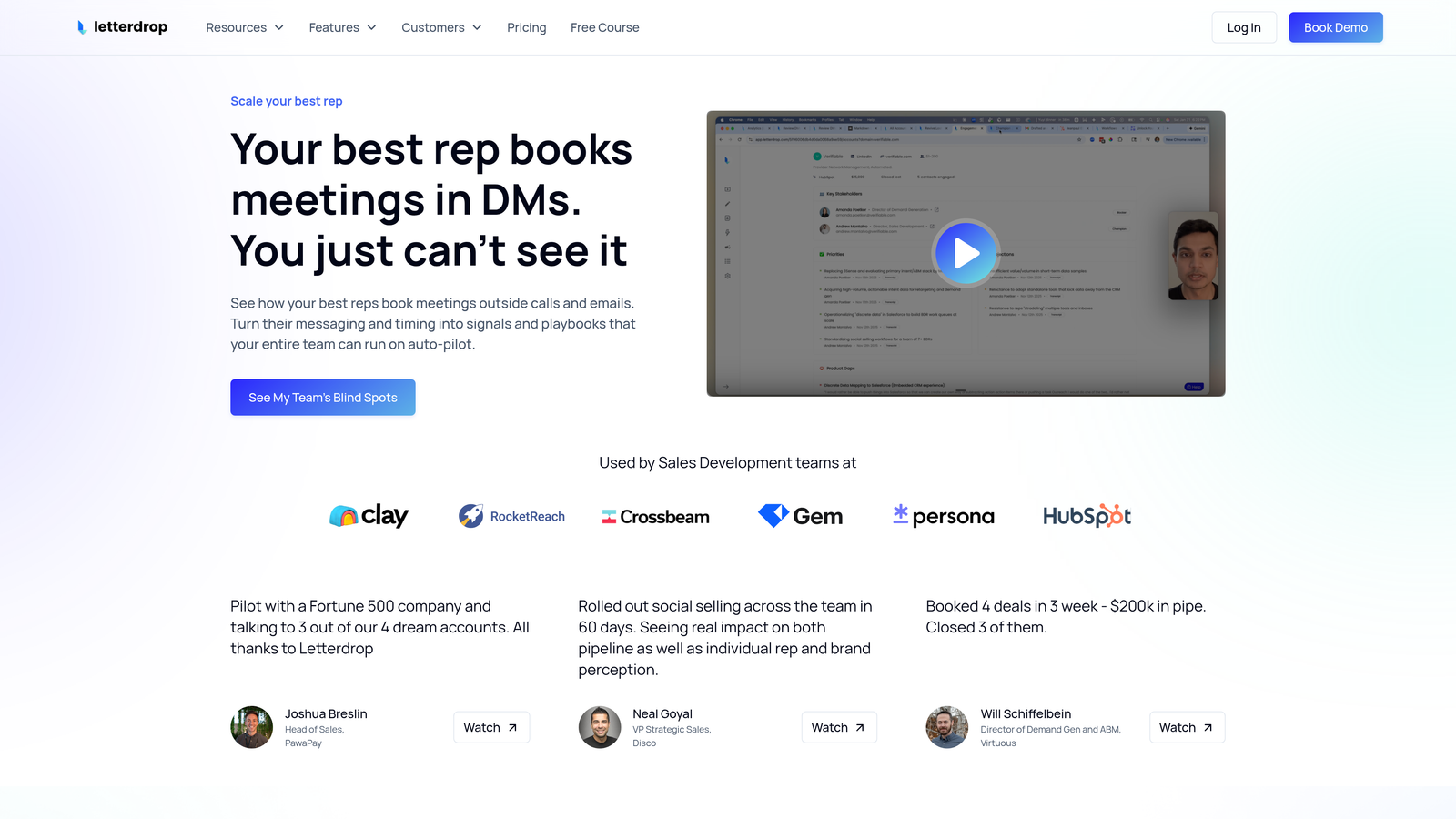
Letterdrop handles content workflows from creation through distribution with template-based generation capabilities.
Where This Tool Shines
Letterdrop treats programmatic content as part of a broader content operations system rather than a standalone function. The platform combines template-based generation with editorial workflows, approval processes, and distribution scheduling. This matters when you're creating hundreds of pages but still need quality control and brand consistency.
The SEO optimization layer analyzes your templates and suggests improvements before you generate at scale. Fix issues once in the template, and every generated page benefits from the improvement.
Key Features
Template-Based Generation: Create content frameworks that populate with different data for each page.
SEO Optimization Suggestions: Built-in recommendations for improving template structure and content quality.
Content Workflow Automation: Approval chains and scheduling for programmatic content at scale.
Multi-Channel Publishing: Distribute generated content across your website, blog, and other channels from one platform.
Best For
B2B marketing teams that need programmatic capabilities within a full content operations platform. Works well when you're balancing high-volume generation with editorial oversight and brand standards.
Pricing
Custom pricing based on team size and content volume requirements.
4. Byword
Best for: Bulk article generation from keyword lists with direct CMS integrations
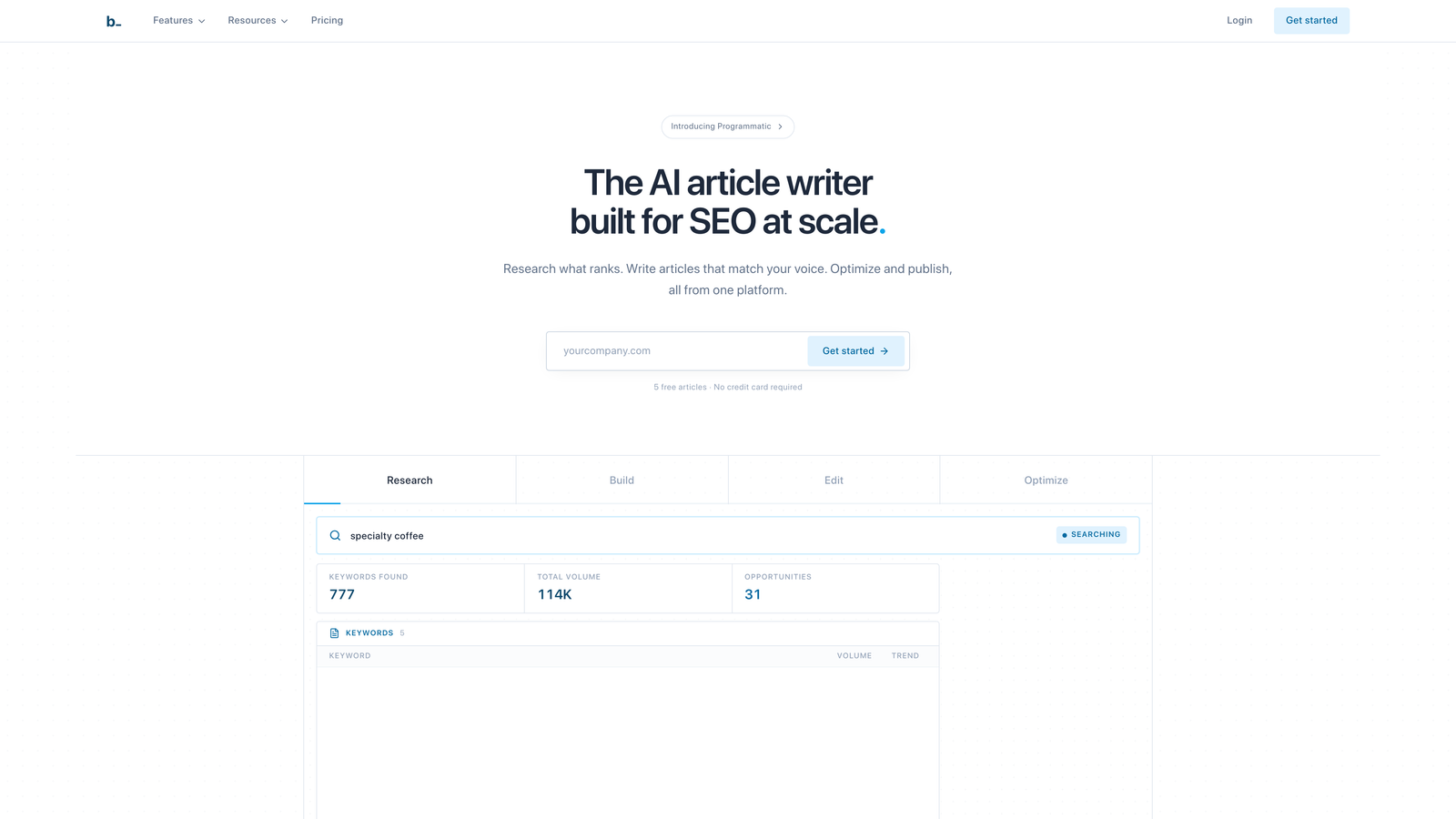
Byword specializes in generating hundreds of articles from CSV uploads with automated publishing to WordPress or Webflow.
Where This Tool Shines
Byword focuses specifically on the bulk generation use case. Upload a CSV with your target keywords or topics, and the platform generates complete articles for each row. This approach works particularly well for content clusters, comparison pages, or informational content at scale.
The 80+ language support opens programmatic SEO to international markets without hiring translators or managing multiple tools. Generate your English templates, then create localized versions across dozens of languages from the same workflow.
Key Features
CSV Upload for Bulk Generation: Upload spreadsheets with hundreds of keywords and generate articles for all of them simultaneously.
Multiple Article Types: Templates for listicles, how-to guides, comparison articles, and informational content.
80+ Language Support: Generate content in dozens of languages from the same input data.
WordPress and Webflow Integrations: Direct publishing to your CMS without manual exports and imports.
Best For
Content teams executing keyword-based programmatic strategies who need to generate hundreds of articles quickly. Particularly valuable for affiliate sites, niche blogs, or content clusters targeting long-tail keywords.
Pricing
Starts at $99/month for 25 articles, with higher tiers for increased volume.
5. Airtable + Webflow (DIY Stack)
Best for: Teams wanting complete control over data structure and page generation logic
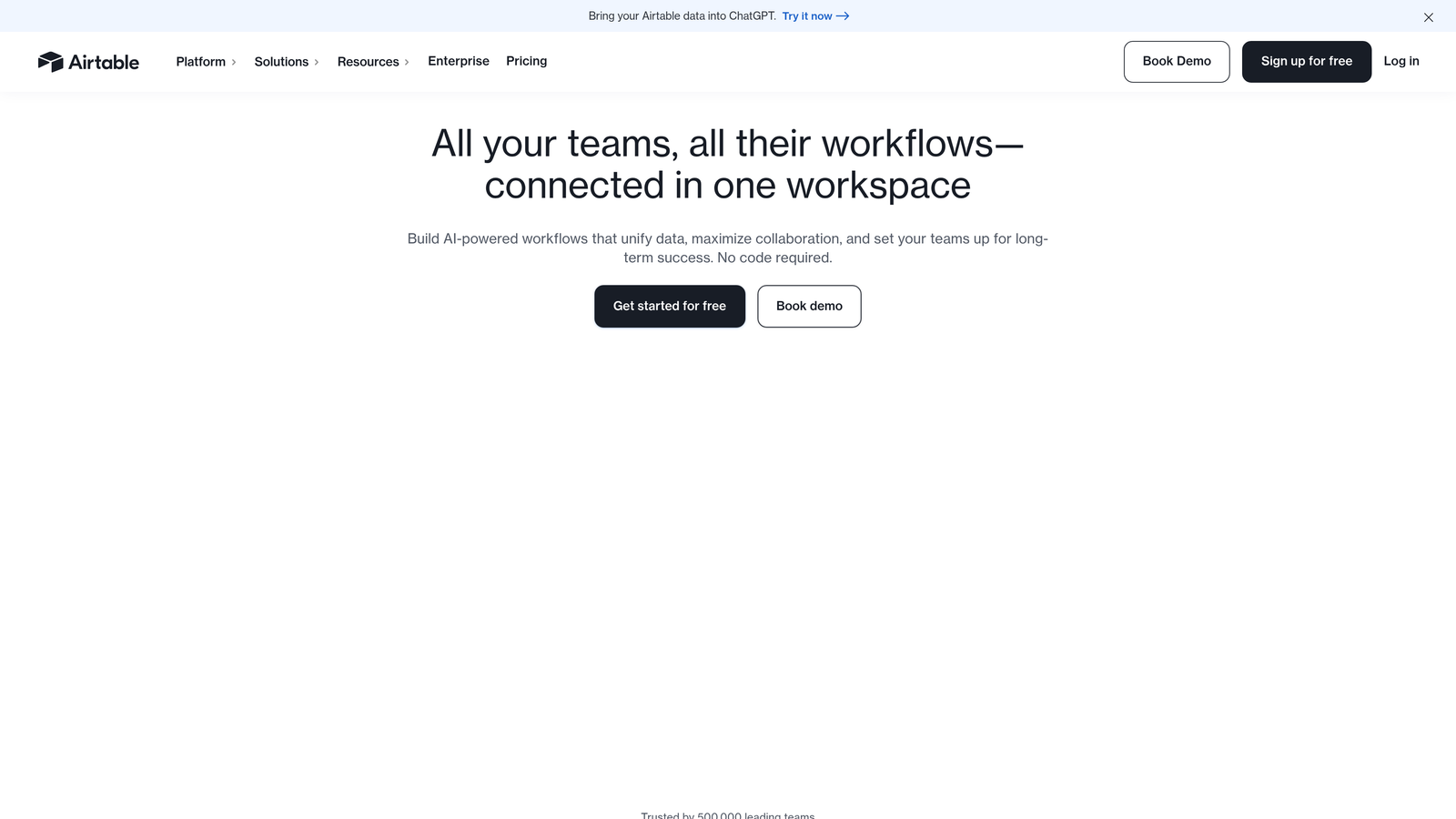
Airtable combined with Webflow creates a flexible foundation for custom programmatic SEO workflows.
Where This Tool Shines
The DIY approach gives you full control over every aspect of your programmatic SEO system. Design your database schema exactly how you want it in Airtable, build custom automations with Zapier or Make, and create sophisticated Webflow templates that pull from multiple data sources. No platform limitations, no forced workflows.
This flexibility matters when your programmatic SEO strategy involves complex data relationships. Maybe your location pages need to pull from three different Airtable tables, or your comparison pages require calculations before displaying data. The DIY stack handles complexity that purpose-built tools can't.
Key Features
Complete Customization: Design your database structure and page generation logic exactly how you need it.
Webflow CMS Collections: Create sophisticated templates that populate from Airtable data through API connections.
Automation via Zapier or Make: Build custom workflows connecting Airtable updates to Webflow page creation.
Scalable to Thousands of Pages: Both platforms handle large-scale implementations without performance issues.
Best For
Technical teams or agencies with development resources who need custom programmatic SEO solutions. Best when your use case involves complex data relationships or unique page generation requirements that pre-built tools can't handle.
Pricing
Airtable starts at $20/user/month for team plans; Webflow CMS plans start at $14/month with increasing limits for larger sites.
6. Typemat
Best for: WordPress sites generating bulk content with template variables and dynamic insertion
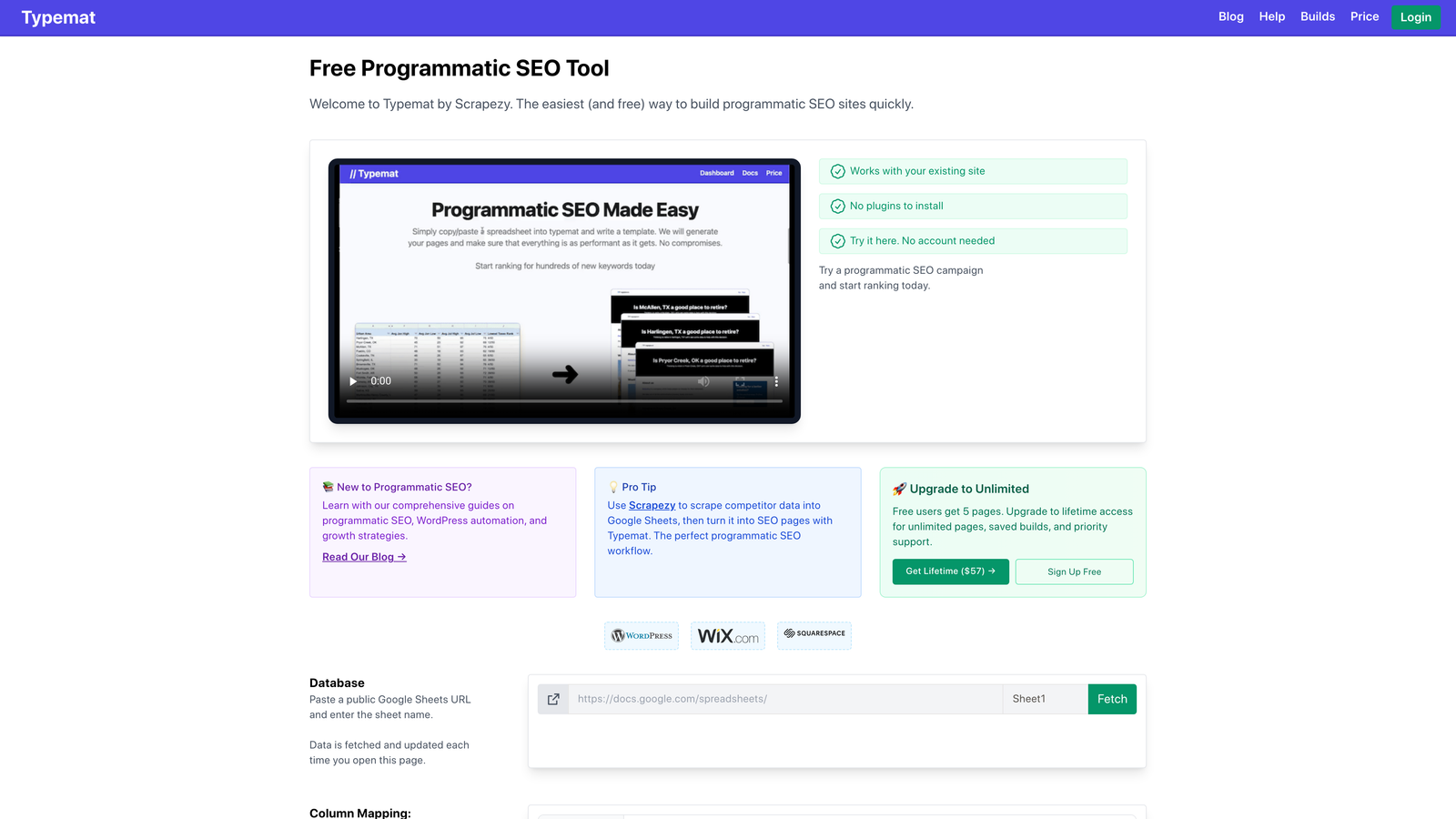
Typemat focuses specifically on programmatic content for WordPress through template-based generation and variable replacement.
Where This Tool Shines
Typemat understands WordPress intimately, which matters when you're generating hundreds of pages on the platform. The tool works directly within your WordPress environment rather than requiring exports from external systems. Create your templates with variables like [city], [service], or [product], then upload your data—Typemat generates all the pages with proper WordPress formatting, categories, and metadata.
The SEO metadata automation ensures every generated page has unique titles, descriptions, and schema markup. Set the rules once, and Typemat applies them consistently across thousands of pages.
Key Features
Template Variables: Use placeholders in your content that get replaced with specific data for each page.
Direct WordPress Publishing: Generate pages directly in WordPress without external tools or imports.
Bulk Page Generation: Create hundreds of pages from a single template and data source.
SEO Metadata Automation: Automatically generate unique titles, descriptions, and schema for each page.
Best For
WordPress-based businesses creating location pages, service pages, or directory content at scale. Particularly useful for local SEO strategies requiring city-specific pages or multi-location businesses.
Pricing
Plans start at $29/month with different tiers based on page volume and feature access.
7. PageFactory
Best for: Creating location-based landing pages and service pages with dynamic content insertion
PageFactory specializes in generating templated landing pages with built-in optimization and testing capabilities.
Where This Tool Shines
PageFactory treats programmatic pages as conversion-focused landing pages rather than just SEO content. The platform includes A/B testing capabilities so you can optimize templates before scaling to hundreds of pages. Test different headlines, calls-to-action, or layouts on a few pages, then apply the winning variation across your entire programmatic site.
The analytics integration connects directly to your conversion tracking, showing which programmatic pages actually drive business results. This data-driven approach helps you identify which templates and page types deserve more investment.
Key Features
Dynamic Content Insertion: Populate templates with location-specific or category-specific content automatically.
Location Page Templates: Pre-built frameworks for creating city, region, or neighborhood-specific pages.
A/B Testing Capabilities: Test template variations before scaling to ensure optimal performance.
Analytics Integration: Connect conversion tracking to measure programmatic page effectiveness.
Best For
Businesses with physical locations or service areas needing location-based landing pages that convert. Works well for franchises, multi-location services, or any business targeting geographic keywords.
Pricing
Starts at $49/month with higher tiers for increased page volumes and advanced features.
8. Bardeen
Best for: Scraping data and building browser automation workflows for pSEO data pipelines
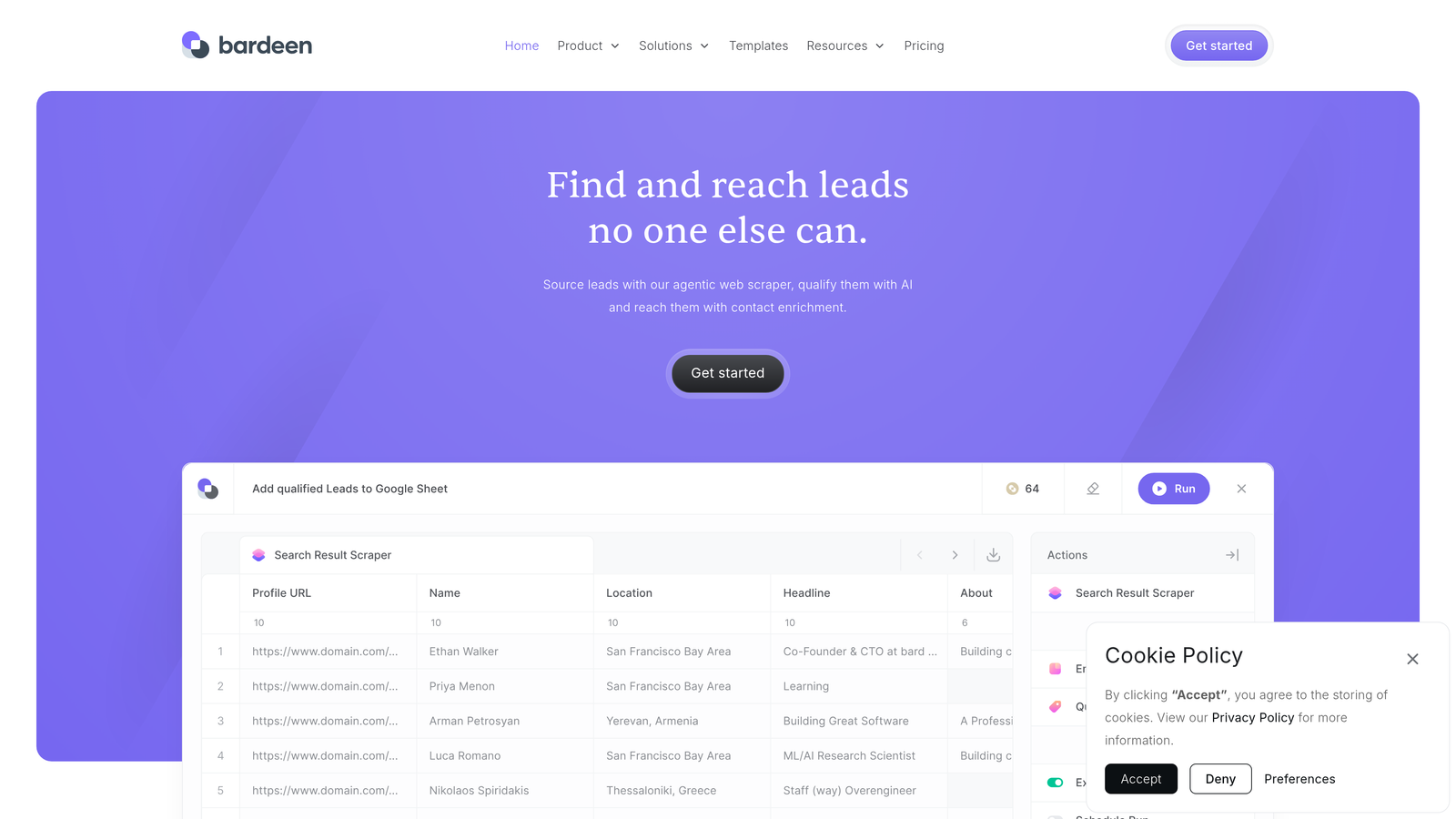
Bardeen automates browser tasks and data collection to feed your programmatic SEO content systems.
Where This Tool Shines
Bardeen solves the data sourcing challenge in programmatic SEO. Many pSEO strategies require gathering information from multiple sources—competitor websites, directories, public databases. Bardeen automates this collection through browser-based workflows that extract, transform, and load data into your spreadsheets or databases.
The no-code approach means marketers can build these data pipelines without developer help. Record a workflow once by clicking through a website, and Bardeen repeats those actions automatically to collect data from hundreds of similar pages.
Key Features
No-Code Web Scraping: Extract data from websites without writing scraping scripts or dealing with APIs.
Browser-Based Automation: Automate repetitive tasks like data collection, form filling, or page navigation.
Spreadsheet and Database Integrations: Send collected data directly to Google Sheets, Airtable, or other data tools.
Pre-Built Automation Templates: Start with existing workflows for common data collection tasks.
Best For
Teams building programmatic content that requires data aggregation from multiple sources. Particularly valuable for comparison sites, directories, or any pSEO strategy requiring competitive intelligence or public data collection.
Pricing
Free tier available for basic automations; Pro plans start at $10/month for advanced features and higher usage limits.
9. Rows
Best for: Preparing and enriching programmatic SEO data with built-in AI and API connections
Rows combines spreadsheet functionality with AI text generation and API integrations for data preparation.
Where This Tool Shines
Rows bridges the gap between raw data and content-ready information. The built-in AI functions let you generate text variations, create descriptions, or write summaries directly in spreadsheet cells. This means you can enrich your programmatic data without switching between tools—transform basic product names into compelling descriptions right in your data preparation workflow.
The API connections pull live data from external sources, ensuring your programmatic pages stay current. Connect to pricing APIs, inventory systems, or any data source with an API, and your spreadsheet updates automatically.
Key Features
Built-In AI Text Generation: Use AI functions directly in cells to create descriptions, summaries, or variations.
API Connections: Pull data from external sources directly into your spreadsheet without manual updates.
Data Enrichment Functions: Clean, transform, and enhance data before feeding it to content generation systems.
Collaboration Features: Team members can work simultaneously on data preparation and content planning.
Best For
Teams managing complex data preparation workflows for programmatic content. Works well when you need to combine data from multiple sources, generate text variations, or maintain live data connections.
Pricing
Free tier available for individual use; Plus plans start at $59/month for teams with higher usage needs.
10. Screaming Frog
Best for: Auditing programmatic pages for technical issues, duplicate content, and template quality
Screaming Frog crawls your site to identify issues across thousands of programmatic pages.
Where This Tool Shines
Screaming Frog catches problems at scale that you'd never find manually. When you're generating hundreds of pages from templates, small mistakes multiply quickly. A broken internal link in your template becomes hundreds of broken links across your site. A metadata issue affects every generated page.
The crawler identifies these patterns by analyzing your entire programmatic section at once. Export the data, filter by your programmatic URL patterns, and you'll see exactly which template issues need fixing before they impact more pages.
Key Features
Crawl Large Sites: Free version handles 500 URLs; paid license removes limits for comprehensive programmatic audits.
Duplicate Content Detection: Identify pages with identical or near-identical content across your programmatic sections.
Bulk Export: Download complete site data for analysis in spreadsheets or databases.
Custom Extraction: Pull specific data from pages to verify template variables populate correctly.
Best For
Technical SEO teams managing large programmatic implementations who need to audit thousands of pages for quality and technical issues. Essential for maintaining programmatic site health as you scale.
Pricing
Free for crawling up to 500 URLs; full license costs £199/year for unlimited crawling and advanced features.
11. IndexNow API
Best for: Instantly notifying search engines about new programmatic pages for faster indexing
IndexNow is a free protocol that tells search engines about new or updated pages immediately.
Where This Tool Shines
IndexNow solves the waiting game in programmatic SEO. Traditionally, you publish hundreds of pages and hope search engines discover them through sitemaps or internal linking. This can take weeks or months for large batches of pages. IndexNow flips this model—you notify search engines the moment pages go live.
The protocol works across multiple search engines simultaneously. Submit a URL to IndexNow, and it notifies Bing, Yandex, and other participating engines in one request. For programmatic strategies where timing matters, this acceleration from weeks to hours makes a measurable difference.
Key Features
Instant Indexing Notifications: Tell search engines about new pages immediately rather than waiting for crawl discovery.
Multi-Engine Support: One submission notifies Bing, Yandex, and other participating search engines.
Free Implementation: No costs, subscriptions, or usage limits for the protocol.
Batch URL Submission: Submit multiple URLs at once for efficient programmatic page notification.
Best For
Any programmatic SEO implementation where faster indexing provides competitive advantage. Particularly valuable for time-sensitive content, competitive niches, or large-scale launches where you need hundreds of pages indexed quickly.
Pricing
Completely free to implement and use—supported by participating search engines as an industry standard.
Making the Right Choice
Your programmatic SEO tool stack depends on your specific workflow and technical resources. For content generation at scale with built-in indexing, Sight AI handles both creation and distribution in one platform. Teams focused on bulk article generation from keyword lists will find Byword's CSV approach efficient and straightforward.
Data management defines success in programmatic SEO. Whalesync eliminates technical barriers for Webflow users, while the Airtable + Webflow DIY stack gives technical teams complete control over complex data relationships. WordPress sites benefit from Typemat's native integration and template variable system.
The reality? Most successful programmatic SEO strategies combine multiple tools. You might use Bardeen to collect data, Rows to enrich it, Sight AI or Byword to generate content, and Screaming Frog to audit results. The tools work together rather than competing.
Technical teams often prefer DIY stacks for flexibility, while marketing teams gravitate toward integrated platforms that reduce complexity. Location-based businesses need tools like PageFactory that understand geographic targeting, while content operations teams benefit from Letterdrop's workflow features.
The indexing piece matters more than many teams realize. Generating hundreds of pages means nothing if search engines take months to discover them. IndexNow integration—whether built into your content platform or implemented separately—accelerates the path from publication to organic traffic.
Stop guessing how AI models like ChatGPT and Claude talk about your brand—get visibility into every mention, track content opportunities, and automate your path to organic traffic growth. Start tracking your AI visibility today and see exactly where your brand appears across top AI platforms.