Programmatic SEO is how you create hundreds or thousands of pages from templates and structured data—think location pages, product comparisons, or integration directories that capture long-tail search traffic at scale. The challenge? Finding tools that balance automation with content quality while keeping pages indexed fast. We evaluated these platforms based on their automation capabilities, data integration flexibility, content uniqueness controls, and indexing speed. Here are the top programmatic SEO tools for scaling your organic presence in 2026.
1. Sight AI
Best for: Teams wanting AI-generated programmatic content with instant search engine indexing
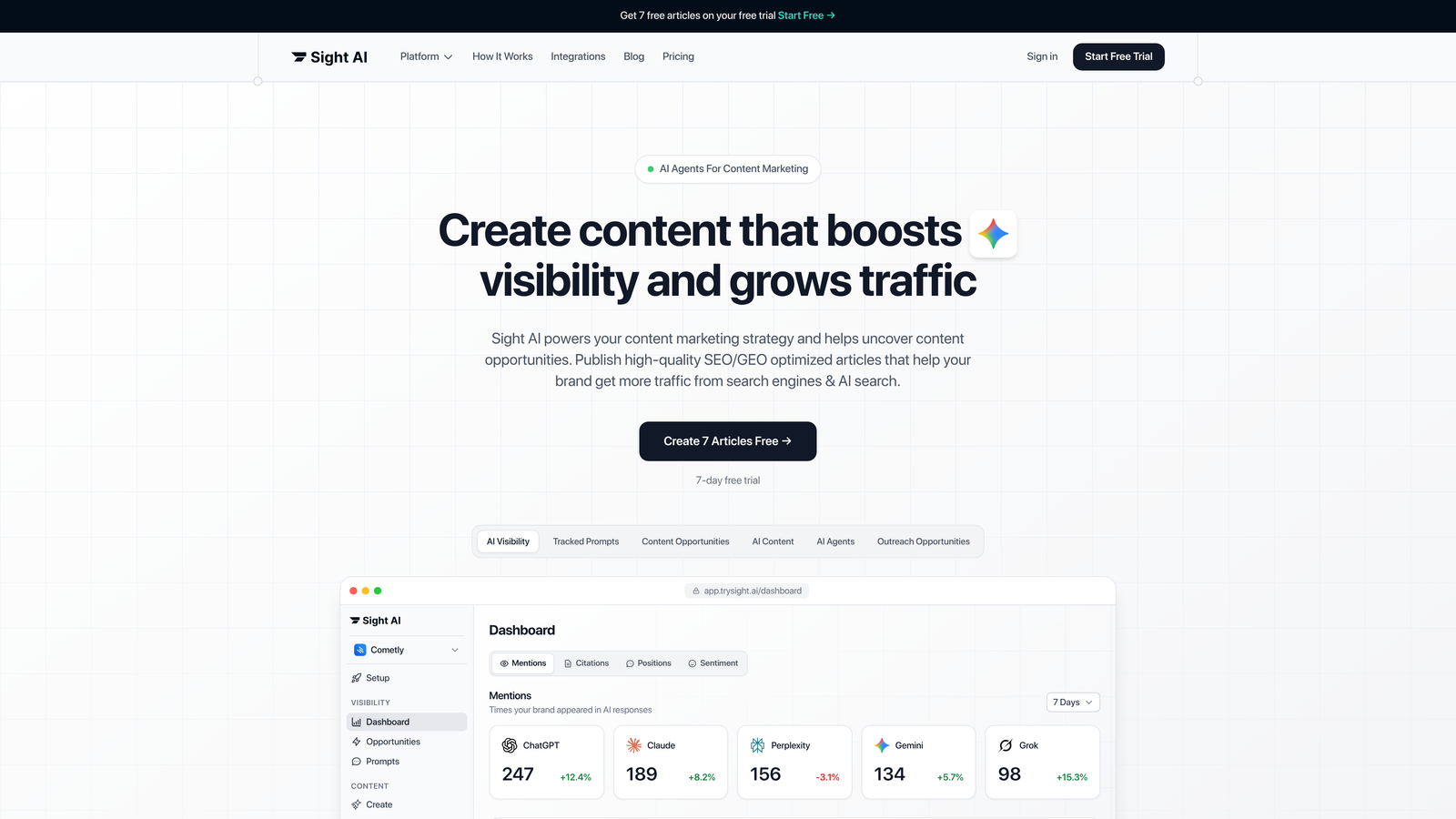
Sight AI combines 13+ specialized AI agents with automatic IndexNow integration to generate and index programmatic content at scale.
Where This Tool Shines
The platform's Autopilot mode handles the entire content generation workflow hands-free—from keyword research to publishing. Each of the 13+ AI agents specializes in different content types (listicles, guides, explainers), ensuring your programmatic pages match the intent behind each search query.
What sets it apart is the built-in IndexNow integration. Your programmatic pages get submitted to search engines the moment they publish, dramatically reducing the time between content creation and organic visibility. For teams running large-scale programmatic campaigns, this speed advantage matters.
Key Features
13+ Specialized AI Agents: Each agent trained for specific content formats, from comparison pages to location-based content.
IndexNow Integration: Automatic submission to Bing, Yandex, and other supporting search engines for faster discovery.
Autopilot Mode: Hands-off content generation that runs programmatic campaigns without constant oversight.
CMS Auto-Publishing: Direct publishing to your website without manual export/import workflows.
AI Visibility Tracking: Monitor how AI models like ChatGPT and Claude reference your programmatic content across 6+ platforms.
Best For
Marketing teams and agencies running programmatic SEO campaigns who need both content generation and instant indexing in one platform. Particularly valuable if you're creating hundreds of pages monthly and want to minimize the indexing lag that typically slows programmatic campaigns.
Pricing
Visit their pricing page for current plans tailored to different content volumes and team sizes.
2. Webflow + Whalesync
Best for: No-code teams building programmatic pages from Airtable or Notion databases
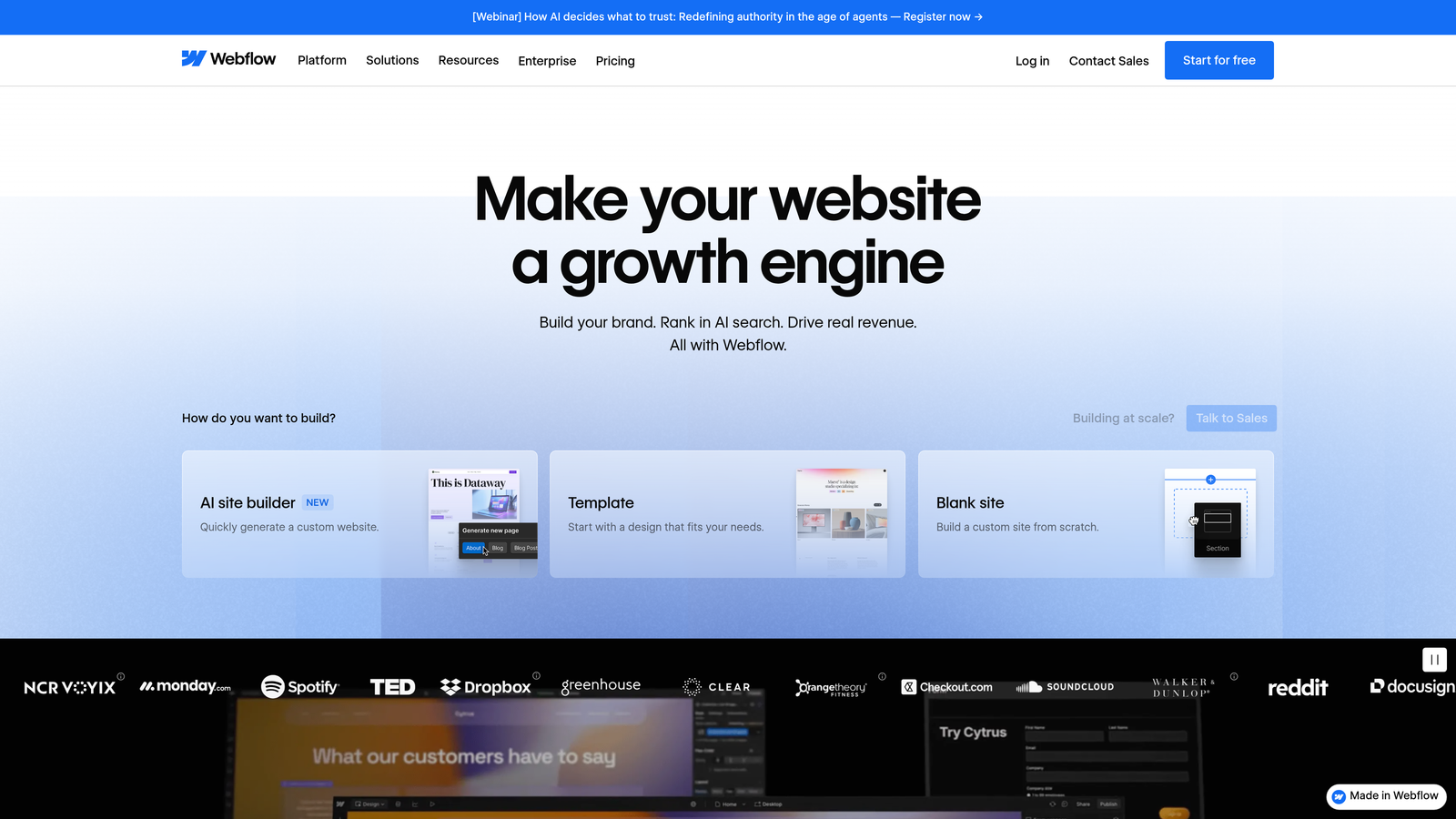
Webflow is a visual website builder that becomes a programmatic SEO powerhouse when paired with Whalesync's real-time database synchronization.
Where This Tool Shines
The visual CMS lets non-technical teams design beautiful templates without touching code. When you connect Whalesync, every row in your Airtable or Notion database automatically generates a new page using your template. Update your data source, and pages refresh in real-time.
This combination works exceptionally well for location pages, service area pages, or product catalogs where you're working with structured data. The responsive design system ensures your programmatic pages look polished on any device.
Key Features
Visual Template Builder: Design page templates with drag-and-drop controls, no coding knowledge required.
Real-Time Database Sync: Whalesync keeps your Airtable or Notion data synchronized with your Webflow CMS automatically.
Built-In SEO Controls: Set meta titles, descriptions, and structured data directly in the visual interface.
Responsive Design System: Templates automatically adapt to different screen sizes with Webflow's flexible layout engine.
Custom Domain Support: Host programmatic pages on your primary domain or create microsites for specific campaigns.
Best For
Marketing teams who prefer visual tools over code and already use Airtable or Notion for data management. Ideal for campaigns with 100-5,000 pages where design quality matters as much as scale.
Pricing
Webflow starts at $14/month for basic sites, with CMS plans from $23/month. Whalesync adds $49/month for the sync functionality.
3. Letterdrop
Best for: B2B companies automating content briefs and keyword clustering for programmatic campaigns
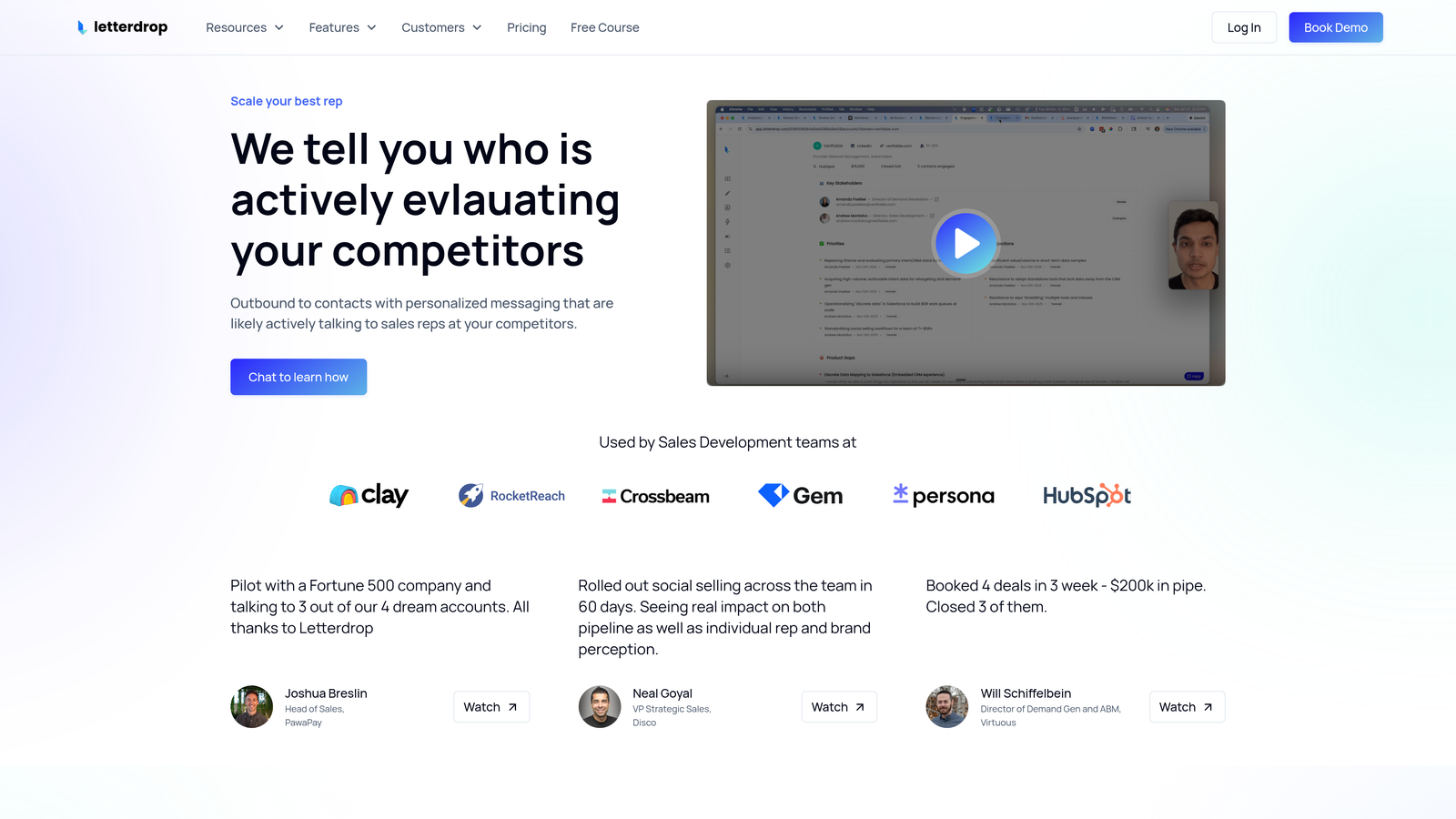
Letterdrop is a content operations platform with native programmatic SEO workflows built for B2B marketing teams.
Where This Tool Shines
Letterdrop's keyword clustering engine groups related search terms automatically, helping you identify which keywords to target on the same programmatic page versus creating separate pages. This prevents cannibalization issues that often plague programmatic campaigns.
The automated content brief generation pulls competitor analysis, search intent data, and content structure recommendations for each page in your programmatic set. Writers get clear direction without manual research for every single page.
Key Features
Keyword Clustering: Automatically groups related keywords to optimize your programmatic page structure and avoid internal competition.
Automated Content Briefs: Generates detailed briefs with competitor insights and structure recommendations for each programmatic page.
Built-In SEO Optimization: Real-time suggestions for title tags, headers, and content structure as you write.
Publishing Workflow: Manage approval processes and automate publishing schedules for large batches of programmatic content.
Performance Tracking: Monitor which programmatic page templates drive the most organic traffic and conversions.
Best For
B2B marketing teams creating programmatic content around integrations, use cases, or industry-specific pages where content quality and strategic keyword targeting matter more than pure volume.
Pricing
Custom pricing based on monthly content volume and team size. Contact their sales team for a quote tailored to your programmatic needs.
4. Bardeen + WordPress
Best for: Teams automating WordPress publishing from spreadsheets or databases without coding
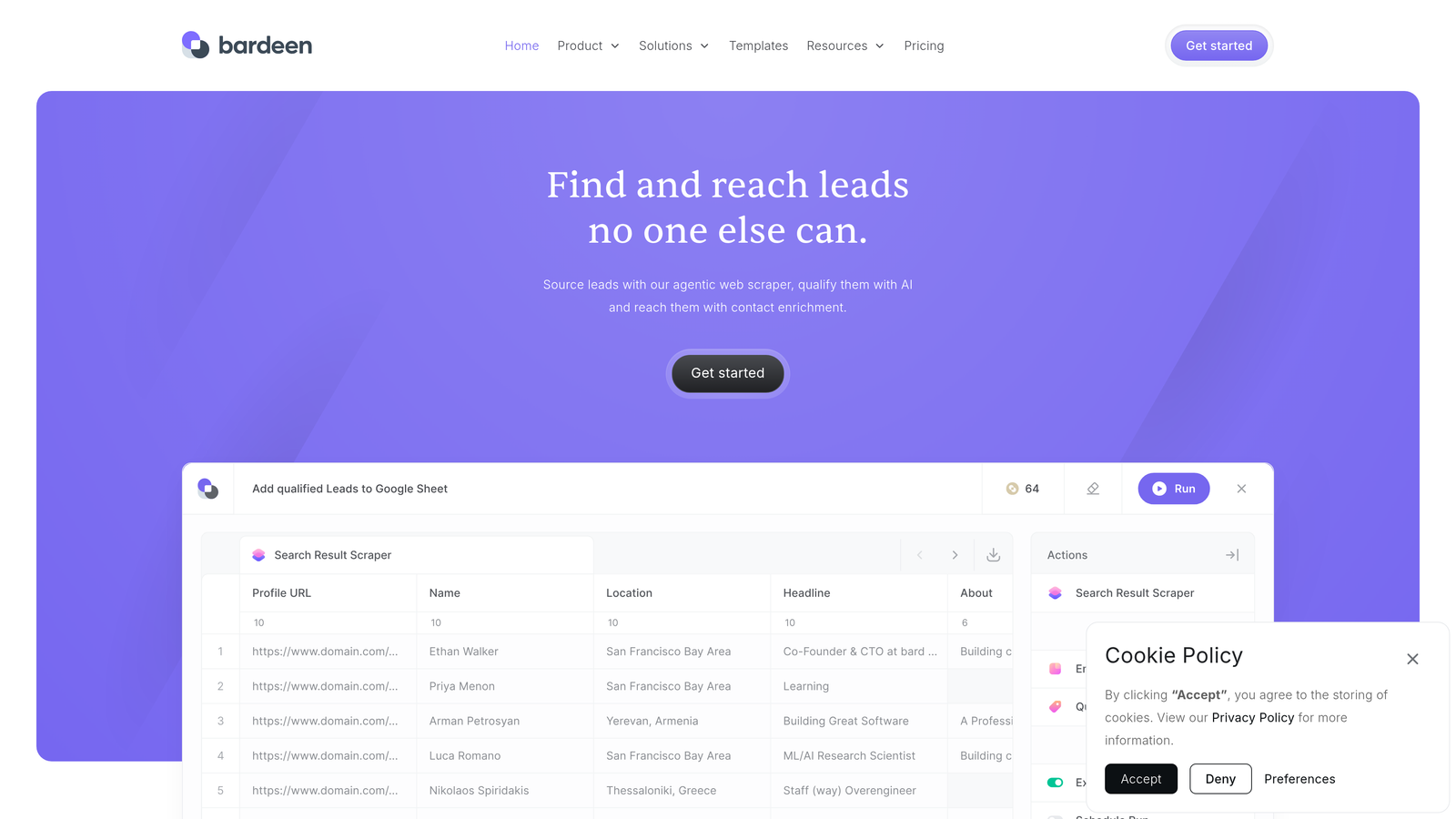
Bardeen is a no-code automation platform that connects data sources to WordPress for automated content publishing workflows.
Where This Tool Shines
The visual automation builder lets you create workflows that pull data from Google Sheets, Airtable, or databases and publish directly to WordPress. You can trigger these workflows on a schedule or when new data appears in your source.
What makes Bardeen particularly useful is the 200+ pre-built integrations. Need to scrape competitor data, pull API information, or combine multiple data sources before publishing? The platform handles these complex workflows without requiring developer resources.
Key Features
No-Code Automation Builder: Visual interface for creating multi-step workflows that connect data sources to WordPress.
200+ App Integrations: Connect spreadsheets, databases, APIs, and web scraping tools to your content pipeline.
WordPress Publishing Actions: Create posts, set categories, add tags, and configure SEO fields automatically from your data.
Scheduled Workflows: Run programmatic publishing on a schedule or trigger based on specific conditions in your data.
Data Transformation: Clean, format, and combine data from multiple sources before it becomes page content.
Best For
WordPress users who want programmatic SEO automation without hiring developers. Works well for teams comfortable with spreadsheets who need more sophisticated data handling than simple imports.
Pricing
Free tier includes 500 automation credits monthly. Pro plans start at $10/month with increased credits and advanced features.
5. Airtable + Make
Best for: Teams needing maximum flexibility in data structure and complex automation workflows
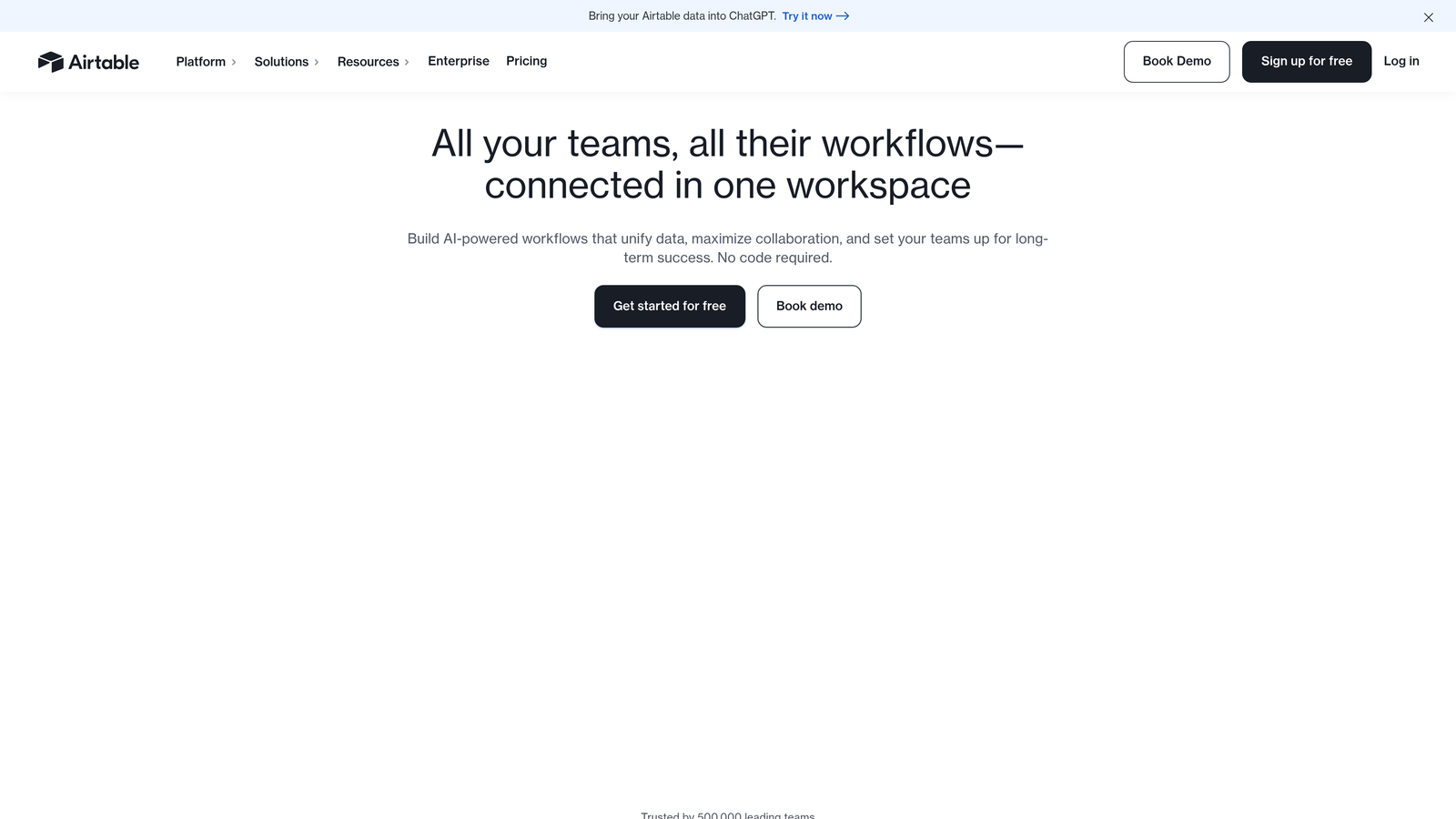
Airtable provides flexible database management while Make handles the automation connecting your data to any CMS platform.
Where This Tool Shines
Airtable's database flexibility lets you structure programmatic data exactly how you need it—with relationships between tables, lookup fields, and formula columns that calculate values automatically. This matters when your programmatic pages require complex data relationships.
Make (formerly Integromat) brings enterprise-grade automation with conditional logic, error handling, and data transformation capabilities. You can build workflows that pull data from multiple Airtable bases, combine external APIs, transform the content, and publish to any CMS with an API.
Key Features
Flexible Database Structure: Create custom tables with relationships, lookups, and calculated fields for complex programmatic data.
Advanced Automation Logic: Make handles conditional workflows, error handling, and multi-step data transformations.
Universal CMS Connections: Publish to WordPress, Webflow, custom headless CMSs, or any platform with an API.
Team Collaboration: Multiple team members can manage data, review content, and update automation workflows simultaneously.
Version History: Track changes to your programmatic data and roll back if needed.
Best For
Teams with technical resources who need complete control over their programmatic SEO pipeline. Ideal when your data structure is complex or you're publishing to multiple platforms simultaneously.
Pricing
Airtable starts at $20/seat/month for Pro features. Make begins at $9/month for basic automation, with higher tiers for increased operations.
6. Typemat
Best for: Quick programmatic page generation from Google Sheets with minimal setup
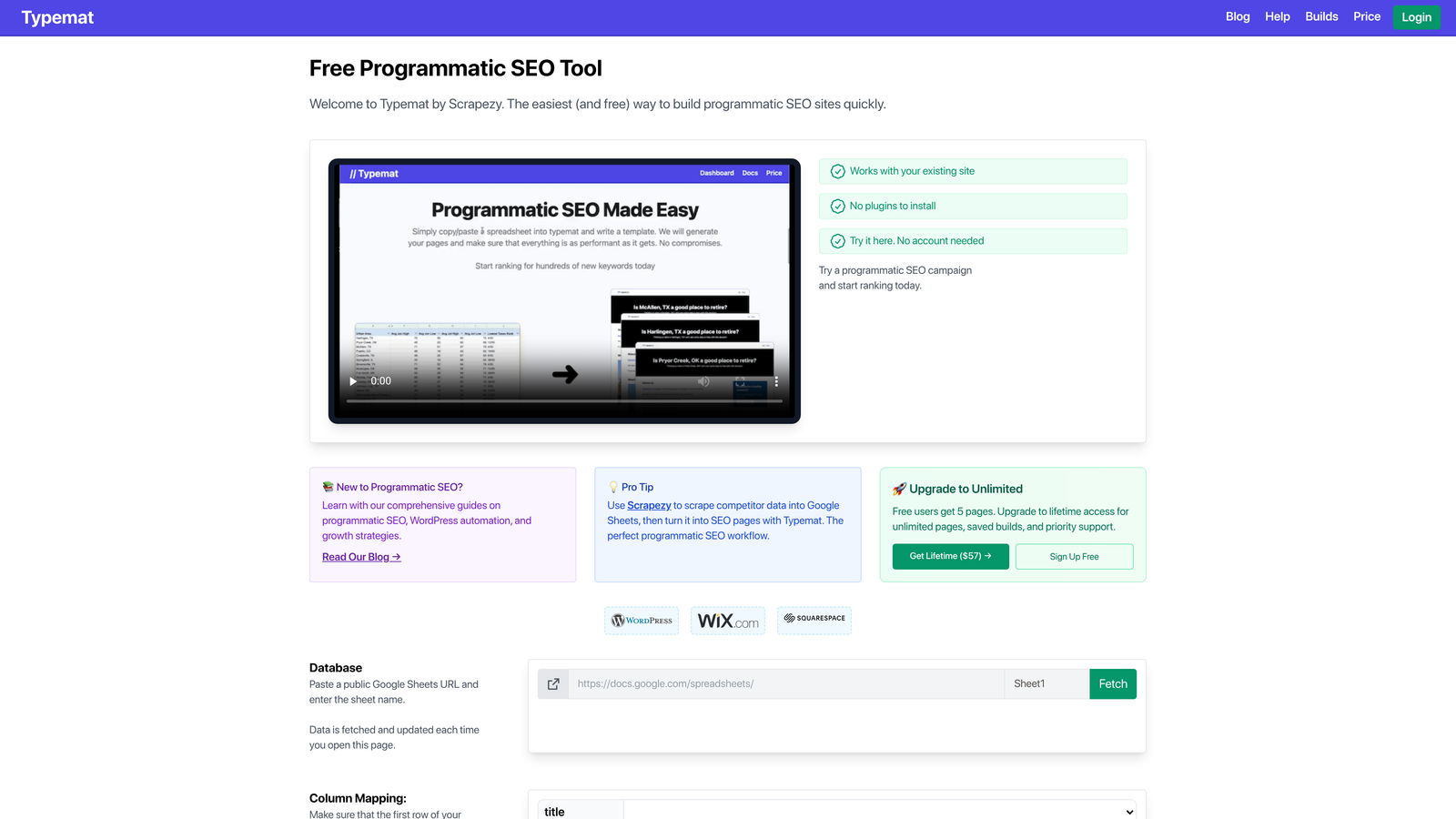
Typemat is a straightforward tool that turns Google Sheets data into programmatic web pages fast.
Where This Tool Shines
The simplicity is the selling point. You create a Google Sheet with your data, design a basic template, and Typemat generates pages. No complex automation workflows, no extensive configuration—just a direct path from spreadsheet to published pages.
This approach works particularly well for testing programmatic SEO ideas before investing in more complex infrastructure. You can launch 100 pages in an afternoon and validate whether the traffic opportunity justifies building a more sophisticated system.
Key Features
Google Sheets Integration: Direct connection to your spreadsheet data without exporting or importing files.
Simple Template System: Create page templates with basic HTML and CSS, then map spreadsheet columns to template variables.
Fast Page Generation: Bulk create hundreds of pages in minutes once your template and data are ready.
SEO-Friendly Output: Generated pages include proper meta tags, heading structure, and clean HTML for search engines.
Custom Domain Hosting: Host programmatic pages on your domain or create a subdomain for specific campaigns.
Best For
Small teams or solo marketers who want to test programmatic SEO concepts quickly without significant technical investment. Perfect for campaigns under 1,000 pages where speed to market matters more than advanced features.
Pricing
Plans start at $29/month for basic programmatic page generation with custom domain hosting included.
7. PageFactory
Best for: Creating location-based programmatic pages with local SEO optimization built-in
PageFactory specializes in generating city and service area pages with local search optimization features.
Where This Tool Shines
The platform includes location data for cities, states, and regions out of the box. You don't need to manually compile geographic information—it's already structured and ready to use in your programmatic templates.
PageFactory automatically adds local SEO elements like city-specific schema markup, localized business information, and geographic targeting signals that help these pages rank in location-modified searches. This saves significant time compared to manually optimizing each location page.
Key Features
Built-In Location Data: Pre-loaded database of cities, states, regions, and geographic information ready for programmatic use.
Local SEO Optimization: Automatic schema markup, NAP consistency, and geographic targeting signals for each location page.
Service Area Templates: Pre-built templates designed specifically for "service in [city]" and "[service] near me" searches.
Schema Markup Automation: LocalBusiness, Service, and geographic schema added automatically based on your business type.
Bulk Page Generation: Create location pages for hundreds of cities simultaneously with one template.
Best For
Service businesses, franchises, or companies with physical locations who need to rank in local searches across multiple cities. Particularly valuable for HVAC, plumbing, legal services, or any business where location matters.
Pricing
Plans start at $49/month for basic location page generation with increased limits at higher tiers.
8. Contentbase
Best for: Generating thousands of unique AI-written pages from keyword lists at scale
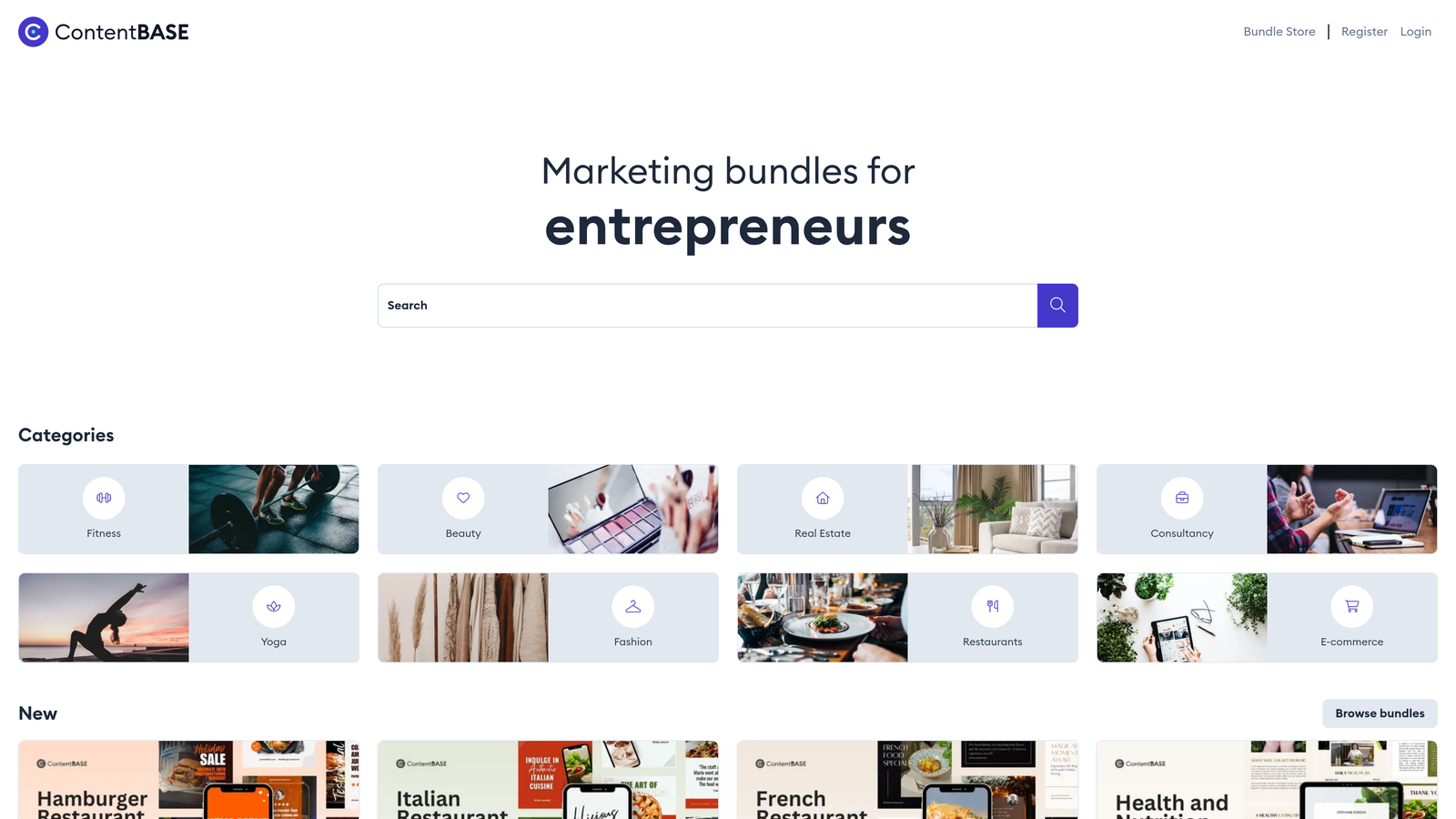
Contentbase is an AI content platform designed specifically for bulk programmatic content generation.
Where This Tool Shines
The keyword-to-page automation takes a list of target keywords and generates complete articles for each one. The AI varies content structure, examples, and phrasing across pages to maintain uniqueness—important for avoiding thin content penalties.
Contentbase includes controls for content uniqueness that let you adjust how different each page should be from others in your programmatic set. This balance between efficiency and uniqueness helps at scale where manually writing thousands of pages isn't feasible.
Key Features
Bulk AI Content Generation: Upload keyword lists and generate hundreds of complete articles simultaneously.
Keyword-to-Page Automation: AI creates page structure, headers, and content optimized for each target keyword automatically.
Content Uniqueness Controls: Adjust variation levels to ensure each page provides distinct value while maintaining efficiency.
Built-In Hosting Option: Host programmatic pages directly on Contentbase infrastructure or export to your CMS.
SEO Optimization: Automatic meta tags, header structure, and keyword placement based on search intent analysis.
Best For
Teams creating programmatic content at massive scale (5,000+ pages) where manual writing isn't practical. Works well for glossaries, definition pages, or comparison content where structure is consistent but details vary.
Pricing
Plans start at $99/month for basic bulk generation with higher tiers supporting increased page volumes and advanced features.
9. Plasmic
Best for: Developers who want visual design tools combined with full code control
Plasmic is a visual builder that exports to React and Next.js, bridging the gap between design and development.
Where This Tool Shines
The visual builder lets designers create programmatic page templates without writing code, then developers can export the components as clean React code. This workflow eliminates the back-and-forth typically required when designers and developers collaborate on programmatic templates.
Because Plasmic integrates with Next.js, you get static site generation and incremental static regeneration out of the box. Your programmatic pages load fast and handle high traffic volumes efficiently—critical when you're generating thousands of pages.
Key Features
Visual Builder with Code Export: Design templates visually, then export clean React/Next.js code for full customization.
Headless CMS Integration: Connect to Contentful, Strapi, or any headless CMS for programmatic data sources.
React/Next.js Compatible: Native support for modern frameworks with SSG and ISR for performance optimization.
Component-Based Design: Build reusable components that maintain consistency across thousands of programmatic pages.
Version Control: Track changes to templates and roll back if needed, with full Git integration available.
Best For
Development teams building programmatic SEO solutions where performance, scalability, and design quality all matter. Ideal for enterprise implementations with complex requirements and high traffic expectations.
Pricing
Free tier available for individual projects. Pro plans start at $49/month with team collaboration and advanced features.
10. Directus + Next.js
Best for: Enterprise teams needing full API control and self-hosted infrastructure
Directus is an open-source headless CMS that pairs with Next.js for enterprise-grade programmatic SEO implementations.
Where This Tool Shines
The open-source nature means you can self-host and customize every aspect of your programmatic SEO infrastructure. You control the database schema, API endpoints, and data models completely—essential when your programmatic needs don't fit standard CMS structures.
Directus provides both REST and GraphQL APIs, giving developers flexibility in how they query programmatic data. The admin interface is automatically generated from your data schema, so non-technical team members can manage content without touching code.
Key Features
Open-Source and Self-Hostable: Complete control over your infrastructure with no vendor lock-in or usage limits.
Full REST and GraphQL APIs: Query programmatic data however your architecture requires with comprehensive API access.
Flexible Data Modeling: Create custom data structures that match your programmatic SEO needs exactly.
Enterprise Security: Role-based access control, audit logs, and compliance features for regulated industries.
Auto-Generated Admin Interface: Non-developers can manage programmatic data through an intuitive interface built from your schema.
Best For
Enterprise organizations with development resources who need complete control over their programmatic SEO infrastructure. Particularly valuable when dealing with sensitive data, compliance requirements, or extremely high page volumes.
Pricing
Self-hosted version is free and open-source. Cloud-hosted plans start at $99/month with managed infrastructure and support.
11. Rows + Zapier
Best for: Teams wanting spreadsheet-native workflows with automated CMS publishing
Rows is a spreadsheet platform with built-in integrations that connects to Zapier for automated content publishing.
Where This Tool Shines
The spreadsheet interface feels familiar to anyone who's used Excel or Google Sheets, but Rows includes 50+ built-in integrations for pulling data from APIs, databases, and external services. This means you can build programmatic data sets entirely within the spreadsheet without switching tools.
Connect Rows to Zapier, and you can automate publishing to WordPress, Webflow, or any CMS Zapier supports. The workflow stays spreadsheet-centric, making it accessible to marketing teams who prefer working in familiar interfaces.
Key Features
Spreadsheet-Native Interface: Familiar grid layout with formulas and functions that work like traditional spreadsheets.
50+ Built-In Integrations: Pull data from APIs, databases, and services directly into your spreadsheet without coding.
Zapier Connection: Automate publishing to any CMS or platform Zapier supports from your spreadsheet data.
Team Collaboration: Multiple team members can work on programmatic data simultaneously with real-time updates.
Data Refresh Scheduling: Automatically update your programmatic data on a schedule to keep pages current.
Best For
Marketing teams who live in spreadsheets and want to automate programmatic SEO without learning new interfaces. Ideal for campaigns where data comes from multiple sources that need combining before publishing.
Pricing
Free tier available for basic spreadsheets. Pro plans start at $59/month with advanced integrations and automation features.
Choosing Your Programmatic SEO Stack
The right programmatic SEO tool depends on your technical resources and scale ambitions.
For teams prioritizing speed and AI content quality, Sight AI combines generation and indexing in one platform—eliminating the lag between publishing and search visibility. The 13+ specialized agents ensure your programmatic pages match search intent across different content types.
No-code teams should consider Webflow + Whalesync or Bardeen + WordPress. These options let marketing teams build and manage programmatic campaigns without developer dependencies. The visual interfaces make template creation accessible while automation handles the repetitive work.
Development teams with complex requirements benefit from Plasmic or Directus + Next.js. These solutions provide the flexibility to build custom programmatic infrastructure that scales to millions of pages while maintaining performance and code quality.
For location-based campaigns, PageFactory's built-in geographic data and local SEO optimization remove significant manual work. You get city pages with proper schema markup and local signals without configuring each element individually.
The key consideration across all tools: ensure each programmatic page provides genuine value. Search engines have become sophisticated at identifying thin content, regardless of how many pages you create. Focus on unique data, helpful information, and clear user intent for each page in your programmatic set.
Your programmatic SEO success depends less on the specific tool and more on your content strategy. The best platforms simply make it easier to execute that strategy at scale while maintaining quality and indexing speed. Start tracking your AI visibility today and see exactly where your brand appears across top AI platforms—then use these insights to guide which programmatic pages will capture the most valuable traffic.