The best AI mention tracking tools in 2026 are Sight AI, Profound, Promptwatch and Peec for direct LLM monitoring, with AirOps and Writesonic as content-side complements. Pick based on what you do with the data: Sight AI if you want tracking, content creation and indexing in one workflow, Profound for enterprise benchmarking, Promptwatch for prompt-level analysis, and Peec for competitive share-of-voice.
When a potential customer asks ChatGPT or Perplexity to recommend a tool in your category, most marketers don't know whether their brand gets mentioned. The right tracker shows where your brand appears, how it's framed, and where competitors are winning the conversation instead of you. The tools below were evaluated on five criteria: platform coverage, sentiment analysis depth, prompt customization, reporting quality, and how well each one helps you act on what you find. The list covers founders, marketers running generative engine optimization (GEO) programs, and agencies managing several clients.
Quick comparison
| Tool | Type | Best for | Pricing |
|---|---|---|---|
| Sight AI | Tracking + content + indexing | Teams and agencies that want one workflow from insight to publishing | Paid plans |
| Profound | Enterprise monitoring | Large brands that need benchmarking at scale | Custom quote |
| Promptwatch | Prompt-level monitoring | Technical SEO and GEO practitioners | Tiered by volume |
| Peec | Share-of-voice tracking | Competitive intelligence | Tiered by queries |
| AirOps | Workflow automation | Content ops acting on visibility data | Free tier; from ~$99/mo |
| Writesonic | Content generation | High-volume SEO content | Free trial; from ~$16/mo |
1. Sight AI
Best for: Teams that want one platform for tracking, content creation and indexing.
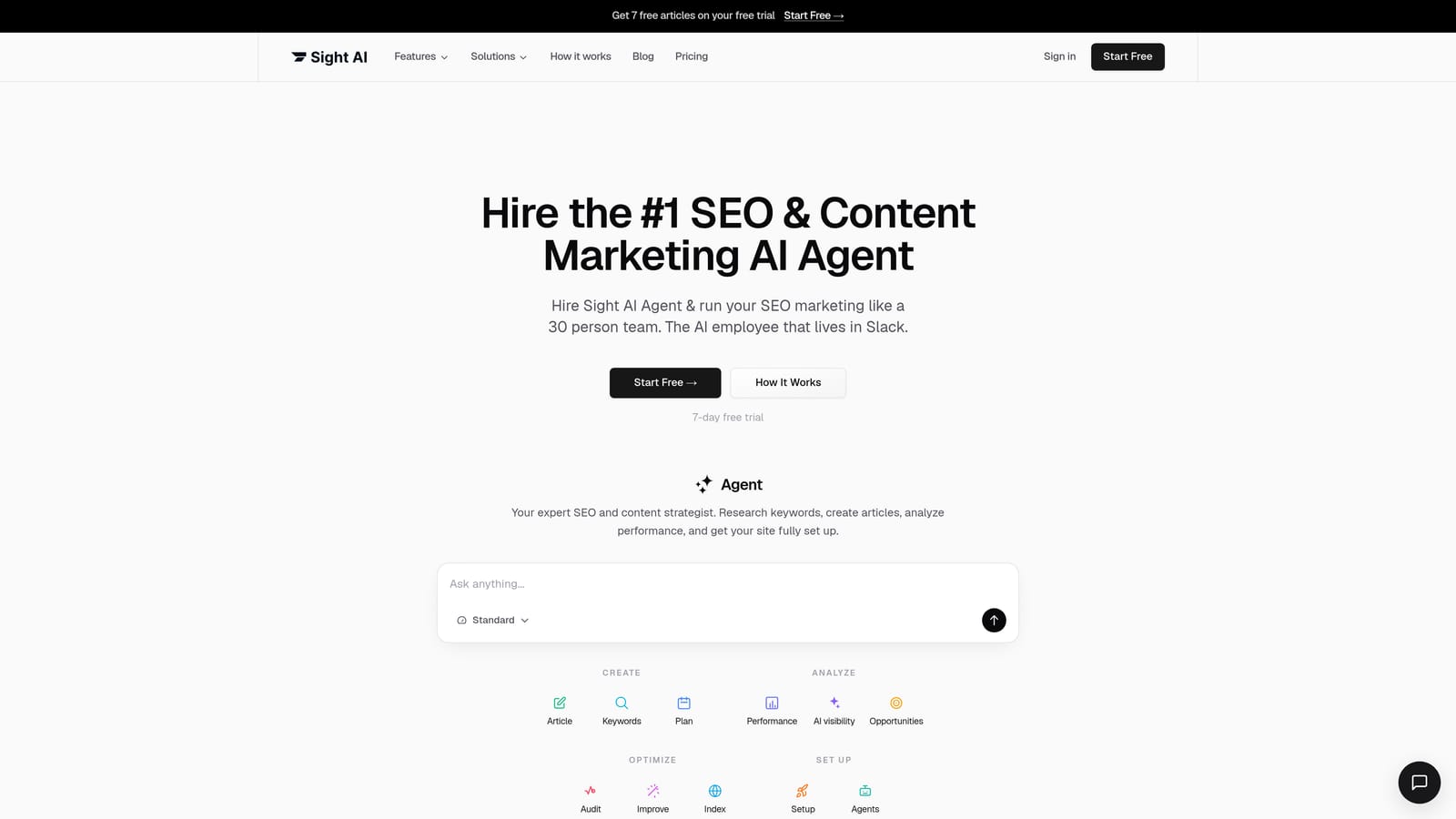
Sight AI is an all-in-one AI visibility platform. It monitors brand mentions across 6+ LLMs, then helps you close the loop by generating optimized content and publishing it automatically.
Where This Tool Shines
Most LLM tracking tools stop at the data. Sight AI connects visibility insights directly to content production. When you find a gap, such as a prompt where competitors are cited and you're not, you can respond in the same platform instead of exporting a report and starting a separate workflow.
The AI Visibility Score helps teams report AI search performance to stakeholders. It combines mention frequency, sentiment and prompt context into a single metric you can track across ChatGPT, Claude, Perplexity and other platforms. Few tools in this young category offer that kind of consolidated view.
Key Features
AI Visibility Score: Combines mention frequency, sentiment and prompt context across 6+ AI platforms into a single performance metric.
Prompt Tracking: Shows which queries and prompt types surface your brand in LLM responses, so you can see when and why you appear.
13+ Specialized AI Content Agents: Generates SEO- and GEO-optimized listicles, guides and explainers that target the visibility gaps you've found.
Autopilot Mode: Triggers content production from visibility data, so your content strategy responds to AI search signals without manual work.
IndexNow Integration: Gets newly published content indexed quickly, shortening the lag between publishing and discovery.
CMS Auto-Publishing: Takes content from draft to live without the manual steps that slow most content operations.
Best For
Sight AI fits marketers, founders and agencies who want more than a monitoring dashboard. If you want to track LLM mentions and then improve your position through content, the integrated workflow saves you from stitching several tools together. Agencies tracking AI brand mentions for multiple clients can run each brand's prompts and content from the same workspace.
Pricing
Paid plans available. Check trysight.ai for current pricing tiers, which vary by team size and feature access.
2. Profound
Best for: Enterprise marketing teams tracking brand presence in AI-generated answers at scale.
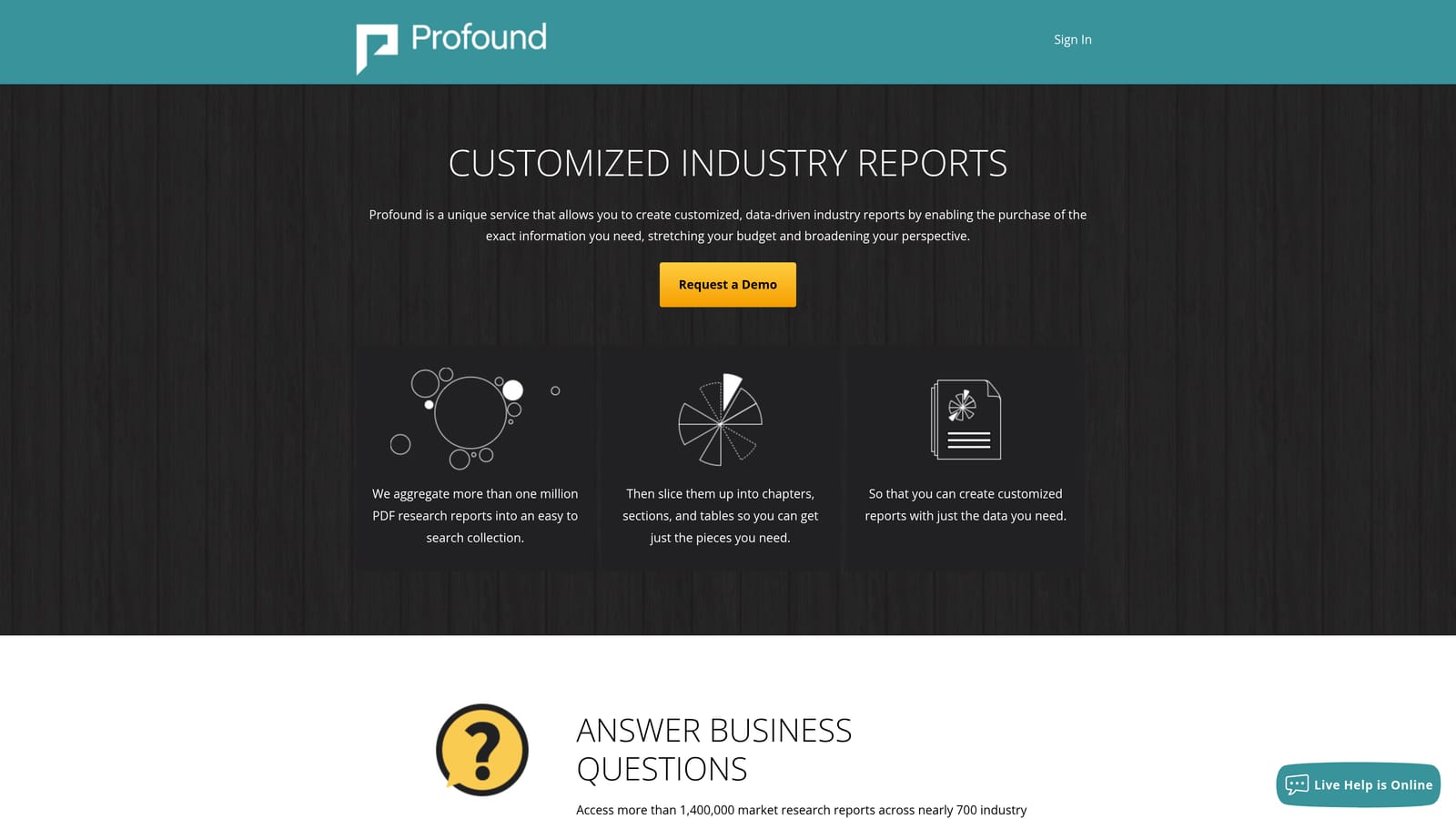
Profound is an enterprise AI answer monitoring platform. It's built for brands with significant AI search exposure that need competitive benchmarking.
Where This Tool Shines
Profound is built for scale. Many tools in this category serve SMBs and growth-stage companies. Profound targets enterprise marketing teams that need robust monitoring infrastructure and want to benchmark their AI answer presence against industry peers.
Competitive benchmarking is its standout capability. Profound doesn't just show where your brand appears; it puts that data next to your competitors' numbers, so you see your relative share-of-voice in LLM-generated responses. That's especially useful for category leaders defending their position as AI search grows.
Key Features
AI Answer Monitoring at Scale: Tracks brand mentions in LLM-generated responses across a high volume of queries.
Competitive Benchmarking: Measures your AI answer presence against industry peers to give share-of-voice context.
Analytics Dashboard: Tracks share-of-voice trends over time for reporting across marketing teams.
Enterprise Design: Built for larger organizations whose marketing teams treat AI search as a strategic channel.
Best For
Profound suits enterprise brands and large marketing teams that need serious monitoring infrastructure and competitive intelligence across AI search. It's a weaker fit for small teams or anyone who wants content creation built in alongside tracking.
Pricing
Enterprise pricing. Contact Profound for a quote based on your team's needs and query volume.
3. Promptwatch
Best for: Technical SEO and GEO practitioners who need to see exactly which queries trigger brand mentions.
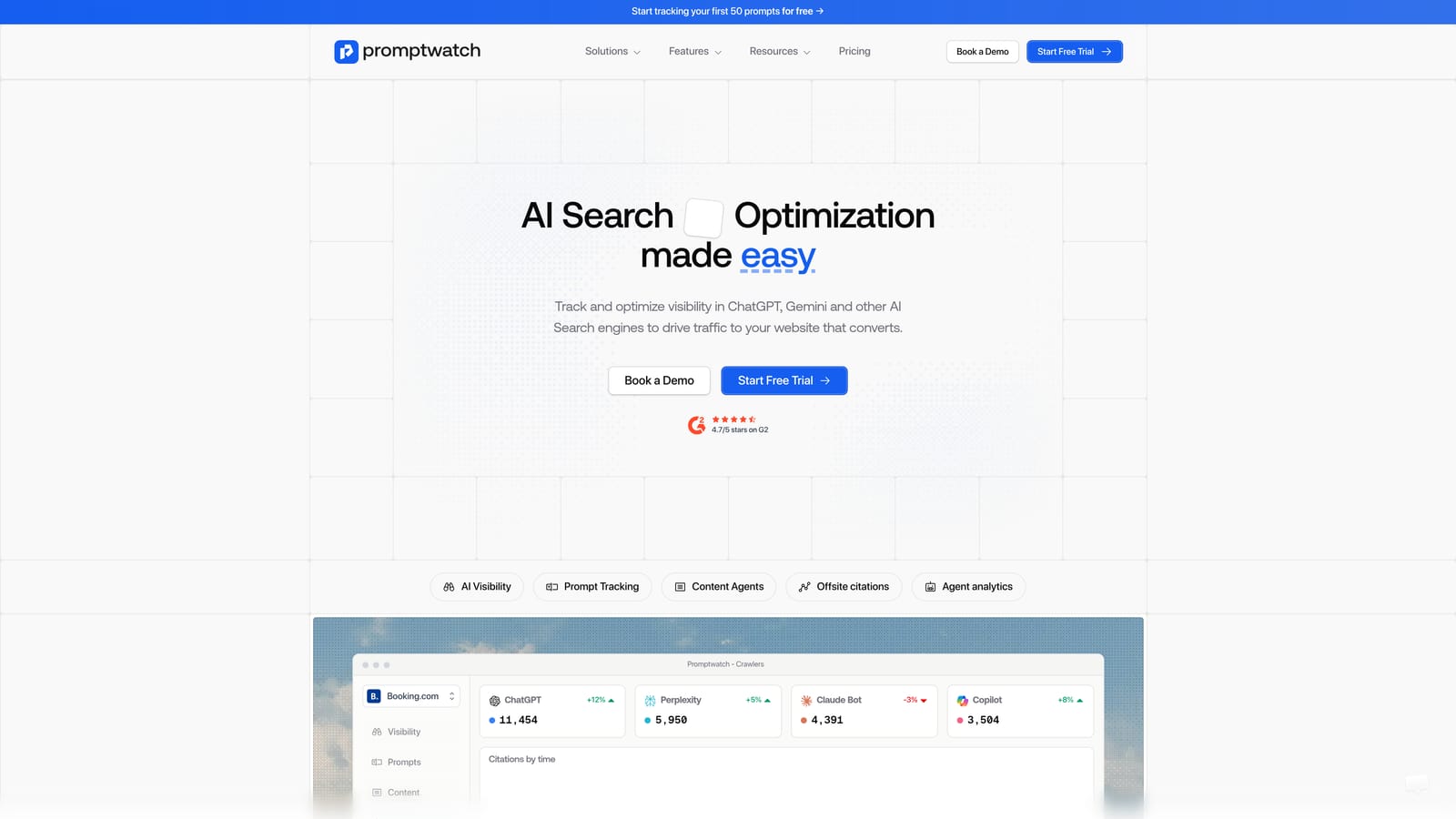
Promptwatch is a prompt-level LLM monitoring tool. It tracks which query types and prompt conditions trigger or suppress brand mentions across AI platforms.
Where This Tool Shines
Promptwatch is more granular than most tracking tools. It doesn't stop at telling you that your brand appeared in an LLM response; it maps the prompt conditions that led to that appearance. Practitioners who optimize at the query level get far more out of that than a simple mention count.
For teams building a GEO strategy around specific query categories, it answers a question that's otherwise hard to pin down: what does a user need to ask before your brand gets cited? That prompt-to-response mapping gives you a clear feedback loop for testing and refining.
Key Features
Prompt-to-Response Tracking: Maps which prompts and query conditions surface your brand in LLM outputs, showing cause and effect.
Suppression Analysis: Identifies query conditions where your brand is missing from LLM responses, highlighting gaps in your AI search presence.
Response Logging: Stores and analyzes LLM responses over time so you can refine your prompt strategy.
GEO Practitioner Focus: Designed for technical users who want query-level data rather than high-level dashboards.
Best For
Promptwatch suits technical SEO specialists, GEO practitioners and in-house teams who want to understand exactly when and why their brand appears in LLM responses. It's a deep-dive tool, not an executive reporting tool.
Pricing
Check promptwatch.io for current pricing; tiers vary by query volume and feature access.
4. Peec
Best for: Brands focused on competitive AI search intelligence and share-of-voice benchmarking.
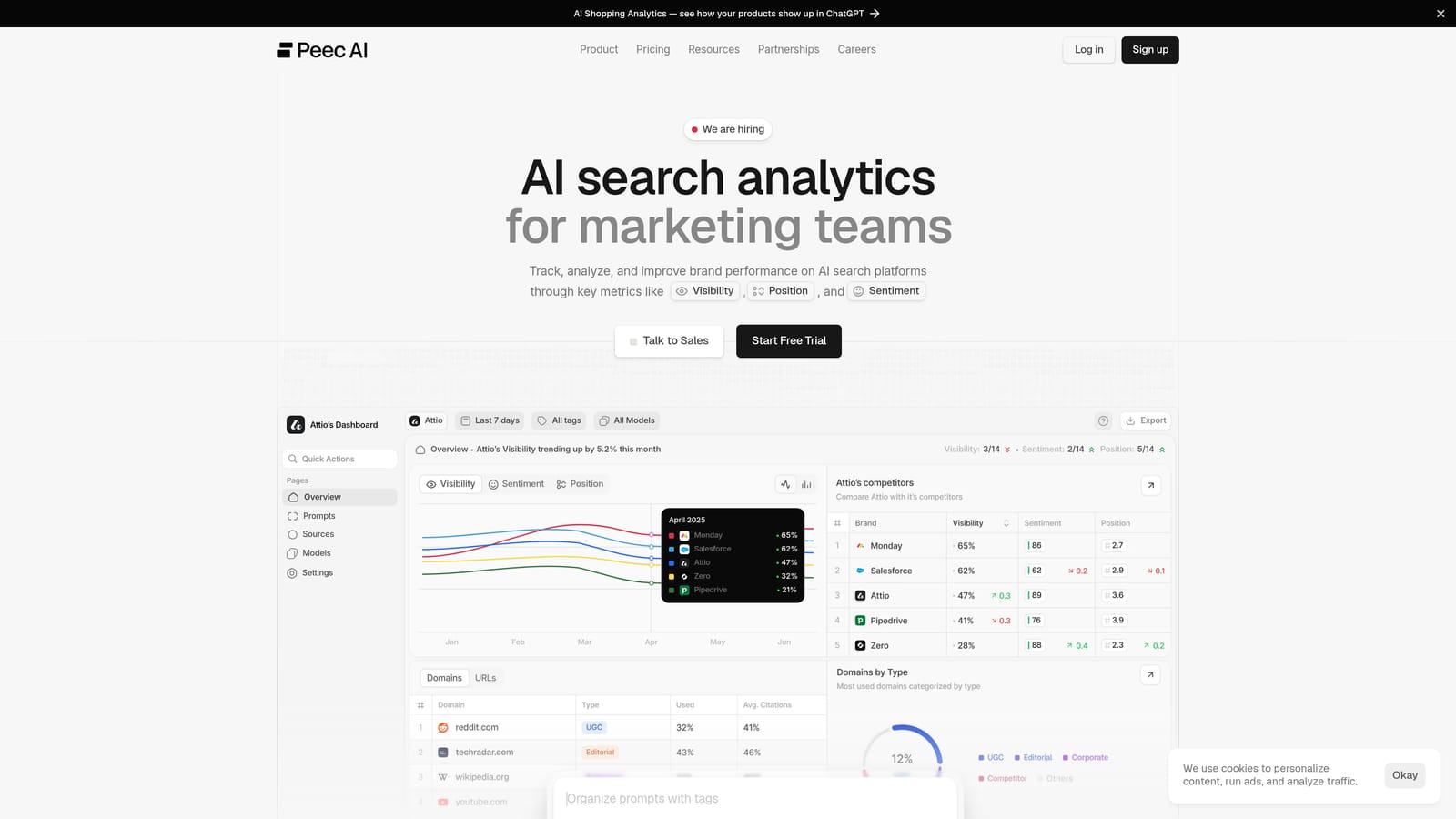
Peec is an AI search visibility tool. It quantifies your brand's share-of-voice inside LLM-generated responses and benchmarks it against direct competitors.
Where This Tool Shines
Peec's core value is competitive context. It shows how often your brand appears in LLM responses and how that compares to other brands competing for the same mentions. That shifts the question from "are we visible?" to "are we winning?"
Trend tracking adds another dimension. Watching how your mention frequency changes over time, especially against competitors, tells you whether your content and GEO work is moving the needle or a competitor is gaining ground.
Key Features
Share-of-Voice Measurement: Quantifies your brand's mention rate in AI search results relative to competitors across tracked query sets.
Competitive AI Visibility Benchmarking: Compares your brand's LLM presence side by side with industry peers.
Trend Tracking: Monitors changes in mention frequency over time for analysis across reporting periods.
Actionable Competitive Insights: Surfaces opportunities to improve your position in LLM responses where competitors currently lead.
Best For
Peec fits brands and agencies whose main driver is competitive intelligence. If your main question is "how do we compare to competitors in AI search?" rather than "what content should we create to improve our position?", Peec's share-of-voice approach matches that goal.
Pricing
Check peec.ai for current pricing; plans vary by number of tracked queries and team size.
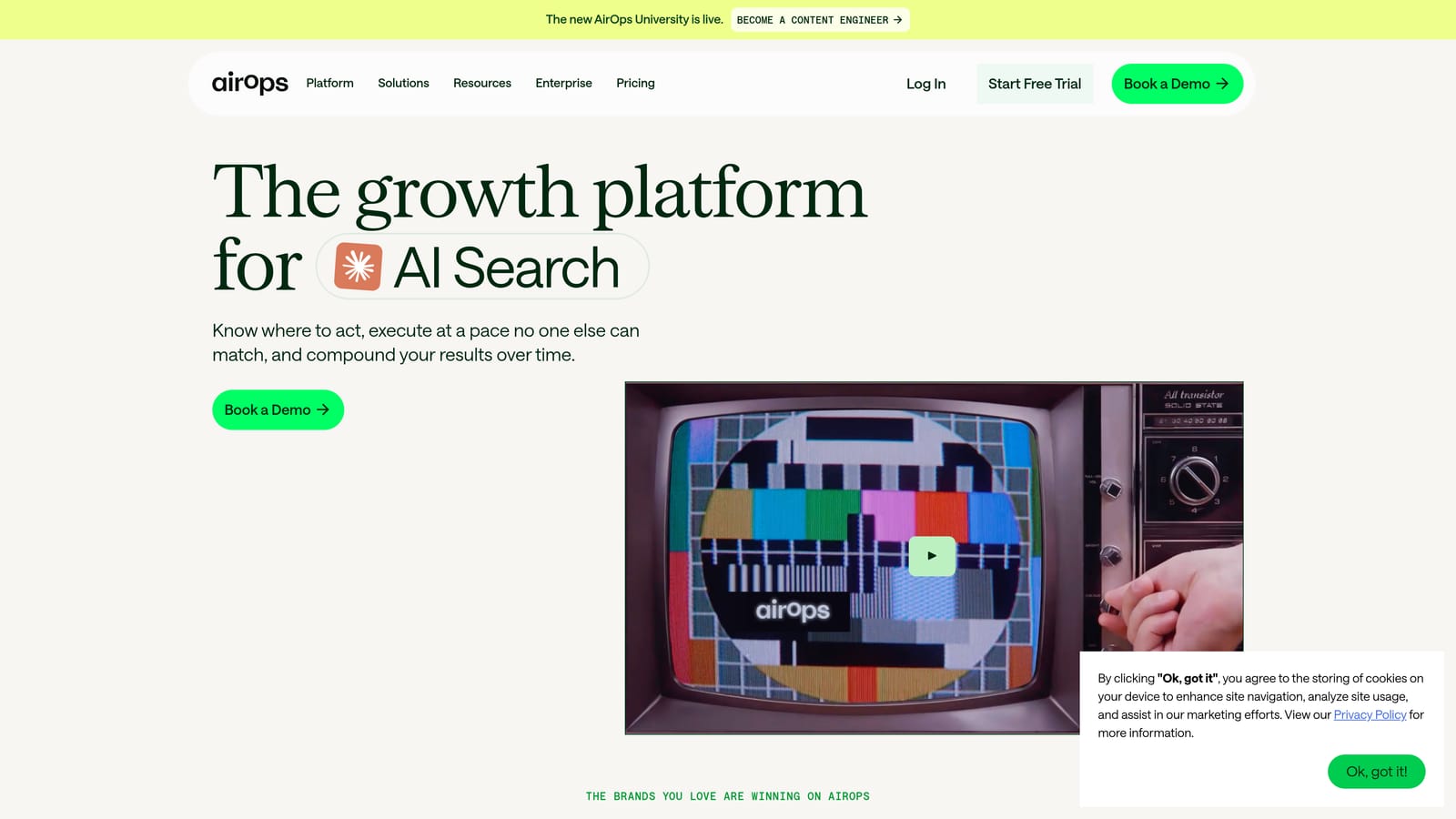
5. AirOps
Best for: Teams building structured content production workflows around LLM-powered operations.
AirOps is a workflow automation platform for LLM-powered content operations. Teams use it to build pipelines that turn AI visibility data into content at scale.
Where This Tool Shines
AirOps sits at the operational layer of AI content strategy. It isn't a pure LLM mention tracker, but it's highly relevant for teams that have tracking data and need a structured way to act on it at scale. Its workflow builder lets you design repeatable content processes that use multiple AI models, cutting the manual coordination usually needed to go from insight to output.
For larger content teams or agencies with high production volume, AirOps provides the infrastructure to run an AI content strategy. Think of it as the assembly line downstream of your tracking tools, turning signals into published content.
Key Features
Workflow Builder: Lets teams design and automate LLM-assisted content operations as structured, repeatable pipelines.
Multi-Model Integration: Connects to multiple AI models for different use cases and formats.
Structured Data Pipelines: Links tracking insights to content output through defined workflows, reducing manual handoffs.
Team Collaboration Features: Helps larger organizations coordinate content operations across many contributors.
Best For
AirOps suits content operations teams and agencies that need workflow infrastructure for AI content production. It complements tracking tools rather than replacing them. Teams that already have visibility data and need to act on it systematically will get the most from it.
Pricing
Free tier available; paid plans from approximately $99/month. Verify current pricing at airops.com before committing.
6. Writesonic
Best for: Content teams producing high-volume, SEO-optimized content designed to improve LLM citation likelihood.
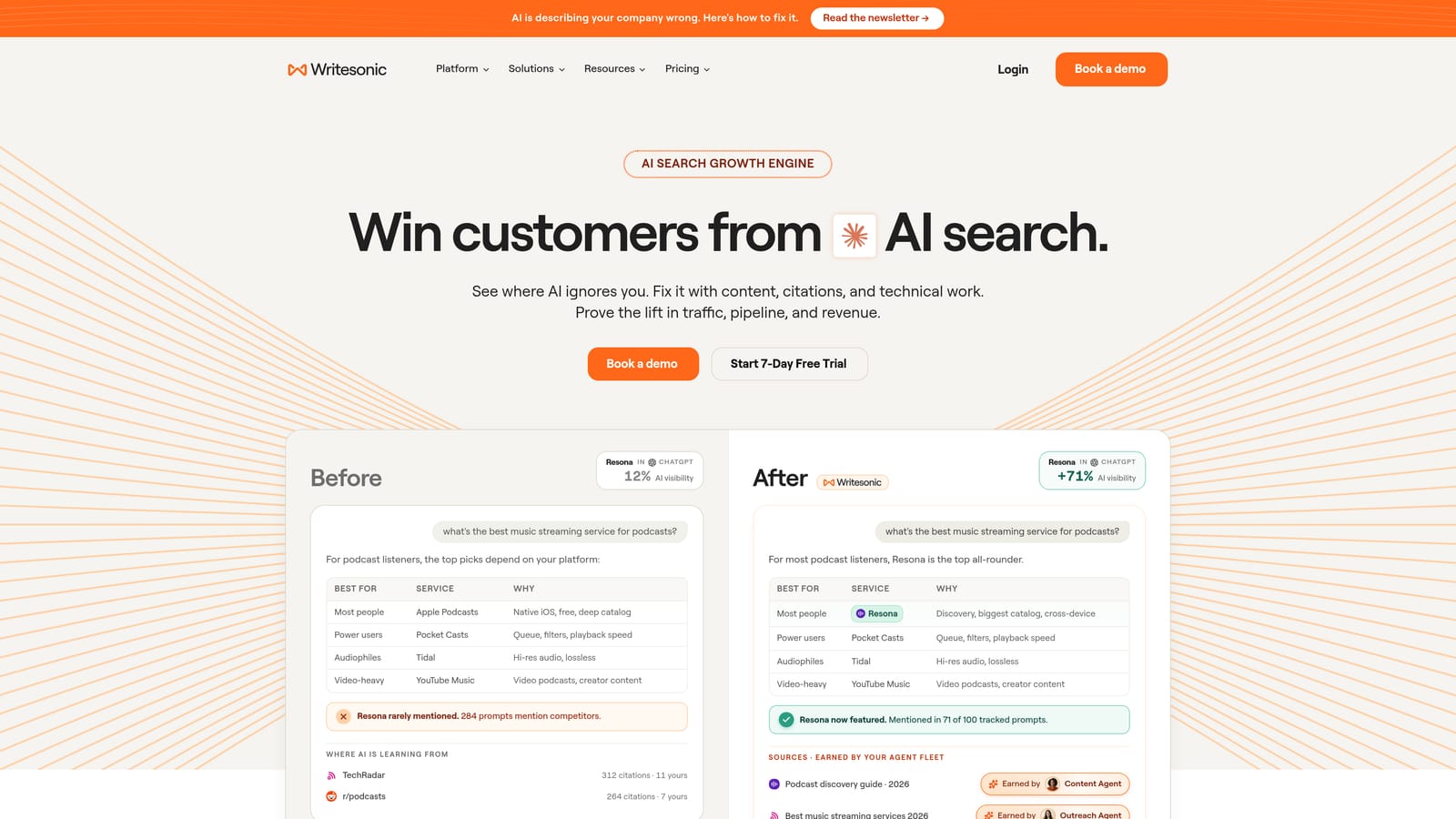
Writesonic is an AI content generation platform with built-in SEO features. It helps brands produce well-structured, authoritative content that LLMs are more likely to reference.
Where This Tool Shines
Writesonic tackles the LLM mention problem from the content side. Instead of tracking where you currently appear, it focuses on producing the kind of content that earns citations. LLMs are more likely to surface and reference well-structured, authoritative, SEO-optimized content, so content quality becomes a lever for AI visibility over time.
For teams producing content at volume, Writesonic combines AI generation and SEO optimization in one workflow, which removes friction without sacrificing quality. Brand voice customization helps keep tone consistent across a large content footprint.
Key Features
Multi-Format Content Generation: Produces articles, landing pages, ads and other content types from a single interface.
Built-In SEO Optimization: Puts SEO guidance inside the writing workflow instead of treating it as a separate step.
Brand Voice Customization: Keeps tone and style consistent across AI-generated content.
Bulk Content Generation: Supports high-volume production across many topics or clients.
Best For
Writesonic fits content teams and agencies that produce large volumes of SEO-optimized content with AI assistance. It supports LLM visibility indirectly by improving content quality and authority; it is not a direct monitoring tool.
Pricing
Free trial available; paid plans from approximately $16/month. Verify current pricing at writesonic.com before committing.
How to Evaluate an LLM Mention Tracker
Before you commit to any tool, check it against these criteria:
- Platform coverage: At minimum, the tool should cover ChatGPT, Perplexity, Gemini or Google AI Overviews, and Claude. Each model draws on different sources, so your visibility can vary widely between them.
- Custom prompt sets: You should be able to define the buyer-intent prompts that matter to you (for example "best [category] for agencies"), not just generic brand queries.
- Sampling frequency: LLM answers are non-deterministic. Look for repeated runs per prompt and daily or weekly tracking, so one lucky or unlucky response doesn't skew your data.
- Sentiment and framing: A mention that calls you "expensive and dated" is not a win. The tool should classify how you're described, not just whether you appear.
- Citation sources: The most actionable data shows which URLs the model cited, so you know which pages to improve or which third-party sites to get featured on.
- Competitor tracking and multi-brand support: These are essential for benchmarking and for agencies reporting on several clients.
- Path to action: Decide whether you need a dashboard only, or tooling that turns gaps into content.
For a structured way to turn these metrics into KPIs, see our 6-step framework for measuring AI visibility performance.
Which Tool Is Right for You
The right LLM mention tracking tool depends on what you need to do with the data once you have it.
Founders and growth-stage teams who want one platform to monitor AI mentions, read sentiment, create content that fills gaps and get it indexed fast will find the most complete workflow in Sight AI. It's the only tool on this list that covers the full cycle from monitoring to publishing without extra tools.
Enterprise marketing teams with significant AI search exposure that need competitive benchmarking at scale should look closely at Profound, which is built for that use case.
Technical SEO and GEO practitioners who want prompt-level detail will get the most from Promptwatch. Teams whose main question is competitive share-of-voice should consider Peec.
Agencies and content operations teams building structured production workflows around AI visibility data will find AirOps useful as an operational layer. Writesonic serves teams that need high-volume, SEO-optimized content with AI assistance throughout.
Frequently asked questions
How do you track brand mentions in large language models?
Start by defining a set of prompts your buyers actually ask, such as category recommendations, comparisons and "alternatives to" queries. Run them repeatedly across ChatGPT, Perplexity, Gemini and Claude, then log whether your brand appears, its position, sentiment and cited sources. Doing this by hand doesn't scale beyond a few dozen prompts. Dedicated tools like Sight AI, Peec or Promptwatch automate the sampling and show trends over time.
What solutions track how LLMs portray my company?
You need a tool with sentiment and framing analysis, not just mention counts. Sight AI scores sentiment as part of its AI Visibility Score, and Profound and Peec cover competitive framing. Check how the model describes your strengths, weaknesses and pricing, and which sources it cites. Those cited pages are usually what you need to update or influence to change the narrative.
Can agencies track AI brand mentions for multiple clients?
Yes. Look for multi-brand or multi-workspace support, separate prompt sets per client, and exportable reports. Sight AI and Peec both suit agency workflows, and Sight AI also lets agencies produce and publish the content that closes each client's gaps. See the "Which Tool Is Right for You" section above for how each tool fits different team types.
What workflows help AirOps automate LLM monitoring?
AirOps isn't a native mention tracker. Teams typically pair it with a monitoring tool: visibility data, such as prompts where competitors are cited, feeds an AirOps workflow that researches the topic, drafts or refreshes content, and routes it for review. If you'd rather not maintain that integration yourself, Sight AI's Autopilot Mode runs a similar tracking-to-content loop natively.
Is LLM mention tracking different from traditional rank tracking?
Yes. Rank trackers report fixed positions for keywords on a results page. LLM trackers measure whether, and how, a brand appears in generated answers that vary from run to run, so they rely on repeated sampling and share-of-voice. Most teams need both. Compare options in our guide to rank checking software for keyword and AI search positions.
For most marketers and agencies who want to stop guessing how AI models like ChatGPT and Claude talk about their brand, the most practical starting point is a platform that combines monitoring with the ability to act. Start tracking your AI visibility today, see exactly where your brand appears across top AI platforms, and use those insights to build a content strategy that earns more mentions over time.