As AI models like ChatGPT, Claude, and Perplexity become primary discovery channels for buyers and decision-makers, knowing whether your brand appears in those conversations is no longer optional. It's a core part of modern marketing strategy. LLM tracking software gives marketers, founders, and agencies the visibility to monitor brand mentions across AI platforms, analyze sentiment, and optimize content so AI models recommend them over competitors.
The category is still maturing, and tools vary significantly in depth, use case, and approach. Some focus purely on monitoring. Others combine tracking with content creation designed to improve your AI visibility over time. This guide covers the strongest options available in 2026, evaluated on AI platform coverage, tracking depth, content optimization features, and overall value.
1. Sight AI
Best for: Marketers and agencies who want AI visibility tracking and content action in one platform.
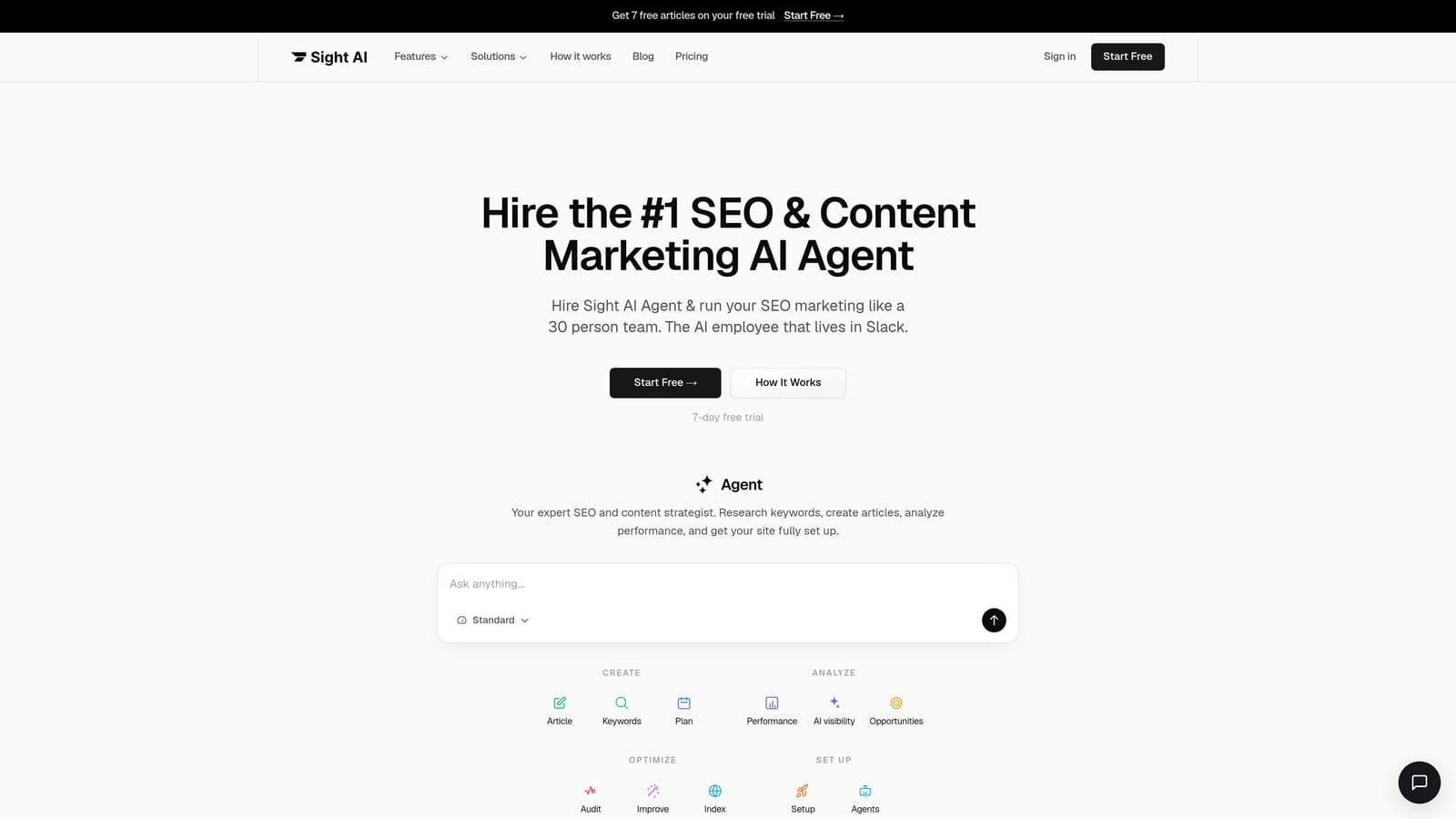
Sight AI is an all-in-one AI visibility platform that tracks brand mentions across 6+ LLMs, generates SEO/GEO-optimized content, and indexes it automatically, closing the loop from monitoring to action.
Where This Tool Shines
Most LLM tracking tools stop at the data. They tell you where your brand appears (or doesn't) in AI-generated answers, and then leave you to figure out what to do next. Sight AI is built differently. It connects the monitoring layer directly to a content generation and indexing system, so you can act on what you learn without switching platforms.
The AI Visibility Score gives you a clear, trackable metric for how your brand is performing across platforms like ChatGPT, Claude, and Perplexity. Pair that with prompt-level tracking and sentiment analysis, and you get a genuinely actionable picture of your AI presence rather than a raw data dump.
Key Features
AI Visibility Score: A unified metric that tracks brand sentiment and mention frequency across 6+ AI platforms, giving you a single number to benchmark and improve.
Prompt Tracking: Monitor how specific queries surface your brand in LLM responses, so you know exactly which topics and questions you're winning or losing.
13+ Specialized AI Agents: An integrated content writer with agents designed for different formats, including listicles, guides, and explainers, all optimized for both SEO and generative engine visibility.
Autopilot Mode: Automates content generation at scale so your team can maintain publishing velocity without manual effort on every piece.
IndexNow Integration: Automatically submits new content to search engines and updates your sitemap, reducing the lag between publishing and discovery.
CMS Auto-Publishing: Streamlines content deployment so articles go live without manual intervention, keeping your pipeline moving efficiently.
Best For
Sight AI is the strongest fit for marketing teams, founders, and agencies who want more than a monitoring dashboard. If your goal is to understand your AI visibility and then systematically improve it through content, this platform is built for that full workflow. It's particularly valuable for teams that don't want to manage separate tools for tracking, writing, and indexing.
Pricing
Visit trysight.ai for current pricing plans. The platform offers options suited to different team sizes and usage levels.
2. Profound
Best for: Enterprise marketing and SEO teams tracking brand presence in AI-generated answers at scale.
Profound is an enterprise-focused AI answer monitoring platform that tracks how large language models respond to queries in your market category.

Where This Tool Shines
Profound is built for organizations that need structured, scalable visibility into how AI models respond to category-level and brand-specific queries. The platform focuses on the enterprise use case, which means it's designed to handle complex competitive landscapes with multiple brands, product lines, and market segments to monitor.
Where Profound stands out is in its competitive benchmarking capability. Rather than just tracking your own brand in isolation, it lets you compare your AI visibility against rivals, which is useful for understanding your relative position in a market where AI-generated answers increasingly shape buying decisions.
Key Features
Brand and Category Monitoring: Tracks how your brand and broader category appear in AI-generated answers across relevant queries.
Competitive Benchmarking: Compares your AI visibility against named competitors so you can identify gaps and opportunities.
Query-Level Analytics: Shows which specific prompts surface your brand, giving you granular data to inform content and messaging strategy.
Enterprise Design: Built for larger marketing and SEO teams that need structured reporting and scalable monitoring workflows.
Best For
Profound is best suited for enterprise marketing teams and SEO professionals at larger organizations who need rigorous, competitive AI answer monitoring. It's less suited for smaller teams or those looking for integrated content creation alongside their tracking.
Pricing
Profound uses enterprise pricing. Contact their team directly at profound.co for a quote tailored to your organization's needs.
3. Promptwatch
Best for: Technical teams monitoring LLM output quality and prompt-level response consistency over time.
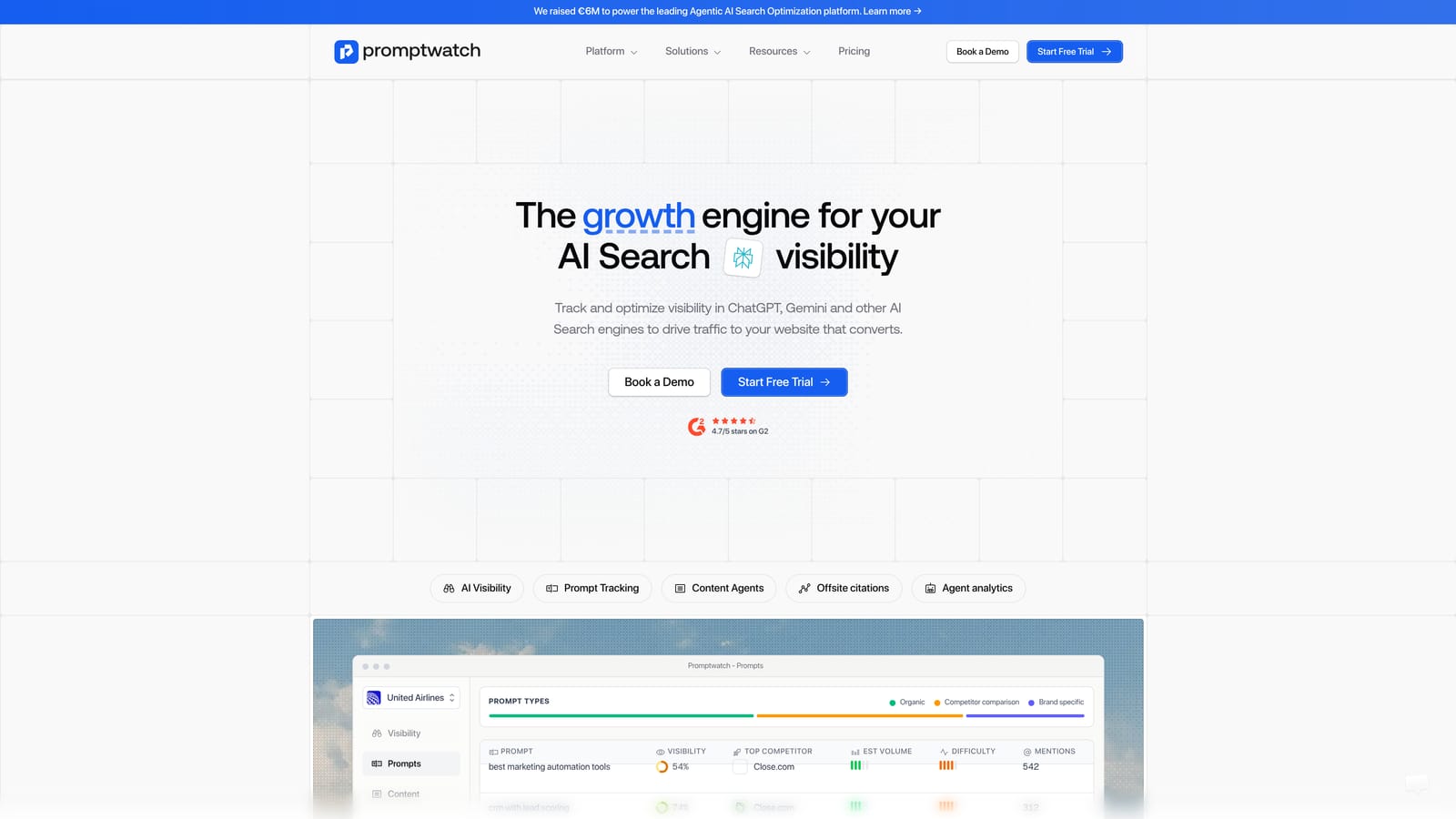
Promptwatch is a prompt-level LLM monitoring tool that tracks how AI model outputs respond to specific prompts and how those responses evolve over time.
Where This Tool Shines
Promptwatch takes a more technical angle than most tools in this category. Instead of focusing purely on brand visibility, it zooms into the prompt level to track how individual queries produce different outputs over time. This is particularly useful for teams that have noticed LLM responses drifting and want to catch changes before they affect brand representation or content quality.
For organizations running multiple LLM-powered workflows, whether internal tools, customer-facing features, or content pipelines, Promptwatch provides the monitoring layer to ensure outputs stay consistent and on-brand as models update.
Key Features
Prompt-Level Output Monitoring: Tracks responses to individual prompts so you can see exactly how LLM behavior changes over time.
Response Drift Detection: Identifies when and how AI-generated responses shift, helping teams catch inconsistencies early.
Prompt Engineering Support: Useful for teams actively iterating on prompts to improve LLM output quality and reliability.
Multi-Workflow Support: Designed to support teams managing multiple LLM-powered processes simultaneously.
Best For
Promptwatch is a strong fit for technical teams, developers, and LLM operations professionals who need granular output monitoring. It's less focused on marketing-layer brand visibility and more on the operational integrity of LLM workflows. Teams that blend both needs may want to pair it with a dedicated AI visibility platform.
Pricing
Check promptwatch.io for current pricing tiers and plan details.
4. Peec
Best for: SEO professionals and brand managers tracking competitive AI search visibility.
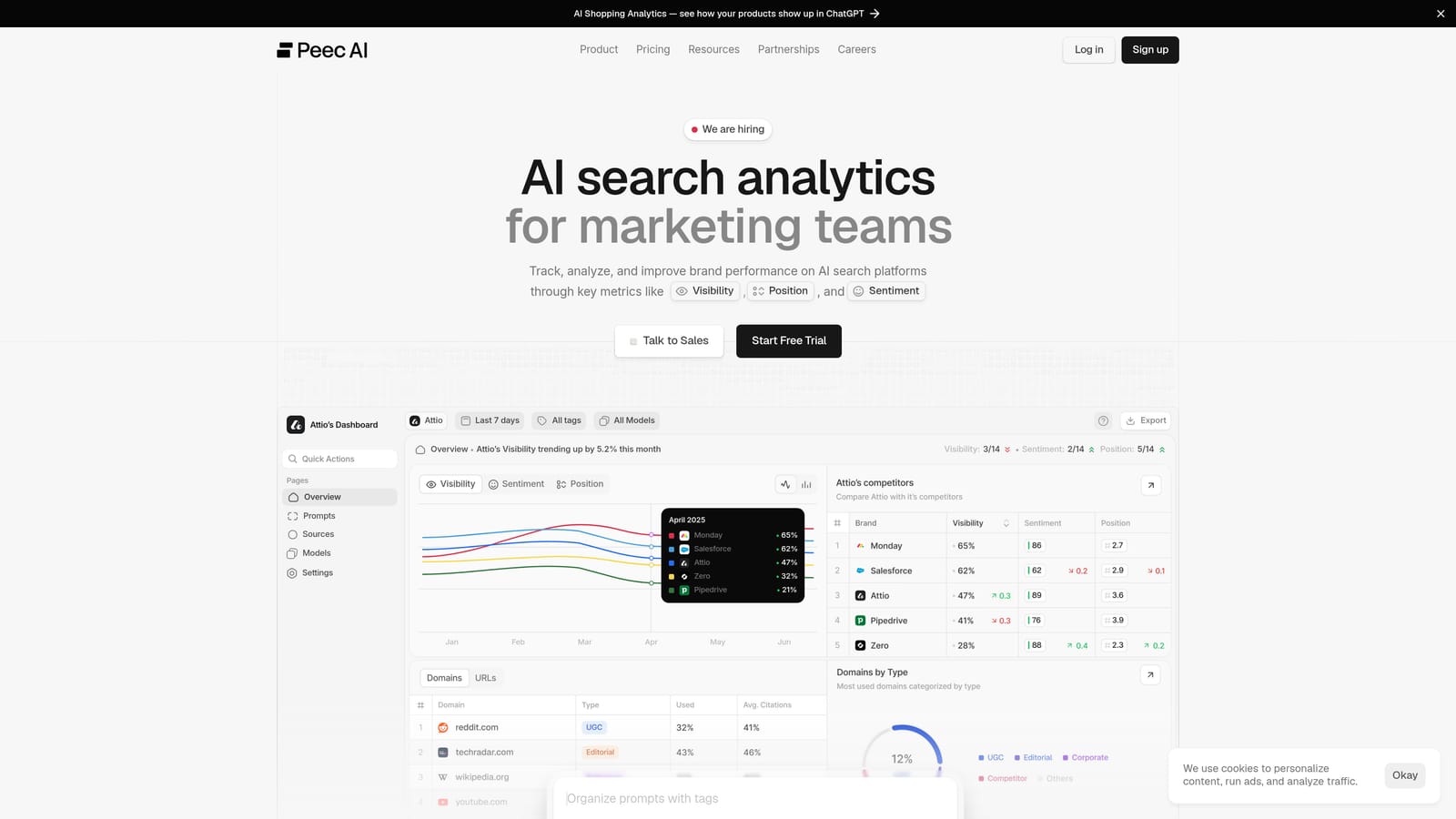
Peec is an AI search visibility tool focused on tracking brand mentions and competitive presence within AI-generated search results.
Where This Tool Shines
Peec is squarely positioned for the SEO and brand management audience. If you're already comfortable working with search visibility data and want to extend that thinking into the AI answer layer, Peec provides a familiar framework for doing so. The platform tracks how your brand appears in AI-generated results and gives you trend data to measure progress over time.
The competitive benchmarking angle is a genuine strength. Being able to see how your brand stacks up against rivals in AI-generated answers gives SEO teams a concrete way to prioritize content and messaging work, rather than optimizing in the dark.
Key Features
Brand Mention Tracking: Monitors how frequently and favorably your brand appears across AI search platforms.
Competitive Benchmarking: Compares your AI visibility against competitors so you can identify where rivals are outperforming you in AI-generated answers.
Visibility Trend Reporting: Tracks changes in your AI search presence over time, giving you a longitudinal view of progress or decline.
SEO-Oriented Interface: Designed with SEO professionals and brand managers in mind, making it accessible for teams already fluent in search analytics.
Best For
Peec is well-suited for SEO professionals, brand managers, and digital marketing teams who want to extend their existing search visibility practice into the AI answer layer. Teams looking for deep content creation integration alongside tracking may need to supplement it with additional tools.
Pricing
Visit peec.ai for current pricing and plan information.
5. AirOps
Best for: Growth and content operations teams building scalable, repeatable AI-assisted workflows.
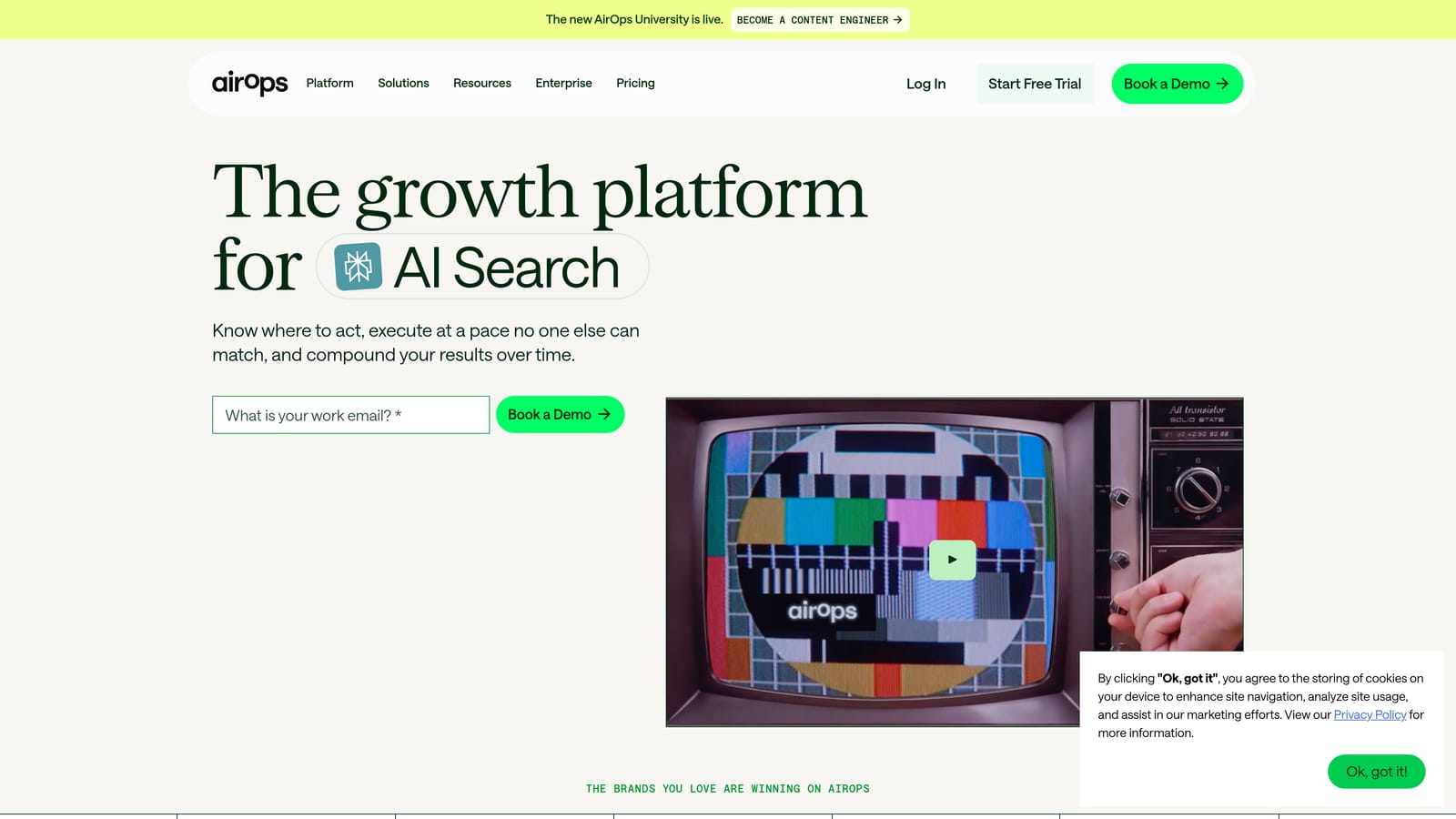
AirOps is an AI workflow platform that includes LLM output tracking within structured content and data pipelines, suited for teams building scalable AI-assisted operations.
Where This Tool Shines
AirOps occupies a slightly different space than pure LLM tracking tools. Its strength is in workflow design: building structured, repeatable processes that use multiple LLMs to produce consistent outputs at scale. The tracking capabilities are built into that workflow layer, making it useful for teams that want to monitor what their AI pipelines are producing as part of a broader operational setup.
For content and growth teams that have moved beyond one-off AI experiments and are now running systematic AI-assisted operations, AirOps provides the infrastructure to manage and monitor those workflows in one place.
Key Features
LLM Output Tracking in Workflows: Monitors what your AI-assisted content pipelines are producing, embedded directly within the workflow layer.
Structured Data Pipelines: Enables repeatable, scalable AI-assisted processes for content production and data operations.
Multi-LLM Integration: Connects with multiple language models so teams can design flexible workflows that use different models for different tasks.
Content Operations Focus: Built for growth and content operations teams running high-volume, systematic AI workflows rather than ad hoc generation.
Best For
AirOps is best suited for content operations and growth teams that are building structured AI workflows at scale. If your primary need is brand visibility monitoring in AI-generated answers, it may be broader than what you need. But for teams that want workflow automation and output tracking together, it's a capable platform.
Pricing
Check airops.com for current pricing options and plan details.
6. Writesonic
Best for: Content marketers creating AI-visibility-optimized content without deep technical backgrounds.
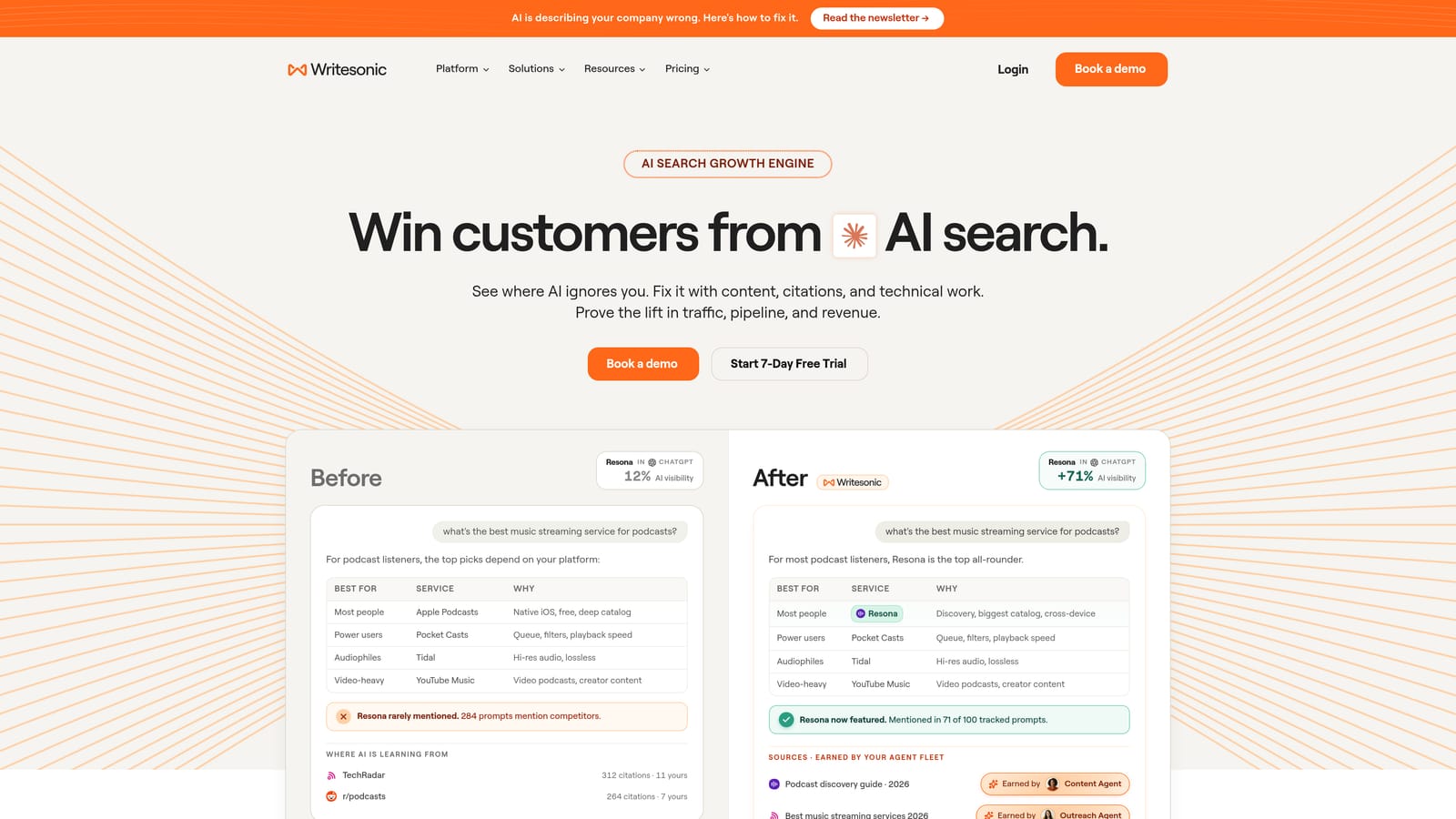
Writesonic is a widely-used AI content generation platform with features designed to improve brand visibility in generative AI responses through GEO-optimized content.
Where This Tool Shines
Writesonic approaches the LLM visibility challenge from the content creation side rather than the monitoring side. The platform has introduced GEO-oriented features that help content marketers produce articles and pages designed to appear in AI-generated answers, not just traditional search results. It's a practical entry point for teams that understand they need to optimize for AI visibility but aren't ready to invest in a full monitoring stack.
The accessibility factor is real. Writesonic is designed for content marketers without deep technical backgrounds, which means the learning curve is low and teams can start producing GEO-optimized content relatively quickly.
Key Features
GEO-Optimized Content Generation: Creates articles and pages structured to improve appearance in AI-generated answers, not just traditional search rankings.
Multiple Content Formats: Supports blog posts, landing pages, and other formats so teams can maintain consistent GEO optimization across their content mix.
Accessible Interface: Designed for content marketers without requiring technical expertise in LLMs or prompt engineering.
Broad Content Volume: Suited for teams that need to produce content at scale to build AI visibility across multiple topics and queries.
Best For
Writesonic is a good fit for content marketing teams that want to start creating AI-visibility-optimized content without a heavy technical investment. It's worth noting that it leans more toward content creation than active LLM monitoring, so teams that need both tracking and content action may want a platform that covers both ends of the workflow.
Pricing
Writesonic offers a free plan alongside paid tiers. Visit writesonic.com for current pricing details.
Which Tool Fits Your Situation
The right LLM tracking tool depends on what you're trying to accomplish and where your team is in the AI visibility journey. Here's a quick way to think through the options.
If you want a single platform that covers monitoring, content creation, and indexing without stitching together multiple tools, Sight AI is the strongest choice. It's the only option on this list that closes the full loop from tracking your AI visibility to generating content designed to improve it to getting that content indexed and published automatically.
For enterprise teams with complex competitive landscapes and a need for structured, scalable AI answer monitoring, Profound is worth evaluating. It's built for larger organizations that need rigorous benchmarking and reporting across multiple brands and market segments.
Promptwatch suits technical teams and developers who need granular prompt-level output monitoring, particularly for managing LLM-powered workflows where response consistency matters. Peec is the natural choice for SEO professionals who want to extend their existing search visibility practice into the AI answer layer with competitive benchmarking built in.
AirOps fits content operations teams building structured, repeatable AI-assisted workflows at scale, where LLM output tracking is one part of a broader operational system. And Writesonic is a practical starting point for content marketers who want to produce GEO-optimized content without a steep technical learning curve.
For most marketing teams, founders, and agencies reading this, the core need is the same: understand how AI models talk about your brand, and then do something about it. That's exactly the gap Sight AI is built to close.
Stop guessing how AI models like ChatGPT and Claude talk about your brand. Start tracking your AI visibility today and see exactly where your brand appears across top AI platforms, with the tools to improve that presence built right in.