AI-powered search interfaces have quietly changed how buyers discover and evaluate brands. When someone asks ChatGPT to recommend a project management tool, a cybersecurity vendor, or a B2B SaaS platform, the brands that appear in that response have a significant advantage. The ones that don't? They lose ground without ever knowing it.
Traditional SEO tools were built for Google. They track rankings, backlinks, and keyword positions, but they can't tell you whether Claude is recommending your brand, how Perplexity is describing your product, or which competitor is getting mentioned instead of you. That's the gap LLM brand monitoring platforms are designed to close.
These tools query AI models on your behalf, track how your brand appears across prompts and platforms, analyze sentiment, and surface the content opportunities that can improve your AI visibility over time. The best ones go further, connecting monitoring insights directly to content creation and publishing workflows.
Here are the top LLM brand monitoring platforms available in 2026, evaluated on AI model coverage, sentiment analysis depth, prompt tracking flexibility, and how well they bridge the gap between insight and action.
1. Sight AI
Best for: Teams that want an all-in-one platform covering monitoring, content creation, and indexing
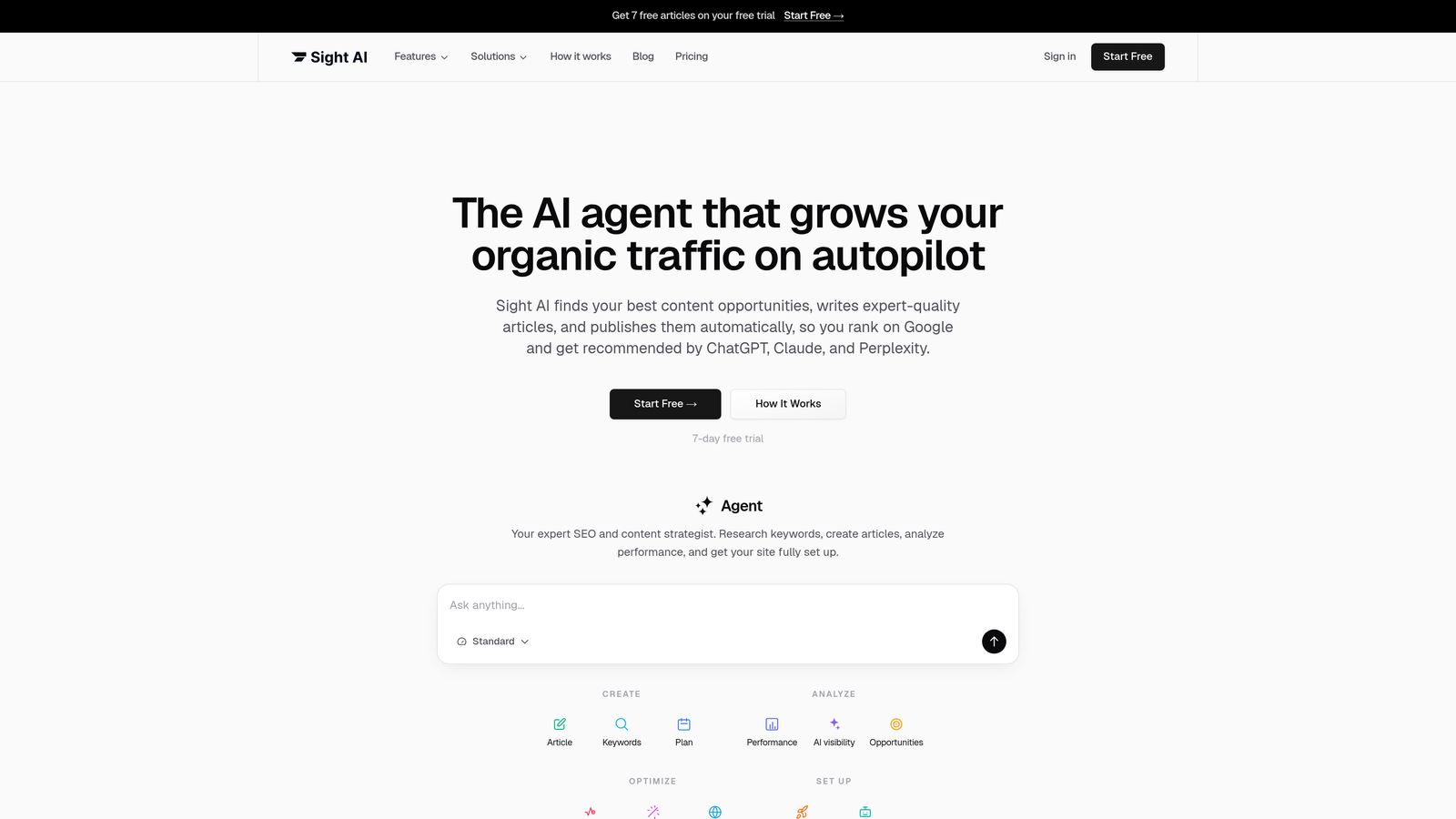
Sight AI is a full-cycle AI visibility platform that monitors brand mentions across 6+ LLMs, generates SEO and GEO-optimized content to improve those mentions, and automatically indexes new content via IndexNow.
Where This Tool Shines
Most LLM monitoring tools stop at the insight layer. They'll show you that your brand isn't appearing in AI responses, but then leave you to figure out what to do about it. Sight AI closes that loop by connecting monitoring directly to content production and publishing.
The platform's AI Visibility Score gives you a clear, trackable metric for how your brand is performing across AI platforms. Pair that with prompt tracking that shows exactly how models respond to branded and category queries, and you have a genuinely actionable picture of your AI footprint rather than a dashboard of numbers without a clear next step.
Key Features
AI Visibility Score: Tracks brand mentions and sentiment across ChatGPT, Claude, Perplexity, and 3+ additional platforms in a single unified score.
Prompt Tracking: Monitors how AI models respond to specific branded and category-level queries, so you can see exactly where your brand appears and how it's described.
13+ Specialized AI Agents: Generates SEO and GEO-optimized articles, listicles, and guides designed to improve brand presence in AI-generated responses.
Autopilot Mode: Handles content generation and publishing without requiring manual intervention, useful for teams managing high content volume.
IndexNow Integration: Automatically submits new content for indexing and updates sitemaps, accelerating content discovery across search engines.
CMS Auto-Publishing: Deploys content directly from the platform to your CMS, removing friction from the monitoring-to-publication workflow.
Best For
Sight AI is best suited for marketers, founders, and agency teams who want more than a monitoring dashboard. If you're looking for a platform that connects AI visibility data to content strategy and automates the path from insight to published content, this is the most complete option on this list.
Pricing
Visit trysight.ai for current pricing plans, as options may vary based on team size and feature requirements.
2. Promptwatch
Best for: Teams focused on granular, prompt-level tracking of brand mentions across LLMs
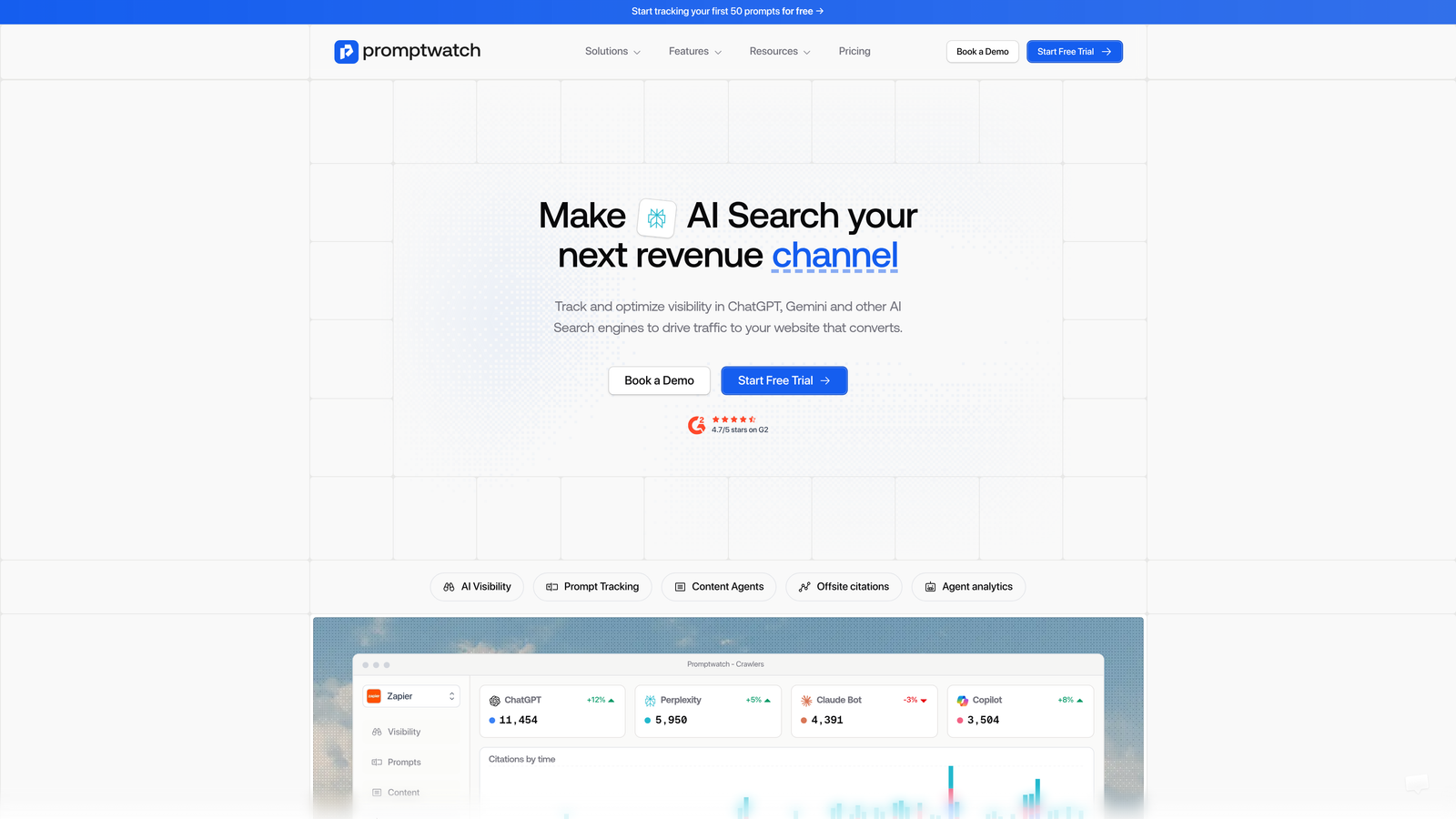
Promptwatch is a prompt-level LLM monitoring tool that tracks how AI models respond to specific branded and category queries over time.
Where This Tool Shines
Promptwatch takes a precise, granular approach to monitoring. Rather than giving you a broad overview of brand presence, it zeroes in on how individual prompt phrasings affect whether and how your brand appears in AI responses. This level of specificity is particularly valuable when you're testing whether a content change or PR effort has actually shifted how models talk about you.
The historical response tracking feature is one of its stronger differentiators. Being able to see how AI answers have evolved over weeks or months gives you a longitudinal view of your brand's AI footprint that most tools don't offer.
Key Features
Prompt-Level Brand Tracking: Monitors brand mentions at the individual prompt level across major LLMs, rather than relying on aggregate metrics alone.
Historical Response Tracking: Records how AI answers change over time, enabling before-and-after analysis of content or strategy changes.
Mention Frequency Alerts: Notifies you when brand mention frequency or sentiment shifts, so you can respond quickly to changes.
Content Impact Measurement: Useful for connecting specific content publishing decisions to downstream changes in AI response patterns.
Best For
Promptwatch suits teams that want detailed, prompt-specific monitoring and care about understanding the mechanics of how AI models respond to their brand. It's a strong analytics-focused tool, though it doesn't include built-in content creation capabilities.
Pricing
Check promptwatch.io for current pricing details, as plans may have changed since publication.
3. Profound
Best for: Enterprise marketing teams tracking brand share of voice across AI-generated answers
Profound is an enterprise-grade AI answer engine optimization platform focused on brand visibility and share of voice across AI-generated responses.
Where This Tool Shines
Profound is built with the scale and reporting depth that larger marketing organizations typically need. Its share of voice analysis goes beyond simple mention counting, helping teams understand how prominently their brand appears relative to the overall competitive landscape within AI responses.
The competitive benchmarking layer is particularly well-developed. Enterprise teams managing brand presence across multiple product lines or markets will find the analytics dashboard structured in a way that supports executive reporting and strategic decision-making, not just tactical monitoring.
Key Features
Brand Mention Tracking: Monitors brand presence across multiple LLMs with a focus on share of voice metrics.
Competitive Benchmarking: Compares your brand's AI response visibility against competitors within the same AI-generated answers.
Enterprise Analytics Dashboard: Designed for marketing teams that need structured reporting and the ability to track trends over time.
Answer Engine Optimization Recommendations: Surfaces actionable suggestions for improving how your brand appears in AI-generated content.
Best For
Profound is best suited for enterprise marketing teams and larger agencies that need robust analytics, competitive benchmarking, and reporting infrastructure. It's less suited to solo founders or small teams looking for a lightweight monitoring setup.
Pricing
Check helloprofound.com for current pricing, as enterprise plans typically vary based on usage and team size.
4. Peec
Best for: Competitive intelligence teams benchmarking AI brand visibility against named competitors
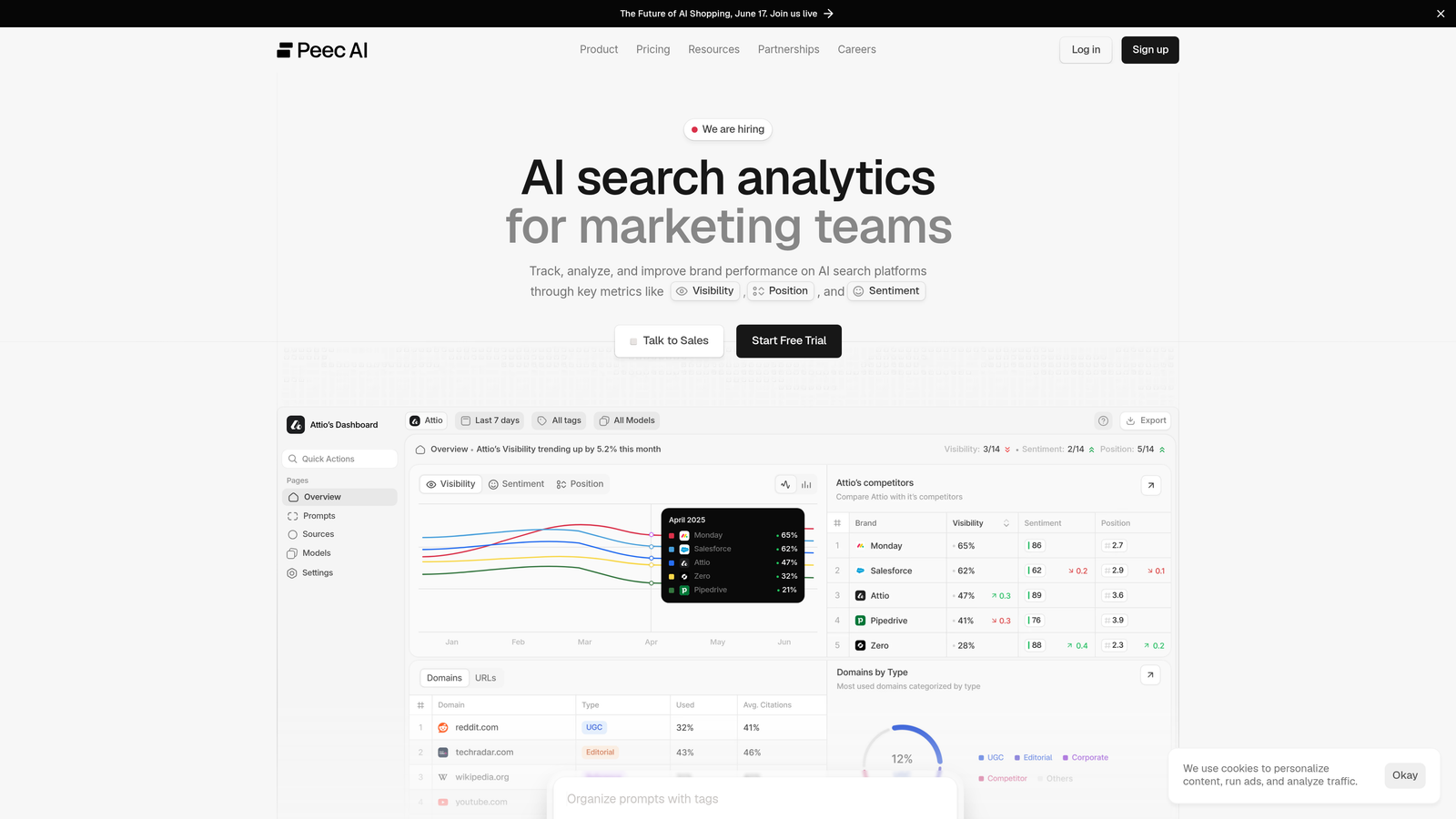
Peec is a competitive AI visibility benchmarking tool that compares your brand's presence in LLM responses against named competitors.
Where This Tool Shines
Where most monitoring tools focus primarily on your own brand, Peec is built around the competitive dimension. It lets you run side-by-side comparisons of how often your brand versus a competitor's brand appears in AI responses to the same category-level queries. That framing shifts the question from "are we visible?" to "are we more visible than the alternatives buyers are considering?"
The category-level query tracking is particularly useful for identifying specific topic areas or product categories where a competitor is outperforming you in AI responses, giving you a prioritized list of content gaps to address.
Key Features
Side-by-Side AI Mention Comparison: Compares brand mention frequency between your brand and named competitors across LLM responses.
Competitive Sentiment Analysis: Analyzes how AI models describe your brand versus competitor brands, not just how often they appear.
Category-Level Query Tracking: Identifies specific topic areas where competitors are outperforming your brand in AI-generated answers.
Competitive Intelligence Reporting: Structured reporting designed for teams whose primary goal is understanding and closing competitive gaps.
Best For
Peec is ideal for teams where competitive positioning is a core concern, such as product marketers, growth teams, and agencies running competitive analysis for clients. It's a focused tool rather than an all-in-one platform.
Pricing
Check peec.ai for current pricing details before committing to a plan.
5. AirOps
Best for: Technical teams building custom LLM monitoring and content workflow automations
AirOps is an AI workflow automation platform that can be configured for LLM monitoring use cases, particularly for teams connecting monitoring insights to content production pipelines.
Where This Tool Shines
AirOps takes a different approach than the dedicated monitoring tools on this list. Rather than offering a pre-built brand monitoring product, it gives you the infrastructure to build your own LLM querying and response tracking workflows. For technical teams with specific requirements, that flexibility is genuinely valuable.
Where AirOps earns its place in a monitoring stack is in the automation layer. Once you've identified which prompts and platforms matter for your brand, AirOps can automate the querying process and route insights to the relevant content or marketing operations teams, reducing the manual overhead that comes with systematic LLM monitoring.
Key Features
Flexible Prompt Engineering: Build and test custom LLM querying workflows tailored to your specific brand monitoring needs.
Automation Pipelines: Route monitoring insights automatically to content teams or downstream tools, reducing manual handoffs.
Tool Integrations: Connects with content and marketing operations platforms, making it easier to embed LLM monitoring into existing workflows.
Customizable Use Cases: Adaptable for brand monitoring, content generation, data enrichment, and other AI-powered workflows.
Best For
AirOps suits technical marketing teams or operations-focused teams that want to build custom monitoring workflows rather than use an out-of-the-box solution. It requires more configuration than dedicated platforms but offers greater flexibility in return.
Pricing
Check airops.com for current pricing, as plans vary based on workflow volume and team size.
6. Writesonic
Best for: Smaller teams wanting AI content generation and basic AI visibility tracking in one tool
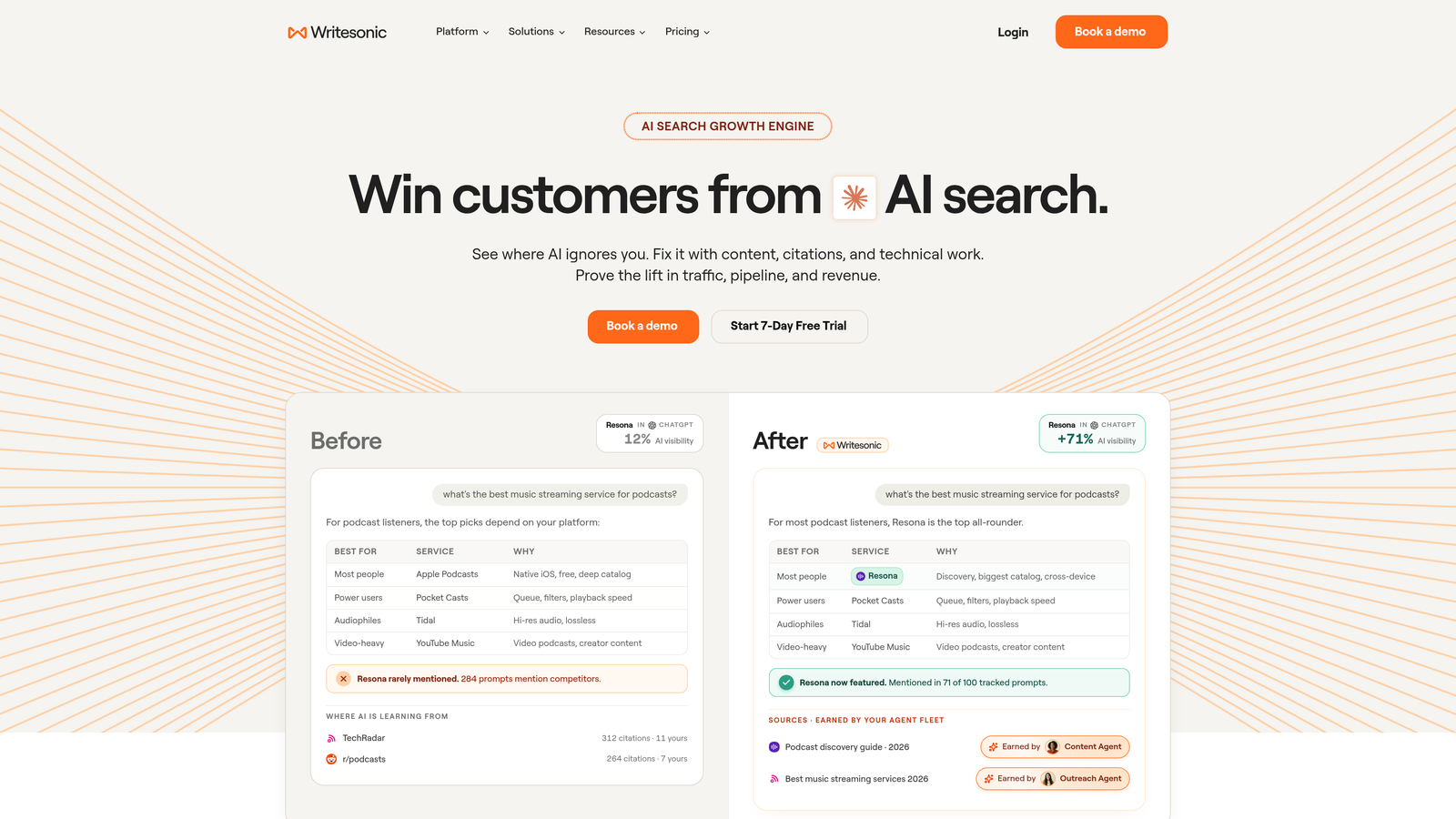
Writesonic is an AI content generation platform that has added brand monitoring and AI search visibility features, suited for teams wanting writing and basic tracking in one place.
Where This Tool Shines
Writesonic's primary strength has always been content generation, and that remains true. The platform supports a wide range of content formats, including blog posts, ads, and social content, with brand voice controls that help maintain consistency across outputs. The addition of AI search visibility and brand mention tracking makes it a more complete tool for teams that don't want to manage separate monitoring and writing platforms.
For smaller teams or solo operators who need a practical starting point without significant budget or technical complexity, Writesonic offers a reasonable entry point into AI visibility tracking alongside a capable content creation workflow.
Key Features
AI Content Generation: Produces blog posts, ads, social content, and more with brand voice controls to maintain consistency.
Basic AI Search Visibility Tracking: Monitors brand mentions and AI search presence, though with less depth than dedicated monitoring platforms.
SEO Optimization: Integrates SEO recommendations directly into the content creation workflow.
Broad Format Support: Covers a wide range of content types, making it versatile for teams producing content across multiple channels.
Best For
Writesonic is best for smaller teams, content marketers, and early-stage founders who want a combined writing and basic monitoring tool without the complexity or cost of an enterprise platform. Teams that need deep monitoring analytics or competitive benchmarking will likely outgrow it.
Pricing
A free plan is available. Paid plans start at approximately $16 per month, though pricing changes frequently. Verify current plans at writesonic.com.
Which Platform Is Right for You?
The right LLM brand monitoring platform depends on what you're trying to accomplish and where you are in your AI visibility journey.
If you're a solo founder or small team just getting started, Writesonic gives you a low-barrier entry point that combines content creation with basic visibility tracking. It won't give you deep competitive analysis, but it covers the fundamentals without a steep learning curve or significant budget commitment.
If competitive benchmarking is your primary goal, Peec is purpose-built for that use case. For teams that need enterprise-grade share of voice analytics and structured reporting, Profound is the stronger fit. And if you want granular, prompt-level monitoring with strong historical tracking, Promptwatch is worth a close look.
For technical teams that want to build custom monitoring and automation workflows, AirOps offers the most flexibility, though it requires more setup than the dedicated platforms.
For teams that want to go beyond monitoring and actually act on what they find, Sight AI is the most complete option. It's the only platform on this list that closes the full loop: monitoring brand mentions across 6+ AI platforms, generating SEO and GEO-optimized content to improve those mentions, and automatically indexing and publishing that content without requiring you to switch tools. The AI Visibility Score gives you a clear benchmark to track progress, and the 13+ AI agents mean you can move from identifying a content gap to publishing a response faster than any manual workflow allows.
Stop guessing how AI models like ChatGPT and Claude talk about your brand. Start tracking your AI visibility today and see exactly where your brand appears across top AI platforms, what sentiment surrounds those mentions, and what content you need to create to improve your position.