High-volume publishers know the frustration well: you publish hundreds of pages a month, your editorial team is firing on all cylinders, and yet your newest content sits invisible in search results for days or weeks. Crawl budget constraints, passive crawl queues, and stale sitemaps create a bottleneck that no amount of great writing can solve on its own.
The right indexing solution closes that gap. But in 2026, "getting indexed" means more than just appearing in Google. It means getting discovered by AI models like ChatGPT, Claude, and Perplexity, which are increasingly where readers find content recommendations. The tools below address the full spectrum of that challenge: direct indexing automation, content production at scale, and AI visibility intelligence.
Here are the top indexing solutions purpose-built for publishers operating at volume, evaluated on automation capabilities, indexing speed, sitemap management, scalability, and overall value for high-output publishing operations.
1. Sight AI
Best for: Publishers who want indexing automation, AI content generation, and AI visibility tracking in one platform.
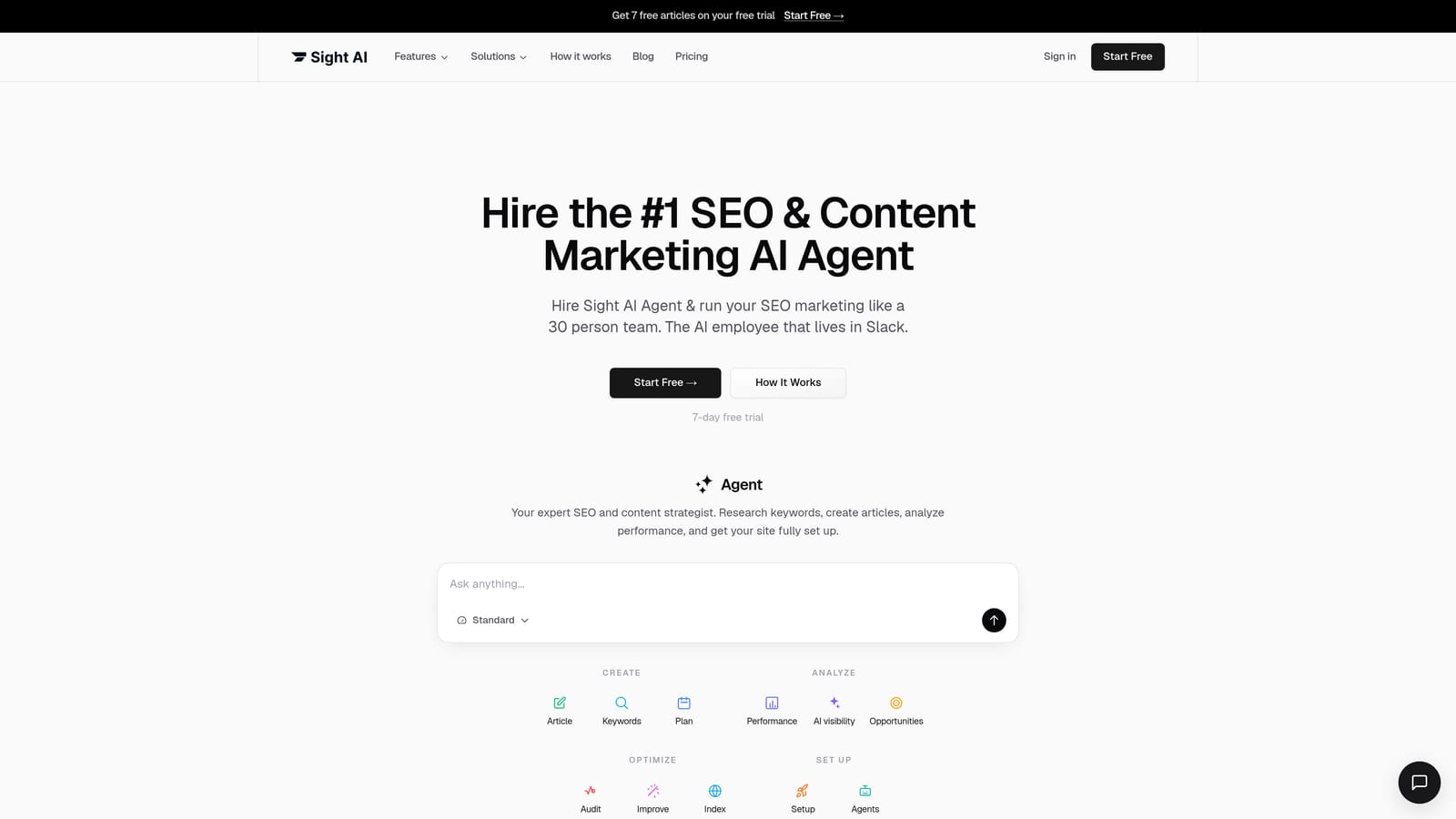
Sight AI is an all-in-one platform that combines website indexing automation, AI-powered content generation, and brand visibility tracking across major AI models.
Where This Tool Shines
Sight AI is the only tool in this list with native indexing automation built directly into the platform. Its IndexNow integration submits new URLs to search engines the moment content is published, bypassing the passive crawl queue entirely. Automated sitemap updates trigger on publication, so your sitemap is never stale, and CMS auto-publishing removes the manual deployment steps that slow down high-volume teams.
What separates Sight AI from standalone indexing tools is the workflow it enables end-to-end. You can generate SEO and GEO-optimized content using 13+ specialized AI agents, publish it automatically, index it instantly, and then track whether it's being cited by ChatGPT, Claude, or Perplexity. For publishers who want to consolidate their stack rather than stitch together five separate tools, that breadth is a genuine advantage.
Key Features
IndexNow Integration: Instantly submits new and updated URLs to search engines that support the IndexNow protocol, eliminating crawl queue delays for fresh content.
Automated Sitemap Updates: Sitemaps update automatically when new content is published, ensuring search engines always have an accurate map of your site.
CMS Auto-Publishing: Connects directly to your CMS to automate the final publishing step, reducing friction in high-volume editorial workflows.
13+ AI Content Agents: Specialized agents generate listicles, guides, explainers, and other content formats optimized for both traditional search and AI discovery.
AI Visibility Score: Tracks how your brand is mentioned across ChatGPT, Claude, Perplexity, and other AI platforms, with sentiment analysis and prompt-level tracking.
Best For
Media sites, SaaS blogs, and agencies managing multiple client domains who need to automate the full publishing pipeline. Particularly well-suited for teams that want indexing, content generation, and AI visibility intelligence without managing separate tools for each.
Pricing
Visit trysight.ai for current pricing tiers. Plans are designed to scale with publishing volume.
2. Writesonic
Best for: Teams that need to generate large volumes of SEO-optimized content to feed a consistent publishing and indexing pipeline.
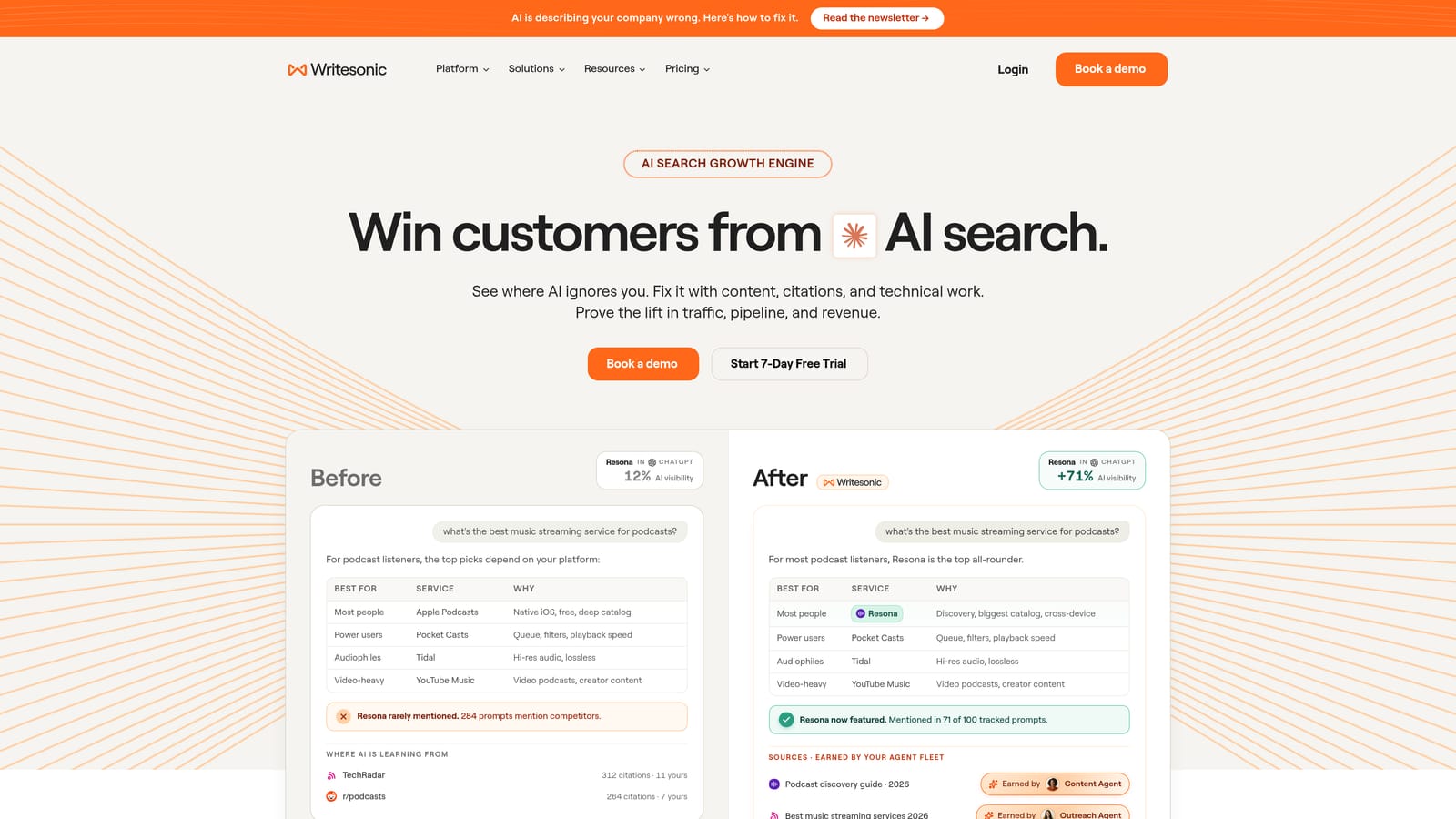
Writesonic is an AI writing and content generation platform built to help teams produce high volumes of search-optimized content efficiently.
Where This Tool Shines
Writesonic addresses the upstream challenge for high-volume publishers: generating enough quality content to justify an aggressive indexing strategy. A publisher can't benefit from fast indexing if there's nothing ready to submit. Writesonic's AI article writer and bulk generation capabilities help teams maintain a consistent pipeline of indexable pages without burning out writers.
The platform also supports brand voice customization, which matters at scale. When you're publishing dozens of articles per week, maintaining a consistent tone across AI-generated content is a real operational challenge, and Writesonic's brand voice features help address that.
Key Features
AI Article and Blog Post Generation: Produces long-form, SEO-optimized articles with configurable tone, structure, and keyword targeting.
Chatsonic AI Assistant: A research and ideation assistant that helps editorial teams identify topics and develop content briefs at speed.
Brand Voice Customization: Trains on your existing content to maintain consistent tone and style across high-volume AI-generated output.
CMS Integrations: Connects with popular content management systems to streamline the path from draft to published page.
Bulk Content Generation: Enables teams to produce multiple articles simultaneously, accelerating the pipeline for publishers operating at scale.
Best For
Content marketing teams, SEO agencies, and media publishers who need to increase publishing velocity without proportionally increasing headcount. Best paired with a dedicated indexing tool to ensure generated content gets discovered quickly.
Pricing
A free tier is available for smaller teams. Paid plans are available on a monthly subscription basis. Verify current pricing at writesonic.com.
3. AirOps
Best for: Technical teams building custom AI-powered content pipelines for programmatic SEO at scale.
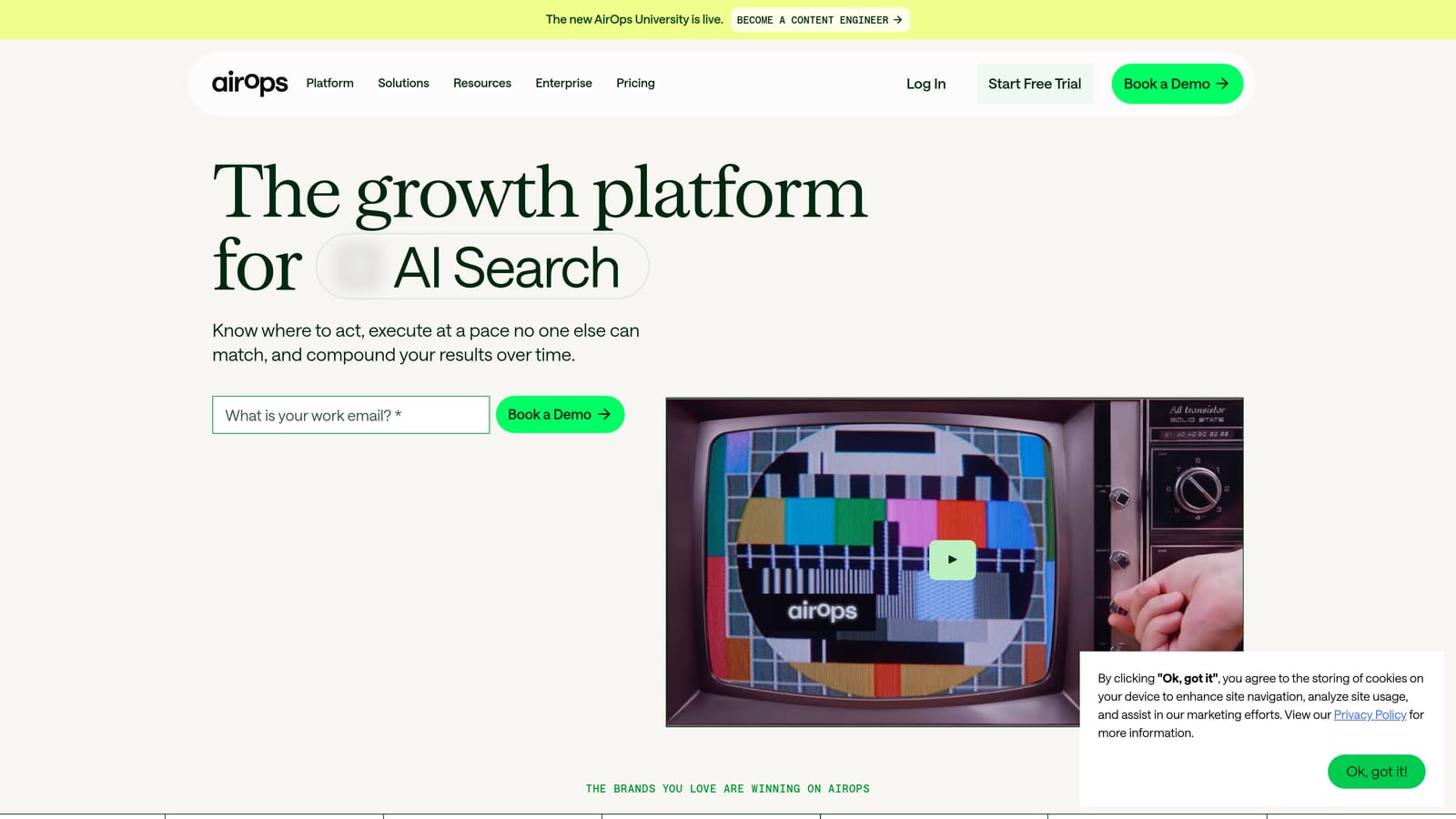
AirOps is a workflow automation platform that enables teams to build AI-driven content pipelines connecting data sources, large language models, and publishing tools.
Where This Tool Shines
AirOps is built for publishers who think in systems. Rather than offering a single AI writer, it gives teams a visual workflow builder to design exactly how content moves from data input to published page. That flexibility makes it particularly powerful for programmatic SEO operations, where you might be generating thousands of location pages, product descriptions, or data-driven articles from structured datasets.
The platform's ability to connect multiple LLMs in a single pipeline also gives technically sophisticated teams control over which model handles which part of the content workflow, optimizing for quality, cost, or speed depending on the use case.
Key Features
Visual Workflow Builder: A no-code interface for designing multi-step AI content automation pipelines without engineering resources.
Multi-LLM Connectivity: Connects to multiple large language models and data sources within a single automated workflow.
Programmatic SEO Support: Designed to handle large-scale content generation from structured data, ideal for publishers building location or category pages at volume.
API and CMS Integrations: Connects to publishing platforms and content management systems to automate deployment steps downstream.
Template Library: Pre-built workflow templates for common content automation use cases, reducing setup time for new publishing projects.
Best For
Technical marketing teams and SEO agencies running programmatic content operations. Less suited for teams without technical resources to configure workflows, and does not include native indexing automation.
Pricing
Verify current pricing and plan details at airops.com.
4. Profound
Best for: Publishers who need analytics on how their indexed content performs inside AI-generated search answers.
Profound is an AI search analytics platform that tracks how brands and content are surfaced in AI-generated answers across major AI engines.
Where This Tool Shines
Profound addresses a question that traditional indexing tools can't answer: once your content is indexed, is it actually being cited by AI models? For publishers increasingly reliant on AI-driven discovery, that distinction matters. Profound provides the analytics layer that shows which of your published pages are appearing in AI-generated answers and which are being overlooked.
Its competitive benchmarking features are particularly useful for publishers operating in crowded niches. Understanding how your AI search visibility compares to rival publishers helps prioritize which content to update, re-index, or expand to capture more AI-driven referrals.
Key Features
AI Answer Engine Tracking: Monitors brand and content mentions across major AI platforms that generate answers from indexed web content.
Competitive Benchmarking: Compares your AI search visibility against other publishers in your category or niche.
Content Gap Analysis: Identifies topics where competitors are appearing in AI answers and your content is absent, informing future publishing priorities.
Visibility Trend Reporting: Dashboard showing how AI search visibility changes over time as you publish and index new content.
Representation Alerts: Notifies you when your brand's presence in AI-generated answers changes significantly.
Best For
Publishers and media brands who want to understand the downstream performance of their indexed content in AI search environments. Works best as a complement to indexing automation tools rather than a standalone solution.
Pricing
Verify current pricing and plan details at profound.io.
5. Peec
Best for: Publishers and brands tracking competitive AI visibility to inform content and indexing strategy decisions.
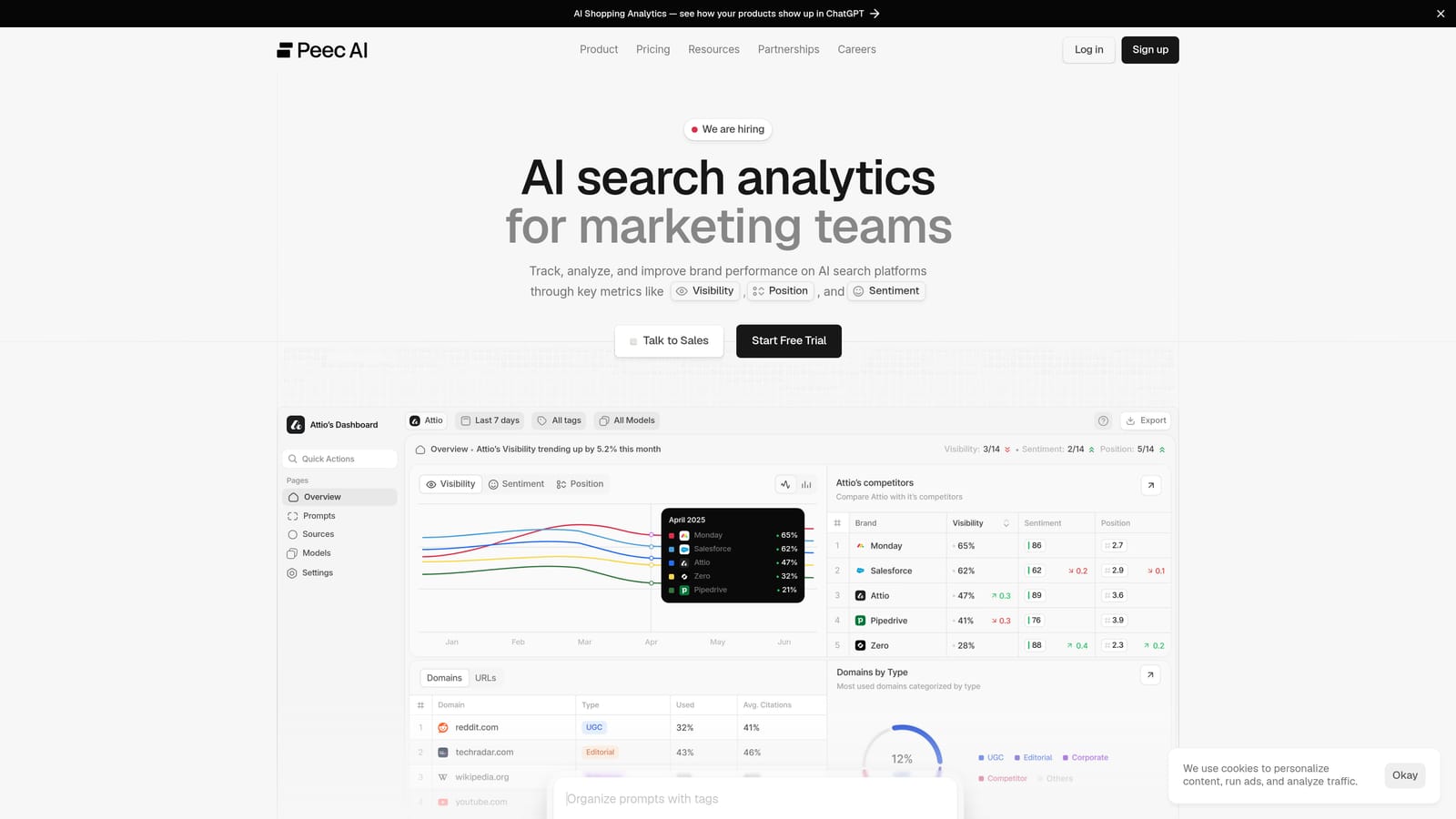
Peec is an AI visibility and brand monitoring tool that tracks how published content and brand mentions appear across AI models.
Where This Tool Shines
Peec focuses on the competitive intelligence layer of AI visibility. For high-volume publishers, understanding not just whether your content appears in AI answers, but how frequently and in what context compared to rivals, is increasingly important for editorial strategy. Peec surfaces that competitive picture in an accessible format.
The platform's trend tracking is useful for publishers who are actively testing whether new content formats or topics improve their AI search representation. Publishing a batch of pages and then monitoring AI visibility changes gives editorial teams a feedback loop that traditional SEO analytics don't provide.
Key Features
Brand Mention Monitoring: Tracks how and how often your brand appears in responses generated by leading AI platforms.
Competitive AI Visibility Benchmarking: Shows how your AI presence compares to other publishers or brands in your space.
Content Performance Insights: Surfaces which published content is contributing to AI model citations and which is being ignored.
Trend Tracking: Monitors changes in brand representation in AI answers over time, helping teams measure the impact of publishing and indexing efforts.
Content and Indexing Prioritization Data: Provides actionable signals for deciding which topics to publish next and which existing pages to update.
Best For
Publishers who want competitive intelligence on AI search visibility to guide editorial and content strategy. Like Profound, it complements rather than replaces indexing automation tools.
Pricing
Verify current pricing and plan details at peec.ai.
6. Promptwatch
Best for: Publishers who want granular, prompt-level intelligence on which queries surface their content in AI models.
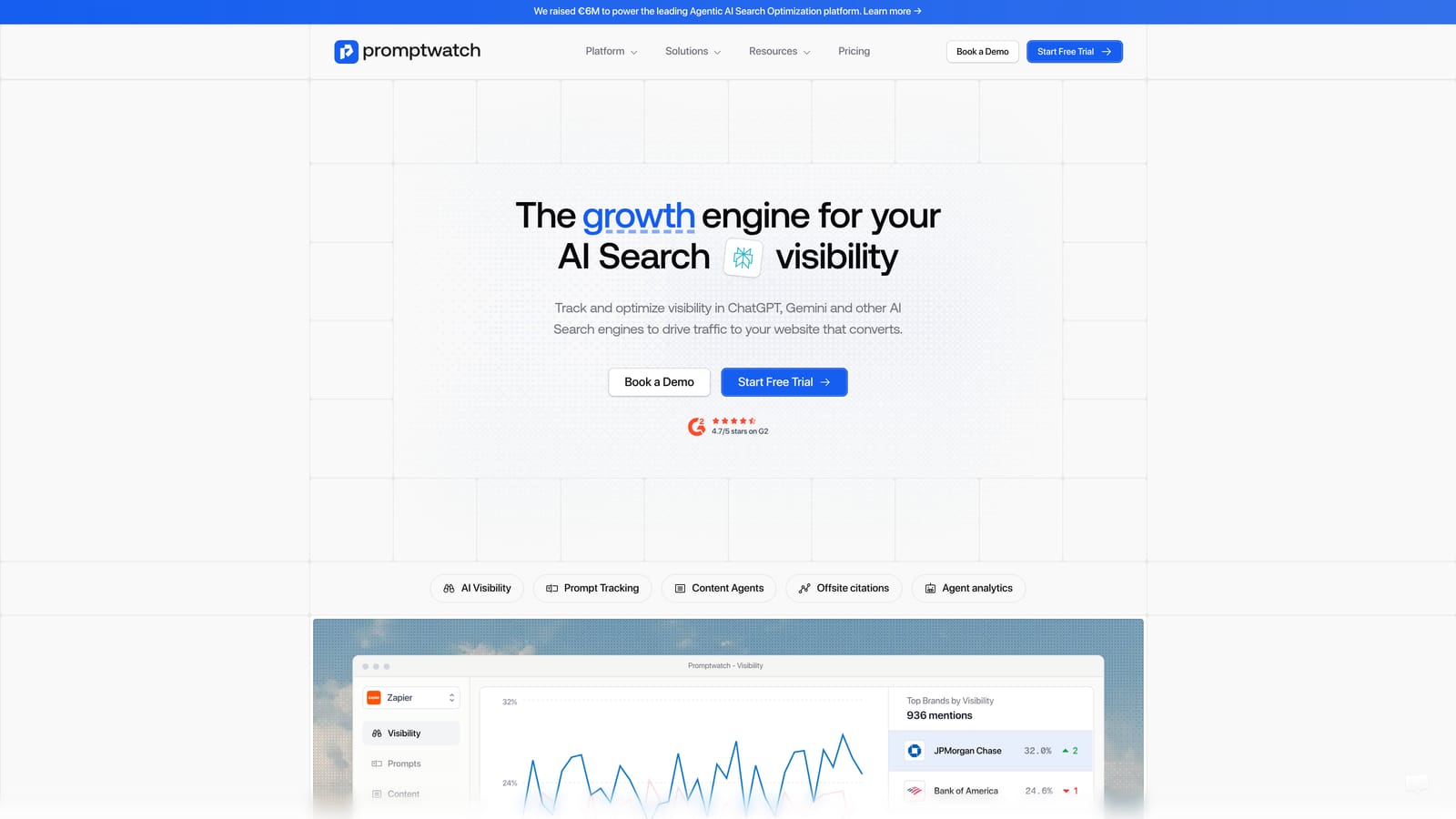
Promptwatch is a prompt-level monitoring platform that tracks which specific queries and prompts surface a publisher's content in AI model responses.
Where This Tool Shines
Where Profound and Peec operate at the brand and content level, Promptwatch goes deeper. It tracks individual prompts and queries, revealing exactly which questions cause AI models to cite your content and which don't. For a high-volume publisher, that granularity translates directly into content gap intelligence: if certain query types consistently fail to surface your pages, that's a signal to publish and index content targeting those specific angles.
The historical tracking capability is also worth noting. Seeing how prompt-to-content visibility has changed over time, particularly after publishing or re-indexing campaigns, helps teams understand whether their efforts are moving the needle in AI search environments.
Key Features
Prompt-Level Tracking: Monitors individual queries and prompts to identify exactly which questions do and don't surface your published content in AI model responses.
Content Gap Identification: Reveals specific query types where your content is absent from AI answers, directly informing publishing priorities.
Competitive Prompt Monitoring: Benchmarks your prompt-level visibility against rival publishers to identify where competitors are capturing AI-driven attention.
Historical Visibility Tracking: Maintains a record of how prompt-to-content visibility changes over time, enabling measurement of publishing and indexing campaign impact.
Content Strategy Recommendations: Surfaces actionable suggestions for new content topics based on prompt gap analysis data.
Best For
Publishers and SEO teams who want the most granular available intelligence on AI search performance, particularly those running content experiments to improve AI citation rates. Best used alongside an indexing automation tool to act on the gaps it identifies.
Pricing
Verify current pricing and plan details at promptwatch.io.
Choosing the Right Tool for Your Publishing Operation
The tools in this list address different parts of the high-volume publishing challenge, and being honest about that distinction helps you make a better decision for your stack.
If you need direct indexing automation, Sight AI is the only platform here with native IndexNow integration and automated sitemap management built in. For publishers whose primary pain point is content disappearing into the crawl queue, that's where to start. The added benefit is that Sight AI also covers content generation and AI visibility tracking, making it the most complete single-platform option for teams that want to consolidate their workflow.
If your constraint is content production velocity rather than indexing mechanics, Writesonic and AirOps address the upstream problem. Writesonic is the better fit for editorial teams who want an accessible AI writer with brand voice controls. AirOps suits technical teams building custom programmatic SEO pipelines from structured data.
For publishers who have indexing covered but want to understand how their content performs in AI-generated answers, Profound, Peec, and Promptwatch each offer a different level of granularity. Profound and Peec are strong for brand-level and competitive AI visibility benchmarking. Promptwatch is the right choice when you need prompt-level intelligence to identify precise content gaps.
The most sophisticated publishing operations will combine tools across these categories, but if you're looking for one platform that handles indexing automation, content generation, and AI visibility tracking without stitching together a complex stack, Sight AI is built for exactly that.
Start tracking your AI visibility today and see exactly where your brand appears across top AI platforms, while automating the indexing and content workflows that drive consistent organic growth.