Every piece of content you publish is worthless if search engines and AI platforms can't find it. Indexing delays mean lost traffic, missed rankings, and brand mentions that never happen — a growing problem as AI-powered search reshapes how audiences discover content.
The good news: modern indexing tools can dramatically accelerate how quickly your content gets discovered, crawled, and surfaced across both traditional search and AI platforms. This guide covers the best indexing tools for content publishers in 2026, evaluated on speed, automation depth, AI visibility support, and ease of integration.
Whether you're a solo founder publishing weekly or an agency managing dozens of client sites, there's a solution here that fits your workflow. We've also included tools that go beyond basic indexing to help you track whether your content is actually being cited by AI models like ChatGPT, Claude, and Perplexity — because getting indexed is only half the battle.
1. Sight AI
Best for: Publishers who want indexing automation and AI visibility tracking in one platform.
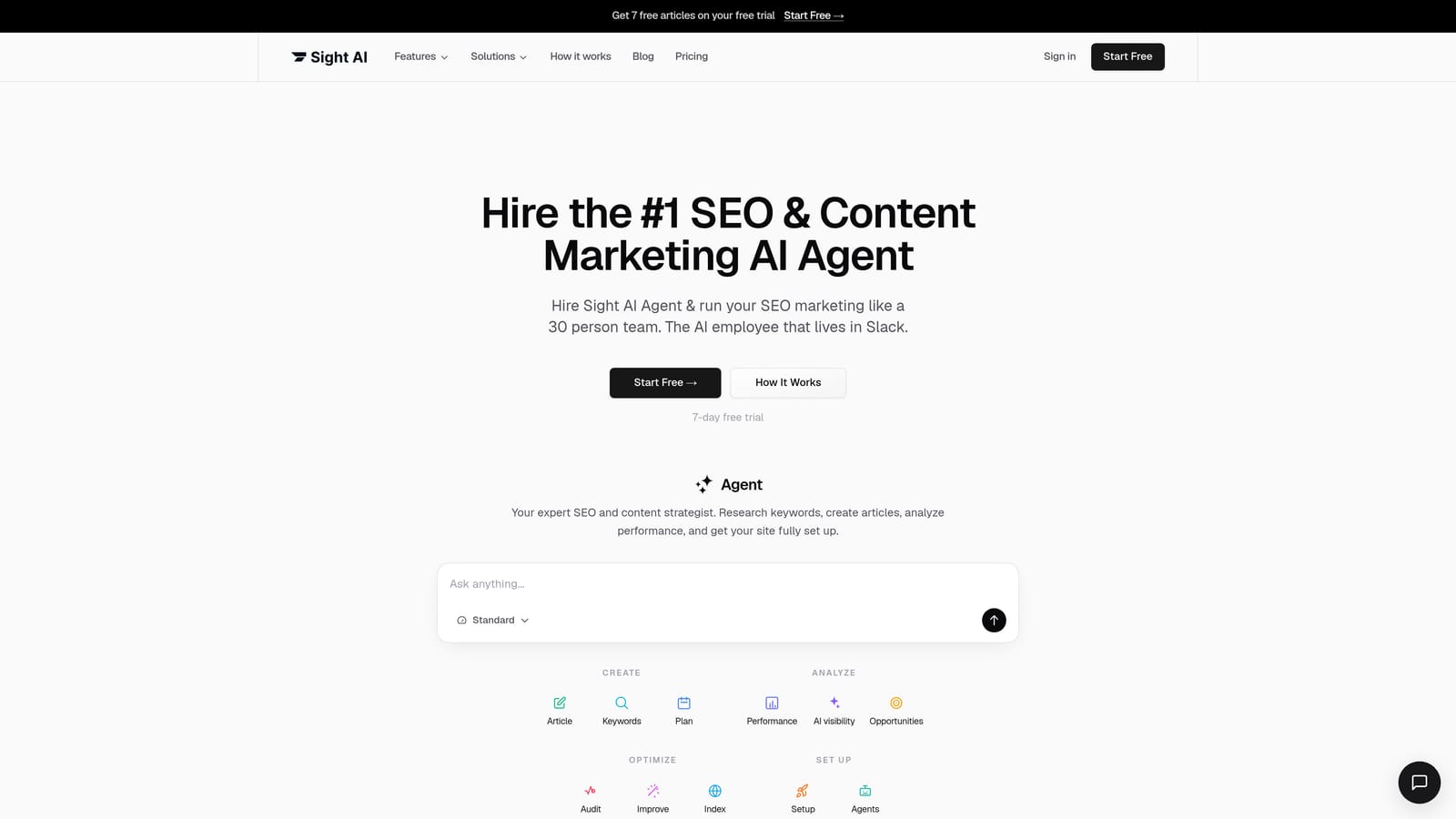
Sight AI is an all-in-one platform combining IndexNow-powered indexing automation, automated sitemap management, CMS auto-publishing, and AI visibility tracking across 6+ AI platforms including ChatGPT, Claude, and Perplexity.
Where This Tool Shines
Most indexing tools stop at telling search engines your content exists. Sight AI goes further by also tracking whether AI models are actually citing your content in their responses. That dual focus on traditional search indexing and AI citation monitoring makes it genuinely distinctive in a market where most tools handle only one side of the equation.
The IndexNow integration means search engines receive an instant notification the moment you publish, rather than waiting for the next scheduled crawl. Pair that with automated sitemap updates and CMS auto-publishing via Autopilot Mode, and the entire publish-to-index workflow becomes hands-off.
Key Features
IndexNow Integration: Automatically notifies search engines the instant new content goes live, eliminating crawl delays.
Automated Sitemap Management: Generates and updates your sitemap continuously so your content architecture stays current without manual intervention.
AI Visibility Score: Tracks how your brand and content appear across 6+ AI platforms with sentiment analysis and prompt-level monitoring.
13+ Specialized AI Agents: Generates SEO and GEO-optimized content including listicles, guides, and explainers designed to surface in both traditional and AI search.
CMS Auto-Publishing with Autopilot Mode: Connects content creation directly to publication, removing manual handoffs from the workflow.
Best For
Content publishers, marketers, and agencies who need their content indexed fast and want to monitor how AI models reference their brand. Particularly valuable for teams that want a single platform covering content creation, indexing, and AI visibility rather than stitching together multiple tools.
Pricing
Multiple tiers available to suit individual publishers and agencies. Visit trysight.ai for current pricing details.
2. Writesonic
Best for: Content teams scaling SEO-optimized article and blog post production.
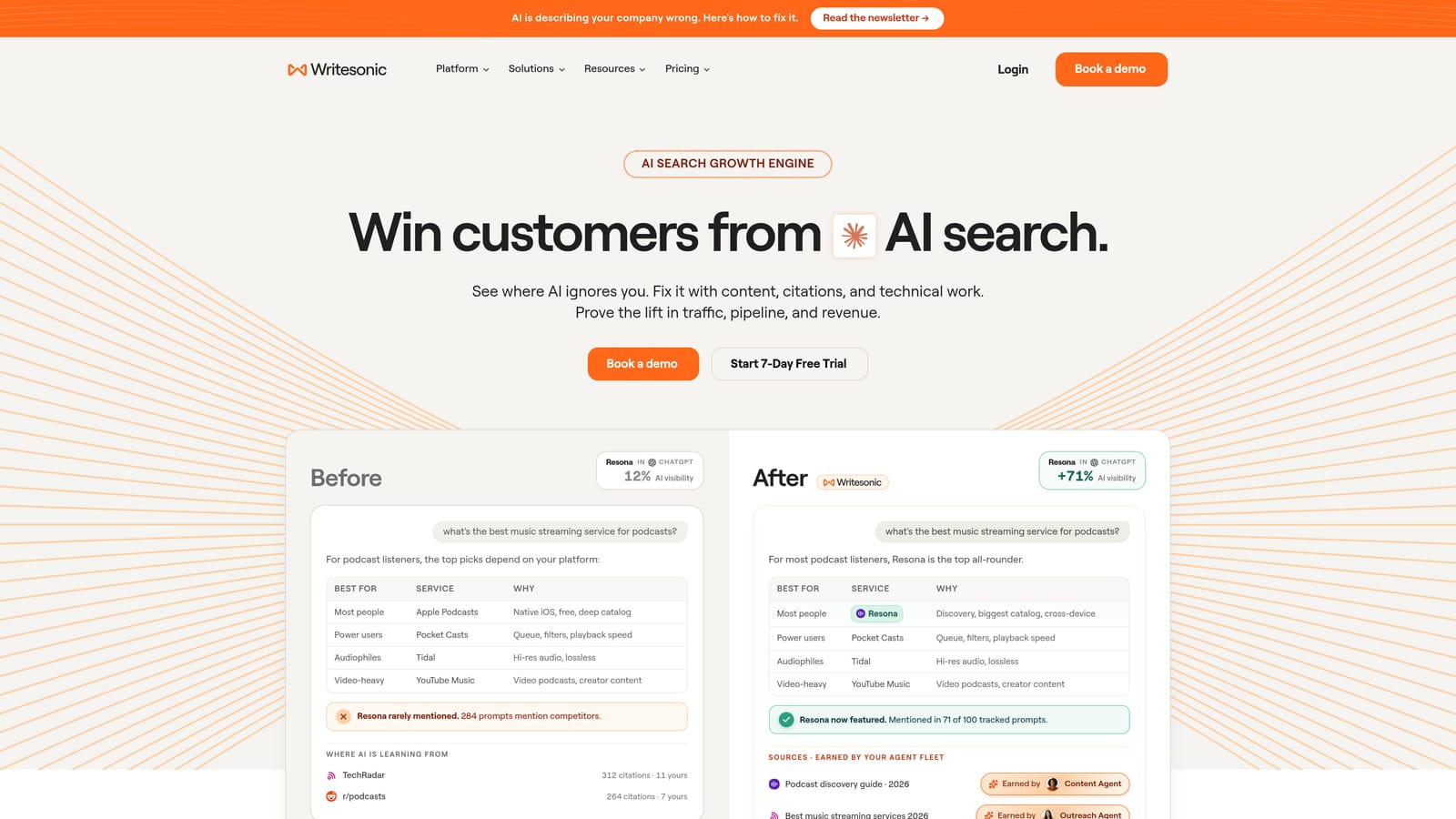
Writesonic is an AI content generation platform built to help teams produce keyword-targeted long-form articles, blog posts, and landing pages at scale.
Where This Tool Shines
Writesonic's strength is volume without sacrificing structure. The platform's SEO mode is designed to incorporate target keywords naturally throughout generated content, making it a practical choice for publishers who need to cover broad topic clusters quickly.
Brand voice customization is a notable feature for agencies managing multiple clients. Rather than producing generic output, Writesonic can be trained to match specific tones and styles, keeping content consistent across a publication's body of work.
Key Features
AI Long-Form Content Generation: Produces full-length articles and blog posts from keyword inputs or content briefs.
SEO Mode: Structures content output around target keywords to improve relevance for search engine ranking.
Brand Voice Customization: Adapts tone and style to match a specific publication or client brand.
CMS Integrations: Connects with popular content management platforms to streamline the content-to-publish workflow.
Best For
Content teams and agencies that need to produce large volumes of SEO-structured articles efficiently. Best suited for publishers whose primary bottleneck is content creation speed rather than indexing or AI visibility monitoring.
Pricing
Subscription-based with tiered credit limits. A free trial is available. Visit writesonic.com for current plan details.
3. AirOps
Best for: Operations and content teams building automated AI-powered publishing pipelines.
AirOps is a workflow automation platform that lets content and operations teams build custom AI-powered pipelines, from content brief generation through drafting and into publishing steps.
Where This Tool Shines
AirOps is less of a content tool and more of a content infrastructure tool. If your publishing operation involves multiple handoffs — brief to writer to editor to CMS — AirOps lets you automate and connect those steps using AI. The result is a more consistent, repeatable process with fewer manual bottlenecks.
The custom workflow builder is the standout capability here. Teams can design pipelines that match their specific content operations rather than adapting to a rigid template, which makes AirOps particularly flexible for larger publishing organizations with complex workflows.
Key Features
Custom AI Workflow Builder: Lets teams design bespoke content pipelines tailored to their specific publishing process.
Automated Brief and Draft Generation: Moves content from topic input to structured draft with minimal manual input.
Pipeline Automation: Connects content creation steps to publishing actions, reducing handoff friction.
Team Collaboration: Supports multi-user workflows so content and ops teams can coordinate on AI-powered pipelines.
Best For
Content operations teams and agencies that need to systematize and automate their publishing workflows. Best for organizations where process consistency and scalability matter as much as the content itself. Not a fit for publishers primarily seeking indexing submission or AI citation tracking.
Pricing
Tiered plans available. Visit airops.com for current pricing.
4. Profound
Best for: Publishers focused on understanding and improving their presence in AI-generated search responses.
Profound is an AI answer engine optimization platform that monitors how brands and content appear in AI-generated responses, helping publishers improve their visibility in AI search.
Where This Tool Shines
Profound is built specifically around the emerging discipline of Generative Engine Optimization. Rather than focusing on traditional search ranking signals, it analyzes how AI models respond to queries relevant to your brand and content, giving publishers a clear picture of where they appear and where they don't.
The content gap analysis feature is particularly useful for GEO strategy. By identifying topics and queries where competitors are being cited but your brand isn't, Profound helps publishers prioritize new content that targets those AI citation opportunities directly.
Key Features
AI Answer Engine Monitoring: Tracks brand and content appearances across major AI platforms in real time.
Brand Visibility Tracking: Shows how frequently and in what context your content surfaces in AI-generated responses.
GEO Insights: Provides actionable data for improving content's likelihood of being cited by AI models.
Content Gap Analysis: Identifies queries and topics where competitors are cited in AI responses but your brand is absent.
Best For
Publishers and marketers with a dedicated focus on AI search visibility and GEO strategy. Most valuable for brands that have already addressed traditional search indexing and are now prioritizing how they appear in AI-generated answers.
Pricing
Visit profound.com for current pricing information.
5. Peec
Best for: Publishers who want competitive benchmarking in AI search visibility.
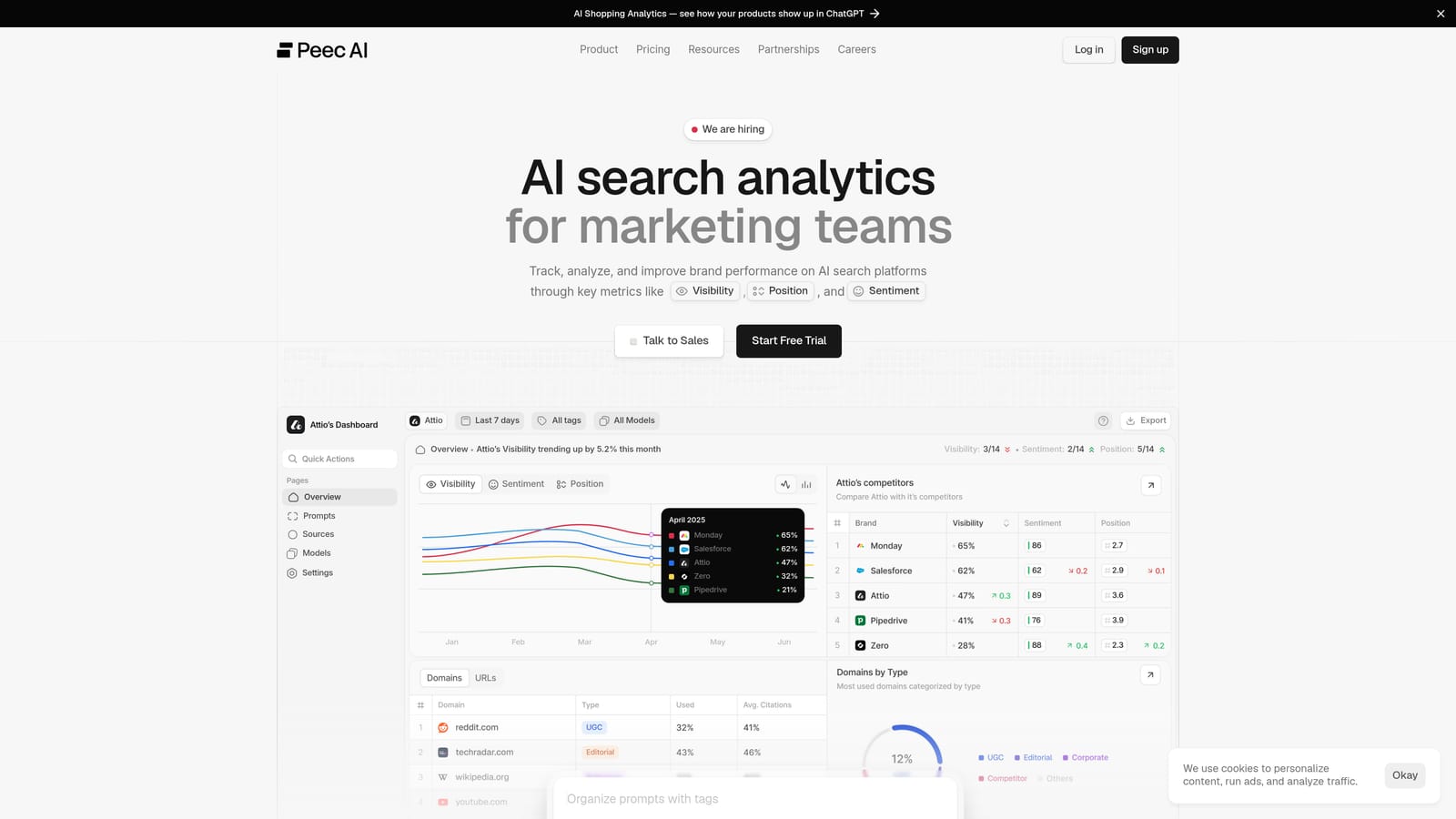
Peec is an AI search visibility monitoring tool that tracks brand and content mentions across AI platforms, with a particular focus on competitive benchmarking against other publishers in your space.
Where This Tool Shines
Where many AI visibility tools focus on your own brand's performance in isolation, Peec adds a competitive dimension. The share-of-voice analysis shows not just where you appear in AI responses, but how your presence compares to competitors, which is essential context for understanding whether your GEO efforts are actually moving the needle.
Trend monitoring adds a time dimension to that competitive picture. Publishers can track whether their AI citation share is growing or declining over time, giving them a clearer signal of whether content and optimization efforts are working.
Key Features
Brand Mention Tracking: Monitors when and how your content is cited across AI answer engines.
Competitor Benchmarking: Compares your AI search visibility against competitors in the same topic space.
Share-of-Voice Analysis: Quantifies your relative presence in AI-generated responses within your category.
Trend Monitoring: Tracks citation patterns over time to measure the impact of content and GEO strategy changes.
Best For
Publishers and marketing teams in competitive verticals where understanding relative AI visibility is as important as absolute performance. Particularly useful for agencies reporting AI search performance to clients who want competitive context alongside raw visibility data.
Pricing
Visit peec.ai for current pricing details.
6. Promptwatch
Best for: Publishers who want granular, prompt-level data on what drives AI brand citations.
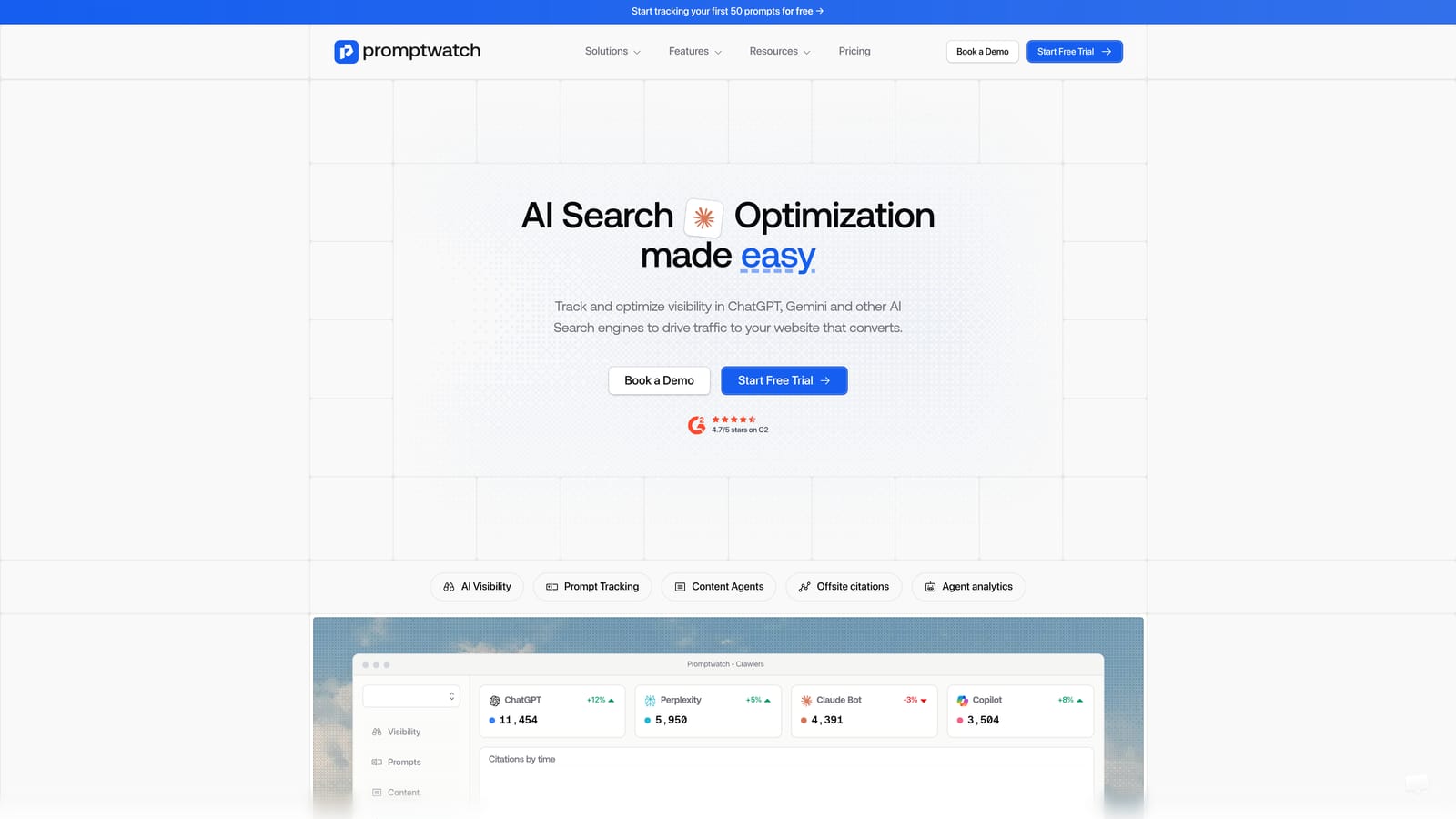
Promptwatch is a prompt-level AI visibility tracking tool that monitors which specific user queries trigger brand or content mentions in AI model responses, providing detailed data for GEO content strategy.
Where This Tool Shines
Most AI visibility tools tell you that your brand appeared in AI responses. Promptwatch tells you exactly which user prompts triggered those appearances. That granularity is the key differentiator. When you know which specific queries are driving brand citations, you can create more content targeting similar query patterns and amplify what's already working.
The GEO campaign measurement capability makes Promptwatch particularly useful for structured content strategies. Publishers can set up specific prompts to monitor, track performance over time, and measure whether new content is actually improving their AI citation rate for targeted queries.
Key Features
Prompt-Level Tracking: Identifies the specific user queries that generate brand or content mentions in AI model responses.
Query Performance Monitoring: Tracks citation performance across individual prompts over time.
GEO Campaign Measurement: Provides reporting on whether GEO content efforts are improving AI citation rates for target queries.
High-Value Prompt Identification: Surfaces which prompts are driving the most valuable brand visibility in AI search.
Best For
Publishers and content strategists who want to move beyond broad AI visibility metrics and understand the specific query-level dynamics driving their brand's appearance in AI responses. Best for teams running structured GEO campaigns who need detailed measurement to optimize their content strategy.
Pricing
Visit promptwatch.io for current pricing information.
Which Tool Is Right for Your Publishing Workflow?
The right choice here depends heavily on where your biggest gap is: getting content indexed faster, understanding your AI visibility, or both.
If you're a publisher who needs to solve the indexing problem and the AI visibility problem without managing multiple platforms, Sight AI is the only tool in this list that handles both. The IndexNow integration accelerates traditional search discovery while the AI Visibility Score tracks your brand's presence across ChatGPT, Claude, Perplexity, and more. Add the built-in content generation and CMS auto-publishing, and it covers the full publish-to-index-to-track workflow in one place.
For publishers whose primary need is content production at scale, Writesonic delivers SEO-structured output efficiently. If your challenge is more about systematizing your content operations, AirOps gives you the workflow automation infrastructure to build repeatable pipelines.
On the AI visibility side, Profound is the strongest choice for GEO strategy and content gap analysis. Peec adds competitive benchmarking for publishers who need to understand their share of voice in AI-generated responses. And Promptwatch is the right fit when you need prompt-level granularity to understand exactly which queries are driving your AI citations.
The broader trend is clear: getting indexed is table stakes. The publishers gaining ground in 2026 are the ones who also know how AI models are talking about their brand and using that data to inform what they publish next.
Stop guessing how AI models like ChatGPT and Claude talk about your brand. Start tracking your AI visibility today and see exactly where your brand appears across top AI platforms, uncover content opportunities, and automate your path to organic traffic growth.