Content marketing demands consistency, but most teams hit a ceiling—there are only so many hours in a day and so many writers on payroll. The solution isn't working harder; it's building systems that work while you focus on strategy.
Content marketing automation transforms scattered efforts into a predictable engine that researches, creates, optimizes, and distributes content without constant manual intervention. This guide walks you through six practical steps to automate your content marketing workflow, from identifying which tasks to automate first to measuring the impact of your new systems.
Whether you're a solo founder drowning in content demands or an agency managing multiple client accounts, you'll learn how to reclaim hours each week while actually increasing your content output and quality. The key is knowing which tasks to automate, which to keep human, and how to build systems that maintain quality while scaling production.
Step 1: Audit Your Current Workflow to Find Automation Opportunities
Before automating anything, you need a clear picture of where your time actually goes. Most teams underestimate how much time they spend on repetitive tasks until they document the full process.
Start by mapping your content process from ideation to publication. Document every single task and who handles it. Track activities like keyword research, competitive analysis, outline creation, writing, editing, formatting, image sourcing, SEO optimization, scheduling, and distribution. Don't skip the small tasks—those five minutes here and ten minutes there add up to hours each week.
Once you have your complete workflow mapped, identify repetitive tasks that consume disproportionate time. Keyword research that takes two hours per article? Formatting that requires thirty minutes of manual adjustments? Social media distribution that eats up an hour after each publication? These are your prime automation candidates.
Now categorize each task into three buckets: automate fully, automate partially with human oversight, or keep manual. Tasks like keyword research, image optimization, and social scheduling can often be automated fully. Content creation and brand messaging typically need automation with human review. Strategic planning and relationship building should remain manual.
Calculate time spent on each task to prioritize high-impact automation targets. If keyword research takes two hours per article and you publish ten articles monthly, that's twenty hours you could reclaim. If social distribution takes one hour per piece, that's another ten hours. Suddenly you're looking at thirty hours per month—nearly a full week of work—that could be automated. Teams looking for guidance on content marketing automation tools should start with this assessment.
Your success indicator for this step is a clear list of five to ten tasks ready for automation with estimated time savings. This becomes your roadmap for the next steps. Focus on tasks that are both time-consuming and highly repetitive—these deliver the biggest immediate impact.
Step 2: Build Your Automated Content Research and Ideation System
Content research is where most teams waste hours manually searching for topics, analyzing competitors, and trying to identify gaps. Automation transforms this from a weekly time sink into a continuous background process.
Set up keyword gap analysis tools to continuously surface content opportunities without manual searching. Tools that monitor your competitors' ranking keywords and compare them to yours can automatically identify topics where you're missing coverage. Configure these to run weekly and deliver reports directly to your content planning system.
Configure competitor monitoring to automatically track new content in your space. Instead of manually checking competitor blogs every week, set up RSS feeds or monitoring tools that alert you when they publish. This keeps you aware of industry trends without the manual effort of checking multiple sites daily.
Create automated alerts for trending topics and questions in your industry. Tools that monitor social platforms, forums, and question sites can surface emerging topics before they become saturated. Set filters based on your target keywords and audience interests so you receive relevant signals without noise.
Establish a content calendar that auto-populates based on research findings. When your monitoring tools identify opportunities, they should flow directly into your calendar with suggested publish dates based on search volume trends and seasonal patterns. Building an automated blog content pipeline eliminates the monthly scramble to fill your editorial calendar.
Here's a common pitfall: automating research without clear criteria leads to topic overwhelm. You'll receive hundreds of potential topics but lack direction on which to pursue. Define filters upfront—minimum search volume, relevance score, competitive difficulty. Your automation should deliver a curated list of viable topics, not an overwhelming firehose of possibilities.
The goal is a system that continuously feeds your pipeline with validated content ideas. You should never sit down to plan content and face a blank calendar. Instead, you're choosing from a pre-vetted list of opportunities that your automation has already qualified.
Step 3: Implement AI-Powered Content Creation Workflows
Content creation is the most time-intensive part of content marketing, and it's where AI automation delivers the most dramatic time savings. The key is building workflows that leverage AI for speed while maintaining human oversight for quality.
Choose AI content tools that match your content types. If you primarily create long-form guides, you need tools with strong research and structure capabilities. If you focus on listicles and product content, look for systems with templating features. Modern AI-powered content marketing platforms often include multiple specialized agents—one for research, another for outlining, another for writing—that work together to produce comprehensive drafts.
Create standardized briefs and templates that AI tools can work from consistently. The better your input, the better your output. Develop brief templates that include target keywords, audience intent, required sections, word count targets, and brand voice guidelines. When you feed AI tools consistent, detailed briefs, you get consistent, on-brand output.
Set up human review checkpoints throughout the process. Automation should handle drafts, but humans handle quality control. A typical workflow might look like this: AI generates outline, human approves structure, AI writes draft, human edits for accuracy and voice, AI optimizes for SEO, human does final review. This division of labor maximizes efficiency while maintaining quality.
Build a content style guide that AI tools can reference for brand voice consistency. Document your preferred tone, terminology, sentence structure, and formatting preferences. Many AI platforms let you create custom instructions or style guides that influence every piece of content they generate. This ensures brand consistency even when automating high volumes of content.
Your success indicator here is first drafts generated in minutes instead of hours with seventy percent or more usable content. If your AI drafts require complete rewrites, your briefs need work. If they're ninety percent ready to publish with minimal editing, you've built an effective system. The goal is dramatically reducing time from idea to publishable draft while maintaining your quality standards.
Think of AI as your tireless first-draft writer. It handles the heavy lifting of research compilation and initial writing, freeing your human team to focus on strategic editing, fact-checking, and adding unique insights that only human expertise can provide.
Step 4: Automate SEO Optimization and Content Enhancement
Creating content is only half the battle. If it's not optimized for discovery, it won't drive results. SEO automation ensures every piece of content is technically sound without requiring manual optimization checklists.
Configure automated internal linking to strengthen site architecture without manual effort. Tools that analyze your content library and suggest relevant internal links can run automatically as you publish new content. They identify opportunities to link from existing articles to new ones and vice versa, building topical authority without the tedious manual process of reviewing your entire site for linking opportunities.
Set up on-page SEO checks that run before publication. Automated systems can verify that meta descriptions are within character limits, headers follow proper hierarchy, target keywords appear in strategic locations, and images have descriptive file names. Using automated SEO content writing tools catches common SEO mistakes before content goes live, eliminating the need for post-publication fixes.
Implement automated image optimization and alt text generation. Images often represent the largest files on your pages, impacting load speed and user experience. Automation can compress images to optimal sizes, convert to modern formats, and generate descriptive alt text based on image content and surrounding context. This happens in the background without manual intervention.
Create workflows that flag content gaps and suggest improvements based on search intent. Tools that analyze top-ranking content for your target keywords can identify topics, questions, and formats you're missing. They can suggest adding FAQ sections, comparison tables, or specific subtopics that appear in competing content. This keeps your content comprehensive and competitive.
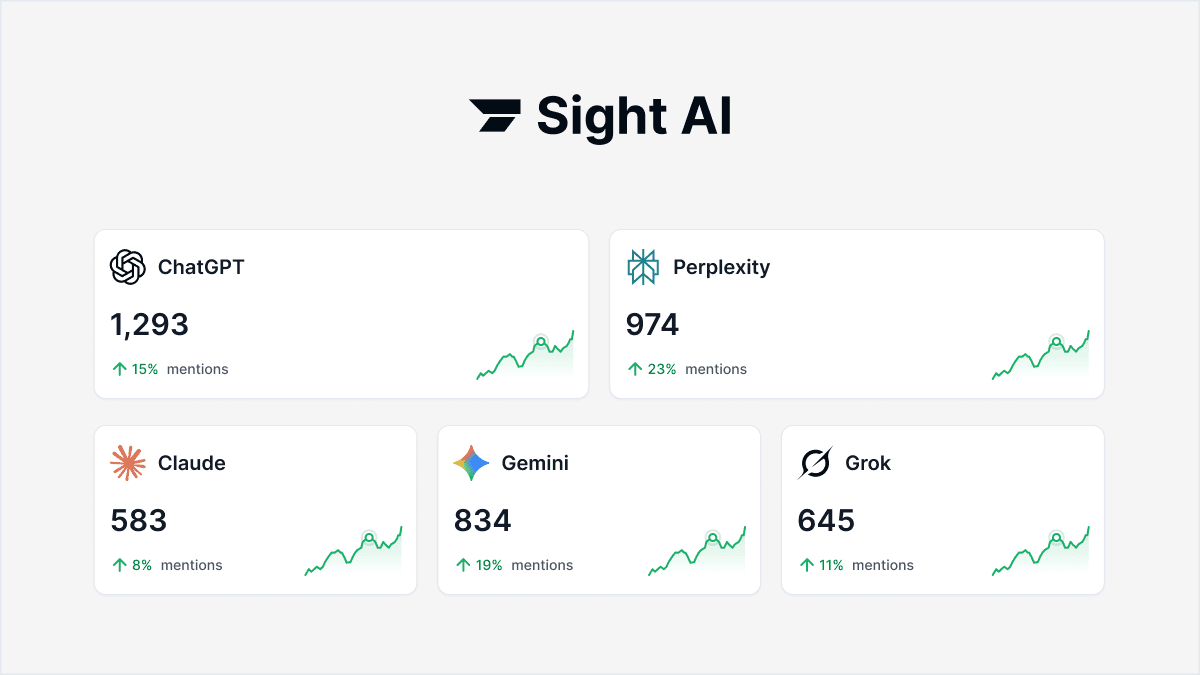
Integrate AI visibility tracking to ensure content is optimized for both traditional search and AI models. As platforms like ChatGPT and Perplexity become primary research tools, tracking how AI models reference your brand becomes as important as traditional search rankings. Automated monitoring shows which content AI platforms cite, helping you understand what resonates with both algorithms and AI systems.
The beauty of SEO automation is consistency. Manual optimization is prone to oversight—you forget to add alt text, skip internal linking, or miss keyword placement opportunities. Automated systems apply the same rigorous checks to every piece of content, ensuring nothing slips through the cracks.
Step 5: Set Up Automated Publishing and Distribution Pipelines
Content that sits in drafts doesn't drive results. Publishing and distribution automation ensures your content reaches your audience immediately and consistently across all channels.
Connect your content tools directly to your CMS for one-click or scheduled publishing. Modern platforms offer API integrations that let you push content from your creation tools straight to your website. Learning how to automate content publishing allows you to schedule publication times, set up automatic formatting, and even trigger related workflows like sitemap updates—all without manually copying and pasting content into your CMS.
Configure IndexNow or similar protocols for instant search engine notification when content goes live. Traditional search indexing can take days or weeks. IndexNow lets you notify search engines immediately when you publish new content, dramatically reducing the time between publication and discovery. Set this up once and it runs automatically with every new article.
Build automated social distribution workflows that adapt content for each platform. Instead of manually crafting social posts for Twitter, LinkedIn, and Facebook, automation can generate platform-specific versions from your article. It pulls key quotes, creates engaging hooks, and schedules posts at optimal times for each platform. You review and approve, but the heavy lifting is done.
Set up email newsletter automation that pulls from your latest published content. Configure rules that automatically feature your newest articles in weekly or monthly newsletters. The system can select content based on topic categories, performance metrics, or publication date, then generate email-friendly summaries with links back to your site.
Here's a common pitfall: publishing without proper indexing delays. You might automate content creation and publishing but forget to automate sitemap updates or search engine notifications. The result? Your content sits invisible to search engines for days or weeks. Ensure automated sitemap updates are active and connected to your publishing workflow. When content goes live, your sitemap should update and search engines should be notified automatically.
The goal is zero manual effort between hitting publish and having your content discoverable across all channels. Your automation should handle website publishing, search engine notification, social distribution, and email integration in one coordinated workflow.
Step 6: Monitor Performance and Optimize Your Automation Stack
Automation isn't a set-it-and-forget-it solution. The most effective systems include automated monitoring that continuously evaluates performance and identifies optimization opportunities.
Create dashboards that track content performance without manual report building. Configure your analytics tools to automatically compile metrics like organic traffic, keyword rankings, engagement rates, and conversion data. Understanding how to measure content marketing ROI ensures these dashboards update in real-time and highlight trends without requiring you to dig through raw data weekly.
Set up automated alerts for content that's underperforming or losing rankings. Instead of manually checking rankings for hundreds of keywords, configure alerts that notify you when content drops significantly. This lets you respond quickly to algorithm changes or new competition without constant manual monitoring. You focus attention where it's needed rather than checking everything constantly.
Monitor how AI models reference your brand to track Generative Engine Optimization impact. As AI platforms become primary research tools, understanding how they cite and recommend your content becomes crucial. Automated AI visibility tracking shows which articles AI models reference, what context they use, and how your brand positioning compares to competitors in AI-generated responses. If you're wondering why your content isn't showing in AI search, this monitoring becomes essential.
Schedule quarterly reviews to identify new automation opportunities as tools evolve. The automation landscape changes rapidly. Tools add new features, new platforms emerge, and new workflows become possible. Set calendar reminders to revisit your automation stack quarterly. Ask what's still manual that could be automated, what's automated but underperforming, and what new tools could enhance your system.
Your success indicator here is clear visibility into ROI of automation with time saved versus content output metrics. Track hours saved through automation alongside content volume and quality metrics. If you're publishing twice as much content in half the time while maintaining quality standards, your automation is working. If output increased but quality dropped, you need more human checkpoints.
The most sophisticated automation systems are self-improving. They learn from performance data, adjust workflows based on results, and surface insights that help you make better strategic decisions. Your role shifts from execution to orchestration, focusing on strategy while systems handle the mechanics.
Putting Your Content Automation Framework Into Action
Start with your workflow audit this week. Document every task involved in creating a single piece of content from start to finish. Be thorough—include the small tasks that seem insignificant but accumulate into hours. Then prioritize automation based on time savings and impact.
Your quick-start checklist: Complete workflow audit and identify top five automation targets. Set up automated research and topic discovery systems that continuously feed your content pipeline. Implement AI content creation with human review gates to maintain quality while increasing speed. Configure SEO automation and internal linking to ensure technical excellence without manual checklists. Connect publishing pipelines with indexing protocols so content reaches search engines immediately. Build performance monitoring dashboards that surface insights without manual report building.
The goal isn't to remove humans from content marketing. It's to free them for strategy, creativity, and relationship building while systems handle the repetitive execution. You should spend your time on high-value activities—developing unique insights, building industry relationships, creating innovative campaigns—not on formatting articles or scheduling social posts.
Stop guessing how AI models like ChatGPT and Claude talk about your brand—get visibility into every mention, track content opportunities, and automate your path to organic traffic growth. Start tracking your AI visibility today and see exactly where your brand appears across top AI platforms.
Remember that automation is a journey, not a destination. Start with one or two high-impact automations, measure results, refine your approach, then expand. The teams that win with content marketing automation are those that continuously evolve their systems, maintaining the balance between efficiency and quality that drives sustainable growth.