Shoppers no longer start their buying journey on Google alone. Increasingly, they're asking ChatGPT which protein powder to buy, querying Claude for the best running shoes under $150, or turning to Perplexity to compare home espresso machines. If your ecommerce brand isn't appearing in those AI-generated answers, you're invisible to a growing segment of high-intent buyers.
That's the core challenge Generative Engine Optimization (GEO) was built to solve. Unlike traditional SEO, GEO focuses on creating and structuring content in ways that AI models prefer to cite, reference, and recommend. For ecommerce teams managing large product catalogs, seasonal campaigns, and competitive categories, the right GEO content tool can be the difference between being mentioned and being overlooked.
Here are the top GEO content tools for ecommerce in 2026, evaluated on AI visibility tracking, content creation capabilities, ecommerce relevance, and indexing speed.
1. Sight AI
Best for: Ecommerce brands wanting an all-in-one platform for GEO content creation, AI visibility tracking, and automated publishing.
Sight AI is a purpose-built GEO content platform combining AI visibility monitoring, specialized content generation, and IndexNow-powered indexing in a single workflow.

Where This Tool Shines
Most ecommerce teams cobble together separate tools for content writing, SEO tracking, and publishing. Sight AI collapses that stack into one platform. You can monitor how AI models like ChatGPT, Claude, and Perplexity describe your brand and products, then immediately act on those insights by generating optimized content to close the gaps.
The IndexNow integration is particularly valuable for ecommerce. When you're launching seasonal campaigns, adding new product lines, or updating category pages, content needs to be discovered fast. Sight AI's automated sitemap updates and IndexNow support accelerate that discovery cycle without manual intervention.
Key Features
AI Visibility Score: Tracks brand mentions across 6+ AI platforms including ChatGPT, Claude, and Perplexity, with sentiment analysis and prompt-level tracking to show how AI models frame your products and category positioning.
13+ Specialized AI Agents: Purpose-built agents for generating listicles, buying guides, product explainers, and category content optimized for both traditional SEO and GEO requirements.
Autopilot Mode: Maintains a consistent publishing cadence automatically, so ecommerce teams don't need to manually manage every content cycle.
IndexNow Integration: Pushes new and updated content to search engines faster, with automated sitemap management built into the workflow.
CMS Auto-Publishing: Reduces operational overhead by publishing content directly to your CMS without manual steps.
Best For
Ecommerce brands, marketing teams, and agencies that want to track AI visibility and create GEO-optimized content from a single platform. Especially suited to teams managing large catalogs or multiple clients who need scalable, automated content operations.
Pricing
Visit trysight.ai for current pricing tiers and plan details.
2. Writesonic
Best for: High-volume ecommerce content generation across product pages, category descriptions, and SEO articles.
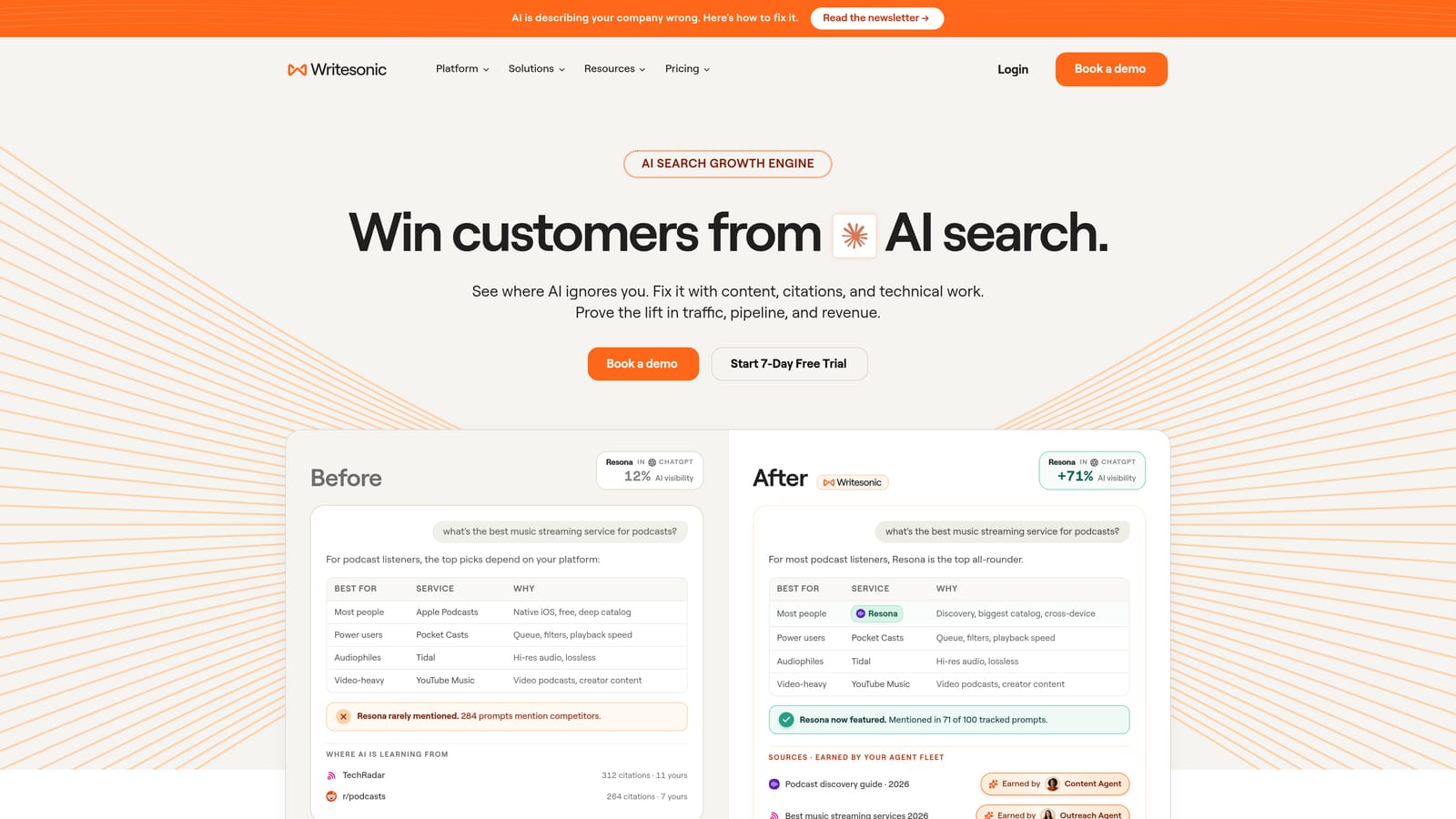
Writesonic is a broad-purpose AI content platform with strong ecommerce templates and growing support for AI search optimization.
Where This Tool Shines
Writesonic has built a reputation for volume. If you're managing a catalog with hundreds of product descriptions, dozens of category pages, and a steady blog publishing schedule, the platform's ability to generate content at scale makes it a practical choice for ecommerce operations teams.
Its SEO-mode writing integrates with search data to inform content structure, which helps ensure that articles and product pages are built around terms and formats that perform. The growing focus on AI search optimization in its outputs also makes it increasingly relevant for teams starting to think about GEO alongside traditional SEO.
Key Features
SEO-Mode Article Writing: Integrates search data to inform content structure, headings, and keyword targeting for articles and guides.
Ecommerce Templates: Pre-built formats for product pages, category descriptions, and buying guides tailored to ecommerce use cases.
High-Volume Generation: Designed to handle large-scale content needs, making it practical for ecommerce sites with extensive catalogs.
Multi-Format Output: Covers articles, ad copy, product descriptions, and landing pages from a single platform.
Best For
Ecommerce teams and agencies that need to produce content at scale and want a flexible AI writing platform with ecommerce-specific templates. Less suited to teams whose primary need is AI visibility monitoring rather than content production.
Pricing
Visit writesonic.com for current pricing tiers, including agency and high-volume plans.
3. AirOps
Best for: Agencies and ecommerce teams that need to build scalable, automated content pipelines from structured product data.
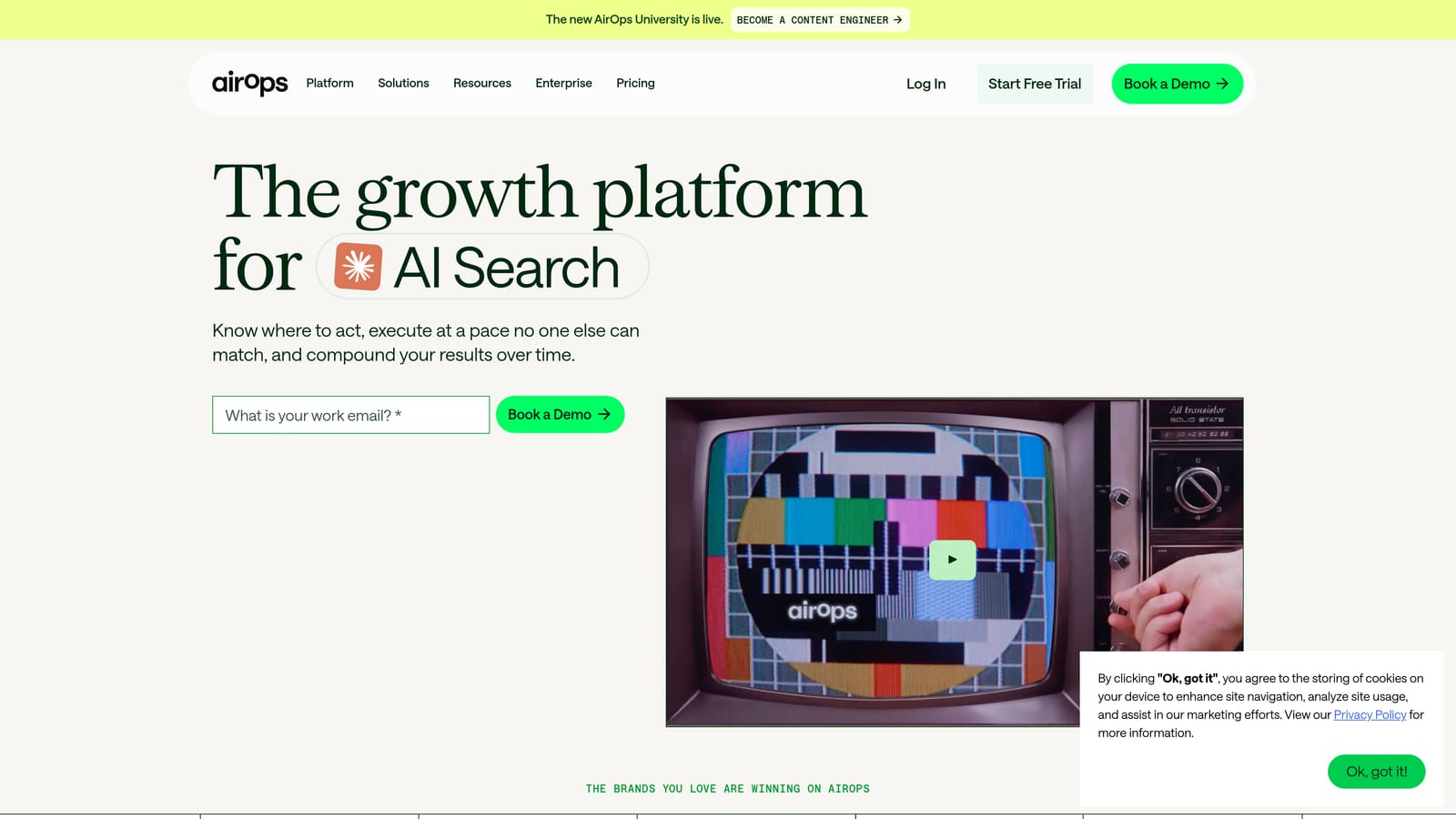
AirOps is an AI workflow automation platform that connects large language models to product feeds, databases, and spreadsheets to power repeatable content operations.
Where This Tool Shines
AirOps takes a different approach from traditional content tools. Rather than giving you a writing interface, it lets you build custom AI workflows that pull from your existing data sources. For an ecommerce brand with a product feed containing thousands of SKUs, that means you can build a workflow that generates optimized descriptions, buying guide entries, or category content automatically as new products are added.
For agencies managing multiple ecommerce clients, this workflow-first approach enables consistent, scalable content production across different brands and catalogs without starting from scratch each time.
Key Features
Custom AI Workflow Builder: Connects AI models to product feeds, spreadsheets, and databases to generate content from structured ecommerce data.
Scalable Content Operations: Designed for teams and agencies managing high-volume, repeatable content production across multiple clients or catalogs.
Flexible AI Model Integration: Supports connection to various AI models, giving teams flexibility in how workflows are structured.
Data-Driven Content Generation: Produces structured content outputs from ecommerce data at scale, reducing manual input requirements.
Best For
Agencies managing multiple ecommerce clients and in-house teams with large product catalogs who need to automate content production pipelines. Less focused on GEO-specific optimization or AI visibility monitoring; the strength is in operational scale.
Pricing
Visit airops.com for current pricing and workflow plan details.
4. Profound
Best for: Ecommerce brands that want to understand their current AI search footprint before investing in content creation.
Profound is an AI search analytics platform focused on tracking how and where brands appear in AI-generated responses across major platforms.
Where This Tool Shines
Before you can improve your AI visibility, you need to understand where you currently stand. Profound is built for exactly that diagnostic phase. It surfaces which AI platforms are mentioning your brand, in what context, and with what framing, giving ecommerce teams a clear baseline to work from.
The context analysis is particularly useful for ecommerce. Knowing that an AI model mentions your brand but positions it as a budget option when you're targeting a premium segment is the kind of insight that directly informs your GEO content strategy.
Key Features
Brand Mention Tracking: Monitors brand appearances across major AI platforms to establish a clear visibility baseline.
Context Analysis: Shows how AI models frame brand and product mentions, not just whether they appear.
Visibility Reporting: Structured analytics dashboards to inform and prioritize GEO content investment.
AI Search Footprint Mapping: Provides a comprehensive view of where and how a brand exists in the AI-generated answer ecosystem.
Best For
Ecommerce brands and marketing teams that want data-driven insight into their AI search presence before building a GEO content strategy. Pairs well with a content creation tool since Profound focuses on analytics rather than content generation.
Pricing
Visit getprofound.com for current pricing and plan information.
5. Peec
Best for: Ecommerce brands in competitive categories who want to benchmark their AI visibility against rivals.
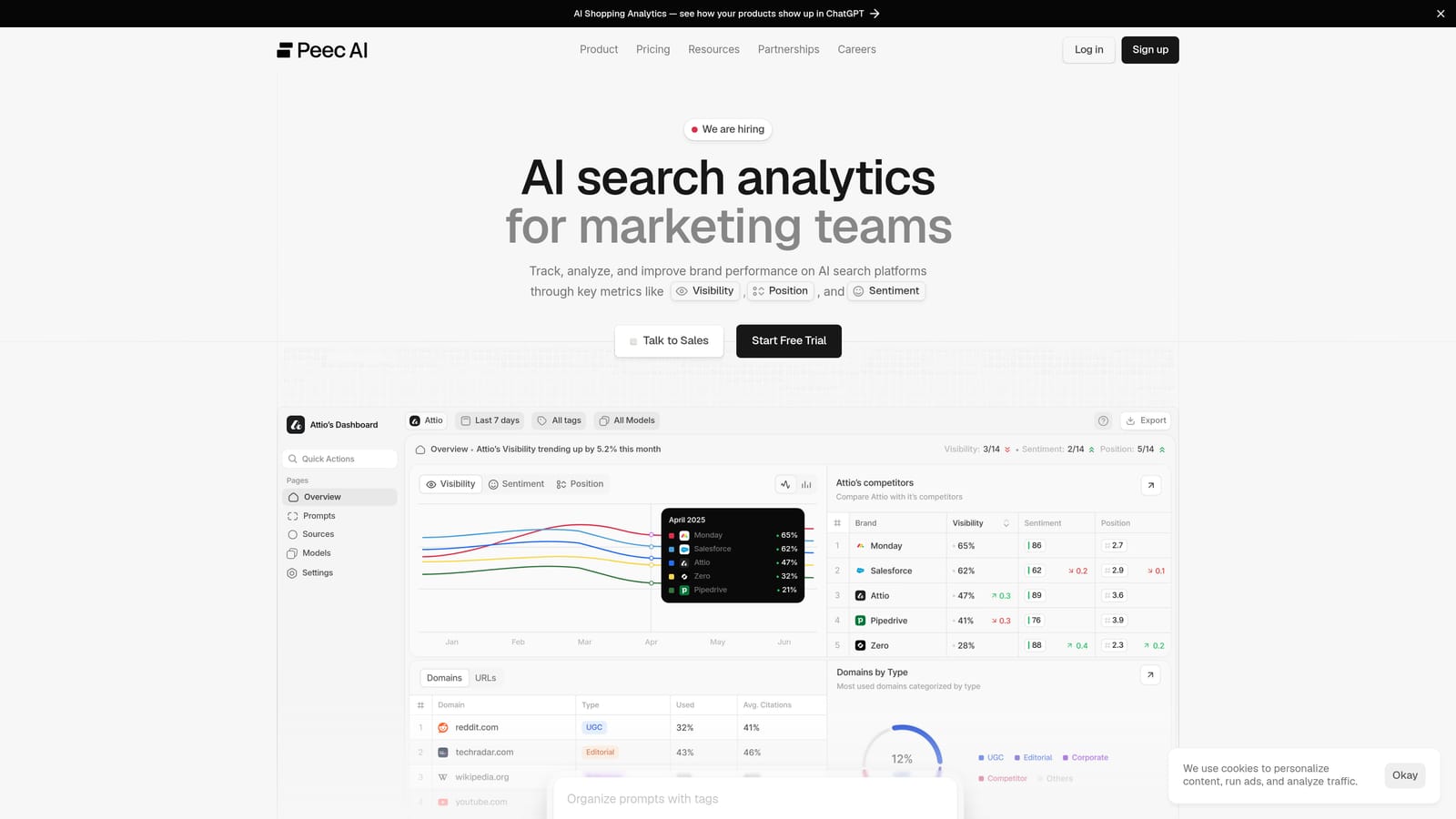
Peec is an AI monitoring tool that tracks brand and product mentions in AI search engines with a focus on competitive benchmarking.
Where This Tool Shines
Peec's competitive benchmarking capability sets it apart from other monitoring tools. Instead of just showing you your own AI visibility, it shows you how you compare to competitors within the same product category. For ecommerce brands in crowded spaces like consumer electronics, apparel, or home goods, that competitive context is highly actionable.
Category-level analysis adds another layer of value. You can see which brands consistently dominate AI responses for specific product queries, helping you understand not just your own gaps but the competitive dynamics shaping AI-generated buying recommendations in your market.
Key Features
Brand and Product Mention Tracking: Monitors how often and in what context your brand appears in AI search responses.
Competitive Benchmarking: Compares your AI visibility against category competitors to identify relative strengths and gaps.
Category-Level Analysis: Surfaces patterns in how AI models respond to product category queries, revealing who dominates and why.
Ongoing Monitoring Dashboard: Provides a continuous view of AI visibility trends over time.
Best For
Ecommerce brands in competitive product categories who want to understand how they stack up against rivals in AI-generated answers. Primarily a monitoring tool, so works best alongside a content creation platform.
Pricing
Visit peec.ai for current pricing details.
6. Promptwatch
Best for: Ecommerce brands that need granular, prompt-level insight into how AI models frame their products and category comparisons.
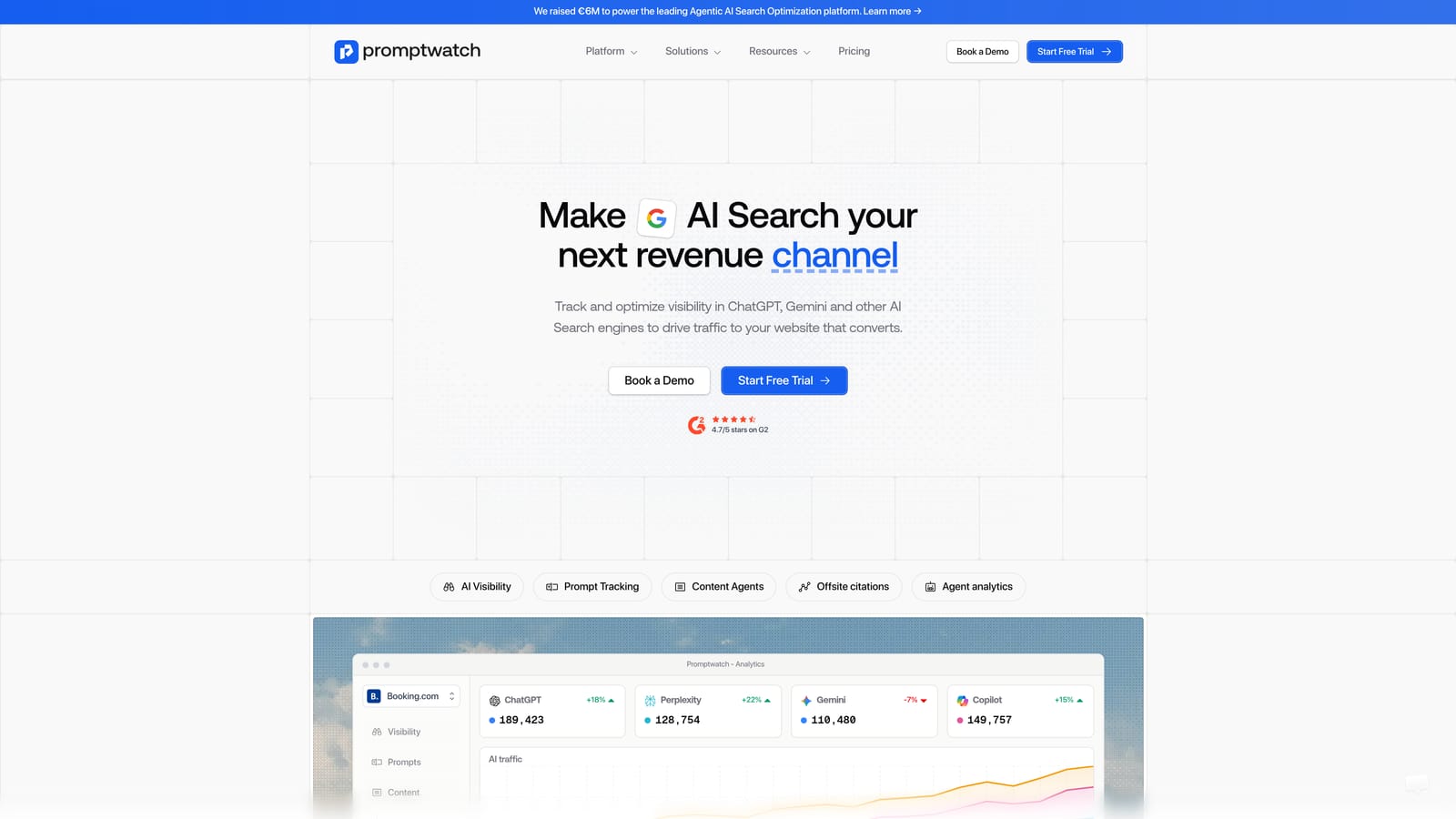
Promptwatch is a specialized AI monitoring tool that tracks specific queries to AI models and analyzes how responses mention brands, products, and categories at a granular level.
Where This Tool Shines
Where most monitoring tools show you aggregate visibility data, Promptwatch goes deeper. It tracks how AI models respond to specific prompts, which means you can see exactly what an AI says when a user asks "What's the best ergonomic office chair under $500?" and whether your brand appears, how it's described, and where it sits in the recommendation hierarchy.
For ecommerce brands in competitive categories where AI model framing can directly influence purchase decisions, that level of granularity is valuable. It moves beyond knowing you're mentioned to understanding the narrative AI models build around your products.
Key Features
Prompt-Level Tracking: Monitors AI model responses to specific brand and product queries, providing granular visibility into AI behavior.
Response Framing Analysis: Analyzes how AI models describe product categories, brand comparisons, and buying recommendations in detail.
Brand Positioning Insight: Reveals where and how your brand appears within AI-generated buying guides and product comparisons.
Competitive Category Monitoring: Particularly useful for tracking AI response patterns in high-competition ecommerce categories.
Best For
Ecommerce brands in competitive categories who want granular data on how AI models frame their products relative to alternatives. A monitoring-focused tool that works best when paired with a GEO content creation platform to act on the insights it surfaces.
Pricing
Visit promptwatch.io for current pricing and plan information.
Which GEO Tool Is Right for Your Ecommerce Stack?
The right choice depends on where your biggest gap is right now. Are you flying blind on AI visibility? Do you need to produce more content faster? Or are you looking for a single platform that handles both?
If your priority is AI visibility monitoring, Profound, Peec, and Promptwatch each offer strong tracking capabilities with different levels of granularity. Profound is a solid starting point for establishing your baseline. Peec adds competitive benchmarking for brands in crowded categories. Promptwatch goes deepest on prompt-level analysis for teams that want to understand exactly how AI models frame their products.
If your priority is content production at scale, Writesonic handles high-volume ecommerce content well, while AirOps is the better choice for teams that need to build automated pipelines from structured product data.
If you want everything in one place, Sight AI is the only tool on this list that combines AI visibility tracking, GEO-optimized content generation, and IndexNow-powered indexing in a single platform. For ecommerce teams that don't want to manage a fragmented stack of monitoring tools, content writers, and indexing solutions, that integration is a meaningful operational advantage.
Stop guessing how AI models like ChatGPT and Claude talk about your brand. Get visibility into every mention, track content opportunities, and automate your path to organic traffic growth. Start tracking your AI visibility today and see exactly where your brand appears across top AI platforms.