Generative Engine Optimization has shifted from an emerging concept to an urgent priority for content teams. As AI models like ChatGPT, Claude, Perplexity, and Google's AI Overviews increasingly shape how users discover information, appearing in those AI-generated answers matters just as much as ranking on page one.
The challenge is that most traditional SEO tools weren't built for this. Content teams now face a dual optimization problem: earning traditional search rankings while also being cited in AI-generated responses. The tooling landscape is still catching up, with some platforms purpose-built for GEO and others adapting their existing feature sets.
We evaluated the field and narrowed it to the tools that solve real GEO problems for content teams in 2026. Here's what made the cut, what each tool does best, and who should be using it.
1. Sight AI
Best for: Content teams that need AI visibility tracking, GEO-optimized content creation, and automated indexing in one platform.
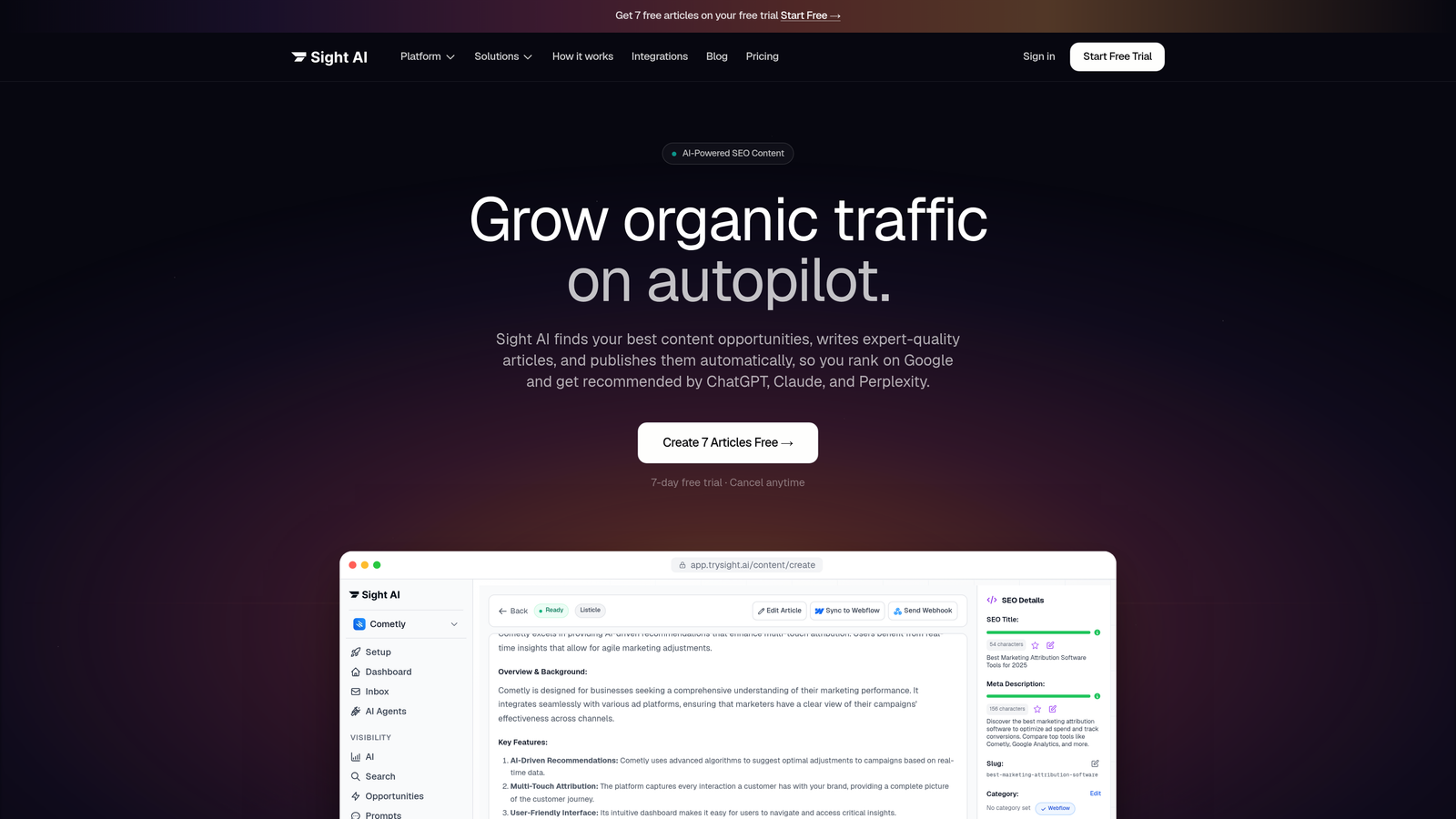
Sight AI is an all-in-one GEO platform combining AI visibility tracking across 6+ AI models, a 13-agent AI content writer, and automated website indexing with IndexNow integration.
Where This Tool Shines
Most GEO tools solve one piece of the puzzle. Sight AI addresses the full workflow: understanding how AI models currently talk about your brand, creating content designed to improve that visibility, and ensuring that content gets discovered and indexed quickly. That end-to-end coverage makes it particularly valuable for lean content teams that can't manage five separate tools.
The AI Visibility Score gives teams a concrete benchmark to track over time, with sentiment analysis and prompt-level tracking showing not just whether your brand appears in AI responses, but how it's being characterized. That qualitative layer is something most monitoring tools skip entirely.
Key Features
AI Visibility Score: Tracks brand mentions and visibility across ChatGPT, Claude, Perplexity, and more with a unified scoring system.
Sentiment and Prompt Tracking: Analyzes the context and tone of brand mentions in AI-generated responses, not just whether they appear.
13+ Specialized AI Writing Agents: Covers listicles, guides, explainers, and other content formats with Autopilot Mode for hands-off GEO-optimized publishing.
IndexNow Integration: Automatically submits new and updated content to search engines for faster discovery, paired with automated sitemap updates.
CMS Auto-Publishing: Streamlines content team workflows by pushing finished content directly to your CMS without manual intervention.
Best For
Content teams at SaaS companies, agencies, and growth-focused startups that want a single platform for AI visibility tracking and content production. Especially useful for teams where the same people responsible for monitoring brand mentions are also responsible for creating the content that improves them.
Pricing
Free tier available. Paid plans start at $39/month, making it one of the more accessible all-in-one options in the GEO category.
2. Semrush
Best for: Enterprise and mid-market SEO teams that want GEO insights layered into a comprehensive search analytics platform.
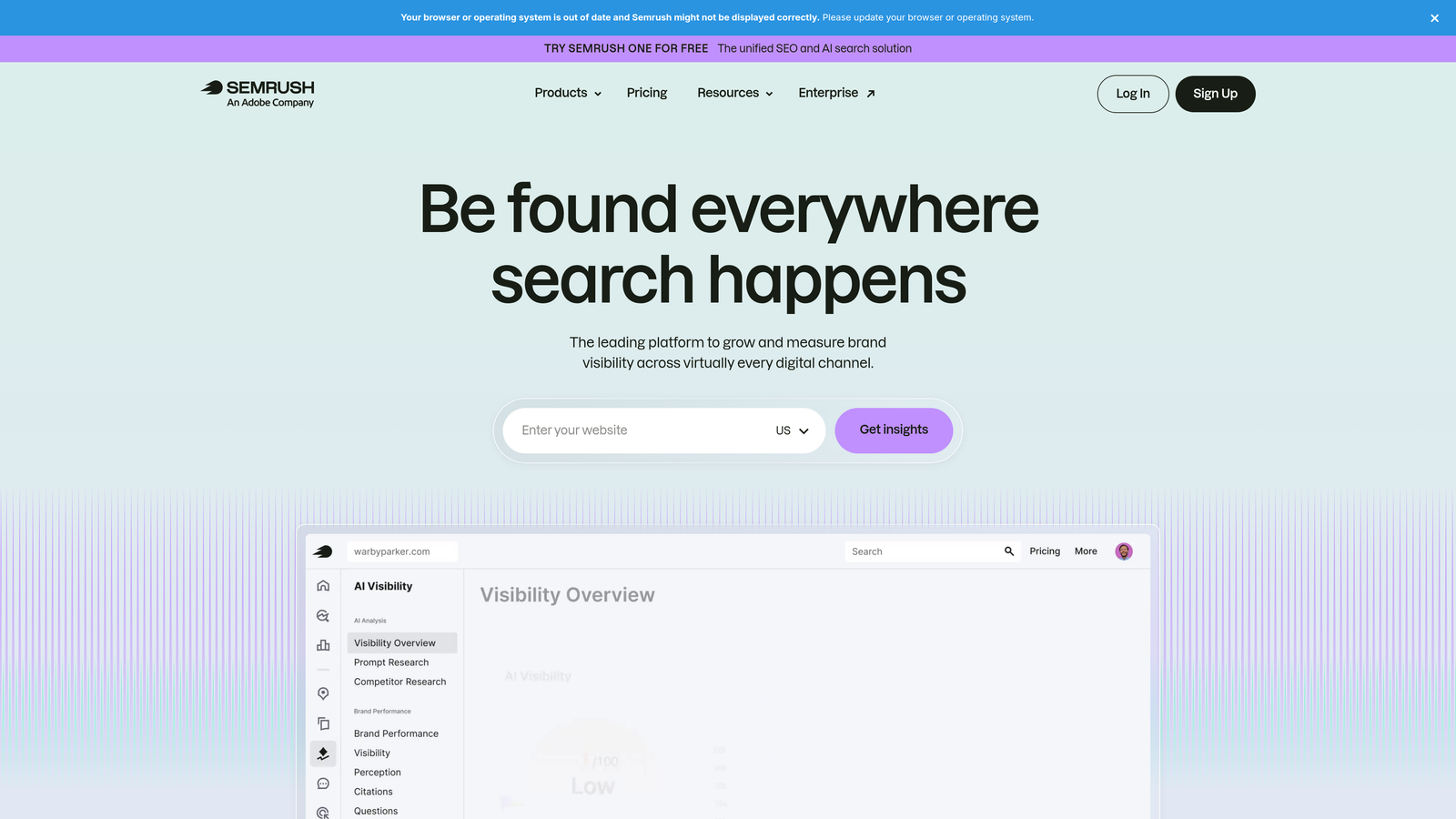
Semrush is a comprehensive SEO platform with expanding GEO capabilities including AI Overview tracking, keyword-level AI visibility data, and content optimization tools.
Where This Tool Shines
Semrush's strength is breadth. If your content team is already using it for keyword research, backlink analysis, and competitive intelligence, the AI Overview tracking features slot naturally into existing workflows. You can see which queries in your target keyword set are triggering AI-generated answers, which helps prioritize where GEO optimization effort will have the most impact.
ContentShake AI adds assisted content creation to the mix, though it's more of a drafting accelerator than a purpose-built GEO writing tool. Teams that need deep AI citation optimization will likely want to supplement it with a more specialized platform.
Key Features
AI Overview Tracking: Identifies which queries in your tracked keyword set are triggering Google's AI Overviews.
Position Tracking with AI Indicators: Shows AI snippet visibility alongside traditional ranking data in a unified dashboard.
ContentShake AI: Assists with content creation based on competitive SERP analysis and topic research.
Topic Research and Content Gap Analysis: Identifies coverage gaps against competitors to inform GEO-relevant content planning.
Backlink and Domain Authority Analytics: Extensive off-page data that supports the authority signals AI models use when evaluating citation-worthiness.
Best For
Enterprise content and SEO teams that want GEO features integrated into the platform they're already using for search analytics. Less suited for teams whose primary need is AI visibility monitoring across non-Google AI platforms.
Pricing
Starts at $139.95/month for the Pro plan. Higher-tier plans unlock additional features and user seats.
3. Surfer SEO
Best for: Writers and content editors who want real-time optimization guidance while drafting articles.
Surfer SEO is an on-page optimization platform with a real-time Content Editor that scores articles against top-ranking pages and increasingly incorporates AI answer optimization signals.
Where This Tool Shines
Surfer's Content Editor is genuinely useful at the point of writing. It surfaces the terms, topics, and structural elements that top-ranking content covers, giving writers actionable guidance without requiring them to leave their draft. For content teams producing high volumes of articles, that in-editor feedback loop can meaningfully improve topical comprehensiveness, which is directly relevant to AI citation likelihood.
The SERP Analyzer provides a useful layer of competitive context, showing what the highest-ranking pages cover and how your content compares. It's particularly strong for teams doing content refreshes on existing pages.
Key Features
Content Editor with Real-Time Scoring: Grades content as writers draft, surfacing missing terms and topics based on competitive analysis.
SERP Analyzer: Breaks down what top-ranking pages cover so you can identify gaps before writing.
AI-Assisted Outline and Draft Generation: Accelerates the brief-to-draft process with AI-generated structure and initial content.
Keyword Clustering: Groups related keywords into content clusters to support topical authority building.
Google Docs and WordPress Integrations: Works inside tools your team already uses rather than requiring a workflow change.
Best For
Content teams and freelance writers who produce a steady volume of long-form articles and want real-time optimization guidance during the drafting phase. Works well for teams that have keyword strategy handled elsewhere and need execution support.
Pricing
Starts at $99/month for the Essential plan. Higher tiers add more articles per month and additional team features.
4. Perplexity Business (Publisher Tools)
Best for: Publishers and content teams that want direct insight into how their content is cited within Perplexity's AI answer engine.
Perplexity Business offers publisher-facing analytics that give content teams direct visibility into how their content is surfaced and cited in Perplexity's AI-generated responses.
Where This Tool Shines
Most AI visibility tools infer citation data by querying AI platforms and analyzing responses. Perplexity's publisher tools offer something different: first-party data directly from the platform itself. For content teams that have verified publisher status, this means seeing exactly which queries surface your content, how frequently it's cited, and in what context.
The revenue sharing program adds an additional incentive for publishers to engage with the platform, and the growing enterprise partnership program suggests deeper data access may become available over time. As one of the most widely used AI search engines, Perplexity-specific visibility data is genuinely valuable signal for GEO strategy.
Key Features
Publisher Analytics Dashboard: Shows citation frequency, query context, and content performance within Perplexity's answer engine.
Query Visibility: Identifies which specific queries are surfacing your content in AI-generated answers.
Revenue Sharing Program: Provides financial participation for publishers whose content is cited.
Direct Feedback Loop: First-party data from a major AI search platform, rather than inferred third-party monitoring.
Enterprise Partnerships: Expanding program for deeper data access and integration for larger publishers.
Best For
Established publishers and content-heavy brands that have or can achieve verified publisher status with Perplexity. Less immediately accessible for smaller teams or newer domains, but worth pursuing as your content authority grows.
Pricing
Publisher tools are available to verified publishers. Perplexity Pro for individual AI search access starts at $20/month.
5. Otterly.AI
Best for: Content and brand teams focused specifically on monitoring AI search visibility and benchmarking against competitors.
Otterly.AI is a purpose-built AI search monitoring tool that tracks brand mentions, rankings, and sentiment across AI-generated responses from multiple platforms.
Where This Tool Shines
Otterly is one of the more focused tools in this list. It doesn't try to be a content creation platform or an SEO suite. It does one thing well: telling you how your brand appears in AI-generated responses across ChatGPT, Perplexity, and Google AI Overviews, with historical trend data so you can see whether your GEO efforts are moving the needle.
The competitor benchmarking feature is particularly useful for content strategy. Knowing that a competitor is being cited more frequently for a specific query type gives your team a concrete content opportunity to pursue. Prompt-level tracking adds granularity that aggregate visibility scores often miss.
Key Features
Multi-Platform AI Visibility Tracking: Monitors brand mentions across ChatGPT, Perplexity, and Google AI Overviews in a unified dashboard.
Historical Trend Data: Tracks visibility changes over time so teams can correlate content actions with AI mention outcomes.
Competitor AI Visibility Benchmarking: Compares your AI presence against competitors to identify gaps and opportunities.
Prompt-Level Tracking: Shows which specific queries are triggering brand mentions in AI responses.
Alerts and Reporting: Notifies teams of significant changes in AI visibility for faster response.
Best For
Brand and content teams that want dedicated AI search monitoring without the overhead of a full SEO platform. A natural complement to content creation tools rather than a standalone solution for teams that also need to produce GEO-optimized content.
Pricing
Starts at approximately $25/month. Enterprise plans available for larger teams and higher query volumes.
6. Frase
Best for: Content teams that need fast, research-backed briefs and want to build topical depth into every article they produce.
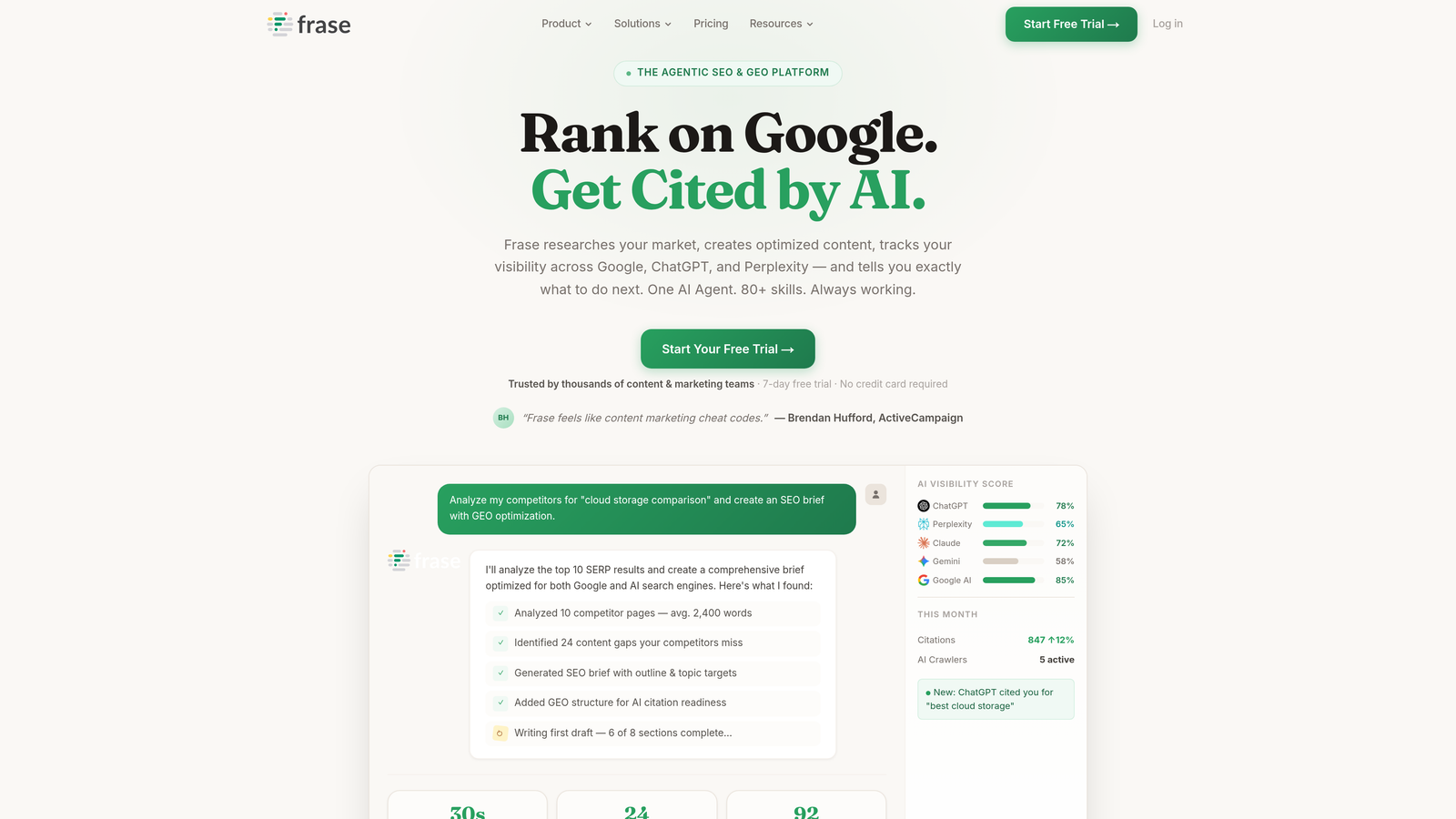
Frase is a content research and brief generation platform that helps content teams create comprehensive, well-structured articles optimized for topical depth, a key factor in AI citation likelihood.
Where This Tool Shines
Frase accelerates the research phase of content production, which is often where GEO optimization gets shortchanged. By automatically pulling in SERP data, People Also Ask questions, and related queries, it helps writers understand the full scope of a topic before they start drafting. Content that comprehensively covers a topic is more likely to be cited by AI models looking for authoritative answers.
The team collaboration features make it practical for content operations at scale. Brief sharing and collaborative scoring mean that editors, strategists, and writers can work from the same research foundation without duplicating effort.
Key Features
Automated Content Briefs: Generates research-backed briefs from SERP analysis in minutes rather than hours.
Question Clustering: Aggregates People Also Ask and related queries to ensure comprehensive topic coverage.
AI Writing Assistant: Accelerates draft creation from the brief without replacing the writer's judgment.
Content Scoring: Grades content against top-ranking competitors to identify coverage gaps before publishing.
Team Collaboration: Brief sharing and workflow features designed for content teams rather than individual writers.
Best For
Content teams that publish frequently and need to scale brief creation without sacrificing research quality. Particularly useful for SEO-focused teams building topical authority across a content cluster strategy.
Pricing
Solo plan starts at $15/month. Team plan at $115/month. One of the more accessible options in the content intelligence category.
7. MarketMuse
Best for: Content strategists and SEO teams that need to audit an existing content library and identify topical authority gaps at scale.
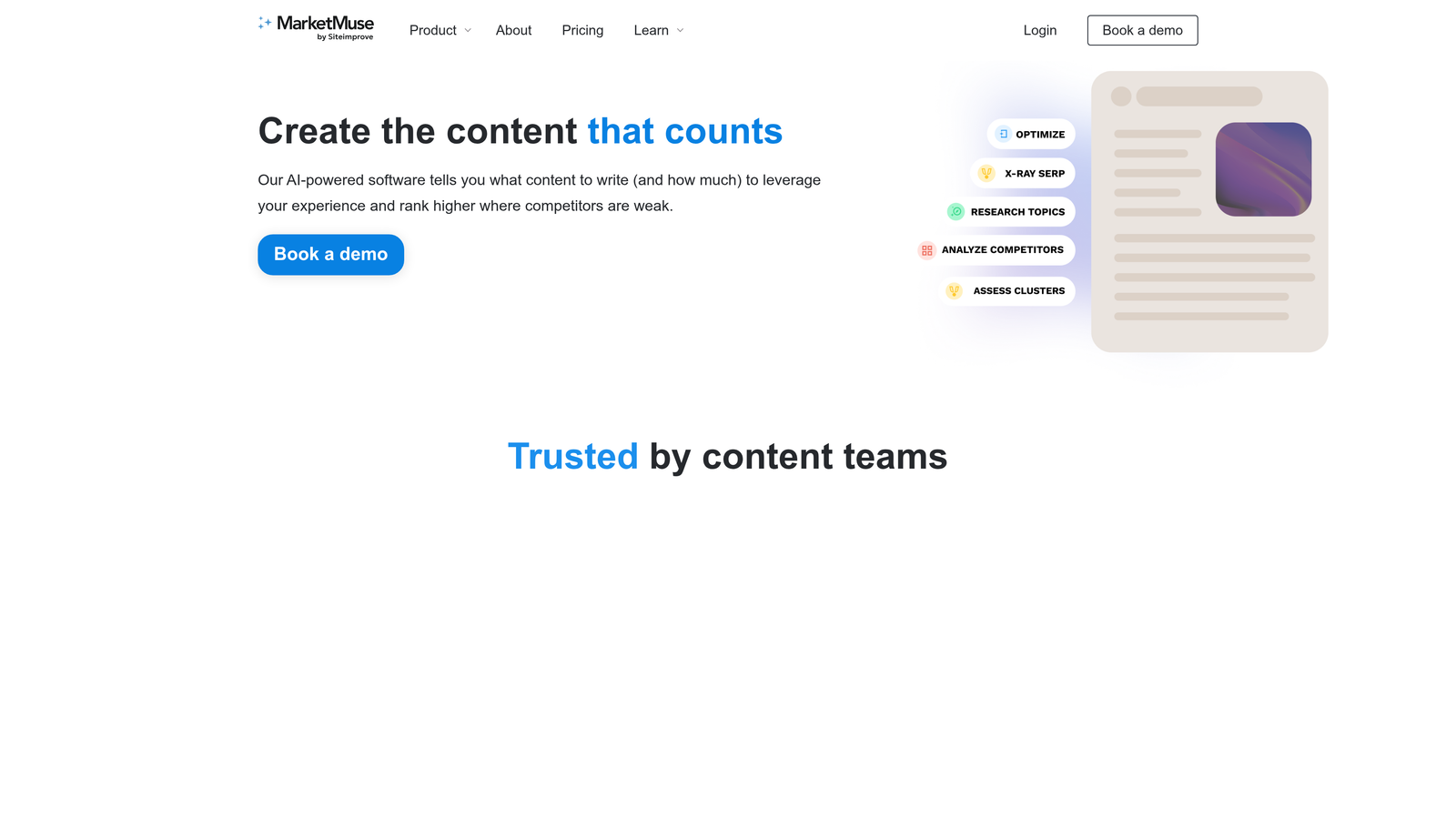
MarketMuse is a content intelligence platform that uses AI to audit content libraries, identify topical authority gaps, and prioritize content creation for maximum competitive advantage.
Where This Tool Shines
MarketMuse excels at the strategic layer of content planning. Rather than optimizing individual articles, it analyzes your entire content library against the topical landscape to show where you have authority and where you have gaps. For GEO purposes, this matters because AI models tend to cite sources that demonstrate comprehensive topical coverage, not just individual well-optimized pages.
The personalized difficulty scores are a standout feature. Instead of generic keyword difficulty based on domain authority, MarketMuse scores difficulty relative to your site's existing content coverage. That makes prioritization decisions more accurate and actionable.
Key Features
Content Inventory Analysis: Audits your existing content library with authority scoring to identify what's working and what needs attention.
Topical Model Mapping: Visualizes coverage gaps across topic areas to guide content planning decisions.
Personalized Difficulty Scores: Calculates content opportunity difficulty based on your site's specific authority, not just generic metrics.
Content Planning Workflows: Prioritized recommendations that help teams focus effort where it will have the most competitive impact.
First-Draft Generation: Produces initial drafts based on competitive topic models to accelerate production.
Best For
Content strategists at established brands with large content libraries who need to make smart decisions about where to invest content resources. Also strong for teams building out new topic clusters from scratch with a strategic foundation.
Pricing
Free plan available. Paid plans start at $149/month, with enterprise pricing for larger teams and higher usage volumes.
8. Clearscope
Best for: Editorial teams that want clean, distraction-free semantic optimization guidance during the writing process.
Clearscope is a semantic content optimization platform with a grade-based scoring system that helps writers produce topically comprehensive content aligned with how AI models assess relevance.
Where This Tool Shines
Clearscope's interface is deliberately simple, and that's a feature, not a limitation. Writers get a letter-grade score and a list of recommended terms to include, without the visual complexity that can slow down editorial workflows. The grading system creates a clear, shared standard across a content team: everyone knows what an A-grade article looks like.
The semantic term recommendations are genuinely useful for GEO. AI models evaluate topical comprehensiveness when deciding what to cite, and Clearscope's term suggestions help writers cover the conceptual ground that signals expertise on a topic. It's not explicitly marketed as a GEO tool, but the underlying optimization logic aligns well with what AI citation engines reward.
Key Features
Letter-Grade Content Scoring: Grades content from A++ to F based on semantic coverage, creating a clear quality benchmark for editorial teams.
Real-Time Term Suggestions: Surfaces recommended terms and concepts as writers draft, without requiring them to leave the editor.
Google Docs and WordPress Integrations: Works inside the tools editorial teams already use daily.
Keyword-Level Competitive Reports: Analyzes what top-ranking content covers for each target keyword.
Clean Editorial Interface: Minimal distractions designed for writers who need to focus on the content itself.
Best For
Editorial teams and content agencies that produce high volumes of written content and need a consistent, easy-to-use optimization standard. Works especially well in teams where writers have varying levels of SEO expertise.
Pricing
Starts at $189/month for the Essentials plan. Higher-tier plans add more reports and additional team members.
9. HubSpot Content Hub
Best for: Marketing teams that want GEO-aware content creation tied directly to CRM data, lead attribution, and multi-channel publishing.
HubSpot Content Hub is an AI-powered content management platform integrated into HubSpot's broader marketing, CRM, and analytics ecosystem.
Where This Tool Shines
Content Hub's differentiation is context. While most content optimization tools operate in isolation, HubSpot connects content performance to revenue data through its CRM integration. For content teams at B2B companies, that means you can see not just which articles rank or get cited, but which ones actually contribute to pipeline. That attribution layer is difficult to replicate with standalone GEO tools.
The brand voice settings for AI-assisted content creation are also worth noting. Teams that use AI writing tools at scale often struggle with consistency, and HubSpot's brand voice configuration helps ensure that AI-generated content sounds like your brand rather than generic AI output.
Key Features
AI Content Generation and Remix: Built-in AI writing tools that generate and repurpose content with brand voice settings applied.
CRM-Connected Analytics: Ties content performance to contact, lead, and revenue data for full-funnel attribution.
SEO Recommendations in the Editor: Surfaces optimization suggestions within the content creation interface.
Multi-Channel Publishing: Publishes to blog, landing pages, and email from a single platform.
Brand Voice Configuration: Maintains consistent tone and style across AI-assisted content at scale.
Best For
Marketing teams already using HubSpot for CRM, email, or marketing automation who want content creation and performance analytics in the same ecosystem. Less suited for teams that need deep standalone GEO monitoring or advanced AI citation analysis.
Pricing
Content Hub Starter at $20/month. Professional plan at $500/month, which includes the full suite of AI content tools and analytics.
Which Tool Is Right for Your Content Team?
The right GEO stack depends on where your team's biggest gap currently sits. Here's a quick breakdown to help you choose.
Best all-in-one GEO platform: Sight AI covers AI visibility tracking, GEO-optimized content creation, and automated indexing in a single platform at an accessible price point. It's the strongest choice for teams that want to monitor and improve their AI presence without managing multiple tools.
Best for enterprise SEO teams: Semrush offers the broadest feature set and the deepest integration with existing search analytics workflows. If your team is already in Semrush and needs GEO features layered in, it's the natural choice.
Best for writers and editors: Clearscope and Surfer SEO both excel at in-editor optimization guidance. Clearscope wins on simplicity and editorial usability; Surfer wins on competitive depth and content planning features.
Best for AI visibility monitoring: Otterly.AI is purpose-built for this and does it cleanly. Pair it with a content creation tool for a focused two-tool GEO stack.
Best for content strategy and topical authority: MarketMuse and Frase both address the strategic layer, with MarketMuse better suited for auditing large existing libraries and Frase better suited for teams scaling brief creation.
Regardless of which tools you choose, the first step is understanding where your brand currently stands in AI-generated responses. Start tracking your AI visibility today and see exactly where your brand appears across top AI platforms, what's being said, and where your content has the most opportunity to improve.