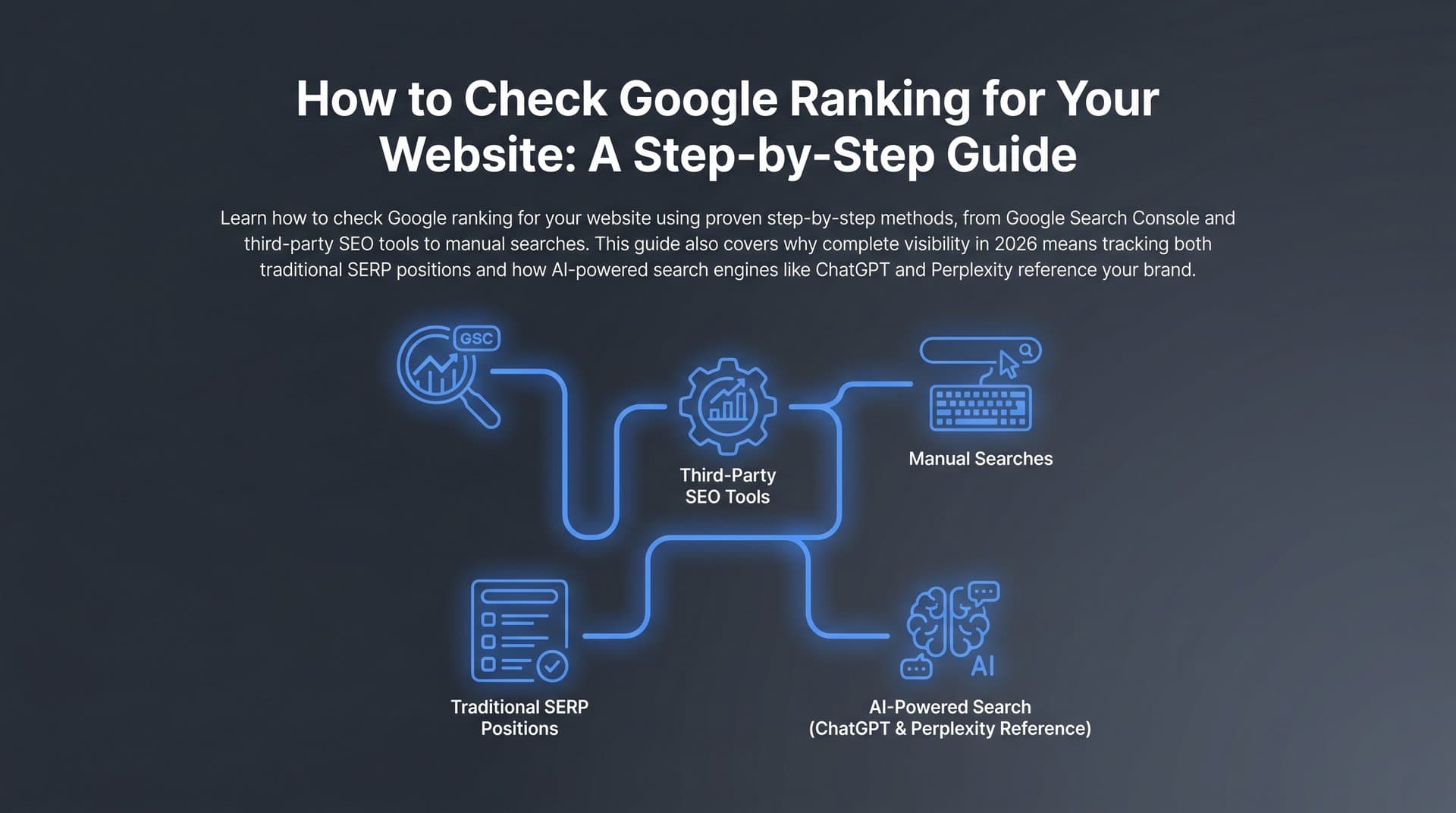
Backlinks remain one of the strongest ranking signals in search, and increasingly, they influence how AI models like ChatGPT, Claude, and Perplexity perceive your brand's authority. When authoritative sites link to your content, search engines treat those links as votes of confidence. The same principle is beginning to apply across AI-powered platforms: brands that are frequently cited by trusted sources are more likely to appear in AI-generated recommendations.
But not all backlinks are equal. A single contextual link from a high-authority, topically relevant domain can outperform dozens of low-quality directory submissions. The challenge for marketers, founders, and agencies is building backlinks systematically without resorting to spammy tactics that trigger penalties or damage your brand reputation.
This guide walks you through a repeatable, step-by-step process to create backlinks that strengthen both your traditional SEO performance and your visibility across AI-powered search platforms. You'll learn how to audit your current link profile, identify high-value targets, craft outreach that actually gets responses, and track the impact of every link you earn.
Whether you're building links for a SaaS product, an agency client, or your own brand, these steps will help you develop a sustainable backlink strategy grounded in quality content and genuine relationships. Let's get into it.
Step 1: Audit Your Existing Link Profile and Identify Gaps
Before you build a single new backlink, you need to understand what you're working with. Jumping into outreach without auditing your current profile is like renovating a house without checking the foundation first. You might be building on top of problems that are actively dragging your rankings down.
Start by exporting your backlink data using a tool like Ahrefs, Moz, or Google Search Console. Each platform surfaces slightly different data, so using two in combination gives you a more complete picture. Google Search Console is free and shows you which sites Google has actually crawled and credited. Ahrefs or Moz add domain authority scores and spam indicators that help you prioritize.
Once you have your data, categorize your existing links across three dimensions:
Referring domain authority: Higher domain authority generally means more link equity. Prioritize understanding how many of your links come from genuinely authoritative sites versus low-authority directories or link farms.
Topical relevance: A link from a site in your niche carries more weight than a link from an unrelated domain, even if the unrelated domain has higher authority. Google's algorithms have become increasingly sophisticated at evaluating whether links make contextual sense.
Link placement: Contextual links embedded within the body of an article are significantly more valuable than footer links, sidebar widgets, or sitewide links. Audit where your links actually appear on the linking page.
Next, look for toxic or spammy links. These might be links from known link farms, private blog networks (PBNs), or irrelevant foreign-language directories. If you find a cluster of these, consider using Google's Disavow Tool to signal that you don't want these links counted. This is especially important if you've inherited a site with a questionable link history.
Finally, run a competitor gap analysis. Export the backlink profiles of your top three to five competitors and identify domains that link to multiple competitors but not to you. These are warm prospects: the site has already demonstrated willingness to link to content in your space. Document everything in a spreadsheet with columns for domain, authority score, topical relevance rating, link type, and status. Building a comprehensive SEO performance dashboard becomes your master reference for the entire campaign.
Success indicator: You have a clean, categorized link profile, a list of toxic links flagged for disavowal, and a gap list of at least 20 to 30 competitor-linked domains you haven't yet earned links from.
Step 2: Build Linkable Assets That Earn Attention
Here's the uncomfortable truth about link building: if your content isn't worth linking to, no amount of clever outreach will compensate. The most scalable backlink strategies are built on assets that attract links naturally, even before you send a single email.
So what makes content genuinely linkable? Think of it this way: another site's editor will only link to your content if it makes their own content better or more credible. That means your asset needs to offer something their readers can't easily find elsewhere.
The content formats that consistently earn editorial links include:
Original research and data studies: If you have access to proprietary data, customer survey results, or industry benchmarks, publish them. Journalists and bloggers regularly cite original data because it gives their articles credibility. A well-structured data study can earn links passively for years after publication.
Comprehensive how-to guides with visual assets: Guides that combine deep practical instruction with custom visuals, frameworks, or diagrams give other sites something to reference and embed. Visual assets are particularly link-friendly because they're easy to credit and share. Learning how to optimize content for SEO ensures these guides also perform well in search results.
Free tools and templates: Calculators, generators, audit checklists, and downloadable templates attract links because they solve a specific problem. If someone writes an article about your topic, linking to a free tool you've built adds immediate value for their readers.
Unique frameworks and methodologies: If you've developed a proprietary approach to solving a common problem, name it and document it. Named frameworks are inherently citable. They give other writers a shorthand to reference, and they position your brand as the originating authority.
When building these assets, optimize them for both traditional SEO and GEO (Generative Engine Optimization). Structure your content with clear headings, concise definitions, and well-organized sections so AI models can easily parse and reference your material when answering related queries. This matters because backlinks and AI citations are increasingly connected: the more your content is linked to and cited, the more likely AI platforms are to surface your brand in generated answers.
Before you publish, ask yourself one honest question: "Why would another site link to this instead of competing resources?" If you can't answer that clearly, the asset needs more work.
Once your asset is ready, get it indexed fast. Submit it through IndexNow or manually via Google Search Console so it's discoverable as quickly as possible. Understanding how to index a website in Google means faster link acquisition opportunities, especially if you're building around a timely topic or trend.
Success indicator: You have at least one published asset with a clear, differentiated value proposition that you can confidently pitch to external sites as a resource worth linking to.
Step 3: Prospect and Qualify High-Value Link Targets
With your assets ready, it's time to build a list of sites worth pursuing. This is where many link-building campaigns go wrong: teams either cast too wide a net (wasting time on irrelevant targets) or aim too high exclusively (getting ignored by sites that have no reason to engage with a newer brand).
The smart approach is a tiered prospect list that balances ambition with realism.
Start with search operators to surface relevant opportunities. In Google, try combinations like:
"your keyword" + "resources"
"your keyword" + "guest post"
"your keyword" + "roundup"
"your keyword" + "recommended tools"
These queries surface resource pages, contributor programs, and curated lists that are explicitly designed to link to external content. They're warm targets because the site has already signaled intent to link.
Evaluate each prospect on three criteria before adding them to your list:
Domain authority: Use Ahrefs or Moz to check the site's authority score. This gives you a rough proxy for how much link equity a placement would pass. Don't obsess over this number, but use it to tier your prospects.
Topical relevance: Is this site genuinely about your niche? A link from a tangentially related site is worth far less than one from a domain that covers your topic regularly and in depth.
Real organic traffic: Authority scores can be gamed or outdated. Check whether the site actually receives organic traffic using Ahrefs' Site Explorer or a similar tool. A site with a decent authority score but zero organic traffic is a red flag. Knowing how to track keyword rankings helps you verify whether a prospect's traffic claims hold up.
Once you've evaluated your prospects, organize them into three tiers. Tier 1 covers high authority and high relevance, the ideal targets you'll invest the most personalization effort into. Tier 2 covers moderate authority with strong relevance, solid placements that are more attainable. Tier 3 covers niche blogs with smaller but engaged, highly relevant audiences. These can be surprisingly valuable for topical authority even if their domain authority scores are modest.
Aim for 50 to 100 qualified prospects per campaign. This accounts for typical response rates in cold outreach, which tend to be low even with excellent personalization. Having a deep pipeline means your campaign doesn't stall after a few non-responses.
For each prospect, find the right contact person. Check the site's author bios, LinkedIn profiles, or use a tool like Hunter.io to identify the editor or content manager. Avoid generic contact forms whenever possible. A personalized email to a named individual consistently outperforms a form submission that may never reach the right person.
Success indicator: You have a tiered prospect list of 50 to 100 qualified sites with a named contact for each, organized by tier and ready for outreach.
Step 4: Craft Personalized Outreach That Gets Replies
Most link-building outreach fails for one simple reason: it leads with the ask instead of the value. Site owners and editors receive dozens of link requests per week. The emails that get replies are the ones that feel like they came from a real person who actually read their content and has something genuinely useful to offer.
Here's the framework that works:
Open with a specific, genuine observation: Reference something specific about their content. Not "I loved your article on X" but "Your breakdown of Y in your article on X was particularly useful, especially the section on Z." This signals you actually read it and immediately differentiates you from mass-blast campaigns.
Introduce your value proposition before your ask: Tell them what you have to offer before you ask for anything. This might be a data study that adds depth to a point they made, a free tool that would benefit their readers, or a resource that fills a gap in their existing content.
Keep the email to four to six sentences: Editors are busy. A concise, well-structured email that respects their time performs better than a lengthy pitch. Make your call to action clear and low-friction: "Would it make sense to add this as a resource in that section?" is easier to say yes to than "Please review my content and let me know if you'd like to collaborate."
The most effective outreach angles for creating backlinks include:
Broken link replacement: Find a broken outbound link on their page, identify what it was pointing to, and offer your content as a replacement. This frames your request as solving their problem, not creating work for them.
Resource page additions: If a site has a "resources" or "tools" page relevant to your niche, pitch your linkable asset as a natural addition. These pages exist specifically to link out.
Data citations: If your research or data study covers a topic they've written about, offer it as a citation to strengthen their existing article. Editors appreciate anything that makes their content more credible.
Expert roundup contributions: Offer a concise, quotable expert insight for a roundup they're working on or planning. This builds relationships and earns contextual links simultaneously.
On follow-ups: send one follow-up after five to seven days with a brief, polite nudge. Keep it to two sentences. Never send more than two emails total per prospect. Persistence beyond that crosses into spam territory and damages your sender reputation. Setting up efficient outreach workflows helps you manage follow-up timing without letting prospects slip through the cracks.
Track your outreach in a spreadsheet or CRM. Log open rates, reply rates, and conversion rates by template and outreach angle. Over time, this data tells you exactly which approaches resonate with which types of sites, and you can refine your templates accordingly.
Success indicator: Your outreach is generating reply rates above the industry baseline for cold email, and you're converting a meaningful percentage of replies into actual link placements.
Step 5: Leverage Content Partnerships and Digital PR
One-off link requests are fine for building volume, but the highest-quality backlinks often come from ongoing relationships and strategic partnerships. Think of this step as shifting from transactional link building to relationship-driven link earning.
The most sustainable way to create backlinks at scale is to become a trusted contributor in your industry's media ecosystem. That means building genuine relationships with editors, bloggers, and journalists over time, not just reaching out when you need a link.
Guest articles on reputable publications are one of the most reliable ways to earn contextual, editorial backlinks. The key is to pitch topics where you have genuine expertise and a fresh angle. Editors at quality publications have seen every generic "10 tips for X" pitch. What they want is a specific, well-argued perspective that their readers haven't encountered before. Maintaining a well-planned content calendar ensures you always have timely, relevant pitches ready for editorial opportunities.
Digital PR platforms have made it significantly easier to connect with journalists who are actively seeking expert sources. Platforms like Connectively (formerly HARO), Qwoted, and Featured allow you to respond to journalist queries with expert insights that can earn contextual backlinks from major publications. The key is speed and specificity: respond quickly, keep your pitch concise, and make sure your expertise is directly relevant to what the journalist is asking about.
Co-marketed content is another powerful tactic that many brands underutilize. Joint webinars, co-authored research reports, and shared data studies give both parties a reason to promote and link to the content. When you partner with a complementary brand on a piece of content, you're effectively doubling your distribution network and your link-earning potential from a single asset.
Finally, monitor your brand mentions across the web. Many sites will reference your brand, your content, or your data without actually linking to you. These unlinked mentions are low-hanging fruit: the site has already demonstrated familiarity with your brand, so converting a mention into a link is a much warmer ask than cold outreach. Set up Google Alerts for your brand name and key asset titles to catch these as they happen.
Success indicator: You have at least two to three ongoing contributor relationships with publications in your niche, and you're regularly monitoring and converting unlinked brand mentions into backlinks.
Step 6: Track Results and Measure Backlink Impact on Rankings and AI Visibility
Link building without measurement is just hope. To build a backlink strategy that compounds over time, you need to track what's working, what's not, and where your efforts are generating the most return.
Start with the basics. Monitor new and lost backlinks on a weekly basis using your preferred SEO tool. Most platforms allow you to set up automated alerts when you gain or lose links, so you're not manually checking every week. Lost links matter just as much as gained ones: if a high-value link disappears, it's worth reaching out to understand why and whether it can be restored.
Next, connect your link-building activity to ranking and traffic outcomes. When you earn a significant new backlink, note the date and the target page. Then track whether that page's keyword rankings improve in the weeks that follow. Understanding how to measure SEO success ensures this correlation analysis is structured and actionable, even though Google's algorithm considers many signals. Over time, patterns emerge that tell you which types of links from which types of sites move the needle for your specific domain.
Here's where it gets particularly relevant for modern SEO: measure the broader impact of your backlink strategy on AI visibility. As AI-powered search platforms like ChatGPT, Claude, and Perplexity become more widely used, your brand's presence in AI-generated answers is increasingly tied to how authoritative and frequently cited you are across the web. Backlinks from trusted sources contribute to that authority signal.
Use an AI visibility tracking tool to monitor how your brand appears across AI models. Are you being mentioned more frequently as your link profile grows? Are AI platforms citing your original research or referencing your frameworks? This kind of tracking gives you a fuller picture of the ROI from your link-building efforts beyond traditional ranking metrics. Pairing backlink data with insights on how to increase organic traffic helps you connect link acquisition directly to growth outcomes.
Calculate your campaign ROI by comparing the cost of your link-building efforts, including time, tool subscriptions, and content production, against organic traffic gains and the leads or revenue those visitors generate. This analysis helps you make the case internally for continued investment and identifies which tactics deserve more resources.
Refine your strategy quarterly. Look at which content types earned the most links, which outreach angles had the highest conversion rates, and which referring domains sent the most qualified traffic. Double down on what's working and cut what isn't.
Success indicator: You have a clear dashboard tracking new and lost links, keyword ranking changes, organic traffic growth, and AI brand mention frequency, updated at least monthly.
Your Backlink Strategy Starts Now
Building backlinks is not a one-time project. It's an ongoing discipline that compounds over time. The brands that treat link building as a continuous system rather than a campaign sprint are the ones that build durable authority across both traditional search and AI-powered platforms.
Here's a quick checklist to keep your strategy on track:
Audit quarterly: Review your link profile every three months and disavow any newly identified toxic links.
Maintain a content pipeline: Aim to publish at least one new linkable asset per month, whether that's a data study, a free tool, or a comprehensive guide.
Keep your prospect list fresh: Replenish your outreach pipeline with 50 or more qualified targets per campaign so you always have warm prospects to contact.
Personalize every email: Customize the opening and value proposition for each prospect, and follow up once after five to seven days.
Build relationships, not just links: Ongoing partnerships with editors and journalists yield recurring opportunities that no one-off outreach campaign can replicate.
Track both SEO and AI visibility: Measure the full impact of your link-building work across traditional rankings and how your brand appears in AI-generated answers.
As AI-powered search continues to grow, the brands that earn authoritative backlinks will be the ones AI models trust and recommend. Your link profile is no longer just an SEO asset; it's a signal of credibility that influences how AI systems understand and represent your brand to their users.
Start with Step 1 today, and build a backlink engine that drives organic growth across every search surface, traditional and AI alike. And to make sure your efforts are actually moving the needle where it counts, start tracking your AI visibility today so you can see exactly where your brand appears across top AI platforms and uncover the content opportunities that will accelerate your growth.