Content teams are drowning in data but starving for insights. You're publishing consistently, tracking pageviews, maybe even monitoring keyword rankings—but connecting content efforts to actual business outcomes remains frustratingly elusive.
Content performance analytics platforms solve this by unifying engagement metrics, SEO data, conversion tracking, and increasingly, AI visibility signals into actionable dashboards. This guide evaluates top platforms that help marketers, founders, and agencies understand which content actually drives results.
We've prioritized tools that go beyond vanity metrics to reveal content ROI, identify optimization opportunities, and track how content performs across AI-powered search experiences.
1. Sight AI
Best for: Tracking brand visibility across AI models and traditional search simultaneously
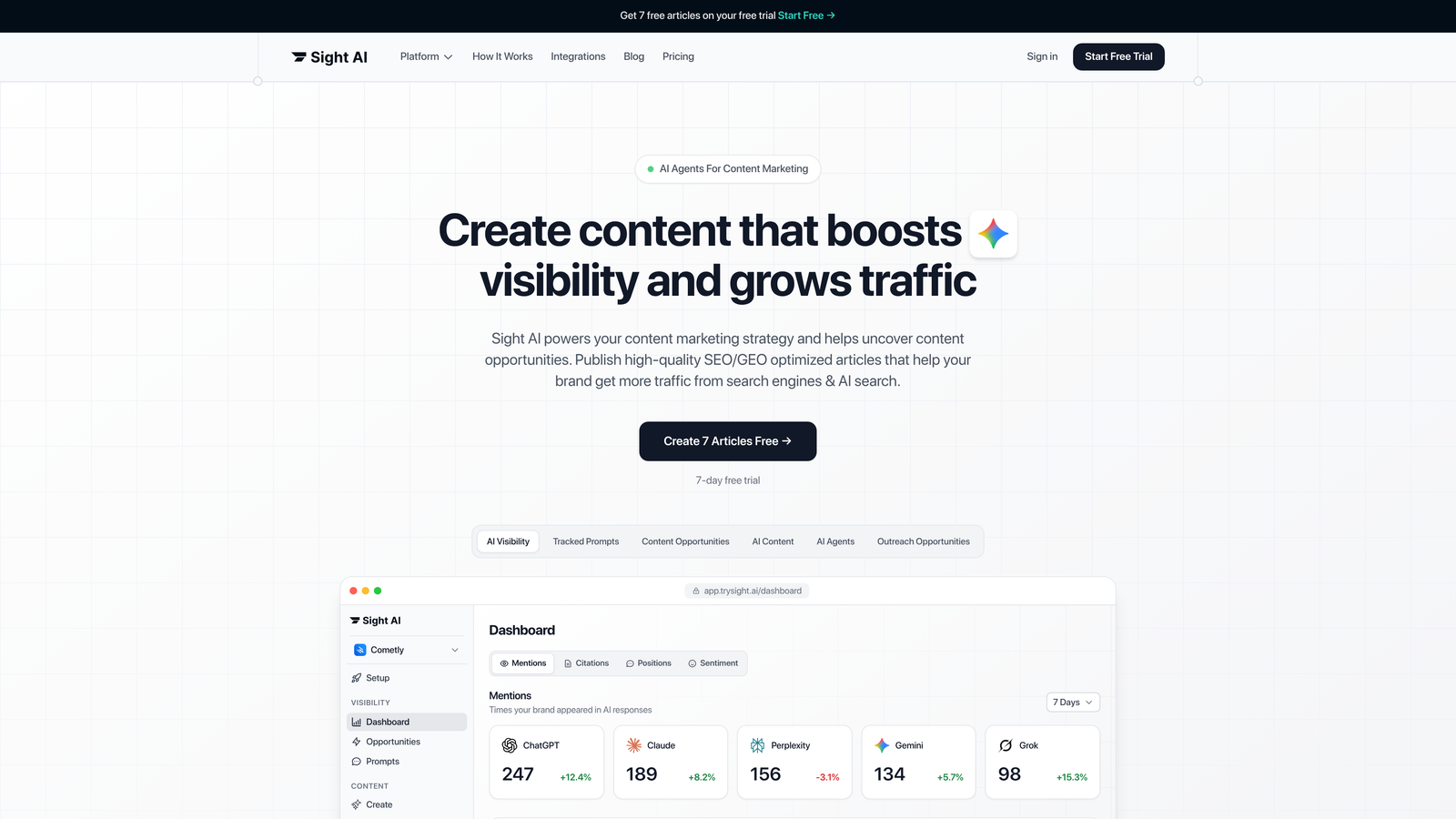
Sight AI is an AI-powered content performance platform that monitors how your brand appears across ChatGPT, Claude, Perplexity, and other AI models.
Where This Tool Shines
Most analytics platforms still operate in a pre-AI world, focusing exclusively on traditional search and website metrics. Sight AI addresses the emerging blind spot: understanding how AI models talk about your brand when users ask questions.
The platform tracks brand mentions across six AI platforms, assigns sentiment scores to each mention, and reveals which prompts trigger your brand's appearance. This visibility becomes increasingly critical as more users discover content through conversational AI rather than traditional search engines.
Key Features
AI Visibility Score: Quantifies brand presence across multiple AI platforms with sentiment analysis.
Prompt Tracking: Shows exactly which user queries trigger your brand mentions in AI responses.
SEO/GEO Content Generation: 13+ specialized AI agents create optimized content designed for both search engines and AI model training.
Automated Indexing: IndexNow integration ensures new content gets discovered and indexed faster.
Brand Sentiment Analysis: Monitors how AI models characterize your brand—positive, neutral, or negative.
Best For
Marketing teams at B2B SaaS companies, agencies managing multiple client brands, and founders who recognize AI search as a growing discovery channel. Particularly valuable for brands in competitive spaces where AI-powered recommendations influence purchase decisions.
Pricing
Contact for pricing with tiered plans available from startups through enterprise. Pricing scales based on brand monitoring volume and content generation needs.
2. Semrush Content Marketing Platform
Best for: Comprehensive SEO-driven content strategy with deep competitive analysis
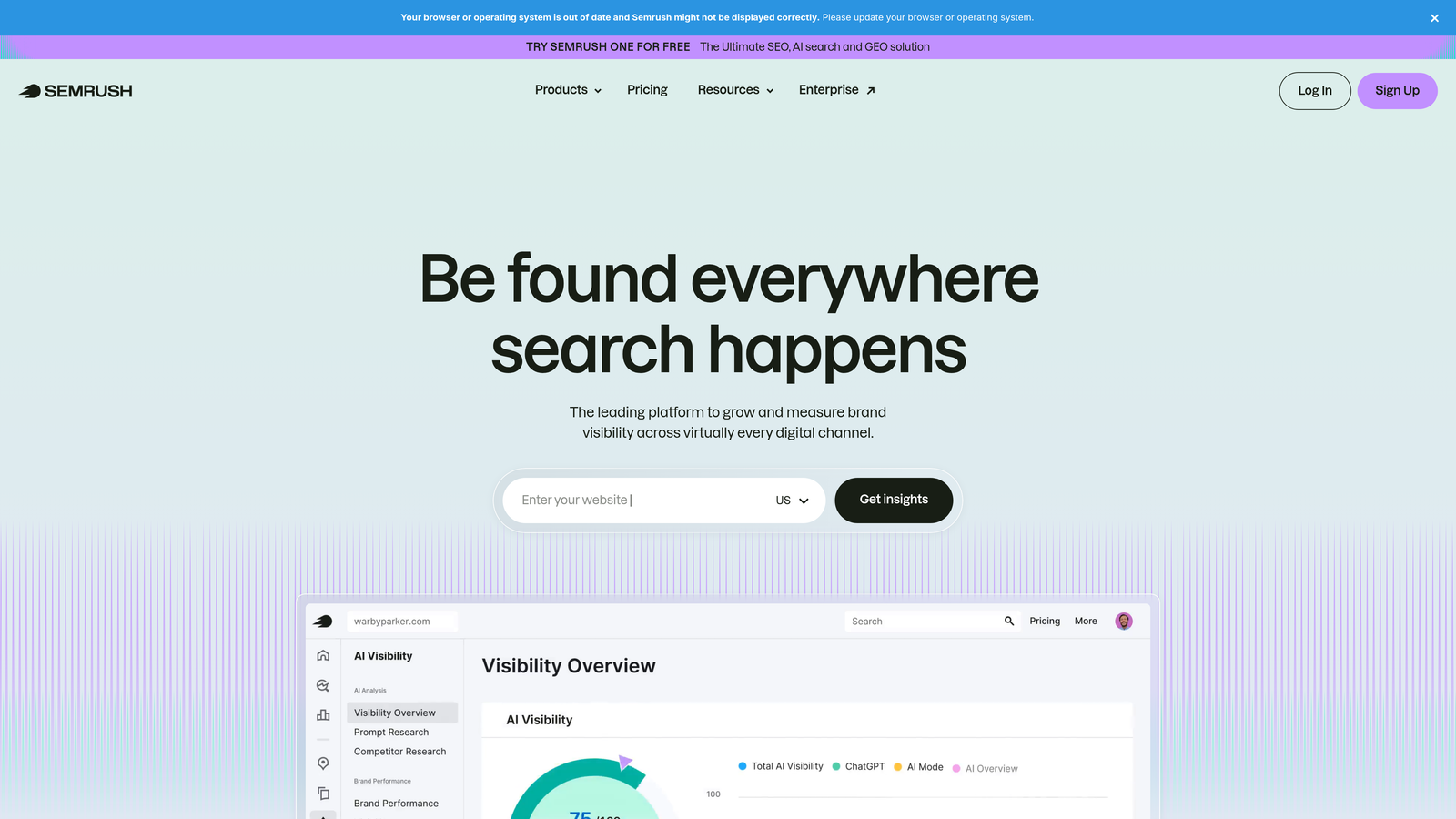
Semrush Content Marketing Platform is a comprehensive suite combining keyword research, content auditing, and performance tracking with competitive intelligence.
Where This Tool Shines
Semrush excels at the intersection of SEO and content strategy. The platform doesn't just tell you how content performs—it reveals why competitors outrank you and what topics you're missing entirely.
The content audit functionality assigns SEO health scores to individual pages, identifying technical issues, keyword optimization gaps, and backlink opportunities. For teams managing large content libraries, this systematic approach to improvement beats guesswork every time.
Key Features
Content Audit: Automated SEO health scoring for every page with prioritized fix recommendations.
Topic Research: Discovers content gaps by analyzing what competitors cover that you don't.
Post Tracking: Monitors keyword position changes for published content over time.
Brand Monitoring: Tracks brand mentions across the web with sentiment context.
Marketing Calendar: Workflow management with assignment tracking and deadline alerts.
Best For
SEO-focused content teams, agencies managing multiple client sites, and companies competing in crowded niches where technical optimization makes the difference. Teams already using Semrush for keyword research get the most value from the integrated workflow.
Pricing
Starts at $129.95/month for Pro plan, but Content Marketing Platform features require Guru at $249.95/month or higher tiers.
3. Parse.ly
Best for: Real-time content analytics for publishers and high-volume content operations
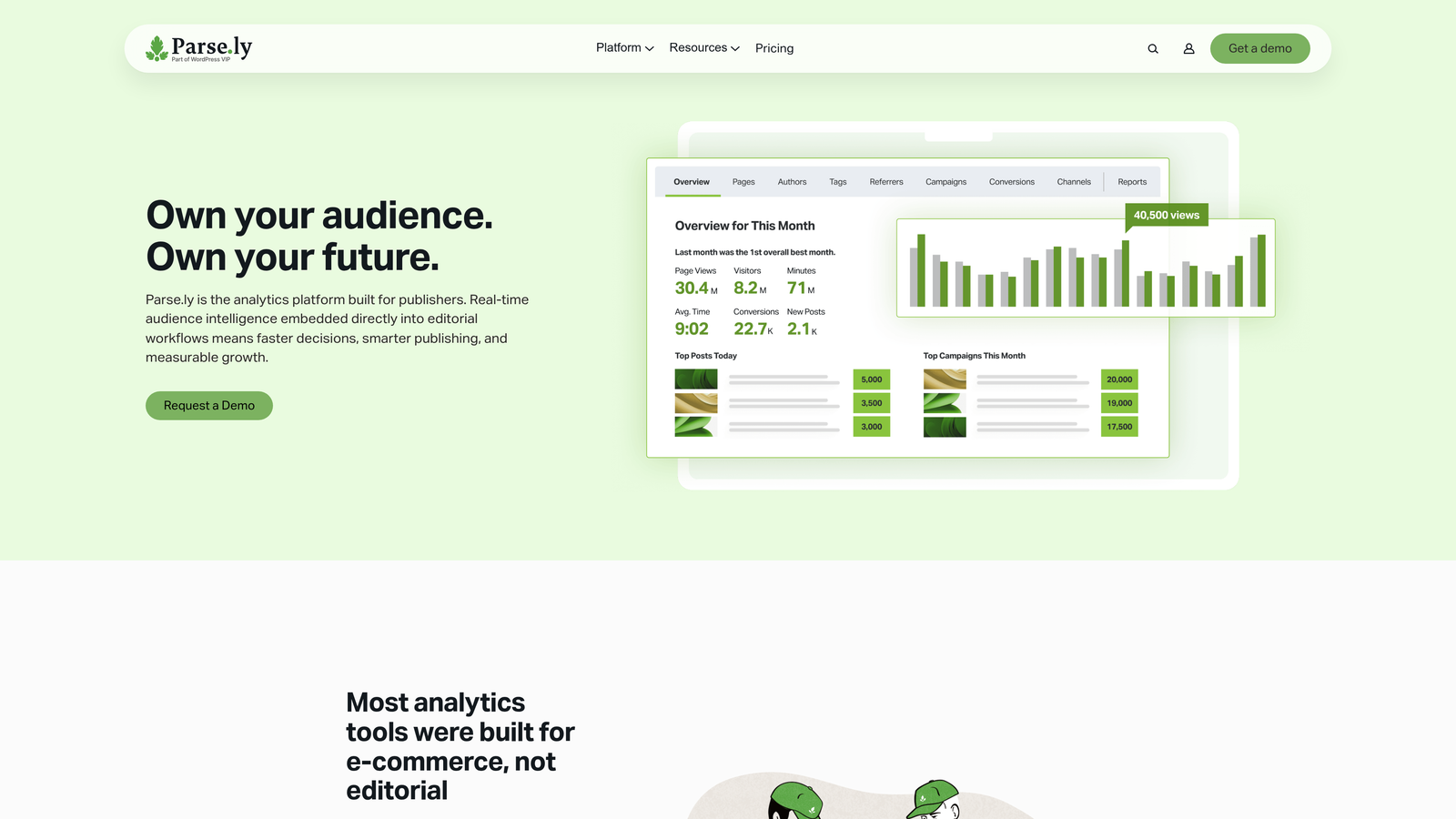
Parse.ly is a real-time analytics platform designed specifically for publishers and content-driven organizations that publish dozens of articles daily.
Where This Tool Shines
Parse.ly was built for newsrooms where content has a shelf life measured in hours, not months. The real-time dashboard shows which stories are gaining traction right now, allowing editorial teams to amplify trending content or adjust homepage placement instantly.
The platform goes deeper than pageviews with attention metrics—engaged time, scroll depth, and return visitor patterns. These signals help publishers understand not just what gets clicked, but what actually gets read and remembered.
Key Features
Real-Time Dashboard: Live traffic visualization showing content performance as it happens.
Attention Metrics: Tracks engaged time and scroll depth beyond simple pageview counts.
Content Recommendations API: Powers personalized content suggestions on your site.
Historical Trending: Compares current performance against historical patterns to identify breakout content.
Author Performance: Breaks down metrics by writer, section, and content type.
Best For
Digital publishers, media companies, and content operations publishing 20+ articles per day. Teams that need to make real-time decisions about content promotion and homepage placement get the most value.
Pricing
Custom pricing based on monthly traffic volume, typically starting around $500/month for smaller publishers and scaling significantly for high-traffic sites.
4. Chartbeat
Best for: Optimizing for engaged time and building audience loyalty
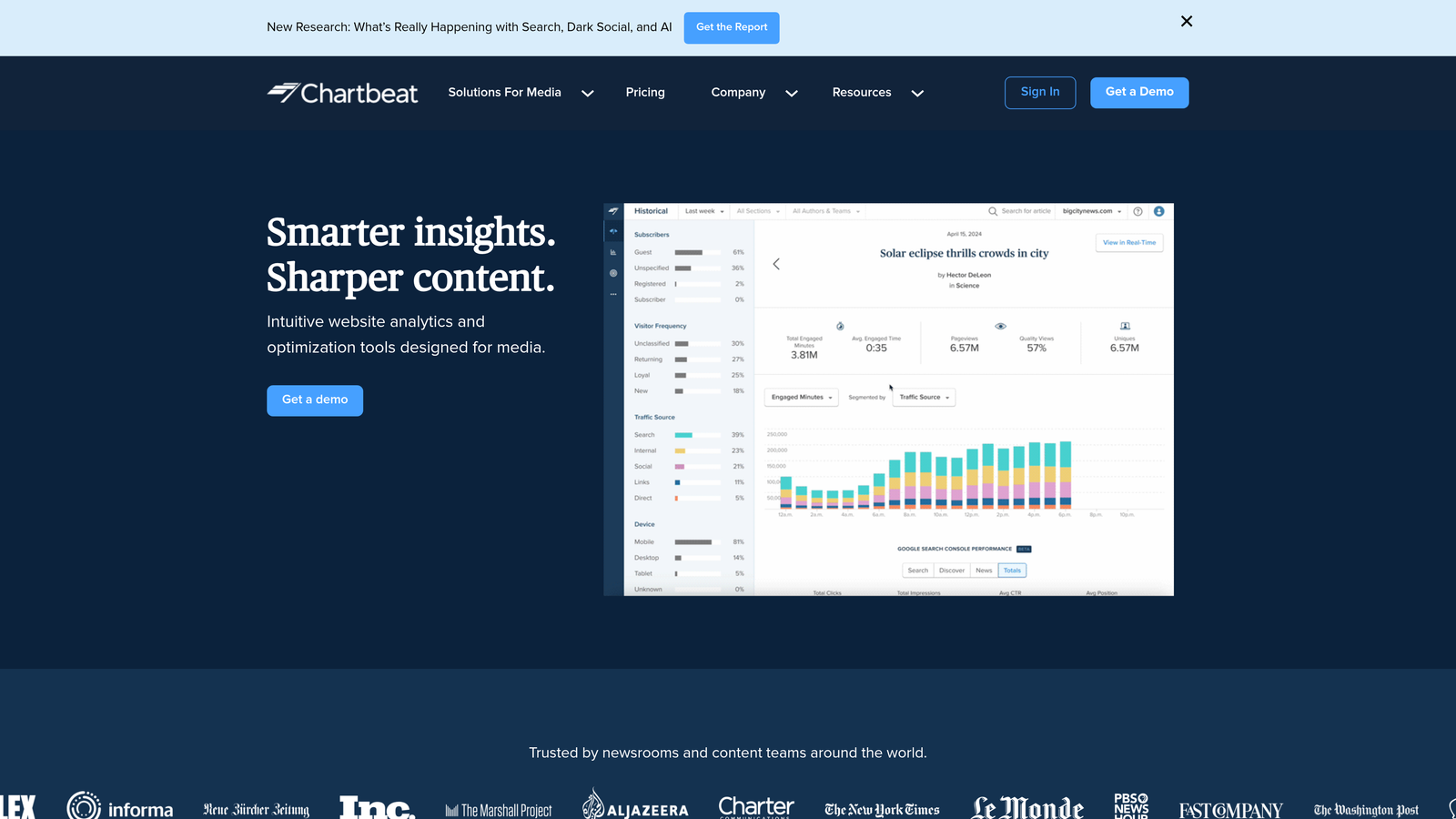
Chartbeat is a real-time analytics platform that prioritizes engaged time over pageviews, helping publishers understand actual reader attention.
Where This Tool Shines
Chartbeat challenges the pageview obsession by measuring what matters more: how long readers actually engage with content. The platform distinguishes between active reading and idle browser tabs, giving publishers accurate attention data.
The headline testing feature deserves special mention. Publishers can test multiple headlines simultaneously and watch real-time click-through data reveal which version resonates. This removes the guesswork from one of content's most critical decisions.
Key Features
Engaged Time Measurement: Differentiates active reading from idle time with mouse movement and scroll tracking.
Headline Testing: A/B tests headlines with real-time performance comparison.
Editorial Dashboard: Real-time view of top-performing content and trending topics.
Recirculation Tracking: Monitors how readers move between articles on your site.
Loyalty Analytics: Identifies return visitors and measures audience retention over time.
Best For
Publishers focused on building loyal audiences rather than chasing viral traffic spikes. Editorial teams that want to optimize for reader satisfaction and subscription conversion rather than pure volume.
Pricing
Custom enterprise pricing typically ranging from $7,000 to $50,000+ annually based on traffic volume and feature requirements.
5. Contentsquare
Best for: Understanding user behavior and content interaction patterns
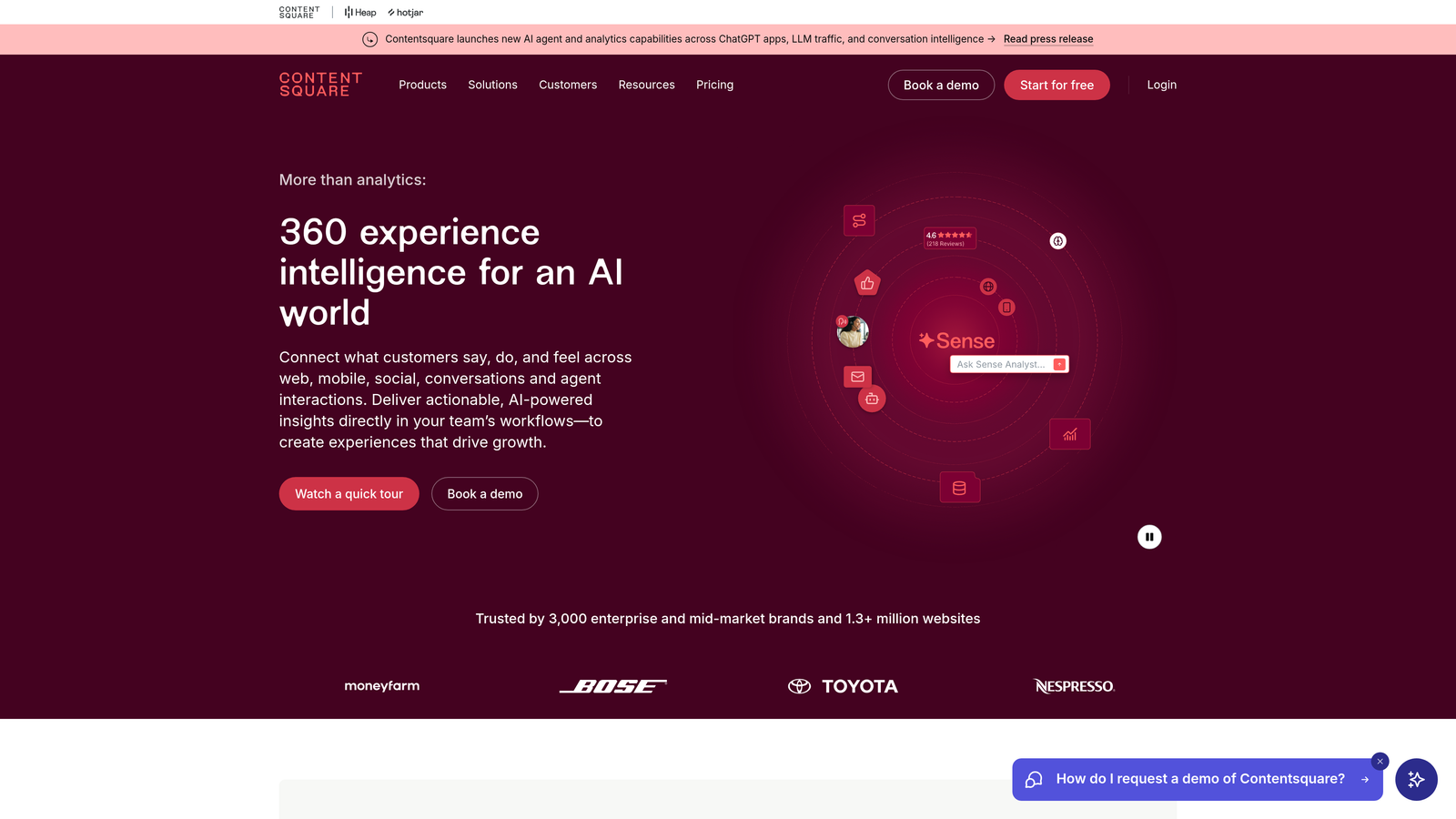
Contentsquare is a digital experience analytics platform that combines behavioral data with content performance insights through session replays and heatmaps.
Where This Tool Shines
Contentsquare reveals the "why" behind content performance through visual behavior data. Session replays let you watch exactly how users interact with articles—where they pause, what they skip, and where they abandon.
The zone-based heatmaps go beyond traditional click tracking to show attention patterns across content elements. You can see whether readers engage with embedded CTAs, whether images distract from key messages, or whether your sidebar recommendations actually get noticed.
Key Features
Session Replay: Records and replays individual user sessions to understand content interaction patterns.
Zone-Based Heatmaps: Visualizes attention and interaction across specific content elements.
Journey Analysis: Maps how users move through content touchpoints before converting.
Impact Quantification: Measures revenue impact of content changes and optimizations.
AI-Powered Insights: Automatically surfaces anomalies and optimization opportunities.
Best For
E-commerce brands where content directly influences purchase decisions, SaaS companies optimizing product education content, and enterprises with complex content experiences requiring detailed behavioral analysis.
Pricing
Enterprise pricing typically starting around $50,000+ annually based on traffic volume. Offers a limited free tier for smaller sites.
6. Clearscope
Best for: Content optimization with built-in performance tracking and grading
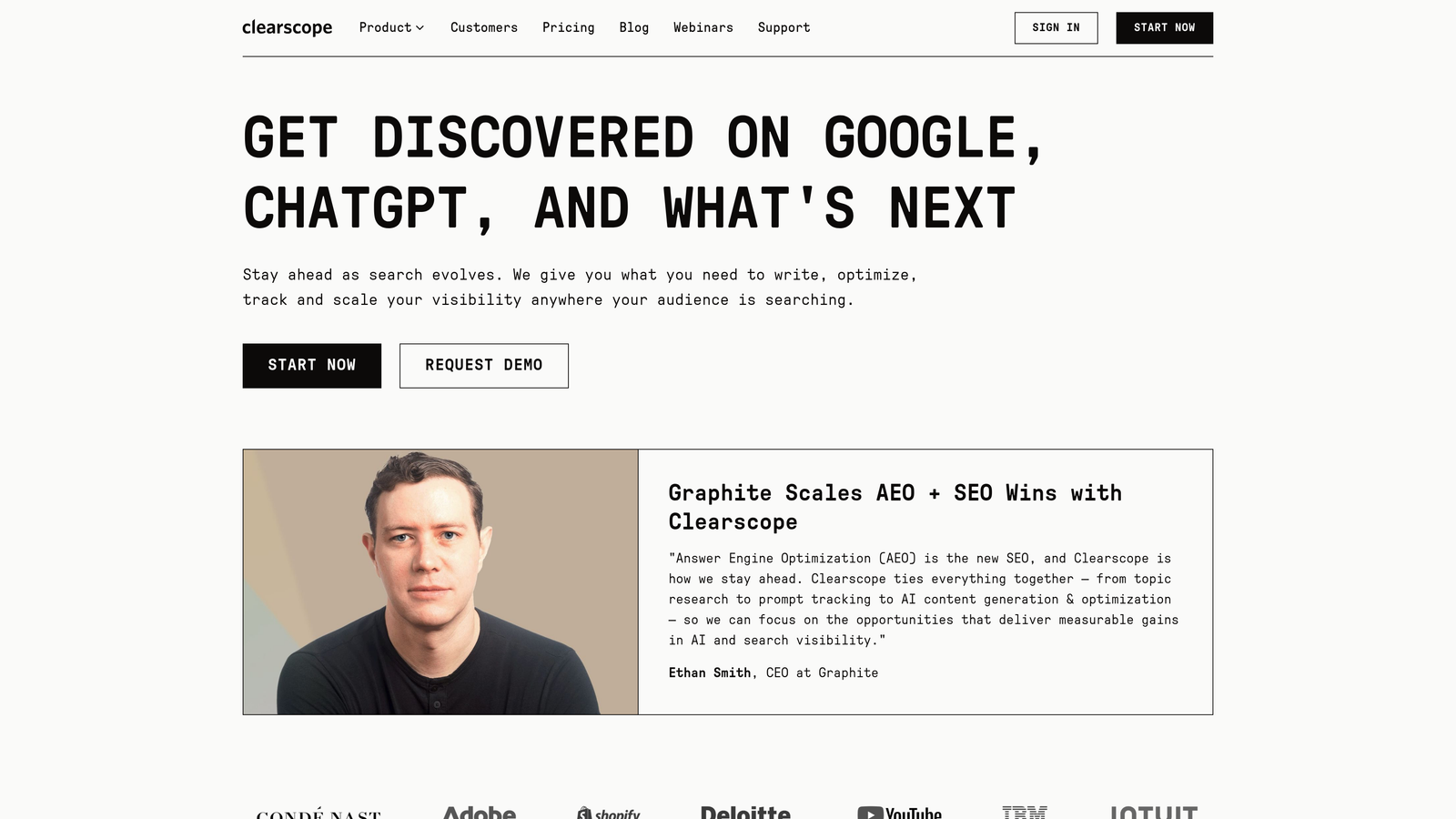
Clearscope is a content optimization platform that grades content quality and tracks performance with integrated SEO recommendations.
Where This Tool Shines
Clearscope transforms content optimization from guesswork into a graded assignment. The platform analyzes top-ranking content for your target keywords and assigns your draft a letter grade based on topic coverage completeness.
The search intent analysis helps writers understand not just what keywords to include, but what questions readers expect answered. This prevents the common mistake of keyword-stuffing content that doesn't actually satisfy user intent.
Key Features
Content Grade Scoring: Assigns letter grades based on topic coverage depth and keyword optimization.
Search Intent Analysis: Reveals what users expect to find when searching target keywords.
Competitor Benchmarking: Compares your content against top-ranking competitors term by term.
Google Docs Integration: Provides real-time optimization suggestions inside your writing workflow.
Content Inventory Tracking: Monitors published content performance with refresh recommendations.
Best For
Content marketers focused on organic search rankings, SEO agencies managing client content, and in-house teams producing educational content where comprehensive topic coverage matters more than publishing speed.
Pricing
Starts at $189/month for Essentials plan with limited content reports. Professional tier at $399/month unlocks unlimited reports and team collaboration.
7. Google Analytics 4 + Looker Studio
Best for: Free analytics foundation with powerful custom dashboard capabilities
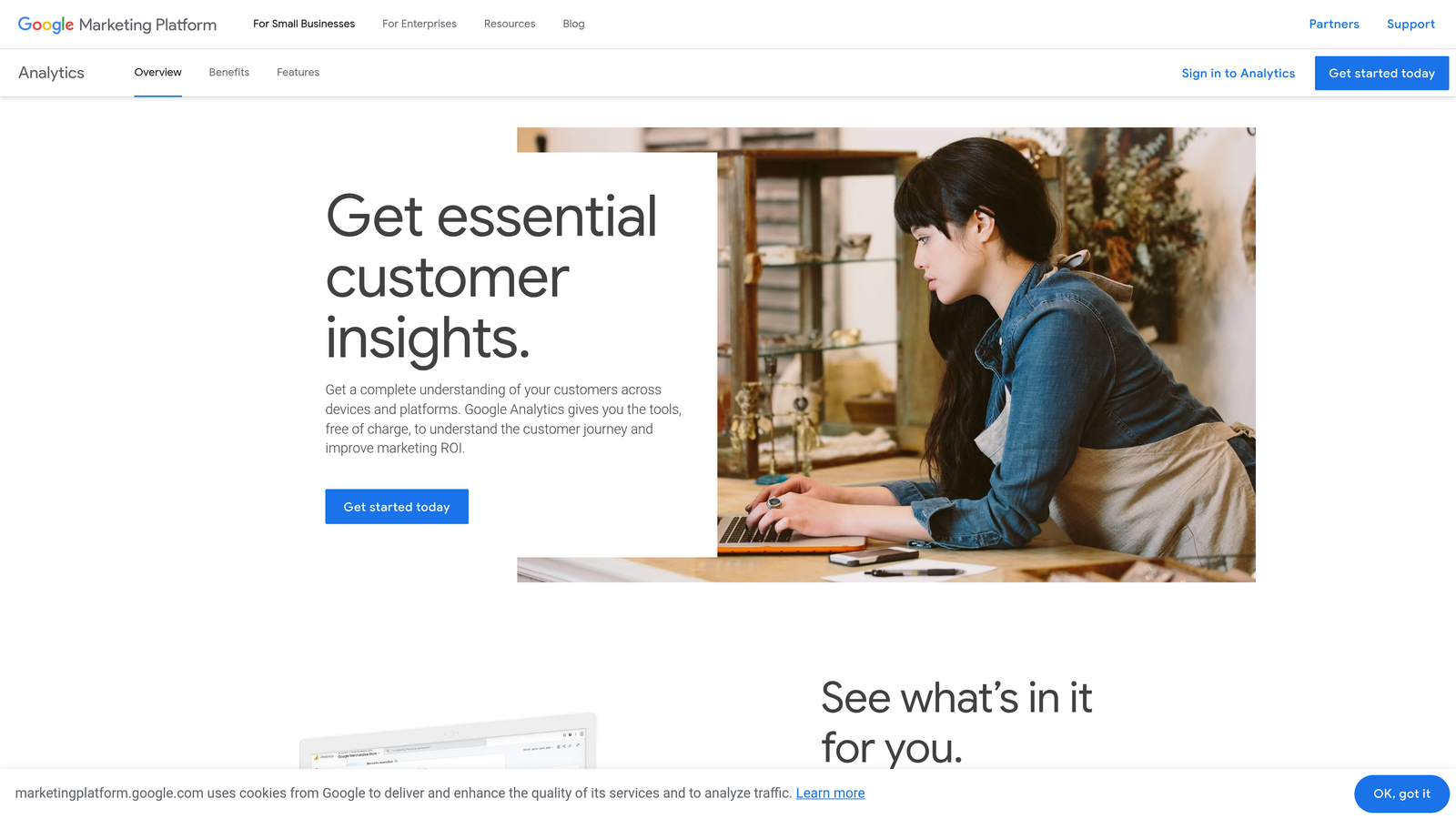
Google Analytics 4 provides event-based content tracking with free Looker Studio dashboards for visualization and custom reporting.
Where This Tool Shines
GA4's event-based model finally makes content performance tracking flexible and customizable. You can track specific content interactions—scroll depth, video plays, downloads, CTA clicks—without complex custom code.
The combination with Looker Studio transforms raw GA4 data into shareable dashboards. You can build custom content performance reports showing exactly the metrics your stakeholders care about, then schedule automated delivery.
Key Features
Event-Based Tracking: Flexible content interaction tracking beyond basic pageviews.
Custom Content Groupings: Organizes content by topic, funnel stage, or any custom dimension.
Engagement Metrics: Tracks engaged sessions, engagement rate, and average engagement time.
Path Exploration: Visualizes how users move through content journeys before converting.
Looker Studio Integration: Creates custom dashboards with automated reporting and sharing.
Best For
Startups and small teams with limited analytics budgets, companies already invested in the Google ecosystem, and organizations needing highly customized reporting that paid tools don't support out of the box.
Pricing
Free for standard use with generous limits. GA360 for enterprise needs with SLA guarantees starts around $50,000/year.
8. HubSpot Content Analytics
Best for: Content attribution to revenue with native CRM integration
HubSpot Content Analytics provides integrated content performance tracking within HubSpot's marketing platform with direct CRM-connected attribution.
Where This Tool Shines
HubSpot's killer advantage is closed-loop attribution. Because the CRM, marketing automation, and content analytics live in the same platform, you can trace individual blog posts to actual deals and revenue.
The topic cluster tracking helps teams organize content around pillar pages and subtopics, then monitor how the entire cluster performs as a unit. This strategic view prevents the common problem of optimizing individual pages while missing broader content strategy gaps.
Key Features
Blog Analytics: Tracks blog performance with topic cluster organization and monitoring.
Content Attribution: Connects content touchpoints to deals, revenue, and customer acquisition.
A/B Testing: Tests content variations including headlines, CTAs, and page layouts.
SEO Recommendations: Built-in optimization suggestions with keyword tracking.
Native CRM Integration: Tracks which content influences leads through the entire funnel.
Best For
B2B companies with longer sales cycles where content influences multiple touchpoints, teams already using HubSpot CRM, and marketing departments that need to prove content ROI to executive stakeholders.
Pricing
Marketing Hub Professional starts at $890/month with basic content analytics. Enterprise tier at $3,600/month unlocks advanced attribution and custom reporting.
9. Databox
Best for: Aggregating content metrics from multiple sources into unified dashboards
Databox is a dashboard and reporting platform that pulls content performance data from over 100 sources into customizable, shareable dashboards.
Where This Tool Shines
Databox solves the multi-tool problem. Most content teams use GA4 for traffic, Semrush for SEO, HubSpot for conversions, and social platforms for distribution. Databox aggregates all these sources into single dashboards that show the complete picture.
The pre-built templates get teams up and running fast. Rather than building dashboards from scratch, you can start with proven content marketing templates, then customize metrics and visualizations to match your specific needs.
Key Features
100+ Native Integrations: Connects to GA4, Semrush, HubSpot, social platforms, and most marketing tools.
Pre-Built Templates: Content marketing dashboard templates that work out of the box.
Goal Tracking: Sets performance targets with automated alerts when metrics exceed or fall below thresholds.
Automated Reporting: Schedules dashboard delivery to stakeholders and clients on custom frequencies.
Mobile Access: Native mobile apps for monitoring content performance on the go.
Best For
Agencies reporting to multiple clients, marketing teams using 5+ different tools, and executives who want consolidated performance views without logging into multiple platforms daily.
Pricing
Free tier available with limited data sources and users. Starter plan at $59/month, Professional at $169/month unlocks more integrations and custom dashboards.
Making the Right Choice
The right content performance analytics platform depends entirely on your content operation's maturity and goals.
If you're tracking AI visibility alongside traditional metrics, Sight AI addresses the emerging blind spot most platforms ignore. As AI-powered search grows, understanding how ChatGPT and Claude talk about your brand becomes increasingly critical for organic discovery.
Publishers and high-volume content operations get the most value from real-time platforms like Parse.ly or Chartbeat. When you're publishing dozens of articles daily, immediate feedback on what's working lets you amplify winners while they're still trending.
SEO-focused teams benefit from the depth of Semrush or Clearscope. These platforms excel at the content-search intersection, revealing not just what performs but why competitors outrank you and which topics you're missing.
For teams needing revenue attribution, HubSpot's native CRM integration closes the loop between content and deals. You can finally answer the executive question: "Which blog posts actually generate revenue?"
Budget-conscious startups should start with GA4 and Looker Studio. The learning curve is steeper, but the combination provides enterprise-grade analytics at zero cost. As you grow, you can layer specialized tools on top of this foundation.
The common thread across successful content analytics implementations? Teams that actually use the data to make decisions. The best platform isn't the one with the most features—it's the one your team checks daily and uses to guide content strategy, not just report on past performance.
Stop guessing how AI models like ChatGPT and Claude talk about your brand—get visibility into every mention, track content opportunities, and automate your path to organic traffic growth. Start tracking your AI visibility today and see exactly where your brand appears across top AI platforms.