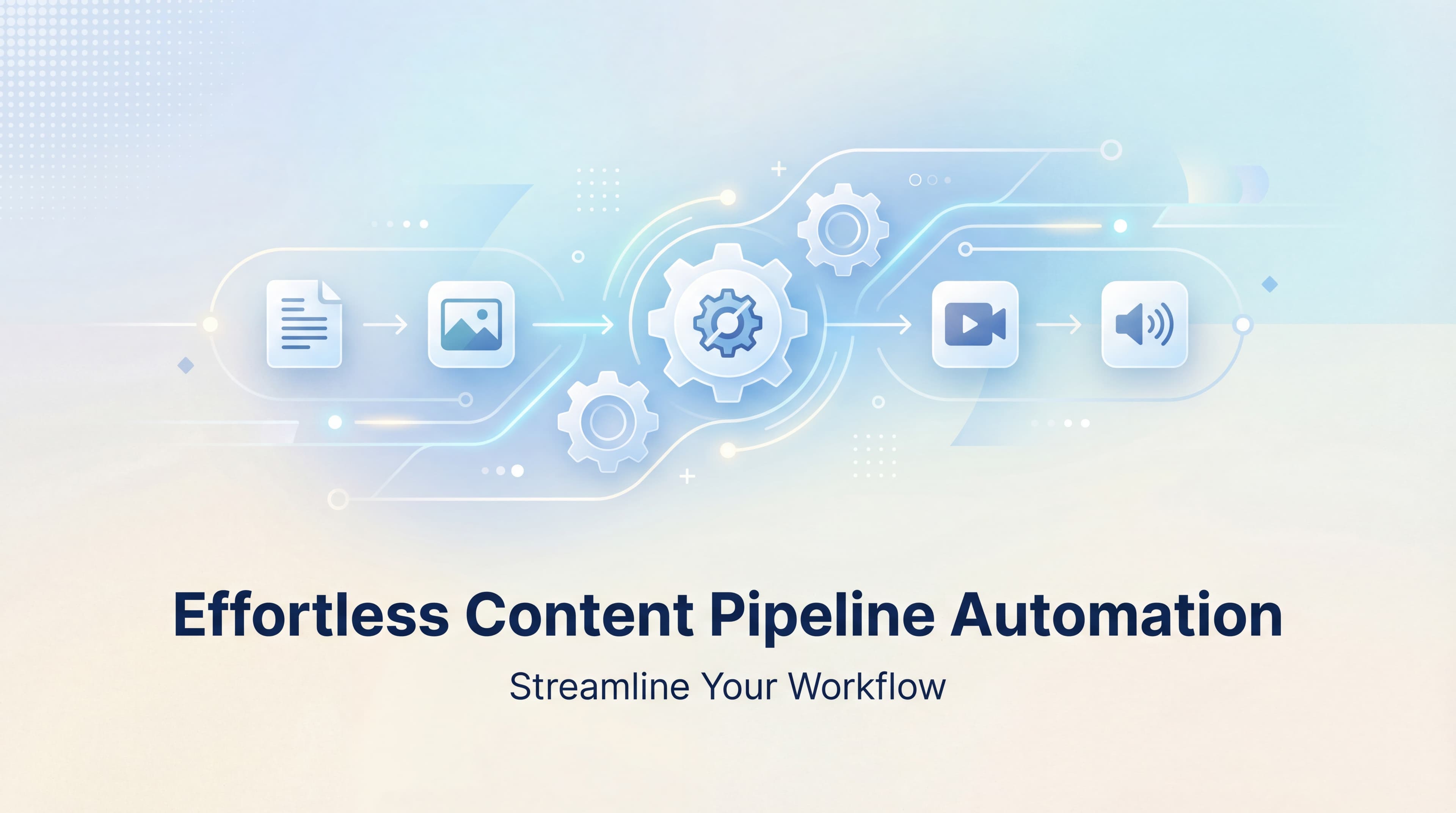
Managing content at scale without automation is like trying to fill a swimming pool with a teaspoon—technically possible, but painfully inefficient. Content pipeline automation software eliminates the bottlenecks between ideation, creation, optimization, and publishing that slow down marketing teams.
These tools handle everything from AI-assisted writing and SEO optimization to scheduling and automatic publishing, letting you focus on strategy rather than manual tasks. We evaluated dozens of platforms based on automation depth, content quality, SEO capabilities, publishing integrations, and value for money.
Here are the top tools for teams ready to scale their content operations in 2026, followed by the specialist tools that fill single pipeline stages such as AEO tracking, governance, and multi-channel distribution.
What a Content Pipeline Automates (and Where It Usually Breaks)
A complete pipeline runs through six stages: topic and gap discovery, brief, draft, review and optimization, CMS publishing, and post-publish indexing and tracking. Most tools automate one or two of these well. The failures happen at the handoffs, especially the last mile between "finished" and "live."
Manual publishing means copying a draft into the CMS, reformatting headings, uploading images, filling SEO title and meta fields, choosing categories, adding internal links, and setting the slug. That typically takes 15–30 minutes per article. At 100 articles a month, it adds up to 25–50 hours of mechanical work, and it introduces errors: missing meta descriptions, broken internal links, absent schema markup.
Automated publishing replaces those steps with an API connection. The content tool sends a structured package (body, headings, metadata, images, categories, publish status) to the CMS, maps each element to the correct field, and applies your formatting rules. Webhooks fire when an article is approved, so publication starts within seconds, and a scheduler can queue articles for staggered release. After publication, the system should regenerate the XML sitemap and notify search engines via IndexNow rather than waiting for a crawl. When you compare tools, check integration depth: can it populate custom fields, SEO plugin settings such as Yoast or Rank Math, featured images with alt text, Webflow CMS collections, or headless CMS entries?
1. Sight AI
Best for: Teams wanting end-to-end automation from content creation to instant indexing
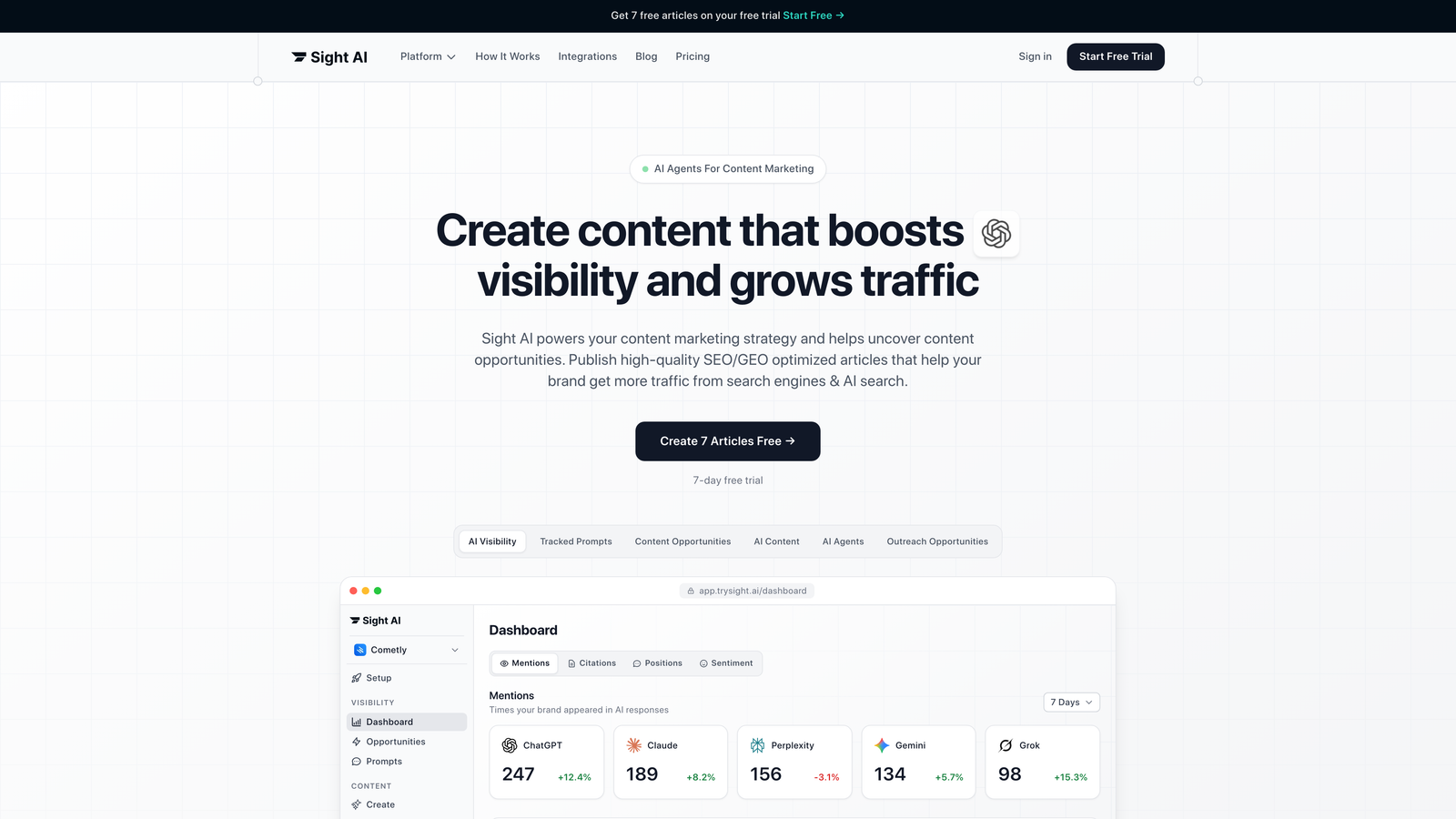
Sight AI is an all-in-one platform that handles the complete content pipeline from research through publishing and indexing.
Where This Tool Shines
Sight AI stands out by addressing three critical bottlenecks at once: content creation, optimization, and discoverability. Most platforms handle one piece well but leave you manually bridging gaps between tools.
The platform's Autopilot mode represents genuine hands-off content generation. You set parameters once, and the system continuously produces optimized articles, up to one per day, without daily intervention. The IndexNow integration means your content gets discovered by search engines within minutes instead of days or weeks.
It also closes the loop that most pipelines leave open. Visibility tracking shows which prompts in your category surface competitors instead of you, and those gaps become the next briefs, so answer engine optimization (AEO) data feeds directly into research, writing, and publishing.
Key Features
13+ AI Agents: Specialized agents handle research, writing, SEO and GEO optimization, and fact-checking as a coordinated system, with format-specific agents for listicles, guides, and explainers. Long-form articles typically run 2,500–4,500 words.
Autopilot Mode: Set your content strategy parameters and let the platform generate articles continuously without manual input.
Auto-Publishing: Direct integration with major CMS platforms, including WordPress and Webflow, eliminates the copy-paste workflow entirely.
IndexNow Integration: Instant submission to search engines plus automated sitemap updates mean faster indexing and quicker organic traffic growth.
AI Visibility Tracking: Monitor how ChatGPT, Claude, Perplexity, Gemini, and other AI models mention your brand across 6+ platforms, with sentiment analysis and prompt tracking that surfaces content opportunities.
Best For
Marketing teams and agencies producing high volumes of SEO content who want to eliminate manual handoffs between creation, optimization, and publishing. Particularly valuable if you're tracking performance across both traditional search and AI platforms.
Pricing
Contact for pricing with tiered plans based on content volume, making it scalable for growing teams. A free trial is available.
2. Jasper
Best for: Enterprise teams needing brand consistency across large content operations
Jasper is an enterprise-focused AI writing platform built around maintaining brand voice consistency at scale.

Where This Tool Shines
Jasper excels when you have multiple writers or agencies creating content under your brand. The brand voice engine learns your style guidelines and enforces them automatically across all content, preventing the inconsistency that plagues distributed teams.
The collaboration features are genuinely enterprise-grade. Approval workflows, commenting systems, and version control mean you can manage complex content operations without losing track of what's in progress versus what's published. Campaign briefs generate a coordinated set of assets (blog post, social, email, ad variations) from one strategic input, which is the fastest way in this list to produce on-brand creative variations at enterprise scale.
Key Features
Brand Voice and Knowledge: Upload existing content, style guides, product information, and company facts so the AI matches your tone and stays factually consistent.
Team Workflows: Built-in approval processes, role-based permissions, and collaborative editing for distributed teams.
50+ Templates: Pre-built frameworks for blog posts, social media, ads, and email campaigns.
Browser Extension: Write directly in Google Docs, WordPress, or any web interface without switching platforms.
AI Image Generation: Create supporting visuals without leaving the platform or subscribing to separate tools.
Best For
Large marketing teams, agencies managing multiple brands, or enterprises where brand consistency is non-negotiable. The collaboration features justify the premium pricing for teams of 10+ content creators. SEO tooling is secondary, so most teams pair it with an optimization tool.
Pricing
Creator plan starts at $49/month for individuals; Business plans are custom-priced based on team size and usage volume. Per-seat pricing adds up for large teams.
3. Surfer SEO
Best for: Data-driven optimization with real-time scoring against SERP competitors
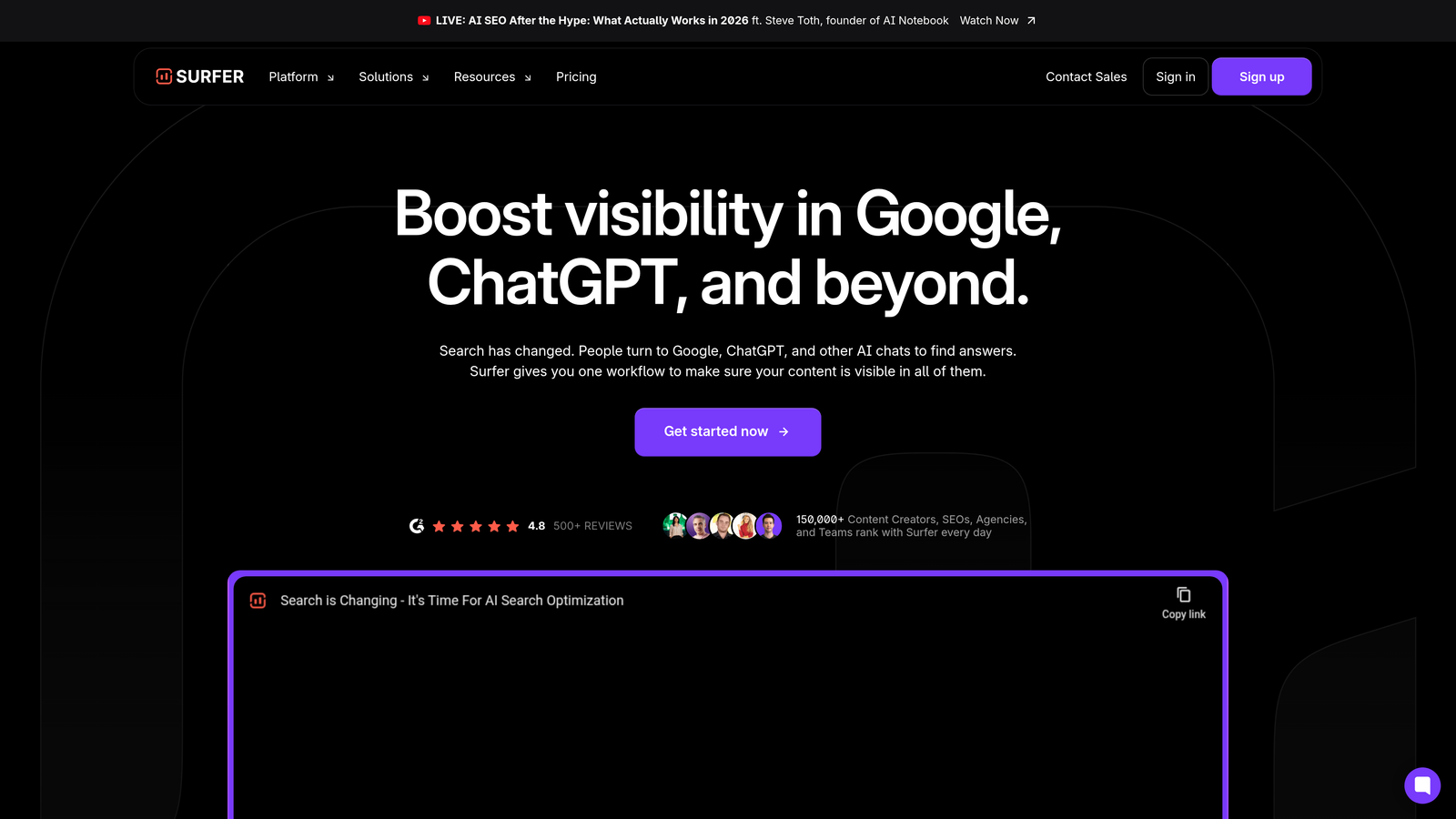
Surfer SEO is a content optimization platform that uses NLP analysis to score your content against top-ranking pages.
Where This Tool Shines
Surfer removes the guesswork from SEO optimization. As you write, the content editor scores your work in real-time against the top 10 SERP results for your target keyword. You see exactly which topics and terms you're missing compared to ranking competitors.
The NLP-powered suggestions go beyond simple keyword density. The platform analyzes semantic relationships and topic coverage, helping you create comprehensive content that addresses user intent rather than just hitting keyword quotas. Surfer AI can also generate a first draft against those guidelines, which a writer then edits to a target score (teams commonly aim for 80+) before finalizing with internal link suggestions.
Key Features
Real-Time Content Scoring: Live feedback as you write, showing how your content compares to top-ranking pages.
NLP Topic Suggestions: Semantic analysis identifies related topics and entities to include for comprehensive coverage.
Content Audit: Analyze existing pages and get specific recommendations for improvement based on current SERP data.
Content Planner: Keyword clustering tool that groups related terms into logical content topics.
Direct Integrations: Write and optimize directly in Google Docs or WordPress without copy-pasting between platforms.
Best For
SEO-focused content teams who want data-backed optimization decisions. Particularly valuable for competitive niches where small optimization differences impact rankings significantly.
Pricing
Essential plan starts at $89/month with increasing content article limits at higher tiers.
4. Copy.ai
Best for: Go-to-market teams needing pre-built workflows for multiple content types
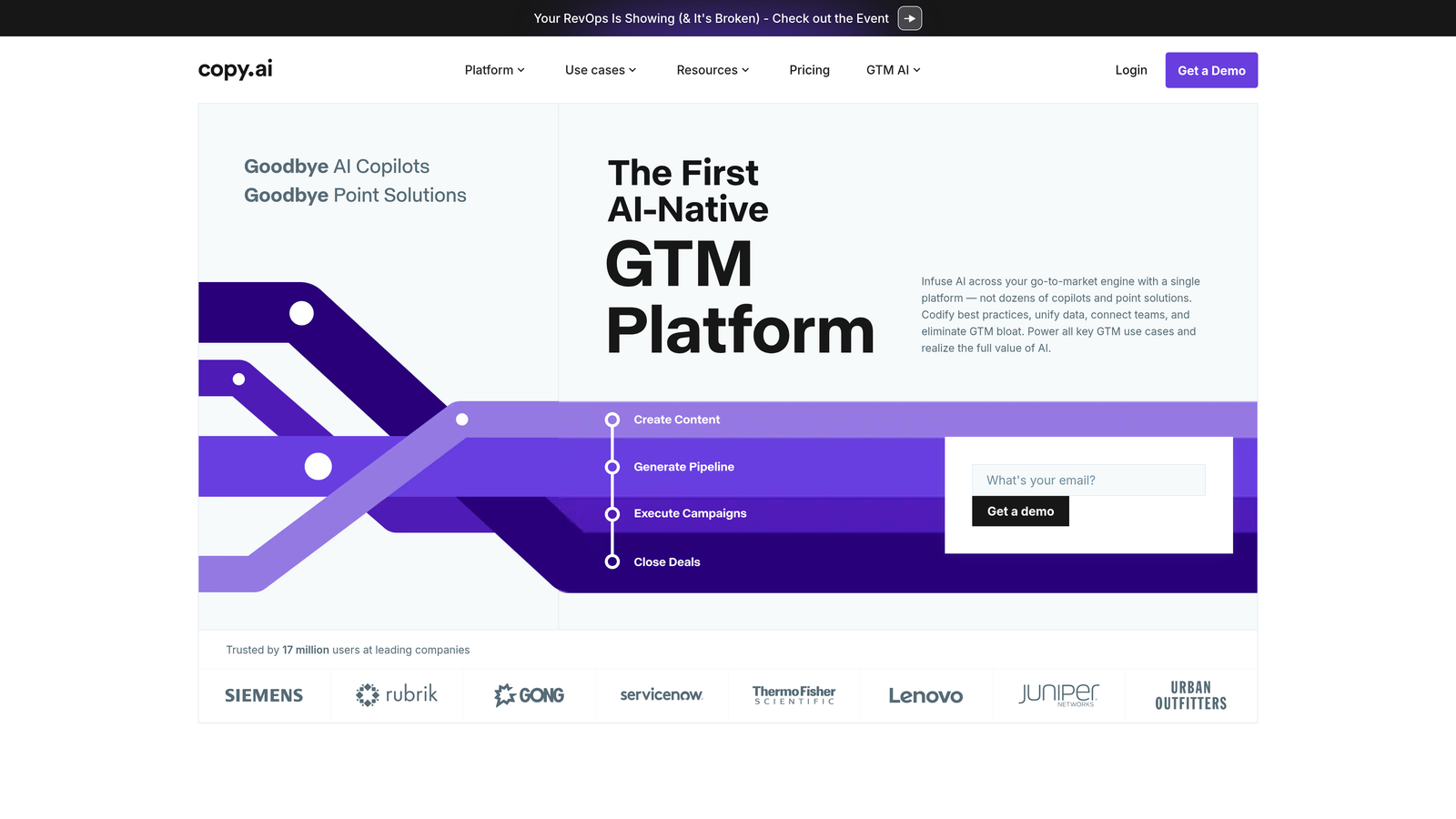
Copy.ai is a GTM AI platform that automates content creation through customizable workflow templates.
Where This Tool Shines
Copy.ai's workflow approach treats content creation as a repeatable process rather than a one-off task. Instead of starting from scratch each time, you build or customize workflows that handle your specific content needs automatically.
The pre-built templates cover common GTM scenarios like product launches, email sequences, and social campaigns. You can also build custom workflows that chain multiple AI agents together. A typical SEO workflow ingests a keyword list, researches competitors for each term, drafts an outline, writes the post to a predefined structure, and formats it for your CMS.
The Infobase stores product details, positioning, and messaging centrally, so you can organize source material by product line and assign workflows by marketing task while keeping every output grounded in accurate company information.
Key Features
Workflow Templates: Pre-configured automation for blog posts, email sequences, social content, and ad copy.
Custom Workflow Builder: Chain together research, writing, and optimization steps into repeatable processes.
Brand Voice Training: Feed the platform examples of your writing to maintain consistent tone across outputs.
Team Workspace: Shared workflows, templates, and brand assets for collaborative content operations.
API and CRM Access: Connect Copy.ai to Salesforce, HubSpot, and the rest of your stack, and run bulk generation from CSV imports.
Best For
Marketing teams producing diverse content types across multiple channels who want to standardize and scale their processes. The workflow approach works best when you create similar content repeatedly. The most powerful automation sits in higher tiers.
Pricing
Free tier available with limited features; Pro plan starts at $49/month with unlimited workflow runs.
5. Clearscope
Best for: Content grading and optimization with straightforward A-F scoring
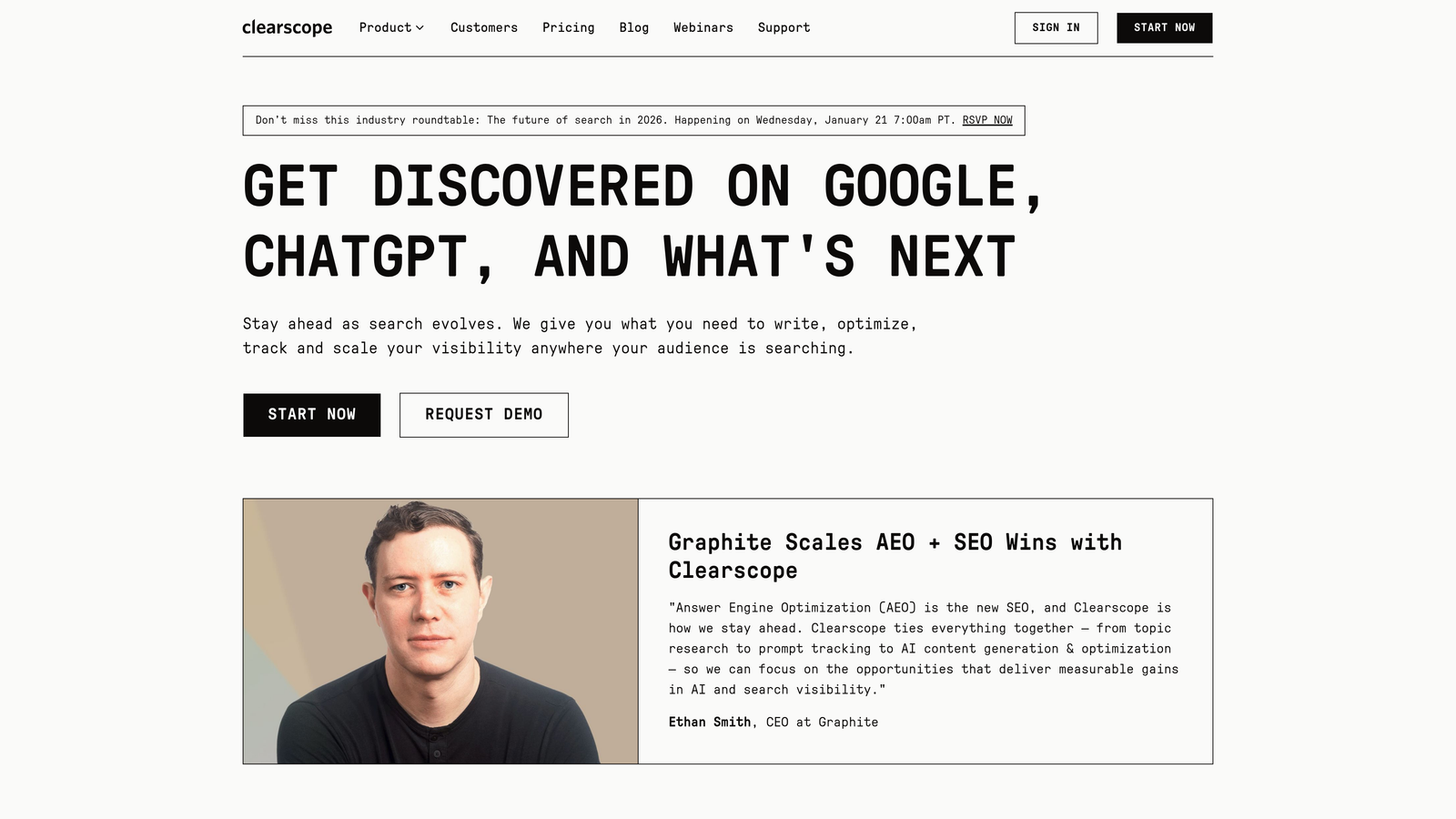
Clearscope is a content optimization platform that grades your writing against search performance criteria.
Where This Tool Shines
Clearscope's grading system makes optimization accessible to writers without SEO expertise. The A-F score gives immediate, intuitive feedback on content quality, making it easy to know when a piece is ready to publish. That makes it a practical editorial review gate: editors can check the grade alongside the draft in Google Docs before approving.
The competitive analysis shows exactly what top-ranking pages cover and how comprehensively they address the topic. This removes guesswork about what "good enough" means for your target keyword.
Key Features
Content Grading: Simple A-F scoring system that evaluates optimization quality at a glance.
Competitive Analysis: Side-by-side comparison of your content against top-ranking pages for your keyword.
Editor Plugins: Native integrations for Google Docs and WordPress mean optimization happens where you write.
Keyword Research: Discover related keywords and topics to expand your content coverage.
Content Inventory: Track and manage your content library with optimization scores for existing pages.
Best For
Content teams where writers aren't SEO specialists but need to produce optimized content consistently. The straightforward grading system works well for agencies managing content for multiple clients.
Pricing
Essentials plan starts at $170/month, positioning it as a premium optimization tool.
6. MarketMuse
Best for: Content strategy and planning with AI-generated briefs and gap analysis
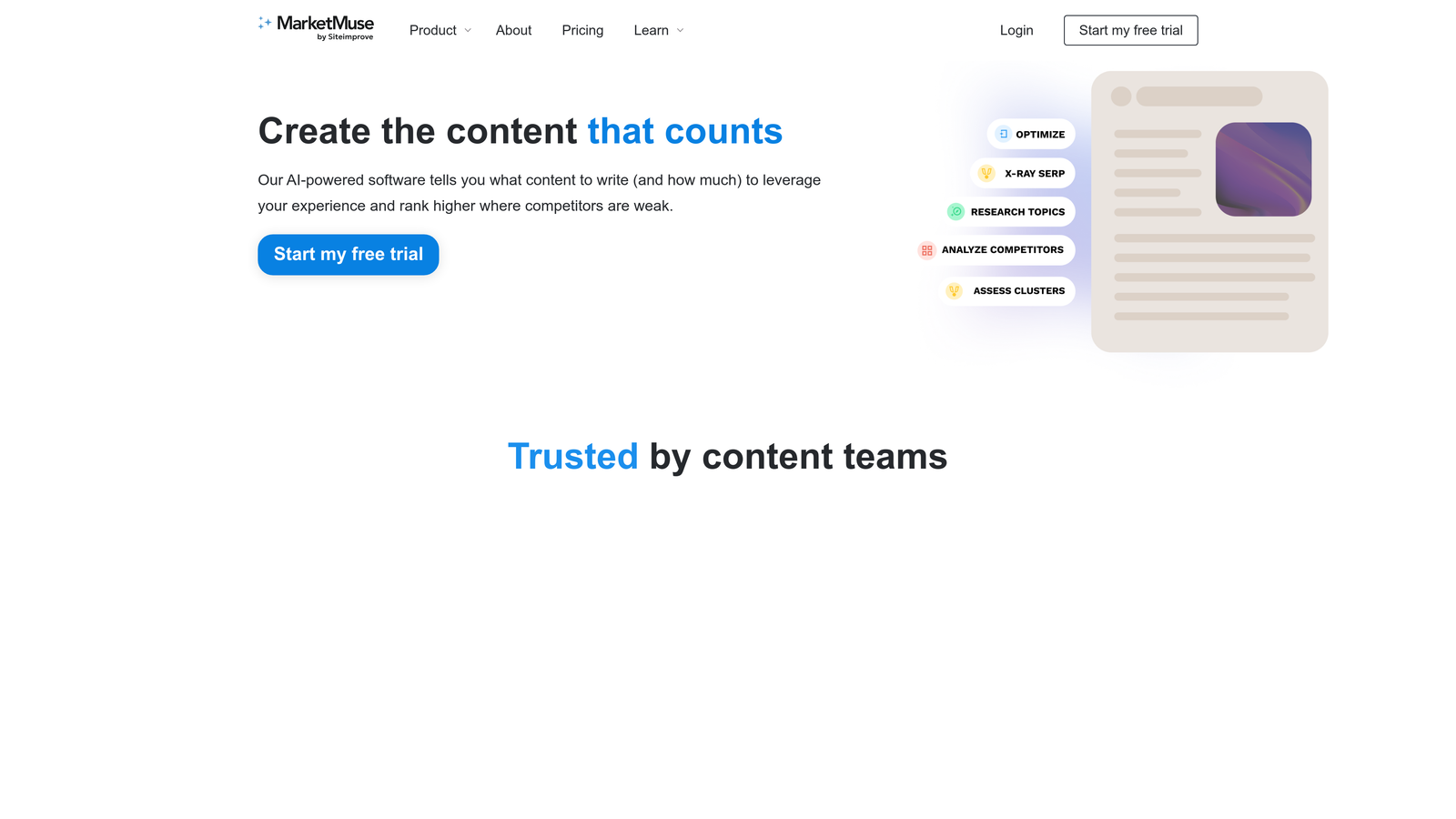
MarketMuse is an AI-powered platform focused on content strategy, topic planning, and brief generation.
Where This Tool Shines
MarketMuse approaches content from a strategic level rather than just execution. The platform analyzes your entire content inventory against your topic authority, identifying gaps where you should create content to build topical coverage.
The personalized difficulty scores are particularly valuable. Instead of generic keyword difficulty metrics, MarketMuse calculates how hard a topic will be for your specific site to rank for based on your existing authority. This helps you prioritize content that you can actually win.
Key Features
AI Content Briefs: Automatically generated outlines with recommended topics, questions, and structure for each piece.
Topic Clusters: Identify content gaps and build comprehensive topic coverage across related keywords.
Content Inventory Audit: Analyze existing content for optimization opportunities and identify underperforming pages.
Personalized Difficulty: Keyword difficulty calculated specifically for your site's authority and existing content.
First Draft Generation: AI-written initial drafts based on the strategic briefs the platform creates.
Best For
Content strategists and SEO teams focused on building topical authority systematically. Most valuable when you're planning content calendars months in advance rather than creating ad-hoc pieces. Expect a learning curve; it does not publish to your CMS.
Pricing
Free tier with limited monthly queries; Standard plan starts at $149/month with higher limits.
7. Frase
Best for: Fast research-to-draft workflow combining SERP analysis with AI writing
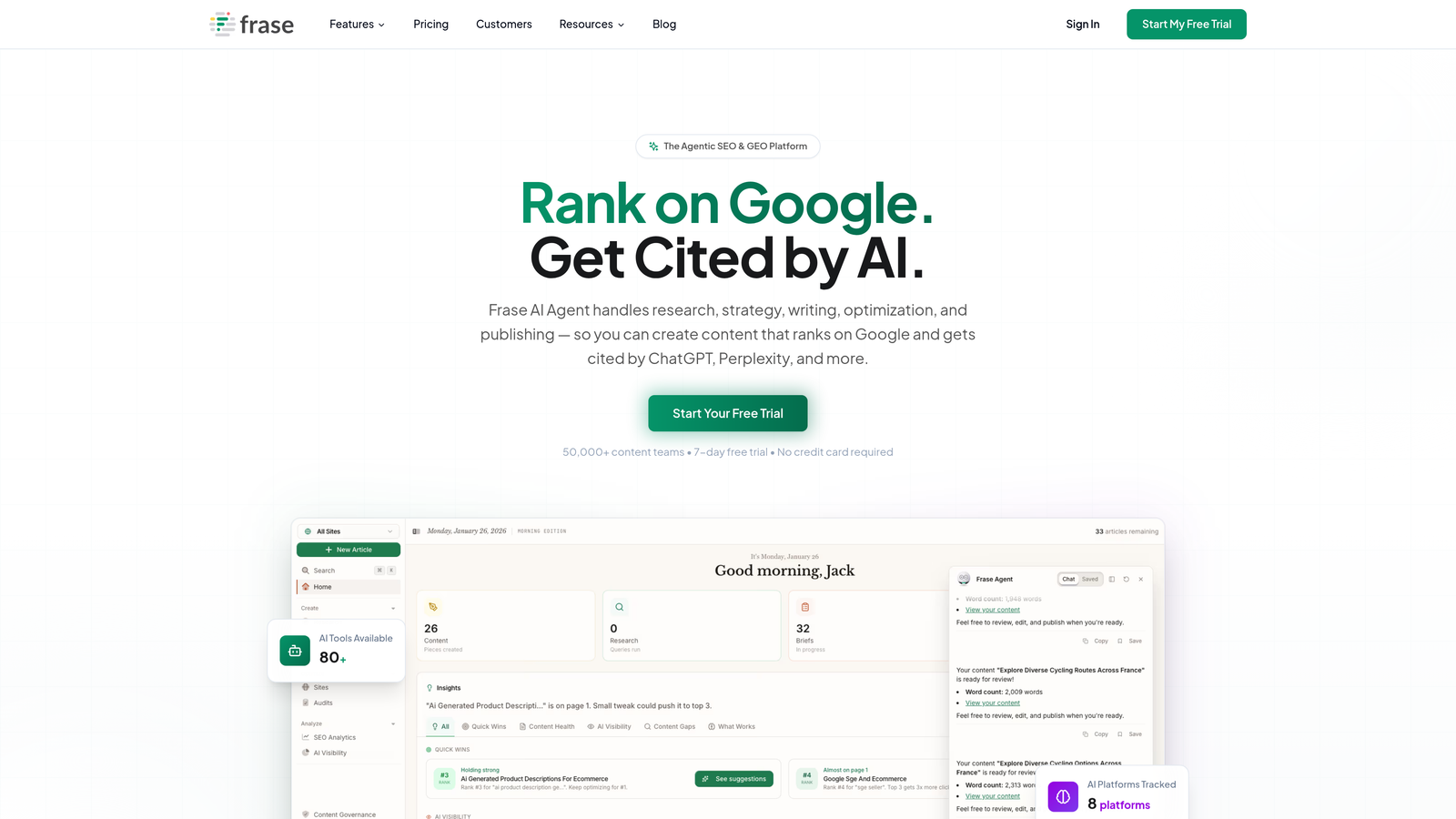
Frase is a content platform that streamlines the path from research to finished draft through integrated SERP analysis and AI writing.
Where This Tool Shines
Frase compresses the research phase dramatically. The platform automatically pulls and analyzes the top search results for your keyword, extracting key topics, questions, and statistics, including People Also Ask data. You see what's working for competitors without manually reviewing each page, plus which questions they leave unanswered.
The AI writer works from this research foundation, generating content that naturally incorporates the topics and questions identified in the SERP analysis. This creates a faster path from keyword to publishable draft than separate research and writing tools.
Key Features
SERP Analysis: Automatic extraction of topics, questions, and statistics from top-ranking pages.
AI Writing: Content generation based on SERP research with outline suggestions and section templates.
Answer Engine Optimization: Optimize content for featured snippets and AI-powered answer boxes; AI search visibility features are gated to higher tiers.
Content Brief Templates: Save and reuse research frameworks for similar content types.
Google Search Console Integration: Track content performance and identify optimization opportunities from actual search data.
Best For
Solo content creators and small teams who need to move quickly from keyword research to published content. The integrated workflow eliminates tool-switching that slows down production.
Pricing
Solo plan starts at $15/month for individual creators; Team plans begin at $115/month with collaboration features.
Pipeline Coverage Compared
| Tool | Research and briefs | Drafting | Optimization | CMS publishing | Indexing | AI visibility / AEO tracking |
|---|---|---|---|---|---|---|
| Sight AI | Yes, incl. AI visibility gaps | 13+ agents, Autopilot | SEO and GEO | Native auto-publish | IndexNow and sitemap | Yes, 6+ AI platforms |
| Jasper | Knowledge base, campaign briefs | Yes | Limited | Via extension and integrations | No | No |
| Surfer SEO | SERP analysis | Surfer AI | Real-time scoring | Google Docs, WordPress | No | Not core |
| Copy.ai | Workflow research steps | Yes | Limited | Via workflows and API | No | No |
| Clearscope | Keyword research | No | A-F grading | WordPress plugin | No | No |
| MarketMuse | Briefs, gap analysis | First drafts | Topic coverage | No | No | No |
| Frase | SERP briefs | Yes | Content scoring | Limited | No | Higher tiers |
Complementary Tools for Specific Pipeline Stages
If part of your pipeline already works, these tools fill a single stage rather than replacing the stack.
AEO and AI Visibility Tracking
Profound, Peec, and Promptwatch measure how brands appear in AI-generated answers. Profound focuses on answer engine visibility, competitor benchmarking, and GEO reporting; Peec is a lighter option for founders who want brand mention monitoring and alerts; Promptwatch tracks prompts and AI responses over time. None of them writes or publishes content. If you are evaluating Profound to cut manual production work, treat it as a post-publish analytics layer that needs a separate generation, publishing, and distribution pipeline to act on its findings. That separation is the main difference from Sight AI, which runs tracking and publishing in one system.
Custom Workflow Builders
AirOps offers a visual builder for chaining LLM calls, data enrichment, conditional logic, and publishing actions, which suits agencies with ops resources and non-standard CMS destinations. Zapier connects 6,000+ apps with conditional routing, for example publishing posts tagged "news" immediately while sending "evergreen" posts through approval. Notion paired with Make gives you a database where content can be organized by product, marketing task, and status, with Make pushing approved entries to your CMS.
Review, Governance, and Compliance
Writer is built for regulated industries: configurable AI guardrails, custom terminology, a Knowledge Graph that grounds output in verified company facts, SOC 2 Type II and SSO, and no-code Playbooks that route drafts to human approval. The Team plan starts at $18/user/month. Narrato combines AI writing with calendars, freelancer management, approval stages, and direct publishing to WordPress and social channels.
Multi-Version Publishing and Distribution
Headless CMSs such as Contentful, Sanity, and Strapi deliver one content source to websites, apps, and other channels via API, with webhooks and staging environments. HubSpot Content Hub serves different versions of a page to different segments and A/B tests variants. CoSchedule's unified calendar and ReQueue keep blog and social aligned, Buffer and StoryChief handle cross-channel distribution, and Lately repurposes long-form content into social posts based on your historical engagement data.
How to Roll Out Pipeline Automation
- Map your current workflow. Document every step from brief to live page, who owns it, and how long it takes. The audit usually shows that formatting, image handling, and metadata consume most publishing time.
- Check CMS readiness. Confirm API access or native integrations for WordPress, Webflow, or your headless CMS, including custom fields and SEO plugin settings.
- Pilot one content type. Start with high-volume, predictable content such as SEO blog posts, refine formatting rules, then expand.
- Keep a human review gate. Editors approve for accuracy and brand fit; approval should trigger publication rather than another manual step.
- Measure the right metrics. Track time-to-publish, indexing speed, content velocity, publishing error rate, and AI mentions before and after automation.
Making the Right Choice
Your ideal content pipeline automation tool depends on which bottlenecks slow you down most. If you're spending hours on manual publishing and waiting days for search engines to discover new content, Sight AI's end-to-end automation and instant indexing eliminate those friction points entirely. It is also the only tool here that connects research, writing, publishing, and AEO tracking in one workflow.
For enterprise teams where brand consistency across multiple creators is the challenge, Jasper's collaboration features and brand voice enforcement justify the premium pricing; Writer is the stronger choice where compliance controls are mandatory. If you're optimizing for traditional search and need data-driven decisions, Surfer SEO and Clearscope provide the competitive analysis that removes guesswork.
Teams focused on workflow standardization across diverse content types will find Copy.ai's template approach most valuable. Content strategists planning comprehensive topic coverage should explore MarketMuse's gap analysis and authority-building features. Solo creators and small teams needing speed will appreciate Frase's compressed research-to-draft workflow.
If you combine specialist tools instead, count the coordination cost: every handoff between a generator, a publishing tool, an indexing solution, and a visibility tracker adds manual work that compounds with each article you ship.
The content landscape has evolved beyond traditional search optimization. AI platforms like ChatGPT, Claude, and Perplexity now influence how audiences discover brands and information. Stop guessing how these AI models talk about your brand—get visibility into every mention, track content opportunities, and automate your path to organic traffic growth.
Start tracking your AI visibility today and see exactly where your brand appears across top AI platforms while automating the content pipeline that drives those mentions.