Content that isn't indexed quickly is content that might as well not exist. In a landscape where both traditional search engines and AI models like ChatGPT, Claude, and Perplexity are competing to surface the best answers, the window between publishing and visibility has never mattered more. If your content isn't crawled fast, it misses ranking opportunities. If it isn't structured for AI citation, it misses GEO visibility entirely.
The good news is that modern platforms have evolved well beyond simple URL submission tools. Today's best options combine indexing automation with content generation, AI visibility tracking, and CMS publishing workflows. The category itself is shifting: what used to require four separate tools can now live under one roof.
To build this list, we evaluated platforms on indexing speed and protocol support, automation depth, AI and GEO optimization capabilities, integration flexibility, and pricing transparency. Whether you're a founder trying to scale organic traffic, a marketer managing a content pipeline, or an agency tracking AI brand visibility for clients, there's a platform here for your workflow.
1. Sight AI
Best for: Teams that want content indexing, AI content generation, and AI visibility tracking in one platform.
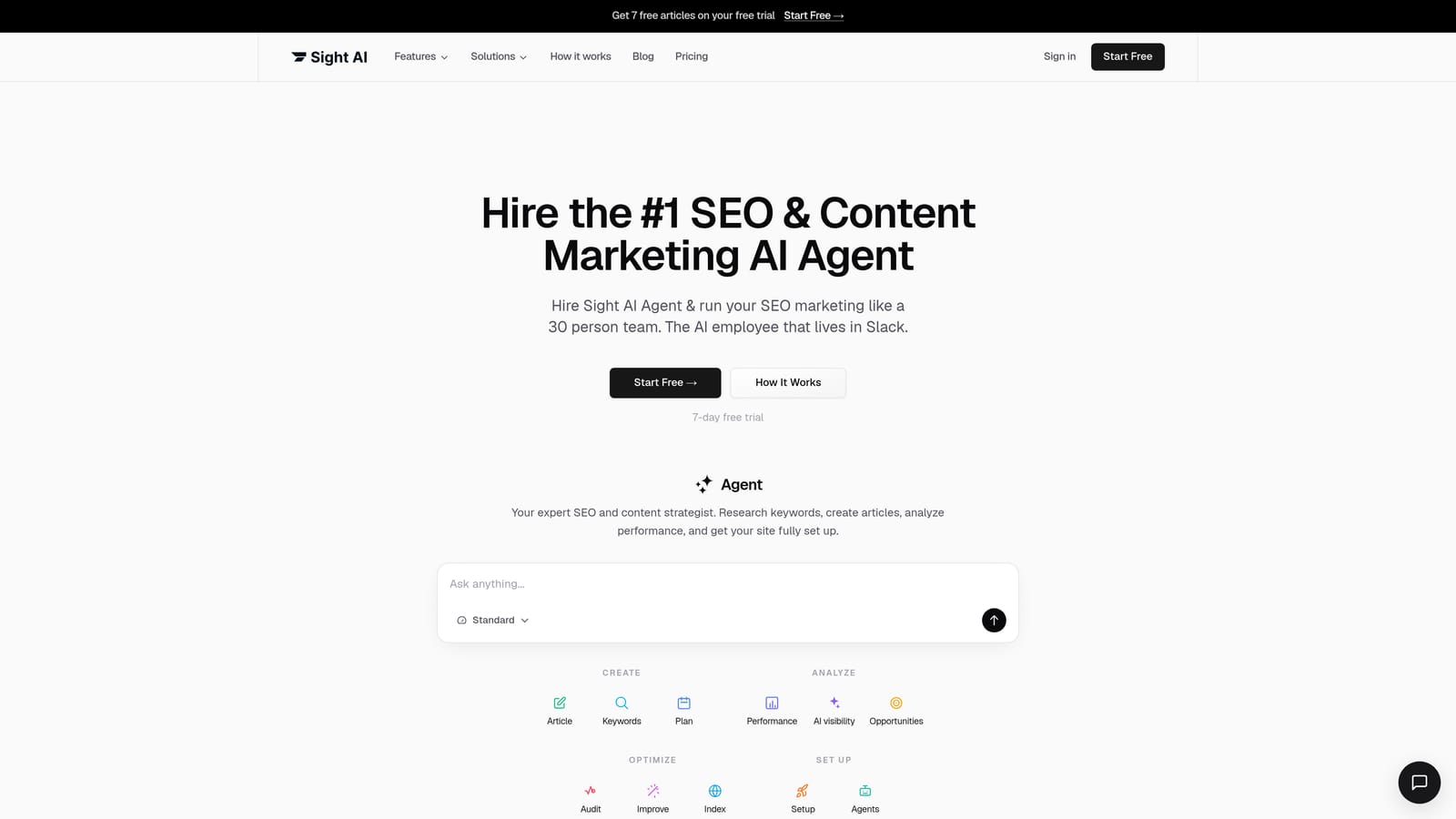
Sight AI is an all-in-one platform combining IndexNow-powered content indexing, 13+ AI writing agents, and AI brand visibility tracking across six or more AI platforms.
Where This Tool Shines
Sight AI's core advantage is consolidation. Most teams trying to optimize for both traditional search and AI answer engines end up stitching together a content writer, a sitemap manager, an indexing tool, and a separate AI visibility tracker. Sight AI replaces that stack with a single platform that handles each layer of the workflow.
The combination of IndexNow integration and automated sitemap management means new content gets signaled to major search engines in near-real time, rather than waiting for a scheduled crawl. Pair that with the AI Visibility Score, which tracks how your brand is being mentioned and framed across platforms like ChatGPT, Claude, and Perplexity, and you get a closed loop: publish, index, and monitor AI citation impact without switching tools.
Key Features
IndexNow Integration: Signals new and updated URLs to participating search engines immediately after publishing, reducing crawl delay significantly.
Automated Sitemap Updates: Keeps your sitemap current without manual intervention, ensuring search engines always have an accurate picture of your content.
13+ Specialized AI Writing Agents: Covers listicles, how-to guides, explainers, comparison articles, and more, each agent tuned for SEO and GEO optimization.
AI Visibility Score: Tracks brand mentions, sentiment, and citation patterns across six or more AI platforms, giving you a quantified measure of your AI search presence.
Autopilot Mode and CMS Auto-Publishing: Enables hands-off content operations, from generation through publishing, without requiring manual steps at each stage.
Best For
Sight AI is the strongest fit for marketers, founders, and agencies who want to grow organic traffic through both traditional SEO and AI search, without managing multiple disconnected tools. It's especially valuable for teams that are actively building a GEO strategy and need to track whether their indexed content is actually influencing AI-generated responses.
Pricing
Visit trysight.ai for current plan details and pricing tiers. Plans are designed to scale with content volume and team size.
2. Writesonic
Best for: Content teams that need AI-assisted article writing with built-in SEO guidance.
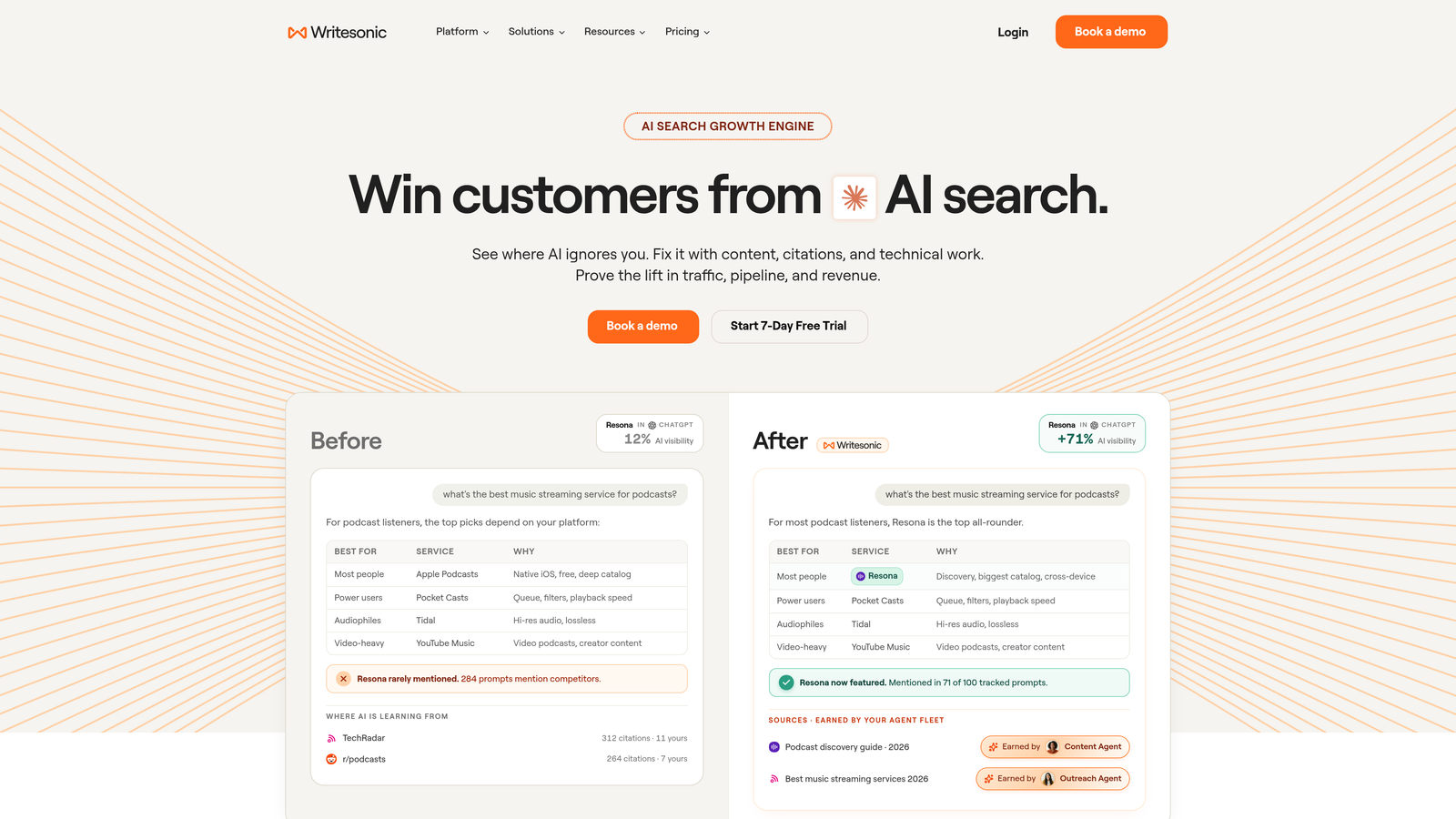
Writesonic is an AI content generation platform built to help marketing teams produce SEO-optimized articles, landing pages, and ad copy at scale.
Where This Tool Shines
Writesonic has established itself as a capable AI writing platform with a strong focus on SEO-aligned content generation. Its article writer is designed to produce long-form content that follows on-page optimization principles, and its integration with Surfer SEO adds a layer of keyword and structure guidance during the writing process.
For teams whose primary bottleneck is content production volume rather than indexing automation, Writesonic offers a well-rounded workflow from brief to published draft. It supports multiple content formats and has publishing integrations that reduce manual steps between generation and going live.
Key Features
AI Article Writer: Generates long-form, SEO-focused content with structure and keyword targeting built into the output.
Surfer SEO Integration: Provides on-page optimization guidance alongside content generation, helping teams produce content that aligns with competitive keyword benchmarks.
Multi-Format Content Support: Covers blog posts, landing pages, product descriptions, and ad copy within a single platform.
Publishing Workflow Features: Supports content review and publishing steps to reduce friction between draft and live content.
Freemium Entry Point: Allows teams to test the platform before committing to a paid tier, with plans that scale with usage volume.
Best For
Writesonic suits content teams and agencies that need to produce high volumes of SEO-optimized content efficiently. It's worth noting that indexing automation is not a native feature, so teams who need that capability will need to pair it with a dedicated indexing solution.
Pricing
Writesonic offers a freemium plan with paid tiers that scale based on word volume and features. Check writesonic.com for current pricing.
3. AirOps
Best for: Growth and content teams that need custom AI-powered workflow pipelines for content operations.
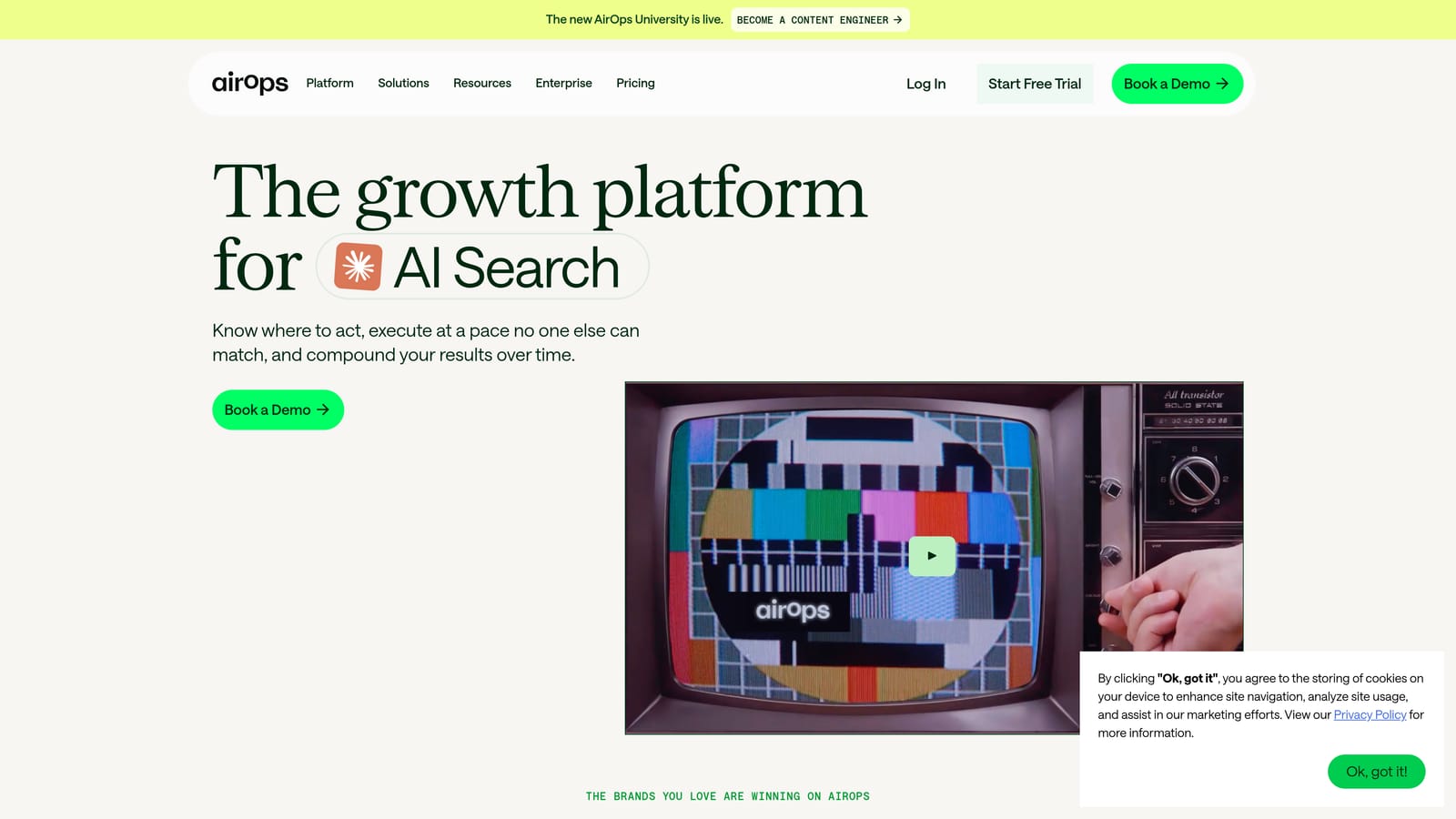
AirOps is a workflow automation platform that lets teams build structured, repeatable LLM-powered pipelines for content creation, enrichment, and publishing operations.
Where This Tool Shines
Where most content tools give you a fixed interface, AirOps gives you a builder. Teams can design custom pipelines that pull data from various sources, run it through LLM-powered transformations, and push outputs to CMS platforms or downstream tools. This flexibility makes it particularly useful for agencies and growth teams with non-standard content workflows.
For content indexing workflows specifically, AirOps can serve as the orchestration layer, automating the steps between content creation and the publishing actions that trigger indexing. It's less of a one-click solution and more of a building block for teams that want precise control over their content operations stack.
Key Features
LLM Workflow Builder: Lets teams design custom AI-powered pipelines without needing to write code for every step.
Content Creation and Enrichment: Supports generating, transforming, and enriching content at scale within the same workflow.
CMS and Data Source Integrations: Connects with popular platforms to pull inputs and push outputs across your content stack.
Team Collaboration Features: Allows multiple team members to build, manage, and iterate on shared content workflows.
Custom Automation Flexibility: Designed for teams that need pipelines tailored to their specific operations rather than a pre-built tool.
Best For
AirOps is a strong fit for agencies and growth teams with complex, custom content operations that don't fit neatly into pre-built tools. Teams that want direct indexing automation out of the box will need to integrate AirOps with dedicated indexing solutions.
Pricing
Check airops.com for current plan details, as pricing varies based on usage and team size.
4. Profound
Best for: Enterprise marketing and SEO teams tracking brand visibility in AI-generated responses.
Profound is an AI answer engine visibility platform that monitors how brands appear in AI-generated responses, helping teams understand whether their indexed content is actually being cited by leading AI models.

Where This Tool Shines
Profound addresses a question that has become central to modern SEO: getting content indexed is only half the battle. The other half is understanding whether that content is influencing what AI models say when users ask relevant questions. Profound focuses on this second half, giving enterprise teams visibility into their share of voice within AI-generated answers.
For teams building a GEO strategy, Profound provides the measurement layer that connects content investment to AI citation outcomes. Rather than guessing whether your indexed content is resonating with AI models, Profound surfaces data on which content is being cited and how your brand compares to competitors in AI-generated responses.
Key Features
AI Answer Engine Tracking: Monitors brand mentions and citations across major AI answer engines to show where and how often your brand appears.
Competitive Share of Voice: Benchmarks your AI visibility against competitors to identify gaps and opportunities in AI-generated responses.
Content-to-Citation Insights: Helps teams identify which specific content pieces are driving AI citations, informing future content strategy.
GEO Strategy Support: Connects content optimization efforts to measurable AI mention outcomes, making GEO performance more tangible.
Enterprise Focus: Designed for larger marketing and SEO teams with significant content portfolios and competitive monitoring needs.
Best For
Profound is best suited for enterprise marketing and SEO teams that need structured visibility into how their brand performs in AI search. It's a monitoring and analytics tool rather than an indexing or content generation platform, so it works best as part of a broader content stack.
Pricing
Check profound.co for current pricing and plan options.
5. Peec
Best for: Marketers and agencies focused on measuring AI brand visibility and competitive GEO performance.
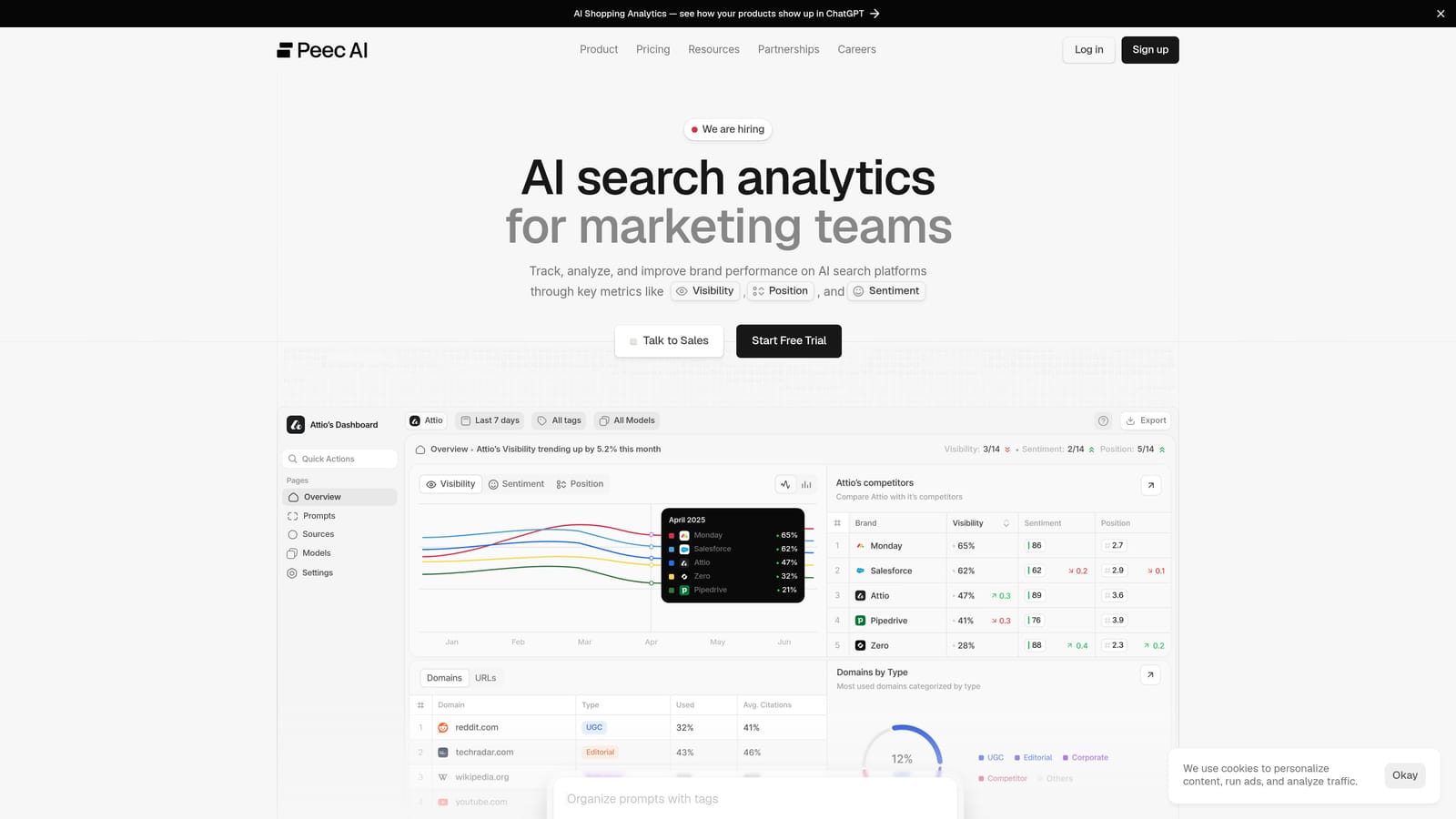
Peec is an AI brand monitoring tool that tracks how brands are mentioned across LLM outputs, with competitive benchmarking to measure GEO performance and share of voice in AI search.
Where This Tool Shines
Peec sits in a similar space to Profound but with a focus that may suit smaller teams and agencies more directly. Its competitive benchmarking features let teams measure how their brand's AI visibility stacks up against key competitors, which is increasingly important as AI answer engines become a primary discovery channel for many product categories.
For teams who have invested in content creation and indexing, Peec provides the feedback loop that shows whether those efforts are translating into actual AI mentions. It helps surface which topics and content types are driving visibility, making it a useful tool for refining GEO content strategy over time.
Key Features
AI Brand Mention Tracking: Monitors how and where your brand appears across major LLM platforms in response to relevant queries.
Competitive Benchmarking: Measures your AI share of voice relative to competitors, helping teams prioritize where to focus content efforts.
GEO Performance Monitoring: Connects content optimization work to AI citation outcomes, making it easier to evaluate what's working.
Topic and Content Insights: Helps teams identify which subject areas and content formats are generating the most AI visibility.
Agency-Friendly Design: Suited for marketers and agencies managing AI search presence for multiple brands or clients.
Best For
Peec is a good fit for marketers and agencies who want a dedicated AI brand monitoring tool with competitive benchmarking. Like Profound, it's a monitoring platform rather than an indexing or content generation tool, and works best alongside content and indexing solutions.
Pricing
Check peec.ai for current pricing and plan details.
6. Promptwatch
Best for: SEO and AI visibility teams that want prompt-level insight into how content influences LLM responses.
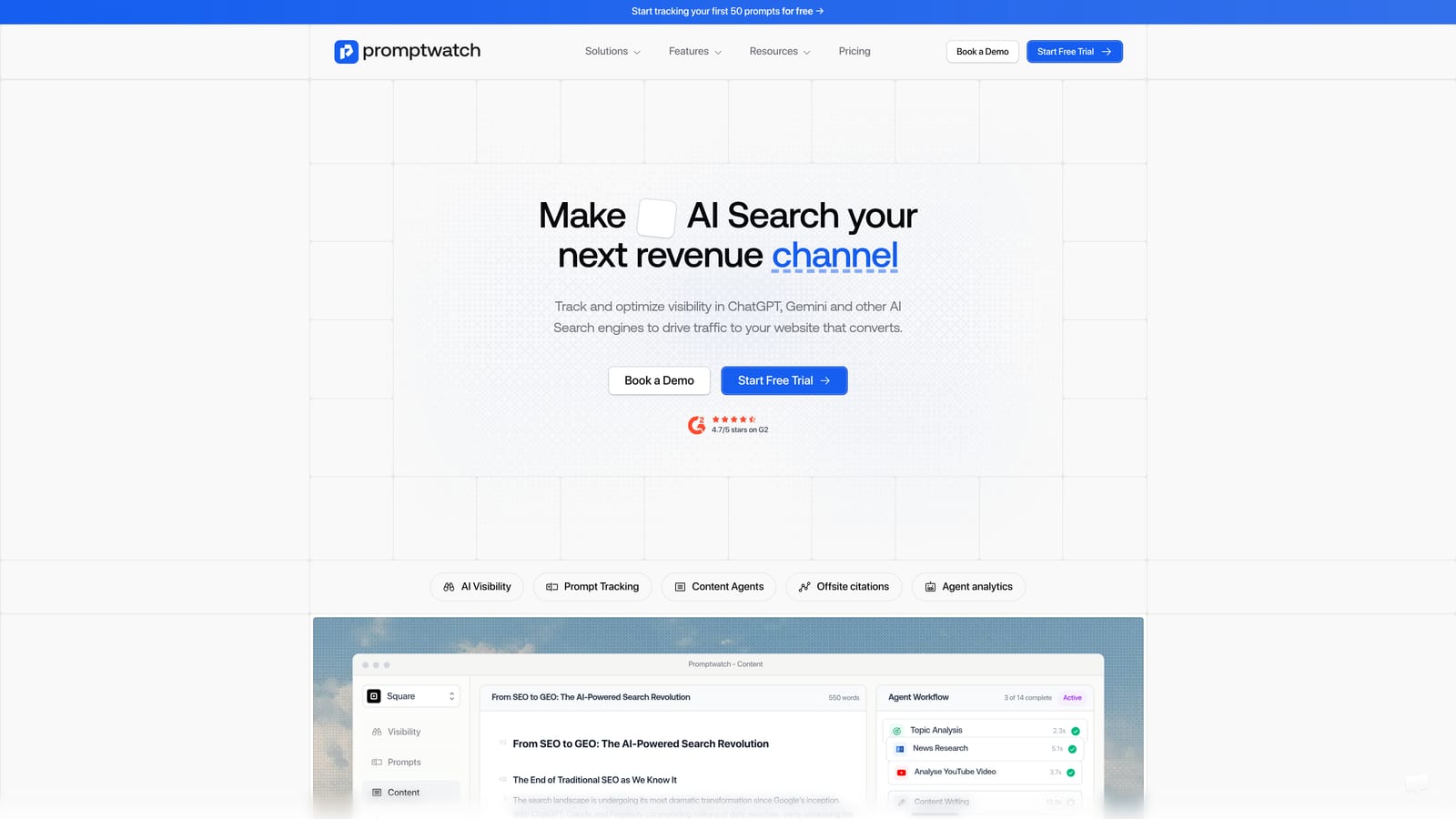
Promptwatch is a prompt-level AI monitoring tool that tracks how specific queries return brand mentions across AI platforms, helping teams validate whether their content and optimization efforts are influencing LLM outputs.
Where This Tool Shines
Most AI visibility tools track brand mentions at a broad level. Promptwatch goes deeper, letting teams monitor specific prompts and queries to see exactly how AI models respond and whether their brand appears in those responses. This granularity is valuable for teams that want to test and iterate on GEO content strategies with precision rather than relying on aggregate data alone.
For teams actively running GEO experiments, Promptwatch functions as a testing and validation layer. You can observe how changes to your indexed content influence what AI models say in response to targeted queries, which makes it easier to understand cause and effect in your AI visibility strategy.
Key Features
Prompt-Level Brand Tracking: Monitors specific prompts and queries across AI platforms to surface exactly where and how your brand appears in responses.
Content Change Impact Monitoring: Tracks how updates to indexed content influence LLM citation behavior over time.
GEO Strategy Testing: Supports structured testing and iteration of generative engine optimization content approaches.
Granular Visibility Insights: Provides more detailed prompt-to-response data than broad brand monitoring tools, useful for teams running targeted experiments.
SEO and AI Visibility Integration: Designed to help teams connect traditional content optimization efforts to measurable AI search outcomes.
Best For
Promptwatch is best for SEO professionals and AI visibility teams who want granular, prompt-level data to inform and validate their GEO strategies. It's a monitoring and analytics tool, not an indexing or content generation platform, making it most effective when combined with tools that handle those upstream functions.
Pricing
Check promptwatch.io for current pricing and plan options.
Which Platform Belongs in Your Stack
It's worth being direct about what this category actually looks like in 2026. Of the six platforms covered here, only Sight AI directly combines content indexing automation with content generation and AI visibility tracking in a single product. The other five are strong tools in their own right, but they address adjacent parts of the workflow: content generation, AI monitoring, or workflow orchestration rather than indexing automation as a primary function.
That matters for how you build your stack. If you're starting from scratch and want a platform that handles the full journey from generating SEO and GEO-optimized content, to indexing it via IndexNow, to tracking how it performs in AI-generated responses, Sight AI is the most complete option available without stitching tools together.
If you already have a content generation tool and need AI visibility monitoring, Profound and Peec are both solid choices depending on your team size and benchmarking needs. If you need prompt-level granularity for GEO testing, Promptwatch adds a useful layer of insight. For teams with complex, custom content operations, AirOps provides the workflow flexibility that pre-built tools often can't match. And if content volume is your primary challenge, Writesonic offers a capable AI writing workflow with SEO integration.
The broader trend is clear: the teams gaining the most organic traction in 2026 are those treating content creation, indexing speed, and AI citation visibility as a connected system rather than three separate problems. Stop guessing how AI models like ChatGPT and Claude talk about your brand. Start tracking your AI visibility today and see exactly where your brand appears across top AI platforms, so you can build a content strategy that works for both traditional search and the AI-powered answers your audience is already getting.