Every day, content teams publish articles, landing pages, and updates that search engines and AI models never see. Pages sit unindexed for days or weeks while competitors with faster discovery pipelines capture the traffic you earned. The crawl queue is slow, unpredictable, and indifferent to your publishing schedule.
Automated indexing platforms solve this by pushing URLs directly to search engines the moment content goes live. But in 2026, "indexing" means more than getting into Google's index. It means getting cited by ChatGPT, surfacing in Perplexity responses, and appearing in AI Overviews. The tools below cover that full spectrum: from instant URL submission via IndexNow to AI search monitoring and GEO-optimized content workflows.
Here are the top automated indexing platforms evaluated on speed, search engine coverage, AI visibility support, integration depth, and value for marketers, founders, and agencies running content at scale.
1. Sight AI
Best for: Teams that want automated indexing, AI visibility tracking, and content generation in one platform.
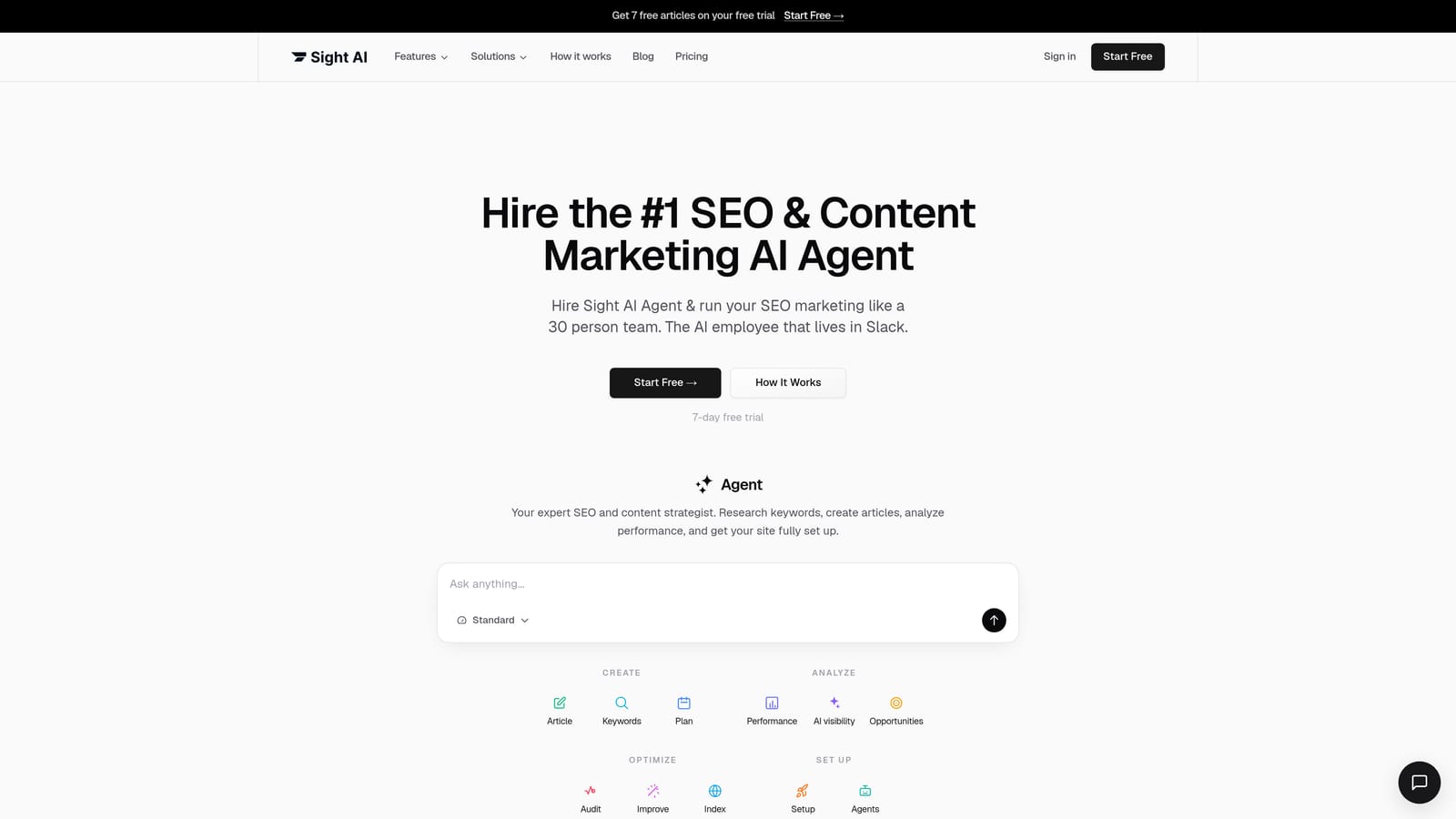
Sight AI is an all-in-one platform combining automated website indexing, AI brand visibility tracking across 6+ AI platforms, and a 13-agent AI content writer for SEO and GEO-optimized articles.
Where This Tool Shines
Most indexing tools stop at URL submission. Sight AI connects the entire discovery loop: publish content, index it immediately via IndexNow, then monitor whether AI models are actually citing it in their responses. That end-to-end workflow is rare in a single platform.
The AI Visibility Score is particularly useful for teams investing in GEO. Rather than guessing whether your content influences ChatGPT or Claude outputs, you get direct monitoring of brand mentions with sentiment context, prompt tracking, and competitive benchmarking across AI platforms.
Key Features
IndexNow Integration: Submits URLs to all participating search engines instantly when new content is published, bypassing the standard crawl queue.
Automated Sitemap Updates: Triggers sitemap refreshes on publish so search engines always have an accurate map of your content.
AI Visibility Score: Tracks brand mentions across ChatGPT, Claude, Perplexity, and 3+ additional AI platforms with sentiment analysis and prompt-level insights.
13+ Specialized AI Agents: Generates SEO and GEO-optimized content including listicles, guides, and explainers tailored for both traditional and AI-powered search.
CMS Auto-Publishing with Autopilot Mode: Connects content generation to publishing and indexing in a single automated workflow, reducing manual steps across the pipeline.
Best For
Sight AI is best suited for marketers, founders, and agencies that want to compress the time between creating content and getting discovered, across both traditional search engines and AI-powered surfaces. It's particularly valuable for teams running content at scale who can't afford to manage indexing, AI monitoring, and content production as separate workflows.
Pricing
Visit trysight.ai for current pricing plans. Multiple tiers are available to accommodate solo operators through agency teams.
2. Writesonic
Best for: Content teams that need high-volume AI writing with SEO-focused publishing workflows.
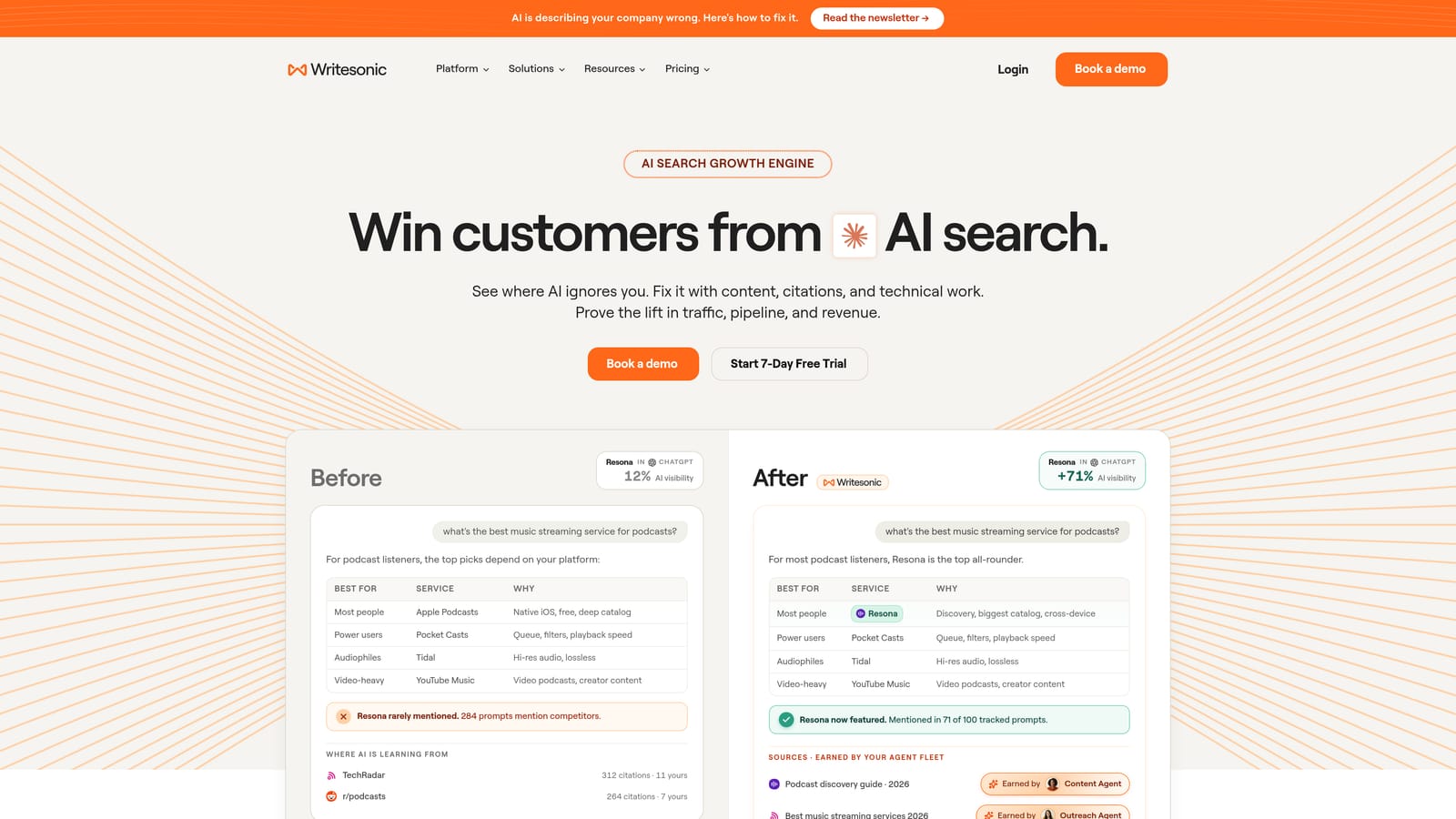
Writesonic is an AI content generation platform built for producing blogs, landing pages, and marketing copy at scale with integrated publishing capabilities.
Where This Tool Shines
Writesonic's strength is throughput. For teams that need to produce large volumes of SEO-oriented content quickly, the platform offers a structured workflow from keyword input to publishable draft. The SEO mode provides keyword targeting guidance and optimization suggestions inline, which reduces the back-and-forth between writing and optimization.
Publishing integrations mean content doesn't just get written, it gets distributed. While Writesonic's indexing support is secondary to its generation capabilities, the publish-to-live pipeline helps reduce the lag between content creation and search engine discovery.
Key Features
AI Content Generation: Produces blog posts, landing pages, ad copy, and marketing materials with configurable tone and format options.
SEO Mode: Incorporates keyword targeting and on-page optimization suggestions directly into the writing workflow.
Publishing Integrations: Connects to CMS platforms to support content-to-live workflows without manual copy-paste steps.
Brand Voice Customization: Allows teams to define consistent voice parameters for scaled output across multiple content types.
Multi-Language Support: Generates content in multiple languages, useful for teams targeting international search audiences.
Best For
Writesonic fits content marketers and agencies that prioritize production velocity and need SEO-aware writing assistance. It's a strong complement to a dedicated indexing tool for teams that have the generation side covered but want to accelerate discovery.
Pricing
Tiered plans are available. Visit writesonic.com for current pricing details, including free trial options.
3. AirOps
Best for: Technical teams and agencies that need programmable content and publishing pipelines with LLM integration.
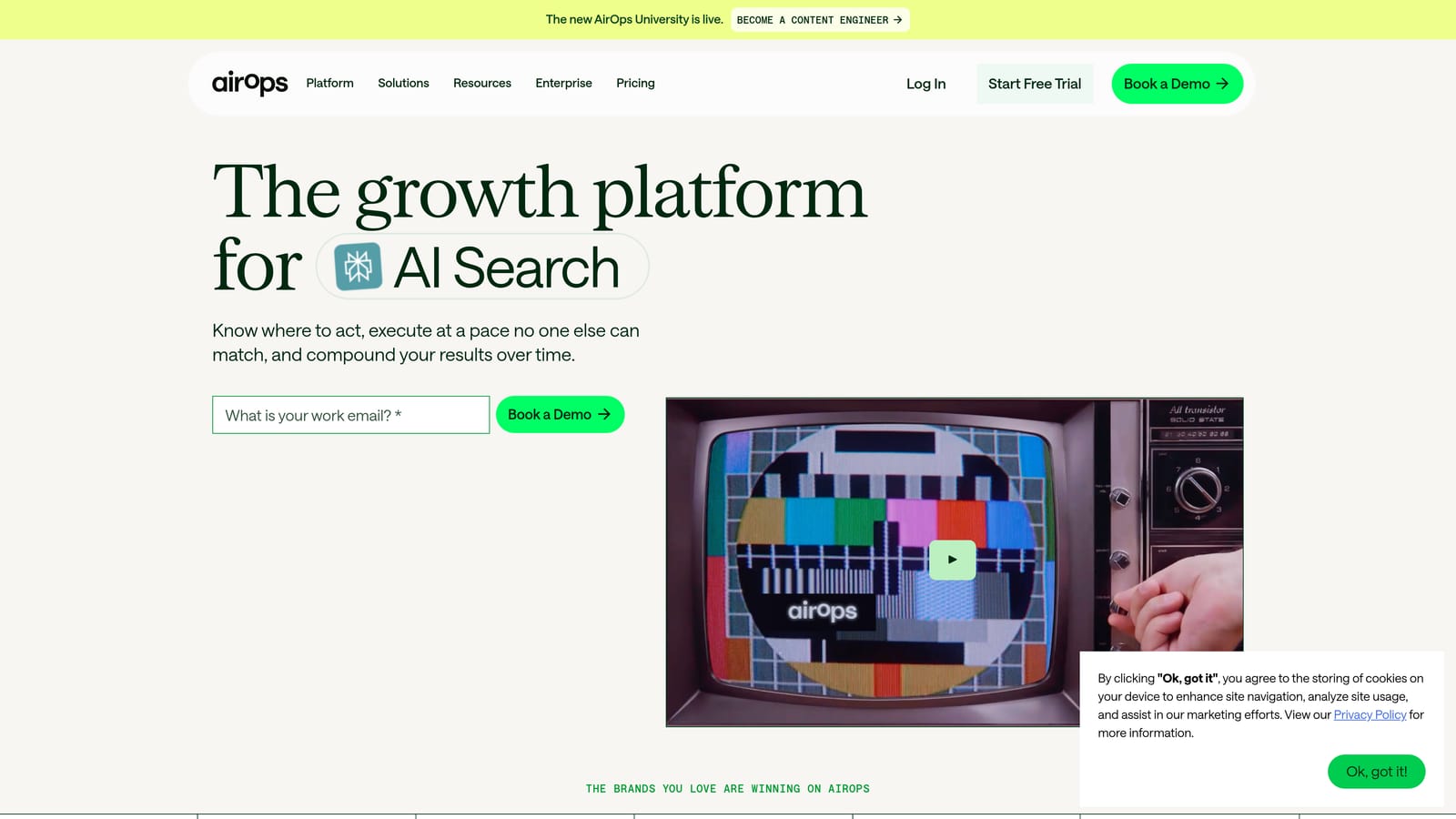
AirOps is a workflow automation platform that uses large language models to power custom content and data pipelines, connecting generation, review, publishing, and indexing triggers in configurable sequences.
Where This Tool Shines
AirOps occupies a different space than most content tools. Instead of giving you a fixed workflow, it gives you the building blocks to construct your own. For ops-heavy teams managing multiple client sites or complex content approval chains, that flexibility is genuinely valuable.
The API-first architecture means AirOps can slot into existing tech stacks rather than replacing them. Teams can wire up content generation from an LLM, route it through a review step, push it to a CMS, and trigger an indexing ping, all within a single automated sequence.
Key Features
LLM-Powered Workflow Builder: Lets teams design custom pipelines combining AI generation with data transformations and publishing actions.
CMS Connectors: Integrates with popular content management systems to automate the publish step within a larger workflow.
Custom Automation Sequences: Links generation, review, approval, and publish steps in a configurable order suited to each team's process.
Agency Scalability: Designed to handle multiple client sites and content streams simultaneously without manual overhead.
API-First Architecture: Provides deep customization options for technical teams that need to integrate with proprietary systems or non-standard tooling.
Best For
AirOps is best for growth engineers, technical SEO teams, and agencies that want programmable control over their content pipelines. It rewards teams with the technical capacity to configure workflows, making it less suited to solo operators looking for a simple out-of-the-box solution.
Pricing
Plan details are available at airops.com. Options range from team plans to enterprise configurations.
4. Promptwatch
Best for: SEO and content teams monitoring brand presence in AI model responses.
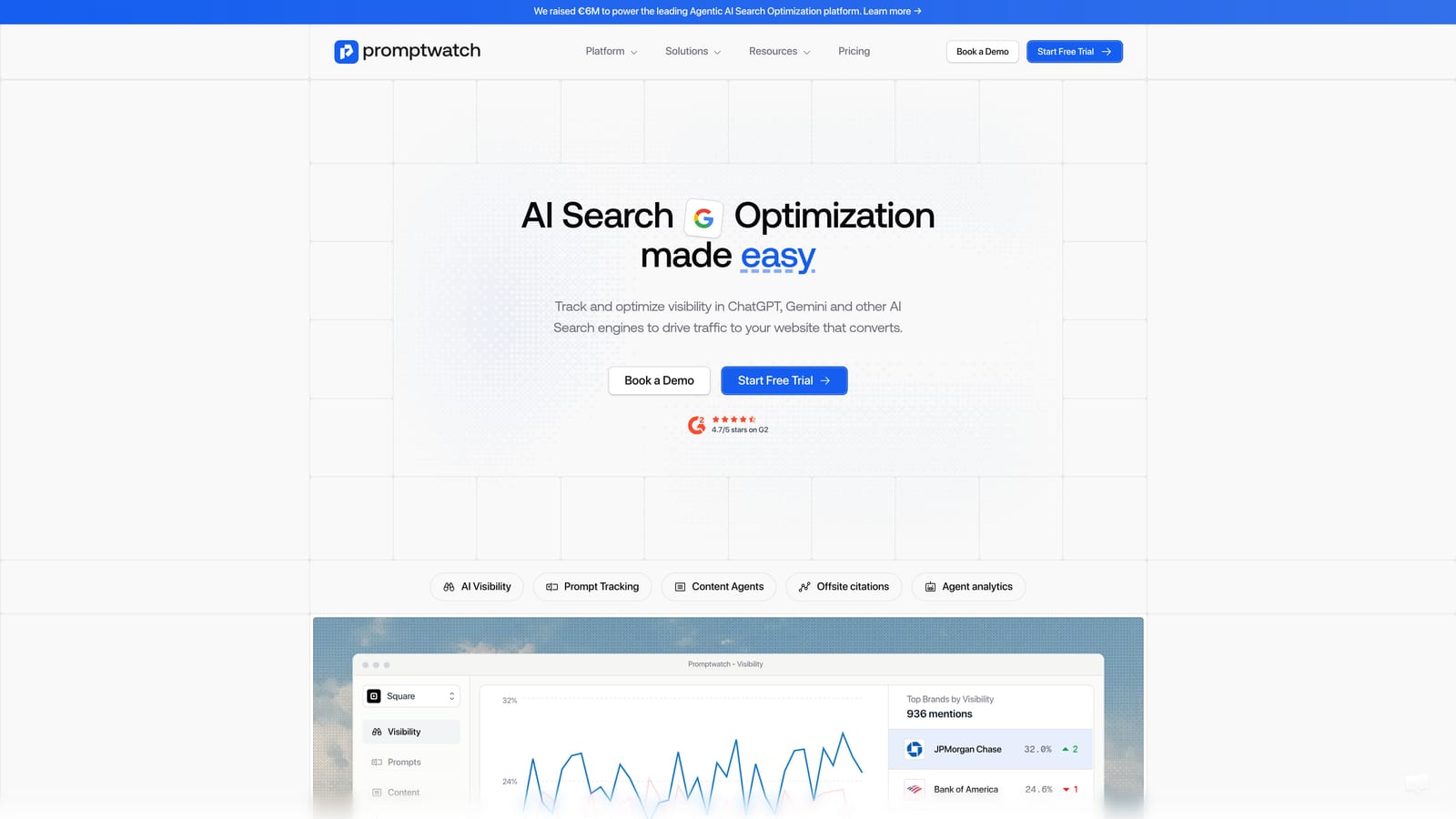
Promptwatch is an AI search monitoring tool that tracks how AI models respond to prompts related to your brand or industry category, helping teams understand and optimize their presence in AI-generated outputs.
Where This Tool Shines
Getting content indexed is only half the battle. The other half is knowing whether that content is actually influencing what AI models say about your brand. Promptwatch addresses this gap by monitoring AI responses at the prompt level, giving teams direct visibility into how their brand appears in LLM outputs.
The competitive benchmarking capability is particularly useful for GEO strategy. Instead of operating blind, teams can see how their AI search presence compares to competitors and identify which prompts are driving favorable or unfavorable mentions.
Key Features
Prompt-Level Brand Tracking: Monitors specific prompts to surface how AI models mention or omit your brand in responses.
Multi-LLM Monitoring: Tracks brand visibility across multiple AI platforms rather than limiting coverage to a single model.
Visibility Alerts: Notifies teams when AI-generated brand mentions change, enabling faster response to shifts in AI search presence.
Competitive Benchmarking: Compares your AI search visibility against competitors to identify positioning gaps.
GEO Strategy Insights: Surfaces data to guide content decisions aimed at improving AI model citation rates.
Best For
Promptwatch is well suited to SEO professionals and content strategists who are actively building a GEO practice and need data to guide which content angles will improve AI citation rates. It's a monitoring-first tool rather than a publishing or indexing tool.
Pricing
Current pricing is available at promptwatch.io.
5. Profound
Best for: Enterprise brands and agencies tracking AI search citations at scale across multiple properties.
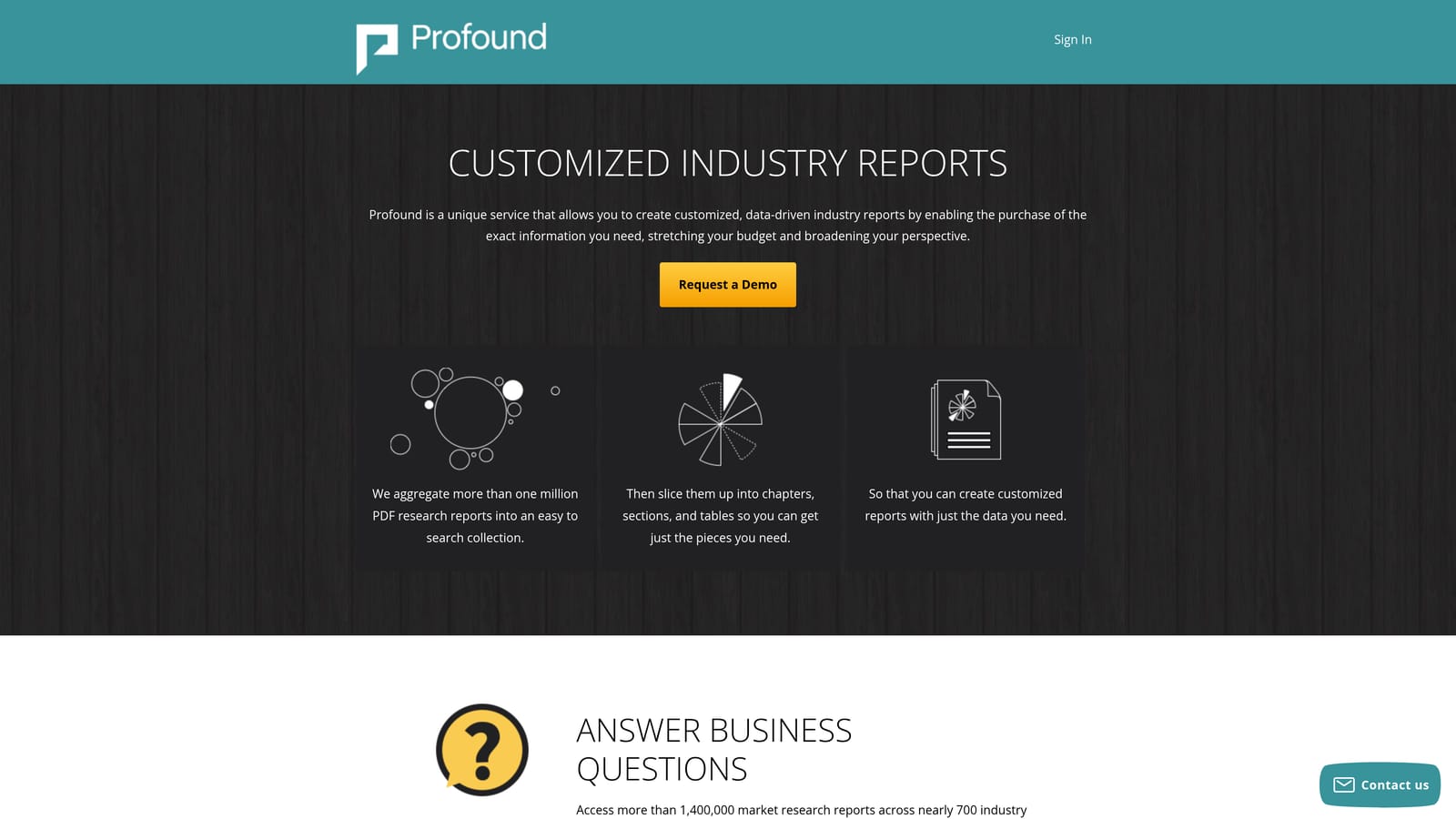
Profound is an enterprise-grade platform for tracking brand citations and visibility within AI search engines, providing analytics on how AI-generated responses reference or omit brand content across large content portfolios.
Where This Tool Shines
Profound is built for scale. Where smaller monitoring tools give you a snapshot of brand mentions, Profound provides structured analytics dashboards designed for multi-brand and multi-client reporting. That makes it a natural fit for enterprise marketing teams and agencies that need to present AI search performance data to stakeholders in a structured format.
The content gap identification feature is worth highlighting. By analyzing what AI responses say about your category without citing your brand, Profound helps teams pinpoint exactly where new content investment could improve AI-generated visibility.
Key Features
Brand Citation Tracking: Monitors how major AI search surfaces reference your brand in generated responses.
AI Search Analytics Dashboard: Visualizes visibility trends over time to support strategic reporting and decision-making.
Competitor Citation Benchmarking: Tracks competitor mentions alongside your own to provide relative positioning context.
Enterprise Reporting: Supports multi-brand and agency use cases with reporting structures suited to stakeholder presentations.
Content Gap Identification: Analyzes AI response patterns to identify topics and angles where your brand is underrepresented.
Best For
Profound is best suited to enterprise marketing teams and large agencies managing AI search authority across multiple brands or client portfolios. The enterprise pricing model reflects this positioning, making it less accessible for smaller teams or solo operators.
Pricing
Profound operates on enterprise pricing. Contact the team directly at profound.com for a quote.
6. Peec
Best for: SEO practitioners benchmarking brand positioning within AI-generated search results over time.
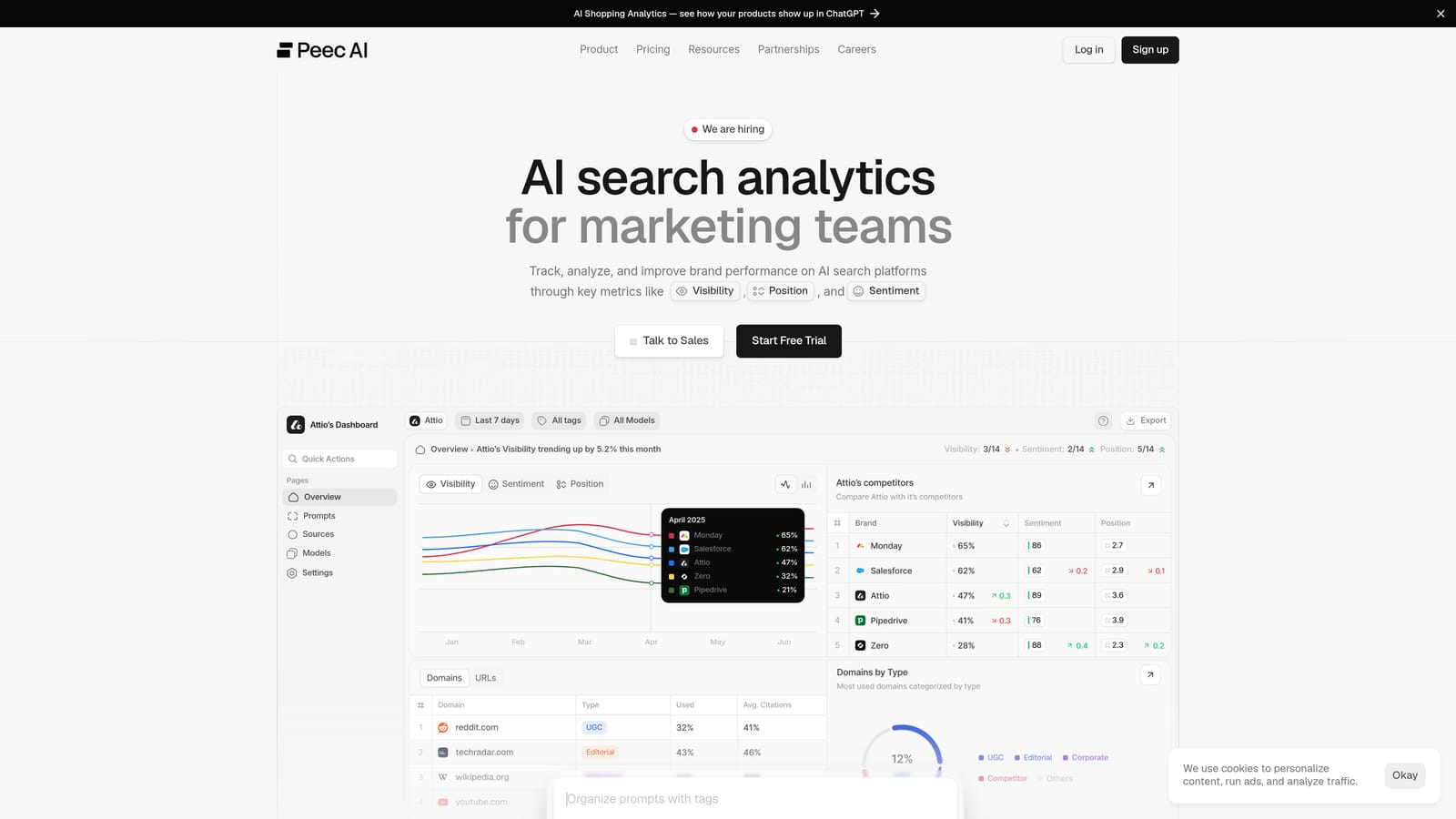
Peec is an AI search monitoring tool focused on tracking brand and competitor positioning within AI-generated search results, with an interface designed for SEO professionals rather than enterprise data teams.
Where This Tool Shines
Peec occupies a practical middle ground between lightweight monitoring and enterprise analytics. For SEO practitioners who want to understand their AI search presence without navigating a complex enterprise platform, Peec's accessible interface lowers the barrier to getting started with GEO benchmarking.
The trend monitoring capability is useful for teams iterating on GEO content strategy. By tracking brand mention frequency over time, teams can connect content publishing decisions to measurable shifts in AI search positioning, closing the feedback loop between what you publish and how AI models respond.
Key Features
Brand Position Tracking: Monitors where and how your brand appears within AI-generated search results across platforms.
Competitor Visibility Benchmarking: Provides side-by-side comparison of your AI search presence versus key competitors.
Trend Monitoring: Tracks brand mention patterns over time to identify shifts tied to content or algorithm changes.
GEO Content Insights: Surfaces actionable data to guide content optimization for AI-powered search surfaces.
SEO-Practitioner Interface: Designed for accessibility, making it approachable for individual SEO professionals without a dedicated analytics team.
Best For
Peec is a strong fit for individual SEO practitioners and smaller teams that want to incorporate AI search monitoring into their workflow without the complexity or cost of an enterprise solution. It complements traditional indexing tools by showing whether indexed content is actually surfacing in AI outputs.
Pricing
Current pricing plans are available at peec.ai.
Which Platform Fits Your Workflow?
The right choice here depends on where your biggest gap sits: raw indexing speed, AI search visibility, content production, or all three at once.
If you need immediate URL submission to search engines combined with AI visibility monitoring and content generation, Sight AI is the only platform on this list that handles all three natively. The IndexNow integration ensures your content enters the crawl queue the moment it publishes, while the AI Visibility Score shows you how that content is being cited across ChatGPT, Claude, Perplexity, and beyond. For teams treating indexing as part of a broader organic growth system, that integration removes a lot of tool-switching friction.
For teams already invested in content production workflows, Writesonic and AirOps offer genuine value. Writesonic accelerates high-volume SEO content creation with publishing integrations that reduce time-to-live. AirOps suits technical teams that want programmable pipelines connecting generation, approval, and publish steps in a custom sequence.
On the AI monitoring side, Promptwatch, Profound, and Peec each serve a distinct audience. Promptwatch is well-suited to SEO teams building a GEO practice from scratch. Profound fits enterprise brands that need structured analytics and multi-brand reporting. Peec serves individual practitioners who want accessible AI search benchmarking without enterprise overhead.
The most competitive teams in 2026 aren't treating indexing as a one-off technical task. They're running a continuous loop: publish optimized content, index it immediately, monitor how AI models surface it, and iterate based on what they find. Start tracking your AI visibility today and see exactly where your brand appears across top AI platforms, alongside the indexing and content tools to act on what you discover.